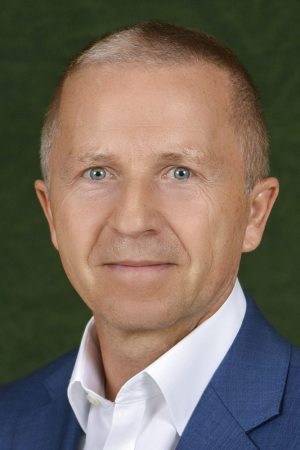
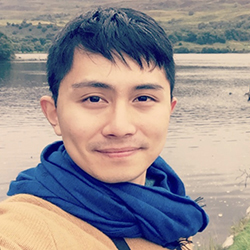
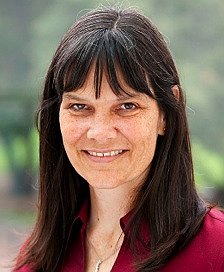
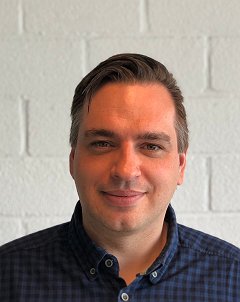
Jean-Pierre Dalmont is a Researcher at the Institute of Acoustics of Le Mans University. His work bridges the experimental and theoretical domains of Waveguides and the Physics of Musical Instruments , focusing on wind instruments and harmonic resonators. Specialist in saxophone waveguide modeling (staircase cones, analogous to bowed string models) Developed acoustic impedance sensors (with CTTM) and non-linear measurement methods for reed instruments Active in scientific outreach: Ask project, Acoustic MOOC for Musicians , and CISM Summer School in Italy His research explores Non-linear Acoustics in musical contexts, Metrology for instrument validation, and Elastic Waves in complex media. Publications span Acta Acustica and Forum Acusticum , addressing topics like ghost notes in brass, pedal note harmonics, and educational clarinet innovations. Collaborations include CTTM, LAUM, and European acoustics networks.
Maciej Noras is an Associate Professor in the Engineering Technology and Construction Management department at the University of North Carolina at Charlotte . His academic background includes a Ph.D. in Engineering Science from Southern Illinois University and an M.S. in Electrical Engineering from UNC Charlotte and Wroclaw University of Technology. Ph.D. in Engineering Science, Southern Illinois University, Carbondale, IL (2000) M.S. in Electrical Engineering, University of North Carolina at Charlotte and Wroclaw University of Technology, Poland (1994) Noras's research focuses on electrostatics , power engineering , and sensor design , with applications in semiconductor manufacturing , actuator technology , and non-contact charge measurement . He has explored Electrostatic voltmeter design for semiconductor wafers Ionizer monitoring in ESD-sensitive environments Charge feedback systems for piezoelectric actuators Surface potential measurement techniques His recent publications highlight advancements in electrostatic sensor technology , actuator control systems , and charge accumulation analysis across semiconductors and data storage devices. Key trends include Development of high-resolution electrostatic voltmeters Optimization of ionizer systems in manufacturing Integration of piezo-driven sensors for precision applications Charge feedback amplifiers for actuator control No scientific awards or honors are mentioned in the provided data. He has submitted multiple research grants , including DOE Grant (2010-2012) for a Net-Zero Energy Building Operator Training Program as Co-PI Unfunded UNC Charlotte Faculty Grant (2008) on Doherty Amplifier feasibility Pending Army Research Laboratories proposal (2008) on geophysical anomaly detection Multiple declined NSF grants (2009-2010) for power engineering and pharmaceutical blend research
Dr. Richard K. Simpson is a Research Fellow at the University of Windsor , specializing in evolutionary signal production in birds. His work bridges behavioral ecology , ornithology , and signal evolution through innovative field and laboratory approaches. Research Themes include: Dynamic modulation of animal signals through behavior and environment Evolution of color signaling mechanisms in hummingbirds and warblers Comparative analysis of signaling systems across geographic gradients His scientific contributions feature in publications like Ecology Letters (2018) and American Naturalist (2020), with notable methodological advances in signal recreation technology (lazy Susan apparatus) and full-spectrum photography . Current work explores color-song co-evolution with Dr. Stephanie Doucet and applied signaling research in vineyard management systems. Research Highlights include: Disproving static color measurement paradigms in animal communication Documenting two evolutionary pathways for color appearance in hummingbirds Identifying migratory behavior as primary driver of sexual color dimorphism
David F. Mazurek is a Professor in the Department of Civil and Environmental Engineering at the United States Coast Guard Academy (USCGA), where he has served since 1990 after industry experience at General Dynamics' Electric Boat Division and a teaching position at Lafayette College. His career spans structural engineering with emphasis on railroad infrastructure, forensic investigations, and security design. Education: Ph.D., Civil Engineering, University of Connecticut, 1988 M.S., Civil Engineering, Florida Institute of Technology, 1984 B.S., Ocean Engineering, Florida Institute of Technology, 1982 Research Focus: Dr. Mazurek's work integrates historical preservation with modern engineering challenges. Current projects involve railroad structure history with the Ontario and Western Railway Historical Society and in situ stress measurement techniques for steel bridges with the Federal Railroad Administration. His legacy research includes vibration-based structural damage detection for bridges and ships, forensic analysis of Coast Guard tower collapses, and development of blast-resistant design methodologies through courses like Structural Design for Extreme Events. Publication Trends: Recent publications (2010-2021) demonstrate dual expertise in railroad bridge engineering (particularly steel eyebars and collapse analysis) and engineering education. His scholarly output combines practical railroad infrastructure solutions with foundational textbook contributions that have shaped engineering curricula across multiple editions. Scientific Recognition: Coast Guard Engineer of the Year, National Society of Professional Engineers (2015) Civil Engineering Educator of the Year, Connecticut Society of Civil Engineers (2015) Distinguished Faculty Award, USCGA Alumni Association (2014) Excellence in Scholarship Award, USCGA Center for Advanced Studies (2014) Distinguished Alumnus Award, Florida Tech College of Engineering (2014) Professional Engagement: Dr. Mazurek maintains active collaborations with the Ontario and Western Railway Historical Society and Federal Railroad Administration. He has served on the American Railway Engineering and Maintenance-of-Way Association's Committee for Steel Structures since 1991, including chairing its Subcommittee on Coatings and Special Construction. Information regarding student advising and specific research grants was not documented in available materials.
Xueyuan Michael Han-Vanbastelaer is an Assistant Professor in the Department of Computer Science at Wake Forest University , focusing on systems-level security and privacy research. His work integrates data provenance, machine learning, and distributed systems to develop robust security mechanisms. Ph.D. in Computer Science (2022) from Harvard University Master of Science in Computer Science (2022) from Harvard University B.Sc. in Computer Science (2015) from University of California, Los Angeles His research interests span systems security , privacy , data provenance , and graph analysis , where he develops operating system infrastructures, language-level frameworks, and algorithms to enhance system transparency and detect sophisticated attacks. His publications reveal a trend of advancing provenance-based security solutions, including intrusion detection systems like KAIROS and Unicorn, eBPF security frameworks like SafeBPF, and data deletion techniques like Splice. He has contributed to 15 major publications since 2016, with recent work (2024–2025) focusing on hardware-assisted kernel security and real-time provenance auditing. His teaching includes courses like CSC 111: Introduction to Computer Science and CSC 250: Computer Systems I , covering programming fundamentals, system architecture, and memory management.
Andrew Jacobsen is a Postdoctoral Research Fellow affiliated with the Polytechnic University of Milan and the University of Milan, working under the supervision of Nicolò Cesa-Bianchi. His research focuses on theoretical aspects of machine learning, particularly online learning and adaptive algorithms for dynamic environments. His educational background includes: PhD in Computing Science (2024) from the University of Alberta, supervised by Ashok Cutkosky and Martha White. MSc and BSc in Computing Science from the University of Alberta, supervised by Martha White and Adam White. Music program at Grant Macewan University, majoring in composition and minoring in music technology. Andrew's primary research interest lies in online learning theory, with a focus on developing algorithms that require no hyperparameter tuning and can adapt to time-varying objectives. He is also broadly interested in machine learning theory, reinforcement learning, and bandits. His work bridges theoretical guarantees with practical algorithmic design, creating robust systems for non-stationary environments through parameter-free optimization and regret minimization frameworks. His publication trends reveal a strong emphasis on dynamic regret analysis, equivalence proofs between static and dynamic regret, and hyperparameter-free methods across online optimization. Recent work extends into reinforcement learning applications and continual learning systems, consistently targeting theoretical foundations with practical implementations. Scientific recognition includes: Outstanding PhD Thesis Award for "Adapting to Non-stationarity in Online Learning" (2024). Andrew has no documented student advising or grant leadership in the provided materials. He maintains active research collaborations at his institutions while pursuing interdisciplinary interests in music composition and physical activities like skateboarding and grappling.
Wilfried Kausel is a faculty member at the University of Music and Performing Arts Vienna, associated with the Department of Music. He serves as Dean of Scientific Studies (Studiendekanat für wissenschaftliche Studien) and leads the Graduate Center. His work bridges musical acoustics and computational physics, with a focus on brass instruments and structural vibrations. Academic Rank: Professor Key Institutions: University of Music and Performing Arts Vienna Research Labs: Acoustic Laboratory, Performance Science Lab Research interests center on the physics of musical instruments, particularly: Computational modeling of brass instruments Wall vibrations and their acoustical influence Directivity patterns and power efficiency Time-resolved interferometry for vibration analysis Bore reconstruction and impedance measurements Stick-slip simulations for lip oscillators The 15 most recent publications (2002-2021) reveal expertise in: Brass instrument mechanics (walls, bells, bores) Wave propagation and coupling Electronic speckle pattern interferometry Computational simulations for acoustics Material properties in instrument design Wind instrument intonation and sensory evaluation Labs and infrastructure include: Acoustic Laboratory with anechoic chamber Performance Science Lab Slow Motion Lab Computer Wing for simulations Motion Capture and Eye Tracking networks
János Török is an Associate Professor at the Department of Theoretical Physics, Budapest University of Technology and Economics, affiliated with the Morphodynamics group. His research spans granular materials, social network modeling, and morphodynamics of pebbles. Granular materials: Quasi-static shearing, shear band formation, particle shape effects, hopper flow Social science: Conflicts on Wikipedia, consensus modeling, social network dynamics Morphodynamics: Collective abrasion, fragmentation of pebbles His recent publications focus on computational modeling of granular physics and social dynamics, with applications in machine learning for malaria detection. Articles highlight interdisciplinary approaches to phase transitions, network analysis, and material deformation. Shear zones in granular materials Deep learning for social network parameters Malaria detection software He is involved in open-source projects (WWM, Mozi) and teaches courses in mathematical methods, mechanics, and scientific programming.
Kathleen Fisher is an Adjunct Professor in the Computer Science Department at Tufts University and currently serves as the Director of the Information Innovation Office at DARPA. She previously held roles as Professor and Department Chair at Tufts (2016-2021), Program Manager at DARPA, and Principal Member of Technical Staff at AT&T Labs Research. Her academic journey began with a PhD in Computer Science from Stanford University. Kathleen’s research focuses on advancing programming languages through domain-specific languages (DSLs), program synthesis, and formal methods. Her work addresses challenges in ad hoc data management, secure systems, and integrating machine learning with programming language design. Notable projects include the Hancock and PADS systems for data processing, Forest for filestore management, and verified parser generators. She has received prestigious accolades, including ACM Fellow, Hertz Foundation Fellow, and SIGPLAN Distinguished Service Award. Her service includes leadership roles in ACM SIGPLAN, CRA-W, and as General Chair for ICFP 2015. Kathleen has advised PhD student Matt Ahrens and led impactful DARPA programs like HACMS and PPAML. As co-founder of the Programming Language Mentoring Workshop (PLMW), she actively contributes to diversity initiatives in computer science. Her research group, TuPL, explores DSLs, program synthesis, and language-based security, maintaining projects such as Autobahn and PADS.
Coen De Roover is a Professor at the Software Languages Lab (SOFT) of Vrije Universiteit Brussel (VUB) since October 2015, where he leads the Code Analysis and ManiPulation (CAMP) subgroup. His research focuses on program analysis design and its applications to software quality, including soft verification of contracts, incremental abstract interpretation, vulnerability detection in infrastructure code, and mining change patterns in commits. Key Research Areas: static analysis, dynamic analysis, mining software repositories, software engineering tools, security, and empirical studies. Conference Roles: Organizing Committee Chair for ECOOP Academy (2026), Steering Committee Member for GPCE, Program Committee Member for ICFP, SANER, and VMCAI, and Session Chair for multiple research tracks. Notable Contributions: Publications on WebAssembly analysis, Ansible security, concolic testing, and abstract interpretation frameworks. He also serves as Programme Director for the Bachelor in Computer Science at VUB since 2019-2020.
Lorenz Steckhan is a researcher at the Chair of Ergonomics at the Technical University of Munich , focusing on sociotechnical modeling, human-centered automated driving, and ergonomic design. He contributes to teaching as a lecturer assistant in courses like Ergonomic Product Design and participates in projects such as COmplex Socio-technical Systems MOdeling (COSSMO) and software tool development for FRAMalyse. His work bridges ergonomics, robotics, and human-computer interaction. Key research areas: Automated Driving, Sociotechnical Modeling, Human Factors Projects: COSSMO, FRAMalyse, Cabin Design, Robotics for Healthcare Recent publications explore user satisfaction in automated driving systems, cooperative interfaces, and vibro-tactile assistance for impaired drivers. He is involved in lab activities including dynamical mock-ups and static driving simulators.
Dr. Ralph E. Flori is an Associate Professor and Assistant Chair for Undergraduate Studies in the Department of Geosciences and Geological and Petroleum Engineering at Missouri University of Science and Technology . Recognized as the Dean's Educator (2018) , he bridges petroleum engineering, geological research, and educational technology innovation. He earned all his degrees (B.S., M.S., Ph.D.) in Petroleum Engineering from Missouri University of Science and Technology, graduating in 1979 , 1981 , and 1987 respectively. His academic journey reflects a deep commitment to engineering education and applied research. Enhanced Oil Recovery (EOR) via low-salinity water flooding and thermal methods Reservoir Wettability analysis using SEM-BSE and contact angle measurements Educational Software Development , notably the BEST Dynamics system Geomechanics for wellbore stability in complex formations Machine Learning applications in petroleum engineering His 152+ scholarly works focus on unconventional reservoirs, with case studies in Kuwaiti carbonate and Southern Iraq formations. Recent publications address smart waterflooding , CO2-EOR coupling , and drilling risk mitigation via data-driven analytics. Scientific awards include the Dean's Educator (2018) for his contributions to curriculum innovation. He leads the development of multimedia-based engineering education tools and has mentored curriculum improvements for statics, dynamics, and mechanics of materials courses.
Manuel Fuentes Conde is a full-time University Professor in the Department of Electronic and Automatic Engineering at the University of Jaén . He leads research in the Research and Development in Solar Energy group within the Center for Advanced Studies in Earth Sciences, Energy . His work bridges electronics engineering with sustainable energy solutions, particularly focusing on photovoltaic systems and their applications in water disinfection. Education : PhD in Electronics Technology (University of Jaén, 2009) with dissertation: Contribution to the modeling of the electrical behavior in real sunlight of crystalline silicon photovoltaic modules and ICs His research spans Solar Energy , Photovoltaic Systems , Water Disinfection Technology , and IoT Applications in Renewable Energy . He pioneers the SolWat hybrid system, combining photovoltaic energy generation with solar water purification. His projects address sustainable development goals , focusing on developing countries and refugee camps . Recent publications emphasize hybrid solar-water systems , IoT-enabled monitoring , and technology scalability . He has developed low-cost Arduino-based dataloggers for PV systems and explored the Bunsen–Roscoe Reciprocity Law in UV disinfection. His work includes field trials in Mexico and long-term evaluations of solar installations in Saharawi refugee camps. As an educator, he implements Project-Based Learning (PBL) in engineering courses, including Radio Control Vehicles and Applied Electronics . His technical contributions extend to 3G-connected monitoring systems and cost-effective sensors for solar applications, aligning with global development and sustainability objectives.
Dr.-Ing. Ann-Kathrin Goldbach is a Professor at the Chair of Statics and Dynamics within the School of Engineering and Design at the Technical University of Munich . She has served as Deputy Chair since 2021 and Habilitation candidate since 2022, with a focus on CAD-integrated design cycles for structural membranes and isogeometric analysis. Her roles include Chief Representative for Equality of Women in Science since 2023. Master's Degree in Civil Engineering, Technical University of Munich (2013) Bachelor's Degree in Civil Engineering, Technical University of Munich (2009-2012) PhD in Structural Engineering, Technical University of Munich (2021) Research Focus : Goldbach specializes in parametric design workflows, isogeometric analysis, and lightweight membrane structures. Her work bridges CAD/CAE integration, wind engineering, and multidisciplinary optimization for additive manufacturing. Key projects include the FlexWing and MistralWind initiatives, emphasizing fluid-structure interaction and digital twins for durable construction systems. Article Trends : Recent publications highlight CAD-integrated parametric modeling, nonlinear behavior of membrane structures, fluid-structure interaction under wind loads, and digital twin applications in construction. Collaborations with TUM faculty and international institutions reflect her multidisciplinary approach. Teaching Contributions : She leads courses on Isogeometric Analysis , Computational Design , and Membrane Workshop , while supervising student theses and project-based learning initiatives. 2024: Doce et Delecta Teaching Award for Membrane Workshop 2023: TUM Learning Professional Certification 2019: IASS Hangai Prize for CAD-integrated design research
Dr. Veronika Singer is a Postdoctoral Researcher (Akademische Rätin a.Z.) at the Chair of Statics and Dynamics, Technical University of Munich, working under Prof. Dr.-Ing. habil. Roland Wüchner since October 2024. Previously, she served as an Academic Councillor at the Chair of Structural Analysis under Prof. Dr.-Ing. Kai-Uwe Bletzinger from December 2020 to September 2024, and as a Research Assistant from April 2017 to November 2020. Her educational background includes: M.Sc. in Civil Engineering from Technical University of Munich (2014-2017), with thesis on 'Detailed lateral-torsional buckling investigations of steel profiles and frame systems' B.Sc. in Civil Engineering from Technical University of Munich (2010-2014), with thesis on 'Beam elements for linearly variable cross-sections' Dr. Singer's research focuses on advanced computational methods for structural analysis, particularly the Material Point Method (MPM) and its applications in natural hazard simulation. She has pioneered innovative coupling strategies between MPM and Finite Element Method (FEM), as well as MPM and Discrete Element Method (DEM), to address complex multiphysics problems involving large deformations. Her work has significant applications in simulating granular mass flows and designing protective structures against natural disasters, contributing to improved infrastructure resilience. Her publication record shows a consistent trajectory of high-impact research in computational mechanics, with a concentration on partitioned coupling approaches that enable more efficient and accurate simulations of complex engineering problems. The research demonstrates increasing sophistication in handling boundary conditions, large deformations, and multiphysics interactions. Her scientific contributions have been recognized with multiple teaching awards: Doce et Delecta, 3rd prize for Statics 1 in the 'NextGen & Young Talents' category (July 2025) Doce et Delecta, 1st Prize for Statics 2 (July 2024) Certificate of University Teaching at Bavarian Universities (December 2022) Multiple previous Doce et Delecta awards (2018, 2019) Dr. Singer actively supervises student theses across computational mechanics topics, with over 20 completed projects ranging from element formulation to natural hazard simulation. She is involved in research projects including CoDA, MistralWind, WINSENT, and FlexWing, focusing on advanced computational methods for structural analysis and natural hazard mitigation. She is an integral member of the Chair of Statics and Dynamics research team, collaborating on developing more reliable simulation tools for civil engineering applications, particularly in natural hazard contexts. Her work bridges theoretical computational mechanics with practical engineering solutions for infrastructure protection.