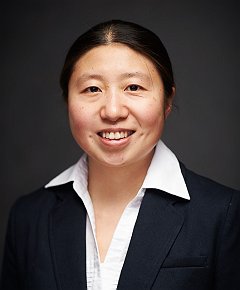
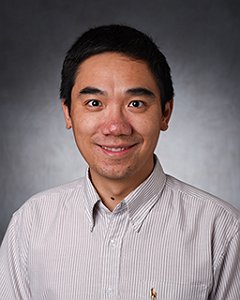
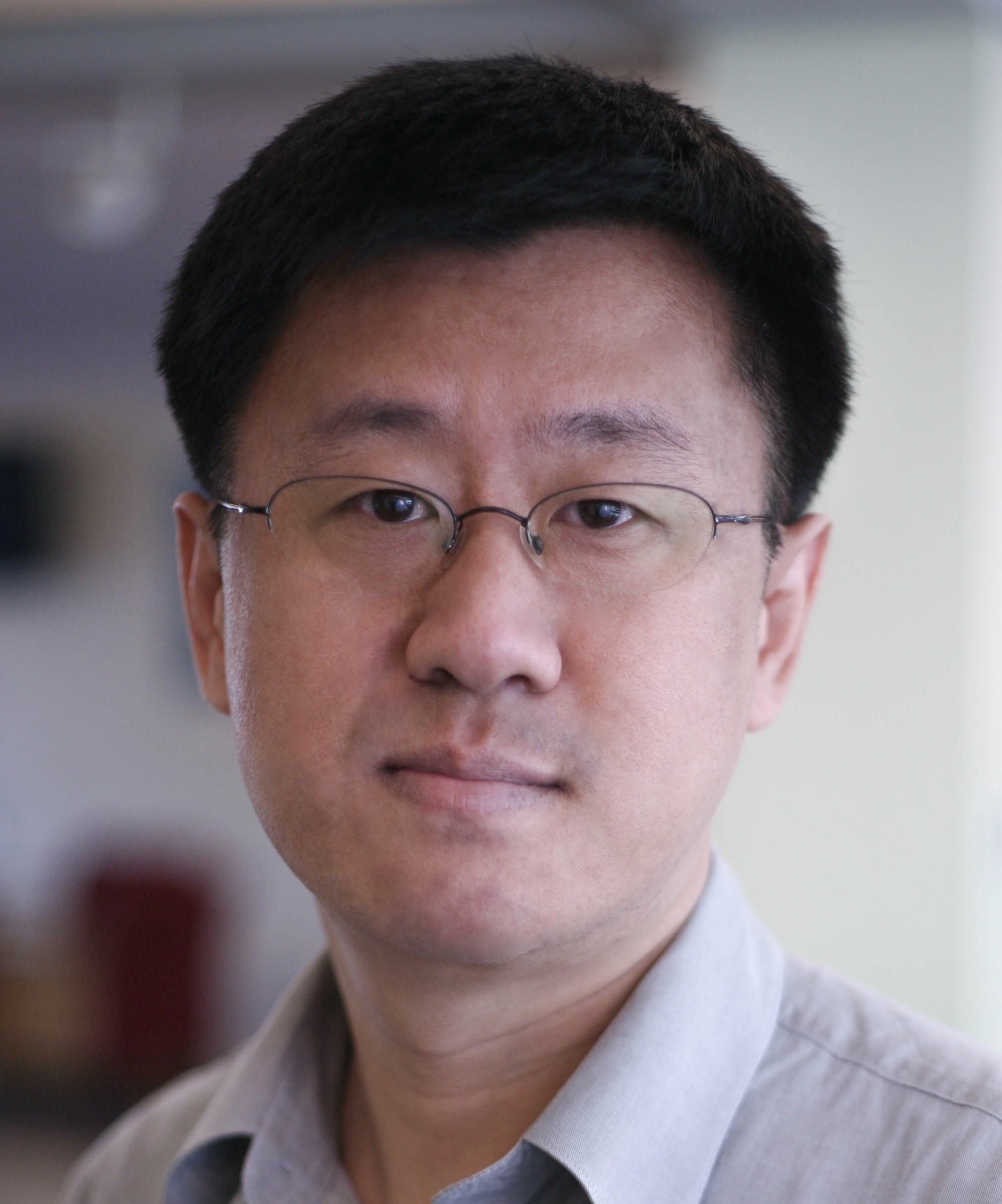
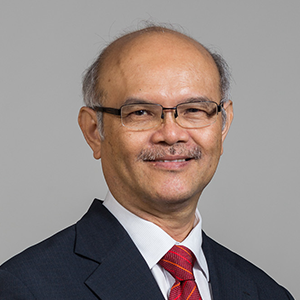
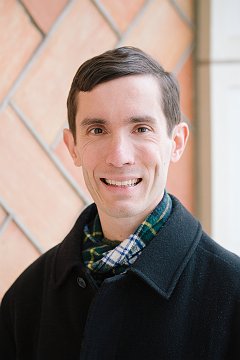
Limin Jia is a Research Professor in the Electrical and Computer Engineering (ECE) department at Carnegie Mellon University, with a courtesy appointment in the Computer Science Department (CSD). Affiliated with CyLab, their work focuses on applying formal techniques to enhance software security through programming language design, formal verification, and information flow analysis. Research interests span Security Programming Languages Formal Verification Information Flow Control Intermittent Computing Rust Programming . Recent publications integrate formal methods with practical security challenges, including Node.js vulnerability detection Rust API testing Secure multi-execution Intermittent computing type systems IFTTT security analysis Browser security frameworks . Limin serves on program committees for conferences like POPL, PLDI, VMCAI, and is actively involved in teaching courses such as Browser Security (18-636) Introduction to Information Security (18-631) .
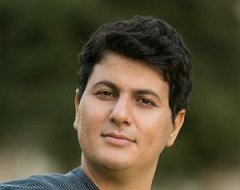
Mohsen Lesani is an Associate Professor in the Computer Science and Engineering Department at the University of California, Santa Cruz's Baskin School of Engineering. His research focuses on reliability and security of software systems, particularly concurrent and distributed systems, with recent emphasis on secure replicated systems and distributed machine learning. Dr. Lesani received his PhD from UCLA, MS in artificial intelligence from Sharif University of Technology, and BS in software engineering from University of Tehran. He was previously a postdoc at MIT. His educational background provides a strong foundation for his interdisciplinary research spanning programming languages, distributed systems, and security. His research interests center on creating reliable and secure distributed systems. Current projects include resilient and secure distributed systems, heterogeneous and reconfigurable secure distributed systems, automatic analysis and synthesis of replicated objects, verification of distributed systems, data analytics, secure exchange across blockchains, machine learning for performance models, domain-specific languages and type systems, and automatic fence insertion for concurrent systems. His work bridges theoretical foundations with practical implementations to address real-world challenges in distributed computing. Lesani's research has been recognized with several prestigious awards including the NSF CAREER award in 2020 and DARPA YFA award in 2022. His work has also received the SIGPLAN Research Highlight in 2019, a distinguished paper award at OOPSLA 2018, and a best paper award at ISSRE 2015. These accolades reflect the impact and quality of his contributions to the field. He actively mentors PhD students in the Safe and Secure Software (S3) lab, including Xiao Li, Eric Chan, Javad Saber-Latibari, and Tejas Mane. His research has been supported by multiple NSF grants, demonstrating sustained funding for his innovative work. Lesani serves on program committees for major conferences including POPL, PLDI, OOPSLA, and DISC, contributing to the academic community. Lesani leads the Safe and Secure Software (S3) lab at UC Santa Cruz, where his team works on cutting-edge research in distributed systems, programming languages, and security. The lab fosters a collaborative environment where theoretical insights are translated into practical systems that address real-world challenges in reliability and security of distributed applications.
Steven Swanson is a Professor in the Department of Computer Science and Engineering at the University of California, San Diego, within the Jacobs School of Engineering. He is the Director of the Non-Volatile Systems Laboratory (NVSL), where he leads cutting-edge research in non-volatile memory, storage systems, and hardware-software co-design. His work bridges computer architecture, systems, and software to develop efficient, reliable, and secure computing platforms. Ph.D., University of Washington, 2006 B.S., University of Puget Sound, 1999 Dr. Swanson's research centers on non-volatile and persistent memory systems , exploring how next-generation storage technologies can transform computing. His lab develops full-stack solutions including file systems like NOVA and Orion , programming models such as NV-Heaps , and hardware prototypes like Moneta and Onyx . The team also works on low-power co-processors (e.g., GreenDroid ) and tools for debugging and verifying persistent memory programs. Research spans system reliability, security, energy efficiency, and performance optimization. His recent publications reveal a strong focus on persistent memory safety , zero-copy I/O , RDMA-based distributed file systems , and real-world characterization of Intel Optane . These works appear in top venues including ASPLOS, FAST, MICRO, and USENIX ATC, demonstrating sustained innovation in storage and systems research. Scientific honors include: NSF CAREER Award Google Faculty Award Facebook Faculty Award NetApp Faculty Fellow Dr. Swanson has advised 15 PhD students and 4 postdocs , many now faculty or senior engineers at Google, Microsoft, Intel, and other leading tech firms. He has secured significant research funding and leads major community initiatives such as the annual Non-Volatile Memories Workshop and Persistent Programming In Real Life (PIRL) . His educational efforts include innovative courses on robotic system design, quadcopter building, and modern storage systems, emphasizing hands-on learning and real-world implementation. The Non-Volatile Systems Laboratory (NVSL) under his leadership fosters a collaborative, international research environment, hosting visitors and postdocs from around the world. The lab is recognized globally as a pioneer in storage systems research and a key contributor to the adoption of persistent memory technologies in industry.
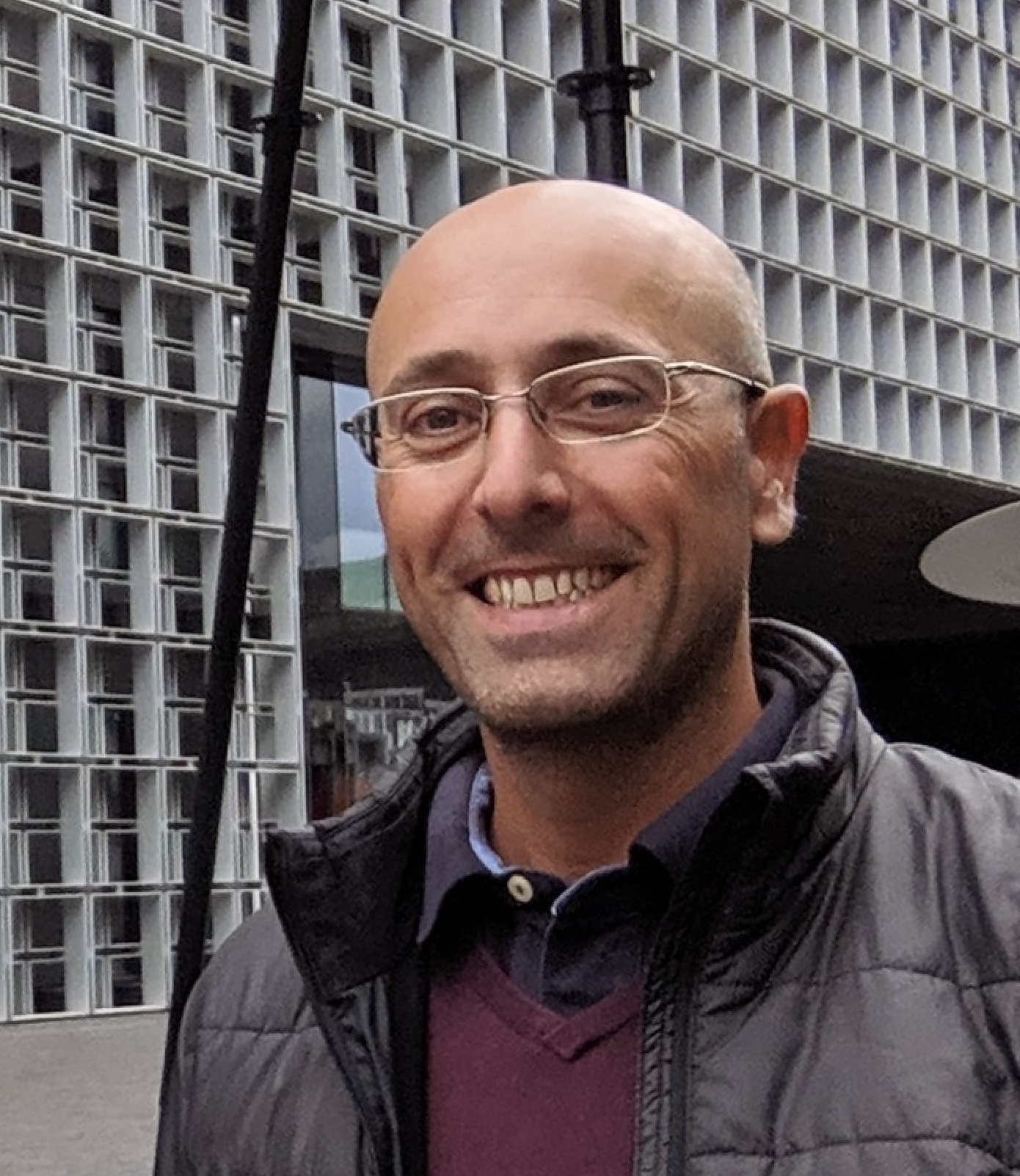
Alfredo Capozucca is a full permanent Researcher at the Department of Computer Science (DCS) within the Faculty of Science, Technology and Medicine (FSTM) at the University of Luxembourg. He holds a PhD in Computer Science from the University of Luxembourg (2010) and an M.S. from the National University of Rosario, Argentina (2003). His research focuses on modern software engineering methods, dependable systems, and computing education, with an emphasis on formal verification and sustainable computing practices. Capozucca has contributed to the design of courses at undergraduate and master's levels, including serving as Deputy Programme Director for the BSc in Computer Science from 2021-2024. His work bridges theoretical foundations with practical applications in education and industry. Research interests prominently include AI in education (e.g., ChatGPT's role in formal specification writing), formal verification techniques, and the integration of DevOps philosophies into academic curricula. He has authored numerous papers on topics ranging from security policy analysis to energy-efficient transactional models. Capozucca's contributions extend to open-source projects and tool development, such as the Messir UML requirements engineering tool. His teaching spans software engineering fundamentals, dependability, and modern DevOps practices, reflecting a commitment to aligning education with industry needs. Key professional roles include R&D engineer positions (2004-2006) and leadership in educational program design. His research infrastructure is based at the Maison du Nombre facility in Luxembourg. While no specific grants or awards are listed, his extensive publication record and teaching contributions highlight sustained academic engagement.
Caterina Urban is a Research Scientist (Chargé de Recherche) at INRIA and École Normale Supérieure (ENS) in Paris, France. She is a member of the INRIA research team ANTIQUE (ANalyse StaTIQUE), where she focuses on formal methods and static analysis. Prior to her current position, she was a postdoctoral researcher at the Chair of Programming Methodology, led by Peter Müller at ETH Zurich. Dr. Urban holds a PhD in Computer Science (2015) from École Normale Supérieure, Paris, where she worked under the joint supervision of Radhia Cousot and Antoine Miné. She also earned a Master's degree (2011) and Bachelor's degree (2009) in Computer Science, both with full marks and honors (summa cum laude) from the Università degli Studi di Udine, Italy. Her research interests span the whole spectrum of formal methods with a focus on developing rigorous methods and tools to enhance the reliability of computer software, particularly data science applications. Her main area of expertise is static analysis based on abstract interpretation. Dr. Urban is currently engaged in several research projects including Lyra (focusing on data science software), Libra (fairness certification for neural networks), and SAIF (addressing safety concerns in machine learning-based systems). Dr. Urban's recent publications demonstrate her expertise in applying abstract interpretation to diverse areas including machine learning, data science, program verification, and security. Her work bridges theoretical foundations with practical applications, particularly in ensuring the reliability and trustworthiness of increasingly critical data science and machine learning systems. She has received recognition for her work through invitations to serve on program committees for major conferences including OOPSLA 2026, PLDI 2026, and CAV 2026. She is also the general chair of iFM 2025 in Paris. Dr. Urban actively mentors the next generation of researchers, supervising PhD students and postdoctoral researchers. She teaches courses on abstract interpretation and its applications at the Master Parisien de Recherche en Informatique (MPRI) and various international summer schools. She has developed several open-source software tools including Lyra (a static analyzer for data science applications), Libra (for fairness certification of neural networks), and Typpete (SMT-based static type inference for Python).
Gang (Gary) Tan is a Professor at the Pennsylvania State University's College of Engineering, specializing in computer security, formal methods, and programming languages. He co-directs the Institute for Networking and Security Research (INSR) and leads the Security of Software (SOS) Group, focusing on compiler, programming language, and formal method techniques to enhance computer security. Education: B.E. in Computer Science from Tsinghua University Ph.D. in Computer Science from Princeton University His research integrates formal verification with practical security applications, particularly emphasizing: Compiler-based security enforcement Side-channel mitigation in speculative execution Fairness analysis in machine learning systems Formal grammar approaches for software reliability Key article trends show: Security-focused formal methods (15% of publications) ML fairness verification (20% of recent work) Compiler-based security solutions (30% of output) Side-channel defense mechanisms (25% of research) Parser design and formal grammar synthesis (10% of contributions) Scientific achievements include: NSF CAREER Award Google Research Awards (2x) PLDI 2024 Best Paper James F. Will Career Development Professorship Outstanding Research Award at Penn State Ruth and Joel Spira Excellence in Teaching Award Dr. Tan actively contributes to academic communities through: DARPA ISAT study group membership Program committee roles (CGO 2024, ECOOP 2018, etc) Leadership in security research initiatives
Zhendong Su is a full professor in the Department of Computer Science at ETH Zurich since August 2018. Previously, he held a full professorship at UC Davis from 2003 until June 2019. He earned his Ph.D. in Computer Science from UC Berkeley and dual Bachelor’s degrees in Computer Science and Mathematics from UT Austin in 1995. Affiliations: ETH Zurich: Full Professor (since 2018) UC Davis: Full Professor and Chancellor’s Fellow (2003–2019) IEEE Fellow, ACM Fellow, and Member of Academia Europaea His research focuses on programming languages, compilers, software engineering, computer security, and education technologies . Key contributions include compiler validation (e.g., Project Yin-Yang for SMT solvers and DBMS testing), testing tools like SQLancer, and educational innovations such as the Algot visual programming language. Recent work emphasizes secure AI (e.g., CipherSteal for TEE-shielded models) and compiler reliability (e.g., Artemis/Apollo for JIT validation). He has pioneered techniques like metamorphic testing and equivalence modulo inputs (EMI) for compiler validation, uncovering thousands of bugs in GCC/LLVM and SMT solvers. Awards: ICSE MIP Award (2022), ACM SIGSOFT Impact Paper (2018), NSF CAREER Award, and multiple industrial awards. His students have won IEEE TCSE Rising Star and SIGSOFT Impact Paper awards, securing roles at top universities and companies like Google and NVIDIA. Service: Steering committee member of ISSTA and ESEC/FSE, ACM Distinguished Speaker, and Associate Editor for ACM TOSEM. Program chaired ISSTA 2012 and co-chaired FSE 2016. Labs/Teams: Leads research groups on compiler validation, secure AI, and education technologies. Projects include Yin-Yang (SMT testing), SQLancer (DBMS fuzzing), and Algot (visual programming for education).
KHOO Siau Cheng is an Associate Professor in the Department of Computer Science at the National University of Singapore (NUS) School of Computing. He also serves as Co-Director of the NUS Business Analytics Centre, established in 2013 in collaboration with the Economic Development Board of Singapore and IBM. His academic journey began with a Ph.D. in Computer Science from Yale University in 1992. Professor Khoo's research focuses on improving software developer productivity through advanced programming language theories and software engineering techniques. His work spans multiple areas including static program analysis, dynamic program optimization, code analytics, and specification mining. He has applied his expertise to develop domain-specific languages for financial data analysis and has pioneered techniques for discovering dynamic program behaviors via data-mining approaches. Research Interests: Programming Languages and Software Engineering Code Analytics and Program Analysis Specification Mining and Bug Signature Discovery Static and Dynamic Program Analysis Program Transformation and Optimization Domain-Specific Languages Professor Khoo's publications demonstrate a consistent focus on improving software quality and developer productivity. His recent work emphasizes scalable approaches to refactoring detection, bug signature mining, and specification inference, showing an evolution from theoretical foundations to practical applications in software maintenance and quality assurance. As an educator and mentor, Professor Khoo has supervised numerous graduate students to completion of their M.Sc. and Ph.D. degrees. His research projects have provided valuable training opportunities for students while addressing important challenges in software development. He has also contributed significantly to academic administration, having served as Vice Dean (Undergraduate Studies) in the School of Computing from 2005 to 2011 and currently as Co-Director of the Master of Science (Business Analytics) Programme.
Carlisle-Martin is an Associate Department Head and Professor of Practice in the Department of Computer Science & Engineering at Texas A&M University. They also serve as Director of the United States Air Force Academy Center for Cyberspace Research. Their research focuses on computer security, programming languages, and innovative computer science education techniques. Education: Ph.D., Computer Science, Princeton University (1996) B.S., Mathematics and Computer Science, University of Delaware (1991) Research Interests: Malware analysis and detection Cybersecurity frameworks for DNS and network protocols Visual programming tools like RAPTOR for education Ada language modernization and integration Cybersecurity education through CTF competitions Awards: 2016: Meritorious Civilian Service Award (USAF) 2014: SANS Institute Security Award 2009: ACM Distinguished Educator 2008: Colorado Professor of the Year 2007: Arthur S. Flemming Award Advising & Grants: Known for mentoring through cybersecurity initiatives and leading the USAF Academy's cyberspace research programs. No specific grant details listed, but their work aligns with defense and education funding priorities. Labs/Teams: Directs the USAF Academy's Center for Cyberspace Research, focusing on applied cybersecurity solutions and educational outreach.
Alastair F. Donaldson is a Professor and Director of Research in the Department of Computing at Imperial College London, where he leads the FastPL research group. His work bridges formal methods, software testing, and programming languages, with a focus on enhancing the reliability of high-performance and parallel software systems. He has held key roles including Director of Research (since 2023) and previously served as Lecturer (2011–2014), Senior Lecturer (2014–2017), and Reader (2017–2020) before being promoted to Professor in 2020. His research interests include formal verification, compiler testing, GPU programming, concurrency, and fuzzing. He has made significant contributions to the verification of GPU kernels, metamorphic testing of graphics drivers, and the development of tools like GPUVerify and GraphicsFuzz. His work combines theoretical rigor with practical impact, demonstrated by the acquisition of his startup GraphicsFuzz by Google in 2018 and his subsequent roles as Senior Software Engineer and Visiting Researcher at Google. His recent publications reflect a sustained focus on compiler and system reliability, with trends in fuzzing, formal specification, and automated testing of complex systems such as WebGPU, CXL cache coherence, and large language models for code generation. His work increasingly integrates empirical validation with formal techniques to uncover subtle bugs in real-world systems. Scientific awards and recognitions include: 2017 BCS Roger Needham Award EPSRC Early Career Fellowship Fellow of the British Computer Society Best Paper awards at EuroSys 2024, MET 2021, IISWC 2019, IWOCL 2019, and ICST 2016 Best Industry Paper at ICST 2024 ACM SIGSOFT Distinguished Paper at ISSTA 2023 ACM SIGPLAN Most Influential OOPSLA Paper Award (2012 paper), awarded in 2022 Best Student Paper at PPoPP 2014 He has advised numerous PhD students and leads a vibrant research group. He has secured significant research funding and collaborates extensively with industry and academia. His service includes leadership roles such as General Chair of PLDI 2020, PC Chair of ECOOP 2019, and Steering Committee Chair of PLDI (2022–2025). He also serves on the advisory board of PACM-PL and on program committees for top venues including POPL, OOPSLA, PLDI, ICSE, and ISSTA. He leads the FastPL research group, which focuses on the design and implementation of programming tools and techniques for reliable software. The group conducts cutting-edge research in compiler testing, formal methods, and high-performance systems, fostering collaboration across academia and industry.
Dr. Tatsuya Mori is a Professor at the Department of Computer Science and Communication Engineering , Faculty of Science and Engineering, Waseda University . He also holds visiting researcher positions at RIKEN Center for Advanced Intelligence Project (since 2018) and National Institute of Information and Communications Technology (since 2019). Education: Ph.D. in Information Science (2005), Waseda University Research Interests: Spanning information security and privacy across emerging technologies like autonomous driving , AI , 3D sensing , VR , biometric measurement , and Web3 . His work focuses on offensive security and interdisciplinary research , including physical-layer attacks on sensors and behavioral studies on phishing detection. Scientific Awards: Recipient of multiple prestigious awards, including the Distinguished Paper Award Runners-Up at IEEE EuroS&P 2024 , IPSJ Outstanding Paper Award 2024 , and CSS2024 Concept Research Prize . His research has been recognized in top conferences like USENIX Security , NDSS , and ACM CCS . Professional Leadership: Active in academic governance as Chief Investigator for NISC Working Groups and Committee Member for JST Research Areas . He serves on program committees for NDSS , IMC , and ACM CCS .
Dimitris Mitropoulos is an Assistant Professor at the National and Kapodistrian University of Athens (NKUA) in the Department of Business Administration, where he teaches courses on Distributed Ledger Technologies, Data Security and Privacy, Algorithms and Business Analytics, and Introduction to Programming. He also serves as Head of the Reliability Engineering Directorate at the National Infrastructures for Research and Technology (GRNET), Greece's national research and education network organization. Previously, he was a Postdoctoral Researcher in the Computer Science Department at Columbia University. Dr. Mitropoulos received his Ph.D. degree in Secure Software Development Technologies from the Athens University of Economics and Business (AUEB) in 2014. His doctoral research was supported by the Heracleitus II Scholarship, co-financed by the European Union and Greek national funds. He is a member of prestigious professional organizations including ACM, IEEE, and USENIX. Dr. Mitropoulos conducts pioneering research at the intersection of software engineering and cybersecurity, with particular expertise in secure software development, vulnerability analysis, and blockchain security. His work spans multiple dimensions of software security including code injection attacks, infrastructure as code security, smart contract analysis, and dependency management in software ecosystems. His research methodology combines static and dynamic analysis techniques with empirical studies of real-world software systems, particularly focusing on Java, Python, and Solidity ecosystems. His recent work has made significant contributions to understanding security vulnerabilities in modern software development practices and infrastructure management. Dr. Mitropoulos has received numerous prestigious awards for his research contributions, including the Research Excellence Award from NKUA (2025), Distinguished Paper and Artifact Awards at PLDI '22, Best Data Showcase Award at MSR 2018, and multiple postdoctoral research funding scholarships. His work on "Finding typing compiler bugs" was recognized with both Distinguished Paper and Artifact Awards at PLDI '22, highlighting the significance and reproducibility of his research. He has also received recognition for his service to the academic community, including a Certificate of Appreciation from ESEC/FSE '21 for his contributions to conference organization. Dr. Mitropoulos has been actively involved in securing research funding and leading significant research projects. He currently serves as Principal Investigator for the SecOPERA project (2023-Today), funded by the European Commission under Horizon Europe. Previously, he contributed to several major EU and US-funded projects including eSSIF-Lab (2019-2022), FASTEN (2019-2022), PRIViLEDGE (2018-2021), CERTCOOP (2017-2020), PANORAMIX (2016-2019), and TREDISEC (2016-2018). His research has been supported by diverse funding sources including the European Commission's Horizon 2020 program, the National Science Foundation, and the Defense Advanced Research Projects Agency (DARPA). Dr. Mitropoulos plays an active role in the international research community through various leadership positions. He serves on program committees for top-tier conferences including OOPSLA (2026), ICSE (2026), ESEC/FSE (2025), and ISSTA (2025). He has previously served as Workshop Co-Chair for ISSTA 2025 and Student Volunteer Chair for ESEC/FSE 2021. His contributions to mentoring the next generation of researchers include serving as a mentor for the ICSE Student Mentoring Workshop (2022) and supervising Google Summer of Code projects (2017).
Amir Shaikhha is an Associate Professor (Reader) in the School of Informatics at the University of Edinburgh. He was previously an Assistant Professor (Lecturer) at the same institution from 2020 to 2024 and a Departmental Lecturer at the University of Oxford until August 2020. He is also a Junior Research Fellow at University College, Oxford. His academic journey began with a Ph.D. from EPFL in 2018, where he was awarded the Google Ph.D. Fellowship in structured data analysis and a Ph.D. thesis distinction. His research centers on the design and implementation of data-analytics systems, drawing upon techniques from databases, programming languages, compilers, and machine learning. He develops high-performance systems such as SDQL.py, StructTensor, and VecHT, focusing on the compilation of data science workloads and optimization of tensor operations. His work bridges the gap between high-level abstractions and efficient execution, particularly in sparse and probabilistic computing domains. The recent publications highlight a strong trend in compiler-driven optimizations for data-intensive applications, including automatic differentiation, loop fusion, probabilistic programming, and domain-specific language (DSL) restaging. His research integrates machine learning for systems decisions and emphasizes reproducibility and performance. He has published consistently in top venues like PLDI, OOPSLA, SIGMOD, and CGO, reflecting sustained impact in programming languages and database systems. Dahl-Nygaard Junior Prize, 2025 Google Research Scholar Award, 2025 Most Influential Paper Award, GPCE 2024 Best Paper Award, GPCE 2017 Most Reproducible Paper Award, SIGMOD 2017 Google Ph.D. Fellowship, 2017 Amir Shaikhha has advised PhD students including Hesam Shahrokhi and has been nominated for Best Supervisor of the Year at the University of Edinburgh. He leads research projects that have received recognition and support through awards and grants, including the Google Research Scholar Award. He actively serves the community through program committees (e.g., GPCE, DBPL, DRAGSTERS), editorial roles, and peer review for premier journals. His leadership in organizing workshops and conferences underscores his role as a central figure in the programming languages and databases research communities. He leads a research group focused on compiler and database systems, with recent open-source releases such as StructTensor and VecHT. His team collaborates with researchers from institutions like MIT, EPFL, and TU Berlin, and he co-chairs workshops like Sparse@PLDI and DRAGSTERS. His lab emphasizes innovation in how data-intensive programs are compiled and executed efficiently across modern hardware.
Bryan Parno is a Professor at Carnegie Mellon University in the Departments of Electrical & Computer Engineering and Computer Science . He is the recipient of the Kavčić-Moura Chair and leads the Secure Foundations Lab , focusing on end-to-end secure systems through formal verification. Research spans secure systems , applied cryptography , distributed systems , and zero-knowledge proofs Developed Verus (verified Rust systems) and Project Everest (verified HTTPS stack) Key contributions include Ironclad , Flicker , and Pinocchio , with impacts on Intel CPUs and Windows/iOS security models His work emphasizes open-source tools and reproducibility , often published in top venues like POPL, PLDI, and IEEE S&P. Recent projects address WebAssembly security and formal verification of complex distributed systems . Major Awards Jay Lepreau Best Paper Award (OSDI 2025) IEEE Cybersecurity Award for Practice (2024) Sloan Research Fellowship (2018) Test-of-Time Awards (IEEE S&P 2023, IEEE S&P 2020) Best Paper Awards at USENIX Security, OOPSLA, and PLDI
Prof. Peter Müller is a Full Professor at the Department of Computer Science at ETH Zurich since 2008. Previously, he held positions as Assistant Professor at ETH Zurich (2003-2008), Researcher at Microsoft Research Redmond (2007-2008), and IT project manager at Deutsche Bank. He earned his Diploma in Computer Science from Technical University of Munich (1996) and his Dr. rer. nat. from University of Hagen (2001) with a dissertation on modular verification of object-oriented programs. His research focuses on enabling correct software development through programming languages, verification methods, and tools. Key areas include formal verification for Rust and Go programs (Prusti and Gobra projects), separation logic, security protocols, and distributed systems verification. Müller's work emphasizes practical verification techniques for real-world systems, including secure router implementations and smart contract verification. Recent research trends highlight advancements in hyperproperties, modular reasoning for iterators and closures in Rust, and formal validation of verification tools. His methodologies bridge theoretical foundations with industrial applications, addressing challenges in concurrency, memory safety, and security assurance. Notable contributions include the SCION internet architecture, the Prusti verifier for Rust, and formal verification frameworks for distributed systems. His work often integrates rigorous mathematical foundations with scalable software engineering practices.