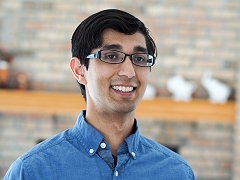
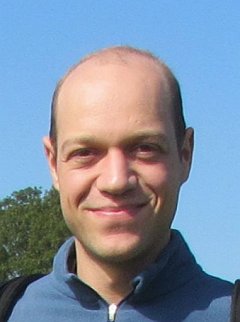
Tej Chajed is an Assistant Professor in the Department of Computer Sciences at the University of Wisconsin-Madison, focusing on formal verification of systems software. His research bridges theoretical foundations and practical implementations to ensure software correctness in concurrent and crash-safe systems. Research interests include formal verification, concurrency, crash safety, and programming languages, particularly using Coq, Perennial, and Goose frameworks. He has contributed to systems like DaisyNFS, a verified file system with sequential reasoning, and Verus, a foundation for systems verification. His work appears in top venues like SOSP, OSDI, and PLDI. 2025: Dafny PC Member 2024: PLDI Committee Member, CoqPL Co-chair 2023: CoqPL Co-chair, POPL Program Committee He actively mentors students and develops tools for systems verification education, including extensive Coq-based course materials.
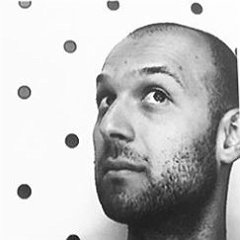
Aws Albarghouthi is affiliated with the University of Wisconsin-Madison, USA. He is an active researcher with significant contributions to program synthesis, formal verification, and machine learning. Key roles: Author, Session Chair, Committee Member in conferences like PLDI, POPL, VMCAI, SPLASH, and ICFP. Research spans quantum computing, differential privacy, and static analysis. Research Trends include: Quantum Circuit Compilation and Optimization Probabilistic Verification of Fairness and Privacy Synthesis of Datalog and MapReduce Programs Neural-Augmented Static Analysis Bias Detection in Data Security Robustness in Machine Learning
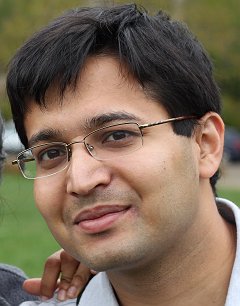
Deepak Garg is a researcher at the Max Planck Institute for Software Systems (MPI-SWS) in Germany. His work primarily focuses on secure compilation , type theory , and formal verification of software systems. Conference Roles: He has served as an author and committee member in premier programming language conferences such as POPL , PLDI , ICFP , and ESOP since 2015. Research Interests include: Secure compilation techniques for hyperproperty preservation. Modal and refined type theories for cost analysis and concurrency. Formal verification of C code and probabilistic programs. Compiler correctness and decentralized multi-language verification. Contributions span foundational research in programming languages, with a focus on security, complexity, and concurrency. His work has been published in tracks like PriSC , OOPSLA , and ESOP , addressing topics such as data-flow back-translation and robust property preservation.
Pr. Jean-François Lalande is a Professor at CentraleSupélec, affiliated with Inria's PIRAT and CIDRE teams. His research focuses on the security of IT infrastructures, Android applications, and C embedded software, including access control policies, intrusion detection tools, and software code analysis. He has led projects like PEPR DefMal (2022–2028) and ANR LYRICS (2011–2015) for privacy-preserving cryptographic protocols in NFC systems. Roles: Conference Chair (EICC 2025, EICC 2020), Workshop Organizer (IWSMR, 3SL, COLSEC, SHPS). Editorial: Guest Editor for journals like Information Technology and Future Generation Computer Systems . His work spans malware analysis, privacy in mobile systems, and security validation. He has served on technical program committees for international conferences (IEEE, ACM) and national events like SSTIC. His students include PhD graduates such as Romain Brisse and Tomas Miranda Concepcion.
Binoy Ravindran is a Professor at Virginia Tech’s College of Engineering, Department of Electrical and Computer Engineering, leading the Systems Software Research Group (SSRG). His research focuses on computer systems, emphasizing security, performance, concurrency, distributed systems, and real-time computing, with recent work in software verification and heterogeneous-ISA platforms. Key projects: Low-level Reasoning Machine (LLRM), Popcorn Linux, LibrettOS, Hyflow, HermiTux, SlimGuard, HydraVM, KairosVM. He has co-authored 15+ papers from 2025 to 2022, spanning venues like ASPLOS, POPL, PLDI, VEE, PPoPP, and MIDDLEWARE, with awards including ACM Distinguished Scientist and eight Best Paper Awards. Service roles: Editorial Boards (IEEE Transactions on Cloud Computing, ACM TECS), Program Co-Chair (ACM Systor 2025), Committee memberships across ASPLOS, PLDI, and more.
Yasmina Abdeddaïm is an Associate Professor at Université Gustave Eiffel and affiliated with ESIEE Paris. She works within the Laboratoire d'Informatique Gaspard-Monge (Softwares, Networks and Real-time team) and serves as Head of the Master in Artificial Intelligence and Cybersecurity (AIC) program. Her research focuses on real-time systems, critical systems, and scheduling algorithms. University: Université Gustave Eiffel Role: Head of Master AIC program Laboratory: Laboratoire d'Informatique Gaspard-Monge Team: Softwares, Networks and Real-time Her research spans real-time systems , mixed-criticality scheduling , energy-harvesting systems , and probabilistic schedulability . Recent publications analyze compilation optimization impacts on timing variability and propose new models for real-time deep neural networks over GPUs. She employs formal methods like timed automata for scheduling verification. Her teaching includes courses on Real-time Systems , Model Checking , Critical Application Development , and Artificial Intelligence . She is based at Cité Descartes, Champs-sur-Marne, France, with office contact details provided.
Stephen Chong is a Gordon McKay Professor in the Harvard John A. Paulson School of Engineering and Applied Sciences , where he co-directs the Undergraduate Studies in Computer Science program. His research intersects programming languages and information security , focusing on language-based security frameworks. Education : PhD in Computer Science from Cornell University (2008), B.Sc.(Hons) and B.A. from Victoria University of Wellington (New Zealand). Research : Develops tools like Formulog (Datalog + SMT for static analysis) and Accrue (Java interprocedural analysis), emphasizing security guarantees proportional to programmer effort. Grants : Funded by NSF , DARPA , AFOSR , and Google Faculty Research Award . Recent publications focus on neurosymbolic approaches (e.g., Guess & Sketch ), Datalog synthesis (e.g., Making Formulog Fast ), and quantitative robustness in cyber-physical systems. His group has pioneered formal methods for secure assembly transpilation and sensor attack modeling. Awards : NSF CAREER Award AFOSR Young Investigator Award Sloan Research Fellowship Advising : Supervised numerous PhD and senior thesis students, including Aaron Bembenek , Anitha Gollamudi , and Lucas Waye . Mentored projects like AbcDatalog (multi-threaded Datalog engine) and Shill (secure shell scripting). Labs/Teams : Leads the Programming Languages at Harvard group, collaborating with institutions globally. Organized workshops (e.g., NSF Workshop on Formal Methods for Security ) and chaired committees at conferences like CSF , POPL , and PLDI .
Sylvain Conchon is a Professor at Université Paris-Saclay, affiliated with the Laboratoire Méthodes Formelles (LMF, UMR 9021) and the Toccata research team, a joint project with INRIA Saclay – Île-de-France. His work lies at the intersection of formal methods, automated reasoning, and software verification. Research Interests: His primary research areas include SMT solving, automated deduction, program verification, model checking for parameterized systems, and information flow analysis. He develops theoretical foundations and practical tools to ensure software correctness, particularly in safety-critical and concurrent systems. Publications and Tools: His recent work centers on projects like BPI IDemo ARGOS (2024) and PEPR Secureval (2022), focusing on industrial software verification and cybersecurity. He is the main developer of Alt-Ergo , an SMT-based theorem prover, and Cubicle , a model checker for parameterized systems. His publications span formal methods, logic in computer science, and static analysis, with a strong emphasis on tool building and application. Scientific Awards: Advising and Grants: He has advised several PhD students including Guillaume Girol, Alain Mebsout, and Mohamed Iguernelala. He has led and participated in numerous research projects funded by ANR, FUI, PEPR, and industrial partners, demonstrating sustained grant success in formal methods and verification. Labs and Teams: He is a core member of the Toccata team at INRIA Saclay and the LMF laboratory, where he collaborates on advancing the state-of-the-art in deductive program verification and automated reasoning.
Ichiro Hasuo is a Professor at the National Institute of Informatics (NII) in Tokyo, Japan, where he serves as Director of the Research Center for Mathematical Trust in Software and Systems. He holds a joint appointment at The Graduate University for Advanced Studies (SOKENDAI). Since 2016, he has been the Research Director of the JST ERATO Metamathematics for Systems Design Project, and founded Imiron Co., Ltd. in 2024. Education: PhD in Computer Science (cum laude) from Radboud University Nijmegen (2008) MSc in Mathematical and Computing Sciences from Tokyo Institute of Technology (2004) BSc in Mathematics from University of Tokyo (2002) His research focuses on foundational aspects of software science, particularly formal verification techniques using mathematical structures from category theory and coalgebra. He develops methods for ensuring reliability in cyber-physical systems and systems incorporating machine learning components. Current work emphasizes logical frameworks for autonomous vehicle safety and mathematical trust in complex systems. Hasuo's publications demonstrate consistent focus on theoretical foundations with practical applications. His recent work spans coalgebraic verification methods, temporal logic for hybrid systems, quantum programming semantics, and applications to autonomous driving systems. Key themes include compositional reasoning, probabilistic modeling, and the integration of discrete and continuous system verification. Awards and Honors: Best Paper Award at ICTAC 2024 Minister of Education, Culture, Sports, Science and Technology Commendation (2024) Distinguished Paper Award at CAV 2023 Outstanding Reviewer Award at EMSOFT 2022 Best Paper Award at ICECCS 2018 Best Paper Award at CONCUR 2014 Hiroshi Fujiwara Encouragement Prize (2012) PhD cum laude (2008) He leads multiple major research grants including: JST ASPIRE (2024-2029) for international collaboration on software trust JST START (2022-2025) for autonomous driving verification JST ERATO Metamathematics for Systems Design (2016-2025) Several JSPS KAKENHI grants As head of the MMM laboratory (Hasuo-Lab) at NII, he supervises PhD students and postdoctoral researchers in formal methods and mathematical systems design.
Caroline Lemieux is an Assistant Professor at the University of British Columbia, specializing in automated software testing and reliability. Her research develops methods for testing, debugging, and improving software correctness through techniques like fuzz testing and program synthesis. She holds a Ph.D. from UC Berkeley advised by Koushik Sen and a B.Sc. in Computer Science and Mathematics from UBC. Research Interests: Dr. Lemieux's work focuses on: Fuzz testing for vulnerability detection Program synthesis using AI/ML approaches Property-based testing frameworks Automated debugging and specification mining Applications of reinforcement learning in test generation Publication Trends: Her recent papers explore large language models for test generation, fuzzing strategies in CI/CD environments, and neural-backed program synthesis. Work consistently bridges theoretical computer science with practical software engineering challenges. Awards: ACM SIGSOFT Distinguished Paper Award Google PhD Fellowship Best Paper Award (Industry Track) Berkeley Fellowship for Graduate Study
Magnus Madsen is an Associate Professor at Aarhus University, Department of Computer Science. He leads the development of the Flix programming language, a declarative tool integrating logic, functional, and imperative features with Java interoperability. His work spans type and effect systems, program analysis, and JavaScript bug-finding tools, particularly for asynchronous applications. Academic Affiliation: Aarhus University (Denmark) Leadership: Flix Programming Language Magnus's research focuses on programming language design, type systems, and static/dynamic analysis. This includes Datalog constraints, polymorphic effects, and nullability frameworks. His contributions to JavaScript analysis address asynchrony and concurrency challenges. Key trends in his work include declarative program analysis, effect system design, and Datalog-based frameworks like IFDS/IDE. Recent papers explore rank-polymorphic function inference, purity reflection, and stratification in logic programming. Scientific awards include: Sapere Aude grant (2023) Dahl-Nygaard Junior Prize (2022) STEM Grant (2022) Amazon Research Award (2021) DFF Project One (2020) ECOOP 2023 Distinguished Paper ICSE 2016 Distinguished Paper Current PhD students advised: Jonathan Lindegaard Starup, Matthew Lutze, Andreas Stenbæk Larsen (co-advised with Aslan Askarov), Caroline Palma Berger (co-advised with Clemens Nylandsted Klokmose).
Quentin Stiévenart is a researcher at Université du Québec à Montréal, focusing on abstract interpretation, concurrency, and static analysis. His work spans programming language design, software verification, and tool development for WebAssembly and functional languages like Racket and Scheme. Active in organizing and reviewing for conferences including SPLASH, ICFP, ECOOP, and SAS Developed tools such as Wassail for WebAssembly static analysis and RacketLogger for educational purposes Contributions include theoretical work on effect-driven flow analysis and practical advancements in concolic execution abstraction His research addresses challenges in concurrency verification, cyclic reinforcement in incremental analysis, and security-focused taint tracking across multiple language paradigms.
Adrien Pommellet is an Associate Professor at EPITA , affiliated with the Laboratoire de Recherche en Informatique (LRE) automata team. His research focuses on formal methods, automata theory, and program synthesis. Education: PhD in Computer Science from Université Paris-Diderot (2018), Parisian Master of Research in Computer Science (2012) His research interests include active and passive learning of automata , model-checking algorithms for Büchi automata, and program synthesis . He actively contributes to the development of the Spot formal verification tool. Recent publications emphasize synthesis algorithms , automata reduction techniques , and LTL verification . He has also explored type systems and formal verification of concurrent programs. Teaching roles include courses in computer science (AAA, COMP, CPXA) and formal logic (FOLO, LOFO). Formerly taught ALGO, LOGI, and PING. He worked as a research engineer at CS Communications & Systèmes before joining EPITA's LRDE (now LRE) verification team in 2019.
Laure Gonnord is a Full Professor in Computer Science at Grenoble INP , affiliated with the Esisar Engineer School in Valence, France, since September 2021. She is a member of the CTSYS research team at the LCIS laboratory and an external member of the CASH team at the University of Lyon / CNRS / LIP / Inria. Her research focuses on compilation , static analysis , and applications to safety , security in high-performance and embedded systems . Fields of Interest : Compiler Design Static Analysis for Safety & Security Abstract Interpretation Embedded Systems High-Performance Programming Hardware Security Engineering Research Trends (from recent publications): Her work explores modular verification through monadic abstract interpreters, complexity bounds in term rewriting , and educational tools for theorem proving . Notable contributions include compiler hardening schemes for hardware security and memory layout optimizations for algebraic data types. Academic Leadership : Scientific Director of the Summer School EJCP (École Jeune Compilation et Programmation) Board Member of the French national research group GDR GPL Teaching Responsibilities at Grenoble INP include courses in architecture , compilation , programming languages , algorithms , and databases . She has also taught at University of Lyon, ENS Lyon, Polytech'Lille, and INSA.
Arthur Charguéraud is a senior researcher (Directeur de Recherche) at Inria, based in Strasbourg within the Camus team, affiliated with the iCube laboratory at Université de Strasbourg. His research spans program verification, program optimization, and mechanized semantics of programming languages, with a strong focus on separation logic and interactive theorem proving using Coq. Affiliation: Inria, Camus team, iCube Laboratory, Université de Strasbourg Position: Senior Researcher (Directeur de Recherche) Research Focus: Formal verification, separation logic, source-to-source transformations, high-performance computing His research interests center on developing formal methods to ensure correctness and efficiency in software systems. He works extensively on separation logic to verify both time and space complexity of programs, especially in the presence of garbage collection. His work bridges theoretical foundations with practical tools, such as the CFML framework and the OptiTrust optimization framework, which enables trustworthy source-to-source transformations with formal guarantees. His publications reveal a consistent focus on interactive verification, formal semantics, and performance optimization. Key themes include granularity control in parallelism, mechanized semantics (e.g., for JavaScript), and verified compilation. He has made significant contributions to separation logic, including extensions for time and space credits, big-O reasoning, and higher-order representation predicates. Arthur Charguéraud has received notable recognition for his work, including: Distinguished Paper Award at CPP 2022 SIGPLAN Research Highlight at PPoPP 2019 He has advised several PhD students and postdoctoral researchers, including Guillaume Bertholon, Alexandre Moine, and Armaël Guéneau. He leads the ANR-funded OptiTrust project (2022–2027), which aims to build a framework for verified source-to-source optimizations. He has also been involved in other major projects such as ANR VOCAL, ANR AJACS, and ERC DeepSea. His work is supported by both national (ANR, Inria) and institutional (CEA, ENS) grants. He is actively involved in the programming languages research community, serving on the program committees of top conferences including POPL, ICFP, PLDI, CPP, and CoqPL, and has chaired several workshops. He is also engaged in education and outreach, co-authoring the book Separation Logic Foundations in the Software Foundations series and designing challenges for the Concours Castor Informatique to promote computer science among young students.