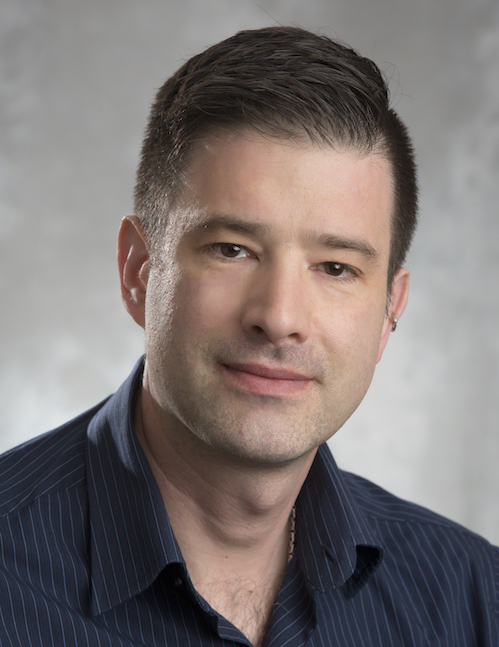
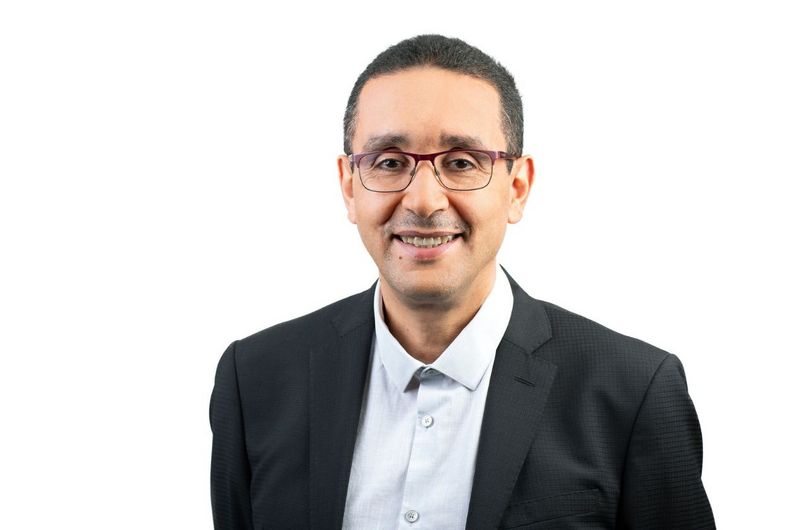
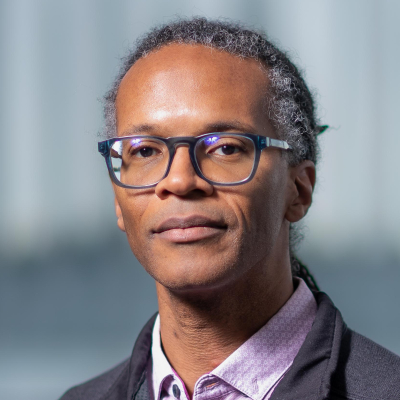
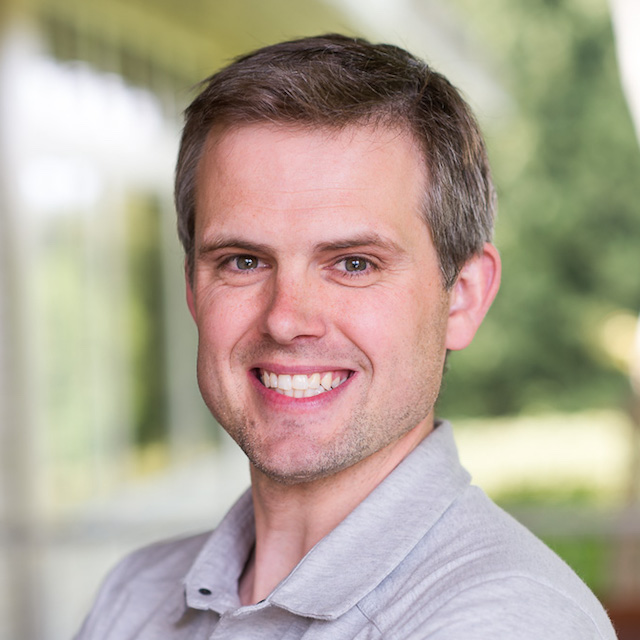
Arie Gurfinkel is a Professor at the University of Waterloo, holding a joint appointment in the Department of Electrical and Computer Engineering and the Cheriton School of Computer Science. His research focuses on automated program analysis, software model checking, automated reasoning, and abstract interpretation. He develops tools like SeaHorn, Avy, and others to enhance the verification and testing of complex computer systems. His work emphasizes formal methods, machine learning integration, and hardware/software verification. Recent publications highlight advancements in interpolation-based model checking, constrained Horn clauses, and algorithm selection for hardware verification. Gurfinkel's contributions include open-source tools and frameworks widely used in academic and industrial verification efforts. He actively seeks motivated graduate students interested in logic, automated reasoning, and formal methods. His research has been presented in top-tier conferences and journals, reflecting his expertise in formal verification and software engineering.
Michael Godfrey is a Professor at the University of Waterloo's David R. Cheriton School of Computer Science, affiliated with the Department of Electrical and Computer Engineering. His work focuses on software engineering, empirical studies of software systems, code review practices, and open-source software ecosystems. He holds a Ph.D., M.Sc., and B.Sc. from the University of Toronto (1997, 1988, 1986). Research interests include software evolution, mining software repositories, provenance tracking, code duplication analysis, and program comprehension. He actively explores how developers interact with code reviews, documentation systems, and modern CI/CD pipelines. Recent work investigates app store software ecosystems, Bash scripting vulnerabilities, and deep learning API testing. Publications span empirical studies of developer communities (e.g., Stack Overflow analysis), architectural teaching methods, and automated testing techniques like documentation-guided fuzzing. His work bridges theory and practice, addressing challenges in large-scale systems maintenance and developer productivity. Leverages tools like Elasticsearch for repository mining and explores anomaly detection in software development. Engaged in curriculum development for software architecture education and has contributed to conferences like MSR and ICSE.
Academic Profile Dr. Meiyappan (Mei) Nagappan is an Associate Professor at the University of Waterloo's Cheriton School of Computer Science. He holds a Ph.D. (2011) and M.Sc. (2008) from North Carolina State University, and a B.Sc. from Anna University, India (2006). Research Focus His research spans empirical software engineering, mining software repositories, and mobile app store analysis. Current investigations focus on software security, static analysis techniques, and diversity in software engineering. Recent work critically examines AI programming assistants like GitHub Copilot, evaluating their performance, security implications, and impact on developer workflows. Key Research Areas Diversity analysis in open-source contributions and academic publishing Vulnerability detection using machine learning Bug localization and automated debugging Cross-platform app analysis Publications Research demonstrates strong focus on empirical validation of developer tools, with recent emphasis on AI-assisted programming. Work appears in top software engineering venues covering security, testing, and developer productivity.
Chen Sun is an Adjunct Assistant Professor at the Department of Data and Systems Engineering, The University of Hong Kong. His research focuses on compiler testing, program analysis, static binary taint analysis, and software engineering methodologies. Notable areas include leveraging large language models (LLMs) for compiler testing baselines, probabilistic delta debugging, and enhancing program reduction techniques across multiple languages. Recent work addresses ransomware defense mechanisms, fuzzing countermeasures, and database management system (DBMS) bug discovery through configuration transformations. Research interests span compiler optimization, fault localization, cybersecurity, and algorithmic efficiency. His publications from 2023-2025 highlight trends in combining AI with traditional software engineering challenges, such as improving type inference for Java code and developing syntax-guided program reduction frameworks. Articles frequently address practical security concerns like protecting embedded devices from protocol fuzzing and mitigating memory leaks through sanitizer-based localization. No scientific awards are explicitly mentioned. Advising and grants sections remain underdeveloped in available data. Current affiliations emphasize academic-industrial collaboration through adjunct roles focused on cutting-edge software reliability and security research.
Ahad Armin is a Lecturer in the School of Mechatronic Systems Engineering at Simon Fraser University (SFU). He holds a PhD in Mechanical Engineering from the University of Saskatchewan (2014), an M.Sc. from Amirkabir University of Technology, Iran (2009), and a B.Sc. from Bahonar University of Kerman, Iran (2006). His research focuses on rapid prototyping, finite element analysis (FEA), and sensors/actuators. Teaching interests include Strength of Materials, Statics/Dynamics, Machine Design, Robotics, and advanced manufacturing techniques like CNC and fabrication. He currently teaches MSE 220 (Engineering Materials) and MSE 310 (Sensors and Actuators) in Fall 2025. No scientific awards or grants are explicitly listed. He is affiliated with SFU’s Faculty of Applied Sciences and contributes to the school’s research labs and technical training programs.
Houari Sahraoui is a Full Professor and Vice Dean of Planning and Infrastructure at the Faculty of Arts and Sciences, University of Montreal, where he also previously served as Department Director from 2013 to 2017. He leads the GEODES research group (Groupe de recherche sur les systèmes ouverts et distribués et l'expérimentation dans les logiciels) and has been actively supervising graduate students and conducting research in software engineering since at least 2000. Dr. Sahraoui's research focuses on automated software engineering , with particular emphasis on model transformations learning from examples using evolutionary approaches. His work spans reverse engineering (comprehension) and reengineering (refactoring, migration to component-based software), utilizing static and dynamic analysis techniques. He also investigates visualization of large sets of multidimensional data for software comprehension and maintenance. His research integrates artificial intelligence approaches to enhance various phases of the software development lifecycle. His recent publications demonstrate a strong trend toward integrating large language models and artificial intelligence with traditional software engineering practices. The research spans code review automation, model-driven engineering, microservices identification, and digital twins for applications like vertical farming. Many publications focus on improving automation through techniques like parameter-efficient fine-tuning, knowledge distillation, and social diversity metrics. Dr. Sahraoui was named a Fellow of Automated Software Engineering in 2023, an honor recognizing his significant and sustained contributions to the ASE community, both scientifically and professionally. This prestigious title is awarded by the IEEE/ACM International Conference Steering Committee. Dr. Sahraoui has supervised over 50 Master's and PhD students throughout his career, with recent supervision focusing on AI-assisted software engineering, code review automation, and model-driven approaches. His research has been supported by multiple grants from the Natural Sciences and Engineering Research Council of Canada (NSERC), MITACS, and industry partners, with projects spanning from 2000 to projected completion in 2031. He leads the GEODES research group (Groupe de recherche sur les systèmes ouverts et distribués et l'expérimentation dans les logiciels) which focuses on open and distributed systems and software experimentation. His current projects include 'Improving automation and assistance for software engineering tasks with generative AI' (2025-2031) and work on digital twins for vertical farming.
Ronald Garcia is an Associate Professor in the Department of Computer Science at the University of British Columbia, affiliated with the Faculty of Science and the Software Practices Lab. His research focuses on programming language theory, emphasizing gradual typing, type systems, and end-user programming. He teaches courses such as Programming Language Principles (CPSC 509) and Compiler Construction (CPSC 411). Education details are not explicitly stated in the provided texts, but his extensive academic contributions span over two decades. Research interests include formal semantics of programming languages, typestate systems, dependent types, and improving software practices for end-users. He has advised numerous Ph.D. and Master's students, contributing to over 30 academic publications. Recent work explores hybrid programming environments for end-users, runtime type slicing for debugging, and foundational frameworks for gradual dependent types. Garcia actively participates in academic conferences as a PC member and keynote speaker, notably in PLDI, POPL, and ICFP. His lab and collaborations focus on advancing theoretical foundations while addressing practical challenges in software development and education.
Reid Holmes is a Professor in the Department of Computer Science at the University of British Columbia , part of the Faculty of Science . His research focuses on improving software engineering practices, particularly in end-user programming, developer tool design, and empirical software engineering. He leads the Software Practices Lab and has contributed extensively to understanding developer workflows, testing methodologies, and educational tools for programming. Education: PhD in Computer Science, University of Calgary (2008) MSc in Computer Science, University of British Columbia (2004) BSc in Computer Science, University of British Columbia (2002) Research Interests: End-user programming environments, software testing, developer productivity tools, human-centered AI, educational technology, and empirical studies on software development practices. His work emphasizes bridging the gap between theoretical advancements and practical usability for both professional developers and novice programmers. Recent Article Trends: Focus on hybrid programming environments (e.g., block-based and graph-based systems), human-AI collaboration in testing/assertion generation, and age-inclusive IDE design. His research often involves empirical evaluations of tool effectiveness and developer workflows. Awards: FSE Most Influential Paper Award ICSE Most Influential Paper Award UBC Computer Science Teaching Award CS-Can/Info-Can Outstanding Research Prize Advising & Grants: Supervised over 30 graduate students and postdocs. Noted for collaborative projects with industry partners (e.g., Mozilla, Microsoft). Active in curriculum development for software engineering education. Labs/Teams: Leader of the Software Practices Lab , collaborating with industry and academic partners on tools like CodeShovel , AutoAssert , and Devy (conversational developer assistant).
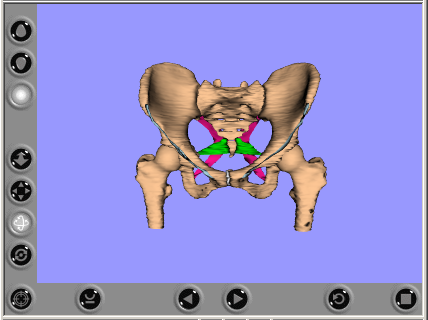
Robert Funnell, PhD is an Investigator at the Research Institute of the McGill University Health Centre (RI-MUHC) and a Professor in the Department of Otolaryngology - Head and Neck Surgery at McGill University's Faculty of Medicine. His research is conducted within the Child Health and Human Development Program at RI-MUHC, where he applies engineering principles to understand auditory mechanics and improve diagnostic tools for hearing assessment. Dr. Funnell's research focuses on the mechanics and acoustics of hearing, with particular emphasis on developing novel measurement techniques in experimental animals and infants, and creating computational models of the ear. His work combines experimental measurements with sophisticated modeling approaches to better understand middle ear function. He has developed specialized software for creating 3D models of complex anatomical structures, including his notable Thrup'ny 3D viewer application. His research has significant clinical applications, particularly in improving newborn hearing screening protocols and developing better diagnostic tests for middle ear conditions. Analysis of Dr. Funnell's recent publications reveals a consistent trajectory in middle ear biomechanics research spanning several decades. His work demonstrates increasing sophistication in computational modeling techniques, with recent publications integrating optical coherence tomography, X-ray microCT data, and finite element analysis to create increasingly accurate representations of middle ear function. A significant portion of his recent work focuses on newborn hearing assessment, reflecting the clinical importance of early hearing detection. His research bridges engineering principles with clinical audiology, creating practical applications for hearing screening and diagnosis. Dr. Funnell has developed several notable software tools including Thrup'ny, a free open-source 3D viewer for VRML models designed for both anatomy teaching and finite-element pre- and post-processing. His website hosts various educational resources including interactive 3D models of the ear, finite-element simulation tools, and teaching materials on middle ear mechanics. These resources have been widely used for both research and educational purposes in the field of otolaryngology and biomedical engineering.
Dr. Laurie Sykes Tottenham serves as Professor of Psychology and Assistant Dean at the University of Regina, Canada. With over two decades of academic experience since her 2003 debut publication, she maintains active research leadership while fulfilling significant administrative responsibilities within the Faculty of Arts. Her educational foundation includes: BA (Honours) in Psychology, University of Regina PhD in Psychology, University of Saskatchewan Dr. Sykes Tottenham's research program uniquely bridges neuropsychology and women's health. Early work established her expertise in laterality and pseudoneglect, examining spatial cognition through line bisection tasks and collision biases. Since 2016, her focus has intensified on reproductive endocrinology, particularly investigating how menopausal transitions and menstrual cycles impact cognition, mood, and health behaviors. This evolution reflects both scientific maturation and growing recognition of sex-specific health research imperatives. Her methodology integrates laboratory experiments with longitudinal hormone tracking, often collaborating with Dr. Gordon's team. Analysis of her 15 most recent publications reveals a dominant trajectory toward women's health research, with 80% of 2019-2023 work centered on menopause transition neurocognition. This represents a strategic pivot from her foundational spatial cognition work while maintaining core neuropsychological frameworks. Her research demonstrates increasing clinical relevance, particularly in understanding hormonal contributions to depressive symptoms and cognitive changes during aging. While no specific awards are documented in available sources, her sustained publication record in high-impact journals (Maturitas, Biology of Sex Differences, Psychology Medicine) indicates peer recognition. As Assistant Dean, she oversees academic operations while maintaining an active lab. Current supervision likely includes graduate students working on hormone-cognition projects, though specific trainee names aren't published. Her research group appears embedded within the Department of Psychology without a separately branded laboratory. Dr. Sykes Tottenham's work provides critical evidence for clinical management of menopausal cognitive symptoms and informs road safety interventions through pseudoneglect research. Future directions likely involve expanding mechanistic studies of hormone-brain interactions and developing targeted interventions for women's cognitive health during transitional life stages.
Ettore Merlo is a Full Professor in the Department of Computer Engineering and Software Engineering at Polytechnique Montréal, where he leads research in cybersecurity, artificial intelligence, and software systems. He holds an M.Sc. from the University of Turin and a Ph.D. from McGill University. His affiliations include membership in the Institute for Data Valorization (IVADO), focusing on data science and AI innovation. His research integrates software engineering with AI, emphasizing: Software artifact analysis (static/dynamic/symbolic) AI-driven security solutions for clone detection, malware analysis, and access control Fairness and robustness in machine learning systems Evolutionary analysis of software vulnerabilities Recent publications (2022-2025) demonstrate a strong focus on ethical AI, including bias mitigation in neural networks, automated anomaly detection, and certification of safety-critical ML systems. His work frequently applies graph neural networks, unsupervised learning, and formal verification methods to industrial and cybersecurity challenges. Professor Merlo has supervised 25 graduate students (10 PhD, 15 Master's), with projects ranging from avionics software to phishing kit analysis. While no scientific awards are listed, his extensive publication record includes 136 works spanning journals, conferences, and technical reports. Collaborations include partnerships with industrial telecommunication firms and international academia. No dedicated lab is specified, but his research aligns with Polytechnique Montréal's 'New Frontiers in Information and Communications Technologies' center.
Professor Georgina Maria Tinungki is a distinguished academic serving as a Full Professor at Hasanuddin University's Department of Statistics within the Faculty of Mathematics and Natural Sciences. She simultaneously holds an Associate Professor position at Makassar Merchant Marine Polytechnic in the Sea and Port Transportation Management department and serves as Head of Department at Hasanuddin University since September 2019. With a career spanning over three decades since her initial lecturer position at Christian University of Indonesia Paulus (1989-1991), Professor Tinungki has established herself as a leading figure in statistics and mathematics education in Indonesia. PhD in Educational Mathematics and Statistics from Indonesia University of Education (2016) PhD in Coastal and Marine Resources from IPB University (2005) MSc in Statistics from IPB University (2000) Dra in Mathematics (equivalent to Master's degree) Professor Tinungki's research spans multiple interconnected domains with particular emphasis on mathematics and statistics education, applied statistics, mathematical modeling, and coastal and marine resource management. Her recent work demonstrates a strong focus on financial applications, particularly examining dividend policy during the COVID-19 pandemic using sophisticated panel data approaches. She has made significant contributions to educational methodology through her research on Team-Assisted Individualization (TAI) cooperative learning models that enhance mathematical problem-solving, communication, and self-proficiency among students. Her methodological expertise includes advanced statistical techniques such as copula methods for risk assessment, geographically weighted regression, and robust statistical approaches for handling outliers and non-normal data. Postgraduate scholarship from Directorate General of Higher Education for 2nd PhD degree study (2011) Postgraduate scholarship from Directorate General of Higher Education for PhD degree study (2001) Postgraduate scholarship from Directorate General of Higher Education for Master degree study (1997) With 77 publications and 585 citations, Professor Tinungki maintains an active research program with recent publications spanning finance, education, and statistical methodology. Her work on dividend policy during the pandemic demonstrates rigorous application of both static and dynamic panel data models. In education research, she continues to refine cooperative learning approaches with particular attention to developing students' self-proficiency alongside technical skills. Her laboratory work focuses on applying statistical methods to real-world problems in finance, education, and resource management, often collaborating with colleagues across multiple institutions. Professor Tinungki leads Georgina Maria Tinungki's Lab, which focuses on interdisciplinary research bridging statistics, education, and practical applications. The lab environment emphasizes methodological rigor while addressing real-world challenges in financial modeling, educational assessment, and resource management. Current projects include analyzing market reactions to corporate policies during crises, developing innovative statistical teaching methods, and applying spatial statistics to socioeconomic issues in Indonesia.