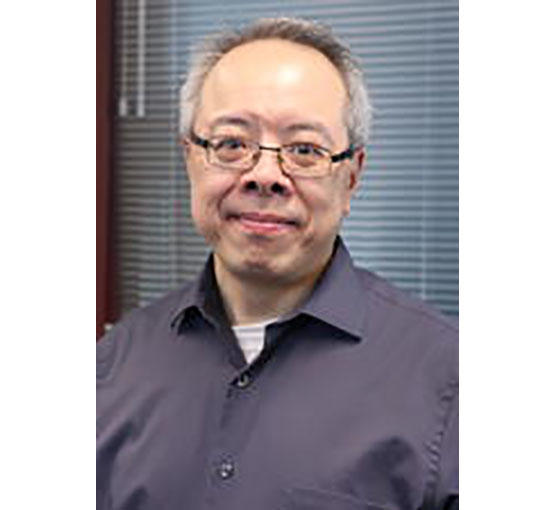
Philip Fong is an Associate Professor in the Department of Computer Science at the University of Calgary. He previously held a Tier-2 Canada Research Chair in Software Security (2009–2019) and served as faculty at the University of Regina (2003–2008). He holds a B.Math and M.Math from the University of Waterloo and a Ph.D. from Simon Fraser University. His research focuses on access control mechanisms, IoT security, privacy in social computing systems, and language-based security. He has contributed to frameworks addressing policy negotiation, inference attack mitigation, and privacy-preserving systems. Notable work includes developing the Papilio tool for Android permission visualization and formalizing purpose-based privacy policies. His scientific achievements include the Tier-2 Canada Research Chair. His research spans interdisciplinary areas such as geo-social computing, federated systems protection, and hybrid logic-based policy enforcement. He has also explored security in open-source medical records systems and design patterns for multi-stakeholder platforms. Collaborations involve secure collaboration models and policy analysis techniques. His work bridges theoretical foundations (e.g., policy satisfiability) with practical tools (e.g., visualization systems for access control).
Théo Le Calvar is an Assistant Professor in Software Engineering at IMT Atlantique in Nantes, France, specializing in Model-Driven Engineering and Constraint Solving. He holds a PhD in Computer Science from the University of Angers (2016–2019), with a focus on exploring model sets under the supervision of Frédéric Saubion, Fabien Chhel, and Frédéric Jouault. His academic career includes a Post-Doctorate at the University of Montreal and ERIS team (2020–2021), and roles as a Temporary Teaching and Research Associate at the University of Angers (2020). He has conducted research internships at the National Institute of Informatics in Tokyo (2016) and the LERIA lab (2015). His research interests include model transformations, constraint programming, incremental systems, and combinatorial optimization. He has published extensively in venues like the ACM/IEEE MODELS Conference and the International Conference on Model Transformations. His work integrates formal methods, such as process algebra and OCL-based analysis, with practical applications like anomaly detection and fruit basket management systems. Le Calvar advises engineering students on projects involving logic solvers, anomaly detection, and food waste reduction. He contributes to open-source tools like the Eclipse Modeling Framework and actively participates in workshops and seminars, including the Dagstuhl Seminar (2018) and the Transformation Tool Contest. His technical skills span Java, C++, Python, and tools like Docker and Ansible.
Émilien Azéma is a Professor at the University of Montpellier since 2023, affiliated with the Department of Mechanics in the Faculty of Sciences and the Mechanics and Civil Engineering Laboratory (LMGC). Since 2024, he also holds an Associate Professor position at Polytechnique Montréal in the Department of Civil, Geological and Mining Engineering. Primary Institution: University of Montpellier, France Secondary Appointment: Polytechnique Montréal, Canada Research Recognition: French University Institute (IUF) Research Chair (2020-2025) Dr. Azéma received his complete education at the University of Montpellier, earning degrees in Mathematics, Solid Mechanics, and completing his Doctorate and Habilitation (HDR) in Mechanics. His doctoral research focused on railway ballast behavior using Discrete Element Method (DEM) simulations, supported by a joint CNRS and SNCF grant. Licence/Maîtrise (Master 1) in Mathematics DEA (Master 2) in Solid Mechanics Doctorate in Mechanics Habilitation (HDR) in Mechanics His research program centers on the micromechanics of granular systems with realistic microstructure. Using innovative Discrete Element Method (DEM) approaches, he systematically investigates the nonlinear effects of particle shape characteristics (angularity, non-convexity, elongation) and size polydispersity on granular rheology across flow regimes from quasi-static to rapid. His work extends to evolving granular systems where particles can fragment or undergo large deformations, with applications to geomechanical materials, industrial powders, and extraterrestrial granular systems. An analysis of his recent publications (2023-2025) reveals a strong emphasis on particle shape effects, cohesive strength mechanisms, and polydisperse system behavior. His research bridges fundamental granular physics with practical applications in railway engineering, planetary science (particularly asteroid regolith modeling), and geomechanics, appearing in high-impact journals including Physical Review E, Granular Matter, and Icarus. Dr. Azéma's significant research contributions have been recognized through: A prestigious Research Chair from the French University Institute (IUF) as Junior Member (2020-2025) An extensive publication record with 81 publications across multiple high-impact journals He teaches core courses in solid mechanics, numerical computation, finite element method, discrete approaches, and rheology of granular media. His administrative responsibilities include: International affairs coordinator at the Faculty of Sciences (since 2018) Responsible for the first year curriculum of the Mechanical Engineering Master's program (since 2021) His primary research laboratory is the Mechanics and Civil Engineering Laboratory (LMGC) at the University of Montpellier, where he conducts his investigations into granular media and solid mechanics phenomena, with significant collaborations extending to Polytechnique Montréal and international institutions.
Michalis Famelis is an Assistant Professor at the Department of Computer Science and Operations Research , affiliated with the Faculty of Arts and Sciences at Université de Montréal . He leads research in the GEODES Software Engineering Research Group , focusing on formal yet practical methods for software development. His work integrates formal verification, model-driven engineering, and empirical methods to address challenges in software design and uncertainty management. Educated at the University of Toronto (PhD 2016, MSc 2010) and the National Technical University of Athens (DiplEng 2008), he completed a postdoctoral fellowship at the University of British Columbia . He teaches courses such as IFT1025 Programming 2 and IFT6755 Software Analysis . His research projects include a Wellcome Trust-funded platform for climate-sensitive disease modeling and CRSNG grants for formal software design support. He has supervised 6 master’s students, focusing on topics like design uncertainty, API usage verification, and software product lines. Notable collaborations involve Climate-Sensitive Infectious Disease Modelling and Formal Support for Software Design . His work emphasizes improving developer workflows through tool development and empirical studies.
Nafiseh Kahani is an Assistant Professor in the Department of Systems and Computer Engineering at Carleton University's Faculty of Engineering and Design. She leads the RavenSoft Research Lab and supervises undergraduate and MEng research projects in software engineering. Her service roles include Software Engineering Program Coordinator (2023–present), ECOR1055B Coordinator (2023–present), and Chair of the Women in Engineering (WIE) Affinity Group (2018–present). Research Interests: Model-Driven Development: Focus on automated synthesis and verification of software models. Machine Learning in Software Engineering: Application of ML techniques to testing, code analysis, and refactoring. Software Testing & Quality Assurance: Test case prioritization, continuous integration, and runtime monitoring. Software Security: Detection and mitigation of vulnerabilities through static and dynamic analysis. Code Smell Detection and Refactoring: Tools and methodologies for improving software maintainability. Her research integrates empirical methods with practical tool development, as evidenced by projects such as CodeSmell, CodeViz, CodeCleanse, IntelliReq, and automated instrumentation and monitoring systems. Scientific Awards: Queen’s School of Computing PhD Research Achievement Award (2019) IEEE PhD Research Excellence Award Advising and Grants: Dr. Kahani actively mentors undergraduate students through research assistantships, I-CUREUS internships, and NSERC USRA awards. She supervises Capstone (SYSC 4907) and MEng projects, encouraging student participation in cutting-edge software engineering research. Though specific grants are not listed, her involvement in NSERC USRA indicates active participation in federally funded undergraduate research programs. Labs and Teams: She leads the RavenSoft Research Lab , which focuses on innovative software engineering tools and methodologies. The lab supports a collaborative environment for students to engage in projects involving program analysis, visualization, test automation, and AI-driven software development.
Thomas A. DuBois is the Halls-Bascom Professor of Scandinavian Studies, Folklore, and Religious Studies in the Department of German, Nordic and Slavic at the University of Wisconsin-Madison. His academic work bridges multiple disciplines including Nordic studies, folklore studies, and religious studies, with a particular focus on Indigenous and traditional knowledge systems. He is deeply engaged in the Wisconsin Idea, connecting academic scholarship with public engagement and community collaboration. Professor DuBois's research focuses on the ways people think about and use tradition in their lives, with particular attention to Finnish, Sámi, and medieval Nordic cultures, as well as Indigenous Wisconsin communities and descendants of Nordic settlers in North America and the British Isles. His work spans diverse topics including the Finnish national epic Kalevala, Viking Age religion, medieval Scandinavian saints' lives, Icelandic sagas, lyric and narrative song, shamanism, literature, wood carving, Indigenous cultures, sacral landscapes, and Sámi media. He approaches folklore not as static heritage but as a dynamic process of meaning-making that connects people to their cultural pasts while shaping their contemporary identities. His recent publications reveal a growing interest in collaborative methodologies, Indigenous knowledge systems, and the intersection of traditional knowledge with contemporary educational practices. DuBois has increasingly focused on projects that bridge academic research with community engagement, particularly through digital tools like Siftr that facilitate participatory folklore collection. His work on Sámi snow terminology demonstrates how traditional ecological knowledge can transform contemporary understandings of environmental phenomena. Chancellor's Distinguished Teaching Award (2017) Professor DuBois emphasizes a "learning with" rather than "learning from" approach to teaching, particularly with graduate students and advanced undergraduates. He frequently collaborates with students on research projects that result in shared publications and presentations. His work with the Bradley Learning Community brings academic scholarship into residential living communities for first-year students. DuBois has secured numerous grants supporting his collaborative research projects, particularly those involving Indigenous communities and digital humanities applications in folklore studies. His research projects include the Wiigwaasi-Jiimaan Birchbark Canoe project, the Snow Challenge exploring Sámi snow terminology, The 4 Ps project on Finnish American cooking traditions, and the development of Siftr as a tool for the folklore classroom. These projects often involve collaborations with community members, students, and other scholars, reflecting his commitment to engaged scholarship that serves both academic and public audiences.
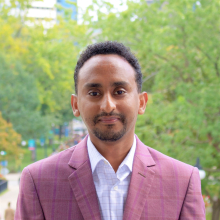
Matiyas A. Bezabeh serves as an Assistant Professor in the Department of Civil Engineering within McGill University's Faculty of Engineering. His office is located in Room 475B of the Macdonald Engineering Building at 817 Sherbrooke Street West, Montreal, QC, Canada H3A 0C3. He teaches core structural engineering courses including CIVE 205 (Statics), CIVE 507 (Wind Engineering), and CIVE 628 (Advanced Design of Wood Buildings) for upcoming academic terms. Ph.D., University of British Columbia (2021) M.A.Sc., University of British Columbia (2014) BSc., Addis Ababa University (2011) Professor Bezabeh specializes in performance-based design methodologies for timber and hybrid structures under extreme wind and seismic loads. His research focuses on developing frameworks for wind and seismic design of tall mass timber buildings, including probabilistic serviceability assessment, aeroelastic instability analysis, and near-collapse behavior studies. He investigates wind directionality effects, uncertainty modeling, supplemental damping systems, and experimental techniques for structural validation. His work directly contributes to industry standards including Canada's Technical Guide for the Design and Construction of Tall Wood Buildings and the Modeling Guide for Timber Structures published by FPInnovations. Analysis of his recent publications reveals a concentrated research trajectory toward performance-based wind engineering for tall timber structures. His work integrates wind tunnel testing with advanced computational modeling to address challenges in nonlinear dynamic response, particularly for non-synoptic wind events like tornadoes. The publications demonstrate increasing sophistication in probabilistic methods for structural reliability assessment, with a clear progression from fundamental parametric studies to comprehensive design frameworks applicable to real-world tall timber construction. Young Scientist Excellence Award, World Conference on Timber Engineering (WCTE), 2018 Mitacs Accelerated Ph.D. Fellowship, 2016-2019 Mitacs-JSPS Fellowship, 2018 University Graduate Fellowship, UBC, 2013-2016 Professor Bezabeh actively mentors 16 graduate and undergraduate students across diverse research projects in timber engineering. His research group, the McGill Timber Structures Group (McGill-TSG), maintains active collaborations with FPInnovations, Western University's WindEEE Dome, and international partners. He serves on the ASCE Performance-Based Wind Engineering Task Committee and participates in European COST Action CA20139 (HELEN) for taller timber buildings. His research program addresses critical gaps in tall timber construction standards, particularly for buildings exceeding 30 meters where prescriptive codes fall short. The McGill Timber Structures Group laboratory conducts advanced wind tunnel testing, structural reliability analysis, and development of performance-based design methodologies for timber and hybrid systems. Current projects include multi-hazard analysis of sequential seismic and thunderstorm loads, risk-based wind design frameworks, and development of novel timber-steel hybrid structural systems.
Alexander J. Summers is an Associate Professor and Associate Head of Graduate Affairs in the Department of Computer Science at the University of British Columbia (UBC), where he joined in 2020. Prior to UBC, he was a senior researcher (Oberassistent) at ETH Zurich. His research focuses on program correctness, including specification and verification logics, type systems, and automated tools for deductive verification. He leads the Prusti Project, developing verification tools for the Rust programming language, and collaborates on the Viper Project, an intermediate verification language framework. Summers is also actively involved in teaching, offering courses on advanced software engineering and program verifiers. His research interests span formal methods, programming languages, and automated reasoning, with a particular emphasis on Rust and ownership-based systems. He has contributed to the development of verification tools like Viper and Prusti, which aim to enhance software reliability through deductive techniques. Summers has been recognized with awards such as the Distinguished Reviewer Award (ACM SIGPLAN) and the Amazon Research Award. Summers has published extensively in top venues like POPL, PLDI, and OOPSLA, with recent work addressing challenges in Rust's ownership model, formal verification frameworks, and automated reasoning techniques. His lab focuses on advancing the state of the art in program verification while maintaining strong ties to practical tool development and empirical studies of programming practices. He actively mentors students at UBC, including PhD and M.Sc. candidates, and has supervised postdoctoral researchers. Summers is also engaged in academic service, serving on program committees for conferences like OOPSLA and IJCAR, and contributes to the broader formal methods community through tool development and educational initiatives.
Summary Alan J. Hu is a Professor in the Department of Computer Science at the University of British Columbia (UBC), affiliated with the Faculty of Science. His primary research interests include formal methods, formal verification, model checking, and software/hardware co-design. He leads research in areas such as post-silicon validation, cloud resource scheduling, and concurrency verification. Hu teaches courses like CPSC 513 (Formal Verification) and CPSC 320 (Algorithm Design). Education & Roles: Ph.D. in Computer Science (Stanford University), current roles include supervision of graduate students (e.g., Malte Schwerin, Stuart Hoad) and leadership in research groups like ICICS and CAIDA. Research Contributions: Key projects include BackSpace (post-silicon debug framework), MonoSAT (SMT solver), and contributions to formal verification of embedded systems. His work on cloud resource scheduling (e.g., Gridiron, Cospot) addresses network bandwidth guarantees in datacenters. Awards & Recognition: Recipient of the IEEE Outstanding Service Award, IBM Faculty Award, and UBC CS Teaching Award. His research is supported by industry (Intel, Microsoft) and grants (NSERC, SRC). Labs & Collaborations: Active in UBC's Institute for Computing, Information and Cognitive Systems (ICICS) and the CAIDA lab for AI-driven decision-making.
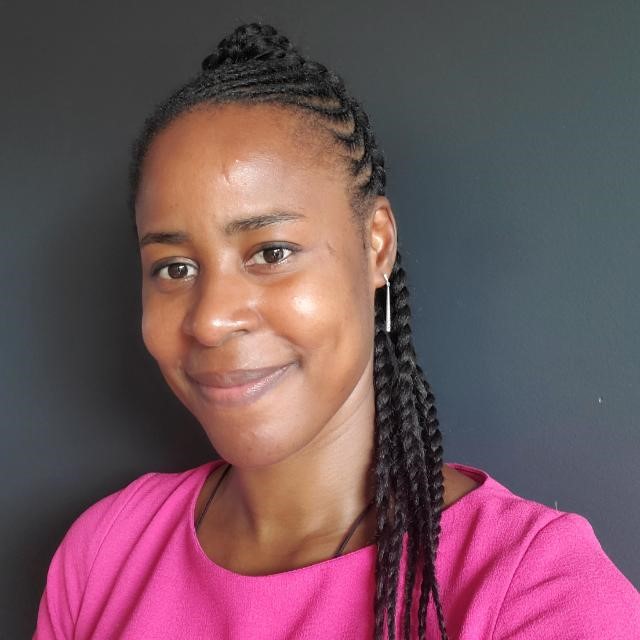
Dr. Alvine Boaye Belle is an Assistant Professor in the Department of Electrical Engineering & Computer Science at Lassonde School of Engineering, York University. She leads the DARE! research group and serves on multiple international committees, including ICSE and RE conferences. Her work bridges software engineering with equity, diversity, and inclusion (EDI) initiatives. PhD in Software Engineering (École de Technologie Supérieure, University of Quebec) 2-year Industrial Postdoctoral (University of Ottawa) Graduate Diploma in Public Administration & Governance (McGill University) Dr. Belle's research focuses on system assurance for autonomous systems, generative AI applications in software engineering, and EDI in computing . She applies machine learning to safety case automation and vulnerability detection, as shown in her publications with high-impact journals. Her recent work explores deep learning and SVM models for Android malware detection with 99% accuracy. She mentors a diverse group of students across Bachelor's, Master's, and PhD levels, emphasizing accessibility and social impact in technology. Keynote speaker at Black History Month events Moderator of EDI-focused panels at ICSE conferences Editorial board member for journals like IEEE Software and Information and Software Technology
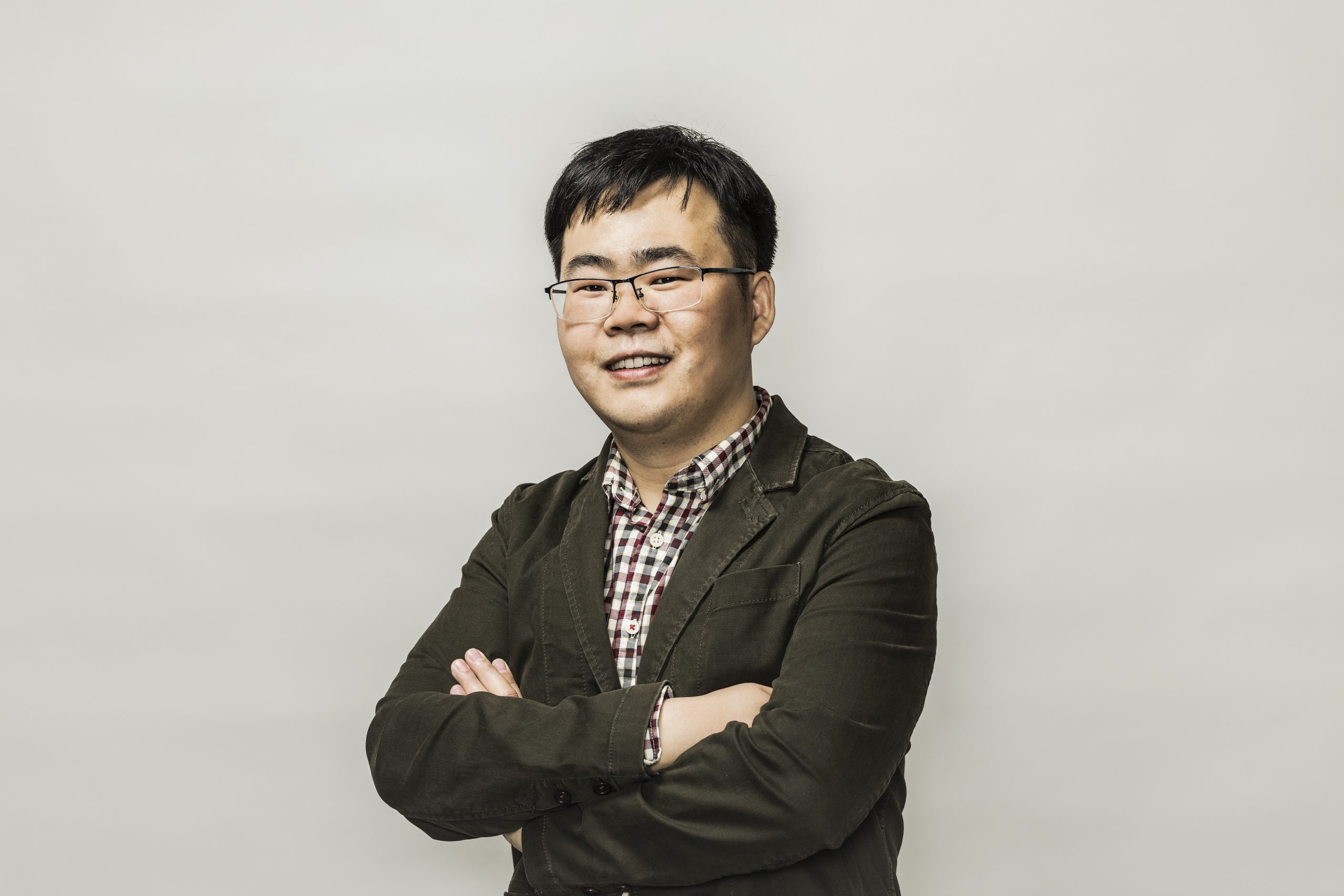
Song Wang is an Associate Professor in the Department of Electrical Engineering and Computer Science at York University's Lassonde School of Engineering. He joined York University as an Assistant Professor in July 2019 and was promoted to Associate Professor in May 2024. He serves as an Associate Editor of ACM Transactions on Software Engineering and Methodology (TOSEM) and has established himself as a prominent researcher at the intersection of Software Engineering and Artificial Intelligence. Dr. Wang earned his Ph.D. in Computer Engineering from the University of Waterloo in December 2018 under Prof. Lin Tan. He received his MS degree from the Chinese Academy of Sciences in June 2014 under the supervision of Prof. Ye Yang, Prof. Wen Zhang, and Prof. Qing Wang. His undergraduate education includes a BE in Software Engineering and a BHRM in Human Resource Management from Sichuan University in June 2011. Prior to academia, he gained industry experience through internships at Microsoft Research, Morgan Stanley Capital International, Yahoo, and Baidu, and co-founded a startup named QualDivine. Dr. Wang's research focuses on two main directions: (1) leveraging AI technologies to address software reliability challenges (AI for SE), and (2) developing software reliability assurance techniques for AI systems (SE for AI). His recent work has particularly focused on how Large Language Models can optimize and reshape software testing practices. His research has practical impact, with tools and techniques that have detected hundreds of true bugs in real-world software systems. His work spans multiple application areas including mobile testing, fuzz testing, and functional testing. His recent publications (2024-2025) demonstrate a strong focus on the intersection of AI and software engineering, with significant contributions in automated vulnerability detection, API recommendation, bias analysis in generated code, and mobile application testing. His research combines empirical studies with innovative technical approaches, often involving benchmarking and systematic literature reviews to establish foundations for future work. He has published over 60 papers in prestigious IEEE/ACM Software Engineering journals and flagship conferences, with over 2,600 citations. Dr. Wang has received four best paper awards: a Distinguished Paper Award at APSEC'23, an ACM Distinguished Paper Award at ICPC'22, an ACM Distinguished Paper Award at ICSE'20, and a Best Paper Award at PROMISE'19. He was recognized as one of the top-10 most impactful early-career researchers in Software Engineering by the Journal of Systems and Software in 2020 and received the TOSEM Distinguished Reviewer Award in 2023. Dr. Wang currently supervises multiple PhD and Master's students including Mohammad Abdollahi, Haoran Xue, Jiho Shin, Nima Shiri Harzevili, and Moshi Wei. He has successfully guided several students to complete their theses, including Reem Al Eithan (Master's thesis defense in April 2025), Moshi Wei (PhD thesis defense in April 2025), and Nima Shiri Harzevili (PhD thesis defense in February 2025). His research group has received funding from various sources to support their work on software engineering and AI. Dr. Wang leads an active research group focused on AI and software engineering at York University. His team includes PhD students, Master's students, and research assistants working on various projects related to software testing, reliability, and AI applications in software engineering. The group has developed tools that have detected hundreds of true bugs in real-world software systems, with some findings documented in Jira issues and GitHub repositories across numerous open-source projects.
Ralph Serin was a Professor in the Department of Psychology at Carleton University, affiliated with the Faculty of Arts and Social Sciences. He held a Ph.D. from Queen's University. His research focused on the intersection of psychology and criminal justice, particularly parole decision-making, correctional programming, and offender desistance. Serin directed the Criminal Justice Decision Making Laboratory and contributed over 160 publications, including seminal works on risk assessment tools like the DRAOR and Structured Decision-Making Framework. He mentored ~80 students and received a lifetime achievement award for contributions to evidence-based corrections. His work emphasized improving correctional practices through empirical research. Research initiatives included developing models for parole decision-making, assessing treatment readiness, and understanding factors influencing desistance. Serin's legacy includes impactful frameworks used globally to enhance offender rehabilitation and public safety. He was a member of professional organizations like the Canadian Psychological Association and Association for Treatment of Sexual Abusers. Key contributions included advancing the 'What Works' agenda in corrections, emphasizing staff training and program efficacy. His interdisciplinary approach bridged academic research with practical criminal justice applications, addressing both offender rehabilitation and risk management.
Dr. Banani Roy is an Assistant Professor in the Department of Computer Science at the University of Saskatchewan. Her research focuses on software maintenance, empirical software engineering, program comprehension, and scientific workflow management systems. She explores challenges in quantum computing applications for software engineering, AI-driven code tools, and reproducibility in computational experiments. Her work includes developing frameworks like VizSciFlow for scientific workflow visualization and Nutrient App for environmental monitoring via smartphone applications. Her research interests span topics such as code quality analysis, gender disparities in software systems, and XAI (Explainable AI) challenges. She has contributed to tools like CloneCognition for code clone validation and FSECAM for feature-to-architecture linkage. Her recent studies address developer challenges with large language models and federated learning approaches for real-time bug prediction. Dr. Roy's publications emphasize interdisciplinary applications of software engineering principles in scientific computing, quantum algorithms, and community-driven problem-solving platforms. She advocates for reproducible workflows and FAIR (Findable, Accessible, Interoperable, Reusable) data practices in collaborative scientific research. While no awards are explicitly listed, her extensive contributions to open-source tool development and empirical studies highlight her impact in advancing software engineering methodologies. She collaborates on projects involving legacy system reengineering, cloud-based code clone validation, and asynchronous collaboration frameworks for scientific teams.
Natalia Stakhanova is an Associate Professor and Director of The CyberLab at the University of Saskatchewan, Canada. She is a leading researcher in cybersecurity, with a focus on malware analysis, software obfuscation, mobile security, IoT security, and e-Health security. Her work integrates practical solutions to real-world security challenges, leveraging advanced techniques in reverse engineering, blockchain forensics, and AI-driven security tools. Her research has been recognized with prestigious awards, including the Best Paper Awards at FPS 2023 and EUSPN 2023, and she was named one of Canada’s Top 20 Women in Cybersecurity. She actively contributes to the cybersecurity community through editorial roles (e.g., IEEE TDSC) and conference leadership (e.g., Program Chair of SAD20 and SSPREW19). Stakhanova’s recent work explores AI-generated code security, adversarial analysis of software tools, and blockchain-based healthcare data integrity. Her projects often involve collaboration with industry partners, emphasizing practical impact alongside academic rigor.
Nikolaos Tsantalis is a Professor in the Department of Computer Science and Software Engineering. He serves as Associate Chair for Software Engineering and focuses on advancing software engineering practices through automated refactoring tools, empirical studies, and code quality analysis. His work emphasizes improving software maintainability, design quality, and developer productivity. Research Interests: Automated Refactoring (e.g., RefactoringMiner, JDeodorant) Code Smells and Design Patterns Empirical Studies on Refactoring Tool Support for Software Evolution Code Diffing and Tracking IDE Integration for Refactoring Key Contributions: Developed RefactoringMiner (2020), a tool for detecting refactoring operations in commit histories, and JDeodorant, a static analysis tool for identifying and resolving class-level design smells. His recent work explores leveraging LLMs and semantic embeddings for automated refactoring. Advising/Grants: No students are explicitly listed, but Tsantalis has contributed to numerous tool-based projects funded through academic collaborations. His research spans industry-academia partnerships to improve software development workflows. Labs/Teams: Leads research on automated refactoring and software maintenance through collaborations with IDE vendors and open-source communities.