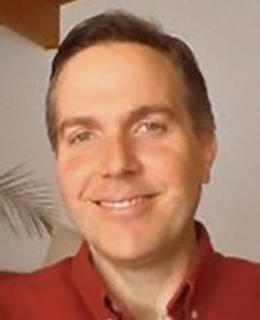
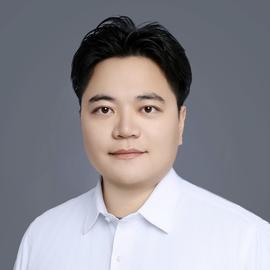
Ondřej Lhoták is a Professor and Director of Undergraduate Studies at the Cheriton School of Computer Science, University of Waterloo. He holds a Ph.D. and M.Sc. from McGill University, and a B.Math from the University of Waterloo. His research focuses on: Programming language design and implementation Compiler optimization techniques Static and dynamic program analysis Object-oriented language semantics Scala programming ecosystem development As Director of Undergraduate Studies, he oversees academic programs and curriculum development for computer science students. His office is located in the Davis Centre (DC 2520) on the Waterloo campus.
Patrick Lam is an Associate Professor in the Department of Electrical and Computer Engineering at the University of Waterloo, with a cross-appointment to the Cheriton School of Computer Science. His research focuses on applications of programming languages and static analysis to software engineering challenges, emphasizing verifiable software specifications and program understanding. Dr. Lam has held significant grants from NSERC and is recognized for his impactful work, including the First Decade High Impact Paper award for his Soot framework. Education: Doctorate in Computer Science, Massachusetts Institute of Technology, 2007 Master's in Computer Science, McGill University, 2000 Bachelor's in Joint Honours Mathematics and Computer Science, McGill University, 1999 Research Interests: His primary areas include static program analysis, verifiable software specifications, and compiler design, with a focus on linking high-level software designs to low-level implementations. He explores techniques like lightweight specifications and domain-specific languages to enhance software reliability and efficiency. Recent work also addresses empirical studies of programming practices and security through modularization. Publications: Dr. Lam's recent publications span advancements in static analysis tools (e.g., WasmWalker for WebAssembly), formal verification of code generated by AI tools like GitHub Copilot, and empirical studies on C++ immutability usage. His work bridges theoretical programming language research with practical software engineering applications, emphasizing tools for developer productivity and code reliability. Awards and Recognition: First Decade High Impact Paper recognition for "Soot – A Java Optimization Framework" (2010) Teaching and Grants: He has taught courses such as CS 447, ECE 453, and ECE 459 on software testing and performance programming. Active in grant-funded research, he secured NSERC Engage Grant (2013) and an ongoing NSERC Discovery Grant (2013–2018). Lam has also advised graduate students and contributed to the Software Engineering Program at Waterloo as its Director (2016–2019). Labs and Teams: His research group explores topics in program analysis and software engineering, with collaborations on projects like abstract debugging tools (GobPie) and static analysis frameworks (Soot). He maintains an open-source repository on GitHub, contributing to educational materials and research tools.
Mahmoud Alfadel is an Assistant Professor in the Department of Computer Science at the University of Calgary, Faculty of Science. His research focuses on software ecosystems, build systems, security vulnerabilities, and mining software repositories. He holds a PhD in Software Engineering from Concordia University (2021), an M.S. from KFUPM (2017), and a B.S. from Damascus University (2013). Education: Bachelor of Science in Information Technology, Damascus University (2013) Master of Science in Software Engineering, King Fahd University of Petroleum and Minerals (KFUPM, 2017) Doctor of Philosophy (Ph.D.) in Software Engineering, Concordia University (2021) His research emphasizes empirical studies in DevOps practices, continuous integration, and software security. Recent work explores vulnerability lifecycle analysis in Golang, fuzz testing adoption in open-source projects, and dependency-induced waste in CI pipelines. His publications reflect a focus on improving software quality and security through automated tools and empirical analysis. Awards and Grants: No specific awards or grants are listed in the profile. His work is supported through empirical studies and academic collaborations. Advising and Labs: No student advisees or specific lab affiliations are noted in the provided materials. His research is likely conducted through collaborative projects with students and industry partners.
Werner Dietl is an Associate Professor in the Department of Electrical and Computer Engineering at the University of Waterloo. His work focuses on programming languages, static analysis, software security, and formal verification techniques. He has contributed to type system design, low-power computing, and approximate data types through projects like EnerJ. His research also addresses challenges in compiler design, cryptographic protocol validation, and runtime enforcement mechanisms. Key research areas include: Type systems for imperative and domain-specific languages Static analysis of implicit control flow (e.g., Java reflection, Android intents) Approximate computing and energy-efficient computation Formal verification of security properties Publications span topics from unit measurement type inference to ownership-based security models, reflecting a focus on practical formal methods. His work emphasizes scalability and precision in type systems while addressing real-world software engineering challenges.
Chengnian Sun is an Associate Professor at the University of Waterloo's David R. Cheriton School of Computer Science. He holds a Ph.D. from the National University of Singapore (2013). His research focuses on software engineering, emphasizing software reliability, security, and developer productivity. His work spans compiler testing, program analysis, cybersecurity, and programming language tools. Key research trends include leveraging large language models (LLMs) for compiler testing and program reduction, probabilistic debugging techniques, and enhancing software security against ransomware and fuzzing attacks. His contributions address challenges in program simplification, fault localization, and vulnerability detection. Notable projects include frameworks like Perses (syntax-guided program reduction), T-Rec (language-agnostic program reduction), and tools like AddressWatcher for memory leak detection. His work bridges theoretical advancements with practical software engineering solutions. Chengnian advises on compiler reliability, cybersecurity, and developer productivity. His research has led to collaborations with industry on testing tools and security frameworks. He maintains an active lab focused on advancing software systems through rigorous analysis and innovation.
Dr. Sihang Liu is an Assistant Professor in the School of Computer Science at the University of Waterloo. Prior to this role, he served as a visiting faculty member at SystemsResearch@Google. He holds a PhD from the University of Virginia, where his research was supported by the Google Fellowship Award. His academic career has been marked by contributions to computer architecture, systems, and persistent memory technologies. Dr. Liu's research interests span computer architecture, systems, and cybersecurity, with a focus on persistent memory systems, energy-efficient computing, and data center optimization. His work bridges hardware-software co-design and explores challenges in scalable computing, fault tolerance, and sustainable AI systems. His recent publications highlight advancements in adaptive memory tiering (HybridTier), carbon intensity forecasting (EnsembleCI), and securing persistent memory (Side-Channel Attacks on Optane). These contributions underscore his commitment to addressing critical issues in modern computing systems' performance, security, and environmental impact. Awards: Google Fellowship Award (PhD), NVMW Memorable Paper Award Finalist (2019), 2019 MICRO Top Picks Honorable Mention Professional Service: Program committees for ISCA, MICRO, ASPLOS; Artifact evaluation roles in leading conferences As an advisor, Dr. Liu mentors a diverse group of students, including current PhD candidates Henry Tian and Desen Sun, and numerous undergraduates. His lab focuses on innovation in sustainable computing and resilient systems design.
Jinqiu Yang is an Associate Professor in the Department of Computer Science and Software Engineering at Concordia University. His research focuses on software reliability, automated program repair, software testing, and quality assurance of machine learning systems, particularly in autonomous vehicles. He holds a PhD and MASc from the University of Waterloo and a B.Eng. from Nanjing University. Yang has been a tenure-track faculty member at Concordia since 2018, following research roles at IBM Watson and IBM CAS. Research Interests: Automated Program Repair Software Testing Machine Learning Systems Text Analytics of Software Artifacts Mining Software Repositories Autonomous Systems Quality Assurance Key Contributions: His recent work includes detecting concept drifts in ML systems (ICSE-25) and investigating social bias in LLM-generated code (AAAI-25). He leads the O-RISA Lab and has authored over 50 peer-reviewed publications, including distinguished papers at MSR-2018. Yang currently holds grants such as the NOVA FRQNT-NSERC Program (2024-2027) and the NSERC Discovery Grant (2019-2025). Service & Awards: Editorial Board Member of the Empirical Software Engineering Journal (EMSE) and active PC member in top venues like ICSE and FSE. Recipient of the IBM CAS Fellowship and ACM SIGSOFT Distinguished Paper Award. Teaching & Students: He mentors students in Master's and PhD programs, with funding available. His lab focuses on cutting-edge topics like secure code generation and autonomous vehicle reliability.
Daniel Y Chen is a Lecturer in the Department of Statistics at the University of British Columbia (UBC), Vancouver Campus. He holds a PhD Candidate status in Genetics, Bioinformatics, and Computational Biology at Virginia Tech, focusing on data science education in the biomedical sciences. His expertise includes statistical computing, open source software development, and reproducible research practices. Education: PhD Candidate (in progress): Genetics, Bioinformatics & Computational Biology, Virginia Tech MSc: Relevant field (implied via career progression) Research Interests: Daniel's work bridges data science pedagogy and biomedical applications. He focuses on improving computational literacy among medical practitioners through accessible education resources, open source tools, and reproducible workflows. His technical contributions span R and Python ecosystems, including packages like grader and pyprojroot , and authoring Pandas for Everyone . He actively promotes best practices in scientific programming and collaborative software development. Grants & Contributions: Contributions to RStudio's gradethis and learnr packages Open source maintenance (e.g., Arch Linux AUR packages) Labs/Teams: Affiliated with UBC's Data Science for Biomedicine (DS4BIOMED) initiative and Virginia Tech's Social Decision Analytics Laboratory. Collaborates with RStudio and GitHub communities on education and tool development.
Robert Walker is a Professor and Assistant Head (Existing Graduate Students) in the Department of Computer Science at the University of Calgary. He holds degrees from the University of British Columbia including a B.S. in Computer Science (1994), B.S. in Geophysics (1992), M.S. in Computer Science (1996), and a Ph.D. in Computer Science (2003). His research focuses on software evolution, reuse, empirical software engineering, and aspect-oriented programming. Key awards include the Italian National Scientific Habilitation (2015) and ACM Distinguished Paper Awards (2012). He teaches courses like SENG 300 (Introduction to Software Engineering) and advanced topics in software evolution. His work addresses challenges in test code reuse from open source software and unanticipated evolution patterns in software product lines.
Jialu Zhang is a Tenure-Track Assistant Professor in the Department of Electrical and Computer Engineering at the University of Waterloo. Her research focuses on AI-driven solutions for programming challenges, including LLM-powered software development, automated debugging, and program repair. She holds a PhD in Computer Science from Yale University (2023) and a BS in Electrical and Computer Engineering from Shanghai Jiao Tong University (2017, IEEE Honor Class). Her work emphasizes practical applications like Gmerge (merge conflict resolution), PyDex (automated code repair), and Clef (AI-assisted competitive programming). She collaborates with Microsoft Research’s RiSE and PROSE teams, exploring industry partnerships in AI-assisted software engineering. Recent projects include productizing Gmerge for Microsoft Edge and developing educational tools like PyDex for AI-driven tutoring systems. Zhang actively seeks students (Masters/PhD/interns) and industry collaborations to advance AI’s role in programming and software engineering. Her research bridges foundational AI capabilities with real-world software development challenges, emphasizing both technical innovation and educational impact.
Affiliations & Roles Michael W. Godfrey is a Professor in the David R. Cheriton School of Computer Science at the University of Waterloo . He holds the David R. Cheriton Faculty Fellowship and has served as an associate director of Cornell's M.Eng. program. His roles include: General Chair for ICPC 2025 (IEEE Program Comprehension) Member of steering committees for ICSME, MSR, SCAM, and SWAN Course coordinator for CS138/CS246 and instructor for advanced topics courses Research Focuses on software evolution , program comprehension , and mining software repositories . His work addresses challenges in code clone analysis, developer productivity, and empirical software engineering. Notable contributions include: Advocating for intentional cloning as valid design practice Pioneering studies on code review quality and anomaly detection Developing tools like JavaDUCK (educational project) and mel (model extraction) Awards & Recognition Recipient of: Best Paper Awards at WCRE 2006, 2011, 2013 Most Influential Paper Award at SANER 2016 Outstanding Reviewer Awards (ICSME 2019/2020) Service & Outreach Active in: Program committee roles for ICSE, ICSM, MSR, and 30+ conferences University service: Undergraduate Recruitment Committee (2016–present) Industry collaborations with CWI (Amsterdam), Sun Microsystems, and automotive software teams
Celina Berg is an Associate Teaching Professor in the Department of Computer Science at the University of Victoria, affiliated with the Faculty of Engineering and Computer Science. She also serves as Outreach, Recruitment, and Retention Coordinator, focusing on enhancing student engagement and diversity in computer science education. Her research interests span parallel programming, system software design, aspect-oriented programming, and educational tool development. Dr. Berg’s work emphasizes bridging gaps between theoretical concepts and practical implementation, particularly in improving accessibility to complex computer science topics for undergraduate students. She has contributed to frameworks such as Ice for binary analysis, eMOTE for online collaboration, and visualization tools like HiLPR for pattern representation. Her publications (2004–2011) explore concurrency solutions, abstraction layers, and educational innovations. Notable areas include parallel pattern languages, virtual machine architecture, and automation strategies in system design. While no specific awards are listed, her contributions to teaching and infrastructure software reflect impactful academic engagement. In outreach, she coordinates initiatives like SPARCS (Supporting Sustainable and Integrated Outreach Activities) to inspire young minds in STEM fields. Her advising and grant activities are not explicitly detailed in available records.
Abram Hindle is a Professor in the Department of Computing Science within the Faculty of Science at the University of Alberta. He holds a Ph.D. from the University of Waterloo (2010), an M.Sc. from the University of Victoria (2005), and a B.Sc. (Honours with distinction) from the University of Victoria (2003). His research focuses on evidence-based software development, leveraging techniques from data mining, machine learning, and empirical analysis. Hindle's research spans multiple domains including software repository mining, energy efficiency in software systems, and interdisciplinary applications like computer music and ECG analysis. His work integrates statistical analysis, NLP, and visualization to study software processes, maintenance, and metrics. His recent publications demonstrate a strong focus on healthcare applications of machine learning (particularly ECG-based diagnostics), software defect prediction, container orchestration, and energy-aware development practices. These reflect an ongoing commitment to empirical validation and real-world impact.
Isabelle Villemure is a Full Professor in the Department of Mechanical Engineering at Polytechnique Montréal and Director of Engineering Studies in the Directorate of Academic Affairs and Student Experience. Her research focuses on the mechanical regulation of bone tissue growth, with applications in pediatric musculoskeletal pathologies. She leads the Pediatric Mechanobiology Laboratory (LMP) and is a member of the Institute of Biomedical Engineering. Dr. Villemure holds a B.Eng. from Polytechnique Montréal, an M.Sc.A. from the University of British Columbia, a Ph.D. from Université de Montréal, and a Postdoc from the University of Calgary. Her expertise spans biomedical engineering, biomechanics, and finite element modeling. Her research integrates three core areas: experimental tissue mechanics, mechanotransduction studies, and implant design for growth modulation. Key projects include developing origami-inspired metamaterials for tissue engineering and investigating distraction osteogenesis techniques. She has supervised over 28 graduate students, contributing to advancements in spinal biomechanics, bone regeneration, and surgical device innovation. Notable grants include a $1.65M award for mentorship programs (2020) and TransMedTech Institute support (2017). Her work has been featured in Materials & Design , Spine Deformity , and Scientific Reports , among others.
Zhen Ming (Jack) Jiang is an Associate Professor and York Research Chair (Tier II) in Software Engineering for Foundation Model-Powered Systems at the Department of Electrical Engineering & Computer Science, York University, Canada. He earned his Ph.D. (2013) from Queen's University and MMath/BMath degrees from the University of Waterloo. Research Focus: Software Engineering for AI, Performance Engineering, Logging Practices, and Software Visualizations. Education: Ph.D. in Computer Science, Queen's University MMath in Computer Science, University of Waterloo BMath in Computer Science, University of Waterloo His research explores engineering rigor in AI-powered applications, performance optimization in foundation model-driven systems, and efficiency improvements in large-scale software. Recent work analyzes logging practices, code cloning in blockchain, and AIOps models. He has received prestigious awards including the NSERC Discovery Accelerator Supplements (2020) and multiple Best Paper Awards at ICST, ICSE, and MSR. He served on program committees for ICSE, ICSME, and ICPE, and reviewed for top journals like IEEE Transactions on Software Engineering.