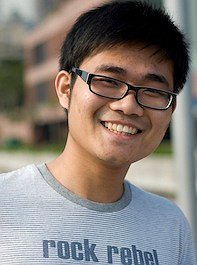
Yuming Feng is a researcher at Peng Cheng Laboratory, actively contributing to blockchain security research through publications at major software engineering conferences including ASE 2025 and ISSTA. Their work focuses on identifying vulnerabilities in decentralized applications and smart contracts. Research interests include: Blockchain security and vulnerability detection Smart contract analysis techniques Multi-chain system compatibility Program analysis for distributed applications Yuming Feng's recent publications demonstrate expertise in state dependency analysis for DApps and identifying problematic code patterns across blockchain platforms, addressing critical security challenges in decentralized application development. As an active contributor to the blockchain research community, their work combines semantic analysis with multi-source tracing to improve security practices in smart contract development across multiple blockchain environments.
Andreea Costea is an Assistant Professor in the Programming Languages Group within the Faculty of Electrical Engineering, Mathematics & Computer Science (EEMCS) at Delft University of Technology. She joined TU Delft in October 2024 after completing her PhD at the School of Computing, National University of Singapore (NUS), where she worked in the Programming Languages and Software Engineering lab collaborating with the Automated Program Repair team, Trustworthy and Secure Software group, and VERSE lab. Her primary research focuses on programming languages design and implementation, with particular emphasis on software verification for critical code, program synthesis, and automated program repair. She maintains strong connections with industry while pursuing formal methods research, especially in the context of Rust programming language safety and interoperability. Dr. Costea's publication record demonstrates consistent contributions to software engineering and programming languages research, with recent work focusing on automated program repair techniques, Rust language safety mechanisms, and communication protocol verification. Her research shows a clear trajectory from theoretical foundations in session types and separation logic toward practical applications in memory safety and program repair. She actively serves the research community as Program Committee member for major conferences including ASE, ICSE, ICFP, and APLAS. Her service includes chairing publicity committees for SPLASH and artifact evaluation for ESOP. Regular Journal Reviewer: CACM, TOSEM, TSE Panel discussions: PLMW @ POPL'22, PLDI'21, PLMW @ PLDI'21, POPL'21 Extensive reviewing for top-tier conferences including POPL, OOPSLA, CAV, VMCAI Dr. Costea supervises multiple Master's students working on Rust-related safety projects and is actively recruiting PhD students to work on software interoperability, particularly focusing on how to restore Rust's safety guarantees when integrating with legacy C code and ensuring correct interaction between components written in different languages.
Haipeng Cai serves as an Associate Professor in the Department of Computer Science and Engineering at the University at Buffalo, SUNY. His academic work spans software engineering, program analysis, and software security with particular emphasis on adaptive analysis techniques for mobile and distributed systems. His research interests center on adaptive/data-driven static and dynamic analysis for security applications targeting mobile apps, distributed systems, and multilingual software. Current work focuses on enhancing vulnerability detection, cross-language bug analysis, and automated security tooling through machine learning approaches. His lab produces tools like VinJ for vulnerability data generation and PolyFax for multilingual software characterization. Recent publications reveal strong trends in multilingual system security and AI-enhanced analysis , with 15+ papers since 2022 addressing cross-language vulnerabilities, Android security, and learning-based vulnerability detection. His work bridges theoretical program analysis with practical security applications in real-world software ecosystems. As an active academic contributor, he serves on program committees for major conferences including ASE, ICSE, and FSE, and will deliver a keynote at PROMISE 2025. His leadership includes journal-first paper chair roles and session chair positions at top software engineering venues. Dr. Cai maintains an active research presence through his personal website , GitHub repository ( github.com/chapering ), and academic social media profiles, with consistent contributions to the software engineering research community since 2018.
David Klein is a PhD Candidate at the Institute for Application Security , part of the Carl Friedrich Gauss Faculty at TU Braunschweig . His work focuses on web security and privacy , with specific expertise in static and dynamic analysis of vulnerabilities, program transformations, and GDPR compliance frameworks. David's research spans multiple subfields, including browser fingerprinting, cross-site scripting (XSS), and memory corruption in WebAssembly. His 15 most recent publications (2013–2025) investigate topics like HTML sanitizer bypasses , privacy-enforcement frameworks , and developer behavior in privacy implementation . His work has been presented at top venues like USENIX Security , IEEE S&P , and PETS . 2024: Distinguished Paper Award Winner at 33rd USENIX Security Symposium David actively participates in program committees for conferences such as ACM CCS , USENIX Security , and IEEE Euro S&P , contributing to the peer-review process in cybersecurity and privacy research.
Markus Enzweiler serves as Professor of Computer Science and Autonomous Systems and Director of the Institute for Intelligent Systems at Esslingen University of Applied Sciences, Germany, within the Department of Computer Science and Engineering. His leadership role positions him at the forefront of intelligent systems research in applied academic settings. His research spans autonomous systems, computer vision, and robotics with emphasis on visual-inertial SLAM, semantic segmentation, and collective perception. Key contributions address real-world challenges in unstructured environments like agricultural fields and urban settings through efficient perception systems. Recent work focuses on lightweight monocular solutions, sensor fusion techniques, and computational efficiency optimization for autonomous vehicles. Analysis of his 2024-2025 publications reveals strong trends in collective perception infrastructure, NeRF/Gaussian Splatting integration for SLAM, and multi-sensor dataset development. His research consistently benchmarks computational costs against accuracy improvements while creating valuable resources like the OPNV public transportation dataset and Rover multi-season SLAM corpus. As Director of the Institute for Intelligent Systems, Enzweiler leads initiatives advancing autonomous driving technologies through practical implementations and industry-relevant research frameworks.
Felix Wolf is a Full Professor at Technische Universität Darmstadt's Department of Computer Science since 2015 and leads the NHR4CES@TU Darmstadt HPC center. He served as Department Chair and Vice Department Chair at TU Darmstadt, with prior faculty roles at RWTH Aachen University (2006–2015) and adjunct positions at the University of Tennessee (2003–2008). His academic work spans performance analysis, parallel programming, and scalability modeling. Ph.D. in Computer Science, RWTH Aachen University (2003) M.Sc., RWTH Aachen University (1998) Research Interests : Wolf focuses on High-Performance Computing , including performance modeling , parallel programming tools , and I/O optimization . His work addresses GPU acceleration , machine learning integration into HPC systems, and structural plasticity simulation . Key projects involve tools like Scalasca, Score-P, and Extra-P for automated performance analysis. Article Trends : Recent publications emphasize HPC systems for AI-driven workflows , I/O contention reduction , and GPU port validation . His team explores empirical modeling for deep learning and scientific simulations , with applications in engineering and neuroscience .
Manuel V. Hermenegildo is a Professor at the Universidad Politécnica de Madrid, Spain. He is a prominent researcher in the field of programming languages and static analysis, with significant contributions to logic programming, program verification, and formal methods. His work focuses on advancing static analysis techniques, compiler optimization, and energy-efficient computing. He has co-authored numerous papers and organized international conferences such as LOPSTR and SAS, demonstrating his leadership in academic and research communities. His research explores topics including abstract interpretation, runtime checking, and parallel logic programming systems. He is a key contributor to the Ciao Prolog system, emphasizing comprehensive tool integration and formal methods. His research interests span static analysis frameworks, program verification, resource usage analysis, and energy efficiency in computing. He has developed methodologies for optimizing program performance while ensuring correctness, with applications in both theoretical and applied domains. His work often bridges the gap between high-level program analysis and low-level hardware constraints, particularly in embedded systems. Recent trends in his publications include advancements in static cost analysis, dynamic inference of invariants, and tools for incremental assertion checking. His collaborations with institutions like the University of Copenhagen and the University of Kent reflect a global network in advancing computational logic and software engineering. He has been actively involved in academic service, including editorial roles for conference proceedings and journals. His contributions highlight a commitment to both foundational research and practical tools for the programming language community.
Jeff Huang is an Associate Professor in the Department of Computer Science and Engineering at Texas A&M University, specializing in programming languages and software engineering with a focus on concurrency and runtime verification. His research develops advanced program analysis techniques and tools to enhance software performance and reliability. Programming Languages Software Engineering Concurrency Runtime Verification His work has been recognized with prestigious awards including the ACM SIGSOFT Early Career Researcher Award, NSF CAREER Award, Google Faculty Research Award, and DARPA Young Faculty Award. Notably, his research has earned multiple SIGPLAN Research Highlights and PLDI Distinguished Paper Awards. ACM SIGSOFT Early Career Researcher Award NSF CAREER Award Google Faculty Research Award Mozilla Research Award Facebook Research Award DARPA Young Faculty Award ACM SIGSOFT Outstanding Dissertation Award ACM SIGPLAN PLDI Distinguished Paper Award SIGPLAN Research Highlights Jeff Huang actively contributes to academic communities as a committee member in venues like SPLASH, ICSE, ISSTA, and PLDI. He has authored influential papers on concurrency bug detection, pointer analysis, and language translation tools, spanning both theoretical foundations and practical implementations.
John Hughes is a Professor at Chalmers University of Technology. His research focuses on functional programming, software testing, and formal methods. He is a co-author of the Haskell programming language and a pioneer of QuickCheck, a property-based testing tool. His work bridges foundational theory with practical applications in software engineering. Research Interests: Development of functional programming paradigms and their applications Property-based testing and automated software validation Type systems and compiler optimization techniques Concurrency and parallelism in functional languages His publications span influential works like Why Functional Programming Matters (1989) and A History of Haskell (2007). He has contributed to open-source tools and frameworks widely used in academia and industry.
Thomas Lemberger is a researcher in the Department of Computer Science at Ludwig-Maximilians-Universität München (LMU Munich), contributing to the Software and Computational Systems Lab. He specializes in software verification, formal methods, and automated testing, with a focus on improving tool efficiency and scalability. His work includes extensions to CPAchecker, such as distributed summary synthesis and cooperative verification approaches, as well as developing user-friendly tools like CoVeriTeam GUI. His research interests involve integrating verification into build systems and IDEs, optimizing verification workflows, and exploring hybrid techniques that combine testing and formal methods. He has actively participated in competitions like SV-COMP and Test-Comp, contributing tools like PRTest and Nacpa. His projects aim to reduce tool restarts, enhance fault localization, and streamline verification processes through parallel portfolio analyses. Thomas mentors students on topics related to verification tool development, test-case generation, and open-source software. His contributions are supported by grants from the DFG (CONVEY, COOP, IDEFIX), emphasizing cooperative verification and scalable analysis. Recent work focuses on enabling developers to use verification tools seamlessly within their existing workflows.
Maria Christakis is a Full Professor at TU Wien's Faculty of Informatics where she leads the Rigorous Software Engineering Group. Her research develops methods and tools for building reliable software through formal methods, automated test generation, and program verification. She directs several projects including Sherlock (a framework for testing program analyzers), Minotaur (constraint-based program generator), and SmartACE (compositional verifier for smart contracts). Her group focuses on improving software robustness while enhancing developer productivity. Awards include the Distinguished Paper Award at ICSE 2016 and Best Presentation Award at ESEC/FSE 2020. She currently advises 5 PhD students and teaches courses in Advanced Software Engineering and Software Engineering Research.
Jürgen Brehm is an Adjunct Professor at the Faculty of Electrical Engineering and Computer Science of Leibniz University Hannover . He holds a venia legendi in Computer Engineering after completing his habilitation in 2000. Education: Diploma in Computer Science (1986), Doctorate in Engineering (1991), Habilitation (2000) Research interests span computer architecture , parallel processing , performance analysis , and e-learning . His work explores ubiquitous computing , communication architectures , and optimization algorithms . Recent publications highlight trends in parallel computing , optimization , and interactive systems , including works on swarm intelligence , particle swarm optimization , and open content integration. Scientific award : Feodor Lynen Fellowship (1994) Teaching includes core courses like Basics of Computer Architecture , Operating Systems , and Parallel Processing . He also designed two multimedia-equipped computer science lecture halls and managed large-scale DFG projects for e-learning and HPC computing.
Parminder Bhatia is a prominent research scientist at Amazon with over 49 publications and 1,400+ citations spanning natural language processing, vision-language models, and medical AI. As a key contributor to Amazon's AI research initiatives, Bhatia has developed influential frameworks including A³Tune for medical vision-language alignment, SIMA for visual-language modality improvement, and ReCode for evaluating code generation robustness. Their work bridges theoretical advances with practical applications across healthcare, software engineering, and multimodal systems. Bhatia's research primarily focuses on enhancing large language models through innovative alignment techniques, efficient fine-tuning strategies, and robustness evaluation frameworks. Key contributions include solving attention distribution challenges in medical VLMs, improving cross-file context understanding for code completion, and developing self-improvement mechanisms for visual-language alignment without external dependencies. Their work demonstrates consistent innovation in addressing fundamental limitations of current AI systems while maintaining practical applicability across diverse domains. Analysis of Bhatia's 15 most recent publications reveals a strong emphasis on medical AI applications (40%), code generation/analysis (30%), and foundational LLM improvements (30%). The research shows an evolving trajectory from basic NLP tasks toward complex multimodal integration, with increasing focus on practical constraints like computational efficiency, robustness to perturbations, and adaptation to specialized domains. Notably, over 60% of recent work involves medical applications, establishing Bhatia as a leader in healthcare AI.
Grégoire Sutre is a CNRS Research Fellow at LaBRI, University of Bordeaux, specializing in formal verification and model checking of infinite-state and concurrent systems. His research includes theoretical and practical aspects of verification, with applications ranging from systems code to biological models. Research Interests: Model-checking of safety properties Infinite-state and distributed systems Abstraction refinement techniques Vector addition systems and Petri nets Software verification and concurrent systems Teaching: He currently teaches Software Verification at the Master 2 level, with lab sessions in OCaml focusing on abstract interpretation and static analysis techniques. Students: He supervises several PhD students working on reachability, concurrency, and binary analysis. Projects: He has led or participated in multiple ANR-funded projects such as BraVAS, ReacHard, VACSIM, and SPaCIFY, focusing on formal methods and verification of critical systems.
Mahmoud Alfadel is an Assistant Professor at the University of Calgary, Canada, actively contributing to software engineering research through program committee roles at ASE, ICSE, and ESEC/FSE conferences from 2021-2025. His research centers on Software Ecosystems, Release Engineering, and Empirical Software Engineering, with specific focus on build systems, continuous integration pipelines, dependency management, and software quality metrics in open-source environments. Methodologically, he employs large-scale empirical studies of real-world development practices. Analysis of his 2021-2025 publications reveals consistent investigation into build technology evolution (particularly Bazel), dependency-induced waste in NPM, and testing practices like fuzzing adoption. His work bridges theoretical software engineering concepts with practical industry challenges, often through case studies of major open-source projects like Kubernetes.