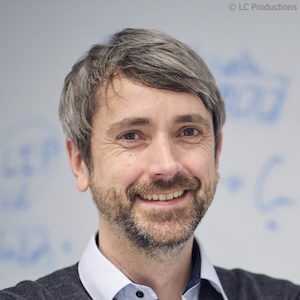
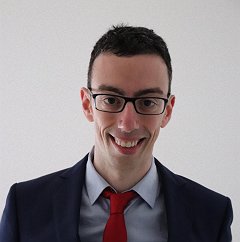
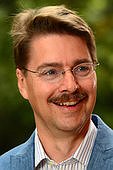
Prof. Dr. Johannes Kinder is a Professor and Chair of Programming Languages and Artificial Intelligence at the Institute of Informatics , Ludwig Maximilian University of Munich. His research focuses on software security through program analysis and machine learning, particularly targeting malware detection , vulnerability analysis , and reverse engineering . He has held faculty positions at Royal Holloway, University of London, and Bundeswehr University Munich. Research Interests include: Securing software systems via program and machine learning techniques Detection of software vulnerabilities and malware Preventing exploitation through binary analysis Applications of formal methods in systems security Recent Publications highlight advancements in binary function embedding , malware detection in npm , and speculative execution attack modeling . His work appears in top venues like USENIX Security and IEEE S&P . Education : Diplom from TU Munich (2005), Doctorate from TU Darmstadt (2010). Professional Roles : General Chair, ACM CCS 2019 Doctoral Symposium Chair, ESSoS 2016 Program Committee member for NDSS 2026, IEEE S&P 2022-2025
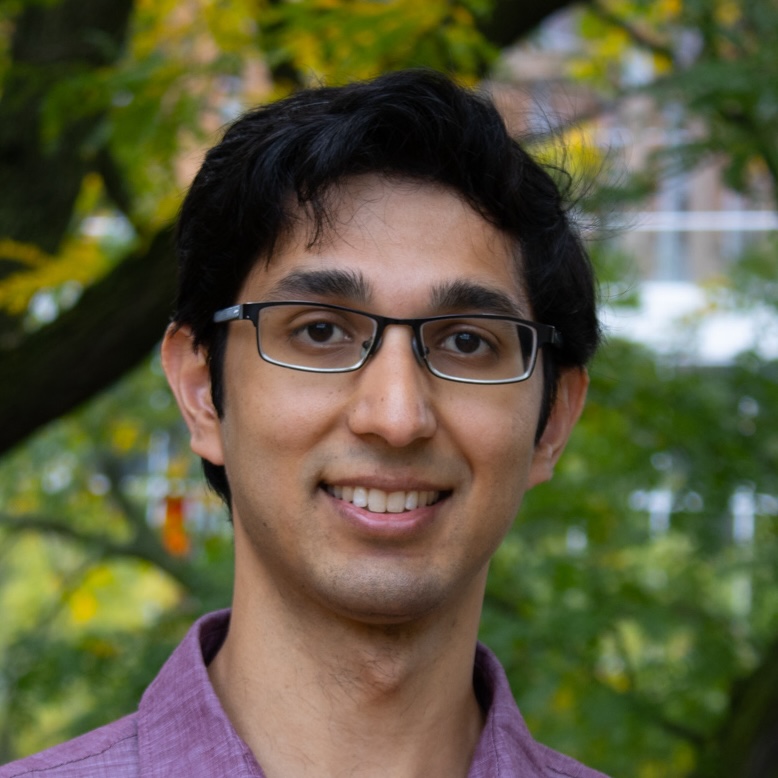
Tej Chajed is an Assistant Professor in the Department of Computer Science at the University of Wisconsin-Madison, where he conducts research in formal verification of systems software. His work focuses on building and proving the correctness of critical systems, particularly file systems and concurrent software. Dr. Chajed earned his PhD from MIT in the PDOS group, followed by a one-year postdoc at VMware Research before joining UW-Madison. His academic journey reflects a strong commitment to bridging theoretical formal methods with practical systems implementation. Chajed's research centers on formal verification techniques for systems software, with particular emphasis on concurrent and crash-safe systems . His work aims to eliminate bugs in critical software through mathematical proofs of correctness. Key contributions include DaisyNFS (a verified concurrent file system), the Perennial framework for reasoning about crash safety, and Goose for connecting proofs to Go code. His research spans the intersection of programming languages, operating systems, and formal methods, developing practical tools that bring verification to real-world systems. His recent publications demonstrate a consistent trajectory toward more practical and scalable verification techniques for increasingly complex systems. The research shows progression from foundational verification frameworks to applied work on specific systems like file systems, journaling, and distributed protocols. A notable trend is the focus on making verification more accessible and practical for systems developers, bridging the gap between theoretical formal methods and real-world software engineering. Dr. Chajed serves on numerous program committees including OSDI 2025 PC, PLDI 2024 PC, SySDW 2023 PC, ECOOP 2023 ERC, CPP 2023 PC, POPL 2023 PC, PLDI 2022 PC, POPL 2022 AEC, EuroDW 2021 PC, POPL 2021 AEC, PLDI 2020 AEC, POPL 2020 AEC, and SOSP 2019 AEC, reflecting his standing in the systems and programming languages research community. In teaching, Chajed has developed and instructed courses on systems verification, operating systems, and protocol verification. He previously helped create MIT's 6.826 (Principles of Computer Systems) during his PhD. His passion for technical communication was cultivated during his time as a Communication Fellow in the EECS Communication Lab at MIT, where he continues to offer guidance to students on writing and presentation skills. His research group at UW-Madison focuses on advancing the state of the art in systems verification, with current projects centered around practical verification frameworks for concurrent and crash-safe systems.
Bihuan Chen is an Associate Professor at the College of Computer Science and Artificial Intelligence, Fudan University, specializing in software engineering with focus on software supply chain security and trustworthy AI systems. His research spans multiple programming languages including JavaScript, Python, Java, and C/C++ across application and AI domains. Dr. Chen earned his B.Sc. and Ph.D. in Computer Science from Fudan University in 2009 and 2014 respectively, followed by postdoctoral research at Nanyang Technological University (2014-2017). His research interests include software supply chain risk assessment, trustworthy AI systems, and program analysis. His recent publications demonstrate strong focus on malicious package detection in NPM/PyPI ecosystems, vulnerability patch porting using LLMs, and safety verification for autonomous driving systems. The work shows increasing integration of machine learning techniques with traditional program analysis approaches, particularly evident in the 2024-2025 publications that leverage LLMs for vulnerability detection and code refinement. ACM SIGSOFT Distinguished Paper Award (FSE 2016, ASE 2018, ASE 2022, FSE 2025) IEEE TCSE Distinguished Paper Award (ICSME 2020, SANER 2023) CCF Prototype Competition Awards (2nd and 3rd Prizes) Dr. Chen has advised over 50 students including current PhD candidates and notable alumni now at Huawei, ByteDance, and other leading tech firms. His fuxi platform assesses security, legal, and maintenance risks across the software engineering lifecycle. He serves on program committees for major conferences including ICSE, FSE, ASE, and ISSTA, and as Associate Editor for the Journal of Software: Evolution and Process.
Prof. Dr. Jens Eisert is a Professor at the Free University of Berlin, where he leads the Quantum Many-Body Theory, Quantum Information Theory, and Quantum Optics research group (Eisert AG) within the Institute of Theoretical Physics at the Dahlem Center for Complex Quantum Systems. His office is located at Arnimallee 14, Room 1.3.06 in Berlin-Dahlem. His research focuses on the intersection of quantum information theory and condensed matter physics, specifically exploring what information processing tasks are possible using individual quantum systems as information carriers. His group develops mathematical-theoretical foundations of quantum information, particularly in entanglement theory and tomography, while also investigating quantum optical implementations using light modes or cold atoms in optical lattices. A major emphasis of their work is on quantum many-body systems, including static properties, efficient numerical simulation methods like tensor networks, and non-equilibrium quantum dynamics. Recent publications highlight significant contributions in thermalization of quantum systems (Communications Physics 2025), quantum thermodynamics (Nature Physics 2025), and quantum error correction (PRX Quantum 2025). The group's work is characterized by combining the rigor of mathematical physics with physically motivated applicability, frequently leading to direct collaborations with experimental groups. Quantum Information Theory Quantum Many-Body Theory Quantum Optics Entanglement Theory Tensor Networks Quantum Error Correction Prof. Eisert maintains active supervision of numerous PhD students and postdoctoral researchers, with research positions regularly available in areas including quantum error correction, quantum information theory, tensor networks, and quantum simulation. His group has published extensively in top journals including Nature Physics, PRX Quantum, and Physical Review series.
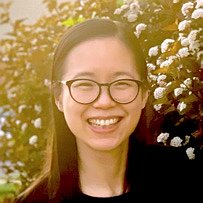
Juan Zhai is an Assistant Professor in the Manning College of Information & Computer Sciences (CICS) at University of Massachusetts Amherst, where she co-directs the Laboratory for Advanced Software Engineering Research (LASER) and participates in the UMass NLP group. Her academic career spans over 7 years of active service including program committee roles at top-tier conferences like ICSE, FSE, and ASE. Her research focuses on Software-AI Synergy with core areas including: Formal Specification Synthesis for precise software behavior definition Comment Generation and Maintenance using LLMs Trustworthy AI through bias detection and framework testing Deep Learning Infrastructure Reliability Recent work demonstrates strong emphasis on practical tools for AI safety and software dependability. Her publication trends show consistent output in top software engineering venues (ASE, ICSE, FSE) with increasing focus on AI/ML conferences (ACL, CVPR, ICLR). Key themes include metamorphic testing for deep learning frameworks, bias analysis in LLMs, and formal methods for specification synthesis. She actively serves the community through: Program committees for 13 major conferences Reviewing for 5 top journals including TOSEM and TSE 40+ total reviews across SE and AI venues Juan mentors PhD students including Gehao Zhang (research focus: Software Engineering, AI Safety) and teaches graduate courses like CS520 (Theory and Practice of Software Engineering) and CS692P (Hot Topics in SE Research). She leads the LASER lab which develops tools like C2S, CPC, and DevMuT for software reasoning and AI infrastructure testing.
Jürgen Cito is an Associate Professor with tenure at Vienna University of Technology (TU Wien), specializing in software engineering, explainable AI, and performance engineering. He leads research at the IPA Lab (as indicated by his personal website) and maintains a visiting researcher position at Google. His academic journey began with joining TU Wien as an Assistant Professor in Spring 2020, with promotion to Associate Professor announced in April 2024. His research interests span multiple critical areas of modern software development, with particular focus on developer experience, program comprehension, and the intersection of AI with software engineering practices. His work bridges theoretical foundations with practical industrial applications, as evidenced by collaborations with major technology companies. Analysis of his recent publications reveals a strong emphasis on practical tools and methodologies that enhance software quality, performance, and security. His research trajectory shows increasing focus on explainable AI techniques applied to software engineering problems, performance prediction from source code, and automated security testing approaches that leverage large language models. best teaching award for distance learning for Web Engineering (2020) Cito actively contributes to the software engineering community through numerous conference committee roles, including program committee positions at ASE, ICSE, ESEC/FSE, and other major venues. His lab appears to focus on developer tools, program analysis, and AI-assisted software engineering, with connections to both academic and industrial research environments.
Gabriele Bavota is an Associate Professor at the Software Institute of Università della Svizzera Italiana (USI) in Lugano, Switzerland. He leads the SEART (Software Engineering Advanced Research Team) group and serves as Principal Investigator for the DEVINTA ERC starting grant focused on developer intelligence through mining software artifacts. Dr. Bavota's research spans Software Quality, Empirical Software Engineering, and Mining Software Repositories. His work has evolved from foundational studies on code smells and technical debt to cutting-edge research at the intersection of artificial intelligence and software development. He has made significant contributions to understanding API usage patterns, software quality metrics, and developer behavior through empirical studies of large software repositories. His recent publications reveal a strong focus on AI-assisted software development, with extensive research examining code generation, code summarization, and code review automation using large language models. He has also expanded his research to include quality assurance in game development (detecting game stuttering and low engagement events) and voice user interface testing. His work consistently bridges theoretical insights with practical applications for software developers. ACM SIGSOFT Distinguished Paper Award for API compatibility research (MSR 2019) ACM SIGSOFT Distinguished Paper Award for Hugging Face model documentation study (ICPC 2024) ACM SIGSOFT Distinguished Artifact Award for deep learning fault taxonomy (ICSE 2020) As an active member of the software engineering research community, Dr. Bavota serves on program committees for major conferences including ICSE, ASE, FSE, and MSR. He has held leadership roles such as Program Co-Chair for ICSME 2023 and Vision/Reflection Track Co-Chair for ICSE. His SEART research group develops practical tools like the SEART Data Hub that streamline large-scale source code mining and preprocessing for empirical software engineering research.
Tien N. Nguyen is a Professor in the Computer Science Department at the Erik Jonsson School of Engineering and Computer Science, University of Texas at Dallas. He has been actively contributing to the software engineering research community since 2005, with significant publications and service to major conferences including ASE, ICSE, and ESEC/FSE. His extensive research portfolio spans multiple areas at the intersection of artificial intelligence and software engineering. Dr. Nguyen's research focuses on AI/ML4Code, encompassing Machine Learning, Natural Language Processing for Software Engineering and Software Security. His work specifically addresses Program Analysis, Software Evolution and Mining, Software Security, Software Maintenance, Mining Software Repositories, Version and Configuration Management, and Web Code Analysis and Security. His research has been consistently funded by multiple NSF grants including NSA NCAE-C-002-2021, CNS-2120386, CCF-1723215, CCF-1723432, CNS-1723198, and others dating back to CCLI-0737029. His recent publications demonstrate a strong trend toward leveraging large language models for various software engineering tasks including program analysis, bug detection, code completion, and automated program repair. The research spans both theoretical foundations and practical applications, with numerous papers accepted at top-tier conferences across multiple years. His scientific contributions have been recognized with several prestigious awards: ACM SIGSOFT Distinguished Paper Award at FSE 2024 IEEE Computer Society TCSE Distinguished Paper Award at SANER 2022 ACM SIGSOFT Distinguished Paper and ASE Best Paper Award at ASE 2014 ACM SIGSOFT Distinguished Paper Award at ASE 2012 ACM SIGSOFT Distinguished Paper Award at ESEC/FSE 2009 Dr. Nguyen has served in numerous leadership roles including Program Co-Chair for ICSE 2020 Demonstrations, Doctoral Symposium Co-Chair for ESEC/FSE 2021, NIER Track Chair for ASE 2020, and Tutorials Co-Chair for ASE 2024. He has received multiple NSF grants supporting his research in software analysis, mining, and security. His work with the Boa infrastructure for ultra-large-scale code mining has established significant infrastructure for the research community. His laboratory focuses on AI for software engineering, with particular emphasis on program analysis, software security, and mining software repositories. The research group develops techniques that bridge the gap between artificial intelligence and practical software engineering challenges, creating tools that are both theoretically sound and practically applicable to real-world software development.
Jens Palsberg is a Professor and former Department Chair of Computer Science at the University of California, Los Angeles (UCLA), where he currently serves as Director of the UCLA-Amazon Science Hub for Humanity and Artificial Intelligence and co-director of UCLA's quantum research center. He chairs ACM SIGPLAN and is a member of the ACM Council. His research spans programming languages, software engineering, quantum computing, compilers, embedded systems, and information security. Palsberg has authored over 80 technical papers, co-authored the book Object-Oriented Type Systems , and revised Appel's textbook on Modern Compiler Implementation in Java . His recent work shows a significant shift toward quantum computing, including compiler techniques and program analysis for quantum systems. Analysis of his recent publications reveals a clear transition from traditional programming language research to quantum computing, with nearly half of his 2022-2024 publications focusing on quantum topics while maintaining strong work in software engineering and programming languages. His quantum research particularly emphasizes compiler optimization, abstract interpretation, and circuit analysis. ACM SIGPLAN Distinguished Service Award (2012) UCLA teaching award for quantum computing courses (2023) National Science Foundation CAREER and ITR awards Purdue University Faculty Scholar award IBM Faculty Award Okawa Foundation research award Palsberg has served in numerous leadership roles including general chair of POPL, conference chair of LICS, and vice chair of ACM SIGBED. His research has been supported by DARPA, Intel, British Telecom, and the National Science Foundation. He was instrumental in establishing UCLA's Masters degree in quantum science and has mentored numerous students through his legendary proof sessions. He leads a research group of over 30 professors in UCLA's quantum research center and maintains active collaborations across academia and industry, particularly with Amazon through the UCLA-Amazon Science Hub.
Peter Sewell is Professor of Computer Science at the University of Cambridge Computer Laboratory, where he builds rigorous foundations for real-world computer systems to enhance robustness, security, and formal verification of hardware-software interactions. His educational background includes undergraduate studies at the University of Cambridge and University of Oxford, followed by a PhD from the University of Edinburgh in 1995 under Robin Milner's supervision. Professor Sewell's research focuses on concurrency models (x86, ARM, Power, C/C++11), verified compilation, formal semantics for C/linking/filesystems/TLS, and applied semantics tools. He pioneers executable ISA specifications through projects like Sail and Cerberus, addressing relaxed-memory concurrency and capability-based security architectures. His 2020-2026 publications reveal a clear trajectory toward formal verification of hardware security properties, with increasing emphasis on capability systems (Arm Morello, CHERI) and real-world applicability of concurrency models across ARM, RISC-V, and MIPS architectures. Scientific recognition: Royal Society University Research Fellowship (1999-2007) He leads major research initiatives in systems security formalization, supported by Cambridge positions and collaborative projects with industry partners. His work bridges theoretical formal methods and practical systems engineering through executable semantics frameworks. As a core member of Cambridge's Systems Research Group, he directs projects including Sail (ISA semantics), Cerberus (C semantics), and verification frameworks for capability architectures, fostering interdisciplinary collaboration across hardware and software security domains.
Raffi Khatchadourian is an Associate Professor in the Department of Computer Science at Hunter College and the Graduate Center of the City University of New York (CUNY). His research focuses on techniques for automated software evolution, particularly automated refactoring and source code recommendation systems, with the goal of easing the burden associated with evolving large and complex software through automated tools. He also conducts research on the automated analysis of Object-Oriented programs. Ph.D., Computer Science & Engineering, Ohio State University (2011) MS, Computer Science & Engineering, Ohio State University (2010) BS, Computer Science, Monmouth University (2004) Khatchadourian's research spans multiple areas of software engineering and programming languages, with particular emphasis on automated software evolution techniques. His work addresses critical challenges in refactoring legacy systems to modern language constructs, optimizing parallel processing in Java 8 streams, and addressing technical debt in machine learning systems. His recent research has expanded into deep learning program transformation, where he develops techniques to convert imperative deep learning code to more efficient graph execution models while ensuring safety. His approach combines static analysis, program transformation, and empirical validation to create practical tools that developers can integrate into their workflows. Analysis of Khatchadourian's recent publications reveals a strong focus on bridging the gap between theoretical program analysis and practical software engineering challenges. His work increasingly intersects with machine learning systems, examining both how to improve ML code through refactoring and how to ensure safety in deep learning frameworks. The research demonstrates consistent evolution from foundational work on Java language features toward more complex systems involving concurrency, deep learning, and automated program transformation. Distinguished Paper Award at SCAM '18 for work on Java 8 stream optimization EAPLS Best Paper Award at FASE '20 for study on Java 8 stream usage EAPLS Distinguished Paper Award at FASE '25 for Deep Learning refactoring work Best Paper Award nominee at IJCAI '24 for AI safety framework Khatchadourian actively mentors graduate and undergraduate students, with several advisees going on to successful academic and industry positions. His former Ph.D. student Tatiana Castro Vélez accepted a tenure-track Assistant Professor position at the University of Puerto Rico. He has supervised numerous master's theses and undergraduate research projects, often resulting in co-authored publications at top software engineering venues. His research has been supported by various grants, though specific funding details are not prominently featured in the available information. Through his work on tools like Fraglight for aspect-oriented programming and Hybridize Functions for deep learning refactoring, Khatchadourian has established a research group focused on practical program analysis and transformation. His lab develops Eclipse plugins and other IDE-integrated tools that help developers with automated refactoring, bug detection, and code optimization. The group maintains active collaborations with researchers at other institutions and contributes to open-source projects on GitHub.
Alexandre Bartel is a Professor in the Department of Computing Science at Umeå University, Sweden, specializing in software security and software engineering. His research focuses on system security and analysis of permission-based software stacks, particularly Android. With numerous publications in top-tier security and software engineering conferences and journals, Bartel has established himself as a leading researcher in vulnerability analysis and software security. Bartel's research interests primarily center around software security, with a particular emphasis on Java and Android ecosystems. His work delves into vulnerability analysis, deserialization attacks, control flow integrity, and security mechanisms for complex software systems. He investigates how to verify security properties through efficient algorithms and examines existing software layers from a security perspective. His research bridges theoretical security concepts with practical implementation challenges in real-world systems. Analysis of Bartel's recent publications reveals a strong focus on Java deserialization vulnerabilities, control flow integrity mechanisms, and Android security. His work demonstrates a consistent trajectory from fundamental vulnerability analysis to developing practical security solutions and benchmarks. The research spans both theoretical frameworks and empirical evaluations, with significant contributions to understanding long-term security adoption patterns and developing tools for vulnerability detection. Scientific Awards: Most influential Paper ICSE N-10 Award for IccTA: Detecting Inter-Component Privacy Leaks in Android Apps Bartel actively contributes to the academic community through service roles, having served on program committees for major conferences including ASE, ESEC/FSE, ICSE, and FSE. His research has practical implications for software developers and security practitioners, particularly in the areas of vulnerability detection and security mechanism implementation. While specific grant information isn't detailed in the provided materials, his extensive publication record suggests successful funding for his research initiatives. Though not explicitly detailed in the provided information, Bartel's research likely involves collaboration with students and researchers on projects related to software security analysis. His work on benchmarks like Gleipner and CONFUZZION suggests involvement in developing tools and resources for the security research community.
Yue Li is an Associate Professor at the School of Computer Science, Nanjing University, where they co-run the PASCAL Research Group with Tian Tan. Their work focuses on static program analysis techniques and tools for programming languages, software engineering, security, and hardware verification. PhD in Computer Science from UNSW Sydney (2016) Postdoctoral research at Aarhus University (Denmark) and UNSW Sydney B.Eng and M.Eng from Northwestern Polytechnical University (2010, 2012) Research interests center on Program Analysis and Programming Languages , with a focus on: Pointer analysis for database-backed applications Context sensitivity optimization Reflection analysis in Java/Android Operational semantics for hardware languages Distributed dataflow analysis frameworks Developer-friendly static analysis tools Key publication trends (2016-2025) span static analysis , pointer precision , reflection handling , and tool frameworks across conferences like OOPSLA, PLDI, ICSE, ISSTA, and journals including TOPLAS and IEEE TSE. Notable artifacts include Tai-e and Chianina systems. 2025: ICSE Best Artifact & Distinguished Paper Awards 2024: IEEE TSE Publication on Generic Sensitivity 2023: OOPSLA Distinguished Artifact, SPLASH/ECOOP committees 2021: National Youth Talent Support Program, ZiJin Scholar 2016: ECOOP Distinguished Paper, CGO Best Paper As co-PI of PASCAL Research Group, they lead projects on precision-guided analysis, microservice systems, and cloud-based dataflow frameworks, with teaching awards for SICP and Software Analysis courses.
Koushik Sen is a Professor in the Department of Electrical Engineering and Computer Sciences at the University of California, Berkeley. His research focuses on developing software tools and methodologies to enhance programmer productivity and software quality, with expertise in Software Engineering, Programming Languages, and Formal Methods. Education: B.Tech from Indian Institute of Technology, Kanpur M.S. and Ph.D. in Computer Science from University of Illinois at Urbana-Champaign Research Focus: Professor Sen pioneers automated testing techniques including concolic testing and DART (Directed Automated Random Testing). His work bridges formal methods with practical software development, emphasizing bug detection, program synthesis, and AI-driven software analysis tools. Recent innovations include machine learning approaches for code recommendation and fuzzing. Publication Trends: His recent publications (2019-2023) demonstrate strong emphasis on fuzzing techniques, program synthesis, and AI/ML applications in software engineering. Notable domains include smart contract security, automated testing, and developer tooling, with frequent collaborations in top-tier conferences. Awards and Honors: NSF CAREER Award (2008) Sloan Foundation Fellowship (2011) IFIP TC2 Manfred Paul Award (2010) Okawa Foundation Research Grant (2015) Multiple ACM SIGSOFT Distinguished Paper Awards UIUC Distinguished Alumni Educator Award (2014) Leadership: Active program committee member for premier conferences (PLDI, ICSE, ISSTA) and keynote speaker. His research is supported by NSF, Okawa Foundation, and Sloan Foundation.
Jignesh M. Patel is a Professor at the University of Wisconsin, Madison, WI, USA , with over 25 years of contributions to database systems, data analytics, and hardware-aware query processing. His work bridges theoretical advancements with practical systems engineering. Research Interests span: Database systems optimization (query processing, transaction management) Hardware acceleration for analytics (eBPF, PIM, GPUs) Machine learning integration in databases (feature selection, model optimization) Efficient data structures (hashing, encoding, indexing) Multi-tenant and cloud database management Recent Work focuses on kernel-embedded databases (BPF-DB, 2025), memory-efficient dataframe processing (SplitDF, 2024), and algorithmic-hardware co-design for dense retrieval (DReX, 2025). He has pioneered techniques for adapting to data skew (VIP Hashing, 2022), leveraging static analysis in R optimization (ROSA, 2017), and rethinking benchmarking paradigms. Collaborations include key partnerships with: Systems researchers (Andrew Pavlo, José F. Martínez) Machine learning experts (Arun Kumar, Kevin Skadron) Education-focused colleagues (Adalbert Gerald Soosai Raj, Richard Halverson) Industry leaders (David J. DeWitt, Microsoft Research)