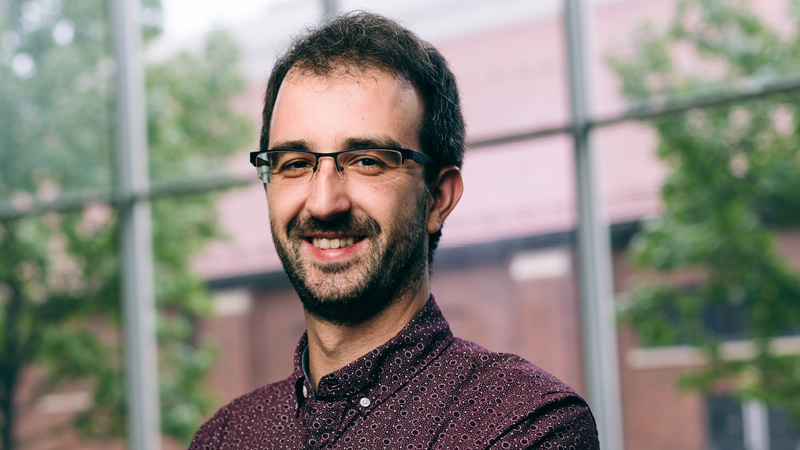
Ulrich Neumerkel is an Assistant Professor in the Department of Compilers and Languages at Technische Universität Wien (TU Wien). He holds academic titles of Dipl.-Ing. (FH) and Dr.techn. His primary research focuses on programming languages, logic programming, and constraint programming, with significant contributions to Prolog optimization, garbage collection, and formal methods. He is also actively involved in educational initiatives, developing declarative programming tools and curricula. Neumerkel teaches courses such as Logic Programming and Constraints, Advanced Logic Programming, and Programming 2. He leads research in formal semantics of Prolog, constraint solver design, and memory management techniques. His work includes contributions to ISO/IEC Prolog standards and the development of tools like the Vienna Abstract Machine (VAM) and the GUPU environment for Prolog education. His research interests span compiler design, termination analysis, and program transformation. He has supervised students, including M. Seidl, on diploma theses related to virtual machine comparison and other topics. Neumerkel's affiliations include the Compilers and Languages group within TU Wien's Institute for Information Systems Engineering.
Ali Muzaffar is an Assistant Professor at Heriot-Watt University’s School of Mathematical and Computer Sciences (MACS), serving as Year 4 Coordinator and Year 3 Group Project Coordinator. He holds a PhD in Computer Science from Heriot-Watt University (2024), specializing in Android malware detection using machine learning. His research focuses on AI applications in cybersecurity, particularly leveraging machine learning for Android security. Research interests include malware detection through static/dynamic analysis, tool development, and comparative evaluations of ML models. His work spans topics like control flow graphs, API call analysis, and active learning frameworks. He has contributed to datasets for malware detection and collaborated on open-access tools like DroidDissector. Publications (2021-2024) emphasize methodological advancements in feature extraction, model optimization, and hybrid analysis techniques. Notable contributions include frameworks for iterative learning (ActDroid) and surveys of ML-based approaches in malware detection. No scientific awards are explicitly listed. His industry experience includes 5 years as an AI Engineer, bridging academic research with practical AI solutions in cybersecurity.
Johann Glock is a PhD candidate and university assistant (Univ.-Ass.) in the Software Engineering Research Group (SERG) at the University of Klagenfurt, Austria. His research is supervised by Prof. Martin Pinzger. He is affiliated with the Department of Informatics Systems and contributes to the Team ICS Eder. His work focuses on software engineering challenges, including developer understanding of code changes, microservice API evolution, and semantic analysis techniques. Education: Holds BSc and MSc degrees (exact institutions unspecified). Research interests span semantic differencing, API evolution strategies, software quality metrics, and developer productivity tools. His recent publications investigate symbolic execution-based methods for code comprehension and empirical studies on microservice architecture challenges. Publications emphasize practical software engineering solutions, with a focus on improving developer workflows and system maintainability. He has contributed to tools like PASDA for semantic code comparison and studies on design patterns' impact on software quality. No scientific awards are explicitly mentioned. Teaching involvement includes software practicum courses and project supervision. Active in the Interactive Systems Research Team (IAS) and contributes to ongoing projects in software engineering and HCI.
Peter FERRARA is an Associate Professor in Computer Science at Ca' Foscari University of Venice, Italy. He joined the university in November 2019 as a tenure-track assistant professor and transitioned to his current rank. His primary affiliation is with the Department of Environmental Sciences, Computer Science and Statistics (D.A.I.S.) and the Research Institute for Complexity. He is part of the Software and System Verification group and maintains an active role in the Temporary Center Innovation Ecosystem Project. Education: Holds a PhD in Computer Science (2009) from École Polytechnique (Paris) and Ca' Foscari University of Venice, advised by Radhia Cousot and Agostino Cortesi. Completed his MA (2005) and BA (2003) in Computer Science from Ca' Foscari. Defended his thesis at École Normale Supérieure in May 2009. His research experience spans 15 years, with 50+ publications and 20 patents, focusing on static analysis for software reliability and security. Research Interests: Specializes in applying abstract interpretation theories to enhance software security, reliability, and performance. Recent work emphasizes static analysis of mobile and .NET systems, blockchain smart contracts, IIoT vulnerabilities, and automated policy enforcement. He bridges formal methods with practical software development, addressing challenges in precision-efficiency tradeoffs and industrial tool adoption. Industry Experience: From 2013-2019, worked in industry as Head of R&D at JuliaSoft SRL (2016–2019) and IBM Research (2013–2015). Developed commercial static analysis tools, managed research projects, and delivered technical presentations to clients. His work focused on transitioning research into deployable solutions. Teaching: Instructs courses in Object-Oriented Programming, Software Architectures, and Coding/Data Management. Engages students through practical LiSA framework experiences. Has taught at ETH Zurich (2009–2013) and supervised over a dozen students across PhD, Master's, and Bachelor's levels. Awards: No specific scientific awards listed, but recognized through extensive patent portfolio and impactful industry-academia collaborations. Holds 20 patents, including innovations in permissions extraction, privacy enforcement, and malware detection. Grants & Projects: Involved in multiple research projects from proposal to execution, including EU Data Act analysis, IoT security frameworks, and blockchain verification initiatives. Collaborates with institutions like IBM, Microsoft Research, and the University of Verona's JuliaSoft spin-off. Labs/Teams: Active in the Software and System Verification group at Ca' Foscari. Co-developed the LiSA static analysis framework. Engages in interdisciplinary projects combining robotics, IoT, and blockchain domains.
Jacques Klein is Full Professor of Software Engineering and Mobile Security at the University of Luxembourg. His research bridges software engineering principles with security challenges in modern computing environments. Research focuses on software security, mobile systems analysis, and increasingly on large language model applications for program analysis. Recent work examines Android ecosystem security, infrastructure-as-code vulnerabilities, and AI-enhanced program repair techniques. Klein's 2025 publications demonstrate strong emphasis on LLM capabilities for automated compliance checking, malware detection, and program understanding. The research combines empirical software engineering with AI methodologies to address security and maintenance challenges.
Alexander J. Summers is an Associate Professor and Associate Head of Graduate Affairs in the Department of Computer Science at the University of British Columbia (UBC), where he joined in 2020. Prior to UBC, he was a senior researcher (Oberassistent) at ETH Zurich. His research focuses on program correctness, including specification and verification logics, type systems, and automated tools for deductive verification. He leads the Prusti Project, developing verification tools for the Rust programming language, and collaborates on the Viper Project, an intermediate verification language framework. Summers is also actively involved in teaching, offering courses on advanced software engineering and program verifiers. His research interests span formal methods, programming languages, and automated reasoning, with a particular emphasis on Rust and ownership-based systems. He has contributed to the development of verification tools like Viper and Prusti, which aim to enhance software reliability through deductive techniques. Summers has been recognized with awards such as the Distinguished Reviewer Award (ACM SIGPLAN) and the Amazon Research Award. Summers has published extensively in top venues like POPL, PLDI, and OOPSLA, with recent work addressing challenges in Rust's ownership model, formal verification frameworks, and automated reasoning techniques. His lab focuses on advancing the state of the art in program verification while maintaining strong ties to practical tool development and empirical studies of programming practices. He actively mentors students at UBC, including PhD and M.Sc. candidates, and has supervised postdoctoral researchers. Summers is also engaged in academic service, serving on program committees for conferences like OOPSLA and IJCAR, and contributes to the broader formal methods community through tool development and educational initiatives.
Christoph Matheja is a Professor at the University of Oldenburg, Germany, leading the Theory of Correct Systems group , and an Associate Professor at the Technical University of Denmark (DTU) in the Software Systems Engineering section. His work focuses on formal methods and verification, particularly for probabilistic and heap-manipulating systems. He develops rigorous mathematical techniques to enhance software correctness and trustworthiness, with contributions to quantitative verification, probabilistic program analysis, separation logic, Rust verification, and static analyses using graph grammars. Before his current roles, he was a postdoctoral researcher at ETH Zürich (Programming Methodology Group) and earned his Ph.D. at RWTH Aachen University under Joost-Pieter Katoen. His research bridges theoretical foundations and practical tool development, as seen in works like LogPPL for probabilistic process mining and the Prusti project for Rust verification. Recent publications emphasize probabilistic systems, POMDPs, and formal verification frameworks. He actively contributes to academic communities, serving on PCs for ESOP 2026, LICS 2026, and CAV 2025. His current focus includes recruiting a PhD student (see UOL openings ) and advancing verification methodologies for probabilistic and concurrent systems.
Esben Lindgaard is a Professor at the Department of Materials and Production, Faculty of Engineering and Science, Aalborg University. His research focuses on composite materials, fracture mechanics, and fatigue-driven damage in wind turbine structures. Projects: CIRCWIND (Circular material solutions for wind turbines), MulFat (Multiscale fatigue modeling), MADE4WIND (Innovative floating wind components). Research: Specializes in delamination behavior, crack propagation, and computational modeling of composite structures under static and fatigue loading. His recent work explores deep learning for delamination traction fields, cohesive element fatigue modeling, and binder-stabilized fabric forming simulations. Collaborates extensively with industry partners and contributes to open-access datasets and software tools. Awards: AAU Talent Project (2018), honored for wind turbine blade defect research (2020). Expertise: Composite material failure, multiscale modeling, industrial validation, and wind energy structural integrity.
Christopher Terman is a Senior Lecturer (Emeritus) at the Massachusetts Institute of Technology (MIT), affiliated with the School of Engineering and the Department of Electrical Engineering and Computer Science (EECS). He holds office in 32-G790 and can be reached at cjt@mit.edu. His research interests span digital communication systems, VLSI design methodologies, and educational technology innovations in engineering education. Terman has contributed extensively to the development of simulation tools for digital integrated circuits and has pioneered interactive learning environments for VLSI design education. His work integrates theoretical advancements with practical applications in both industry and academia. Over his career, Terman has authored influential papers on topics ranging from multiprocessor architectures to compiler optimization techniques, reflecting his interdisciplinary expertise in electrical engineering and computer science. His educational contributions include the design of MIT's 6.004 Computation Structures course, emphasizing scalable and learner-centered pedagogical strategies. Terman's publications demonstrate a sustained focus on bridging computational theory with real-world implementation challenges, particularly in the realms of digital signal processing and embedded systems. While no formal scientific awards are listed, his long-term academic leadership and contributions to foundational engineering education have had lasting impacts on both the field and MIT's curriculum. His work continues to inform modern approaches to integrating simulation, design automation, and collaborative learning in technical disciplines.
Aravind Machiry is an Assistant Professor at the Elmore Family School of Electrical and Computer Engineering at Purdue University. His research focuses on system and software security, particularly in securing embedded systems, firmware, and leveraging modern tools like static analysis and fuzzing to mitigate vulnerabilities. He leads the Purdue Systems and Software Security Lab (PurS3) , which emphasizes principled yet practical security solutions. Research interests include embedded systems security (e.g., Rust adoption in embedded contexts), vulnerability detection in firmware and network stacks, and securing continuous integration workflows. He has explored topics like language model integration in Android apps, fault injection in API error handling, and mitigating data poisoning in federated learning. His work bridges hardware and software domains, with contributions to secure execution environments (e.g., ARM TrustZone via Tarnhelm) and binary analysis tools like BinTrimmer. While no formal awards are listed, his grant-funded projects (e.g., CAREER award) reflect recognition of his research impact. Advising focuses on graduate students in cybersecurity and embedded systems domains. Key projects include rehosting embedded applications as Linux apps (LEMIX), automated firmware analysis (KARONTE), and feedback-driven binary generation (Cornucopia). His research often addresses scalability challenges in vulnerability detection across large codebases.
Trinidad Mendez Morales is a Ramón y Cajal Researcher at the University of Santiago de Compostela, affiliated with the Department of Particle Physics within the Faculty of Physics . She is part of the Strategic Grouping in Materials (AEMAT) and the NaFoMat Group (Nanomaterials, Photonics and Soft Matter Group). Her research focuses on ionic liquids, molecular dynamics simulations, and electrochemical interfaces, with applications in energy storage and nanomaterials. She holds a PhD from the University of Santiago de Compostela (2015), where her thesis explored the theoretical and computational study of ionic liquid mixtures. Her work bridges computational methods and experimental insights to understand the behavior of ionic liquids in confined environments, electrolyte design, and their role in advanced materials. Key areas include hydrogen storage mechanisms, interfacial phenomena at graphene electrodes, and the thermophysical properties of novel electrolyte systems. Her recent studies emphasize hybrid electrolytes, solid polymer electrolytes, and clathrate-based storage solutions. Education: PhD in Physics (2015), University of Santiago de Compostela, thesis: Theoretical and computational study of static and dynamic properties of homogeneous and inhomogeneous mixtures of ionic liquids , supervised by Dr. Luis Miguel Varela Cabo and Dr. Luis Javier Gallego del Hoyo. Research Interests: Electrochemical interfaces and ion transport mechanisms. Design of novel electrolytes for batteries and supercapacitors. Nanostructured materials and their applications in energy storage. Computational modeling of ionic liquid behavior under confinement and mixing conditions. Articles Trends: Her publications since 2022 highlight advancements in understanding ionic liquid mixtures, electrolyte-electrode interactions, and hydrogen storage in clathrates. She has pioneered computational tools like the KUTE estimator for transport properties and explored graphene-based systems for enhanced ion transfer. Recent work emphasizes the role of anion-cation interactions in solvation and the optimization of ternary solid polymer electrolytes. No scientific awards are explicitly mentioned in the provided text. Advising and grants: No listed students or explicit grants are noted, though her research likely benefits from Ramón y Cajal funding and collaborations within AEMAT. Her work is closely tied to the NaFoMat group, focusing on nanomaterials and soft matter systems. Labs and Teams: Active within the NaFoMat Group , collaborating on projects involving molecular dynamics simulations and experimental validation of material properties.
Hyoungshick Kim is a Professor in the Department of Computer Science and Engineering at the College of Computing, Sungkyunkwan University (SKKU), where he leads the Security Laboratory (seclab). He has been selected as an SKKU Fellow in recognition of his research contributions and academic engagement. Dr. Kim received his Ph.D. in the Security Group at the Computer Laboratory, University of Cambridge, under the supervision of Prof. Ross Anderson. His doctoral research focused on complex network analysis for secure and robust communications. Prior to his Ph.D., he worked at Samsung Electronics on secure home networking and content protection research. After completing his doctorate, he served as a post-doctoral fellow at the Laboratory for Education and Research in Secure Systems Engineering (LERSSE) in the Electrical and Computer Engineering department at the University of British Columbia (UBC). He also worked as a distinguished visiting researcher at CSIRO Data61. Dr. Kim's research interests center around usable security, blockchain technology, security vulnerability analysis, and data-driven security approaches. His work bridges theoretical security principles with practical applications, with a particular emphasis on understanding human factors in security systems and developing solutions that are both robust and user-friendly. His research spans areas including phishing detection, authentication systems, web security, mobile security, and AI security, consistently focusing on real-world applicability. Through his extensive publication record spanning multiple years, Dr. Kim has established himself as a leading researcher in cybersecurity. His recent work shows a growing focus on the security implications of artificial intelligence and machine learning systems, examining both how AI can improve security and how AI systems themselves can be vulnerable to attacks. His research demonstrates a consistent pattern of addressing pressing security challenges with innovative, practical solutions. SKKU Fellowship in recognition of research contributions and academic engagement As the leader of the Security Laboratory at SKKU, Dr. Kim oversees research projects that address critical security challenges. His work has been supported by various research grants focusing on practical security solutions for real-world problems. Dr. Kim maintains active collaborations with researchers worldwide and with industry partners to ensure his research addresses current security challenges and translates into practical applications. The Security Laboratory (seclab) under Dr. Kim's leadership focuses on developing practical security solutions with emphasis on usability. The lab's research spans multiple domains including web security, mobile security, blockchain security, and AI security, with a consistent thread of considering human factors in security design. The laboratory produces both theoretical contributions and practical tools that have impact in the security community and beyond.
Pedro Jose Sousa Da Fonseca is an Assistant Professor in the Department of Computer Science at Purdue University, where he leads the Reliable and Secure Systems Lab. His research focuses on building reliable and secure systems, particularly in core software components like operating systems, hypervisors, and distributed systems. He joined Purdue in Fall 2018 and has received awards including the NSF CAREER Award and Google Faculty Research Awards. Education: PhD from Max Planck Institute for Software Systems and University of Saarland (advised by Rodrigo Rodrigues), postdoc at University of Washington (with Arvind Krishnamurthy, Hank Levy). Research interests span system reliability, security, and concurrency testing. His work includes frameworks like MultiNyx for hypervisor analysis, SKI for kernel bug detection, and KARD for data race detection. Teaching includes courses on Operating Systems (CS503), Reliable and Secure Systems (CS592), and Software Testing (CS408). Active in academic service as PC member for OSDI, EuroSys, and SOSP. Advises PhD students on topics like kernel testing, serverless computing, and confidential cloud systems. Awards: NSF CAREER Award (202?), Google Faculty Research Award, Google Research Scholar Award. Over 30 publications in top venues like SOSP, OSDI, EuroSys, and ASPLOS. Collaborations with institutions like MPI-SWS, University of Washington, and industry partnerships with Google.
Kellie Halloran is a Teaching Assistant Professor in the Department of Mechanical Science and Engineering at the University of Illinois Urbana-Champaign, affiliated with The Grainger College of Engineering. She holds a PhD in Mechanical Engineering from the same institution (2024). Her research focuses on biomechanics related to wheelchair users, particularly shoulder injury mechanisms and propulsion dynamics during handcycling. She teaches courses in engineering design, statics, leadership, and creativity. Education: PhD in Mechanical Engineering, University of Illinois Urbana-Champaign (2024) Research Interests: Dr. Halloran investigates the kinetics and kinematics of upper-limb propulsion in adaptive sports, aiming to reduce injury risks for wheelchair users. Her work combines biomechanical analysis with engineering solutions for rehabilitation and sports equipment optimization. Recent studies emphasize recumbent handcycling biomechanics and HIIT effects on spinal cord injury patients. Publications Trends: Her articles analyze shoulder loading, propulsion techniques, and exercise responses in adaptive sports. Key themes include real-time measurement tools, gender differences in wheelchair transfers, and HIIT perceptions among SCI patients. Most work integrates clinical and engineering perspectives to advance adaptive sports safety and rehabilitation strategies. Teaching & Leadership: She teaches courses like TAM 210 (Statics), ME 170 (Computer-Aided Design), and TE 333 (Creativity & Innovation). Her pedagogical focus bridges technical engineering with leadership and design thinking. Labs/Teams: Engaged in collaborative biomechanics research within the MechSE department, though specific lab affiliations are not explicitly stated.
Dr. Tuba Yavuz is an Associate Professor in the Department of Electrical & Computer Engineering at the University of Florida. Her research focuses on formal methods, software engineering, and system security, particularly in automated verification, model checking, and hardware security. She received her Ph.D. from the University of California Santa Barbara in 2004. Her work addresses challenges in firmware analysis, hardware Trojans, and IoT security, supported by an NSF CAREER Award in 2020. Education: Ph.D., University of California Santa Barbara, 2004 Research Interests: Automated Verification and Model Checking Hardware Security and Fuzzing Formal Methods for Embedded Systems Software Testing and Analysis Recent Research Trends: Her publications emphasize scalable hardware fuzzing, model-guided symbolic execution, and IoT framework security. Recent work includes frameworks like Dtjrtl for hardware Trojan detection and tools like SIFT for multithreaded software analysis. Awards: NSF CAREER Award (2020) Grants & Advising: Leads NSF-funded research projects on trustworthy computing and variability-aware software analysis. Advises students in system security and formal methods.