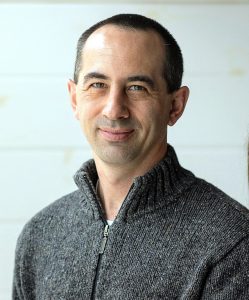
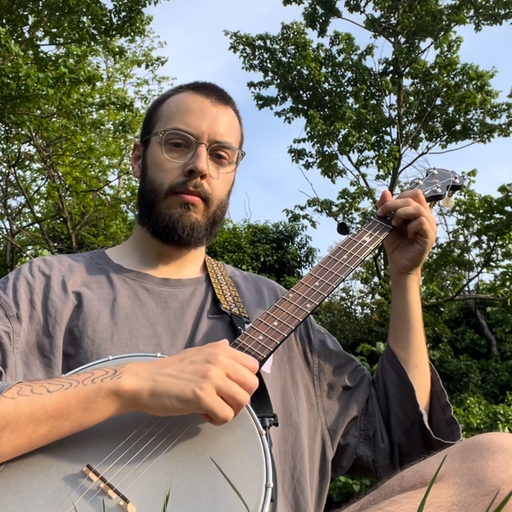
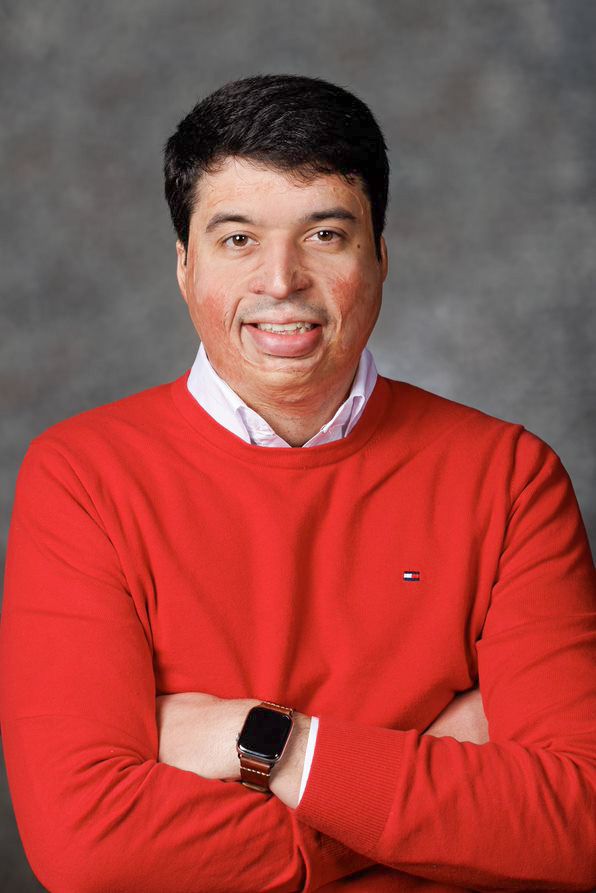
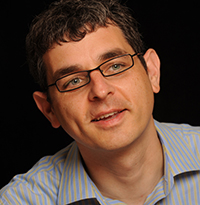
Michael Mühlebach is a Lecturer at the Department of Information Technology and Electrical Engineering at ETH Zurich, affiliated with the Max Planck Institute for Intelligent Systems in Tübingen, Germany. He received Bachelor (2010) and Master (2013) degrees from ETH Zurich, awarded the Outstanding D-MAVT Bachelor Award and Willi-Studer Prize for top performance. His research specializes in multibody dynamics , control of nonlinear systems , and model predictive control , with applications in robotics and aerospace systems. Publications demonstrate consistent focus on theoretical control frameworks validated through experimental platforms like ducted fans and reaction-wheel systems. Awards: Outstanding D-MAVT Bachelor Award Willi-Studer Prize (Best Master in Robotics, Systems, and Control)
Aaron Weiskittel is a Professor of Forest Biometrics and Modeling and the Irving Chair of Forest Ecosystem Management at the University of Maine’s School of Forest Resources. He directs the Center for Advanced Forestry Systems and the Center for Research on Sustainable Forests . His research focuses on developing quantitative tools for forest management, including growth and yield modeling, climate change impacts, and sustainable forestry practices. He holds a PhD (2007), MS (2003), and BS (2001) in forest resources from Oregon State University and The Ohio State University, respectively. Research interests include: Forest biometrics and modeling Climate change effects on forest productivity Stem taper equations and volume estimation Old-growth forest structure analysis Commercial thinning impacts on stand dynamics Key contributions include: Development of growth models for the Acadian Region Evaluation of climate change on forest productivity and species distribution Advancements in forest biomass and carbon estimation Collaborative studies on northern white-cedar silviculture His work integrates field data, remote sensing, and computational modeling to address complex forest management challenges. Ongoing projects focus on carbon MRV frameworks, forest carbon markets, and stakeholder-driven climate adaptation strategies.
Benjamin Hayes is a research scientist at Sony Computer Science Laboratories Paris and a PhD candidate in Artificial Intelligence and Music at Queen Mary University of London's Centre for Digital Music (C4DM). His research focuses on neural audio synthesis, generative models, and perceptual aspects of sound design. He has held internships at Spotify, Sony CSL, and Bytedance, and previously worked as a music producer and lecturer in Electronic & Produced Music at the Guildhall School of Music & Drama. His work bridges digital signal processing, deep learning, and creative sound exploration. Education: PhD in AI and Music (Queen Mary University of London), Master’s/Undergraduate qualifications not explicitly stated but inferred from professional roles. Research Interests: Neural audio synthesis, differentiable digital signal processing, timbre perception, generative models, and psychoacoustics. Current project explores perceptually motivated deep learning approaches for sound synthesis, emphasizing semantic associations in timbre. Professional Experience: Over 10 years in music production, internships at leading tech firms, and academic collaborations across institutions like IRCAM, CNRS, and KTH. Key Contributions: Developed frameworks for end-to-end sound synthesis, addressed challenges in unordered neural network targets, and pioneered gamified systems for crowdsourcing timbre semantics (e.g., timbre.fun). Active in conferences such as ICLR, ICASSP, and DMRN workshops.
Chao Chen is an Associate Professor at the Department of Mechanical & Aerospace Engineering, Monash University, and Director of the Laboratory of Motion Generation and Analysis (LMGA). He holds an adjunct position as Associate Professor at the Chinese University of Hong Kong. His research focuses on medical, agricultural, and infrastructure robotics, emphasizing design, dynamics, control, and intelligence. Key innovations include the Robotic Transverse Profiler (delivered to the Australian Road Research Board in 2016), the 3D Printed Prosthetic Hand (2017 Award), and the Apple Harvesting Robot (2019 Global AI Expo). Dr. Chen has secured over $2M in lead research funding and contributed to $18M in collaborative projects, supported by ARC, Collier Charitable Fund, and International Science Linkages. His awards include the 2017 Innovation Award from the Australian Hand Therapy Association and scholarships from ASME and FQRNT. Education: PhD in Mechanical Engineering (details not explicitly stated in text) Research interests span medical robotics (surgery and rehabilitation), mobile robotics with advanced mobility, and reconfigurable mechatronic systems . LMGA’s mission is to address real-world challenges via robotic technologies, targeting healthcare, agriculture, and infrastructure sectors. Recent projects include fruit harvesting systems, drug delivery sensors, and embodied AI frameworks. Publications highlight advancements in robotic perception (e.g., LiDAR-camera fusion), control systems, and tactile-enabled grasping. His work aligns with UN Sustainable Development Goals, particularly in advancing industry innovation and infrastructure (SDG 9) and sustainable agriculture (SDG 2). Awards: 1996 Dean’s Honor List (Shanghai Jiao Tong University), 2004 ASME Scholarship, 2005 FQRNT Doctorate Scholarship Grants and collaborations include leading the ALF 1 Transverse Profiler and participating in the $18M ARC Smart Process Design Hub . Current projects address robotic fruit harvesting, hydrogel drug delivery systems, and AI-driven manipulation frameworks. Labs/Teams: Director of LMGA, collaborating internationally with institutions like IRCCyN (France), Shanghai Jiao Tong University, and Agriculture Victoria.
Zheng Li is an Assistant Professor in the Department of Agricultural and Resource Economics at North Carolina State University. His research focuses on econometric methodologies with applications in agricultural economics, resource management, and policy analysis. He holds expertise in nonparametric estimation, quantile regression, and structural econometric modeling. Key research interests include analyzing agricultural production risks, evaluating policy impacts on housing markets, and developing advanced statistical techniques for mixed data types. His work bridges econometric theory with practical applications in environmental, urban, and transportation sectors. Recent publications explore topics such as lung cancer detection via biomedical sensing technologies, ridesharing platform incentives, and pandemic effects on real estate markets. Methodologically, his contributions span kernel-based specification tests, bootstrap methods for heavy-tailed data, and monotonicity-constrained estimation techniques. No scientific awards or formal advisees are listed. His research often intersects with interdisciplinary challenges, reflecting a commitment to innovative solutions in applied economics and data science.
Jakob Wagner is a Research Fellow at the Technical University of Munich (TUM), affiliated with the School of Computation, Information and Technology and the Department of Mathematics. He works within the Chair of Optimal Control under Prof. Boris Vexler and serves as an Invited Lecturer at Kutaisi International University in Georgia since 2022. His educational background includes a Master's degree in Mathematics from TUM (2019-2020, grade 1.0) and a Bachelor's degree in Mathematics from TUM (2014-2018, grade 1.2). Wagner's research focuses on Optimal Control of fluid dynamics equations, particularly the Navier-Stokes and Stokes systems. He specializes in Finite Element Methods and rigorous Error Estimates for discretizations of partial differential equations. His work addresses time-dependent problems, state constraints, and boundary control mechanisms in computational fluid dynamics, with significant contributions to stream-function formulations and pressure boundary conditions. Analysis of his publication record reveals a concentrated research trajectory in numerical analysis of incompressible flow control. His work consistently advances theoretical foundations for finite element discretizations, emphasizing fully discrete error analysis and pointwise constraints across Stokes and Navier-Stokes frameworks. Key innovations include novel approaches to blood flow modeling and ocean current reconstruction through coupled ODE systems. Wagner actively mentors students, supervising Master's theses by Alexandro Jedaidi (2025, ocean current reconstruction), Chenhong Lin (2025, Stokes equations), and Hendrik Bruhse (2023, parabolic problems), plus Noah An der Lan's Bachelor thesis (2025, Bayesian experiment design). His teaching portfolio spans Analysis, Optimization, and Numerical Methods courses at TUM and Kutaisi International University. He operates within TUM's Chair of Optimal Control research ecosystem, contributing to international collaborations through conference presentations at GAMM Annual Meetings and specialized symposia, while maintaining active involvement in computational mathematics projects including robotic swarm applications for radio imaging.
Dr. Luan Oliveira is an Assistant Professor and Precision Agriculture Extension Specialist at the University of Georgia's College of Agricultural & Environmental Sciences (CAES), Department of Horticulture. His roles are distributed as 75% Extension, 20% Research, and 5% Service. He holds a Ph.D. in Agronomy (Crop Production) from São Paulo State University and a B.Sc. in Agronomic Engineering from Federal University of Paraíba, Brazil. His research focuses on precision agriculture tools, agricultural machinery optimization for vegetables and specialty crops, and mechanized operations like planting, spraying, and harvesting. He leads the Precision Horticulture Team, aiming to improve crop quality through innovative technologies. Dr. Oliveira has received the 2021 Gerald O. Mott Award for Meritorious Graduate Student in Science. He has authored/co-authored 9 refereed articles, 7 Extension Publications, 40 conference papers, and 13 book chapters, securing ~$220,000 in grants as PI/Co-PI. His work emphasizes practical applications in precision agriculture, including drone spraying, robotic systems, and mechanized sugarcane planting. Key grants and awards highlight his contributions to agricultural technology and crop management. His research spans diverse crops like peanuts, corn, cotton, and sugarcane, addressing challenges in seeding depth, soil compaction, and equipment wear. He collaborates with the Institute for Integrative Precision Agriculture and UGA's Precision Agriculture initiatives.
Hankui Zhang is an Associate Professor in the Department of Geography and Geospatial Sciences at South Dakota State University (SDSU), and a Research Scientist at the Geospatial Sciences Center of Excellence. He holds a Ph.D. from the Chinese University of Hong Kong (2013), specializing in satellite image fusion. His research focuses on developing algorithms for medium-resolution satellite data processing (e.g., Landsat and Sentinel-2), including cloud masking, BRDF correction, and compositing. He also explores AI applications in remote sensing for land cover mapping and environmental monitoring. As a Landsat Science Team member, he contributes to global remote sensing initiatives. Education: B.S. in Geographic Information Systems, Zhejiang University (2007) M.S. in Remote Sensing, Zhejiang University (2010) Ph.D. in Geography and Resource Management, Chinese University of Hong Kong (2013) Research Interests: Deep learning applications in remote sensing, land cover dynamics, analysis-ready data development, and geospatial data harmonization. His work emphasizes operationalizing satellite data for environmental decision-making. Grants & Awards: Over $2.5M in grants as PI/co-PI, including USDA and NASA-funded projects. Notable awards include the SDSU Wadsworth Research Award (2020-2021) and the Global Scholarship for Research Excellence from CUHK (2011-2012). Professional Roles: Editorial board member for Remote Sensing of Environment and Remote Sensing ; guest editor for special issues on deep learning in remote sensing. Top 20 reviewer for Remote Sensing of Environment (2020, 2022-2024). Key Contributions: Published over 70 SCI papers, developed cloud detection algorithms (e.g., LANA), and pioneered analysis-ready data workflows for global monitoring. His work bridges satellite data science with practical environmental applications.
Thomas Heldt is Associate Professor of Electrical and Biomedical Engineering in the Department of Electrical Engineering and Computer Science at MIT, and a Principal Investigator at MIT's Research Laboratory of Electronics. He leads the Integrative Neuromonitoring and Critical Care Informatics Group and serves as Associate Director of the Institute for Medical Engineering and Science. Research focuses on: Noninvasive intracranial pressure monitoring Computational models of cerebrovascular dynamics Sepsis detection algorithms Wearable physiological monitoring Clinical decision support systems Recent publications (2022-2024) demonstrate advances in hemodynamic modeling, diagnostic algorithms for critical care, and AI applications for physiological monitoring. Key innovations include open cranium models for intracranial hypertension studies, deep learning frameworks for fatigue assessment, and mobile-based neurocognitive tracking. Professor Heldt collaborates with Boston Children's Hospital, Beth Israel Deaconess Medical Center, and Boston Medical Center to translate research into clinical practice. His work has been recognized through the W.M. Keck Career Development Professorship and IEEE EMBS Distinguished Lectureship.
Michael Herbst is an Assistant Professor (tenure-track) at EPFL, holding a joint appointment in the School of Basic Sciences (SB) and the School of Engineering (STI). He leads the Mathematics for Materials Modelling (MatMat) research group, focusing on error control in atomistic simulations, density-functional theory (DFT), and interdisciplinary computational methods. His work bridges mathematics, materials science, and computer science, emphasizing robust algorithms and Julia-based software development. Herbst holds a PhD from Heidelberg University and has held postdoctoral positions at RWTH Aachen and Inria Paris. He is a core member of the MARVEL and CESMIX research centers. Education: 2018: Dr. rer. nat. (magna cum laude), Heidelberg University 2009–2013: BA and MSci (1st class) in Natural Sciences, University of Cambridge 2008–2009: Studies in Mathematics/Physics, TU Kaiserslautern Research Interests : Herbst's research centers on developing reliable computational methods for materials modeling, including error estimation in DFT, black-box SCF algorithms, and Julia-based tools like the Density-Functional Toolkit (DFTK). His work addresses challenges in high-throughput simulations, numerical stability, and interdisciplinary collaboration across mathematics, physics, and computer science. Grants & Projects : MARVEL Center for Computational Design (EPFL) CESMIX Center for Extreme-Scale Simulations (MIT) EMC² Project (Sorbonne/Inria/École des Ponts) Awards : HGS MathComp PostDoc Fellowship (2018–2021) DAAD Travel Funding (2018) Exploratory Research Space Fund (RWTH Aachen, 2022) Labs & Teams : Head of the MatMat group at EPFL, focusing on error-controlled simulations and open-source software development.
Shiwei Fang is an Assistant Professor in the Department of Computer & Cyber Sciences within the School of Computer and Cyber Sciences at the University of North Georgia. He holds a Ph.D. in Computer Science from the University of North Carolina (2021) and a B.E. in Computer Science from the State University of New York (2015). His research focuses on IoT systems, cybersecurity, sensor networks, and edge computing, with notable contributions to multimodal analytics, privacy visualization tools, and geospatial tracking datasets. He advises the Graduate Student Organization and serves on the SCCS Academic Web Oversight Committee. Education: Ph.D., Computer Science, University of North Carolina, 2021 B.E., Computer Science, State University of New York, 2015 Research interests include IoT security, context-aware systems, and sensor fusion. His work on IoBT-MAX and GDTM datasets highlights expertise in experimentation frameworks and geospatial tracking. Recent publications explore privacy risks in IoT, AR-based privacy visualization, and efficient inference models for edge computing. He has contributed to over 25 peer-reviewed articles since 2015, with a focus on real-world IoT applications and hardware-software co-design. Service roles include faculty advising and committee participation. He teaches courses like CSCI 3170/5170 on Computer Organization, bridging theoretical computer science with practical hardware concepts.
Samer M. Khanafseh is a Research Associate Professor in the Department of Mechanical, Materials, and Aerospace Engineering at Illinois Institute of Technology (IIT), affiliated with the CARNATIONS research group. He holds a Ph.D. in Mechanical and Aerospace Engineering from IIT (2008), an M.S. from IIT (2002), and a B.S. in Mechanical Engineering from Jordan University of Science and Technology (2000). His research focuses on high-accuracy navigation algorithms, cycle ambiguity resolution, fault monitoring, and robust estimation techniques. Key areas include GNSS spoofing detection, integrity risk bounding, and sensor integration for aerospace applications. He is a member of the Institute of Navigation (ION) and the American Institute of Aeronautics and Astronautics (AIAA). His publications span navigation integrity, fault-tolerant systems, and GNSS applications, with notable work on Bayesian fault-tolerant estimators and GNSS spoofing attack detection using aircraft autopilot responses. His work bridges theoretical modeling with experimental validation, such as testing ground-based augmentation systems (GBAS). Awards: Best-of-Session Paper Award, Institute of Navigation (2006) Institute of Navigation 2011 Early Achievement Award Grants/Advising: Active involvement in CARNATIONS research initiatives, though no formal advisee list is provided. Labs/Teams: CARNATIONS (Context-Aware Navigation and Optimal Sensing) research group at IIT.
Elena Panteley is a Research Director at the CNRS and a member of the Laboratoire des Signaux et Systèmes (L2S) at CentraleSupélec. She holds a PhD in Applied Mathematics from Saint Petersburg State University (1997) and has extensive experience in research, including roles at the Institute of Problems in Mechanical Engineering, Russian Academy of Sciences (1986–1998). She co-chairs the International Graduate School of Control at the European Embedded Control Institute (EECI-IGSC) and serves as a Book-reviews Editor for Automatica and Associate Editor for IEEE Control Systems Letters . Education: PhD in Applied Mathematics, Saint Petersburg State University, 1997 MSc/BSc in relevant fields (implied by career progression) Research Interests: Focuses on stability and control of nonlinear dynamical systems, networked systems, multi-agent systems, and their applications. Her work emphasizes robust control, consensus algorithms, synchronization, and distributed control strategies for autonomous systems. She explores theoretical frameworks like Lyapunov methods and adaptive control, with practical applications in robotics and communication networks. Publications: Over 100 peer-reviewed articles in top journals like IEEE Transactions on Automatic Control and Automatica . Recent trends include advancements in consensus algorithms for multi-agent systems, synchronization of nonlinear oscillators, and control under communication delays. Awards: No specific awards mentioned, but contributions to control theory and networked systems are widely recognized. Grants/Advising: Leads research on adaptive control, network synchronization, and robotics. Collaborates internationally and advises on projects involving autonomous vehicles and distributed systems. Labs/Teams: Active in L2S and affiliated with CNRS, contributing to teams like MODESTY, COMEDY, and SYCOMORE. Engaged in transverse research on energy, industry automation, and healthy systems.
P. Michael (Mike) Kosro is a Professor at Oregon State University, specializing in coastal oceanography and physical oceanography. His work focuses on shelf/deep-sea exchange processes, eastern boundary currents, and the application of remote sensing and ocean acoustics to study ocean circulation. He holds a BA in Physics from the University of California, Santa Cruz (1973) and a PhD in Physical Oceanography from Scripps Institution of Oceanography (1985). Education: BA, UC Santa Cruz (Physics, 1973); PhD, Scripps Institution of Oceanography (1985) His research interests include coastal eddies, poleward undercurrents, and the use of HF radar for surface current mapping. He has contributed to major projects such as GLOBEC (Global Ocean Ecosystems Dynamics) and COAST (Coastal Ocean Advances in Shelf Transport). His work integrates observational data with numerical models to understand coastal circulation dynamics and their environmental impacts. Publications span over 40 years, addressing topics like mesoscale currents, El Niño effects, and the role of physical oceanographic processes in species distribution (e.g., invasive European green crab). His recent work emphasizes long-term data integration and interdisciplinary collaboration in ocean observing systems. Dr. Kosro’s research also explores the interplay between oceanography and marine ecosystems, including carbon transport and biogeochemical cycles. He collaborates with international teams to advance regional ocean observing networks, as seen in studies of the Northeast Pacific.
Mounir El Asmar is an Associate Professor at Arizona State University’s School of Sustainable Engineering and the Built Environment in the Del E. Webb School of Construction. He is also a Senior Sustainability Scientist at the Julie Ann Wrigley Global Institute of Sustainability and an Honors faculty member at Barrett Honors College. Additionally, he serves as co-director of the National Center of Excellence on SMART Innovations. His roles emphasize leadership in sustainable engineering, project delivery systems, and infrastructure development. El Asmar holds a Ph.D., M.S., and B.E. in Civil and Mechanical Engineering from the University of Wisconsin-Madison and the American University of Beirut. His research focuses on decision-making in construction, innovative project delivery systems like Design-Build and Integrated Project Delivery (IPD), sustainable performance metrics, and infrastructure resilience. He has conducted research for the U.S. Department of Transportation, the Construction Industry Institute, and global organizations. His work has been recognized with over 25 awards, including the CII Distinguished Professor Award, ASCE’s Thomas Fitch Rowland Prize, and the DBIA Distinguished Leadership Award. He has led funded projects on topics like EVMS reliability, public-private partnerships, and sustainable construction practices. El Asmar also chairs major conferences, such as the 2020 ASCE Construction Research Congress, and serves on editorial boards for journals like the ASCE Journal of Construction Engineering and Management. He advises Ph.D. students and teaches courses on construction engineering, sustainable practices, and project management. His research integrates technology like augmented reality (AR) to enhance communication and quality control in construction sites. He actively bridges academic research with industry needs through workshops, policy development, and community engagement. Key affiliations include the Global Futures Scientists and Scholars program, the Transportation Research Board, and the Design-Build Institute of America. El Asmar’s contributions span education, research, and service, reflecting ASU’s New American University mission of innovation and societal impact.