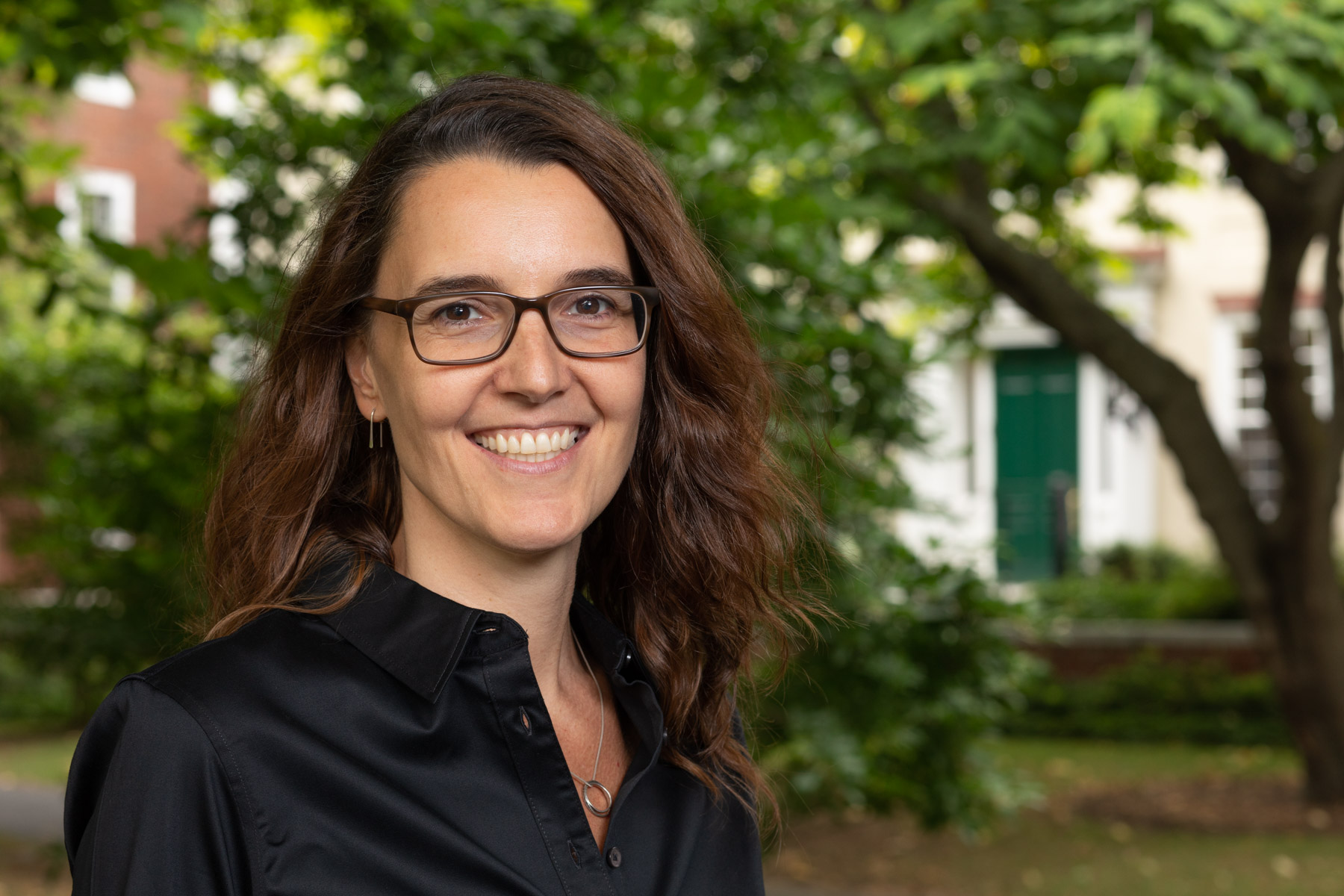
Adam Bonica is an Associate Professor in the Department of Political Science at Stanford University . His research integrates data science and politics , focusing on money in politics , campaigns and elections , judicial politics , and political methodology . Research Interests : Data Science, Political Ideology, Campaign Finance, Judicial Polarization, Quantitative Modeling Contact : Encina Hall West, Room 307, Stanford, CA 94305-6044 | Email : bonica@stanford.edu | Phone : (650) 725-7987 His work has been published in leading journals such as the American Journal of Political Science , Political Analysis , Journal of Economic Perspectives , Journal of Law, Economics, and Organization , and JAMA Internal Medicine . Bonica co-authored The Judicial Tug of War , which explores the politicization of the American judiciary. He has developed comprehensive databases like DIME (Database on Ideology, Money in Politics, and Elections) to advance research on political ideology and campaign finance. Recent publications include analyses of ideological persuasion in U.S. elections, judicial reform dynamics, and supervised machine learning applications in political methodology. His research spans topics such as clerk hiring as ideological indicators , professional networks in fundraising , and polarization trends among physicians and legal professionals .
Eva Ascarza is a Professor of Business Administration in the Marketing Unit at Harvard Business School (HBS) . She co-founded the Customer Intelligence Lab at HBS's D 3 Institute, focusing on responsible and effective customer data utilization. Research Interests include: Customer retention and churn analysis Algorithmic bias in marketing AI Field experimentation (A/B testing) for targeting optimization Customer lifetime value (CLV) modeling Dynamic personalization strategies Scientific Awards and Recognitions: 2023 Weitz-Winer-O'Dell Award (winner) 2022 Paul E. Green Award (PNAS publication) 2020 Marketing Science Institute (MSI) Scholar 2019 Erin Anderson Award for Emerging Female Scholar 2018 Paul E. Green Award (JMR publication) 2014 Frank M. Bass Outstanding Dissertation Award Her articles demonstrate cutting-edge applications of statistical modeling , Bayesian methods , and fair AI frameworks in modern marketing challenges.
Xiaoming Liu is the Anil K. and Nandita Jain Endowed Professor of Engineering and MSU Foundation Professor in the Department of Computer Science and Engineering at Michigan State University . Holding a Ph.D. from Carnegie Mellon University (2004), he leads cutting-edge research in computer vision and machine learning. Research Interests : Computer Vision Pattern Recognition Image and Video Processing Machine Learning Medical Image Analysis Multimedia Retrieval Recent Research Trends : Focus on 3D object detection and depth estimation Development of robust biometric recognition systems Integration of radar-camera fusion for autonomous systems Advancements in self-supervised and multimodal learning Exploration of adversarial AI security Creation of interpretable forgery detection frameworks Teaching : Spring 2013: CSE891-006 Computer Vision Seminar Fall 2012-2015: CSE803 Computer Vision Spring 2014-2017: CSE 471 Media Processing and Multimedia Contact Information : Email: liuxm@cse.msu.edu Office: EB 3137, Michigan State University Phone: +1 (517) 355-2359
Giulio Jacucci is a Professor in the Department of Computer Science at the University of Helsinki, affiliated with the Helsinki Information Technology Research Institute. He serves as a Supervisor in the Doctoral Programme in Computer Science, mentoring PhD candidates in human-computer interaction and related fields. His academic career spans over two decades with continuous research productivity from 2006 through 2025. Professor Jacucci's research interests center on Human-Computer Interaction , particularly focusing on Virtual Reality , Brain-Computer Interfaces , and Neuroadaptive Systems . His work explores how technology can adapt to users' cognitive and physiological states, with significant contributions to social virtual reality environments, embodied agents, and information retrieval systems. He investigates how virtual representations affect social behavior, time perception, and communication in digital spaces. His publication record shows a clear evolution from foundational work in information retrieval toward increasingly sophisticated neuroadaptive systems. Recent publications (2024-2025) demonstrate his leadership in examining social dynamics within virtual reality platforms, including votekicking mechanisms, mirror watching behaviors, and communication tools like mutes. His work bridges technical innovation with deep understanding of human social behavior in digital environments. Professor Jacucci currently leads multiple research projects funded by the Academy of Finland, including DataLit: Datalukutaito ja vastuullinen päätöksenteko (2023-2026) and MyModel: Selitettävyys suositusten hallinnassa (2023-2027). These projects focus on data literacy, responsible decision-making, and explainability in recommendation systems, reflecting his commitment to ethical and user-centered technology development. His research has received media attention, particularly around brain-computer interfaces and virtual reality applications, with coverage in outlets discussing how deep learning transforms mobile applications and sensor landscapes. He has presented his work at major conferences including CHI 2017 and continues to be an active contributor to the international research community.
Itsik Pe'er is a Full Professor and Vice-Chair in the Department of Computer Science at Columbia University's Fu Foundation School of Engineering & Applied Science, and holds a joint appointment as Professor of Systems Biology at the Vagelos College of Physicians and Surgeons. His research focuses on computational methods in human genetics, including genetic variation analysis, disease association studies, and algorithm development for genomic data. He leads the Itsik Pe'er Lab of Computational Genomics, which develops tools like Xplorigin, Germline, and SEACells to address challenges in genomics and medical research. His work spans machine learning applications in healthcare, microbiome analysis, and cancer genomics. Notable contributions include studies on hypertensive disorders in pregnancy, bias correction in predictive models, and the development of non-Euclidean learning libraries like Manify. Pe'er has advised students including Vladimir Vacic, Anat Kreimer, and Arthi Ramachandran, and collaborates on grants addressing genetic epidemiology and computational biology. His lab's location is in the Computer Science Building at Columbia's Morningside Campus.
John P. O'Doherty serves as the Fletcher Jones Professor of Decision Neuroscience within Caltech's Division of Humanities and Social Sciences, holding continuous faculty appointments since 2004 (Assistant Professor 2004-07, Associate Professor 2007-09, Professor 2009-present, Fletcher Jones Professor 2021-present). He previously directed the Caltech Brain Imaging Center (2013-17) and maintains affiliations with the T&C Chen Center for Social and Decision Neuroscience. His educational background includes a B.A. from University of Dublin, Trinity College (1996) and D.Phil. from University of Oxford (2000). His research focuses on computational and neural mechanisms of reward-based learning and decision-making , employing fMRI, intracranial recordings, and mathematical modeling to investigate how the brain solves complex decision problems through evolutionarily conserved algorithms. Key areas include Reinforcement learning systems (model-based/model-free arbitration) Observational and social learning mechanisms Neural representation of value, risk, and uncertainty Computational phenotyping of mental disorders Temporal dynamics of goal persistence Analysis of his 2023-2025 publications reveals dominant trends in computational psychiatry (problem gambling, autism traits), hierarchical decision-making, and neuroeconomic modeling of social behavior. His work consistently integrates cross-species computational frameworks with human neuroimaging to identify transdiagnostic mechanisms. While specific awards beyond his endowed professorship aren't detailed, his leadership as Brain Imaging Center Director and prolific high-impact publications demonstrate significant recognition. Current advising includes graduate researcher Sneha Aenugu on goal-persistence projects, with administrative support from Mary A. Martin (mmartin@caltech.edu). His active research program continues to pioneer computational approaches to understanding decision pathologies.
Julian McAuley is a Professor in the Department of Computer Science and Engineering at the University of California, San Diego's Jacobs School of Engineering. His research spans recommender systems, machine learning, natural language processing, music information retrieval, and multimodal learning. He maintains an active research group with numerous PhD students and postdocs working on cutting-edge AI problems. His research interests focus on developing advanced algorithms for personalized recommendation systems, with particular emphasis on sequential recommendation, multimodal learning, and integrating large language models with traditional recommendation approaches. His work bridges the gap between theoretical machine learning and practical applications across multiple domains including e-commerce, music, and healthcare. McAuley has published extensively in top-tier conferences including NeurIPS, ICML, KDD, SIGIR, and ACL, with his most recent work exploring the intersection of large language models and recommendation systems. His publications reveal a strong trend toward multimodal approaches that combine text, vision, and audio for more comprehensive understanding and recommendation. He has received significant research funding from major technology companies including Google, Amazon, Facebook, Adobe, and Samsung, as well as government agencies like the National Science Foundation and Department of Defense. His work has practical applications across multiple industries, with a focus on improving user experience through better personalization. McAuley advises numerous PhD students who have gone on to successful careers at leading technology companies and academic institutions. His former students include Wang-Cheng Kang and Jianmo Ni at Google DeepMind, Chris Donahue and Zachary Lipton as assistant professors at CMU, and Ruining He at Google Deepmind.
Ronald Parr is a Professor of Computer Science in the Department of Computer Science at Duke University's Pratt School of Engineering. He has been at Duke since 2000, progressing from Assistant Professor to Associate Professor with tenure, and ultimately to Full Professor. From 2014 to 2017, he served as Department Chair and delivered graduation speeches in 2015, 2016, and 2017. Dr. Parr received his Ph.D. in Computer Science from the University of California, Berkeley in 1998, with a dissertation titled "Hierarchical Control and Learning in Markov Decision Processes" under advisor Stuart Russell. He earned his A.B. in Philosophy, cum laude, from Princeton University in 1990. His primary research focuses on methods for solving large stochastic planning problems using Markov Decision Processes and approximate dynamic programming techniques. His work spans reinforcement learning, value function approximation, game theory, sensing, and robotics. Dr. Parr's research has been consistently funded by major agencies including NSF, DARPA, and ARO, with recent projects focusing on feature encoding for reinforcement learning, neurosymbolic hierarchical reinforcement learning, and reasoning in large, structured, uncertain domains. His publication record demonstrates consistent contributions to top venues including NeurIPS, ICML, and AAAI, with work that bridges theoretical foundations and practical applications. Dr. Parr has received numerous honors including being elected as an AAAI Fellow in 2023, receiving an AAAI Outstanding Paper Honorable Mention in 2013, winning the IJCAI-JAIR Best Paper Award in 2007, receiving an NSF CAREER award in 2006, and being named an Alfred P. Sloan Fellow in 2003. He has advised ten graduate students to completion across various research areas within AI and robotics. His research has been supported by over $1.5 million in direct funding to his lab, with additional collaborative funding from multiple NSF, DARPA, and ARO grants. Dr. Parr has served extensively on program committees for major AI conferences including ICML, NeurIPS, AAAI, and UAI, and has held leadership roles such as Program Co-Chair and General Chair for UAI. Dr. Parr maintains an active research group focused on reinforcement learning and sequential decision making, with ongoing projects in neurosymbolic AI, hierarchical reinforcement learning, and interpretable machine learning models, continuing to bridge theoretical foundations with practical applications in robotics and AI systems.
Noorbakhsh Amiri Golilarz is an Assistant Professor in the Department of Computer Science at The University of Alabama, College of Engineering. He has established himself as a prominent researcher in artificial intelligence, particularly in computer vision, deep learning, and image processing. His educational background includes: Postdoctoral Research Fellow, Computer Science, Boston College (2023) Ph.D., Electrical and Computer Engineering, Southern Illinois University Carbondale (2023) D. Eng., Computer Science and Technology, University of Electronic Science and Technology of China (2021) M.S., Electrical and Electronic Engineering, Eastern Mediterranean University (2017) B.S., Electrical Engineering, University of Guilan (2012) Dr. Golilarz's research spans multiple domains of artificial intelligence with a particular focus on computer vision, deep learning, and image processing applications. His work addresses challenges in medical imaging, satellite imagery, and cognitive neuroscience. He has made significant contributions to image denoising techniques, control chart pattern recognition, and AI applications in healthcare. His recent work has expanded into generative AI, large language models, and secure machine learning operations. His publication portfolio demonstrates consistent productivity with over 2500 citations and an h-index of 25. His most impactful work includes applications of blockchain and federated learning for COVID-19 detection, optimized support vector machines for medical diagnosis, and innovative image denoising techniques using metaheuristic optimization algorithms. Among his professional achievements: Co-founded AI Letters journal in 2024, serving as Associate Editor-in-Chief Served as Lead Guest Editor and Topic Editor for several SCI-indexed journals Held the role of Conference Program Chair Dr. Golilarz has supervised numerous graduate students and research projects, with his work spanning theoretical advancements in AI algorithms to practical applications in healthcare, energy systems, and cybersecurity. His research group has established collaborations with institutions including Boston College and Mississippi State University.
Aram Harrow is a Professor of Physics at the Massachusetts Institute of Technology (MIT) , affiliated with the MIT Center for Theoretical Physics and MIT Center for Quantum Engineering . He focuses on quantum information science and quantum algorithms , with additional interests in representation theory and optimization . His recent work explores quantum computing applications in chemical physics and statistical mechanics . Undergraduate and graduate degrees in Physics at MIT Faculty positions: MIT (2013-present), University of Washington (2010-12), University of Bristol (2005-10) Research Interests: His work bridges quantum information theory and many-body physics , including: Quantum algorithm design for chemistry and optimization Quantum circuit complexity and t-designs Entanglement dynamics in quantum systems Quantum-classical hybrid computing models Key Publications: Recent articles demonstrate quantum speedups for biomolecular free energy calculations , Hamiltonian simulation , and jet clustering algorithms . His research combines quantum complexity theory with practical implementations on near-term quantum devices. Scientific Awards: 2023 Simons Investigator 2018 APS Bennett Award 2017 IEEE Best Paper Award 2016 Kavli Frontiers Fellow Mentorship: He advises current PhD students Shankar Balasubramanian , Angus Lowe , and Norah Tan , with 12 former advisees including Anand Natarajan and Saeed Mehraban . His 2026 recruitment seeks one new graduate student.
Raquel Fernández is Full Professor of Computational Linguistics and Dialogue Systems at the University of Amsterdam, where she leads the Dialogue Modelling Group at the Institute for Logic, Language & Computation (ILLC). As Vice-Director for Research at ILLC and a Fellow of the ELLIS Society, she bridges computational linguistics, cognitive science, and artificial intelligence through her research on language use in multimodal and conversational contexts. PhD in Computational Linguistics from King's College London Prior research positions at University of Potsdam and Stanford University's CSLI Her work explores how cognitive constraints, social interaction, and perception shape language use, with a focus on: Visually-grounded language processing Multimodal dialogue modeling Model uncertainty and calibration Language grounding in multimodal data Language learning and semantic change Dialogue reference resolution Recent publications analyze multimodal reasoning limitations, cross-lingual knowledge consistency, and uncertainty modeling in dialogue systems. She has received multiple accolades including an ERC Consolidator Grant , NWO VENI/VIDI/Aspasia fellowships , and EMNLP/GenBench awards . Outstanding Paper Award (EMNLP 2023) Best Data Award (GenBench Workshop 2023) ELLIS Society Fellow ERC Consolidator Grant #819455 recipient NWO VENI/VIDI/Aspasia awardee As a leader in academic service, she serves on the SIGDAT Executive Committee and chairs multiple conference committees. Her lab develops models for multimodal dialogue, visual storytelling, and grounded language understanding.
James Glass is a Senior Research Scientist at the Massachusetts Institute of Technology (MIT) and heads the Spoken Language Systems Group within MIT's Computer Science and Artificial Intelligence Laboratory (CSAIL). He is also affiliated with the Harvard-MIT Division of Health Sciences and Technology. His research spans automatic speech recognition, multimodal learning, and spoken language understanding, with applications in healthcare and video analysis. Education: SM and PhD in Electrical Engineering and Computer Science from MIT His work focuses on paralinguistic speech analysis, health markers in speech, and the intersection of speech and natural language processing. Recent trends emphasize audio-visual alignment, recursive reasoning, and AI applications in cognitive disorder diagnosis. Scientific awards include IEEE Fellow, ISCA Fellow, and Associate Editor for IEEE Transactions on Pattern Analysis and Machine Intelligence. His group explores unsupervised learning, speaker verification, and social text analysis. James leads the Spoken Language Systems Group at CSAIL, collaborating with institutions like IBM and Harvard-MIT Division of Health Sciences and Technology. His research integrates vision-language models, neural audio codecs, and self-supervised frameworks.
Reed Maxwell is the William and Edna Macaleer Professor of Engineering and Applied Science in the Department of Civil and Environmental Engineering and the High Meadows Environmental Institute at Princeton University. He serves as Director of the Integrated Groundwater Modeling Center (IGWMC) and leads a research group comprising graduate students, postdoctoral researchers, and staff. His academic appointments include concurrent roles in both the School of Engineering and Applied Science and the High Meadows Environmental Institute. Maxwell's research focuses on understanding connections within the hydrologic cycle and how they relate to water quantity and quality under anthropogenic stresses. His work centers on hard problems in hydrology including groundwater, evapotranspiration and snow. His research group uses integrated hydrologic modeling, field observations, and remote sensing products to study terrestrial freshwater systems. Key research areas include surface water and the terrestrial hydrologic cycle; interactions of the land-surface, surface water and groundwater; and human health risk assessment. Maxwell has authored more than 185 peer-reviewed journal articles with an H-Index of 66 and over 19,000 citations. His recent work emphasizes machine learning applications in hydrology, continental-scale modeling, and physically rigorous scenario generation through projects like HydroFrame and HydroGEN. He teaches courses including CEE 306/ENV 318 Hydrology: Water and Climate and CEE 586/ENV 586 Physical Hydrology. 2020 Distinguished Henry Darcy Lecturer American Geophysical Union Fellow (2019) 2018 Boussinesq Lecturer Belle van Zuylen Chair (visiting), University of Utrecht 2017 School of Mines Research Award recipient Maxwell has mentored 17 PhD students and 20 MS thesis students throughout his career. His current research group includes multiple postdocs, research software engineers, and graduate students working on projects spanning continental-scale hydrologic modeling, groundwater-stream interactions, and machine learning applications in hydrology. The IGWMC maintains an active education and outreach program including STEM fairs, school visits, and digital educational tools like the HydroFrame Education Team's virtual sandtank aquifer model.
Soumya Dutta is an Assistant Professor in the Department of Computer Science and Engineering at the Indian Institute of Technology Kanpur (IITK), where he leads the INSIGHT: Intelligent Scientific and Visual Computing of Big Data Research Group. He joined IIT Kanpur in October 2022 after working as a Scientist II at Los Alamos National Laboratory (LANL) from July 2019 to August 2022, and previously as a Postdoctoral Research Associate at LANL from June 2018 to July 2019. His educational background includes a Ph.D. and M.S. in Computer Science and Engineering from The Ohio State University (2011-2018), where he was part of the GRAVITY research group, and a B.Tech. in Electronics and Communication Engineering from West Bengal University of Technology, India (2005-2009). Research Interests: Dr. Dutta's research focuses on the intersection of machine learning, visual computing, big data, and high-performance computing. His primary research areas include Machine Learning for Visual Computing and Image Analysis, Big Data Visualization and Analytics, Data Science and HPC, Machine Learning for Scientific Computing, and Explainability and Interpretability of AI Models. His work addresses various big data characteristics including the 5 Vs: Volume, Velocity, Variety, Veracity, and Value. He develops techniques that make complex machine learning models more interpretable and explainable, enabling their effective adoption in real-life applications across scientific domains, social media, IoT, healthcare, and industry applications. Dr. Dutta's research group has secured multiple funded projects including: DAVi: An Intelligent Data Analytics and Visualization Framework (funded by ISRO), Intelligent Visual Computing of Extreme-scale Data for Accelerating Scientific Discovery (IIT Kanpur Initiation Grant), Enabling Interactive Big Data Analytics and Visualization at Exascale (SERB), Development of AI-Enabled National Portal for Efficient Search of Missing People (C3iHub), and Proactive and Generalized Deepfake Defense Mechanisms (C3iHub). Best Reviewer, Honorary Mention Award for IEEE Transactions on Visualization & Computer Graphics (TVCG), 2021 Best Paper Award at ISAV 2021, co-located with Supercomputing (SC) LAAP Award at Los Alamos National Laboratory, 2021 Best Paper Award at TopoInVis 2019 Best Paper Award at ISAV 2018, co-located with Supercomputing (SC) Best Poster Award in 12th Annual CSE Student Poster Exhibition, The Ohio State University, 2018 Best Poster Award in 11th Annual CSE Student Poster Exhibition, The Ohio State University, 2017 Best Paper Honorable Mention Award at IEEE Visualization Conference (IEEE VIS) 2016 Dr. Dutta actively mentors a large group of students including Ph.D., M.Tech., and B.Tech. students. His current Ph.D. students include Shanu Saklani, Sankhadeep Bhowmick, Ananya Chaturvedi, Arpita Santra, Anubhav Dixit (co-supervised), and Robin Shah. He has supervised numerous M.Tech. students with thesis topics ranging from uncertainty-aware neural networks to deepfake detection. Dr. Dutta currently teaches courses including CS360 - Introduction to Computer Graphics and CS661 - Big Data Visual Analytics. The INSIGHT research group collaborates internationally with researchers from Meta, Oak Ridge National Laboratory, and National Taiwan Normal University. The group's work focuses on building machine learning and data science-based solutions to analyze large-scale multifaceted data in a scalable way, enabling interactive and interpretable analytics of complex data from scientific simulations, social media, IoT, healthcare, and other application domains.
Susan J. Simkins is a Professor of Psychology at The Pennsylvania State University, where she serves as Lead of the CTSI-Team Science Core and is based in Moore Building at University Park. Her contact details include email sxm40@psu.edu and phone (814) 863-7387. Education Ph.D., Ohio State University, 1996 Research Interests Dr. Simkins' research centers on effective teamwork and performance through three interconnected streams: team composition/diversity (examining demographic, cognitive, and personality-based diversity within contingency frameworks), team cognition/mental models (focusing on shared understanding of tasks and teamwork dynamics), and temporal integration in teams (investigating time-based diversity, temporal leadership, and pacing styles). Her work emphasizes individual differences, cognitive processes, and temporal dynamics as critical determinants of team effectiveness in organizational contexts. Publication Trends Her 2013-2017 publications reveal a strong focus on temporal dimensions of teamwork, including polychronicity diversity, temporal conflict in specialized teams (e.g., culinary environments), and time-sensitive mental models. Key methodological approaches involve multilevel analysis and contingency frameworks, with applications spanning leadership theory, decision-making diversity, and climate interactions. Work appears consistently in top organizational psychology journals like Journal of Applied Psychology and Organizational Behavior and Human Decision Processes. Scientific Awards No scientific awards were documented in the provided text. Advising and Grants While the text confirms her faculty role and research leadership, specific details about graduate student advising, grant funding, or sponsored projects were not included in the source material. Labs and Teams Dr. Simkins leads the CTSI-Team Science Core, an initiative dedicated to advancing methodologies for studying team-based research structures and improving collaborative effectiveness in scientific and organizational settings.