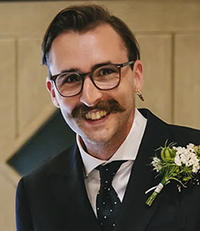
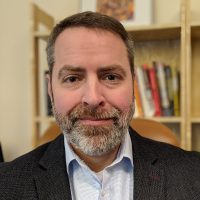
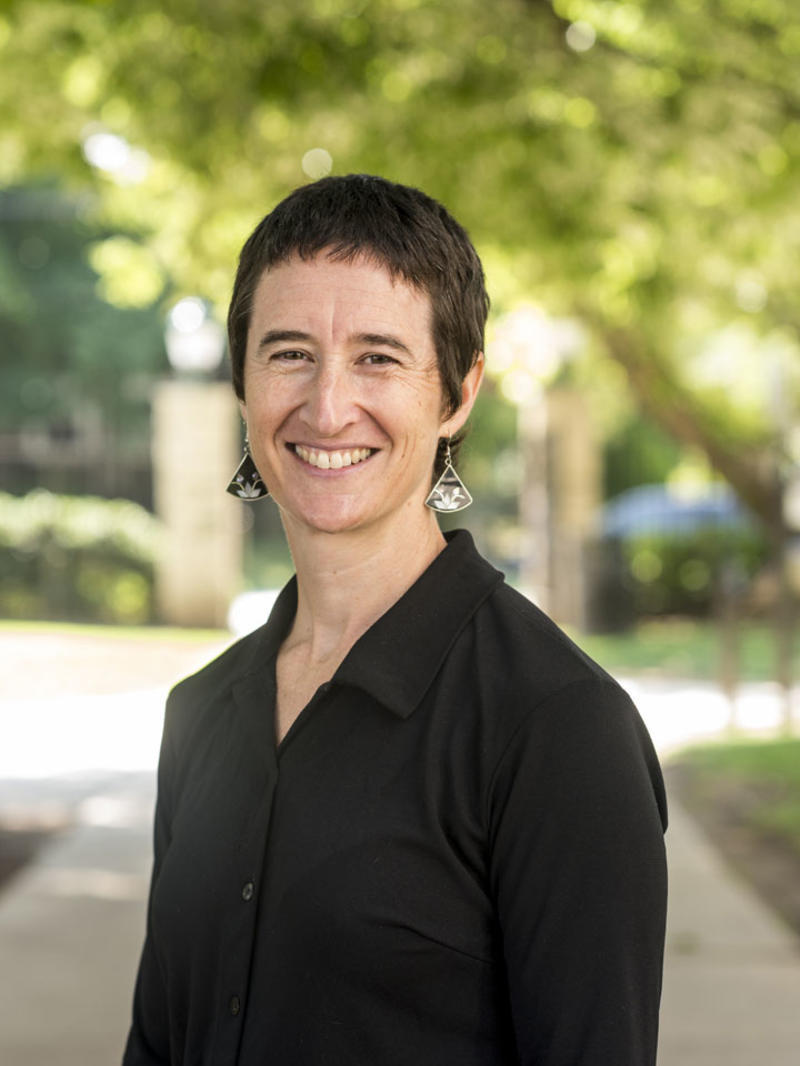
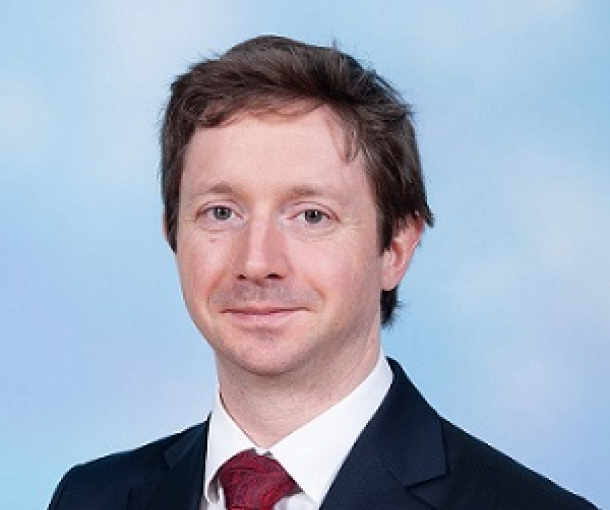
Luke J Davies is a Leverhulme Early Career Fellow in the Faculty of Philosophy at the University of Oxford. His research focuses on Kant’s moral and political philosophy, particularly exploring the interplay between duties to self and the legitimate role of the state. He previously held a fellowship in the Department of Government at the London School of Economics (2018–2022). Education: PhD in Philosophy, University of Oxford (2014–2019) BPhil in Philosophy, University of Oxford (2012–2014) BA in Philosophy, University of Toronto (2006–2011) His research interests include Kantian ethics, political philosophy, rights theory, and the philosophical foundations of state legitimacy. Current work examines how duties to self shape interpersonal moral obligations within Kantian frameworks. Key Themes in Publications: Recurring topics include Kant’s theories of property, citizenship, welfare, and cosmopolitanism, with a focus on reconciling individual autonomy with collective moral obligations. Recent work extends to the state of nature, cosmopolitan law, and active citizenship in republican frameworks. Awards: Leverhulme Early Career Fellowship (2022–2025) His academic trajectory combines rigorous engagement with Kantian texts and contemporary applications of classical philosophy to political and ethical dilemmas.
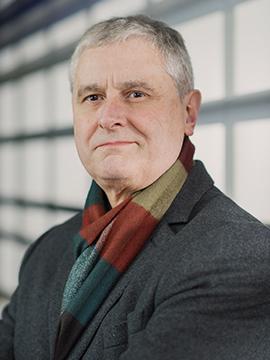
Prof. Dr. Daniel Leese is a full professor of History and Politics of Modern China at the University of Freiburg's Institute of Sinology. He specializes in 20th-century Chinese history, focusing on the Communist Party's legacy and transitional justice. Current research includes a dual biography of Chiang Kai-shek and Mao Zedong, and analysis of PRC information systems. Education: PhD in International History (2006, International University Bremen). Academic roles include ERC grant leadership (2014-2019) and FRIAS Senior Fellowship (2018-2019). Awards include Carl Friedrich von Siemens Fellowship (2022/2023). Key publications: Maos langer Schatten (2021) Justice After Mao (2023) Chinesisches Denken der Gegenwart (2023) Research emphasizes Mao's political impact, historical justice mechanisms, and institutional memory. Maintains a digital archive of Mao-era documents (maoistlegacy.de).
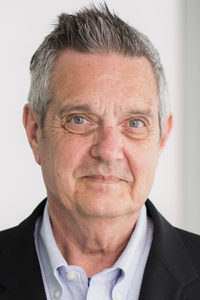
Asia J. Biega is a tenure-track faculty member (W2) at the Max Planck Institute for Security and Privacy (MPI-SP), where she leads the interdisciplinary Responsible Computing group. She is also a principal investigator of the Cluster of Excellence CASA and the FINDHR consortium. Her work sits at the intersection of computing and society, focusing on responsible computing, data protection & governance, and digital well-being within data-driven and AI-based systems. Dr. Biega's research spans multiple disciplines including computer science, law, philosophy, and social sciences. Her work examines how principles of responsible computing can be computationally operationalized, with particular attention to data protection frameworks, privacy technology governance, and digital well-being. She actively collaborates across disciplinary boundaries to make technical contributions while supporting research in other fields. Her approach combines theoretical rigor with practical applications, often drawing from her industry experience at Microsoft and Google. Her publication record reveals a strong focus on the intersection of fairness, privacy, and transparency in information retrieval systems. She has pioneered work on data minimization compliance, fair ranking algorithms, and user perceptions of data collection practices. Her research consistently bridges technical and legal perspectives, particularly examining how GDPR principles can be computationally implemented. Recent work shows increasing attention to generative AI governance, algorithmic hiring systems, and the relational aspects of data in recommender systems. Dr. Biega has received several prestigious awards including the Council of Europe's Rodotà Award for innovative research in data protection, the SaTML Notable Reviewer Award, the GI-DBIS Dissertation Award of the German Informatics Society, and recognition as one of the '100 Brilliant Women in AI Ethics' in 2025. She has advised numerous PhD students and postdocs who have gone on to faculty positions at institutions including the University of Trieste, Penn State, and the University of Washington. Her research is funded by the Max Planck Society, Alexander von Humboldt Foundation, and the European Union (Horizon Europe FINDHR). She serves as General Co-Chair for ACM FAccT 2025 and has held leadership roles in multiple academic conferences.
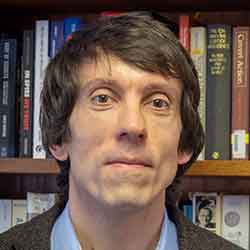
Peter Gries is a Professor of Chinese Politics and the Lee Kai Hung Chair at the University of Manchester, serving as the founding Director of the Manchester China Institute. He previously held roles at the University of Oklahoma and the University of Colorado, Boulder. Born in Singapore, he holds degrees from Middlebury, the University of Michigan, and a PhD from UC Berkeley. His research focuses on political psychology, particularly U.S.-China relations and Chinese nationalism, with notable works including China’s New Nationalism and The Politics of American Foreign Policy . He leads initiatives like the UK-China International Photography Award and the UK-China Diplomatic Dialogue. His grants include funding from the Ford Foundation and Smith Richardson Foundation for projects on security dialogues and course development. He sits on editorial boards of The China Quarterly , Political Psychology , and Nations & Nationalism . Recent work explores racial stereotypes, intersectionality, and threat perception in international relations. Education : Bachelor's and Master's in Asian Studies from Middlebury and the University of Michigan PhD in Politics from UC Berkeley Research Interests : Political psychology of international affairs U.S.-China relations Chinese nationalism and foreign policy Public opinion dynamics Grants : $60,000 from Smith Richardson Foundation (2005–2006) Multiple grants from Ford Foundation and Mershon Center for Sino-American Security Dialogues $4,000 from Freeman Foundation for Chinese Foreign Policy course development Media Contributions : Expert commentary on BBC World News, NYT, and CGTN Discussions on U.S.-China trade wars, China’s Japan policy, and global perceptions of China Labs/Institutes : Manchester China Institute Former director of the Institute for US-China Issues at University of Oklahoma
Timothy Cheek is a Professor at the University of British Columbia with dual appointments in the School of Public Policy and Global Affairs and the Department of History. He holds the prestigious Louis Cha Chair in Chinese Research and serves as Co-Director of the Centre for Chinese Research at the Institute of Asian Research (IAR). Having joined UBC in 2002, Professor Cheek is a leading scholar of modern Chinese history with expertise in Chinese intellectual history and the Chinese Communist Party. Professor Cheek's educational background includes: Ph.D. in History and East Asian Languages from Harvard University (1986) M.A. in History from The University of Virginia (1980) B.A. in Asian Studies (Honours) from Australian National University (1978) His research focuses on three interconnected areas of modern Chinese history: the history of the Chinese Communist Party within China's twentieth-century revolutionary context; contemporary Chinese thought and society, particularly the role of intellectuals in public life; and Mao Zedong studies. Professor Cheek leads the "Revisiting the Revolution" collaborative translation project, bringing Chinese scholarship on revolutionary history to English-speaking audiences. He is also working on a major project mapping Chinese statecraft from the Ming Dynasty to the present. Professor Cheek's scholarly output reveals consistent engagement with Chinese intellectual history and political development. His recent work shows increasing focus on contemporary China under Xi Jinping, examining ideological governance and the reassertion of party control. He maintains strong interest in the historical roots of current political developments, particularly through the lens of Mao-era political practices and their legacy. Among his notable recognitions: Fellow of the Royal Society of Canada (RSC) in the Academy of Arts and Humanities (2023) Professor Cheek actively supervises graduate students, co-mentoring MA and PhD candidates in modern Chinese history with Dr. Jeremy Brown of Simon Fraser University. His research has been supported by multiple SSHRC grants, including a major 2014-2019 project on "Reading and Writing the Chinese Dream" examining public intellectuals in contemporary China. As Co-Director of the Centre for Chinese Research at UBC's Institute of Asian Research, Professor Cheek leads one of Canada's premier institutions for China studies, facilitating research collaborations between Canadian and Chinese scholars and supporting the "Revisiting the Revolution" translation project that brings Chinese historical scholarship to international audiences.
Jonathan Quong is a Professor of Philosophy and Law at the University of Southern California (USC), affiliated with the USC Dornsife College of Letters, Arts and Sciences. He previously taught at the University of Manchester (2003–2013) and held visiting positions at institutions like the Australian National University and Princeton University. Quong earned his D.Phil from Nuffield College, Oxford (2004), following an M.A. (2000) and B.A. (1999) from the University of British Columbia. Education: Ph.D., University of Oxford (2004) M.A., University of British Columbia (2000) B.A., University of British Columbia (1999) His research focuses on moral and political philosophy , particularly issues of public reason, distributive justice, defensive force, and liberalism. He has authored influential books such as Liberalism Without Perfection (2011) and The Morality of Defensive Force (2020), and his work engages with contractualism, deontology, and consequentialism. Quong’s articles address topics like fair equality of opportunity, paternalism, and the legitimacy of state coercion. His editorial roles include associate editorships at Free & Equal: A Journal of Ethics and Public Affairs , Philosophy & Public Affairs , and Stanford Encyclopedia of Philosophy . Quong’s recent publications (2020–2026) emphasize debates around legitimate injustice, group paternalism, and the gendered division of labor, reflecting his commitment to bridging theory and practical ethical dilemmas. Quong’s contributions to political philosophy explore foundational questions about justice, rights, and the moral limits of state authority. His work intersects with legal theory, democratic governance, and multiculturalism, making him a leading voice in contemporary moral and political discourse.
Takashi Miura is an Associate Professor at the University of Arizona specializing in Japanese religions from the early modern to modern periods. His work explores millenarian movements, Shinto practices, and Buddhist visual culture. He holds degrees from the University of Hawai'i at Mānoa (B.A./M.A.) and Princeton University (Ph.D.). Dr. Miura's research examines religious innovations like the rise of 'yonaoshi' renewal gods and deified peasants. His 2019 monograph Agents of World Renewal analyzes apocalyptic concepts in Japanese history. Current projects include a study on early modern peasant deification and its societal impacts. He teaches courses on Buddhism and Japanese religious practices, including EAS 160A1 and JPN 220. His publications span academic journals and edited volumes, addressing topics from Meiji-era polemics to post-war new religions. His work frequently bridges textual analysis with visual and material culture studies.
Professor Jinhua Chen (PhD, McMaster University, 1997) is a leading scholar in East Asian Buddhism at the University of British Columbia’s Department of Asian Studies, Faculty of Arts. Holding a Canada Research Chair (2001-2011) and inducted into the Royal Society of Canada (2020), his work spans trans-regional Buddhist narratives, monastic institutions, relic veneration, and technological innovations in medieval Asian religions. Key Affiliations: UBC Buddhist Forum (Director), Peter Wall Institute for Advanced Studies (Resident Scholar), and editorial roles in Brill Book Series on East Asian Religions and Studies in Chinese Religions . Research Themes: Combines textual analysis with interdisciplinary methods to explore Buddhist sacred sites, doctrinal transmissions, and church-state dynamics. His projects include From the Ground Up (SSHRC Partnership Grant 2016-2023), examining East Asian religions through multi-media sources, and studies on ruixiang (propitious signs) in medieval Chinese prognostication. Scientific Awards: Royal Society of Canada Fellow, Canada Research Chair, SSHRC Insight Grants, Humboldt Research Fellowship, and Max Planck Institute funding. Publications: Over 30 book chapters and journal articles (2000-2016), including monographs on Fazang, Shingon-Tendai conflicts, and Buddhist sacred geography. Teaching: Courses on Chinese thought, Chan/Zen Buddhism, and Buddhist text interpretation, emphasizing methodological rigor and cross-cultural analysis. Projects: Directed international collaborations on Buddhist manuscripts, palace chapels, and relic cultures, with grants totaling over $4 million CAD.
Balázs Trencsenyi is Professor in the Department of Historical Studies at Central European University (CEU) and serves as Director of the CEU Institute for Advanced Study in Budapest. He is also Co-Director of Pasts Inc., Center for Historical Studies, and a Member of the 'Democracy in History' Working Group at the CEU Democracy Institute. His academic leadership includes directing the Erasmus Mundus+ Program 'History in the Public Sphere' (2019–2023) and heading the History Department (2017–2020). His educational background includes a PhD in Comparative History from CEU (2004), an MA in Nationalism Studies from CEU (1998), and an MA in Philosophy from Eötvös Loránd University (1997). Trencsenyi is a leading scholar in the intellectual and political history of East Central Europe, with a focus on transnational and comparative approaches. His research examines political modernity, crisis discourses, nationalism, national characterology, anti-modernism, and the conceptual history of identity and temporality. He has directed major collaborative projects such as the ERC-funded 'Negotiating Modernity' and 'European Regions and Boundaries: A Conceptual History.' His influential publications include the multi-volume A History of Modern Political Thought in East Central Europe (Oxford University Press) and Intellectuals and the Crisis of Politics in the Interwar Period and Beyond (2025). His recent articles reflect sustained engagement with crisis discourses, authoritarian regime-building, transnational intellectual history, and the politics of memory in East Central Europe. Themes across his work include the fragility of democracy, the legacy of state socialism, and the interplay between nationalism and modernity. CEU Community Service Excellence Award (2023) Fellow of Wissenschaftskolleg zu Berlin (2020) Member of Academia Europaea (2011) ERC Starting Grant (2008–2013) Trencsenyi has supervised numerous doctoral students in political thought, nationalism, and intellectual history. He has led research clusters such as 'Crises of Democratization' under the CIVICA project and co-organizes the 'Invisible University for Ukraine' initiative. He is Editor of East Central Europe (Brill) and has served on editorial boards and peer-review panels for major academic institutions and journals. His teaching covers comparative history, political modernity, crisis discourses, and counter-cultural movements under socialism.
William B Gartner serves as the Bertarelli Foundation Distinguished Professor of Family Entrepreneurship at Babson College's F.W. Olin Graduate School of Business, where he also directs research at the Bertarelli Institute for Family Entrepreneurship. Having joined Babson's faculty in 2017, Gartner brings over 40 years of experience studying entrepreneurial phenomena, with particular expertise in family entrepreneurship dynamics. He previously held distinguished chairs at the University of Southern California and Clemson University, establishing himself as a leading scholar in the field. Gartner earned his PhD, MBA, and BBA from the University of Washington, forming the foundation for his extensive research career. His academic journey began during entrepreneurship's early days in the late 1970s when he took one of the first entrepreneurship courses as an MBA student at the University of Washington, when only six students initially enrolled in the class. Gartner's research primarily explores how families act entrepreneurially, examining topics including entrepreneurial legacy, intergenerational knowledge transfer, and the transformation of family businesses across generations. His work bridges entrepreneurship theory with practical applications, particularly focusing on how entrepreneurial legacies can drive innovation in family businesses. He is particularly interested in the linguistic innovations entrepreneurs employ and how storytelling shapes entrepreneurial identity and practice. His scholarship has evolved to incorporate humanities perspectives, recognizing that literature, philosophy, and history provide valuable insights into entrepreneurial thinking and behavior. Analysis of Gartner's recent publications reveals a strong emphasis on family entrepreneurship as an ongoing process rather than a static state, with increasing attention to methodological innovation in entrepreneurship research. His work demonstrates growing interest in the role of narrative, visual methods, and qualitative approaches to understand complex entrepreneurial phenomena. The research shows consistent focus on family business succession as transformation rather than simple transfer, with increasing attention to adolescent entrepreneurial development and the influence of parenting styles. 2025 — Top 1% of Scholars in all subjects, Stanford/Elsevier's Top 2% Scientist Rankings 2024 — The FamCap25 – The Top FamilyEnterprise Academics, FAMILY CAPITAL MAGAZINE 2022 — Justin G. Longnecker Fellow, United States Association of Small Business and Entrepreneurship 2016 — Dedication to Entrepreneurship Award, Entrepreneurship Division, Academy of Management 2013 — Foundational Paper Award, Entrepreneurship Division, Academy of Management 2005 — International Award for Entrepreneurship and Small Business Research Gartner actively mentors doctoral students and early-career researchers, frequently collaborating on publications addressing complex family business dynamics. His editorial roles as Special Issue Editor for Entrepreneurship and Regional Development and Academy of Management Perspectives demonstrate his influence in shaping research agendas. He has secured significant research funding supporting studies on entrepreneurial legacy, family business succession, and adolescent entrepreneurial development, though specific grant amounts aren't detailed in the available materials. As Director of Research at the Bertarelli Institute for Family Entrepreneurship, Gartner leads initiatives connecting academic research with practical applications for family businesses. His work emphasizes the transformative potential of entrepreneurship within family contexts, challenging traditional notions of family business succession as mere transfer of ownership. Through workshops and seminars, he helps families explore how entrepreneurial legacies can lead to new innovations while preserving core values across generations.
Dr. Luca Trenta is an Associate Professor of International Relations at Swansea University's Department of Political and Cultural Studies. His research focuses on state-sponsored assassinations, US foreign policy, and covert operations, with a notable book The President’s Kill List: Assassination in US Foreign Policy since 1945 (2024). He holds grants from the British Academy and hosts the Out of the Shadows podcast. Trenta’s work bridges academia and public engagement, including media contributions to The Guardian , The New Yorker , and BBC programs. He advises PhD students on topics like Cold War interventions and international drug control. His research emphasizes historical analysis of covert actions and their legal/ethical implications, often appearing at major festivals like Hay-on-Wye and international conferences.
J. Paul Goode is an Associate Professor and McMillan Chair in Russian Studies at the Institute of European, Russian and Eurasian Studies (EURUS) within Carleton University’s Faculty of Public and Global Affairs. His research focuses on nationalism, authoritarianism, and political identity in Russia and post-Soviet states. He holds degrees from the University of Oxford (PhD, MPhil), University of Wisconsin-Madison (MA), and University of Texas-Austin (BA). Professor Goode serves as Editor-in-Chief of Communist and Post-Communist Studies and Associate Editor of Nationalities Papers . He contributes to editorial roles at Russian Politics and Social Science Quarterly , and advises Nations and Nationalism . His professional memberships include the Program Committee and advisory board of the Association for the Study of Nationalities, and the Department Development Partnership Program of European University at St. Petersburg. Previous roles include founding Director of the Center for the Study of Nationalism and Coordinator for Russian and East European Studies at the University of Oklahoma, and Convenor of the Research Group on Nationalism, Populism, and Radicalism at the University of Bath. His research explores nationalism in authoritarian contexts, the interplay between state strategies and everyday patriotic practices, and political legitimation mechanisms. Recent projects investigate pandemic politics, AI’s impact on identity, and the evolution of Putin’s governance. He consistently analyses how regimes engineer nationalist narratives to sustain power, with a focus on Russia’s territorial and ideological boundaries. Goode’s work bridges theory and practice through interdisciplinary frameworks, emphasizing constructivist approaches to mass-level nationalism. His editorial leadership aims to democratize scholarly discourse on post-communist and authoritarian systems. He has pioneered studies on hybrid regimes and the challenges of conducting fieldwork in restricted environments. His contributions highlight the need for adaptive research strategies in politically volatile regions.
Rachel Marion Scott is a Professor and Chair of the Department of Religion and Culture at Virginia Polytechnic Institute and State University, within the College of Liberal Arts and Human Sciences. She is also affiliated with ASPECT (Alliance of Social, Political, Ethical, and Cultural Thought), reflecting her interdisciplinary engagement with political and ethical theory in Islamic contexts. Her research centers on Islamic political thought, modern Islamic law, constitutional development in Muslim-majority countries, and personal status law. She has made significant contributions to understanding the interplay between religion and the nation-state, particularly in Egypt. Her scholarly work explores how religious authority is negotiated in constitutional frameworks, the evolution of Islamic legal thought, and the role of institutions like al-Azhar and the Muslim Brotherhood in shaping political discourse. Professor Scott’s publications reveal a sustained focus on the dynamics of Islamic law in modern governance, with a particular emphasis on Egypt’s constitutional history and legal reforms. Her work bridges religious studies, political science, and legal theory, addressing themes such as secularism, religious pluralism, citizenship, and hermeneutics. The articles show a trajectory from broader studies of political Islam to more nuanced analyses of constitutionalism, gender, and religious authority. She has authored two major monographs: The Challenge of Political Islam: Non-Muslims and the Egyptian State (Stanford University Press, 2010) and Recasting Islamic Law: Religion and the Nation State in Egyptian Constitution Making (Cornell University Press, 2021), both of which are central to contemporary scholarship on Islam and governance. While no formal list of awards is provided in the text, her publications with leading academic presses indicate recognition and scholarly impact in her field. Rachel M. Scott advises graduate students and contributes to academic mentorship through her leadership roles. As department chair, she oversees curriculum development, faculty collaboration, and interdisciplinary initiatives. There is no explicit mention of external grants, but her research output suggests engagement with funded scholarly projects or institutional support. She is affiliated with research initiatives related to Islamic studies, political thought, and constitutional law, particularly through her work with ASPECT and the Department of Religion and Culture. These affiliations support collaborative scholarship on ethics, cultural thought, and the role of religion in public life.
Elaine M Shenk is a Professor of Spanish and Chair of the Department of Languages and Linguistics at Saint Joseph's University. Her work focuses on sociolinguistic phenomena in language contact settings, emphasizing language ideologies, bilingualism, and policy debates across Puerto Rico and the United States. Education : PhD in Spanish-Linguistics from the University of Iowa; MA in Spanish-Linguistics from the University of New Mexico; BA in Liberal Arts from Eastern Mennonite University. Her research explores the symbolic values and political dimensions of language contact, with a focus on Puerto Rican communities, U.S. legislative discourse, and educational contexts. She examines metaphors in language-status dynamics, sociolinguistic variation in intermediate classrooms, and the historical evolution of language policies in Congressional bills. Recent publications address language ideologies in Puerto Rican migration, metaphors in language debates, and policy frameworks. These works span sub-fields like language legitimation campaigns, bilingual education strategies, and discourses on protectionism versus receptivity in language officialization. Scientific Awards : 2019 Ed Brady SJ Faith in Action Award 2019 Alpha Sigma Nu Teaching Award 2016 Honorable Mention, AATSP Outstanding Scholarly Publication Award Multiple research grants including the Michael J. Morris Grant (2014) Service-learning and curriculum development grants (2012-2010)
Paul Daly is Professor and University Research Chair in Administrative Law & Governance at the University of Ottawa's Faculty of Law (Common Law Section), appointed in July 2019. Fluent in English and French, he maintains an active external role as part-time member of Canada's Environmental Protection Tribunal since 2019 and has held prior positions at the University of Cambridge and Université de Montréal, with visiting appointments at Harvard Law School, Université Paris II, Louvain Global College of Law, Trinity College Dublin, and Ireland's Law Reform Commission. His academic credentials include: BCL and LLM from University College Cork LLM from University of Pennsylvania Law School PhD from University of Cambridge Professor Daly's research centers on public law with exceptional focus on administrative law, examining judicial review standards, deference principles, and the constitutional foundations of administrative decision-making. His scholarship on the Vavilov framework and Doré duty has reshaped understanding of reasonableness review and fundamental rights application in administrative contexts. He pioneers interdisciplinary approaches connecting legal theory with practical governance challenges, emphasizing procedural fairness and accountability within the administrative state. Analysis of his publication trends reveals deep engagement with Canadian administrative law evolution while maintaining strong comparative perspectives across common law jurisdictions. His work consistently bridges doctrinal analysis with practical implications for tribunals, courts, and policymakers, particularly regarding standard of review methodologies and rights protection mechanisms. Scientific recognition includes: Lexpert Rising Stars Award (2023) for outstanding contributions to public law While specific doctoral students aren't documented, Professor Daly actively mentors through judicial training seminars and continuing legal education events nationwide. His scholarly influence extends through over 150 judicial citations internationally and frequent expert testimony. Grant funding details aren't specified, but his University Research Chair position signifies substantial institutional support for his administrative governance research program. His influential blog Administrative Law Matters serves as a central hub for global administrative law discourse, featuring case commentaries and theoretical analyses that directly inform judicial reasoning as evidenced by multiple Supreme Court of Canada citations.