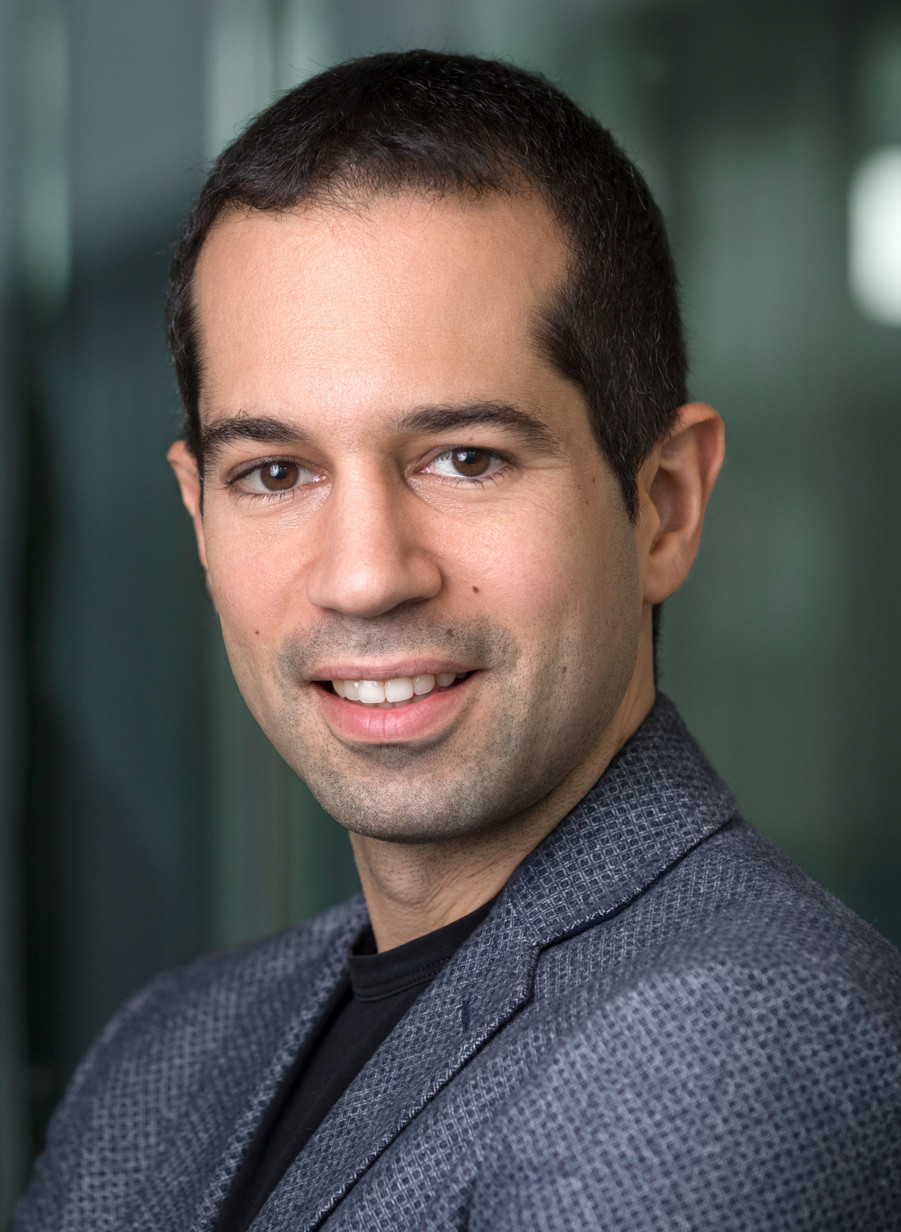
Davide Scaramuzza is a Professor and Director of the Robotics and Perception Group at the University of Zurich. He holds a Ph.D. from ETH Zurich and has conducted postdoctoral research at the University of Pennsylvania and Stanford. His research focuses on autonomous drone navigation using visual and event-based sensors, leading to breakthroughs like AI drones outperforming human pilots in racing (Nature 2023). He pioneered algorithms for Mars helicopter navigation and developed the PX4 autopilot system. Key awards include the Kiyo-Tomiyasu IEEE Technical Field Award (2024), ERC Consolidator Grant (2019), and multiple best paper awards. His entrepreneurial ventures include co-founding Zurich-Eye (later Meta Zurich) and SUIND for agricultural drones. He co-authored the textbook Introduction to Autonomous Mobile Robots , widely used in academia. Research spans event camera algorithms, visual-inertial SLAM, and reinforcement learning for agile flight. His lab's work is featured in IEEE Spectrum, The Guardian, and Forbes. He advises UN initiatives on AI for disaster response and nuclear safety. Current projects include Graph-Generating State Space Models (CVPR 2024) and event-based vision for automotive systems (Nature 2024).
Jared Rubin is a Professor of Economics at Chapman University’s George L. Argyros College of Business and Economics and Co-Director of the Institute for the Study of Religion, Economics, and Society (IRES). His research bridges economic history, institutional economics, and religious studies, focusing on how historical political and religious institutions shaped economic development in the Middle East and Western Europe. Rubin’s work has been published in top journals like Review of Economic Studies and Journal of Economic Growth , and his book Rulers, Religion, and Riches (2017) received the Douglass North Best Book Award. He has secured over $1 million in grants from the John Templeton Foundation and serves on editorial boards for Journal of Economic History and Journal of Comparative Economics . Education: B.A., University of Virginia (2002) Ph.D., Stanford University (2007) Research Themes: Role of religious institutions in economic development Historical divergence between Middle East and Western Europe Political legitimacy and governance structures Cultural transmission of economic norms Recent Publications (2024): Religion, Political Legitimacy, and Complexity How Did the World Become Rich? Endogenous Political Legitimacy: The Tudor Roots of England’s Constitutional Governance Awards & Grants: Douglass North Best Book Award (2017) Over $1 million in grants from the John Templeton Foundation Leadership Roles: Co-Director, Institute for the Study of Religion, Economics, and Society (Chapman University) President, Association for the Study of Religion, Economics, and Culture (ASREC) Editorial Boards: Journal of Economic History Journal of Comparative Economics Explorations in Economic History
Dr. Bill Hamilton is an Assistant Professor in the Department of Computer Science at New Mexico State University. His research focuses on live media design, online communities, and digital game culture. He holds a Ph.D. in Human Computer Interaction from Texas A&M University (2018), and has collaborated with industry partners like Microsoft Research and Motorola Mobility. Education: Ph.D. in Human Computer Interaction, Texas A&M University (2018) Bachelor’s degree in Computer Science, Texas A&M University Research Interests: Bill explores how live media supports societal participation in education, politics, work, and play. His work employs qualitative methods like ethnographic inquiry to study collaborative digital environments. Recent projects include designing wearable interfaces for human-drone teams and analyzing YouTube’s content policies' impact on free speech. Awards: 2018 Texas A&M Distinguished Graduate Research Award 2016 Best Paper at ACM Interactive Experiences for TV/Online Video Advising & Grants: Mentors students like Preeti De Maurya and Cassandra Palmer, with a focus on inclusive education technologies and collaborative tools for emergency response. Active in conference organization including ACM CHI’s Games and Play Subcommittee (2019). Labs: His research is conducted through the PlexLab, exploring playful interactions and live media systems.
Aileen Friesen is an Associate Professor in the Department of History at the University of Winnipeg, affiliated with the Faculty of Arts. She also serves as Executive Director of the Plett Foundation, focusing on interdisciplinary historical research and community engagement. Her work bridges academic and public history through initiatives like heritage cruises and educational outreach. Education Background : While specific degrees are not detailed in the text, her academic roles and publications suggest advanced training in History, likely with a PhD in Russian or Mennonite Studies. She is associated with the Centre for Transnational Mennonite Studies and the H. Sanford Riley Centre for Canadian History. Research Interests : Mennonite History : Focuses on migration, religious dissent, and colonial experiences in Siberia and Ukraine. Russian/Soviet History : Explores Orthodoxy’s role in colonization, state-religion interactions, and ethnic group policies. Migration Studies : Analyzes displacement patterns, transnational identity formation, and diaspora communities. Her work frequently intersects with environmental history, religious studies, and colonial studies. Publications Trends : Recent scholarship emphasizes Siberian Mennonite communities, Soviet-era religious policies, and transnational ethnic mythologies. She combines archival research with oral histories, as seen in The Russian Mennonite Story (2018) and Colonizing Russia’s Promised Land (2024). Her 2020 analysis of Omsk bishops reveals how spiritual networks shaped colonial dynamics. Awards & Grants : No specific awards listed. However, her publications and roles suggest sustained institutional support for research in Mennonite and Russian studies. Labs/Teams : Active in the Newberry Consortium in American Indian Studies and the State Socialism Workshop. Collaborates with the Oral History Centre and the Centre for Rupert’s Land Studies.
Christopher J. Stein is an Associate Professor of Theoretical Chemistry at the Technical University of Munich (TUM), part of the TUM School of Natural Sciences. His research focuses on theoretical (electro-)catalysis, developing electronic-structure models and solvation/embedding methods to understand and optimize catalytic processes. He leads the Stein Group, which integrates computational chemistry with high-throughput simulations to advance energy materials and battery technologies. His work emphasizes realistic modeling of catalyst behavior under operational conditions and has contributed to advancements in quantum embedding and automated reaction mechanism exploration. Education and Career: Earned his PhD in Theoretical Chemistry, with postdoctoral research at Caltech (2017-2020). Became an Associate Professor at TU Munich in 2023. He previously held roles at Karlsruhe Institute of Technology and contributed to projects like the BIG-MAP Materials Acceleration Platform. Research Interests: Theoretical chemistry, electrochemical interfaces, battery materials, high-throughput computational methods, and machine learning integration. His group explores topics like solid electrolyte interphases, charge transfer mechanisms, and automated workflows for materials discovery. Awards: While no explicit awards are listed, his contributions to materials acceleration platforms and theoretical catalysis have been widely recognized in the field. His work has been featured in journals like Journal of Chemical Physics , Chemical Science , and Angewandte Chemie . Labs/Teams: Leads the Stein Group at TUM, collaborating with institutions like the Munich Data Science Institute and MIRMI. His lab focuses on computational tools for accelerating energy material development, including quantum embedding and cloud-based simulations.
Prof. Dr. Kenny R. Cupers is Professor of Architectural History and Urban Studies at the University of Basel , affiliated with the Department of Social Sciences in the Faculty of Humanities and Social Sciences . He co-founded and leads the Urban Studies division, focusing on the intersections of architecture, urbanism, colonialism, and planetary design in African and European contexts. PhD, Harvard University (2010) M.Sc. and B.Sc. in Architecture, Catholic University of Leuven Studies in Visual Culture and Urban Theory, Goldsmiths College, London His research centers on architectural modernism, housing, infrastructure, and decolonization . Key themes include the planetary politics of design, coloniality of infrastructure, and the role of architecture in state transformation. He is currently working on two book projects in Kenya: one on unmaking the plantation system through arts and architecture, and another on post-independence Nairobi’s urban history. Recent publications include The Earth that Modernism Built: Empire and the Rise of Planetary Design (2024) and The Social Project: Housing Postwar France (2014). He leads the Sinergia project Governing through Design (2020–2025) and previously directed the SNF-funded How Infrastructure Shaped Territory in Africa (2018–2022). His work appears in journals such as e-flux Architecture , Antipode , and Architectural Theory Review . Scientific Awards: No specific awards listed in the provided text. As an educator, Cupers promotes engaged pedagogy and collaborative research, co-editing What is Critical Urbanism: Urban Research as Pedagogy (2022). His public research projects include Swiss Corporate Coloniality and Lamu Futures . He has advised multiple PhD and Master’s students, though specific names are not listed. He is part of a vibrant research team including Dr. Ernest Sewordor, Dr. Laura Nkula-Wenz, and Dr. Prita Meier. Laboratories and Research Teams: Urban Studies, University of Basel Critical Urbanisms Program Sinergia Project: Governing through Design How Infrastructure Shaped Territory in Africa (completed) Infrastructure Space and the Future of Migration Management (completed)
Luke Cooper is an Associate Professorial Research Fellow in the Department of International Relations at the London School of Economics and Political Science (LSE), where he is affiliated with the Conflict and Civicness Research Group. He serves as Director of PeaceRep’s Ukraine programme, leading interdisciplinary research teams across six global institutions and a broader network of scholars in Ukraine and the region. His academic work sits at the intersection of historical sociology, political theory, and international relations. His research interests include nationalism, authoritarianism, democracy, uneven and combined development, conflict, and systemic societal transformation. Dr Cooper’s work combines theoretical innovation with empirical analysis, drawing on both historical and contemporary case studies to examine processes of social and political change. His recent publications explore themes such as the global threat of authoritarian contagion, the historical evolution of national identity in the British Atlantic, and the political imaginaries in science fiction literature. These works reflect a consistent engagement with macro-historical processes and structural transformations in global politics. Authoritarian Contagion; the Global Threat to Democracy (2021) Imagined communities: from subjecthood to nationality in the British Atlantic (2022) Worlds beyond capitalism: images of uneven and combined development in Kim Stanley Robinson’s Mars trilogy (2021) Dr Cooper has been involved in significant policy advocacy and public engagement, co-founding the campaign group Another Europe Is Possible and co-hosting the Another Europe podcast. He has led projects on Brexit impacts and international solidarity with Ukraine. He previously served as a visiting fellow at the Institute of Human Sciences (IWM) in Vienna and has taught at Anglia Ruskin University, Richmond American University London, and the University of Sussex. He leads multiple funded research initiatives, including PeaceRep’s Ukraine programme, which conducts evidence-based policy analysis on Ukraine’s war economy and investigates the broader phenomenon of global fragmentation beyond traditional geopolitics. His work emphasizes transnational interconnections in the defense of national sovereignty. Dr Cooper completed his PhD in International Relations at the University of Sussex, holds an MSc in Comparative Politics from LSE, and a BA in Political Studies from the University of Leeds.
Lisa Lowe is the Samuel Knight Professor of American Studies at Yale University, with affiliate appointments in the Programs in Ethnicity, Race, and Migration and Women's, Gender, and Sexuality Studies. She has previously taught at the University of California, San Diego, and Tufts University, establishing a distinguished interdisciplinary career in American Studies, Comparative Literature, and critical race theory. Education: Stanford University – European Intellectual History University of California, Santa Cruz – French Literature and Critical Theory Lowe's research focuses on the intersections of colonialism, race, immigration, and globalization. Her work critically examines how liberal modernity is built upon racial capitalism, settler colonialism, and transnational displacement. She is a leading voice in transnational feminism and Asian American studies, analyzing how immigrant subjects are constructed as 'perpetual foreigners' within national cultures. Her scholarship bridges literary analysis, historical critique, and political theory to interrogate the legacies of empire. Her recent publications show a sustained engagement with the entanglements of liberalism, empire, and intimacy across continents. Themes include racial capitalism, the transpacific, feminist resistance, and the cultural politics of globalization. Her work consistently challenges disciplinary boundaries and calls for a rethinking of American Studies through a global and decolonial lens. Scientific Awards and Honors: Guggenheim Fellow American Council of Learned Societies Fellow Rockefeller Foundation Fellow Mellon Foundation Fellow UC Humanities Research Institute Fellow University of California President's Faculty Research Fellow (2011–12) Visiting Fellow, School of Advanced Study, University of London F. Ross Johnson-Connaught Distinguished Visitor, Munk School of Global Affairs, University of Toronto (2012) Carl Bode - Norman Holmes Pearson Award (2018) Richard A. Yarborough Prize (2018) Finalist, John Hope Franklin Award (2016) Nicolás Guillén Outstanding Book Award (2018) 1997 Book Award in Cultural Studies, Association for Asian American Studies Lowe has been a mentor to numerous scholars, particularly from underrepresented backgrounds, recognized by the Richard A. Yarborough Prize. She has received multiple grants and fellowships supporting her research, including from the Mellon, Rockefeller, and Guggenheim Foundations. She co-convened the Mellon Sawyer Seminar 'Comparative Global Humanities' at Tufts and has been an Affiliate Scholar at the Boston Psychoanalytic Society and Institute (2022–2023). She has also served as a visiting fellow and speaker at numerous international institutions, indicating sustained collaborative and advisory engagement. Lowe co-edits the influential book series Perverse Modernities with Jack Halberstam at Duke University Press, shaping contemporary critical theory. She has also co-edited special issues and volumes that have advanced the field of Asian American Studies. Her scholarly network includes leading institutions across the U.S. and globally, and she continues to be a central figure in interdisciplinary humanities.
Rupert Klein is a Professor at Freie Universität Berlin in the Department of Mathematics and Computer Science , specializing in Geophysical Fluid Dynamics . His research spans atmospheric dynamics, numerical methods, and gas dynamics of combustion. Research Interests : Geophysical Fluid Dynamics and Atmospheric Modeling Multiscale Asymptotic Analysis Wave Propagation and Turbulence Combustion and Pressure Gain Combustion Climate Dynamics and Data Assimilation Scientific Awards : DRS Award for Excellent Supervision (2014) ECMWF Fellowship (renewed 2017) His recent work includes multiscale models for atmospheric flows, vortex dynamics, and combustion processes. Key collaborations involve DFG SPP 1276, CRC 1029 (TurbIn), and CRC 1114 (SCCS) projects. He contributes to numerical methods for low-Mach-number flows and geophysical simulations.
Professor Roland Broemel holds the Chair of Public Law, Economic and Currency Law, Financial Markets Regulation and Legal Theory at the Faculty of Law, Goethe University Frankfurt, and is Deputy Managing Director at the Institute for Monetary and Financial Stability (IMFS) since December 2021. His work bridges legal theory, financial regulation, and digital transformation. Research Interests: Broemel's scholarship centers on market regulation in digitalized sectors—particularly currency, telecommunications, energy, and media. A key cross-cutting theme is the legal dimension of digitalization and algorithm-based applications. He also contributes to Basic Law theory and legal methodology, exploring how legal systems adapt to societal shifts. His recent work emphasizes digital euro, AI governance, and platform regulation. Publication Trends: His recent publications reflect a strong focus on the legal implications of digital transformation in finance and public law. Themes include central bank digital currency, algorithmic regulation, and interdisciplinary legal responses to climate and digital transitions. He frequently publishes in top German and international law journals and handbooks, often in collaboration with economists and legal scholars. Scientific Awards: Doctorate Award 1st Class, University of Hamburg Law Department Hamburg Teaching Prize 2010, Department for Science and Research Advising and Grants: Broemel actively supervises student research through inquiry-based learning formats and leads externally funded initiatives such as the School Project: Digital Euro. He has received support from the Studienstiftung des deutschen Volkes during his early career and continues to secure institutional funding for interdisciplinary research at IMFS. Labs and Teams: As Deputy Managing Director of IMFS, Broemel is embedded in a multidisciplinary research environment focused on monetary and financial stability. He collaborates closely with economists like Volker Wieland and Alexander Meyer-Gohde, contributing a legal perspective to policy-oriented research. His team includes research assistants and doctoral candidates working on digital regulation, financial law, and legal theory.
Dirk Leuffen is a Professor of International Politics at the Department of Politics and Public Administration at the University of Konstanz. Since April 2024, he has served as the University of Konstanz' Vice Rector for Research, Innovation and Impact, having previously held this position from 2015 to 2019. He is also a representative of the German Rectors' Conference (HRK) in the Committee for the selection and evaluation of International Max Planck Research Schools (IMPRS) since 2019. Leuffen directs the project 'Conditions of European Solidarity' (CONSOLI) with Sharon Baute at the Cluster of Excellence on the Politics of Inequality, and has led multiple significant research projects including 'EU3D: EU Differentiation, Dominance and Democracy' and 'EMU-SCEUS - The Choice for Europe since Maastricht.' Leuffen earned his doctoral degree from the University of Mannheim and previously worked as a Senior Researcher at ETH Zurich before joining the University of Konstanz. Professor Leuffen's research focuses on European integration, with particular emphasis on differentiated integration, decision-making processes within the European Union, and the interplay between domestic and international politics. His work examines how citizens perceive and respond to various forms of European integration, with a strong interest in the legitimacy of differentiated integration arrangements and public support for European solidarity. He investigates political preference formation, particularly how crises like the Eurozone crisis and the COVID-19 pandemic shape European policy preferences. His research combines theoretical frameworks from political science with empirical analysis of public opinion data across multiple EU member states. His recent publications reveal a strong focus on how democratic backsliding affects European solidarity, the role of fairness considerations in citizen evaluations of EU policies, and the institutional design features that foster public support for differentiated integration. Leuffen's work often employs experimental methods and comparative survey research across multiple European countries, demonstrating a methodological sophistication that bridges qualitative and quantitative approaches. His research consistently addresses the tension between national sovereignty and European integration, examining how citizens balance concerns about national autonomy with support for European cooperation. As Vice Rector for Research and a principal investigator on multiple major projects, Leuffen has secured significant research funding and leads interdisciplinary teams examining the politics of inequality and European integration. His leadership extends beyond his institution through his role in the German Rectors' Conference, where he influences national research policy and evaluation frameworks. Leuffen is an active member of the Cluster of Excellence on the Politics of Inequality at the University of Konstanz, where he contributes to the research group 'Political Science & International Politics.' His work often involves collaboration with researchers across Europe, reflecting the transnational nature of his research focus on European integration and solidarity.
Dr. Achim Rohde is a Middle East historian serving as Research Fellow at the University of Hamburg's Asia-Africa Institute and Head of Memorial Development at the Lower Saxony Memorials Foundation. He holds a doctorate from Freie Universität Berlin and has held academic positions at institutions including Philipps University Marburg, Goethe University Frankfurt, and TU Berlin. Research Focus: Modern Middle East history (20th/21st century), gender studies, memory politics, and critical analysis of Orientalism and educational systems. Publications: 15 most recent articles span topics from Jihadist masculinity to post-2003 Iraqi education reforms , Tunisian democratization , and German academic discourse on non-Christian religions . Teaching: Courses on Arab Spring legacies, Islamic popular culture, and gender dynamics in Middle Eastern societies across multiple universities between 2002-2021. Academic Network: Collaborations with institutions like German Institute for Global Area Studies, Heinrich-Böll-Stiftung, and editorial work on comparative Middle East studies. Key Projects: Contributions to Social Contexts of Rebellion in Early Islamic Period (SCORE) , InterSaME , and RomanIslam Center for transcultural empire studies.
François Robinet serves as a Lecturer in Contemporary History at the University of Versailles Saint-Quentin-en-Yvelines (UVSQ), where he is an elected member of the Council of the Institute of International Cultural Studies. He concurrently directs the Graduate School of Humanities and Heritage Sciences at the University of Paris-Saclay and holds appointments with the Laboratory Center for the Cultural History of Contemporary Societies (CHCSC) and the 22nd section of the CNU. Education: Doctor of History (2012) Robinet's research centers on 20th-21st century cultural and political history, with concentrated expertise in the Rwandan Tutsi Genocide, post-colonial Franco-African memory politics, and media history since 1990. His work critically examines French journalistic coverage of African conflicts, international information manufacturing during wartime, and the cultural history of colonial and post-colonial societies. He employs interdisciplinary approaches bridging media studies, genocide research, and digital humanities to analyze historical narratives and memory construction. His 15 most recent publications (2016-2023) reveal consistent thematic focus on Rwandan genocide documentation, Franco-Rwandan historical accountability, and media's role in shaping political memory. Key trends include digital methodologies for genocide archives, analysis of French state-media interactions during crises, and evolving commemorative practices through digital platforms. The work demonstrates increasing engagement with digital humanities tools while maintaining rigorous historical analysis of colonial legacies. No scientific awards were documented in the source material. Robinet coordinates the international RwandaMAP2020 research network mapping genocide documentation sites and serves as Vice-president of the Association for the Development of Cultural History. He is an active member of the Society for the History of Media (SPHM) and editorial board of Le Temps des Médias , demonstrating significant scholarly leadership beyond traditional academic advising. His institutional presence spans laboratory governance (CHCSC), university administration (UVSQ Board of Directors), and major conference organization including the 2014 Rwanda international conference and 2022 International Communication Association pre-conference on empires in media history.
Professor Sir Chris Clark is the Regius Professor of History at the University of Cambridge and an Ostrer Professorial Fellow in History at St Catharine's College. His academic work focuses on the intersection of political and cultural history in 19th- and 20th-century Germany and Europe. Key Roles: Regius Professor of History (since 2014), Ostrer Professorial Fellow Research Focus: Modern German and European history, religious-political dynamics, military history Contact: cmc11@cam.ac.uk | St Catharine's College, Cambridge CB2 1RL Clark’s scholarship investigates the evolution of the 'Jewish Question' in Prussia, confessional conflicts, and the aftermath of the 1848 revolutions. His work bridges intellectual history with macro-political narratives, emphasizing the role of state authority in religious matters. His publications, including Iron Kingdom and The Sleepwalkers , have earned prestigious awards like the Wolfson Prize and LA Times Book Prize. His research often involves comparative studies of European states and their cultural dynamics. Clark supervises doctoral research on topics such as monarchical governance and comparative accident insurance policies in 19th-century Europe. He contributes to undergraduate and postgraduate teaching in German history, music and society, and modern European history. Scientific Awards: Wolfson Prize for History ( Iron Kingdom ) LA Times Book Prize (History) for The Sleepwalkers (2013) Knight Bachelor for services to British-German relations (2015)
Rachel Lara Cohen is a Professor in Sociology, Work and Employment at City, University of London , where she joined in 2013 after prior roles at the University of Surrey, University of Warwick, and St Petersburg State University. Her research focuses on the sociology of work, particularly non-standard employment forms like self-employment, mobile work, and homeworking, with a strong emphasis on work-life boundaries, body work, and gendered labor dynamics in occupations such as hairdressing, car mechanics, and accountancy. A mixed-methods researcher, she co-edited special issues on body work and everyday self-employment and led the City Q-Step Centre to enhance data literacy in social science students. Established : 2022-2025 ESRC-funded project ‘L-Earning: Rethinking young women's working lives’ Education : PhD in Sociology (UCLA), BA in Politics and Modern History (University of Manchester) Her research spans gender disparities in student employment, feminist methodologies, and quantitative literacy. She has served as Associate Editor of Work in the Global Economy and former Editor of Radical Statistics , with leadership roles including Head of Department of Sociology (2017-2020) and Elected Senator at City. Notable awards include the British Academy Postdoctoral Research Fellowship (2007-2010) and Senior Fellow of the Higher Education Academy (2021). Students supervised include topics on care sector workers, student employment in service work, ethnic identity negotiation, gender in higher education administration, and statistical studies of diversity. Her work has been published in journals such as The British Journal of Sociology , Sociology , and Gender, Work & Organization , covering themes like precarity, gendered labor patterns, and methodological innovation.