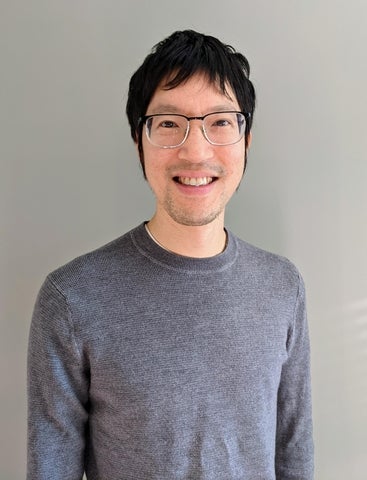
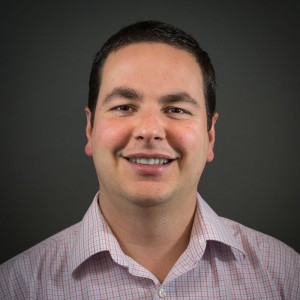
Dr. Samuel Wong is Associate Professor in the Department of Statistics and Actuarial Science at the University of Waterloo. His research develops statistical methods for complex data science problems in protein structure analysis, dynamic systems inference, and materials reliability. Education includes PhD from Harvard Statistics Department (2013). Research addresses challenges in conformational sampling for protein folding, inference for differential equation models, and uncertainty quantification in materials science. Leads development of MAGI software for manifold-constrained Gaussian processes. Publications showcase innovations in Sequential Monte Carlo methods, spatial data fusion, and Bayesian approaches to industrial problems. Recent work focuses on protein structure variability and COVID-19 transmission modeling. Supervises graduate students in Bayesian analysis and computational statistics. Teaches courses including Analysis of Spatial Data and Applied Linear Models.
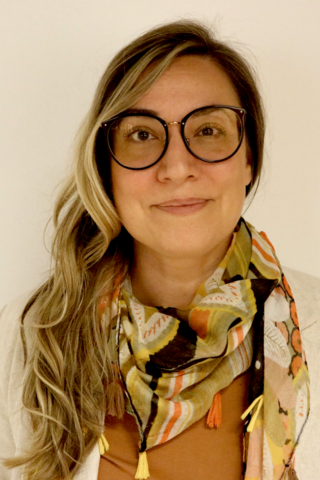
Sisi Zhou is a Research Faculty member at the Perimeter Institute for Theoretical Physics, specializing in quantum information science. Her work focuses on quantum metrology, quantum error correction, and quantum learning, with a particular emphasis on advancing methodologies for noisy quantum systems. Her research explores theoretical frameworks to enhance precision in quantum measurements, optimize error-correcting codes, and apply machine learning techniques to photonic platforms. Recent contributions include studies on non-Markovian metrology, Gaussian measurement limitations, and entanglement-enabled protocols for bosonic channels. Zhou has delivered seminars at institutions such as the Banff International Research Station and the University of Calgary, addressing topics like quantum metrological limits in noisy environments and error mitigation strategies for near-term quantum processors.
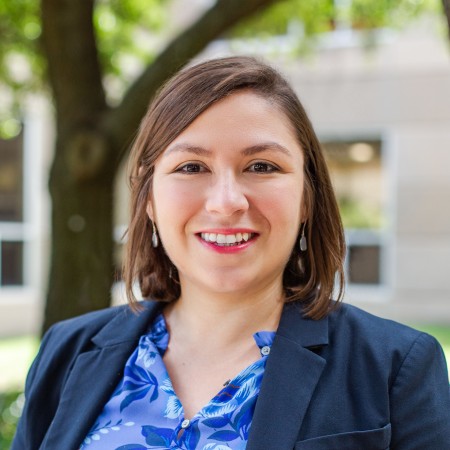
Mai Dao is an Assistant Professor in the Department of Mathematics, Statistics, and Physics at Wichita State University's Fairmount College of Liberal Arts and Sciences. She earned her Ph.D. from Texas Tech University under the mentorship of Professors Min Wang and Souparno Ghosh. Research Focus: Bayesian statistics, high-dimensional inference, and statistical machine learning Contact: mai.dao@wichita.edu | Jabara Hall 319 | Office hours: Tue & Thu 3:30-4:30 p.m. Research Interests include: Bayesian quantile regression High-dimensional data analysis Statistical machine learning algorithms Variable selection techniques Computational statistics Econometric modeling Recent Article Trends : Mai Dao's publications (2021-2025) emphasize Bayesian quantile regression methods, focusing on variable selection, high-dimensional inference, and computational approaches. Key themes include handling non-ignorable missing data, macroeconomic stress testing, and bridge-randomized regression techniques. Academic Expertise spans: Bayesian statistical modeling High-dimensional inference Machine learning applications Quantile regression methodologies Statistical computing
Kursat Kara is an Assistant Professor in the Department of Mechanical and Aerospace Engineering at Oklahoma State University (OSU), leading the Kara Aerodynamics Research Laboratory. He holds a Ph.D. in Aerospace Engineering from Old Dominion University (2008), and has held academic positions including Assistant Professor at Khalifa University (2010–2018), where he received the President’s Faculty Excellence Award for Teaching (2015). His research focuses on fluid dynamics, computational aerodynamics, hypersonic flows, quantum computing, and flow separation control using techniques like CFD and miniPIV. He has advised numerous graduate and undergraduate students, and collaborates on projects such as hypersonic boundary-layer stability, quantum computing for fluid dynamics, and urban wind field modeling for UAS navigation. Dr. Kara’s expertise spans experimental and numerical fluid dynamics, including work on sweeping jet actuators, boundary-layer transition, and aerodynamic design optimization. He is a member of AIAA (Senior), APS, and ASME, and has contributed to facilities like the $3.5M Khalifa University Low-Speed Wind Tunnel. His teaching includes courses on computational fluid dynamics, quantum computing, and unsteady aerodynamics. Recent research highlights include applications of machine learning in wind field prediction and interdisciplinary projects like interface learning for multiphysics systems. Scientific achievements include publications on hypersonic flow stabilization, quantum solvers for Burgers’ equation, and reduced-order models for urban wind simulation. His lab engages students from high school to PhD levels, emphasizing project-based learning and computational tools. Key collaborations involve NASA, the DOD, and industry partners like Sikorsky Aircraft Corp.
R. Edward Beighley is the COE Distinguished Professor and Interim Chair of Civil and Environmental Engineering at Northeastern University. He is also affiliated with the Marine and Environmental Sciences program. His research focuses on hydrologic and hydraulic modeling, remote sensing of the hydrologic cycle, and flood hazard assessment. He holds a Ph.D. from the University of Maryland (2001), an M.S. from Pennsylvania State University (1996), and a B.S. from the same institution (1995). Key honors include the 2024 Distinguished Faculty Award, 2019 Fostering Engineering Innovation Award, and leadership roles in NASA’s SWOT Satellite Mission. His work emphasizes sustainable water resource management through interdisciplinary approaches combining remote sensing, field data, and hydrologic models. Research projects include evaluating microplastic accumulation in floodplains, global river baseflow analysis via GRACE/GRACE-FO satellites, and improving SWOT discharge estimation algorithms. The Beighley Lab collaborates on flood risk assessment and climate change impacts at local to global scales. Grants: SWOT Science Team (NASA), NSF Microplastics Project, North Carolina Hurricane Relief Research. Students: Advises PhD student Max Rome on floating wetlands and urban water quality. Labs/Teams: Beighley Lab focuses on terrestrial water systems and satellite applications.
Xiaoqiang Wang is a Professor in the Department of Scientific Computing at Florida State University (FSU). His research focuses on numerical analysis, applied partial differential equations, mathematical biology, image processing, and scientific computing. He holds a Ph.D. from Pennsylvania State University (2005). His work emphasizes phase-field modeling for elastic bending energy, biological microstructures, and computational methods for complex systems. Notable contributions include advancements in centroidal Voronoi tessellation algorithms for image segmentation and high-performance computing techniques for scientific visualization. Recent publications highlight innovations in topology-preserving phase-field models, neural network-based energy minimization, and stochastic resource competition models. His research bridges theoretical mathematics with practical applications in biophysics, materials science, and biomedical engineering. Wang collaborates actively with interdisciplinary teams, contributing to FSU's computational science initiatives. His lab focuses on developing novel numerical methods and simulations for biological and physical systems, reflecting a commitment to both foundational and applied research.
Dr. Juan Jose Acosta is an Associate Professor at North Carolina State University's Department of Forestry and Environmental Resources , where he also serves as Director of Camcore . His work focuses on genetic improvement of forest trees through advanced genomic and quantitative genetic methods. Expertise in Tree Genetics and Genomic Selection Key research in Pine and Acacia Hybridization Pioneer in Robotic Pollination Technologies Recent publications analyze: Genomic prediction in Pinus taeda trials Pedigree reconstruction in Acacia crassicarpa Wood density phenotyping innovations Hybrid dynamics across multiple genera
Carolin Schwegler is a Senior Researcher at the University of Cologne’s Multidisciplinary Environmental Studies in the Humanities (MESH) and the Department of German Linguistics and Literature 1. Her work focuses on pragmatics, multimodal discourse, and conversation analysis, with an applied emphasis on environmental and medical humanities. She earned a Master’s in German Studies and Philosophy, and a doctorate in German Linguistics (summa cum laude) from Heidelberg University, where her thesis analyzed argumentation strategies in climate and sustainability discourse across media and corporate reports. Affiliations: MESH, Department of German Linguistics and Literature 1 Interdisciplinary Projects: Leads subprojects in PreTAD (predictive turn in Alzheimer’s), CCM (Cultural Climate Models), and HESCOR (Human and Earth System Coupled Research), funded by EU, DFG, and state grants. Her research interests include sustainability communication, risk and disaster communication, future imaginaries, green tourism, language and pain, and sociolinguistics of plant studies. She analyzes linguistic practices in predictive medicine, climate discourse, and interdisciplinary collaborations. Recent work explores dementia risk prediction ethics, social media climate imaginaries, and multimodal identity construction. Her publications span edited volumes on health literacy, mental illness, and language-nature links, alongside articles in LiLi , Alzheimer’s & Dementia , and OBST . She actively presents at conferences globally and collaborates internationally with teams in neuroscience, ethics, and environmental policy.
Dr. Swati Biswas is a Professor and Associate Department Head in the Department of Mathematical Sciences at the University of Texas at Dallas (UTD). She holds a Ph.D. in Biostatistics from The Ohio State University (2003) and has held academic positions at UTD since 2012, including roles at the University of North Texas Health Science Center prior to that. Her research focuses on biostatistical methods for genetic epidemiology, cancer genetics, and risk prediction modeling, with a particular emphasis on Bayesian approaches. Education: B.Sc. (1994), M.Sc. (1996) in Statistics from the University of Delhi, followed by a Ph.D. in Biostatistics from The Ohio State University (2003). She completed a postdoctoral fellowship at MD Anderson Cancer Center (2004–2005). Research interests include statistical genetics, rare haplotype analysis, Bayesian clinical trials, and personalized risk prediction models for diseases like breast cancer and substance use disorders. She has developed tools such as CBCRisk for contralateral breast cancer prediction and Bayesian hierarchical models for pathway analysis. Her publications span over 40 peer-reviewed articles, focusing on methodological advancements in genetic association studies and clinical risk modeling. Notable awards include the 2016 Young Researcher Award from the International Indian Statistical Association and the 2011 President’s Award for Educational Excellence from UNT HSC. Dr. Biswas has secured grants totaling over $10M, including NIH funding for projects like multifrequency ultrasound imaging for breast cancer monitoring and Bayesian meta-analysis of cancer risk. She mentors doctoral students and has advised nine completed dissertations, with several current students.
Irina Panovska is an Associate Professor of Economics at the University of Texas at Dallas (UT Dallas), affiliated with the School of Economic, Political, and Policy Sciences. Her research focuses on macroeconomic policy responses, business cycle dynamics, and economic recoveries. She teaches macroeconomics, forecasting, and business cycles at both undergraduate and graduate levels. Education includes a PhD (2013) and MA (2009) in Economics from Washington University in St. Louis, and a BS in Economics and Mathematics from Ohio University (2007). She holds visiting scholar positions at the University of Zagreb (2023–2026) and has collaborated with institutions in Australia and Croatia. Research interests emphasize modeling policy impacts on economies, labor market dynamics, and time series analysis. Recent work addresses business cycle synchronization in the EU, jobless recoveries, and the effects of the pandemic on financial markets. She has presented at conferences including the Society for Economic Measurement and the Southern Economic Association. Professional activities include serving as Treasurer of the Society for Nonlinear Dynamics and Econometrics (2019–2024) and organizing academic sessions. In 2023, she received the School’s Teaching Comet Award for excellence in instruction. Her work bridges theoretical frameworks with policy relevance, addressing issues like fiscal policy effectiveness, inflation dynamics, and maternal labor force participation. Current projects include keynote talks on commercial real estate and mentoring initiatives for junior economists.
A. Stephen Morse is the Dudley Professor of Electrical & Computer Engineering at Yale University. He has been affiliated with Yale since 1970 and holds memberships in prestigious organizations such as the National Academy of Engineering and the Connecticut Academy of Science and Engineering. His research focuses on control systems, including hybrid systems, network science, multi-agent coordination, and sensor networks. He has received numerous awards, including the Bellman Control Heritage Award (2013) and the IEEE Technical Field Award (1999). Morse earned his BSEE from Cornell University, MS from the University of Arizona, and PhD from Purdue University. His work emphasizes logic-based switching, vision-based control, and distributed algorithms for autonomous systems. He has contributed to foundational papers on multi-agent consensus and formation control, as well as sensor network localization. Current projects include swarming dynamics and reactive control strategies for autonomous vehicles. His scientific contributions span over 200 publications, with recent work addressing distributed control algorithms, climate impact modeling, and game-theoretic network analysis. Morse advises graduate students like Ming Cao and Jia Fang, and his research group explores cutting-edge topics in systems theory and robotics.
Dr. Graziano Fiorillo is an Assistant Professor in the Department of Civil Engineering at the University of Manitoba's Price Faculty of Engineering. He holds a Ph.D. from the City University of New York and M.Sc./B.Sc. from the University of Naples, Italy. His research focuses on structural reliability, bridge systems analysis, and risk assessment, incorporating machine learning and high-performance computing. He has contributed to probabilistic frameworks for infrastructure resilience, filovirus outbreak modeling, and bridge redundancy evaluation. Education: Ph.D. Civil Engineering, City University of New York, 2016 M.Sc. Building Engineering, University of Naples Federico II, 2003 B.Sc. Building Engineering, University of Naples Federico II Research Interests: Dr. Fiorillo specializes in structural analysis of bridges, risk-based design, and machine learning applications in infrastructure. He develops probabilistic models for bridge network reliability and flood risk assessment, with a focus on Manitoba's infrastructure resilience. His work integrates computational fluid dynamics (CFD) and energy efficiency solutions for buildings. Publications: His recent work emphasizes interdisciplinary approaches to infrastructure challenges, including CFD for sediment transport, EnergyPlus-based building efficiency studies, and MPI parallel computing for reliability analysis. His 2024 studies on flood-overload interactions and additive manufacturing in construction highlight emerging trends in civil engineering. Awards: He received the 2012 New York State Intelligent Transportation Society Award for best student paper. His research has been applied to truck weight regulation strategies and bridge importance factor calibration. Advising & Grants: Offers M.Sc. opportunities in CFD, building energy efficiency, and bridge structures. Positions require expertise in OpenFOAM, EnergyPlus, or structural analysis software. No specific grants mentioned in the text.
Boris Shor is an Associate Professor of Political Science at the Hobby School of Public Affairs, University of Houston, where he conducts research on state legislatures, political polarization, representation, and health policy. He is associated with multiple interdisciplinary initiatives and contributes to major data infrastructure in political science. Education: Ph.D. and M.A. in Political Science, Columbia University B.A., Princeton University Shor specializes in American politics with a focus on legislative behavior, ideological measurement, and health policy. His work combines quantitative methods, roll call analysis, and survey data to understand polarization and representation across U.S. states. He has developed one of the most comprehensive datasets on state legislative ideology, influencing both academic research and policy analysis. His recent publications span top journals such as American Political Science Review , American Journal of Political Science , and Political Analysis , with a thematic focus on state-level political dynamics, methodological innovation, and health policy politics. The research consistently explores how partisanship, ideology, and institutional structures shape policy outcomes. Scientific Awards and Honors: Robert Wood Johnson Scholar in Health Policy, UC Berkeley Fellow, Center for the Study of Democratic Politics, Princeton University Shor has secured major external funding from the National Science Foundation and the Russell Sage Foundation . He has advised undergraduate, master’s, and doctoral students throughout his career. His ongoing book project examines the politics of health policy in the American states, building on his interdisciplinary background in political science and public health. He is affiliated with research centers focused on democratic governance and public policy, contributing to collaborative academic networks across institutions.
Hsiao-Dong Chiang is a Professor in the School of Electrical and Computer Engineering at Cornell University. He holds a Ph.D. in Electrical Engineering from the University of California, Berkeley, and has made significant contributions to nonlinear system theory and power system stability. His research spans theoretical development and practical applications in electric power systems, nonlinear optimization, and machine learning. B.S., Electrical Engineering, National Taiwan University, 1979 M.S., Electrical Engineering, National Taiwan University, 1981 Ph.D., Electrical Engineering, University of California, Berkeley, 1986 Chiang's research interests focus on nonlinear system theory , power system stability and control , nonlinear optimization , and their applications to modern power grids with high penetration of inverter-based resources. He is renowned for developing the BCU method and TRUST-TECH methodology , which have enabled fast direct stability assessment and global optimization in complex systems. His work bridges fundamental theory with industrial deployment through his companies, Bigwood Systems, Inc. and Global Optimal Technology, Inc. His recent publications (2024–2025) reflect a strong trend toward integrating machine learning and deep neural networks with power system analysis , particularly in state estimation, optimal power flow, and voltage control. There is a clear emphasis on handling uncertainty, non-convexity, and multi-scale dynamics in active distribution networks and integrated energy systems . His work increasingly focuses on resilience , real-time control , and user-centered methodologies for modern grid operations. Chiang has received numerous scientific honors, including: IEEE Fellow (1997) United States Presidential Young Investigator Award (1989) Multiple DOE Grid Optimization Challenge Awards (2020–2023) Best Paper Awards from IEEE Transactions and Conferences Outstanding Education Award, Cornell University (1990) He has successfully managed over 100 research projects and holds 28 U.S. and international patents. As the founder of Bigwood Systems, Inc., he has commercialized advanced software for utility companies across the U.S. and Japan. His team has published over 480 refereed papers and received more than 17,500 citations. He advises a large research group and leads innovations in computational methods for energy systems. His lab is actively involved in developing next-generation tools for grid security, optimization, and machine learning integration.
Dr. Mahdi Taiebat is a Professor in the Department of Civil Engineering at the University of British Columbia (UBC), affiliated with the Faculty of Applied Science. He specializes in theoretical and computational geomechanics, constitutive modeling, granular materials mechanics, and geotechnical earthquake engineering. His research addresses challenges at the intersection of engineering, physics, and applied mathematics. He leads the Theoretical & Applied Geomechanics (TAG) research group and has co-authored over 150 scientific papers. Educations: B.Sc. and M.Sc. in Civil Engineering, Sharif University of Technology, Iran (2001, 2003) Ph.D. in Civil Engineering, University of California, Davis, USA (2008) Research Interests: Theoretical and computational geomechanics Constitutive modeling of engineering materials Physics and mechanics of granular materials Geotechnical earthquake engineering Static and dynamic soil-structure interaction Awards & Honors: Norman Medal (ASCE, 2012) Discovery Accelerator Supplement (NSERC, 2015) Professor Appreciation Award (UBC Civil Engineering Undergraduate Student Club, 2011) Postdoctoral Research Fellowship, Norwegian Geotechnical Institute (2008-2009) His work includes advising graduate students on geomechanics and geotechnical earthquake engineering, with emphasis on programming skills (C++, Fortran, Python) and competency in solid/fluid mechanics. The TAG group focuses on advanced numerical methods and experimental validation, collaborating internationally on projects like the LEAP initiative. His research spans constitutive model development (e.g., SANISAND/SANICLAY), seismic site response analysis, and liquefaction mitigation strategies.