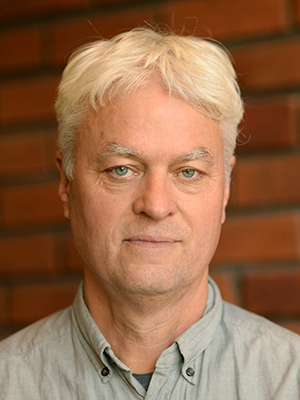
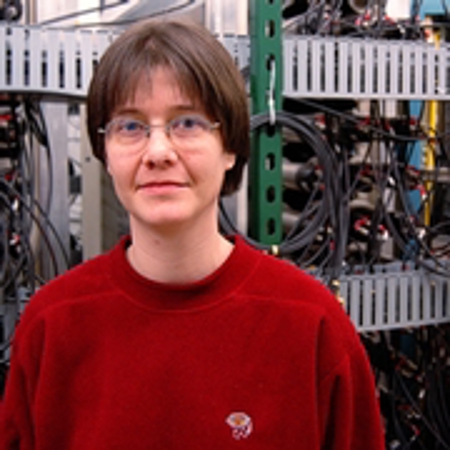
Dag Henrik Tuastad is a Professor of Middle East Studies at the Department of Culture Studies and Oriental Languages (IKOS) at the University of Oslo. His research focuses on kinship dynamics in Palestinian politics, rebel governance (notably Hamas rule in Gaza 2007–2023), political representation crises, and the intersection of sports and politics in the Middle East. Current projects include senior research at Football and Religion in the Middle East (FORM) , funded by the Norwegian Research Council (2021–2026) Former project leader for Rebel Governance in the Middle East (2017–2021) PhD in Social Anthropology (2008) on kinship in Palestinian politics His recent publications analyze Hamas’s symbolic authority, football’s role in Jordanian-Palestinian identity formation, and the erosion of legal frameworks in the West Bank. He critiques media bias (e.g., in Qatar World Cup coverage) and explores how football culture reflects broader political tensions. Teaching: Courses on Middle East history, cultural anthropology, and conflict resolution Regional Focus: Palestine, Jordan, Gaza, and the Levant
Jason Brownlee is a Professor in the College of Liberal Arts at the University of Texas at Austin. His research focuses on comparative politics, democracy, and authoritarianism, with a regional emphasis on the Middle East and Southeast Asia. Ph.D., Princeton University Contact: brownlee@austin.utexas.edu Research Interests : Brownlee investigates the persistence of authoritarian regimes, the political economy of repression, and the impact of foreign intervention on domestic politics. His work often analyzes Egypt, Iran, Malaysia, and the Philippines. Key Publications : Authoritarianism in an Age of Democratization (Cambridge, 2007) Democracy Prevention: The Politics of the U.S.-Egyptian Alliance (Cambridge, 2012) The Arab Spring: Pathways of Repression and Reform (Oxford, 2012, co-authored with Tarek Masoud and Andrew Reynolds) Teaching : Brownlee offers courses such as "War/Freedom in South Asia/Middle East" and "Issues & Policies in American Government," delivered both in-person and online.
Alexandra Gade is a University Distinguished Professor at the Department of Physics and Astronomy in the College of Natural Science , Michigan State University (MSU). She serves as the FRIB Scientific Director and has held leadership roles at both the National Superconducting Cyclotron Laboratory (NSCL) and FRIB. Her research focuses on the structure of exotic nuclei using radioactive isotope beams , with expertise in Coulomb excitation and nucleon knockout reactions . Education: Ph.D. in Physics (Dr. rer. nat.), University of Köln (2002) Diploma thesis, University of Köln (1998) Vordiplom, University of Köln (1995) Her nuclear structure research investigates how neutron-proton asymmetry alters nuclear properties like deformation, excitation patterns, and shell closures. She employs advanced experimental techniques at NSCL/FRIB, including the S800 spectrograph and GRETINA/SeGA gamma-ray detectors , to study exotic nuclei across the nuclear chart. Key projects include proton/neutron removal reactions and intermediate-energy Coulomb excitation , providing insights into nuclear deformation , collective modes , and single-particle orbit modifications . Recent scientific contributions focus on high-profile FRIB experiments , triaxial nuclear shapes , and shell evolution near drip lines . Her work bridges experimental observations with nuclear theory , particularly in refining shell model calculations and reaction models for exotic systems. Scientific Awards: 2023-24 Research Leadership Award (MSU) 2020 AAAS Fellow 2018 William J. Beal Outstanding Faculty Award (MSU) 2017 NatSci Outstanding Faculty Award (MSU) 2015 Zdzislaw Szymanski Prize 2014 GENCO Membership Award (GSI) 2013 APS Fellow 2010 Thomas H. Osgood Excellence in Teaching Award (MSU) 2008 Alfred P. Sloan Fellow 2008 DOE Outstanding Junior Investigator Her research group has trained numerous PhD students and postdoctoral researchers , many of whom hold academic or national laboratory positions. Collaborations include nuclear theorists , instrumentation experts , and international facilities like CERN, Argonne, and Lawrence Livermore National Laboratory.
Rex Ying is an Assistant Professor in the Department of Computer Science at Yale University's School of Engineering & Applied Science. He leads research in graph neural networks, geometric representation learning, and explainable AI, with applications spanning physical simulations, biology, knowledge graphs, and recommender systems. His lab actively recruits PhD students interested in geometric deep learning, graph neural networks, and trustworthy AI. Dr. Ying received his PhD in Computer Science from Stanford University under Jure Leskovec, with a thesis titled "Towards Expressive and Scalable Deep Representation Learning for Graphs." Prior to that, he graduated from Duke University in 2016 with highest distinction, majoring in Computer Science and Mathematics. His research focuses on three interconnected areas: advancing graph neural network architectures for improved expressiveness, scalability, and interpretability; innovating in geometric representation learning for data with diverse characteristics; and developing real-world applications across scientific domains. He has pioneered influential algorithms including GraphSAGE, PinSAGE, and GNNExplainer, and developed the first billion-scale graph embedding services at Pinterest as well as graph-based anomaly detection algorithms at Amazon. His recent publication trends show a strong focus on hyperbolic geometry for foundation models, non-Euclidean representation learning, and multimodal applications in computational biology. The research demonstrates increasing integration of geometric deep learning with large language models and foundation model architectures. KDD 2022 Dissertation Award 2019 Baidu Scholarship in Artificial Intelligence Dr. Ying actively serves the research community as a committee member for major conferences including AAAI, ICML, NeurIPS, ICLR, KDD, and WebConf for over seven years, and as area chair for LoG 2022. He co-leads the open-source PyTorch Geometric project and has organized numerous workshops on graph learning. His industry collaborations include Pinterest, Amazon, Facebook AI Research, DeepMind, Siemens, SLAC National Accelerator Laboratory, and Saudi Aramco. He teaches "Deep Learning for Graph-Structured Data" at Yale and mentors students in developing cutting-edge graph learning algorithms. His research lab collaborates with both academic institutions and industry partners to advance the state-of-the-art in graph representation learning, with particular emphasis on geometric deep learning and its applications to scientific discovery and real-world systems.
John T. Sidel Summary Professor John T. Sidel is the Sir Patrick Gillam Chair in International and Comparative Politics at the London School of Economics and Political Science (LSE), holding joint appointments in the Government and International Relations Departments. He is also Director of the Saw Swee Hock Southeast Asia Centre. His career spans over three decades of research on Southeast Asia, with a focus on the Philippines, Indonesia, and Vietnam. Education B.A. and M.A. in Political Science from Yale University Ph.D. in Government from Cornell University Research Interests Sidel specializes in Southeast Asian politics, including local power dynamics, comparative historical sociology, Islam in politics, reform advocacy campaigns, and infrastructure politics. Key themes include: Local Politics: Analysis of political bossism, dynasties, and subnational governance in the Philippines and beyond. Comparative History: Long-term patterns of state-building, nationalism, and colonial legacies in Southeast Asia. Islam & Politics: Study of religious violence, political mobilization, and transnational Islam in Indonesia. Reform Advocacy: Advising development initiatives like the Philippines' Coalitions for Change program. Infrastructure Politics: Urban transport reforms and their socio-political implications in Metro Manila. Key Publications Major works include Republicanism, Communism, Islam: Cosmopolitan Origins of Revolution in Southeast Asia (2021), Riots, Pogroms, Jihad (2006), and Capital, Coercion, and Crime (1999). His recent research explores transport policy reforms and the political economy of development in the Philippines. Teaching Sidel teaches courses on Southeast Asian politics, comparative historical sociology, and Islam in world politics at LSE. Notable courses include GV4D3 (Local Power in Globalization) and IR461 (Islam in International Relations). Public Engagement He advises international organizations such as The Asia Foundation and UNHCR, contributing reports on Indonesia's refugee policies and Philippine development initiatives. Active in public lectures and podcasts, he promotes Southeast Asian studies through platforms like the LSE's 'Dialogues on Southeast Asia' series.
John (Xuefeng) Jiang is an Eli Broad Endowed Professor in Accounting at Michigan State University's Broad College of Business, holding appointments in the Department of Accounting and Information Systems, with courtesy positions as Professor of Finance and Faculty Affiliate of the law school. He serves as President-Elect of the Financial Accounting and Reporting Section (FARS) of the American Accounting Association and is an associate editor at Management Science. Dr. Jiang received his education from Renmin University of China and the University of Georgia, and has passed the Uniform CPA exams in both China and the United States. His research spans interdisciplinary areas at the interface of accounting and finance, with particular focus on corporate governance, healthcare management, information technology systems, regulation & public policy, and corporate finance. His methodological approach employs natural experiments and novel data sources to address fundamental questions in financial reporting and disclosure. Dr. Jiang's scholarly work has evolved from traditional accounting topics like earnings management and credit ratings to contemporary issues in healthcare management and cybersecurity. His recent publications examine hospital pricing transparency, data breaches in healthcare systems, and the impact of media oversight on hospital behavior, demonstrating his ability to apply accounting principles to emerging real-world challenges. His research has been widely covered by major media outlets including the Wall Street Journal, New York Times, NPR, Forbes, and CBS News. American Accounting Association Distinguished Contribution to Accounting Literature Award (2017) Multiple Outstanding Teacher of the Year awards from graduating students Dr. Jiang has successfully mentored doctoral students who have secured tenure-track positions at the University of Florida, the National University of Singapore, and Miami University. He has served on the FARS steering board from 2018 to 2022 and is actively involved in the academic community as a past President of MSU's Chinese Faculty Club and faculty advisor for the Broad China Business Society.
Barbara Zanchetta is a Senior Lecturer in the Department of War Studies at King’s College London, affiliated with the Faculty of Social Science & Public Policy. She specializes in Cold War history, American foreign policy, and transatlantic relations. Her work examines US-Soviet détente, nuclear arms control, and the strategic implications of post-Cold War policies. She is the author of The Transformation of American International Power in the 1970's and co-author of Transatlantic Relations since 1945 . Currently, she is researching US policies toward the Persian Gulf and their role in the collapse of the Soviet Union. Her teaching includes courses on international history, US national security, and the War on Terror. She is affiliated with the Sir Michael Howard Centre for the History of War, the Latin American Security Research Group, and the Centre for Grand Strategy. Her research explores the intersections of diplomacy, conflict, and security policy, with a focus on Cold War legacies and modern geopolitical challenges. Zanchetta has organized international conferences, including a hybrid event in Paris on the consequences of the Cold War’s end. Her commentary on contemporary issues, such as NATO’s expansion and Russia’s aggression in Ukraine, reflects her expertise in historical and strategic analysis.
Nick Abel is an Honorary Associate Professor at the Fenner School of Environment & Society, Australian National University. With a distinguished international career spanning Africa and Australia, he has worked in Zimbabwe, Kenya, Ethiopia, Botswana, Somalia, Swaziland, Zambia, and Australia. His academic credentials include a Ph.D., M.Sc., and B.Sc.(Hons.), reflecting a strong foundation in environmental sciences and complex systems thinking. Abel's research program centers on the critical challenge of human adaptation to climate change, with particular focus on why adaptation efforts are insufficient to prevent environmental and social tipping points. He critically examines Australia's role as the world's third largest exporter of fossil fuels while facing escalating climate impacts, investigating how fossil fuel companies have maintained influence over public policy. His work integrates social-ecological systems theory, resilience thinking, and practical governance frameworks to address climate adaptation challenges. His publication record demonstrates a clear evolution from foundational work in rangeland management and complex adaptive systems toward urgent climate policy interventions. Early research established theoretical frameworks for understanding resilience in dryland ecosystems, while recent work focuses on transformation pathways, Indigenous engagement, and community-based adaptation strategies. A consistent thread throughout his career is the integration of diverse knowledge systems and the development of practical approaches for environmental governance in rapidly changing conditions. Abel has registered to supervise research students at ANU and participates in significant collaborative projects, including the current 'Partnering with local communities in regional Australia to increase resilience to flood events' (2022-2025). His high-impact publications, including the highly cited 'Resilience management in social-ecological systems' (1,120 Scopus citations) and 'From Metaphor to Measurement: Resilience of What to What?' (2,596 Scopus citations), demonstrate his foundational contributions to the field. Through his work with various research groups and projects, Abel has helped establish frameworks for understanding social-ecological systems and climate adaptation. His contributions to the Fenner School include advancing methodologies for integrating scientific and Indigenous knowledge systems, developing practical approaches to environmental governance, and critically examining the political economy of climate policy in Australia.
Graham Ward serves as Regius Professor of Divinity at Christ Church College, University of Oxford, and holds a Visiting Senior Research Fellow position in Theology at Campion Hall. His academic profile bridges institutional theology with cross-disciplinary cultural analysis within Oxford's theological framework. His research spans systematic theology, philosophy, and cultural studies, with concentrated focus on religion's interplay with anthropology, sociology, political theory, gender studies, and contemporary science. Current work involves a three-volume project developing culturally engaged systematic theology that confronts modern secular frameworks while re-examining Christian doctrine's societal relevance. Publication trends reveal sustained engagement with political theology (particularly through Carl Schmitt interpretations), deconstructive philosophy (Barth/Derrida dialogues), and cultural dynamics of religious practice. His scholarship consistently examines how theological concepts navigate modernity's collapse, addressing secularization through aesthetics, urban studies, and critical theory while maintaining doctrinal rigor.
Michael Gastpar is a full Professor at École Polytechnique Fédérale de Lausanne (EPFL) in the School of Computer and Communication Sciences, where he leads the Laboratory for Information in Networked Systems (LINX). He previously held faculty positions at the University of California, Berkeley (2003-2011, earning tenure in 2008) and Delft University of Technology. His research spans information theory, signal processing, communications, and systems neuroscience. His research interests focus on network information theory and related coding and signal processing techniques, with applications to sensor networks and neuroscience. Recent work demonstrates a strong shift toward exploring the theoretical foundations of modern machine learning, particularly investigating transformer architectures from an information-theoretic perspective. His research group at EPFL explores how information theory principles can provide fundamental limits and novel approaches for contemporary machine learning problems. His recent publications reveal a clear trend toward bridging classical information theory with modern machine learning. The 15 most recent papers show increasing focus on theoretical analysis of transformers, rate-distortion frameworks for language models, universal prediction methods, and applications of information measures to machine learning theory. This represents a strategic evolution from his earlier work on sensor networks and physical-layer network coding toward foundational questions in artificial intelligence. Scientific Awards: IEEE Fellow 2013 Communications Society & Information Theory Society Joint Paper Award Information Theory Society Distinguished Lecturer (2009-2011) ERC Starting Grant (2010) Okawa Foundation Research Grant (2008) NSF CAREER award (2004) 2002 EPFL Best Thesis Award Professor Gastpar has advised over 20 PhD students who have gone on to successful careers in both academia and industry. His research has been generously supported by major grants including an ERC Starting Grant "ComCom" (2011-2016) and ongoing support from the Swiss National Science Foundation. He has served in significant editorial roles, including as Associate Editor for Shannon Theory for the IEEE Transactions on Information Theory (2008-11) and as Technical Program Committee Co-Chair for the IEEE International Symposium on Information Theory in 2010 and 2021. He leads the Laboratory for Information in Networked Systems (LINX) at EPFL, which brings together researchers working at the intersection of information theory, machine learning, and networked systems. The lab maintains strong connections with both theoretical research communities and practical applications in communications and neuroscience.
Christoph Kehle is an Assistant Professor in the Department of Mathematics at the Massachusetts Institute of Technology (MIT) since 2024. He works at the intersection of General Relativity, Partial Differential Equations, and Mathematical Physics, focusing on black hole stability, cosmic censorship, and gravitational collapse phenomena. Education: PhD in Mathematics (2020) from the University of Cambridge under Mihalis Dafermos, MASt (2015) at Cambridge, and BS/MS (2016) from LMU Munich. Research: His work addresses fundamental questions about black hole interiors, extremal black hole formation, and nonlinear wave dynamics on curved spacetimes. He investigates connections between Diophantine approximation and spacetime stability, as well as turbulence in AdS black hole systems. Scientific Awards: Recipient of the Research Scholar at Trinity College (Cambridge), EPSRC PhD Scholarship, Senior Scholarship Exam Prize, and scholarships from the German Academic Foundation and Max Weber-Program. Publications: 15 most recent articles span nonlinear stability of extremal black holes, critical collapse phenomena, and geometric PDEs. Collaborators include Y. Angelopoulos, R. Unger, A. Figalli, and M. Van de Moortel.
Professor Manolis Gavaises is a leading academic in the field of mechanical engineering and computational fluid dynamics at City St George's, University of London, where he holds the position of Professor in the School of Engineering and Mathematical Sciences. He earned his PhD from Imperial College London and has been a faculty member since 2001, progressing to full Professor in 2009. His research is centered on advanced modeling of multi-phase flows, cavitation, and fuel injection systems, with extensive collaborations across Europe and industry partners such as Delphi, Caterpillar, and BP. Education: DIC, Mechanical Engineering, Computational Fluid Dynamics, Imperial College London, 1997 PhD, Mechanical Engineering, Computational Fluid Dynamics, Imperial College London, 1997 Diploma (5 years), Mechanical Engineering, National Technical University of Athens, 1992 His research interests span computational fluid dynamics, cavitation, fuel injection, atomization, high-pressure and supercritical flows, and alternative fuels . He has developed advanced numerical models and experimental techniques, including X-ray phase contrast imaging and high-pressure test rigs. His work integrates fundamental DNS and LES simulations with industrial applications in automotive, marine, aerospace, and medical devices such as heart valves. The recent publications reflect a strong trend toward real-fluid thermodynamic modeling (e.g., PC-SAFT), multi-component fuel behavior, cavitation erosion, and advanced diagnostics . His research increasingly incorporates machine learning and high-fidelity imaging to understand complex flow phenomena across energy, transportation, and biomedical domains. Scientific Awards and Recognitions: Richard Way Prize (1998) Arch T. Collwell Merit Award (1998) Best Oral Paper, SAE World Congress (2006) PE Publication Award, IMechE (2007) Best Presentation Award, Engine Combustion Processes (2009) Fellow, IMechE (2013) Fellow, IMA (2015) As a dedicated mentor, Professor Gavaises has supervised 13 PhDs to completion and currently guides 23 doctoral students. He has secured over €16 million in EU and UK funding, including multiple Horizon 2020 Marie Skłodowska-Curie ITN projects (CAFÉ, HAOS, IPPAD), which support 46 early-career researchers globally. He has created academic opportunities for post-docs and junior faculty, significantly advancing the research profile of his institution. He leads the International Institute of Cavitation Research (IICR), co-founded in 2011 with partners from Loughborough University, TU Delft, and Imperial College, supported by The Lloyd’s Register Foundation. His lab maintains strong experimental capabilities, including a 2000bar pressure flow rig with micro-transparent nozzles and collaborations with Argonne National Laboratory for X-ray imaging.
Alyssa Ney is a leading Professor of Philosophy at Ludwig-Maximilians University Munich (LMU), holding the Chair of Metaphysics within the Faculty of Philosophy, Philosophy of Science, and Religious Studies. Her work bridges metaphysics with the philosophy of physics and mind, focusing on the interpretation of quantum theories, fundamentality, and the unity of science. Education: PhD in Philosophy (Brown University), MS in Physics (UC Davis), BS in Physics and Philosophy (Tulane University) Previous appointments: UC Davis (2019-2024), University of Rochester (2005-2019) Ney’s research explores the metaphysical implications of quantum mechanics, particularly wave function realism and its challenges in grounding macro-objects. She investigates the relationship between quantum theory and classical conceptions of space, time, and causation, with a focus on locality and nonlocality. Her work also addresses physicalism, mental causation, and the methodology of metaphysical inquiry. Recent publications include analyses of density matrix realism (“ Is the Universe Fundamentally a Density Matrix? ”), many-worlds interpretations (“ Branching (Almost) Everywhere and All At Once ”), and the metaphysical status of spacetime in quantum gravity contexts. She was awarded the 2025 Patrick Suppes Prize for her book The World in the Wave Function and the 2024 Humboldt Foundation Bessel Award. Scientific Awards Patrick Suppes Prize (2025) Friedrich Wilhelm Bessel Research Award (2024) FQxI Essay Contest Second Prize (2018) Elsie Field Dupre Prize in Physics (1999) Ney actively mentors underrepresented scholars in philosophy of science and serves on editorial boards for Philosophy of Physics and British Journal for the Philosophy of Science . She has organized workshops connecting metaphysics with philosophy of physics and quantum interpretation.
David L. Henann serves as the James R. Rice Associate Professor of Solid Mechanics in the Department of Engineering at Brown University's School of Engineering. His research focuses on continuum-level constitutive modeling of engineering materials, with particular expertise in granular materials, viscoelastic foams, and bubble dynamics in soft solids. Henann leads an active research group developing computational frameworks for material behavior prediction through numerical simulation. PhD, Massachusetts Institute of Technology (2011) SM, Massachusetts Institute of Technology (2008) BS, State University of New York at Binghamton (2006) Henann's research spans constitutive theory development and computational implementation for complex material systems. His group pioneers nonlocal continuum models for granular flows, large-deformation viscoelastic theories for elastomeric foams, and high-strain-rate characterization of microcavitation phenomena. Current projects include modeling size segregation in granular media, bubble dynamics in viscoelastic hydrogels, and electromechanical instabilities in dielectric elastomers. His publication record reveals consistent focus on material instability phenomena , constitutive model validation , and experimental-computational synergy . Henann frequently collaborates with experimental groups to validate theoretical frameworks, particularly in soft matter mechanics and cavitation dynamics. Eshelby Mechanics Award for Young Faculty (2020) NSF CAREER Award (2016) Pi Tau Sigma Gold Medal (ASME, 2016) Brown University Teaching Awards (2015-2016) Henann maintains an active teaching portfolio covering continuum mechanics, solid mechanics, and plasticity at both undergraduate and graduate levels. His research group operates a computational mechanics laboratory with extensive Fortran-based simulation capabilities, evidenced by multiple open-source repositories on GitHub for granular rheology, foam modeling, and dielectric elastomer analysis. Current work focuses on extending nonlocal granular models to industrial applications and developing predictive frameworks for soft material failure under extreme loading conditions.
Turan Birol is an Associate Professor in the Department of Chemical Engineering and Materials Science at the University of Minnesota, with a secondary appointment in the School of Physics. He leads the Theoretical Materials Physics Group , focusing on computational materials design to discover exotic condensed matter phenomena. Education: PhD in Physics (Cornell University), Postdoc (Rutgers University) Research Areas: Ferroelectricity, Charge Density Waves, Multiferroics, Strongly Correlated Systems, Kagome Metals His work combines Density Functional Theory with Dynamical Mean Field Theory to study materials like perovskites, layered antiperovskites, and 2D/3D compounds. Recent projects include Office of Naval Research -funded ferroelectric design and NSF Discovery File -featured transparent conductors. Scientific contributions include 15+ recent articles on topics spanning structural chirality in superconductors, strain-tuned magnetism, and catalytic resonance theory. Former advisees include PhD graduates in Physics and Materials Science.