Alex Ansong is a Senior Lecturer in Law at the College of Business, Law and Social Sciences. His research focuses on international trade law, particularly the African Continental Free Trade Area (AfCFTA), dispute settlement mechanisms, and labor law in global supply chains. He examines the intersection of sovereignty, regional integration, and sustainable development goals in legal frameworks. Key research areas include: Dispute resolution under AfCFTA, child labor eradication in Ghana’s cocoa industry, and WTO institutional challenges. Recent publications explore legal enforcement strategies for SDG compliance and sovereignty dynamics in multilateral trade governance. His work bridges theoretical international law with practical policy solutions, addressing contemporary issues like privatization of trade regulation and the protection of traditional knowledge. Despite no listed awards or grants, his scholarship critically analyzes systemic challenges in global economic governance.
Ibiyemi Omeihe is a Lecturer and Programme Leader in the School of Business and Creative Industries at the University of the West of Scotland (UWS). She leads the MSc Logistics and Supply Chain Management and the pioneering dual-degree MSc Sustainable Logistics and Supply Chain Management, co-developed with the Ukrainian State University of Railway Transport. Her research focuses on entrepreneurship, leadership, small business development, and supply chain management, with a strong emphasis on decolonising business education and gender equity in entrepreneurial ecosystems. She holds a PhD in Management from UWS and an MBA (Distinction), alongside a Postgraduate Certificate in Academic Practice and Fellowships from the Higher Education Academy and Chartered Association of Business Schools. Her academic roles include Managing Editor of Applied Qualitative Research Methods and Design and International Studies in Entrepreneurship and Small Business . Ibiyemi’s professional affiliations include leadership roles in the Academy of African Studies, British Academy of Management, and Scottish Women’s Budget Group. She has received multiple awards, including the 2022 Lecturer of the Year and 2024 Social Citizenship Award nomination. Her work contributes to UN SDGs related to gender equality, sustainable cities, and responsible consumption.
Dr. Adam Aitken is a Lecturer at the School of Health and Society, University of Salford, Manchester, UK. His career spans over a decade in criminology and security studies, with prior roles as a Criminology Lecturer at De Montfort University (2017-2021) and Assistant Lecturer at the University of Glasgow (2013-2017). Education: Postgraduate Certificate in Academic Practice (2023-2024), University of Salford PhD in Criminology (2013-2017), University of Glasgow MSc in Applied Social Research in Criminology (2011-2012), University of Stirling BSc (Hons) in Criminological Studies (2004-2008), Abertay University Research Interests: Adam's work focuses on security governance , police legitimacy , private security dynamics , and community resilience , particularly in contexts like sporting mega-events and environmental disasters. His current BA/Leverhulme-funded project examines placemaking and rural resilience to UK flooding. Publication Trends: His recent articles (2024-2025) address digital policing, community resilience, and semiotic approaches to security signals. Earlier works analyze mega-event security, democratic governance, and environmental harms. Scientific Awards: Shortlisted 2nd Place (2015) for poster on mega-event policing at SIPR Postgraduate Student Symposium PhD Supervision: Adam has supervised PhD completions (Michael Mathura, 2020) and is primary supervisor for Brian Roberts' ongoing work on AI in UK policing. He contributes to the Centre for Research on Inclusive Society and aligns with UN SDGs for health, urban sustainability, and climate action.
Myropi Garri is a Senior Lecturer in Strategic Management and International Business at the University of Portsmouth's Faculty of Business & Law, within the School of Strategy, Marketing and Innovation. She serves as the Global DBA Course Director and supervises PhD students. Her research focuses on strategy and international business, with emphasis on Foreign Direct Investment (FDI), institutional influences, sustainability, and geopolitical dynamics. She has contributed to over 20 peer-reviewed publications and led projects such as the 'Dynamic Capabilities building in Ukrainian SMEs for post-war restoration' and the Portsmouth City Council-funded 'AI Leadership Skills Bootcamp.' Her work addresses UN Sustainable Development Goals (SDGs), particularly in sustainable development and global economic equity. Garri has received the Alan M. Rugman Most Promising Young Scholar Award (2016) and frequently presents at international conferences, including a 2024 invited talk at the University of Macedonia in Greece. Key research themes include configurational theorizing, institutional theory, dynamic capabilities, and resource-based strategies. Her projects often involve cross-disciplinary collaborations, such as analyzing FDI motives in South Korea and exploring SME resilience in post-war Ukraine.
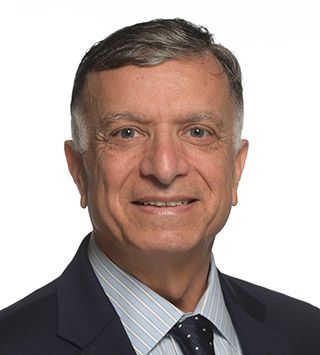
Jamshid Mohammadi is the Interim Provost and Professor of Civil and Architectural Engineering at Illinois Institute of Technology (IIT), within the Armour College of Engineering. He holds a Ph.D. in Civil Engineering (Structural Engineering) from the University of Illinois at Urbana-Champaign. His research focuses on structural integrity, seismic damage analysis, bridge performance, and risk assessment in transportation systems. Research Projects: He leads studies on bridge fatigue, seismic vulnerability, structural health monitoring, and disaster resilience. Notable projects include investigating horizontally curved bridges, seismic damage to skewed bridges, and probabilistic models for fatigue failure in metals. His work often involves collaborations with institutions like NASA and the Illinois Department of Transportation. Publications & Books: Mohammadi has authored over 150 peer-reviewed articles and two influential books: Systems Engineering, with Economics, Probability and Statistics and NDT Methods Applied to Fatigue Reliability Assessment of Structures . His work bridges theoretical models with practical engineering solutions. Expertise: His expertise spans system reliability, highway bridge analysis, and probabilistic methodologies for infrastructure assessment. He advises on temporary structure design, post-disaster risk mitigation, and lifecycle cost optimization. Grants & Recognition: His projects are funded by federal and state agencies. While no specific awards are listed, his extensive publications and leadership roles highlight his impact in civil engineering education and practice.
Janet Hankin serves as a Professor in the College of Liberal Arts and Sciences at Wayne State University, where she maintains an active research program in medical sociology. Her office is located in 2259 Faculty Administration Building, and she can be reached at janet.hankin@wayne.edu or (313) 577-2930. Education: PhD from University of Wisconsin-Madison Research Focus: Dr. Hankin's scholarly work centers on critical intersections of medical sociology and public health, with sustained emphasis on preventing alcohol consumption during pregnancy and addressing systemic health disparities. Her research employs sociological frameworks to examine how social determinants impact maternal health outcomes, particularly among vulnerable populations. The landmark 2010 special issue of the Journal of Health and Social Behavior that she co-edited represents a comprehensive synthesis of medical sociology's evolution over five decades, establishing foundational knowledge for contemporary health equity research. Publication Trends: Her recent scholarly output demonstrates dual trajectories: theoretical contributions through historical analysis of medical sociology (2010) and applied research on prenatal alcohol screening implementation (2012). The Alabama-based study examining alcohol detection in prenatal care settings for low-income women exemplifies her commitment to translating sociological insights into clinical practice improvements within resource-constrained environments. Recognition: Citation index of 383 (2009-present) Academic Service: Professor Hankin teaches MGG7640 - Principles of Genetic Counseling in Fall terms (2023-2024), demonstrating engagement with health professional education. No information regarding grant funding or student mentorship was provided in available materials.
Pedro Fonseca is an Assistant Professor at the Department of Computer Science, Purdue University. He leads the Reliable and Secure Systems Lab, focusing on building reliable and secure core software systems such as operating systems, hypervisors, and distributed systems. His research has been recognized with awards including the NSF CAREER Award and Google Faculty Research Awards. Before Purdue, he completed a postdoc at the University of Washington, working with Arvind Krishnamurthy, Hank Levy, and Xi Wang. He earned his PhD from MPI-SWS and the University of Saarland under Rodrigo Rodrigues. His academic contributions span over 30 peer-reviewed publications in top-tier conferences like SOSP, OSDI, EuroSys, and ASPLOS. He teaches courses including CS503 (Operating Systems), CS592 (Reliable and Secure Systems), and CS408 (Software Testing). He actively serves on program committees for major systems conferences including SOSP, OSDI, EuroSys, and ASPLOS.
Vidyasagar Sharma is a Research Associate at Bielefeld University's Faculty of Sociology, working on the DFG-funded project "Navigating Universities. Student Aspirations, Boundary Drawing, and Transformations in India and the Philippines" under Prof. Dr. em. Joanna Pfaff-Czarnecka. He is affiliated with Department 6 - Sociology of Transnationalization and Social Anthropology and the Bielefeld Graduate School in History and Sociology. Education: 2023-04 - Ongoing: Research Associate in DFG project "Navigating Universities..." at Bielefeld University 2021-08 - 2022-05: Urban Fellows Program, Indian Institute of Human Settlements, Bengaluru 2018-10 - 2021-02: Master of Philosophy in Political Science, University of Delhi (Dissertation: Changing Contours of Caste in Urban Spaces: A Case Study of Delhi) 2015-07 - 2017-07: Master of Arts in Political Science, Jawaharlal Nehru University 2011-07 - 2014-06: Bachelor of Arts in Political Science, Indira Gandhi National Open University Research Focus: Sharma's work critically examines caste dynamics in Indian educational institutions, institutional violence against marginalized students, and the commodification of higher education. His research explores how social hierarchies manifest in university spaces and affect student experiences, particularly for Dalit-Bahujan communities, with strong emphasis on belonging, social exclusion, and educational equity. Publication Trends: His prolific output spans academic journals and major media outlets including The Indian Express and The Wire. A consistent theme across his work is the intersection of caste discrimination and mental health among university students, with particular attention to institutional responses to student suicides and the moral crisis in India's higher education system. Scientific Awards: 2019-07 - 2023-03: Junior Research Fellowship, University Grants Commission, India 2015-07 - 2016-07: Nirman Foundation Fellowship, Centre for Policy Studies, Jawaharlal Nehru University Professional Activities: Sharma is a member of the British Sociological Association (2023-present) and founded the academic initiative "Speaking From Margin" in 2021 to build solidarity for social justice in higher education. His research experience includes work as a Principal Investigator at the Indian Institute for Human Settlements and a Research Intern at the Center for Policy Research in New Delhi. Additional Information: Fluent in Hindi and English with working knowledge of German, Sharma bridges academic scholarship with public discourse through regular contributions to major media platforms addressing pressing issues in education policy and social justice.
Dr. Richard Gauvain is a Lecturer at the University of Chester's Faculty of Arts, Humanities and Social Sciences , based in the Humanities, Cultures and Environment department. He holds a Ph.D. in Theology and Religious Studies from the University of Glasgow (2002) with specialization in Islamic Studies. His academic career spans universities in the Middle East, Europe, and the UK, encompassing diverse teaching roles in Religious Studies, History, Political Science, and Middle East Studies. Dr. Gauvain's research focuses on Islamic law , Salafism , ritual theory , and Anglican studies , particularly in Middle Eastern contexts. Notable themes include Salafi ritual practices in Egypt, the socio-political dynamics of Islamic reform movements, and the interplay between tradition and modernity in religious discourse. Recent work examines Egyptian Anglican Orthodoxy and UAE national identity narratives . His publications span International Journal for the Study of the Christian Church , Oxford Handbook of Ritual and Worship , and Routledge Handbook of Islamic Ritual , reflecting interdisciplinary engagement with anthropology, theology, and political science. No scientific awards are explicitly mentioned, but his extensive fieldwork and ethnographic contributions highlight scholarly rigor. Teaching expertise includes research methods and theory across undergraduate and graduate levels. His academic language proficiency includes Arabic (fluent) and Spanish (academic competence).
Dr. Barney Walsh is a Senior Lecturer in Security, Leadership and Development Education at the African Leadership Centre (ALC) within King's College London's School of Global Affairs, Faculty of Social Science & Public Policy. He serves as programme convenor of the blended learning MSc Global Leadership and Peacebuilding and is the Managing Editor of the ALC Journal of Leadership and Developing Societies. Currently on sabbatical until December 2025, Walsh has been faculty at ALC-King's since completing his PhD there in 2016, where he was the program's first graduate. He also mentors various ALC Fellowship programmes. Education: BA in History and Sociology (international) from Leeds University MA in International Relations from King's College London PhD in Leadership Studies with reference to Security and Development from ALC-King's (2016, first graduate of program) Dr. Walsh's research focuses on African security dynamics, particularly examining leadership, political economy, and international relations in East Africa. His work explores China-Africa relations, Ugandan political economy, and regional security frameworks. He has conducted extensive field research in Uganda, Kenya, Rwanda, Tanzania, and South Africa, bringing practical insights to his theoretical work on security complex theory and human security approaches in the East African context. His scholarship consistently examines African agency within international relations, challenging traditional narratives about external influence on the continent. Dr. Walsh's publication record demonstrates a consistent focus on African security frameworks, with particular attention to East Africa and China-Africa relations. His work bridges theoretical approaches like Regional Security Complex Theory with practical case studies examining Ugandan foreign policy, China's role in African security, and women's contributions to state-building. A recurring theme is the examination of African agency within international relations, challenging traditional narratives about external influence on the continent. Dr. Walsh supervises PhD students in Leadership Studies, Global Leadership, China-Africa Relations, and East African Security. He has organized and overseen numerous academic conferences and symposiums, indicating successful grant acquisition for these activities. His research has involved fieldwork across multiple African countries, suggesting substantial research funding for these activities. Dr. Walsh is associated with the Chinese International Investments research group which examines how Chinese companies and government initiatives have made China a new source of large-scale capital investments and business activities in various sectors across Africa. He has also contributed to policy discussions through initiatives like the African-focused op-ed series on COVID-19 launched by the African Leadership Centre.
Professor Wyn Bowen is a leading academic in non-proliferation and international security, holding the title of Professor of Non-Proliferation and International Security at King’s College London’s Department of War Studies. He serves as Head of the School of Security Studies and Co-Director of the Freeman Air and Space Institute. His roles include leading the Security and Defence PLuS collaboration between King’s, Arizona State University, and the University of New South Wales. Research interests encompass nuclear non-proliferation, strategic stability, coercive diplomacy, and WMD threat reduction. Notable projects include studies on Syria’s chemical weapons, Iran’s nuclear hedging, and Libya’s nuclear reversal. He has contributed to global initiatives such as the Global Partnership against WMD and advised the UK government on defense and security policy. Publications span books like Living on the Edge: Iran and the Practice of Nuclear Hedging and articles in Security Studies and Contemporary Security Policy . Awards include the Bernard Brodie Prize (2015) and a William Penney Fellowship. He has held visiting roles at Lawrence Livermore National Laboratory and the Center for Nonproliferation Studies. Professional activities include membership in the Royal Society’s Advisory Committee on Scientific Aspects of International Security and trustee roles at VERTIC. He co-edits the journal Defence Studies and oversees research centers like the Conflict Records Unit and King’s Cybersecurity Centre.
Dr. Jonathan Buonocore is an Assistant Professor in Environmental Health at the Boston University School of Public Health and Core Faculty at the Institute for Global Sustainability (IGS). His research evaluates health impacts of energy systems, focusing on climate mitigation strategies' co-benefits, equity, and unintended consequences. He holds a Sc.D. and MS from Harvard School of Public Health and a BS from Clarkson University. Education: Sc.D., Environmental Science & Risk Management, Harvard School of Public Health MS, Environmental Health, Harvard School of Public Health BS, Environmental Science & Policy, Clarkson University Research Interests: Dr. Buonocore examines energy systems through integrated frameworks combining health impact assessment, risk modeling, and energy policy analysis. Key areas include: Health co-benefits of renewable energy expansion Air pollution consequences of fossil fuel infrastructure Environmental justice in energy transitions Geoengineering health risks Recent work analyzes electrification policies, methane leakage risks, and extreme climate interventions. Articles emphasize spatial equity in exposure to oil/gas development and transportation policies. Grants & Advising: His research is supported by grants focusing on energy-climate-health linkages. He advises on projects related to decarbonization pathways and environmental justice. Labs & Collaborations: Associated with IGS and prior work at Harvard's Center for Climate, Health, and Global Environment. Collaborates with environmental justice organizations on policy-relevant research.
Dr Folahanmi Aina is a Lecturer in Development Studies at SOAS University of London, specializing in the Political Economy of Violence, Conflict, and Development. He holds a PhD in Leadership Studies from King’s College London, with academic qualifications from institutions including the University of Oxford and Seoul National University. His research focuses on peace, security, and development challenges in West Africa’s Sahel and Lake Chad Basin regions, particularly addressing terrorism, insurgency, and governance failures. Education: BSc (Zaria) → MSc (Oxford) → MA (Seoul) → PhD (King’s College London). Research emphasizes transnational security dynamics, counterterrorism strategies, and the interplay between climate change and violent extremism. He has published in journals like African Security and Democracy and Security , and received the prestigious General Lamine Cissé Young Researcher Award. Recent work examines armed banditry in Nigeria, exploring its linkages to drug trafficking, pandemic impacts, and humanitarian crises. His studies highlight the need for process-based leadership and credible governance to address sub-national fragility.
Nari Shelekpayev is an Assistant Professor of Slavic Languages and Literatures at Yale University, currently on leave for 2024-2025. His research focuses on transnational and comparative history, with specializations in urban history, Soviet and post-Soviet biopolitics, and the cultural history of Central Asia. He holds a Ph.D. in History from Université de Montréal, an M.A. in Social Sciences from EHESS Paris, and an M.L. in International Law from Université Paris 2, Panthéon-Assas, alongside a B.A. in Political Science from Nankai University. His research interests include the intersection of cities and political power, cultural memory in the Soviet and post-Soviet eras, and the role of opera in capital city formation. He has published extensively on topics such as Astana’s urban transformation, Soviet protests in Kazakhstan, and the symbolism of capital cities in imperial contexts. Recent publications include manuscripts on post-Soviet biopolitics and comparative Eurasian urban history. His work has appeared in Kritika , Urban History Review , and Slavic Review , among others. He has held prestigious fellowships including the Macmillan Center Research Grant (2024) and the Nizami Ganjavi Fellowship (2022). Shelekpayev teaches courses such as The Master and Margarita: Money, Sex, and Power in Stalin’s USSR and Second Sex After Second World War at the undergraduate level, and a graduate seminar on Central Asian studies. He is fluent in English, French, Italian, Russian, and Kazakh, with reading competency in Chinese and Portuguese.
Joseph Devietti is an Associate Professor in the Department of Computer & Information Science at the University of Pennsylvania. His research focuses on improving programmability and performance of multiprocessor systems through architectural and programming model innovations. He actively advises PhD students and has supervised numerous graduates now employed at leading tech companies and academic institutions. Education: PhD (2012), MS (2009) in Computer Science and Engineering from University of Washington; BSE (2006) in Computer Science and BA (2006) in English from University of Pennsylvania. Employment: Associate Professor (2020–present), Assistant Professor (2013–2020) at University of Pennsylvania; Principal Scientist & Co-founder at Cloudseal, Inc. (2018–2020). Devietti’s research spans computer architecture, parallel programming, and deterministic execution. Key areas include cache/memory optimization (prefetching, false sharing repair), GPU programming models (race detection, block-size independence), and hardware-software co-design for concurrency safety. His recent work addresses dynamic runtime prefetch tuning (RPG 2 ), online code layout optimization (OCOLOS), and intelligent BTB prefetching (Twig) for data center applications. His publications from 2024–2017 reveal trends in instruction/cache optimization (2024–2020), GPU determinism (2018–2017), and race detection (2018–2016). Awards include the 2024 Penn Engineering Ford Motor Company Award, Radhia Cousot Best Paper (2018), and IEEE Micro Top Picks recognition (2023, 2009, 2008). Scientific Awards : 2024 Penn Engineering Ford Motor Company Award Radhia Cousot Young Researcher Best Paper Award (SAS 2018) IEEE Micro Top Picks (2023, 2009, 2008) Intel Early Career Faculty Honor Program (2013) Intel Ph.D. Fellowship (2011) Advising : Supervised 15+ PhD/Master’s students with placements at Google, Microsoft, Amazon, NYU, and the United States Naval Academy. Collaborations : Works with industry leaders (NVIDIA, Facebook) and academic institutions (University of Washington, Penn).