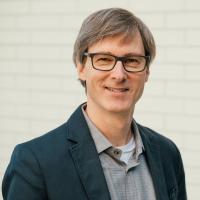
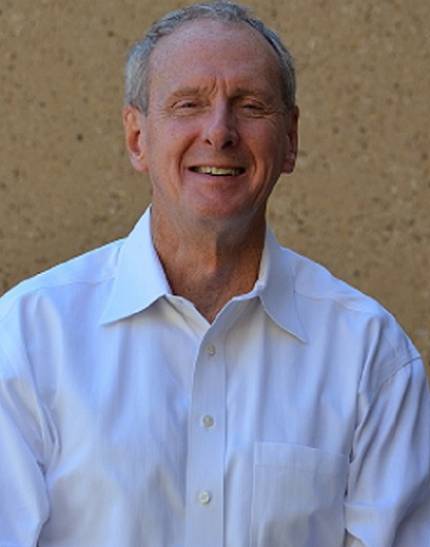
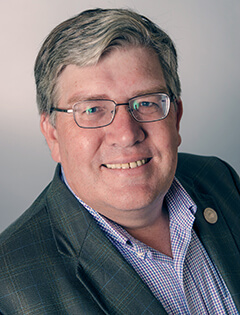
Mathieu Odijk is a Full Professor at the University of Twente's Faculty of Science and Technology, leading the Integrated Devices and Systems department. His research focuses on microfluidic systems, catalysis, and organ-on-chip platforms, with contributions to UN Sustainable Development Goals through advanced material characterization and biomedical engineering. He has authored over 120 publications and holds an h-index of 27 with 1,820 citations. Expertise: Microfluidics, catalyst particle diagnostics, SERS substrates, organ-on-chip systems, and spectroscopic techniques. Collaborations include Weckhuysen (catalysis), van den Berg (microfluidics), and Meirer (materials science). Key projects: Modular organ-on-chip platforms (STARTER), droplet-based catalyst screening, and real-time reaction monitoring via ATR-IR systems. His research combines nanotechnology and chemical engineering to develop tools for sustainable energy, environmental remediation, and biomedical applications. Recent work includes microreactors for catalyst particle analysis, light-driven urea oxidation for wearable kidney devices, and standardized platforms for organ-on-chip research.
Jiju Antony is a Professor at Northumbria University , specializing in quality management, Lean Six Sigma, and operational excellence. His research bridges industrial engineering, sustainability, and service sector optimization through rigorous academic inquiry and cross-industry collaboration. University: Northumbria University Email: jiju.antony@northumbria.ac.uk His research interests include: Quality Management Systems Lean Six Sigma Implementation Continuous Improvement Methodologies Sustainable Operations Industry 4.0 Integration Digital Transformation in Business Processes Recent publications focus on leveraging Lean Six Sigma for UNSDG compliance , Quality 4.0 in digital industries, and ESG performance enhancement through Kaizen practices. His work spans manufacturing, logistics, and healthcare sectors, emphasizing pandemic operational resilience.
Charles E.H. Berger serves as Professor by Special Appointment in Criminalistics at Leiden University's Institute for Criminal Law and Criminology since November 2011, a position funded by the Stichting Leerstoel Criminalistiek. He concurrently holds a principal scientist position at the Netherlands Forensic Institute (NFI), where he contributes to education, R&D strategy, and research on forensic evidence interpretation. His research program centers on logically sound interpretation of forensic evidence through probability theory and computational methods. Berger specializes in applying Bayesian statistics to forensic anthropology, personal identification, and evidential evaluation. His work emphasizes moving forensic science toward activity-level interpretations while managing contextual information to prevent bias. Berger plays a pivotal international role as member of ISO technical committee TC272, serving as lead editor for Part 4 (Interpretation) of the ISO-21043 Forensic Sciences standard. His scholarly contributions focus on improving forensic reasoning frameworks and establishing objective evaluation methodologies. His publications demonstrate consistent engagement with foundational forensic science challenges, particularly in developing statistically rigorous approaches to evidence interpretation that maintain scientific integrity within legal contexts. Berger actively promotes scientifically sound practices across the criminal justice system, emphasizing the importance of clear communication between forensic scientists, legal professionals, and other stakeholders to ensure proper understanding and application of forensic evidence.
Overview Professor Mile Terziovski is a Professor of Entrepreneurship and Innovation at Swinburne University of Technology's School of Business, Law and Entrepreneurship. He previously held leadership roles including Dean of Curtin Graduate School of Business, Head of UniSA's International Graduate School of Business, and Director of the Masters of Entrepreneurship and Innovation program at Swinburne. His academic journey spans over 25 years across multiple Australian universities, alongside a 17-year industrial career at Rio Tinto Group. Education PhD in Quality and Innovation Management (Melbourne Business School, University of Melbourne) MBA (RMIT University) BEng and MEng (University of Wollongong) GAICD (Australian Institute of Company Directors) Research Focus Terziovski's research focuses on innovation strategy, SME innovation practices, quality management systems, and sustainable business practices. His work bridges theory and practice, addressing challenges in manufacturing, healthcare, and energy sectors. He has published 60+ peer-reviewed articles, including in Strategic Management Journal and Journal of Operations Management , and authored books on innovation capability development. Grants & Awards He has secured $3M+ in research grants, including ARC Discovery and Linkage grants. Recognitions include the 2023 Stanford Top 2% Cited Scientists award, two Best Paper Awards from the Academy of Management, and multiple teaching excellence awards. His leadership extends to advisory roles with ACEM, SEAANZ, and Macedonian community organizations. Professional Contributions Terziovski advises global corporations like Motorola, Dow Chemical, and Eurocopter. His visiting professorship at the University of Versailles highlights international academic engagement. He currently supervises doctoral research on AI in entrepreneurship education, leadership in emergency medicine, and cross-border entrepreneurial ecosystems.
Véronique Michaud is an Associate Professor at the École Polytechnique Fédérale de Lausanne (EPFL), affiliated with the Laboratory for Processing of Advanced Composites (LPAC) within the School of Engineering (STI). Her research focuses on polymer composite processing, adaptive composites (e.g., shape memory alloys, self-healing mechanisms), and material science. She also contributes to teaching in Materials Science and Engineering, including courses like 'Materials: From Chemistry to Properties' and 'Composite Materials Processing.' Her academic roles include Associate Professorships in SMX, EDMX, and EDAM teaching units, and she serves as a PhD program committee member for the Doctoral Program in Advanced Manufacturing. She has advised numerous PhD students, including Michele Bonacina, Pierre-Alexandre Boschert, and Jean-Baptiste Desbrest, among others. Research highlights include sustainable composite material development, defect mitigation in composites, and advanced manufacturing techniques. Her work often addresses challenges in aerospace and renewable energy applications, emphasizing sustainability and material innovation.
Professor David Taubman is a distinguished academic serving as Professor and Deputy Head of School (Research) at the School of Electrical Engineering and Telecommunications (EE&T) at the University of New South Wales (UNSW) in Sydney, Australia. He is also co-director of Kakadu Software Pty. Ltd. and its affiliates Kakadu R&D and Kakadu GPU. With a career spanning over three decades, Professor Taubman has made significant contributions to the field of image and video compression, most notably as the author of the EBCOT coding algorithm adopted in the JPEG2000 international standard. Professor Taubman earned his B.Sc. in Mathematics and Computer Science (1986) and B.E. (Medal) in Electrical Engineering (1988) from the University of Sydney, followed by an M.Sc. (1992) and Ph.D. (1994) in Electrical Engineering from the University of California at Berkeley. His professional journey includes engineering work at the Electricity Commission of N.S.W. (1988-1990), research positions at Hewlett-Packard Laboratories in Palo Alto (1994-1998), and an academic career at UNSW where he progressed from Senior Lecturer (1998-2003) to Associate Professor (2004-2009) and finally to Professor (2009-present). He has held various leadership roles including Head of the EE&T Telecommunications Research Group (2003-2014), Head of the EE&T Signal Processing Research Group (2014-present), Director of Research for the School of EE&T (2011-2016), and Deputy Head of School (Research) since 2017. Professor Taubman's research interests center on image and video compression, with particular expertise in JPEG2000 standards and implementations. His work spans signal processing, wavelet transforms, scalable video coding, motion modeling, and multimedia systems. He has pioneered numerous compression algorithms and frameworks, including the EBCOT coding algorithm that became central to the JPEG2000 standard. His recent research focuses on efficient motion modeling with cuboidal partitioning, learned lifting-based transform structures, and high-throughput implementations of JPEG2000 for video applications. His work bridges theoretical foundations with practical implementations, as evidenced by the commercially successful Kakadu Software tools that have garnered around 500 commercial licensees. Analysis of Professor Taubman's recent publications reveals a consistent focus on advancing compression technologies with particular emphasis on scalability, efficiency, and adaptability. His work spans traditional image compression (JPEG2000 extensions), video coding (cuboid-based partitioning for UHD/360-degree video), and emerging applications (nanopore sequencing data compression). A notable trend is the integration of machine learning techniques with traditional compression frameworks, as seen in his work on learned lifting-based transform structures. His research maintains strong connections to real-world applications across diverse domains including medical imaging, astronomical data processing, and genomic sequencing. IEEE Fellow Engineers Australia Fellow (by invitation) Professor Taubman has served as Associate Editor for the IEEE Transactions on Image Processing for two four-year appointments (2003-2005 and 2010-2013). He has been actively involved in numerous research grants focused on image and video compression technologies, particularly those related to the JPEG2000 standard and its extensions. His work has received significant industry support, reflected in his consultancy with various U.S., Japanese, and Australian corporations. He has also contributed to international standards development as a member of Standards Australia Technical Committee MS-065 (mirroring ISO TC42 on Digital Photography) and as a constitutional member of Standards Australia Technical Committee IT-029 (Coded Representation of Picture, Audio and Multimedia/Hypermedia Information). Professor Taubman co-directs Kakadu Software Pty. Ltd. and its research affiliates Kakadu R&D and Kakadu GPU, which have developed the commercially successful Kakadu Software tools for JPEG2000. His research group at UNSW focuses on advanced image and video compression techniques, with particular expertise in wavelet-based methods, scalable coding, and motion modeling. The group maintains strong industry connections and has contributed significantly to the development and standardization of image compression technologies worldwide.
Kelly W. Sundberg is a Professor of Criminology at the Department of Economics, Justice, and Policy Studies within Mount Royal University . His expertise spans migration and border security , public safety standards , and crime prevention through environmental design (CPTED) . He holds adjunct and visiting scholar appointments at the University of Calgary, University of Adelaide, and University of East London, and supervises PhD students at St. John’s University. Education : PhD in Political and Social Inquiry (Monash University), MA in Justice and Public Safety Leadership (Royal Roads University), BA in Political Science (University of Victoria) Kelly’s research focuses on border security , migration enforcement , and security standards development . He has contributed to international policy frameworks through his work with the ISO/TC 292 Security and Resilience committee and founded the SAFE Design Council , which administers the world’s first CPTED certification standard. His applied teaching methodology integrates over 15 years of experience in federal law enforcement, emphasizing critical thinking , ethical decision-making , and practical application of criminological theory . His scholarly work includes publications on pandemic impacts on vulnerable populations , Canada-US border security , and religion-security intersections . He has secured grants for emergency management technologies and public perceptions of policing . Scientific Awards : Alberta Community Justice Award Innovation (2020) Kelly serves as an expert witness in British Columbia, Alberta, and Ontario on border security and crime prevention. He volunteers as an advisor to organizations like the Calgary Police Service and Standards Council of Canada , and his media appearances include CBS News, CBC, and major print outlets.
Stepan Wood is a Professor and Canada Research Chair in Law, Society and Sustainability at the Allard School of Law, University of British Columbia . His research focuses on environmental law , transnational governance , and social justice , with a particular emphasis on climate change , corporate responsibility , and rights of nature . He directs the Centre for Law and the Environment and has held visiting appointments at institutions including the European University Institute and Northwestern University . LLB - Osgoode Hall Law School SJD - Harvard Law School Former Editor-in-Chief, Osgoode Hall Law Journal His work spans globalization and law , voluntary standards (ISO 14001, ISO 26000), and homelessness policy . Recent projects examine environmental rights and the legal reception of English law in colonial BC . Articles he has published address topics like: Transnational business governance interactions Legitimacy in private regulation Augmented reality in ecosystem education Homeless encampment injunctions Climate change and invasive species Scientific awards include: $1 million Wall Fellowship (UBC) for environmental research Donald Smiley Award shortlisting for 'A Perilous Imbalance' He founded Canada’s Willms & Shier Environmental Moot and served as a Canadian negotiator for ISO 14001 standards.
Farah Magrabi is a Professor of Biomedical and Health Informatics at Macquarie University's Australian Institute of Health Innovation. She holds a BE (Hons 1) from the University of Auckland and a PhD in Biomedical Engineering from the University of New South Wales. Her research focuses on the safety and effectiveness of digital health and AI technologies, with notable contributions to patient safety standards, including the ISO/TS 20405 specification. She has been recognized with awards such as the Sax Institute’s Research Action Award (2015) and the Telstra Health Brilliant Women in Digital Health Award (2021). Magrabi’s leadership roles include co-chairing the Australian AI Alliance’s Working Group on Safety, Quality, and Ethics, and the 2023 Medinfo World Congress. She advises the Australian Digital Health Agency and contributes to global initiatives like the OECD’s Global Partnership for AI (GPAI). Her work spans policy development, clinical decision support systems, and AI ethics. Key projects include the NHMRC Centre of Research Excellence in Digital Health’s Safety Research Stream and evaluations of AI in clinical settings. Her research outputs emphasize AI governance, healthcare resilience, and climate change adaptation. Notable collaborations include studies on pandemic responses, generative AI in pain management, and digital health usability. Magrabi’s interdisciplinary approach bridges engineering, informatics, and policy to advance safe and equitable healthcare technologies.
Georgina Meakin is an Associate Professor in Forensic Science at the University of Technology Sydney's Centre for Forensic Science within the School of Mathematical and Physical Sciences. She joined UTS in October 2019 after six years at University College London's Centre for Forensic Sciences. With expertise in forensic DNA analysis, particularly in DNA transfer, persistence, prevalence, and recovery (TPPR), Dr. Meakin is recognized for her contributions to forensic science research and casework. Her academic credentials include: MSc in Forensic and Analytical Science, University of Huddersfield (2007-2008) PhD in Molecular Microbiology and Biochemistry, University of East Anglia (2003-2007) BSc in Molecular Biology and Genetics, University of East Anglia (1999-2003) Dr. Meakin's research focuses on the transfer, persistence, prevalence, and recovery (TPPR) of DNA and other trace evidence in forensic contexts. She is particularly interested in indirect DNA transfer and its implications for forensic interpretation. Her work spans crime scene evidence collection, DNA recovery methods, packaging considerations, and the evaluation of trace DNA in casework. Dr. Meakin has co-authored major review articles on DNA transfer in forensic science and contributes to the development of best practices in forensic DNA analysis. Dr. Meakin's recent publications demonstrate a consistent focus on practical forensic challenges related to DNA evidence. Her work examines DNA recovery methods across various substrates, environmental effects on DNA persistence, and packaging considerations to minimize DNA transfer. She has developed innovative approaches to DNA collection, including an applicator prototype for tapelifts. Her research increasingly addresses operational forensic science questions with direct implications for crime scene investigation protocols and evidentiary interpretation. Dr. Meakin actively supervises students in Biological Criminalistics and Crime Scene Investigation courses at UTS. She has secured research funding including a grant for "Development and validation of an applicator for use with adhesive tape for DNA recovery" from the Defence Science and Technology Group (2022-2024). She provides forensic DNA consulting services for legal cases through various solicitors. As part of the Centre for Forensic Science at UTS, Dr. Meakin collaborates with forensic practitioners and researchers globally. She has participated in high-profile cases, notably serving as a forensic scientist on the team that re-examined evidence for the BBC2 documentary 'The Chillenden Murders'. Her editorial roles with Science and Justice and previous work with Annals of Human Genetics demonstrate her commitment to advancing forensic science scholarship.
Professor Kiyotaka Iwasaki at Waseda University's Faculty of Science and Engineering is a leading figure in biomedical engineering with a focus on cardiovascular device development , tissue engineering , and regulatory science . His career spans over two decades at Waseda University, including roles as Associate Professor (2006-2014) and positions at Harvard Medical School's Laboratory for Tissue Engineering. Holding a Doctor of Engineering from Waseda, he serves on numerous international regulatory committees and has contributed to ISO/TC194 standards for medical devices. 1993-2002: Waseda University Education in Mechanical Engineering 2001-2004: Research Associate at Waseda University 2004: Research Scientist at Harvard Medical School 2018-Present: Professor at Waseda University His research interests include Non-clinical testing methodologies for medical devices Regulatory science frameworks Tissue engineering for ligament and cardiac applications Cardiovascular biomedical engineering His scientific contributions reveal through Development of decellularized tissue grafts for orthopaedic surgery Innovations in 3D cardiac tissue engineering using fibrin-based cell sheet stacking Pioneering bioresorbable stent technology with magnesium alloys Creation of biomechanical simulators for valvular disease modeling His awards span from the 2021 Japanese Ministerial Science Commendation 2020 JSME Standards Award 2018 ARIA Innovation Award 2001 ASAIO Fellowship While his publications demonstrate expertise in Vascular and cardiac device testing Bioresorbable stent evaluation Machine learning in medical device regulation Decellularized tissue applications
George Henderson is a Professor at the Texas Tech University Health Sciences Center in the Department of Pharmacology & Neuroscience . His research focuses on the neurotoxic effects of ethanol and environmental toxins during development, particularly mechanisms of apoptosis and oxidative stress in the brain and placenta. Primary Affiliation: Texas Tech University Health Sciences Center Research Areas: Developmental neuroscience, neurotoxicity, oxidative stress, fetal alcohol spectrum disorder, nanoparticle drug delivery Research Trends: His publications from 1972–2023 show sustained expertise in ethanol-induced developmental damage, placental drug transport mechanisms, and antioxidant therapeutic strategies. Recent work (2023) explores chlorogenic acid as a neuroprotective agent via NFATc4/CSE pathways. Key Collaborations: Institute for One Health Innovation and translational neuroscience teams at TTUHSC.
Steven Casper is the Henry E. Riggs Professor of Management and Program Director (MBS) at the Keck Graduate Institute's Riggs School. He specializes in the 'business of science,' focusing on biotechnology clusters, innovation ecosystems, and global health policy. Previously, he held roles as a University Lecturer in Innovation and Entrepreneurship at the University of Cambridge's Judge Institute of Management Studies and a Senior Research Fellow at the Social Science Center in Berlin. Dr. Casper's research examines regional entrepreneurial ecosystems, non-market technology development in global health, and cross-national comparisons of biotechnology policies. He holds a PhD in Government from Cornell University and has been funded by the National Science Foundation and the English Social Research Council. Notable awards include Fulbright Research Scholar status and fellowships at Stanford's Center for Advanced Study and the Netherlands Institute for Advanced Studies. Education: PhD in Government (Cornell University) Key Research Themes: Biotechnology Clusters, Entrepreneurial Ecosystems, Global Health Drug Development, Policy Impact on Innovation Grants & Funding: NSF, English Social Research Council His recent work explores networks in global health drug development and the role of public policy in shaping innovation ecosystems. He has authored influential books such as Creating Silicon Valley in Europe (Oxford University Press, 2007) and publishes widely in economic sociology and public policy journals.
Dr. Andrzej Ożadowicz is a University Professor at the Department of Power Electronics and Automation of Energy Conversion Systems within the Faculty of Electrical Engineering, Automatics, Computer Science and Biomedical Engineering at AGH University of Science and Technology in Kraków, Poland. His office is located in room 510, building C-1, with contact details including phone +48 12 617 50 11 and email ozadow@agh.edu.pl. He holds PhD, DSc, and Engineering degrees, reflecting his dual expertise in academic research and practical engineering applications. His research spans Power Electronics, Building Automation, Smart Grids, and IoT-driven energy systems. Key interests include energy efficiency optimization through digital twins and BIM, distributed energy resource integration , and AI-enhanced demand management . Notably, he pioneers applications of deep reinforcement learning in home energy systems and develops frameworks for Smart Readiness Indicator implementation. His work bridges theoretical innovation with practical case studies in building thermal modeling and dynamic façade systems. Recent publications (2021-2025) reveal three dominant trends: (1) Convergence of digital twin technology with building automation for real-time energy management; (2) Critical analysis of IoT security and interoperability in smart infrastructure; (3) Pedagogical innovations in engineering education through blended learning methodologies post-COVID-19. His scholarly output demonstrates consistent focus on energy transition challenges and smart grid evolution. Professor Ożadowicz actively contributes to the Discipline Council for Automation, Electronics, Electrical Engineering and Space Technologies at AGH. He is instrumental in the AutBudNet initiative —a network of certified laboratories for energy efficiency assessment that implements "learning by doing" principles in building automation education. His work with this consortium emphasizes practical validation of smart grid technologies and demand response systems.
Sohag Kabir is an Associate Professor in the School of Computer Science, Artificial Intelligence, and Electronics at the University of Bradford. He leads the MSc Big Data Science and Technology, MSc Artificial Intelligence and Machine Learning, and MSc Applied Computer Science and Artificial Intelligence programs. He holds a Ph.D. in Computer Science from the University of Hull (2016), an M.Sc. in Embedded Systems, and a B.Sc. in Computer Science and Engineering. Dr. Kabir's research focuses on safety, reliability, and security assurance of cyber-physical autonomous systems. His work includes model-based safety analysis, probabilistic risk assessment, dynamic reliability analysis, and stochastic modeling. Current projects address IoT security, machine learning certification for automotive systems, and dependability frameworks for complex systems. His publications demonstrate consistent focus on developing integrated frameworks for system dependability, with recent work emphasizing IoT security, autonomous vehicle safety, and AI certification challenges. Dr. Kabir has contributed to multiple EU-funded projects including DEIS (Dependability Engineering Innovation for Cyber-Physical Systems) and MAENAD (Model-based Analysis & Engineering of Novel Architectures for Dependable Electric Vehicles).