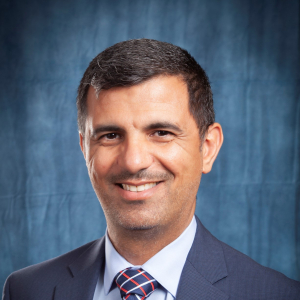
Kerby C. Oberg, MD, PhD, is a Professor and Vice Chair in the Anatomy Division of the Pathology and Human Anatomy Department at Loma Linda University School of Medicine . His research focuses on developmental biology, congenital limb and craniofacial variations, and the molecular mechanisms underlying limb development. Education: MD (1991), PhD (1989), BS (1983) from Loma Linda University CERT-PRO from Stanford University (2018), Baylor College of Medicine (1997) Research Interests: He investigates the genetic regulation of limb development, congenital anomalies, and their clinical implications. His lab, the Molecular Embryopathy Research Laboratory , explores molecular pathways like SHH, FGF, and Lmx1b in limb patterning and regeneration. Recent Publications (2025-2019): His work spans developmental genetics, congenital limb defects, medical imaging, and surgical classification systems. Key contributions include the Oberg-Manske-Tonkin (OMT) Classification for upper limb anomalies and studies on gene regulatory modules in limb development. Teaching: He has taught Human Embryology , Medical Genetics , and Developmental Biology courses since 2019, including lectures and research supervision.
Yvonne Peters is a Senior Lecturer in the Department of Physics at the University of Manchester, where she leads a Helmholtz young investigator group. She is an active experimental particle physicist working with major international collaborations including the ATLAS collaboration at CERN, the D0 collaboration at Fermilab, and the SiD consortium at the proposed International Linear Collider (ILC). Education: Diploma in Physics (2005) - University of Wuppertal Doctorate in Physics (2008) - University of Wuppertal Dr. Peters specializes in high-energy particle physics with a focus on top quark and Higgs boson physics. Her research spans multiple areas including lepton physics, center of mass physics, transverse momentum physics, muon physics, pair production physics, hadron physics, and cross section engineering. She has made significant contributions to understanding fundamental particle interactions through precision measurements at particle colliders. Her recent publications demonstrate a strong focus on differential cross-section measurements, Higgs boson studies, and advanced particle reconstruction techniques. These works primarily utilize data from the ATLAS detector at the Large Hadron Collider, with research directions emphasizing precision measurements of Standard Model processes and searches for physics beyond the Standard Model. Scientific Awards: ERC Consolidator Grant (2018) Fermilab International Fellowship (2010) STFC postdoctoral fellowship (2010) Dr. Peters has held significant research positions including Newton International Fellow (2009-2010) and Junior Professor at the University of Goettingen (2012-2013). She serves on important committees including the Science & Technology Facilities Council (STFC) and is a member of professional organizations such as the Higher Education Academy and the Institute of Physics. Her research group maintains extensive datasets related to particle physics measurements, with 155 published datasets available through HEPData. Her work contributes to UN Sustainable Development Goals related to advancing scientific knowledge and technological development. The Particle Physics Group she belongs to continues to be at the forefront of experimental high-energy physics research, with ongoing projects related to the next generation of particle colliders and precision measurements of fundamental particles.
Dr. Sabine Schilling is a Lecturer at the Lucerne School of Business, part of Lucerne University of Applied Sciences and Arts, affiliated with the Institute of Tourism and Mobility (ITM). She holds a PhD in Theoretical Particle Physics from the University of Zurich and studied physics at the University of Heidelberg. Her research focuses on interdisciplinary applications of statistics , machine learning , and numerical simulations , with particular emphasis on biomedical challenges like intracranial aneurysm analysis. Key areas include: Morphological quantification of vascular structures Hemodynamic modeling of blood flow Genome-wide association studies for neurological disorders Development of computational biology frameworks She maintains active software development contributions, including the R package visStatistics for automated statistical test visualization. Her teaching portfolio includes courses in descriptive statistics.
Russell Poldrack is the Albert Ray Lang Professor of Psychology at Stanford University , with an additional courtesy appointment in Psychiatry and Behavioral Sciences. He serves as Department Chair in Psychology, Associate Director of the Stanford Data Science Initiative, and Director of the Center for Open and Reproducible Science. A British Academy Fellow (2023), Poldrack leads research at the intersection of cognitive neuroscience and neuroinformatics , focusing on decision-making, executive control, and open science frameworks like NeuroSynth and OpenNeuro. Developed fMRIPrep pipeline for standardized neuroimaging preprocessing Championed reproducibility in fMRI analysis through multiverse analysis frameworks Created hyve visualization engine for composite neuroimaging representations His recent publications address decision-making mechanisms (eLife 2025), fMRI reliability (Nature Human Behaviour 2024), and machine learning reproducibility (Science Advances 2024). Poldrack's lab has produced over 150 published reuses of shared neuroimaging data through the OpenNeuro platform, while his Poldrack Lab continues to explore self-regulation ontology in clinical populations. He currently oversees 13 independent studies through Stanford's Neuroimaging Data Science program. Major awards: OHBM Open Science Award , Wiley Young Investigator (2005) Professional roles: Board of Scientific Counselors, NIH NIMH; Former Human Connectome Project EAB Chair Methodological contributions: BIDS standard adoption, MRIQC quality control protocols
Míriam Calvo Gómez is an Assistant Professor at La Salle Digital Engineering School, within the Engineering Department. She is a key researcher in high-energy physics, actively contributing to the LHCb experiment at CERN. Her affiliations include leadership roles in multiple research projects such as LHCb-RTA-URL and InnovAI, and she is a member of the Research Group on Smart Society, which focuses on intelligent digital transformation for SMEs in Catalonia. Her research interests span High Energy Physics , Particle Physics , CP Violation , Standard Model tests, Meson and Baryon Physics , and data analysis techniques in collider environments. She also contributes to engineering applications of data science within smart society frameworks. The recent articles highlight her work in rare B decays, long-lived particle detection, and precision measurements of CKM parameters. These publications, appearing in top journals like European Physical Journal C and Journal of High Energy Physics , reflect her expertise in analyzing complex datasets from the LHCb detector, with a strong emphasis on uncovering physics beyond the Standard Model. She leads and participates in significant research grants, including LHCb-RTA-URL and Predoc LHCb , and supervises doctoral researchers. Her role as Principal Investigator and Supervisor underscores her leadership in both scientific inquiry and academic mentorship. She is actively involved in the Research Group on Smart Society , a multidisciplinary team working on digital innovation for small and medium enterprises, supported by AGAUR and ACCIÓ. This reflects her broader impact in applying advanced data science to societal and industrial challenges.
Jim Napolitano is a Professor of Physics at Temple University. His research focuses on experimental nuclear physics, quantum mechanics, and physics pedagogy, particularly in testing the Standard Model of Particle Physics through neutrino oscillations and parity-violating electron scattering experiments. He has contributed to major collaborations like Daya Bay and PROSPECT, advancing understanding of neutrino properties and weak interactions. Dr. Napolitano earned a Ph.D. in Physics from Stanford University (1982), following an MS (1978) and BS (1977) in Physics from Rensselaer Polytechnic Institute. His work bridges fundamental physics questions with technical innovations in detector design and precision measurement techniques. He holds the 2016 Breakthrough Prize in Fundamental Physics (Daya Bay Collaboration), 2011 APS Fellowship, and the 2010 David M. Darrin Counseling Award. Key projects include measuring the neutron skin thickness in lead nuclei, studying reactor antineutrino oscillations, and advancing Møller polarimetry for future experiments. He has led efforts in optimizing liquid scintillator compositions for detectors like JUNO and contributed to dark matter searches with the DarkSide experiment. His pedagogical interests emphasize improving physics education through evidence-based methods.
Bernardo Adeva Andany is a Professor in the Department of Particle Physics at the Faculty of Physics, Universidad de Santiago de Compostela. He is affiliated with the Galician Institute of High Energy Physics (IGFAE) and the Smart@HEP research group. His research focuses on experimental particle physics, particularly in high-energy collider experiments such as the LHCb collaboration at CERN. Adeva completed his doctorate in Physics at the Universidad Complutense de Madrid in 1983, with a thesis on the inclusive production of particles in interactions. His work has been published in prestigious journals like Physical Review Letters and the Journal of High Energy Physics. Affiliations: IGFAE, LHCb Collaboration Education: PhD in Physics (1983), Universidad Complutense de Madrid Research Interests: Bernardo Adeva’s research spans experimental particle physics, including studies of B-meson decays, CP violation, lepton universality tests, and detector performance. His work contributes to understanding fundamental particles and interactions, with a focus on rare decays and hidden-sector bosons. Key areas include: Analysis of B⁰ → K*⁰μ⁺μ⁻ decays Measurements of B-hadron lifetimes and masses Searches for new physics beyond the Standard Model Development of analysis techniques for high-energy collider data Collaborations: Adeva is a key member of the LHCb collaboration, contributing to precision measurements of CP violation and rare decay processes. His work leverages the LHCb detector’s capabilities for forward spectrometry in proton-proton collisions.
Enrique Javier Carrasco Correa is a researcher at the Universitat de València , affiliated with the Faculty of Chemistry and the Department of Analytical Chemistry . He is a member of the CLECEM group, specializing in Liquid Chromatography, Capillary Electrophoresis, and Mass Spectrometry . Education: PhD in Analytical Chemistry (2015), Universitat de València Research Interests: His work focuses on 3D-printed analytical devices, microextraction techniques, green chemistry, nanomaterials for separation science, environmental pollutant detection, and AI integration in analytical education . Recent articles highlight innovations in rare-earth MOF-based sensors, programmable fluidic platforms, and educational applications of ChatGPT . Key Contributions: Development of 3D-printed optosensors, automated electromembrane extraction systems, and biomimetic models for oral absorption studies . Collaboration: Collaborated extensively with his supervisors Dr. Guillermo Ramis Ramos and Dr. José Manuel Herrero-Martínez on advanced separation materials.
Ahmed A. Bahrani is an Assistant Professor in the Department of Neurology at the University of Kentucky, affiliated with the Sanders-Brown Center on Aging and the Institute for Biomedical Informatics. His research focuses on vascular cognitive impairment and dementia (VCID), Alzheimer’s disease, and neuroimaging techniques to assess cerebrovascular and neurodegenerative mechanisms. Key areas include white matter hyperintensity (WMH) dynamics, cerebral blood flow, and biomarker development for clinical trials. His work explores the interplay between vascular and neurodegenerative pathologies, particularly how white matter integrity and amyloid-beta deposition affect cognitive decline. He has pioneered protocols for quantifying WMH progression/regression using multi-site imaging validation. His studies integrate advanced MRI techniques, PET imaging, and clinical data to understand disease mechanisms in aging populations. Recent research emphasizes sex differences in cerebrovascular reactivity, the role of cardiorespiratory fitness in mitigating WMH burden, and the synergy between amyloid and vascular lesions in cognitive dysfunction. His findings highlight the need for precise biomarkers in VCID trials and the potential of longitudinal WMH analysis as a therapeutic endpoint. No notable scientific awards are mentioned, but his contributions have advanced imaging protocols and VCID biomarker validation. He collaborates across departments, leveraging interdisciplinary resources at the Sanders-Brown Center on Aging and the Institute for Biomedical Informatics.
Jesús Cardenal Carro is a Professor in the Department of Applied Mathematics at the Ferrol Engineering Polytechnic University College, part of the University of A Coruña (UDC). He teaches a wide range of courses across engineering disciplines, including Numerical Methods, Differential Equations, Linear Algebra, and specialized topics in mobility and industrial design. He is actively engaged in research through the Observatorio para el diseño e innovación en movilidad, medios de transporte y automoción, contributing to both academic and applied engineering projects. His research interests span Applied Mathematics , Computational Mechanics , Multibody System Dynamics , and Automotive and Mobility Engineering . He focuses on numerical methods, inertial data filtering, vehicle dynamics, and the development of test benches for simulating mechanical motion. His work bridges theoretical mathematics with practical engineering applications in automotive and industrial systems. The recent articles highlight a strong trend in applied computational mechanics, particularly in vehicle dynamics, numerical simulation, and sensor data processing. Many publications focus on the development and validation of algorithms for orientation estimation from inertial sensors, simulation of mechanical systems, and practical engineering solutions such as vehicle conversions and test bench design. Collaborations with researchers like Javier Cuadrado and Eduardo Bayo Pérez are frequent and long-standing. No scientific awards were explicitly mentioned in the provided text. Jesús Cardenal Carro has directed multiple final degree and master’s theses in Industrial Engineering, including those of José Augusto Antón Nacimiento and Alvaro Deibe Díaz. He has participated in numerous research projects funded by national programs such as the Programa Nacional de Investigación del Transporte, the Secretaria Xeral de Investigación e Desenvolvemento Tecnolóxico, and international entities like the U.S. Army Research Office. These projects span areas of multibody dynamics, vehicle systems, and applied mechanics. He is affiliated with the research group Observatorio para el diseño e innovación en movilidad, medios de transporte y automoción, which focuses on innovation in transportation and automotive design. His work involves close collaboration with industry partners such as NAVANTIA and LABORATORIO OFICIAL DE VEHÍCULOS HISTÓRICOS, as well as academic networks including the Asociación Española de Ingeniería Mecánica (AEIM) and IFToMM.
Magdalena Vande Voorde is a Lecturer and Doctoral student at the Particle Physics, Astrophysics and Medical Imaging Unit of KTH Royal Institute of Technology. She holds teaching roles in courses such as Engineering Skills (SA1007), Modern Physics (SH1012), and Subatomic Physics (SH2103), demonstrating her dual role in both education and research. Her research focuses on high-energy physics experiments, particularly involving the ATLAS detector at the Large Hadron Collider (LHC), with an emphasis on Higgs boson properties, vector boson interactions, and searches for beyond the Standard Model physics. She contributes to detector calibration, jet flavor tagging, and event reconstruction methodologies. Recent work includes studies on WbWb production, CP violation in Higgs decays, and long-lived particle signatures at future colliders like FCC-ee. Her interdisciplinary interests also extend to the environmental sustainability of computing infrastructure in large-scale physics experiments. Her research portfolio includes over 50 publications since 2023, focusing on precision measurements of particle interactions and novel analysis techniques for collider data. Notable contributions include the observation of double parton scattering in W-boson pair production and the development of neural simulation-based inference tools for parameter estimation. She actively participates in international collaborations like the ECFA Higgs Factory Study, exploring future collider strategies for precision physics. Teaching: Engineering Skills (SA1007), Modern Physics (SH1012), Subatomic Physics (SH2103) Research Themes: ATLAS Experiment, Higgs Physics, Collider Phenomenology Key Projects: FCC-ee Long-Lived Scalar Searches, Top-Quark Mass Calibration Her work bridges experimental particle physics with computational innovation, addressing both theoretical challenges and practical sustainability concerns in large-scale scientific endeavors.
Daniela Mascione is a Research Fellow in the Department of Physics at the University of Trento, Italy. Her research is primarily conducted through the ATLAS experiment at CERN's Large Hadron Collider, where she contributes to high-energy physics research focusing on fundamental particle interactions and properties. Her research interests span particle physics with a focus on Higgs boson studies, Z boson physics, heavy flavor jets, and searches for physics beyond the Standard Model. Her work involves analyzing proton-proton collision data at 13 TeV center-of-mass energy, with particular emphasis on precision measurements of cross-sections, polarization effects, and exotic decay channels. Analysis of her recent publications reveals a strong focus on Higgs boson pair production, heavy neutral lepton searches, vectorlike quark physics, and detector performance studies for the ATLAS Inner Detector. Her research contributes to testing the Standard Model predictions and searching for new physics phenomena at the energy frontier. Mascione has been actively involved in multiple ATLAS collaboration papers published in 2024, demonstrating her significant contributions to the field of experimental particle physics. Her work appears in prestigious journals including Physical Review Letters, Journal of High Energy Physics, and European Physical Journal C.
Arun Arjunan is a Professor in Research at the University of Wolverhampton, Faculty of Science and Engineering, School of Engineering. He serves as the Director of the Centre for Engineering Innovation and Research (CEIR) and leads the Additive Manufacturing of Functional Materials (AMFM) research group. His academic journey at the university includes roles as Reader, Senior Lecturer, Lecturer, and Course Leader in Mechanical Engineering. He holds a PhD from the University of Wolverhampton and is a Senior Fellow of the Higher Education Academy (SFHEA). His research focuses on additive manufacturing of advanced functional materials, particularly metamaterials with unique mechanical, acoustic, and biological properties. Key areas include auxetic and meta-biomaterials for biomedical implants and tissue engineering, infection-resistant 3D printed materials, and acoustic metamaterials for noise cancellation (e.g., Herschel Quincke-Arjunan waveguides). The recent publications highlight a strong trend in sustainable and biomedical applications of 3D printing, including personalized implants, water purification using bio-based materials, and environmentally responsible manufacturing. His work bridges engineering innovation with real-world challenges in healthcare and sustainability. GKN Award (2011) Senior Fellowship of the Higher Education Academy (2015) Vice Chancellor’s Award for Outstanding Contribution to Research (2020) UK Engineering Innovation Award (2021) THE ENGINEER UK Collaborate to Innovate Finalist (2021) Nominated for Blavatnik Awards (2019, 2020) Arun actively supervises PhD students and has secured substantial research funding from Innovate UK, the UK Department of Transport, the European Union, and industrial partners. He plays a key role in national and international standards development as a member of the BSI AMT/8 committee and contributes to ISO/TC 261 and CEN/TC 438. He has served as an external examiner for the University of Greenwich and as a reviewer for UK Research Councils. He leads the AMFM research group and CEIR, both of which foster interdisciplinary collaboration among academic staff, post-docs, technicians, and PhD researchers, focusing on cutting-edge engineering solutions for industrial and societal challenges.
Joan Montero Boronat is a Researcher in the Nanobioengineering Department at the University of Barcelona's Institute for Bioengineering of Catalonia (IBEC), focusing on molecular oncology and cancer therapeutics. His work bridges basic research and clinical applications through nanobioengineering approaches. His research centers on apoptosis regulation in cancer , particularly the role of BCL-2 family proteins and BH3 mimetics in overcoming therapy resistance. Key areas include lung cancer, leukemia, melanoma, and pediatric tumors, with emphasis on senescence mechanisms and mitochondrial priming. Recent work integrates microfluidic technologies for dynamic BH3 profiling and organoid-based precision medicine platforms. Analysis of his 15 most recent publications (2021-2025) reveals dominant themes in targeted therapy resistance (73% of articles), BH3 mimetic applications (60%), and pediatric/solid tumor models (47%). His work increasingly combines molecular oncology with bioengineering tools, with 40% of recent papers involving microfluidics or 3D culture systems. While no formal awards are listed in available materials, his collaborative network spans leading European cancer centers including the Spanish Society of Pediatric Hematology and Oncology (SEHOP) and the Relapsed Acute Lymphoblastic Leukemia Network (ReALLNet). Montero leads the Nanobioengineering group's cancer therapeutics research, directing projects on functional precision medicine assays and CRISPR-based tumor tracking. His lab collaborates extensively with clinical oncologists and bioengineers across Spain and Germany, particularly on senescence-targeting strategies and BH3 profiling standardization.
Tara Matise is a Professor and Chair of the Department of Genetics at Rutgers University, where she leads a research program in computational human genetics. She co-directs the Rutgers University Genetics Coordinating Center (RUGCC), a hub for large-scale genomic research initiatives funded by the NIH. Research Interests: Her work spans computational genetics, statistical genetics, and bioinformatics, with a focus on identifying genes responsible for human diseases. Key areas include breast cancer genetics, inherited disorders of the central nervous system, reproductive health, and population-specific genetic variation. She emphasizes inclusive genomics by studying non-European populations to address health disparities. The articles reflect a consistent trajectory in genomic data coordination, statistical methodology development, and disease gene discovery. Her recent work centers on large cohort studies, genotype imputation, ancestry analysis, and cross-consortium collaboration, particularly through projects like The PAGE Study and the NHGRI Genome Sequencing Program. Scientific Leadership and Grants: Co-Director, Rutgers University Genetics Coordinating Center (RUGCC) Lead for NIH-funded PAGE Study (2008–2024) Coordinator, NHGRI Genome Sequencing Program (2015–2022) Principal Investigator, Breast Cancer Genetics Study (launched 2023) She advises graduate students and postdoctoral researchers through her lab and leadership roles, though specific advisees are not listed. Her team manages complex data workflows, facilitates multi-institutional collaborations, and develops analytical frameworks for genetic discovery.