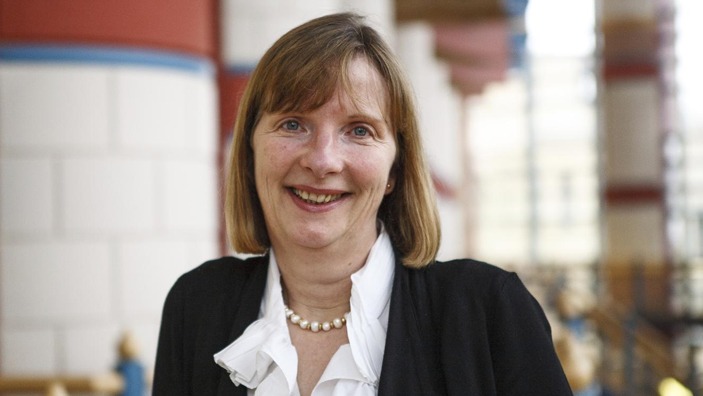
Marya Besharov is a Professor of Organisations and Impact at Saïd Business School, University of Oxford, and Academic Director of the Skoll Centre for Social Entrepreneurship. She holds a BA, MA, and PhD from Harvard University, alongside an MBA from Stanford University. Her work focuses on leadership, social impact, and hybrid organizations, advising global entities on balancing social and financial priorities. Education: PhD in Organizational Behavior, Harvard University MA in Sociology, Harvard University BA in Social Studies, Harvard University MBA, Stanford University Research Interests: Dr. Besharov’s research explores how organizations navigate competing goals, particularly in hybrid models like social enterprises. She investigates organizational identity, institutional logics, and leadership frameworks for systemic change. Her findings appear in Administrative Science Quarterly , Harvard Business Review , and Stanford Social Innovation Review . Engagement & Teaching: She leads executive education programs and workshops on leadership and systems change through the Skoll Centre. Her teaching emphasizes contingency-based frameworks for managing organizational complexity. Labs & Initiatives: Academic Director of the Skoll Centre for Social Entrepreneurship, a global hub for social impact education and research.
Craig Carter is the John G. and Barbara A. Bebbling Professor of Supply Chain Management at Arizona State University’s Department of Supply Chain Management. He holds the Harold E. Fearon Fellow of Purchasing Management title. His research focuses on sustainable supply chain management, ethical buyer-supplier relationships, environmental supply chain practices, and diversity sourcing. He has advised on over 100 Fortune 1000 firms globally and served as an editor for multiple journals, including the Journal of Supply Chain Management and Decision Sciences Journal. Education: Ph.D. in Business from Arizona State University (1996), B.S. in Business from the University of Maryland (1990). His industry experience includes roles at Ryder Systems and the U.S. Department of Transportation. Research emphasizes unintended consequences of sustainability initiatives, behavioral decision-making in supply chains, and supply chain leakage of greenhouse gas emissions. His work bridges theoretical frameworks (e.g., configurational approaches) with practical applications, such as mitigating supply risk and enhancing collaboration. Recent publications explore topics like honesty contagion in negotiations and informal exchanges impacting sourcing collaboration. He has been recognized for editorial contributions and has been actively involved in shaping supply chain management’s academic trajectory through thought leadership. Courses taught include Strategic Procurement, Global Supply Operations, and seminars on supply chain theory. His work often integrates empirical research with real-world case studies, emphasizing actionable insights for practitioners.
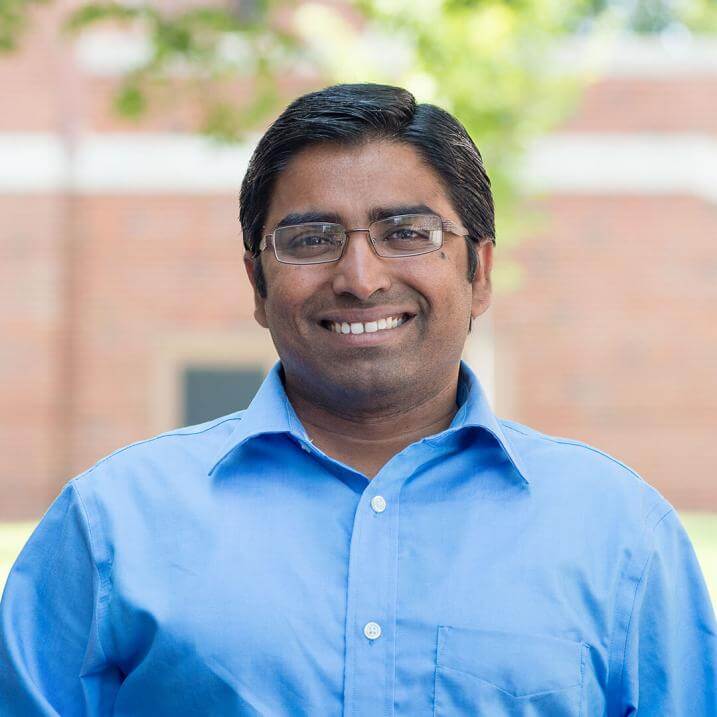
Dr. Appala Raju Badireddy is an Associate Professor in the Department of Civil and Environmental Engineering at the University of Vermont (UVM), and Director of the Water Treatment & Environmental Nanotechnology (WTEN) Laboratory. He is also co-founder and CTO of Secure Surgical Solutions LLC, and a founding member of Vermont Initiative for Biological and Environmental Surveillance (VIBES). His research focuses on sustainable membrane processes, environmental nanotechnology, nanometrology, and water security. Education: Ph.D., Environmental Engineering, University of Houston (2003-2009) M.Tech., Chemical Engineering, Indian Institute of Technology Madras (2001-2003) B.Tech., Chemical Engineering, Jawaharlal Nehru Technological University Hyderabad (1997-2001) Postdoctoral Research, Duke University (2009-2014) under Prof. Mark Wiesner Research Interests: Sustainable Membrane Processes: Water/wastewater treatment, desalination, anti-fouling strategies, and resource recovery. Environmental Nanotechnology: Nano-enabled sensors, remediation, and implications of nanomaterials in ecosystems. Environmental Chemodynamics: PFAS fate/transport, nutrient cycling, and contaminant toxicity. Water Security: Real-time monitoring systems and soil health assessments. His work integrates lab-scale innovations with field applications, emphasizing interdisciplinary collaboration. Recent Research Trends: Recent publications highlight advancements in PFAS remediation, electric-field enhanced filtration, and living lab approaches to precision agriculture. He explores nanomaterials for water treatment while addressing their environmental implications through novel detection methods like ED-HSI microscopy. Labs & Initiatives: WTEN Lab: Focuses on nanotechnology-driven water solutions. VIBES: Develops environmental surveillance tools for public health. Secure Surgical Solutions: Applies nanotechnology to medical devices.
Brett Sanders is a Professor in the Department of Civil and Environmental Engineering at the Samueli School of Engineering, University of California, Irvine. His research focuses on developing innovative algorithms for flow and transport in river and coastal systems and integrating information technologies to create more accurate and efficient simulation tools for flood hazard assessment. His primary research interests include: Flooding and erosion hazards, particularly coastal flooding and urban flooding Surface water quality Low impact development impacts on hydrology Dam-break flooding Aerial and terrestrial lidar scanning Geographical information systems High performance computing for simulation tools Social dimensions of flood risk and adaptation behaviors Dr. Sanders' recent publications (2024-2025) reveal a comprehensive research program addressing both technical and social aspects of flood risk. His work spans computational hydrodynamics, flood hazard mapping, infrastructure vulnerability assessment, and the socioeconomic dimensions of flood risk. He has made significant contributions to understanding multi-grid modeling of urban flooding, post-fire flood hazards, satellite-based monitoring of land motion, and social inequalities in flood exposure. His research demonstrates how flood dynamics are more complex than simple bath-tub filling models suggest, with important implications for urban planning and climate adaptation. Dr. Sanders has received recognition as a Chancellor's Professor at UC Irvine, indicating distinguished scholarly achievement. His educational background includes: Ph.D. in Civil Engineering from the University of Michigan (1997) M.S. in Civil Engineering from the University of Michigan (1994) B.S. in Civil Engineering from the University of California, Berkeley (1993)
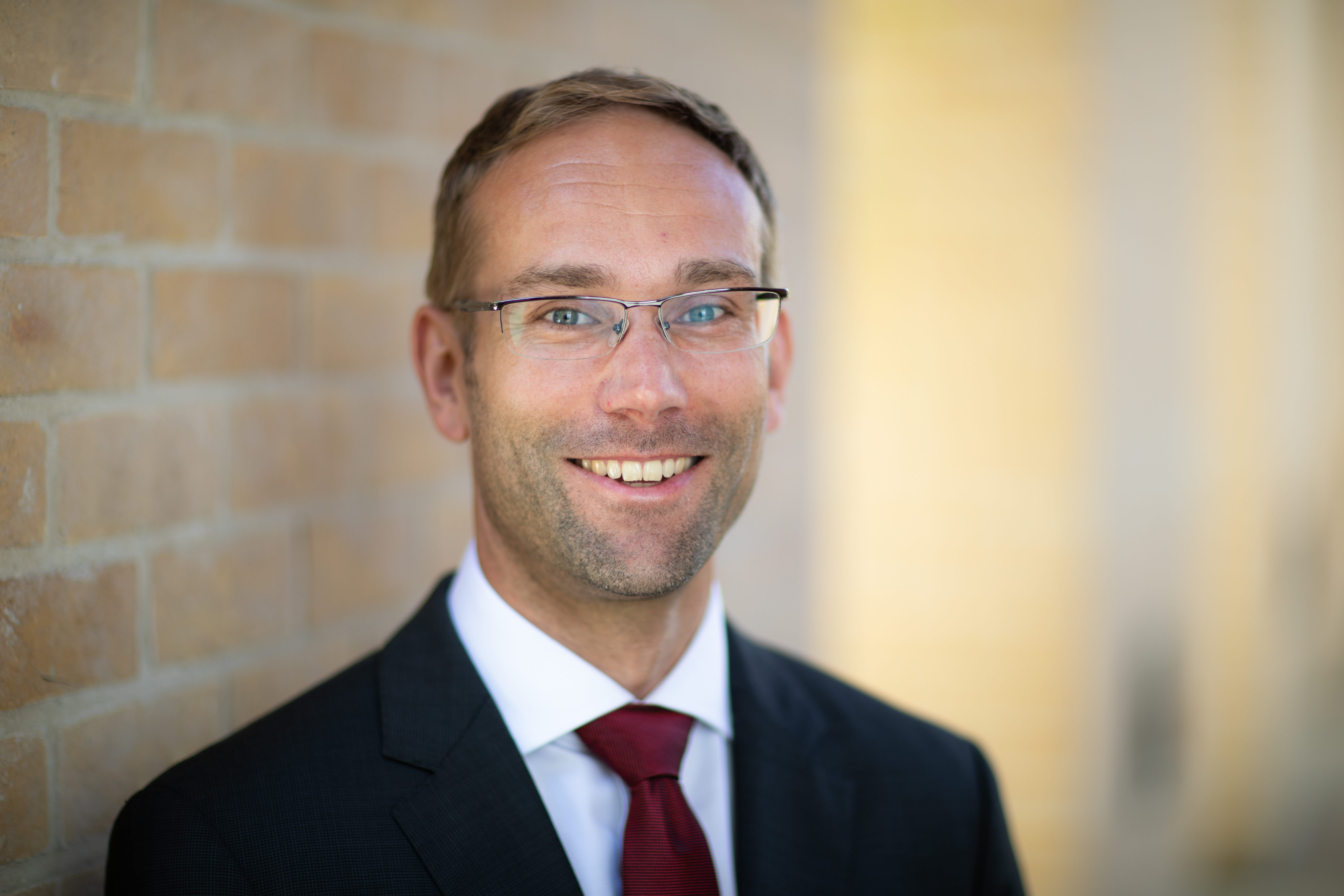
Profile Roles and Affiliations: Michael Smets is a Professor of Management at the Saïd Business School, University of Oxford. He is also a Research Fellow at Green Templeton College and a member of the Centre for Professional Service Firms. His academic contributions span institutional theory, practice theory, and strategic management. Education: Bachelor’s equivalent in Business and Economics, Cologne University, Germany MSc in Management Research, Saïd Business School DPhil in Management, Saïd Business School Postdoctoral Researcher at Saïd Business School and University of Alberta’s School of Management Research Interests: Michael’s work examines professional service firms (PSFs) through three core lenses: Global Operations: Internationalisation challenges in law, consulting, and reinsurance firms, with a focus on institutional complexity and regulatory systems. Innovation & Career Systems: How evolving career structures in PSFs can simultaneously drive innovation and address work-life balance demands. Recent studies highlight ambidextrous career paths and their strategic leverage. Methodological Innovation: Pioneering video- and team-ethnography to capture micro-level organisational practices. His ‘fly on the wall’ study at Lloyd’s of London is a landmark in this domain. Academic & Industry Impact: His research has been translated into industry-relevant outputs, including reports for the reinsurance sector and handbooks for legal firms. The 2013 ESRC Award for Outstanding Impact in Business recognises this translational work. Academically, he has received the 2012 Academy of Management Journal Best Article Award and multiple best paper awards. Teaching & Executive Education: Michael teaches strategic management, innovation, and business development in executive programmes for Commerzbank, Deloitte, and other global firms. He is Programme Director for the Oxford Leading Professional Service Firms Programme, emphasizing interactive, case-study driven pedagogy. His teaching philosophy prioritises critical thinking over rigid models, as he states: ‘It is critical to understand under which circumstances which models work, and which ones don’t.’ Labs & Collaborations: Affiliated with the Centre for Professional Service Firms and the Oxford Initiative on Rethinking Performance. He collaborates with institutions like Cass Business School and Aston Business School on ethnographic studies. His work also intersects with the Insurance Institute of London and the International Bar Association for practitioner-focused outputs.
Sunder Kekre is the Vasantrao Dempo Professor of Operations Management at Carnegie Mellon University’s Tepper School of Business , where he has held academic appointments since 1984. His research focuses on manufacturing systems, global supply chains, and healthcare operations management. Research Expertise : New product development structures, strategic costing, lean innovation, knowledge sharing in enterprise networks, and business analytics for coordinated supply chains. Key Publications : Contributions to journals like Management Science , Operations Research , and Production and Operations Management , with work on LNG storage valuation, RFID logistics, and healthcare disparities. Scientific Recognition : Dempo Chair Professorship Bosch Chair Professorship Best Paper Award (1995) Teaching : Courses in Operations Management, Strategic Management of the Enterprise, and Information Systems Project. Non-Academic Experience : Prior engineering roles at Tata Steel (1974-1980) and consulting engagements with Fortune 500 firms like Bosch, Caterpillar, and IBM.
Dr. Daniel Read is a Senior Lecturer at the Institute for Sport Business , Loughborough University London. His interdisciplinary research addresses critical integrity issues in sport through qualitative and quantitative methodologies, focusing on athlete welfare, governance, sponsorship, fan behavior, and digital media. PhD in Sport Business (Loughborough University London) MRes in Psychology BSc in Sports Science and Physiology Dan's current projects examine: Athlete welfare (care-seeking behavior, medicine misuse, education) Commercial innovation vs. sporting tradition Digital divide impacts on sport access 21st-century sport governance He collaborates with organizations such as the World Anti-Doping Agency , FIFA , World Rugby , and the Professional Footballers’ Association . His teaching expertise spans research methods, data analytics, sport integrity, and digital media, alongside PhD supervision.
Gavin Schwarz is a Professor and Head of School at the School of Management and Governance within the UNSW Business School . He specializes in organizational change , organizational failure and inertia , and the dynamics of virtual teams , with a focus on how organizations fail during change processes and how to develop applied strategies for change management . His work spans diverse sectors including healthcare, technology, and education, with publications in leading journals such as Academy of Management Learning and Education and Administrative Science Quarterly . Education : PhD in Management (University of Queensland), MPhil (Hons) in Management (University of Auckland), BA in Management and English (University of Auckland). Grants : 2020 Brock University grant for "University communication in times of COVID-19" , 2020 UNSW Medicine grant for "Translation and change: Embedding effective change management in health" , and earlier Australian Research Council and Gordon J. Samuels Fellowship awards. His research explores the development of knowledge in organizational theories , with an emphasis on collective responses to change , HR management during crises , and technology strategy . He has contributed to understanding organizational communication , team innovation , and structural inertia . His 15 most recent publications cover topics from AI’s role in organizational change to pandemic-driven research adaptation, with keywords spanning management science , behavioral economics , and digital transformation . Scientific Awards 2021-2023 : Outstanding Reviewer Awards (Academy of Management Review) 2017-2020 : Best Reviewer Awards (Journal of Organizational Behavior) 2019, 2013, 2011 : Best Paper Finalist/Awardee (Academy of Management divisions) 2007, 2006 : Editorial Board Excellence (Academy of Management Journal) and Gordon J. Samuels Fellowship As an active supervisor in organizational change and HR development , his work supports healthcare innovation and digital transformation. He serves as Editor-in-Chief for the Journal of Applied Behavioral Science and is on the editorial boards of Academy of Management Review , Journal of Management , and Journal of Organizational Behavior . Contact: g.schwarz@unsw.edu.au
Thomas C. Lawton is Visiting Professor of Business Administration at the Tuck School of Business, Dartmouth College . He also holds the Professor of Strategy and International Business position at University College Cork and serves as an Associate at the Møller Institute, University of Cambridge . His work spans nonmarket strategy, business model innovation, and international business dynamics. PhD, European University Institute (1995) MSc, London School of Economics and Political Science (1991) BA, University College Cork (1990) Professor Lawton specializes in nonmarket strategy and corporate political activity, with particular focus on emerging economies , socio-political risk management , and institutional voids . His research explores how firms navigate political and social arenas through trade associations, industrial policy initiatives, and regulatory frameworks. Recent publications examine topics such as meta-organizational crisis response , configurational approaches to socio-political risks , and strategic autonomy in M&A . His work appears in top journals including Administrative Science Quarterly , California Management Review , and International Business Review .
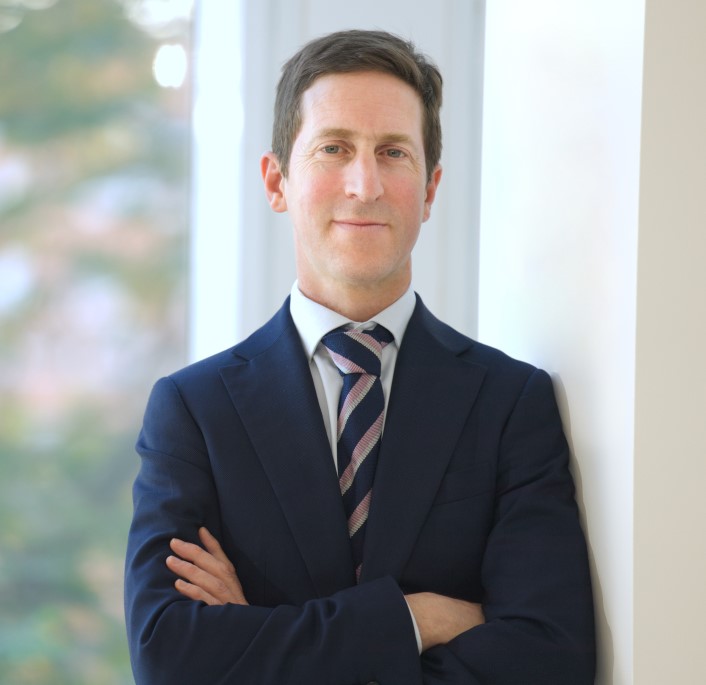
Juan Alcacer is the James J. Hill Professor of Business Administration at Harvard Business School. He holds a PhD in International Business and Strategy from the University of Michigan, an M.A. in Economics, an MBA in Finance, and a Computer Engineering degree. His research focuses on international strategies, location decisions, and agglomeration economies. PhD - University of Michigan (Ross School of Business) MA - Economics, University of Michigan MBA - IESA Computer Engineering - Universidad Simon Bolivar Alcacer’s work examines how firms build competitive advantage through geographic choices, supply chain dynamics, and knowledge transfer. Recent projects analyze Brexit’s impact on investment and the role of internal/external agglomeration economies. His publications span top journals like Strategic Management Journal , Management Science , and Journal of International Business . Awards include the 2024 HBS Student Association Faculty Teaching Award and the 2016 Michigan Ross Distinguished PhD Alumni Award. 2024 HBS Student Association Faculty Teaching Award 2019 Greenhill Award for Field Global Immersion program 2016 Michigan Ross Distinguished PhD Alumni Award 2013 Meritorious Service Award from Management Science At HBS, he teaches required MBA strategy courses, Executive Education programs, and PhD seminars. His consulting spans global corporations on competitive advantage and location strategy.
Professor Michael Davies is Professor of Building Physics and the Environment at the UCL Institute for Environmental Design and Engineering (IEDE) within The Bartlett School of Environment, Energy & Resources at University College London. He is also a member of the UK Climate Change Committee. With over two decades of academic experience, Professor Davies leads research at the critical intersection of building physics, environmental design, and public health, focusing on how the built environment impacts human well-being. His educational background includes: Doctor of Philosophy from the University of Westminster (1994) Postgraduate Certificate in Education from the University of York (1990) Bachelor of Science from the University of Manchester (1986) Professor Davies has pioneered transdisciplinary research methods, particularly in modeling health impacts and applying system dynamics approaches to address urban health challenges. His work demonstrates how healthy sustainable development can be achieved through innovative stakeholder participation and methodological advancements. His research spans building physics, climate change adaptation, indoor environmental quality, and the health implications of urban design, with particular attention to vulnerable populations and environmental justice considerations. His extensive publication record (over 300 outputs) reveals a consistent evolution toward more integrated approaches that connect building science with public health and climate policy. Recent work shows growing emphasis on health equity in climate adaptation, advanced modeling of complex urban systems, and the application of system dynamics to understand interconnected challenges in housing and urban environments. His research bridges technical building performance analysis with broader policy implications, reflecting his commitment to solutions that address both environmental sustainability and social equity. Professor Davies has secured significant research funding, including the prestigious EPSRC Platform Grant funding the Complex Built Environment Systems group at UCL (awarded only to "world leading" centers) and the Wellcome Trust-funded 'CUSSH' project. In total, he has served as PI or Co-I on approximately 50 research projects, demonstrating exceptional ability to lead large-scale, transdisciplinary research initiatives addressing critical urban challenges. As an educator, Professor Davies leads the 'Energy Context' module in the Environmental Design and Engineering MSc course and supervises EngD and PhD students. His teaching emphasizes the integration of energy systems within broader environmental, social, and policy contexts, preparing students to address complex sustainability challenges in the built environment sector.
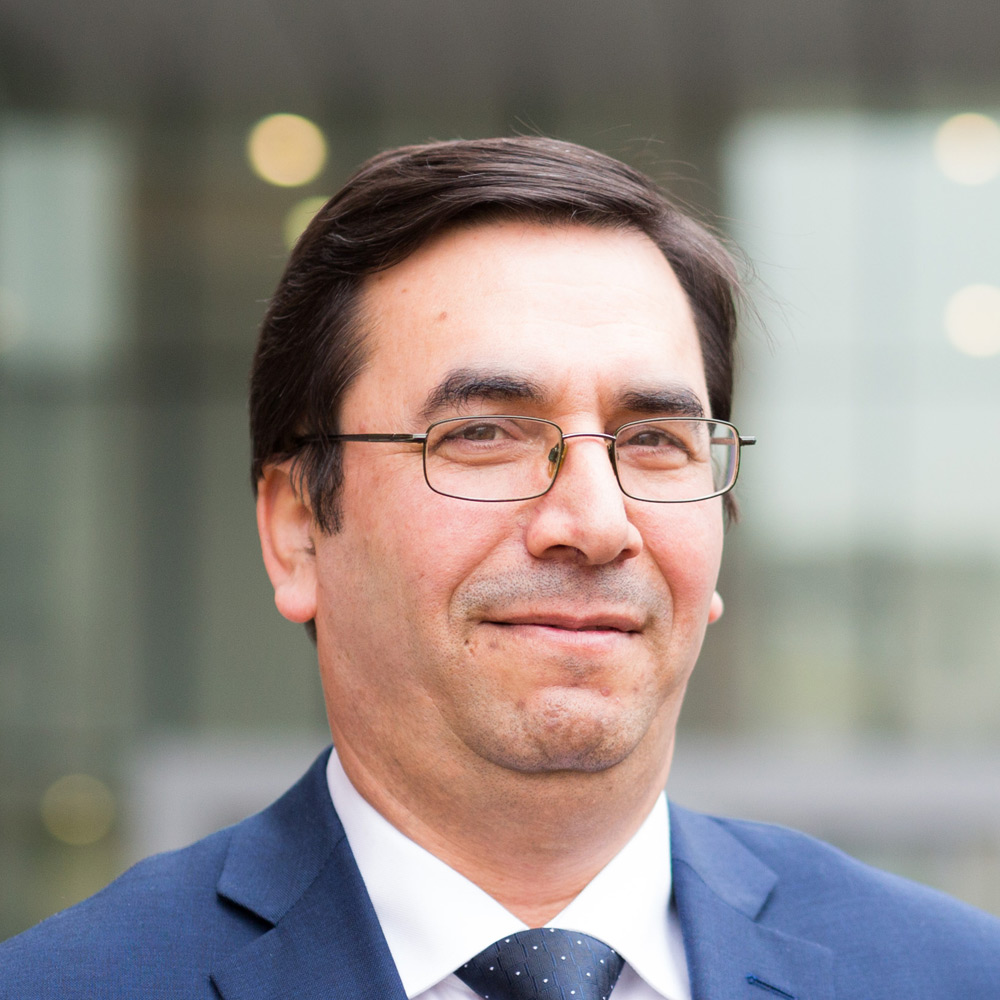
Professor Mehmet Demirbag serves as Deputy Dean of Essex Business School and Professor of International Business at the University of Essex. Previously, he held significant leadership roles including Vice Dean (Internationalisation) and Head of Department of Strategy and Organisation at Strathclyde Business School, and Chair in International Business at the University of Sheffield Management School. His extensive academic career spans over a decade in UK higher education institutions with specialized expertise in international business strategy. Dr. Demirbag completed his Master's degree in Business Analysis at the University of Leicester and earned his PhD at the University of Bradford Management School. His educational background established the foundation for his research focus on international business phenomena, particularly regarding emerging economies and multinational enterprises. His research interests center around internationalisation of R&D activities, offshore R&D, FDI location choice, product and regional diversification strategies of MNEs, multinationals from emerging countries, international mergers and acquisitions, and reverse knowledge transfer by emerging country MNEs. These interconnected research streams examine how firms navigate global markets, particularly focusing on the strategic behavior of emerging market multinationals and their interactions with developed economies. Analysis of his recent publications reveals consistent thematic patterns across international business, strategic management, and human resource management domains. His work demonstrates particular emphasis on emerging market multinationals, cross-border knowledge transfer mechanisms, international strategic decision-making in uncertain environments, and the institutional contexts shaping multinational enterprise behavior. The interdisciplinary nature of his research bridges theoretical frameworks from international business, strategic management, and organizational studies. Professor Demirbag maintains active editorial roles as consulting editor of the Journal of International Management and advisory editor of Eurasian Business Review. He has co-guest edited special issues for numerous prestigious journals including British Journal of Management, Human Resource Management, Journal of World Business, and International Business Review, among others. His editorial contributions span research areas related to emerging market MNEs, MNEs in emerging markets, transitional periphery contexts, and human resource management in uncertain environments. As an educator, Professor Demirbag teaches International Business and International Strategic Management at undergraduate, postgraduate, and executive levels. His supervision portfolio includes doctoral candidates such as Selman Alisan Gemuhluoglu and previously guided Koushik Das Sarma to completion of their PhD in Business Administration. His research has received funding from various sources including the European Commission, and his work on FDI and SMEs has contributed to REF impact cases at both the University of Bradford and the University of Sheffield.
Samuli Patala serves as an Assistant Professor specializing in sustainability within business contexts, explicitly affiliated with the Department of Management Studies. His research directly advances United Nations Sustainable Development Goals through investigations into circular economy frameworks and sustainable resource governance, with particular emphasis on systemic transitions in industrial systems. Patala's research portfolio centers on circular economy meta-organizing, value chain reconfiguration, and cross-sector partnership dynamics. He examines institutional interfaces where global formal policies interact with local informal practices, alongside place-based innovation ecosystems that drive sustainability transitions. His work consistently bridges theoretical frameworks in institutional theory with practical business applications for resource-intensive industries. Analysis of his publication trajectory since 2016 reveals escalating scholarly impact, with his 2023 problematizing review of circular economy assumptions accumulating 69 Scopus citations. His research demonstrates methodological diversity—from configurational analyses of partnership portfolios to stakeholder interviews for data-driven circular systems—while maintaining thematic focus on value creation, resource governance, and systemic barriers in sectors like textiles and energy. His scientific recognition includes: Carolyn B. Dexter Award for Best International Paper (2018) Distinguished Winner of 2023 Responsible Research in Management Award ONE Unorthodox Paper Award (2018) Patala currently leads three major research initiatives as principal investigator: the Academy of Finland-funded Circular Design Network project (2021-2022), Business Finland's BF/SciSustain E70602 (2024-2026) focusing on biocolourants and sustainable materials, and the ongoing SA/GloWater project (2024-2027) addressing global water management challenges. These projects demonstrate his commitment to translating theoretical insights into actionable sustainability solutions through industry-academia collaboration and policy engagement.
Helen Haugh is Associate Professor in Community Enterprise at Cambridge Judge Business School, University of Cambridge, and serves as Research Director for the Cambridge Centre for Social Innovation. Her work bridges organizational theory, social entrepreneurship, and community asset development, with significant impact on policy and practice. Her academic credentials include a BSc from UMIST, MA from Brunel University, and PhD from Aberdeen University. These foundations underpin her empirical approach to studying community-driven enterprise models. Professor Haugh's research centers on organizational theory , institutional dynamics , and community asset ownership , with pioneering work on necessity entrepreneurship in Africa and the reimagining of religious buildings as community hubs. She employs ethnographic methods to explore how place-based contexts shape social innovation, emphasizing ethics of care and resilience in marginalized communities. Her scholarship consistently challenges conventional entrepreneurship frameworks by centering community agency and hybrid organizational forms. Analysis of her recent publications reveals three dominant trajectories: (1) transformational hybridity for societal challenges (2025), (2) decolonizing entrepreneurship research through Global South perspectives (2023), and (3) place-based community asset strategies (2022-2023). Her work increasingly examines institutional voids in refugee contexts and the moral economies of fair trade. Helen has directed the MSt in Community Enterprise (2001-2008), Tata Social Internship Scheme (2008-2011), and Arianne de Rothschild Fellowship (2010-2016). Current projects include the REACH Ely initiative reimagining churches as community assets (featured in Sky News 2022-2023) and historical analyses of community enterprise evolution. Her research is funded through partnerships with the Diocese of Ely and international development agencies. As Research Director of the Cambridge Centre for Social Innovation, she leads a multidisciplinary team investigating social enterprise ecosystems, with recent focus on the generative potential of community embeddedness and strategies for sustaining community assets amid financial constraints.
Thijs Defraeye is a Senior Scientist at Empa (Swiss Federal Laboratories for Materials Science and Technology) and Adjunct Professor at Dalhousie University. He holds a PhD in Building Physics from KU Leuven (2011) and a Master's in Civil Engineering (2006). His work focuses on optimizing food supply chains through multiphysics simulations and digital twins, addressing challenges in refrigerated transport, postharvest quality preservation, and energy-efficient food processing. He leads the SimBioSys group, developing solutions for perishable goods logistics and electrohydrodynamic technologies. Research interests include: Biophysics of food systems Digital twin applications in agriculture Electrohydrodynamic drying Thermal management in cold chains Sustainable food technologies Recent work emphasizes reducing food loss through physics-based modeling of refrigerated containers, ventilated packaging optimization, and scalable evaporative cooling systems. His studies bridge engineering principles with biological processes, aiming to enhance global food security and environmental sustainability.