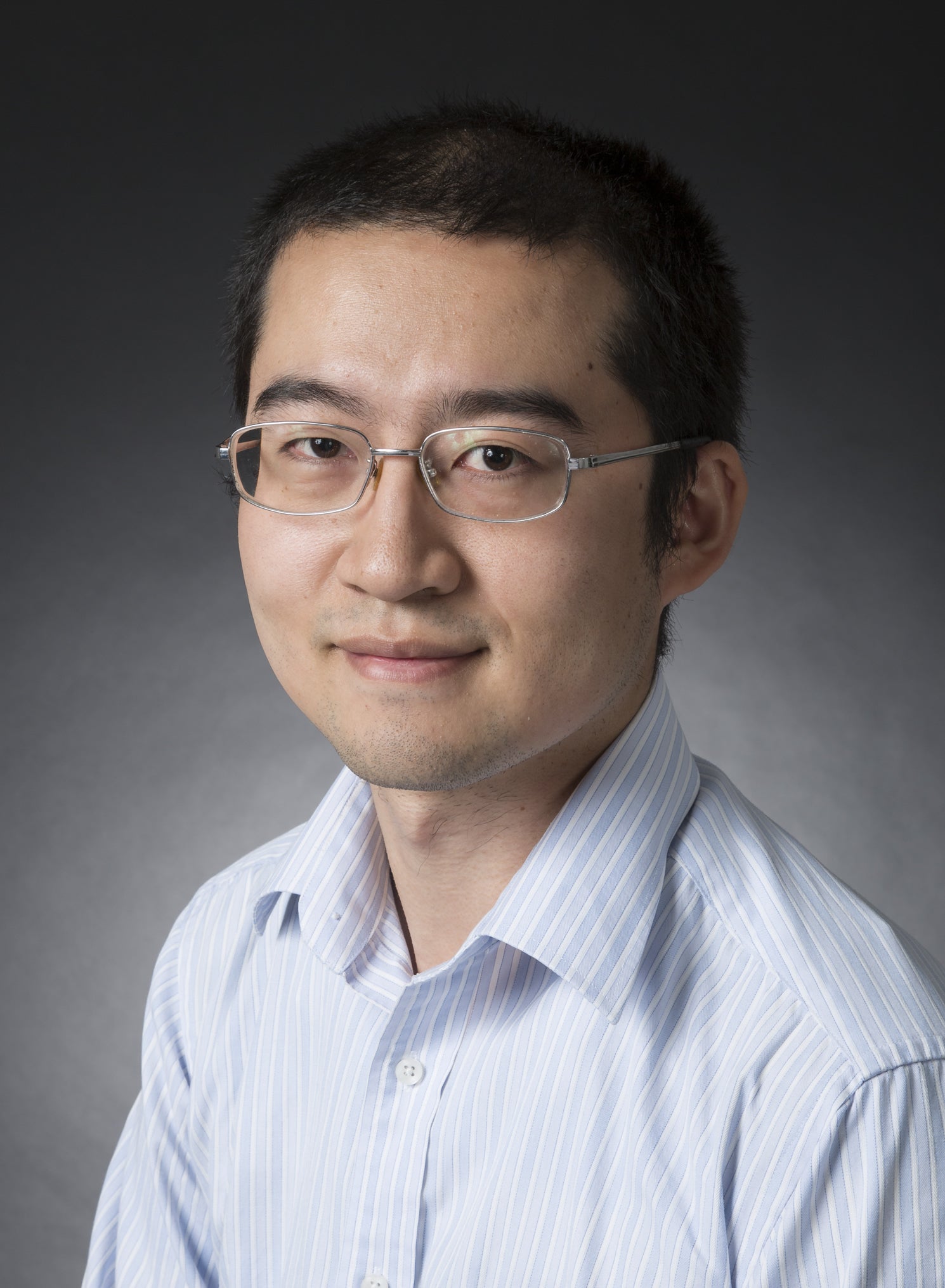
Niki Myrto Mavraki is an Assistant Professor in the Department of Mathematics at the University of Toronto Mississauga, part of the Mathematical and Computational Sciences division. Her research focuses on arithmetic dynamics, algebraic geometry, and number theory, with a particular emphasis on the interplay between dynamical systems and Diophantine geometry. She holds a Ph.D. in Mathematics and has contributed to significant advancements in understanding canonical heights, equidistribution theorems, and the geometry of preperiodic points in dynamical systems. Her work spans complex dynamics, elliptic surfaces, and the study of special subvarieties in moduli spaces. Recent contributions include explorations of the dynamical Shafarevich conjecture, Bogomolov conjectures in families of maps, and the geometric properties of PCF parameters. Her research often bridges abstract algebraic structures with analytic tools, addressing questions at the intersection of arithmetic and geometry. Mavraki’s publications reflect a deep engagement with both classical problems and modern techniques, including applications of adelic measures, multiplier spectra analysis, and probabilistic approaches to polynomial dynamics. Her findings have been disseminated through high-impact journals and conferences, contributing to foundational knowledge in her fields.
Adam Kennedy serves as a Cyberinfrastructure Architect within the Department of Forest Ecosystems & Society at Oregon State University's College of Forestry. His role focuses on developing robust data systems to support environmental research, particularly in forest hydrology and ecosystem monitoring. His educational foundation includes: B.S. in Environmental Sciences and Resources (2004) from Portland State University with a Biology minor M.S. in Environmental Sciences and Resources (2006) from Portland State University with a Hydrology certificate Completed PhD coursework and comprehensive exams in Environmental Sciences (2012) alongside an Ecosystem Informatics Certificate through the IGERT program Dr. Kennedy's research integrates data engineering with ecological science, specializing in real-time environmental monitoring systems. His primary interests encompass Data Management, Ecosystem Ecology, Long-range Wireless Communication, Quality Control Algorithms for Streaming Data, and Sensor Network Best Practices. This interdisciplinary approach enables advanced studies of forest canopy processes and hydrological dynamics through innovative technological solutions. Analysis of his publication trajectory reveals consistent focus on canopy hydrology and sensor technology applications. His recent work (2019-2022) demonstrates sophisticated modeling of dewfall dynamics using machine learning, while earlier research pioneered distributed temperature sensing for stream ecosystems and explored climate-streamflow relationships through teleconnection indices. The body of work shows progressive technical refinement in environmental data acquisition and analysis. No scientific awards are documented in the available sources, though his contributions to environmental data infrastructure are substantiated through technical publications and system development. Information regarding graduate student advising or research grants is not publicly accessible in the provided materials. Dr. Kennedy contributes to the Ecosystem Informatics initiative through his development of real-time data systems, as evidenced by his work on provisional data graphs and sensor network infrastructure. His technical expertise supports long-term ecological research at facilities like the HJ Andrews Experimental Forest, enabling high-resolution environmental monitoring across complex forest landscapes.
Yi Shen is an Associate Professor in the Department of Statistics and Actuarial Science at the University of Waterloo, Canada. He holds affiliations with the Institute of Quantum Computing. His research focuses on applied probability, stochastic processes, and their symmetries, including stationarity, self-similarity, and exchangeability. He explores applications in extreme value theory, financial mathematics, quantum information, and statistical physics. Education: PhD in Operations Research (Cornell University, 2013) under Gennady Samorodnitsky; Ingenieur in Quantitative Economics and Finance (École Polytechnique, 2008); BS in Mathematics and Physics (Tsinghua University, 2005). Research emphasizes random locations of stochastic processes (e.g., supremum locations) and their connections to probabilistic symmetries. Recent work bridges probability with quantum mechanics, econometrics, and machine learning. His publications address topics like regression discontinuity designs, operator-scaling Gaussian fields, and quantum system Hamiltonian inference. Key contributions include analyzing self-similar processes, ergodic theory applications, and separability-entanglement classification in quantum systems. His work spans theoretical probability to applied domains like finance and quantum computing.
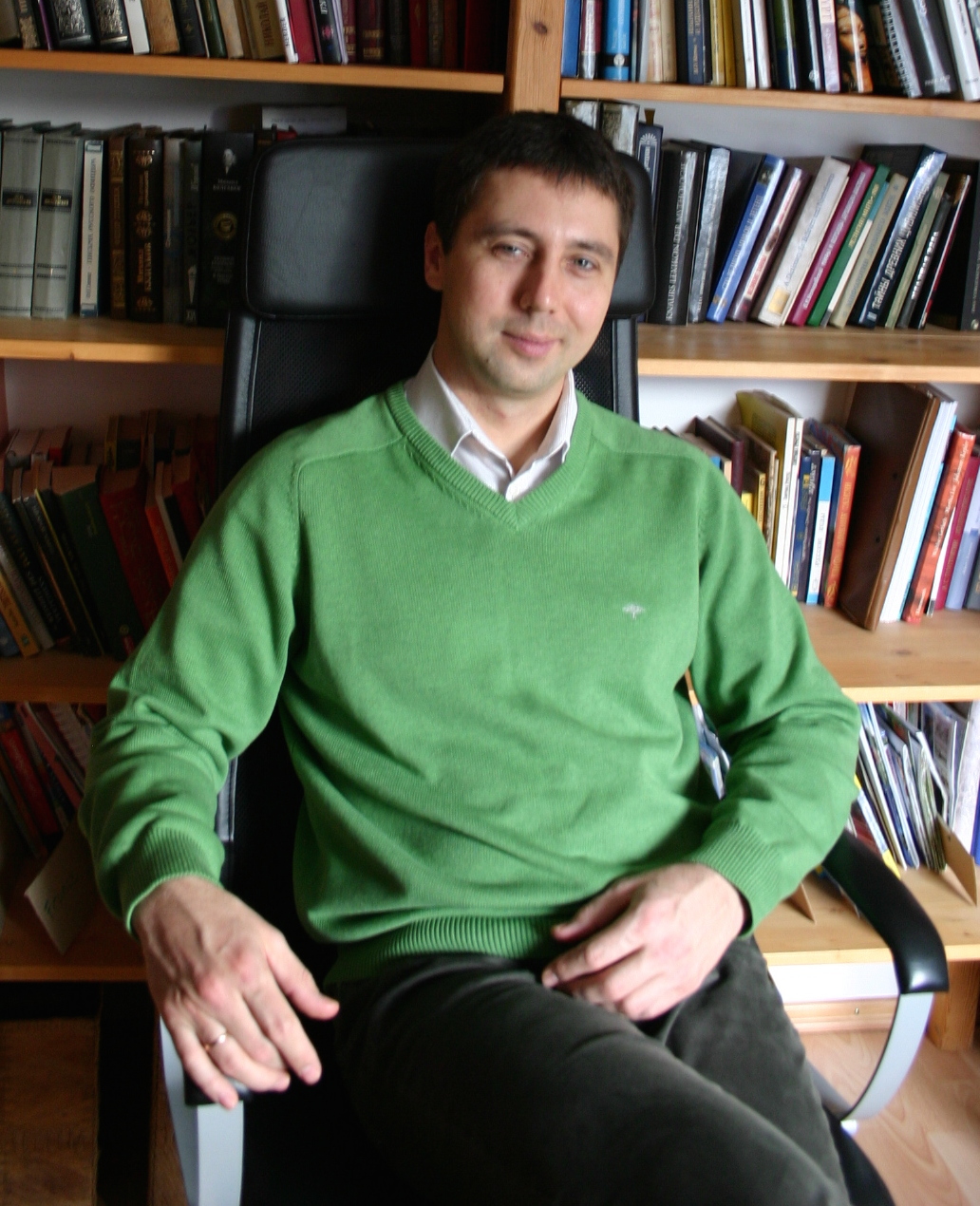
Prof. Dr. Evgeny Spodarev is a full W3 Professor of Applied Statistics and Director of the Institute of Stochastics at the University of Ulm. He holds a dual academic background from Lomonosov Moscow University (Moscow, Russia) and Friedrich Schiller University Jena (Germany), and has held prominent roles including Dean of Mathematical Studies (2013–2017). His research focuses on convex and stochastic geometry, spatial statistics, limit theorems for stochastic processes, and applications in image analysis and risk modeling. He has organized numerous international conferences and workshops, including the German-Japanese Autumn School on Time Series (2024) and the Stochastic & Integral Geometry conference (2025). Notable awards include the Merckle Research Prize (2005). His work spans theoretical contributions to applied domains like anomaly detection in 3D images and statistical methods for material science. Education: 1991–1996: Diploma in Probability Theory and Stochastic Processes, Lomonosov Moscow University 2001: PhD from Friedrich Schiller University Jena Research Interests: Convex and stochastic geometry Spatial statistics and random field analysis Limit theorems for stochastic processes Image analysis with applications to materials science Anomaly detection in 3D imaging Statistical modeling of natural catastrophes Recent Contributions: His work bridges theoretical probability with applied challenges in engineering and materials science, including geometric methods for fullerene analysis and stochastic models for traffic prediction. Current projects involve anomaly detection in spatial data (DAnoBi) and collaborations with institutions like TU Kaiserslautern. Awards: Merckle Research Prize (2005) Teaching & Leadership: Leads stochastic analysis education at Ulm, supervises graduate students, and has developed courses on stochastic processes and mathematical statistics.
Robert Tichy is a full Professor at the Institute of Analysis and Number Theory, Technische Universität Graz. His research spans number theory, stochastic analysis, and computational mathematics. He has held significant administrative roles including Department Head (1994-2000), Dean of Mathematical and Physical Sciences (2003-2009), and Vice-Dean (2010-2017). Tichy is a Corresponding Member of the Austrian Academy of Sciences and has served on editorial boards for journals like the Journal of Number Theory and The Ramanujan Journal .
Hugo Duminil-Copin is a full professor at the University of Geneva (since 2013) and a permanent professor at the Institut des Hautes Études Scientifiques (IHES) in Bures-Sur-Yvette (since 2016). A 2022 Fields Medalist, his research lies at the intersection of probability theory, mathematical physics and combinatorics, with a focus on critical phenomena in lattice models. Education: École Normale Supérieure (ENS), Paris PhD, Université Paris-Saclay Research Interests: Duminil-Copin's work centers on probability theory and statistical physics , particularly the rigorous study of critical phenomena. He uses probabilistic methods to analyze classical lattice models—Ising, Potts, percolation, self-avoiding walks—shedding light on phase transitions and universality. A major breakthrough is his development of dependent percolation theory , which has yielded precise results on critical exponents and scaling limits. His research spans several subfields: Critical percolation and random-cluster models Conformal invariance and Schramm–Loewner evolution Mathematical theory of phase transitions Discrete geometry and combinatorial enumeration Random walks and polymers Scientific Awards & Honors: Fields Medal (2022) Dobrushin Prize (2019) European Mathematical Society Prize (2016) New Horizons in Mathematics Prize (2017) Loève Prize (2017) Jacques Herbrand Grand Prize (2017) ERC Starting Grant “CriBLaM” (2017–2022) Member, French Academy of Sciences Member, Academia Europaea Supervision & Grants: He leads an active research group comprising postdoctoral fellows and doctoral students in Geneva and at IHES. Since 2013 he has supervised 15+ PhD students and mentored numerous postdocs. The ERC Starting Grant “Critical Behavior of Lattice Models” (€1.5 M) supports his team’s work on scaling limits and critical phenomena. Research Group: At the University of Geneva he heads the “Analysis, Mathematical Physics and Probability” group, collaborating closely with colleagues such as Antti Knowles, Stanislav Smirnov, Vincent Vargas and Yvan Velenik.
Timothy Brown is an Assistant Professor in the School of Electrical and Computer Engineering at Oklahoma State University, focusing on brain-inspired analog hardware for AI and neuromorphic computing using materials like VO 2 , NbO 2 , and LaCoO 3 . He holds a PhD in Materials Science & Engineering from Texas A&M University (2019) and completed postdoctoral work at Texas A&M and Sandia National Laboratories. PhD, Materials Science & Engineering, Texas A&M University (2019) BSc, Electronics Engineering Physics, University of Tulsa (2014) His research bridges physics, materials science, and electrical engineering to design devices with internal state variables for applications in neuromorphic computing, active signal transmission, and low-energy computational systems. Key techniques include electro-thermal modeling, memristor characterization, and predictive algorithms for material selection in shape memory alloys. Recent work includes developing CMOS-compatible artificial neurons, demonstrating axon-like signal amplification without discrete components, and engineering spin crossover materials for true random number generation. Publications in Nature , Nature Electronics , and Advanced Materials highlight his contributions to mixed-physics computing primitives and predictive design frameworks. The BRAIN-C3 lab under Brown investigates materials like VOx and NbOx for neuromorphic applications, emphasizing thermal dynamics, reconfigurability, and device scaling. Collaborative projects span flexible substrates for spatiotemporal communication and inverse design methodologies for material property optimization.
Yann Strozecki is an Associate Professor (Maître de Conférences HDR) at the University of Versailles Saint-Quentin, where he is based in the DAVID Laboratory and leads the ALMOST research team focused on algorithms and stochastic models. He is currently on a part-time assignment at LIGM, Gustave Eiffel University, and has previously held positions at LIP6 (RO team), Paris-Sud University (ALGO team), and completed a postdoctoral fellowship at the University of Toronto's Theory Group. He earned his PhD from Paris Diderot (Paris 7) under Arnaud Durand. His research lies at the intersection of theoretical computer science and discrete mathematics, with core interests in: Enumeration complexity, especially delay and space constraints Algorithmic game theory, particularly simple stochastic games (SSGs) Graph and matroid algorithms Cheminformatics and molecular structure generation Sparse polynomials and algebraic complexity Analysis of his recent publications reveals a strong trend in developing efficient enumeration algorithms with provable delay and space bounds, advancing the theoretical foundations of output-sensitive computation. He also contributes to practical algorithms for Cloud RAN scheduling and cheminformatics, often combining theoretical rigor with real-world applications. His work on geometric amortization and strategy improvement in SSGs demonstrates innovation in algorithm design. Notable scientific contributions include: Generic strategy improvement methods for SSGs Polynomial-delay enumeration via closure operations Efficient deterministic scheduling for low-latency networks Tools for molecular cage generation in chemistry Yann Strozecki actively supervises PhD and master’s students, including Noé Demange, Maël Guiraud, and Xavier Badin de Montjoye. He co-organizes the ALMOST team seminar and has advised numerous interns in algorithmics and game theory. His research has been supported through collaborations with Nokia Bell Labs (CIFRE thesis) and interdisciplinary projects in cheminformatics and networking.
Scott Schmieding is an Assistant Professor in the Department of Mathematics at The Pennsylvania State University, affiliated with the Eberly College of Science. His research focuses on dynamical systems, including symbolic and topological dynamics with connections to K-theory and entropy analysis. He is actively involved in seminars such as the Dynamical Systems Seminar and contributes to the field through numerous publications. His work explores topics like automorphism groups of subshifts, stabilization techniques in dynamical systems, and the interplay between algebraic structures and topological dynamics. Key areas of interest include entropy theory, chaotic systems, and geometric aspects of dynamical phenomena. Notable publications from 2020–2025 highlight advancements in local entropy analysis, stabilized automorphism groups, and the geometry of hexponential maps. Schmieding’s research bridges abstract algebraic concepts with concrete dynamical systems, offering insights into complex mathematical structures. He holds a Ph.D. and has been a consistent contributor to academic outreach and teaching, including curriculum development in mathematics. His professional website provides further details on his research, publications, and academic activities.
Prof. Dr. Peter Kern is a Chair of Mathematical Statistics and Probability Theory at the Mathematical Institute of Heinrich Heine University Düsseldorf (HHU). His research focuses on stochastic processes, self-similarity, operator scaling, and fractal geometry, with significant contributions to limit theorems and fractional calculus. Prof. Kern has co-authored numerous peer-reviewed publications on topics such as semi-fractional diffusion equations, dilatively stable processes, and the Hausdorff dimension of Lévy processes. His recent work includes collaborations with researchers from HHU, Bochum, and Siegen on digital educational resources for stochastics, funded by the Ministry of Culture and Science of North Rhine-Westphalia. In his field, Prof. Kern explores connections between operator stable laws, semistable distributions, and their applications to random walks, fractal path properties, and stochastic modeling. He is actively involved in developing interactive learning tools and video tutorials for mathematics education, targeting students in natural and engineering sciences. Prof. Kern's funded projects include "Digital Materials in Stochastics Teaching" (OERContent.nrw, 10/2020–09/2022), "Dimension of Multivariate Self-Similar Processes" (DFG, 2013–2016), and "Dilatively Stable Processes" (DAAD-MÖB, 2014–2015).
Gustavo Didier is an Associate Professor and Director of Graduate Studies in the Mathematics Department at Tulane University, within the School of Science & Engineering. He holds a Ph.D. from the University of North Carolina at Chapel Hill (2007). His research focuses on Probability, Stochastic Processes, Time Series Analysis, and applications in wavelet analysis, high-dimensional probability, and mathematical biology. Notably, his work addresses fractional processes, anomalous diffusion, and operator fractional Brownian motion, with applications in neuroscience, network traffic, and geophysical turbulence. Didier has contributed to the development of wavelet-based estimation techniques for self-similarity parameters and high-dimensional spectral analysis. His recent publications emphasize methodologies for analyzing multivariate scale-free dynamics and fractal connectivity in noisy environments. His research has been applied to diverse fields such as epilepsy prediction via EEG signal analysis, drowsiness detection in polysomnography, and turbulence modeling in geophysical flows. Didier’s work bridges theoretical probability and applied signal processing, with a focus on eigen-analysis and bootstrap-based statistical methods. His collaborations span academia and industry, addressing challenges in biomedical signal processing and environmental data analysis. Didier has advised numerous graduate students and contributed to curricular development as Director of Graduate Studies. His research has been supported by grants focusing on stochastic modeling and high-dimensional data analysis.
Itai Ashlagi is a Professor of Management Science and Engineering at Stanford University and a Senior Fellow at the Stanford Institute for Economic Policy Research. He also holds a courtesy appointment as Professor of Economics. His work focuses on market design, matching, mechanism design, and game theory, with significant contributions to kidney exchange programs. Dr. Ashlagi received his PhD in Operations Research from the Technion-Israel Institute of Technology in 2008. Prior to joining Stanford, he served as an Assistant Professor of Operations Management at MIT Sloan School of Management and completed a postdoctoral fellowship at Harvard Business School. Professor Ashlagi's research centers on the design and analysis of marketplaces, particularly those involving matching as an essential activity. His work applies tools from operations research, computer science, and economics to develop mechanisms for various market settings. He has made significant contributions to kidney exchange programs, which earned him recognition as a Franz Edelman Laureate. His research spans market design, matching theory, mechanism design, game theory, and operations research, with applications in healthcare, education, and online markets. Analysis of Professor Ashlagi's recent publications reveals a strong focus on dynamic matching markets, kidney exchange optimization, and the design of efficient allocation mechanisms. His work increasingly integrates concepts from machine learning and stochastic optimization to address challenges in two-sided markets. He has made significant contributions to understanding welfare distribution in matching markets, the role of interviews in market processes, and the design of token systems for resource allocation. Professor Ashlagi has received several prestigious awards for his work: Franz Edelman Laureate for contributions to kidney exchange NSF CAREER award for research on market design Outstanding paper award at the ACM Conference on Electronic Commerce (2009) Professor Ashlagi has advised numerous graduate students and postdoctoral researchers who have gone on to successful careers at institutions including Yale, USC, UPenn, and Rice University. His research has been consistently supported by the National Science Foundation, including a CAREER award that funded his work on novel designs for kidney exchange and other markets at the intersection of operations research, economics, and computer science. Professor Ashlagi has developed kidney exchange software that has been adopted by several programs worldwide. He collaborates with medical professionals, particularly in the field of organ transplantation, to improve kidney exchange systems and address practical challenges in healthcare market design.
Aleksey Kolokolov is an Associate Professor at the Manchester Business School, University of Manchester, specializing in financial econometrics and market microstructure analysis. His research focuses on high-frequency data analysis, jump detection in financial markets, liquidity modeling, and statistical methods applied to financial time series. His research interests span several key areas in modern finance: Developing statistical methods for analyzing high-frequency financial data Studying market microstructure and price formation processes Investigating liquidity dynamics and market stability during extreme events Applying econometric techniques to cryptocurrency markets, particularly Bitcoin Creating robust estimators for financial volatility and jump activity His work bridges theoretical econometrics with practical financial applications, often addressing methodological challenges in analyzing discontinuous trading patterns and irregular sampling schemes. Analysis of his publication record reveals a strong focus on methodological innovations in financial econometrics, with particular emphasis on jump detection, price staleness, and liquidity measurement. His most cited work, 'Nonstandard Errors' (Journal of Finance, 2024), represents a major collaborative effort addressing statistical challenges in finance research. His recent publications show increasing attention to cryptocurrency markets and the application of traditional financial econometric methods to these emerging asset classes. Kolokolov maintains an active research agenda with frequent collaborations, particularly with researchers like Roberto Renò, Federico M. Bandi, and Kim Christensen. His work appears in top finance journals and working paper series, demonstrating his significant contribution to the field of financial econometrics.
Sophie Fielding is a Zooplankton Ecologist at the British Antarctic Survey , affiliated with the Ecosystems team . Her work integrates acoustic observations to study ecosystem responses to oceanic changes, focusing on global food security and carbon cycles in polar regions. Ph.D. in Biological validation of acoustic backscatter (University of Southampton, 2003) BSc in Marine Biology with Oceanography (University of Southampton, 1995) Her research spans zooplankton-nekton dynamics , ocean acidification , acoustic technology (underwater gliders), and carbon export mechanisms . She collaborates on NERC and EU grants including PICCOLO , COMICS , and MESOPP , contributing to CCAMLR acoustic sampling and NERC Cruise Programme . Recent publications analyze krill distribution models , mesopelagic fish biomass , and carbon fluxes in polar ecosystems. She partners with institutions like Natural History Museum , Newcastle University , and University of Aberdeen , emphasizing emerging technologies in marine science.
Rocío Melissa Rivera is a Professor of Reproductive Physiology and Epigenetics in the Division of Animal Sciences at the University of Missouri. She received her Ph.D. from the University of Florida and completed postdoctoral training at the University of Pennsylvania. Her research investigates epigenetic disruptions in gametes and embryos caused by assisted reproductive technologies (ART). Key projects characterize Large Offspring Syndrome in ruminants and Beckwith-Wiedemann Syndrome in humans—both loss-of-imprinting overgrowth conditions linked to ART. She explores how superovulation and maternal aging alter oocyte DNA methylation patterns and gene expression. Dr. Rivera employs bovine and murine models to identify molecular triggers of epigenetic syndromes, using transcriptomic and chromatin analysis. Current work examines dietary interventions to mitigate ART-associated epigenetic errors. She mentors doctoral students in projects ranging from IGF2R regulation in fetal overgrowth to retroelement control in oocytes. As a Fulbright Senior Scholar at Spain's University of Murcia, she contributed to reproductive biology education. Her laboratory combines developmental biology, epigenetics, and molecular analysis to improve ART safety.