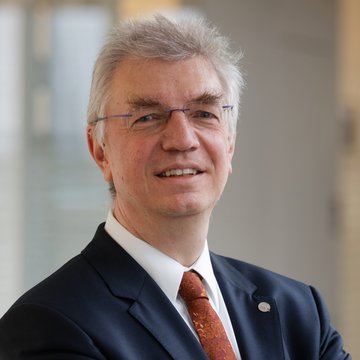
Richard Dodson is an Associate Professor and SKA Radio Astronomy Data Reduction Specialist at The University of Western Australia (UWA), affiliated with the International Centre for Radio Astronomy Research (ICRAR) and the International Space Centre. He leads projects focused on radio astronomy data processing and Very Long Baseline Interferometry (VLBI). His research expertise includes radio interferometry methods, pulsar studies, and galaxy evolution analysis. Key contributions involve optimizing data reduction pipelines for the Square Kilometre Array (SKA) and advancing HI visibility imaging techniques. He has led or co-led 18 grants, including major initiatives like the 'Dark-side of the Milky Way' (ARC-funded) and the SKA Software Construction Contract (SKAO-funded). Notable awards include the Newcomb Cleveland Award (2021), BIGCAT upgrade recognition (2020), and the Peter McGregor Prize (2019). His work addresses UN Sustainable Development Goals related to advancing scientific knowledge and innovation. Recent research focuses on HI content evolution in galaxies, phase calibration in millimeter VLBI, and SFR-radio luminosity correlations. He has supervised 2 research projects and contributed to datasets like CHILES HI morphology studies and GMRT voltage experiments.
Dr. Michele Bianco is a Postdoctoral researcher in the Cosmology group at ETH Zurich, part of the Radio Astronomy and Cosmology group led by Prof. Alexandre Refregier. His research focuses on the Epoch of Reionization (EoR) and Post-Reionization phenomena, employing radiative transfer codes and hydrodynamical N-body simulations to model primordial ionizing sources and their impact on the cosmological 21-cm signal. He specializes in instrumental simulations for radio interferometry experiments like LOFAR and SKA, and applies AI techniques to enhance numerical simulations and mitigate foreground contamination in 21-cm observations. Since 2021, he has been a member of the SKA Swiss Consortium (SKACH). Research interests include advancing observational methodologies for 21-cm signal analysis, improving cosmological inference through AI, and contributing to the Square Kilometre Array project. His work bridges theoretical modeling with cutting-edge observational techniques in radio astronomy.
Cameron Van Eck is a Senior Research Fellow at the Australian National University (ANU), affiliated with the Research School of Astronomy & Astrophysics since September 2022. Previously, he held roles such as Research Associate at the Dunlap Institute for Astronomy and Astrophysics (University of Toronto, 2018–2022), Postdoctoral Researcher at the University of Calgary (2018), and completed his PhD at Radboud University Nijmegen (2013–2017). His education includes an MSc (University of Calgary, 2010–2012) and BSc (2005–2010). His research focuses on cosmic magnetism, particularly magnetic fields in the Milky Way's interstellar medium, utilizing radio astronomy observations and advanced data analysis techniques. He develops methods to process radio emissions and study phenomena like Faraday rotation and supernova remnants. Key tools include the Australian Square Kilometre Array Pathfinder (ASKAP) and the POSSUM survey. Van Eck collaborates on projects like the POSSUM pilot survey, exploring magnetized gas in galaxy groups and the cosmic web. His work contributes to understanding galactic structure and magnetic field dynamics. He is registered to supervise research students and has published extensively in journals like the Astrophysical Journal and Monthly Notices of the Royal Astronomical Society.
Ben Harwood is a Research Scientist at CSIRO's Collaborative Intelligence Future Science Platform (CINTEL FSP), where they focus on developing next-generation scientific workflows for human-AI collaboration. They work on interdisciplinary projects like enhancing human-technology information sharing for the Australian Square Kilometre Array Pathfinder (ASKAP) and integrating Social Science with Machine Learning expertise to maximize positive societal impact. Education: PhD in Computer Systems Engineering (2019), Monash University Bachelor of Mechatronics Engineering with Honours (2012), Monash University Bachelor of Science (Computer Science and Mathematics) (2012), Monash University Bachelor of Computer Science Honours (2011), Monash University Ben's research spans Machine Learning , Pattern Recognition , and Human-Computer Interaction , with a focus on efficient algorithms for high-dimensional big data. They also contribute to organizational initiatives as an officer in the Data61 Diversity, Inclusion and Belonging Committee and co-founder of the CSIRO Neurodiverse Staff Network. Their professional work intersects with Reinforcement Learning , Indexing and Retrieval , and translational science applications, while maintaining interests in community engagement through roles like national committee member for Queers In Science.
Dr Steven Cunnington is a Senior Research Fellow at the Institute of Cosmology and Gravitation (ICG), University of Portsmouth, holding a Stephen Hawking Fellowship since April 2025. His academic trajectory includes three years at the Jodrell Bank Centre for Astrophysics (University of Manchester), a four-month position at the University of Edinburgh's Institute for Astronomy, and a two-year role in Queen Mary University of London's Cosmology and Relativity group, following his PhD completion at the ICG. Education: PhD in Cosmology from the Institute of Cosmology and Gravitation, University of Portsmouth (2016-2019) Cunnington specializes in cosmological tests through large-scale structure surveys, pioneering HI intensity mapping techniques using radio telescopes to chart the cosmic web across billions of light years. His work leverages neutral hydrogen emission to trace underlying cosmic structures, with active exploration of cross-correlations between radio and optical/near-infrared surveys to maximize scientific insights from multi-wavelength data. His recent publications demonstrate leadership in advancing intensity mapping methodologies, including simulations of multipole expansions and performance forecasts for next-generation radio telescopes like MeerKAT and the SKA Observatory, establishing foundational techniques for extracting cosmological information from large-scale structure. Scientific Awards: Stephen Hawking Fellowship While specific student advisement details and grant histories are not provided, Cunnington's leading roles in major international collaborations indicate active research mentorship and funding engagement. He holds key positions in MeerKAT and SKA Observatory collaborations, driving the development of radio cosmology techniques while bridging radio and optical astronomy communities to foster interdisciplinary approaches for understanding the Universe's structure.
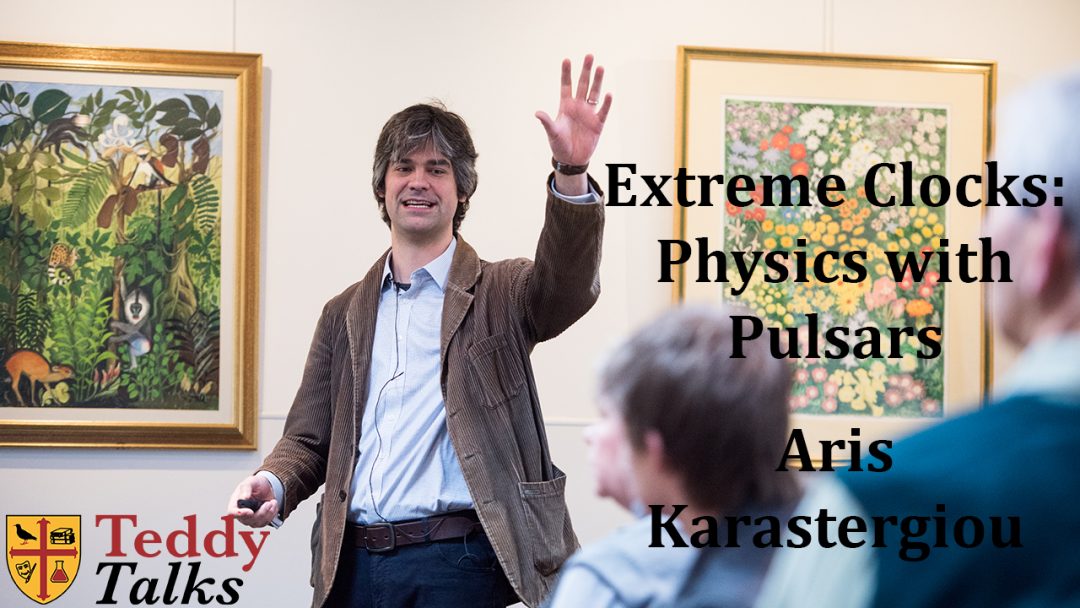
Professor Aris Karastergiou serves as Professor of Astrophysics at the University of Oxford and holds a Fellow by Special Election in Astrophysics position at St Edmund Hall, where he is also a College Lecturer in Physics. His research leverages next-generation radio telescopes including the Square Kilometre Array (SKA), LOFAR, and MeerKAT to advance pulsar science and transient astronomy. Specializing in pulsar astrophysics, Karastergiou investigates emission mechanisms, timing properties, and interstellar medium effects through observational and computational techniques. His work emphasizes real-time processing systems for transient detection and large-scale data analysis from international collaborations, with significant contributions to understanding neutron star physics and fast radio bursts. Analysis of his 15 most recent publications (2023-2025) reveals concentrated focus on the Thousand-Pulsar-Array programme using MeerKAT, yielding insights into pulsar polarization, timing variability, Galactic magnetic fields, and pulse profile evolution. These studies frequently address millisecond pulsars, fast radio bursts, and computational methods for handling massive radio astronomy datasets. Fellow by Special Election in Astrophysics (St Edmund Hall) As principal investigator of the ARTEMIS project, Karastergiou leads real-time pulsar and fast radio burst discovery initiatives, securing research funding for advanced instrumentation including FPGA-based accelerators. His leadership in major international collaborations like SKA and MeerKAT demonstrates significant mentorship roles despite limited student listings in available records. He actively contributes to the Square Kilometre Array, LOFAR telescope network, and MeerKAT operations, participating in key working groups for pulsar timing arrays and transient science. His research group develops specialized pipelines for real-time data processing across multiple observatories in southern Africa and Western Australia.
Dr. David Champion is a Researcher at the Max Planck Institute for Radio Astronomy (MPIfR) in Bonn, Germany, affiliated with the Research Department of Radio Astronomical Fundamental Physics. He is a core member of the COMPACT Research Group, focusing on radio astronomical fundamental physics. His research utilizes major radio telescopes including Effelsberg, Arecibo, Green Bank, and Parkes for pulsar timing and gravitational wave detection. Education History: B.Sc. in Physics with Astrophysics from University of Bristol M.Sc. in Opto-electronics and Optical Information Processing from Queen's University Belfast Ph.D. in Pulsar Searching and Timing from University of Manchester (Jodrell Bank Observatory) Research Focus: Champion specializes in pulsar timing arrays, gravitational wave detection, and neutron star physics. His work includes the European Pulsar Timing Array project, pulsar surveys, analysis of relativistic binaries, and studies of the interstellar medium. Recent research explores dark matter signatures via pulsar polarimetry and developing methodologies for the Square Kilometre Array. Publication Trends: Over 15 recent publications (2024-2025) demonstrate consistent focus on pulsar timing arrays, gravitational wave detection, and neutron star systems. Key themes include MeerKAT data analysis, binary pulsar characterization, survey discoveries, and instrumentation for next-generation telescopes. Research emphasizes statistical methods for noise reduction and gravitational wave background mapping. Scientific Recognition: Natural Sciences and Engineering Research Council of Canada (NSERC) Postdoctoral Fellowship, supplemented by Canadian Space Agency Research Projects & Collaborations: Leads efforts in the European Pulsar Timing Array and Parkes Pulsar Timing Array projects. Manages observational programs using Effelsberg Radio Telescope and contributes to TRAPUM (Transients and Pulsars with MeerKAT). Collaborates internationally on gravitational wave detection and pulsar surveys. Laboratories & Teams: Heads the COMPACT Research Group at MPIfR. Previously worked with pulsar research groups at McGill University and Australia Telescope National Facility (CSIRO). Contributes to instrumentation development for neutron spectroscopy and radio astronomy.
Matthias Steinmetz serves as the Scientific Chairman of the Leibniz Institute for Astrophysics Potsdam (AIP) and Director of the Research Branch "Extragalactic Astrophysics and Cosmology". He is also a University Professor at the University of Potsdam. His leadership extends across the international astronomical community, including his current role as Scientific Member of the German Delegation to ESO Council and former presidency of the German Astronomical Society (2014-2017). His educational background includes: Physics and Mathematics studies at Saarland University (1986-1988) Physics studies at Technical University of Munich (1988-1991) Diploma Thesis at MPI for Astrophysics: "Carbon-Detonations in differentially rotating, highly deformed White Dwarfs" PhD Thesis: "On the formation and morphology of galaxies" (summa cum laude) from MPI for Astrophysics / Technical University of Munich (1991-1993) Steinmetz's research focuses on galaxy formation and evolution, particularly the Milky Way. He has pioneered high-resolution simulations of galaxy formation and is heavily involved in developing and exploiting spectroscopic surveys like the 4m Multi-Object Spectroscopic Telescope (4MOST) for ESO, scheduled to begin operations in 2025. His work bridges theoretical astrophysics with observational data to understand galactic structure, dynamics, and chemical evolution. He is also co-initiator of the German National Center for Astrophysics, currently being established in Goerlitz. Analysis of his recent publications reveals a consistent focus on Milky Way structure and evolution, with particular emphasis on galactic bars, stellar migration, metallicity gradients, and the circumgalactic medium. His research leverages data from major surveys like APOGEE and Gaia, combined with sophisticated computational methods including orbit superposition techniques and machine learning approaches. The interdisciplinary nature of his work connects stellar dynamics, chemical evolution, and cosmological context to build a comprehensive understanding of our galaxy's history. His scientific achievements have been recognized with numerous prestigious awards: 1984: 1. State Prize and 2. Federal Prize in Physics Jugend forscht 1986: 1. State Prize and 4. Federal Prize Earth and Space Sciences Jugend forscht 1988-1991: Stipend of the Studienstiftung des deutschen Volkes 1993: Otto-Hahn-Medal of the Max Planck Society 1998: Alfred P. Sloan Fellowship 1998: David and Lucile Packard Fellowship 2011: Architectural Award Brandenburg 2013: Elected member of the Berlin Brandenburg Academy of Sciences and Humanities 2015: Wilhelm-Foerster Award of the Urania Potsdam for Communicating Science As a leader in the astronomical community, Steinmetz has mentored numerous students and researchers, though specific names aren't listed in the provided text. His significant grant funding includes leadership roles in major international projects like 4MOST and participation in ESO initiatives. He has served on numerous advisory boards including the Science Advisory Board of the MPI for Astronomy and the Square Kilometre Array (SKA) Science and Engineering Advisory Committee. At the Leibniz Institute for Astrophysics Potsdam, Steinmetz leads the Extragalactic Astrophysics research branch, which investigates topics ranging from the structure and dynamics of the Milky Way to the formation of galaxies and the large-scale cosmic web. His team is actively involved in developing next-generation instruments for ESO's Paranal Observatory and the Extremely Large Telescope (ELT), as well as establishing research data infrastructure for astronomy. The institute's collaborative environment connects theoretical modeling with observational astronomy and technological development.