Prof. Dr. Sakibe Nalan BÜYÜKKANTARCIOĞLU is a Professor at Çankaya University, Faculty of Arts and Sciences, Department of Translation and Interpreting Studies (English). She previously served as Professor (2007–2019), Associate Professor (2000–2007), and Assistant Professor (1997–2000) at Hacettepe University, Department of English Linguistics. PhD in English Linguistics (Hacettepe University, 1991) MA in English Language Teaching (Middle East Technical University, 1985) BA in English Teaching (Istanbul University, 1978) Her research spans Linguistics, Cognitive Linguistics, Discourse Analysis, Psycholinguistics, Sociolinguistics, Translation Studies , with a focus on figurative language, interjections, political discourse, and endangered languages. She received the European Language Award (2011) and has supervised numerous PhD and MA theses, including work on Turkish idioms, gender representation, and language awareness. A prolific editor and conference participant, she has contributed to interdisciplinary projects and publications on Turkish sociolinguistics.
Dr. Carolyn Emery is a Professor in the Faculty of Kinesiology at the University of Calgary, with joint appointments in Pediatrics and Community Health Sciences at the Cumming School of Medicine. She holds leadership roles as Chair of the Sport Injury Prevention Research Centre (an International Olympic Committee Research Centre) and the Alberta Children’s Hospital Research Institute. Her affiliations include the McCaig Institute for Bone and Joint Health, Hotchkiss Brain Institute, and O’Brien Institute for Public Health. Dr. Emery’s education includes a BScPT from Queen’s University (1988), MSc in Epidemiology from the University of Calgary (1999), and PhD in Epidemiology from the University of Alberta (2004). Her research focuses on injury prevention in youth sports, concussion, and pediatric rehabilitation, aiming to reduce long-term health consequences such as osteoarthritis and post-concussion syndrome. She leads major grants including CIHR’s “SHRed Injuries” and NFL-funded concussion surveillance programs. Her research interests emphasize practical interventions for injury prevention, including neuromuscular training and policy changes. Recent work explores concussion outcomes in adolescents, biomechanical injury mechanisms, and global sport safety initiatives. She has published extensively on topics like sport-related musculoskeletal injuries, concussion management, and the epidemiology of youth sports. Dr. Emery has received over 20 awards, including the Royal Society of Canada Fellowship, Killam Professorship, and CIHR Canada Research Chair. Her work bridges clinical practice, policy, and community engagement to enhance public health outcomes in sports and youth recreation. Her lab, the Sport Injury Prevention Research Centre, collaborates internationally to develop evidence-based strategies for injury prevention. Current projects include evaluating the impact of tackle laws in rugby, head acceleration in wrestling, and long-term consequences of pediatric concussions.
Adriana Kovashka is an Associate Professor at the University of Pittsburgh , affiliated with the School of Computing and Information and serving as Department Chair . Her academic journey began with BA degrees in Computer Science and Media Studies from Pomona College (2008) and a PhD in Computer Science from The University of Texas at Austin (2014). Joined Pitt’s faculty in January 2015 NSF CAREER awardee (2021) Google Faculty Research Award recipient Dr. Kovashka’s research spans Computer Vision , Machine Learning , and Natural Language Processing , focusing on visual rhetoric, weak multimodal supervision, and domain adaptation. She pioneered techniques for analyzing political imagery, developing robust object detection frameworks, and exploring the intersection of visual and textual persuasion through large-scale annotated datasets. Her recent work emphasizes geographic diversity in vision-language systems, audio-visual fusion for domain generalization, and shape-texture bias mitigation in CNNs. Key publications include groundbreaking studies on symbolic reasoning, multimodal dialogue systems, and ethical AI applications in education. Scientific honors include: NSF CRII Award (2016) NSF CAREER Award (2021) Pitt CRDF Award (2016, 2018) Best Paper at ECV Workshop (2021) Google Faculty Research Award (2016, 2018) Dr. Kovashka actively mentors students in multimodal learning projects and collaborates with interdisciplinary teams on NSF-funded initiatives. She co-organizes workshops like the first CVPR workshop on advertisement understanding and leads research groups exploring human-AI co-learning systems.
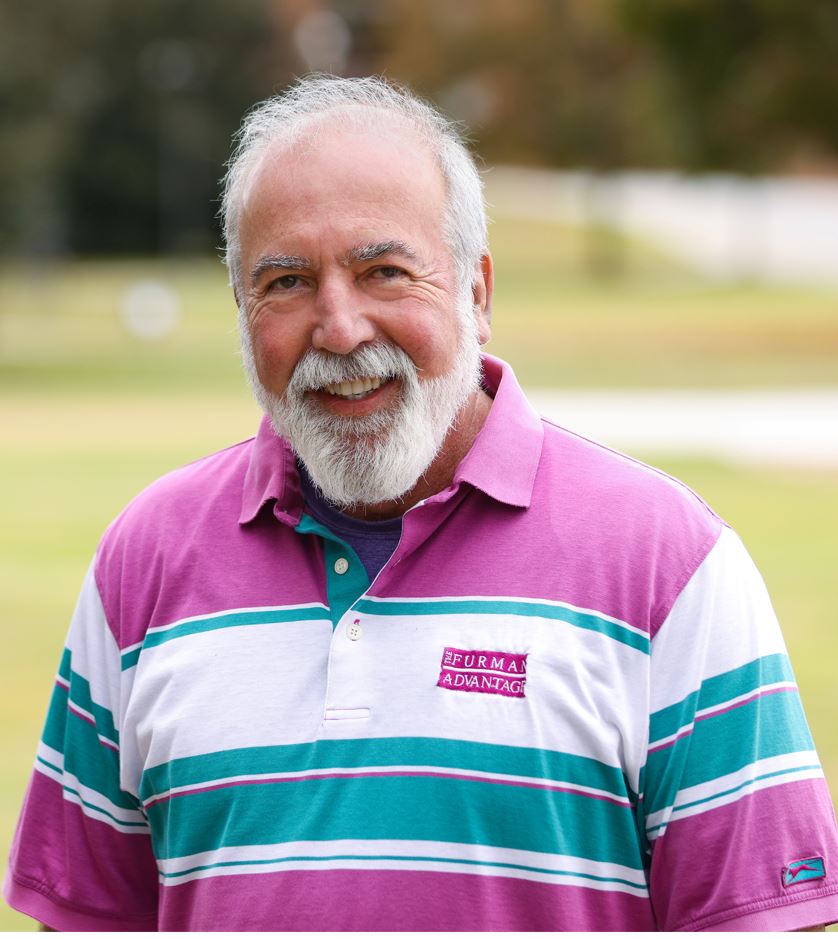
Anthony Caterisano is a Professor of Health Sciences at Furman University, with over 35 years of academic and athletic leadership. He holds a Ph.D., M.A., and B.S. from The University of Connecticut, SUNY, and UNC Chapel Hill. His research focuses on exercise physiology, resistance training, and sports medicine, with notable publications in journals like Medicine and Science in Sports and Exercise . Dr. Caterisano is a Fellow of the American College of Sports Medicine (FACSM) and has authored/co-authored books on football training and resistance techniques. He has served as wrestling coach at Furman, Spartanburg Methodist College, and currently coaches at Wade Hampton High School. As a competitive powerlifter, he has secured 16 South Carolina state titles, 10 national titles, and 10 world gold medals in masters-level competitions. His work bridges scientific research and practical application, with grants and presentations on topics like strength training methodologies and cardiovascular adaptations. Key contributions include studies on Tsunami Barbell training, metabolic responses to exercise, and core muscle engagement. His awards reflect both academic excellence and athletic achievement, while his grants and presentations underscore his commitment to advancing sports science.
Avi Turetsky is an Adjunct Professor at the Weatherhead School of Management (Case Western Reserve University) and a Research Fellow in private equity. Currently a Partner and Co-Head of the Quantitative Research Group (QRG) at Ares Management, he oversees original research, quantitative software development, and tools production teams. Previously served as Chief Operating Officer for The Riverside Company's Europe Fund and holds advisory roles at EDHEC and INSEAD . Research Focus: Turetsky’s work bridges private equity practice and quantitative finance, examining distributional patterns in investment outcomes, competency frameworks for financial professionals, and mathematical models for performance evaluation. His recent publications explore robust statistical methods in portfolio construction, direct alpha calculations for skill assessment, and sector-based value creation strategies in private equity-owned companies. Key Article Trends: His research spans 2016–2023, emphasizing quantitative methodologies in private equity, including skew analysis , value creation metrics , and competency clustering . Topics range from alliance changes in intercollegiate athletics to mathematical modeling of investment professional performance. Leadership & Teams: At Ares Management, Turetsky co-leads the QRG, managing cross-functional teams in Original Research , Quantitative Software Development , and Tools Production . He collaborates with investment teams to integrate quantitative strategies into decision-making processes.
Malcolm McCulloch serves as Professor of Energy Systems and Group Leader of the Energy and Power Group within the Department of Engineering Science at the University of Oxford. He also holds the position of Co-Director for the Oxford Martin Programme on Integrating Renewable Energy and maintains affiliation with Christ Church college. His research spans four primary domains: domestic energy systems, electric vehicle technology, renewable generation, and energy solutions for developing regions. McCulloch's research focuses on practical energy transition challenges. His domestic energy work develops user-centric demand side management technologies and behavior change interventions, leading to the spin-out Intelligent Sustainable Energy (now Navetas Energy Management). In transportation, he pioneered the Morgan LifeCar hydrogen sports car project, resulting in high-efficiency motors and the Oxford Yasa Motors spin-out. His renewable generation research includes lightweight tidal turbines through Kepler Energy, while his Energy for Development work creates nano/micro grid solutions for distributed electrification. Analysis of his recent publications reveals a strong emphasis on integrating variable renewables through innovative market mechanisms, grid flexibility solutions, and electric vehicle integration. His work consistently addresses the technical and economic barriers to decarbonization, with increasing focus on peer-to-peer energy trading, thermal storage, and climate-resilient cooling solutions since 2020. McCulloch previously served as Co-Director of the Institute for Carbon and Energy Reduction in Transport (2008-2013) under the Oxford Martin School. His leadership extends to creating the Integrated Transport Network for Oxford and developing practical applications through multiple successful spin-out companies that bridge academic research and commercial implementation.
Melissa Coyle is a Senior Lecturer at the School of Sport, Exercise and Rehabilitation, Marjon University. She specializes in sport and exercise psychology, focusing on applications in sport science, coaching, physical education, outdoor education, and health and well-being. Her qualifications include HCPC registration as a sport and exercise psychologist, BASES chartered scientist, and BASES-accredited sport scientist (Psychology), alongside a PGCert, MSc, and BSc. Her research explores psychological factors in high-stakes environments, including military training, cancer patient exercise programs, and aging populations. Notable studies include a qualitative evaluation of an 8-week exercise referral program for cancer patients and an investigation into psychological factors in Royal Artillery Army Commando training. She has also examined motivations and barriers to indoor bowls participation among over-65s and mental health transitions in university students. Dr. Coyle has been awarded grants for studies like 'Psychological factors in Army Commando training' and 'Exercise adherence for cancer recovery.' Her publications span journals like Psychology of Sport and Exercise and conferences such as the Association of Applied Sport Psychology. She actively contributes to professional bodies like HCPC and BASES. Her teaching emphasizes practical applications of psychology in sports and health, complemented by research-driven insights. Beyond academia, she is an avid golfer and hill walker.
Sam Yam is a Professor and Head of the Management & Organisation Department at the National University of Singapore's (NUS) Business School. He holds the Jardine Cycle & Carriage Professorship and serves as Associate Dean. His research spans strategy, organisational behaviour, applied psychology, ethics, and human-technology interaction. Yam has contributed to over 125 publications, focusing on AI ethics, workplace dynamics, and cross-cultural management. He explores topics like robot replacement effects, abusive supervision, and financial anxiety's intergenerational impacts. His work bridges psychology, ethics, and organisational theory, addressing contemporary challenges in automation, leadership, and human-AI collaboration. Appointments: Head of Management & Organisation (2022–present), Joint Appointment in Arts & Social Sciences (2023–present). Key Research Themes: Future of work, human-technology interaction, ethical leadership, and Machiavellian dynamics. Notable Contributions: Multimodal ADHD diagnostics, leader biases toward robot-using employees, and cultural impacts on team performance. Yam’s interdisciplinary approach integrates psychology, technology, and management, addressing societal issues like AI ethics and workplace automation. His research frequently appears in top journals like the Journal of Management and Annual Review of Organizational Psychology .
Sabrina Furtado is a Lecturer in Sport Management and Dean’s Associate Fellow at Loughborough University’s School of Sport, Exercise and Health Sciences. She holds a BSc, MSc, and PhD. Previously, she taught at the Federal University of Paraná and State University of Santa Catarina in Brazil, focusing on sport management, sports law, and entrepreneurship in the sports sector. Her research focuses on sports governance, strategic planning, and policy development in public and private sports entities. Key areas include Olympic and Paralympic federations, sports financing, and the impact of media representation on disability inclusion. She contributes to the Sport, Business and Society and Lifestyle for Health and Wellbeing research groups, as well as the Inteligência Esportiva Research Institute . Recent work analyzes governance structures in Santa Catarina municipalities, business intelligence applications in sports management, and modernization processes in Brazilian Olympic federations. Her publications span topics like Paralympic organizational roles, media stigma in disability sports reporting, and funding mechanisms for sports initiatives. No scientific awards are mentioned. Sabrina advises master’s students on sport management and policy but no grant details are provided. Her current projects aim to strengthen sports policies and enhance stakeholders’ engagement in the sport system.
Dr. Ray Bobrownicki is a Lecturer in Sport Psychology and Co-Programme Director of the BSc (Hons) Applied Sport Science at the University of Edinburgh's Moray House School of Education and Sport. He holds affiliations with the Institute for Sport, Physical Education and Health Sciences (ISPEHS) and the Human Performance Science Research Group. As a chartered psychologist (BPS) and licensed athletics coach, his work bridges academic research and real-world sport practice. Educations: PhD (Sport Psychology and Coaching), University of Edinburgh MSc (Performance Psychology), University of Edinburgh AB (Psychology), Brown University PGCert (Academic Practice), University of the West of Scotland His research focuses on optimizing coaching instruction, motor learning, and performance under pressure. He explores how verbal instructions, analogies, and technology (e.g., VR) influence skill acquisition and athlete motivation. Secondary interests include the societal impacts of sporting policies on athlete welfare and identity. Recent work critiques traditional sport science methodologies and advocates for interdisciplinary, applied research. His publications span 2015–2025, emphasizing critical analysis of coaching practices, motor learning mechanisms, and systemic issues in sport. Key themes include instructional design, constraints-led approaches, and translational research validity. Awards: Fellow of the Higher Education Academy Chartered Psychologist (British Psychological Society) Associate Fellow (British Psychological Society) Teaching responsibilities include programme leadership for BSc Applied Sport Science and contributions to MSc Performance Psychology modules. He currently supervises PhD student Tongyu Liu on esports support taxonomies and welcomes inquiries on coaching instruction, performance psychology, and athlete policy impacts. Dr. Bobrownicki’s career integrates athletic experience (Commonwealth Games finalist, high jumper) with coaching expertise (e.g., mentoring record-breaking athletes) to inform evidence-based practice in sport science.
Holly J. Benjamin, MD is a distinguished sports medicine specialist at the University of Chicago, serving as the inaugural Director of the Primary Care Sports Medicine Program at UChicago Medicine Student Wellness Center. She holds leadership positions including Chair of the Committee on Sports Medicine & Fitness for the Illinois Chapter of the American Academy of Pediatrics, and serves as Head Medical Team Physician for the WNBA Chicago Sky and medical officer for major events including the Bank of America Chicago Marathon, US Soccer, and USA Triathlon. Her educational background includes: B.S. in Integrated Life Sciences, Kent State University (1994) Combined BS/MD, Northeastern Ohio Universities College of Medicine (1994) MD, Northeastern Ohio Universities College of Medicine (1994) Residency in Pediatrics, The University of Chicago Children's Hospital (1997) Fellowship in Primary Care Sports Medicine, Lutheran General Hospital (1998) Dr. Benjamin specializes in sports medicine with particular expertise in youth, adolescent, and collegiate athletes. Her research spans acute and overuse sports injuries, concussion management, sport biomechanics, and musculoskeletal ultrasound. She has made significant contributions to understanding injury prevention strategies, safe return-to-play protocols, and the psychological aspects of sports injuries. Her work frequently addresses female athletes and elite/professional athletes, with emphasis on evidence-based approaches to optimize performance while minimizing injury risk. Recent publications demonstrate a strong focus on concussion research, with multiple studies examining diagnostic approaches, recovery trajectories, and factors influencing outcomes. Her work spans biomechanics, mental health considerations in sports injuries, and innovative approaches to injury prevention across various athletic populations. Her scientific recognition includes: Election as Fellow of the American College of Sports Medicine (2003), becoming the second female pediatrician ever elected Election as Fellow of the American Medical Society of Sports Medicine Distinguished Alumni Award from The New Aurora High School Alumni (1999) Invitation to serve as volunteer physician for the Olympic Training Center (2008) Multiple expert contributions to national media including Runner's World and the Naperville Sun Dr. Benjamin actively mentors through her coaching roles at high school and collegiate levels, emphasizing safe return-to-play post-injury and injury prevention. She has developed educational content through video productions for the American Academy of Pediatrics and serves as head team physician for the University of Chicago Lab School and the NCAA Division III UChicago Maroons. Notably, she is one of only a few sports medicine specialists in the country offering diagnostic and procedural musculoskeletal ultrasound in her office, demonstrating her commitment to advanced diagnostic capabilities for patient care.
Armin Falk is a Professor of Economics at the University of Bonn, leading the BonnEconLab since 2004 and co-founding the briq Institute on Behavior & Inequality. He holds affiliations with the IZA, DIW, CEPR, and Max-Planck-Institut. His research focuses on behavioral economics, exploring how social preferences like fairness and trust influence decision-making, and investigates early childhood development's role in inequality. Falk has received prestigious awards, including the Leibniz Prize and Yrjö Jahnsson Award. His work combines lab experiments, field studies, and representative data analysis. Education includes a PhD in Economics from the University of Zurich after studies in Economics, Philosophy, and History at the University of Cologne. Key research highlights include global climate action support studies (Nature Climate Change, 2024), socioeconomic disparities in child development (JPE, 2021), and global economic preferences surveys (QJE, 2018). He co-authored the book *Warum es so schwer ist, ein guter Mensch zu sein* to popularize behavioral economics. Awards include recognition for contributions to behavioral and development economics. Mentoring programs like *Balu und Du* aim to reduce educational inequality. His work bridges academic research with public discourse through media contributions and policy engagement.
Karin Allor Pfeiffer is a Professor in the Department of Kinesiology at Michigan State University (MSU) and Director of the Institute for the Study of Youth Sports. She holds additional membership in the Center for Physical Activity and Health. With a Ph.D. from MSU, her research focuses on physical activity measurement methodologies and population health interventions, particularly among children and adolescents. Her work addresses obesity prevention, environmental design impacts on activity levels, and sociocultural factors influencing youth sport participation. Education: Ph.D. in Kinesiology from Michigan State University Her research interests emphasize: - Quantitative methods for physical activity assessment - Schoolyard redesign strategies and their health impacts - Cardiometabolic risk factors in pediatric populations - Longitudinal tracking of physical fitness and health outcomes Recent work explores accelerometer fragmentation metrics, GPS-linked activity tracking, and disparities in sedentary behavior across demographic groups. She has pioneered interdisciplinary approaches integrating spatial analysis, wearable technology, and policy evaluation. Key contributions include developing the Observational System for Recording Physical Activity in Children and advancing consensus methods for accelerometer data interpretation. Her studies frequently highlight socioeconomic and environmental determinants of health behaviors. Dr. Pfeiffer collaborates with public health agencies and urban planners to translate research into actionable policies. Her lab focuses on scalable interventions for underserved communities, leveraging community-engaged methods to address greenspace accessibility and safety concerns.
Dr. Mathew Todres is a Senior Lecturer in Management at the School of Business, Faculty of Business and Law, University of Wollongong. His research focuses on Management, Change Management, International Business Management, and Strategic Management, with a particular emphasis on Social Entrepreneurship and Workplace Value Congruence. He has conducted action research in Social Enterprise Development and published in journals such as the Social Enterprise Journal and Journal of Business Ethics . Dr. Todres currently supervises PhD candidates Douglas Opoku Agyeman (Micro Entrepreneurship in West Africa) and Grant Hughes (Sports Management). He has received a University of Wollongong Faculty of Business Start-Up Grant (2018). His peer-reviewed work spans organizational behavior, narrative analysis, and social enterprise innovation. His research interests include autoethnographic analysis, narratological analysis, and the application of social theory to entrepreneurial practices. Dr. Todres has contributed to journals such as Medical Education and serves as a reviewer for Journal of Spirituality, Leadership, and Management , among others. His work bridges theoretical frameworks with practical applications in organizational dynamics and social impact initiatives.
Robyn Fox is an Associate Lecturer in the School of Education and Tertiary Access at the University of the Sunshine Coast (UniSC), Australia, teaching in Bachelor of Education (Secondary)/Bachelor of Recreation and Outdoor Environmental Studies programs with emphasis on foundational outdoor studies and paddling-based engagement methods. Her educational qualifications are: MAIntEd, Endicott College MA, DipEd, LaTrobe University BA, LaTrobe University Her research centers on sustainability integration and ecological literacy in outdoor education, driven by her planned PhD investigating embedded sustainable practices. She champions experiential learning through natural environments to foster environmental consciousness and climate-responsive pedagogy. Analysis of her 2022-2025 publications reveals dominant themes in climate change education within outdoor contexts, featuring innovative approaches like near-peer teaching and nature journaling while addressing eco-anxiety and Indigenous knowledge systems. Her scholarship consistently advocates for curriculum transformation toward ecological stewardship and climate action. Robyn actively involves students in community initiatives: Collaborated with Thai army and Regent’s School students to rebuild tsunami-damaged homes in Thailand (2004) Established sports programs between Khartoum International Community School and local institutions in Sudan Coordinated orphanage library setup with Luanda International School in Angola Current participant in Alexandra Headland Community Association’s foreshore regeneration projects