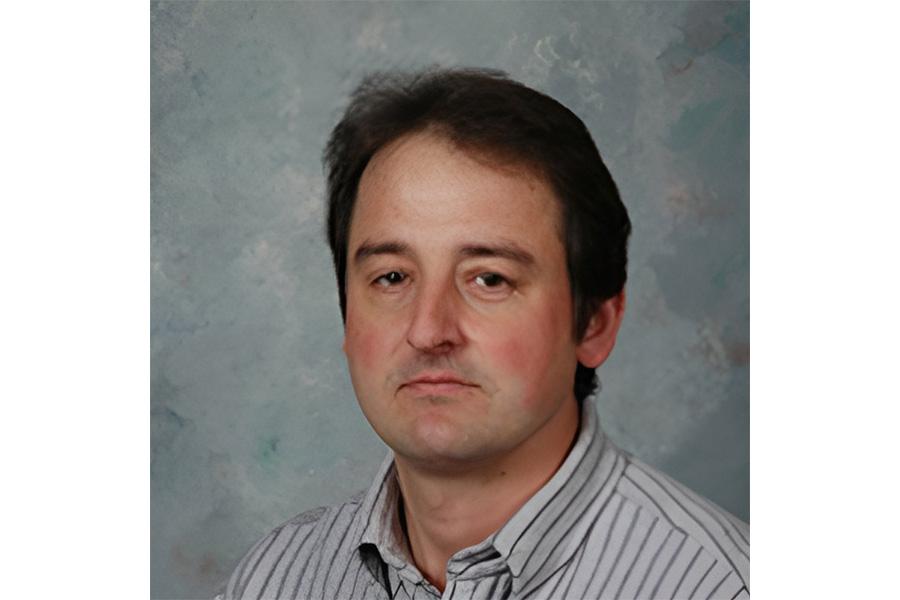
Nikolos Ioannis serves as a Professor at the School of Production Engineering and Management, Technical University of Crete, currently on leave but maintaining active research status. His work spans computational fluid dynamics, aerodynamics, and marine engineering within the Department of Production Engineering and Management. His primary research focuses on computational fluid dynamics with emphasis on ship hull reconstruction from 2D drawings, hypersonic flow simulation, and wind turbine optimization. Recent publications demonstrate expertise in geometric modeling , rarefied gas dynamics , and renewable energy systems . The 2025-2020 article portfolio reveals consistent contributions to naval architecture, aerodynamic shape optimization, and laser-matter interactions with strong methodological focus on B-spline functions, DSMC methods, and differential evolution algorithms. Professor Ioannis maintains an active email contact ( inikolos@tuc.gr ) and office location at D4.107 in the MPD Building. His work shows significant interdisciplinary connections between production engineering, computational physics, and marine applications with particular strength in translating theoretical models to practical engineering solutions.
Fatma Zürnacı Yetiş is a Researcher at the Department of Mathematics Engineering, College of Engineering at Istanbul Technical University. Her research focuses on non-polynomial methods, divided differences, generalized Taylor series, B-spline functions, hypergeometric series, and convergence analysis of numerical schemes for partial differential equations. She has contributed to advancing theoretical frameworks in applied mathematics and numerical analysis. Her work includes studies on operator splitting methods for equations like the Rosenau-Burgers and Benjamin-Bona-Mahony equations, emphasizing convergence and numerical stability. She also explores quantum Bernstein bases and their connections to hypergeometric series, as well as non-polynomial divided differences and their applications in approximation theory. Zürnacı Yetiş has led research projects such as 'New Proofs for Some Hypergeometric Series and Their q-Versions Using Divided Differences' and 'Non-polynomial Divided Differences and Blossoming', funded by Istanbul Technical University. Her contributions span peer-reviewed articles in journals like Mathematical Methods in the Applied Sciences and Filomat.
Kirill Kopotun is a Professor in the Department of Mathematics at the University of Manitoba , where he has held a faculty position since at least 1995. His research focuses on approximation theory , particularly in polynomial and spline approximation , moduli of smoothness , and convex/constrained approximation . He actively contributes to numerical analysis , linear algebra , and partial differential equations . Research Themes : Uniform/pointwise estimates for polynomial approximation, applications of Jacobi weights, shape-preserving approximation, k-monotone functions Collaborations : Extensive co-authorship with D. Leviatan , I. A. Shevchuk , and others in approximation theory. Publications span 2019–2015, emphasizing shape-preserving approximation , Jacobi-weighted approximation , and moduli of smoothness . His work appears in journals like Constructive Approximation , Journal of Approximation Theory , and Ukrainian Mathematical Journal . Contact : Office 422 Machray Hall, Kirill.Kopotun@umanitoba.ca
Maciej Woźniak serves as a university professor at the Institute of Computer Science within the Faculty of Computer Science at AGH University of Science and Technology in Kraków, actively contributing to research and teaching staff while participating in the Computer Science Discipline Council and College of the Faculty. His office is located at D-17, ul. Kawiory 21, III, 4.58, with primary contact via macwozni@agh.edu.pl. His research spans computational mathematics and high-performance computing, specializing in parallel algorithms for numerical simulations including isogeometric analysis, finite element methods, and multi-frontal solvers. Key applications address environmental challenges like hail suppression and urban smog reduction, alongside biomedical modeling of tumor growth and airborne pathogen dispersion. Methodological innovations focus on GPU acceleration, shared-memory architectures, and efficient integration techniques for partial differential equations. Analysis of his 2019-2024 publications reveals consistent advancement in parallel computational frameworks for environmental and biomedical applications, demonstrating interdisciplinary impact through experimental validation of hail cannons, smog reduction technologies, and pathogen dispersion modeling during the COVID-19 pandemic. His work bridges theoretical algorithm development with real-world problem solving across physics, engineering, and life sciences. Scientific Awards: No specific awards were documented in the provided sources. Student advising, research grants, laboratory affiliations, and educational background details beyond his PhD, DSc, and Eng. titles remain unspecified in the available materials, though his extensive publication record suggests active mentorship and collaborative research leadership.
Knut Martin Mørken is a Professor and Vice Dean for Education at the Department of Mathematics, Faculty of Mathematics and Natural Sciences, University of Oslo. His academic career spans both research and leadership in computational mathematics and science education reform. Roles: Vice Dean of Education (since 2019), Leader of the CCSE (Centre for Computing in Science Education), Former leader of the InterAct educational development project (2012–2019) Teaching: Co-instructor of MAT-INF1100 and INF-MAT5340 courses Research Interests: Approximation theory with focus on spline functions, B-splines, wavelets, and geometric modeling Integration of computational methods into mathematics and science education, spanning the CSE (Computers in Science Education) project and its successor, the CCSE (now a national Centre of Excellence in Education) Scientific Contributions: His work includes algorithm development for function approximation, stability analysis of wavelets on nonuniform triangulations, and interdisciplinary studies on mathematics-computing integration in education. Awards & Recognition: CCSE awarded Centre of Excellence in Education (SFU) by DIKU Collaborations: Active partnerships across departments and institutions, including collaborations with Lyche, Reif, Lockwood, Caballero, and Melvær in research and educational initiatives.
Gauthier Vermandel is a full-time researcher at École Polytechnique's Department of Applied Mathematics (CMAP) and holds a tenured Associate Professor position at Université Paris-Dauphine-PSL. He is affiliated with the Institut Polytechnique de Paris and serves as a research fellow for the Stress-test Chair at Polytechnique. Vermandel is also a consultant for the Banque de France on climate change models through the DECAMS directorate and serves as President of DSGE-net, a non-profit organization supporting the Dynare project. His research interests focus on quantitative macroeconomics, climate change economics, and the development of economic modeling tools. Vermandel specializes in integrating climate considerations into macroeconomic frameworks, particularly through Dynamic Stochastic General Equilibrium (DSGE) models. His work explores social learning expectations, business cycle theory, and the economic impacts of carbon taxation policies. He has made significant contributions to the Dynare platform, extending its capabilities for climate economics and social learning applications. Vermandel's recent publications demonstrate a strong focus on the intersection of climate policy and financial markets, with particular attention to how carbon taxation affects economic stability. His research combines theoretical economic modeling with practical applications for policy makers, especially in the context of the European Union's green transition initiatives. EFA Prize in Responsible Finance (2021) Banque de France Young Researcher Prize in Green Finance (2023) Vermandel serves as program director of the Environmental Macro research group at the Institute for Macroeconomic and International Policies (i-MIP), hosted by PSE and CEPREMAP. He is a member of the Dynare Team working on implementing Dynare into Python/Julia environments and participates in the organization committee of the Quantitative Sustainable Finance (QSEF) seminar at CMAP–CREST. His former role as scientific advisor at France Stratégie (the French Prime Minister's research unit) provided him with direct policy experience that informs his academic work. Vermandel maintains active research laboratories through his leadership roles in DSGE-net and the Stress-test Chair, where his team develops advanced modeling techniques for assessing climate-related financial risks. His work bridges academic research with practical policy applications, particularly in the context of the European Central Bank's climate stress testing initiatives.
Alicia Cantón Pire is a Professor at the Department of Mathematics and Computer Science Applied to Civil and Naval Engineering , affiliated with the Higher Technical School of Naval Engineers (ETSIN) at the Polytechnic University of Madrid (UPM) . Her research spans multiple domains within Mathematics, Applied Mathematics, and Computer Science, focusing on geometric modeling, complex analysis, and graph theory. Research Interests : Asymptotic values of meromorphic functions, Gromov hyperbolicity in planar graphs, geometric characteristics of Bézier surfaces, and isoperimetric inequalities. Teaching : Engaged in academic instruction, with access to the Moodle platform for current courses. Professional Affiliations : Member of mathematical societies including the Royal Spanish Mathematical Society (RSME) , Spanish Society of Applied Mathematics (SeMA) , and the American Mathematical Society (AMS) . Her work integrates theoretical mathematics with practical applications in engineering and computer science, reflecting in her collaborative publications and extensive contributions to geometric and analytic problems. Email : alicia.canton@upm.es
Kenji Takizawa is a Professor at the Faculty of Science and Engineering, School of Creative Science and Engineering at Waseda University. He holds a PhD from Tokyo Institute of Technology (2005) and specializes in computational mechanics with a focus on fluid-structure interaction problems. His educational background includes: PhD in Energy Sciences from Tokyo Institute of Technology (2005) Master's degree in Energy Sciences from Tokyo Institute of Technology (2002) Bachelor's degree in Mechanо-Aerospace Engineering from Tokyo Institute of Technology (2001) Takizawa's research focuses on computational fluid dynamics, isogeometric analysis, and fluid-structure interaction. His work centers on developing advanced computational methods for complex engineering problems involving moving boundaries, contact mechanics, and turbulent flows. He has pioneered space-time variational multiscale (ST-VMS) methods that enable high-fidelity simulations of challenging problems such as heart valve flows, tire aerodynamics, and wind turbine wake dynamics. His recent publications reveal a strong focus on space-time computational methods with applications spanning aerospace engineering, biomedical devices, automotive systems, and renewable energy. The research demonstrates consistent innovation in handling complex geometries, moving boundaries, and multi-scale phenomena through integrated computational frameworks that combine isogeometric analysis with topology change capabilities. His significant scientific achievements have been recognized through numerous prestigious awards: 2022 APACM Computational Mechanics Award 2018 JSPS Prize Multiple Highly Cited Researcher designations (2016-2018) Thomas J.R. Hughes Young Investigator Award (2012) Computational Mechanics Achievement Award from JSME (2014) Takizawa has made substantial contributions to computational mechanics through his development of innovative numerical methods that address previously intractable problems involving moving boundaries and interfaces. His work bridges theoretical advancements with practical applications across multiple engineering disciplines.
Nira Dyn is a Professor of Applied Mathematics at Tel Aviv University's School of Mathematics, where she has established herself as a leading researcher in geometric modeling and approximation theory. Her academic career spans decades of contributions to subdivision methods and computational mathematics, with a consistent focus on both theoretical foundations and practical applications in computer graphics and image processing. Research Interests Professor Dyn's primary research areas include Geometric Modeling , Subdivision methods , and Multivariate approximation theory , with significant contributions to Computer-Aided Geometric Design (CAGD) and Image Compression. Her current work centers on Nonlinear subdivision schemes and the Approximation of set-valued functions , representing cutting-edge extensions of classical approximation theory to handle complex geometric structures and uncertain data. These interests form a cohesive research program that bridges pure mathematical analysis with computational applications, particularly in handling geometric data through innovative subdivision techniques. Publication Trends Analysis of her recent publications reveals a strong emphasis on advancing subdivision methodologies beyond linear frameworks, with increasing focus on nonlinear schemes capable of handling complex geometries and set-valued data. Her work demonstrates consistent progression from foundational subdivision theory toward practical applications in image compression and geometric modeling, with notable contributions to metric-based approximation techniques. The publications showcase interdisciplinary reach spanning mathematics, computer science, and engineering applications, while maintaining rigorous mathematical foundations in approximation theory. Professional Activities While specific advising relationships and grant information aren't detailed in the available materials, Professor Dyn's extensive publication record in top-tier journals indicates active research leadership. Her collaborations span multiple institutions and disciplines, reflecting the interdisciplinary nature of modern geometric modeling research. The absence of explicit laboratory or team information suggests her work may be primarily theoretical or conducted through collaborative networks rather than a dedicated physical research space.
Professor Oleg Davydov holds a Professorship for Numerical Analysis at the Department of Mathematics, University of Giessen, Germany. His research focuses on developing advanced numerical methods with strong theoretical foundations and practical applications. He maintains an active research program with numerous recent publications and international collaborations. Position: Professor of Numerical Analysis Institution: University of Giessen, Department of Mathematics Contact: Heinrich-Buff-Ring 44, 35392 Giessen, HRZ Room 117 Email: oleg.davydov@math.uni-giessen.de Homepage: https://oleg-davydov.de/ Professor Davydov's research interests center around meshless numerical methods, approximation theory, and computational mathematics. His primary focus areas include: Meshless Finite Difference Method - Developing robust meshless techniques that avoid the need for structured grids Finite Element Method - Particularly Bernstein-Bézier finite elements and specialized approaches for complex geometries Scattered Data Fitting - Creating efficient algorithms for approximating data on irregular domains Approximation Theory - Investigating theoretical properties of splines, radial basis functions, and other approximation tools His research has resulted in several software packages including mFDlab (Meshless Finite Difference Method), BBFEM (Bernstein-Bézier Finite Elements), and TSFIT (Two-Stage Scattered Data Fitting), demonstrating the practical implementation of his theoretical work. Analysis of Professor Davydov's recent publications shows a consistent focus on improving meshless methods, particularly in stencil selection, error analysis, and applications to complex problems. His work spans both theoretical developments (like error bounds and optimal approximation orders) and practical implementations (for fluid dynamics, manifold learning, and interface problems). A notable trend is the increasing sophistication of adaptive techniques and the handling of challenging geometries. Professor Davydov has supervised several doctoral students to completion, including: Gaelle Andriamaro Fabien Rabarison Abid Saeed Wee Ping Yeo His research group appears to maintain active collaborations with institutions worldwide, as evidenced by his extensive co-authorship network. The group focuses on developing both theoretical foundations and practical implementations of numerical methods, with particular attention to problems involving irregular domains, singularities, and complex geometries. Students in his group would gain experience in both theoretical analysis and software development for numerical methods.
Lili Yu is the Karl E. Peace Endowed Chair of Biostatistics and Professor in the Department of Biostatistics, Epidemiology & Environmental Health Sciences at Georgia Southern University, where she has been faculty since 2007. Her academic appointments include serving as Principal Investigator for the Office of International Chinese Statistical Association (2007-2017) and as Co-Principal Investigator for current research projects including 'Hierarchical Bayes Regression Models for Geospatial Inquiries' at Georgia Southern University. Dr. Yu's educational background is highly interdisciplinary, with degrees spanning medicine and statistics: PhD in Biostatistics from Ohio State University (2007) MS in Statistics from Ohio State University (2004) MS in Neuroscience from Capital Medical University (2001) MD in Clinical Medicine from Tianjin Medical University (1995) Her research interests focus on biostatistical methodology development and application, particularly in survival analysis, categorical data analysis, and multivariate data analysis. Dr. Yu has made significant contributions to accelerated failure time models, Bayesian statistics, and spatiotemporal modeling. Her work often addresses important public health questions related to disease modeling, mortality risk factors, and health outcomes assessment. Analysis of her publication trends shows a consistent trajectory from methodological development in survival analysis to applied studies addressing significant health issues. Dr. Yu has received recognition for her scholarly contributions, with an h-index of 11 according to Scopus data, and 1,876 citations across her publications. Her work has appeared in numerous high-impact journals across biostatistics, epidemiology, and public health disciplines. Her research funding includes multiple successful grant awards, demonstrating her ability to secure competitive research support. Notable projects include 'Hierarchical Bayes Regression Models for Geospatial Inquiries' (2022-2023), 'Efficient statistical methods in AFT model for cancer data' (2009-2010), and leadership of the Office of International Chinese Statistical Association (2007-2017). Dr. Yu's collaborative network is extensive, with co-authors from multiple institutions across the United States and internationally. Her work bridges methodological statistics with practical applications in public health and medicine, contributing to United Nations Sustainable Development Goals related to health and well-being.
Professor Miriam Primbs is a faculty member at Hochschule Ruhr West (HRW) in the Institute of Natural Sciences, where she teaches Mathematics and Simulation. She has been a professor at HRW since 2011 and coordinates the HRW research focus MARTA since 2022. Professor Primbs studied Mathematics and Physics (Diplom and 1. Staatsexamen) and earned her PhD in Mathematics at the University of Duisburg-Essen. Her career includes a research stay at IMATI CNR in Italy, teaching on the school ship Thor Heyerdahl, and working in Research and Development at Siemens Energy Mülheim before joining HRW. This blend of academic and industry experience informs her teaching and research approach. Her research focuses on applying mathematical and numerical methods to technical problems across engineering disciplines, from mechanics to electrical engineering. As coordinator of the MARTA research focus, she leads various projects including those funded by BMBF and collaborations with industry partners like Siemens Energy. Her scholarly work spans wavelet analysis, numerical methods, signal processing, and power systems analysis. Professor Primbs teaches Engineering Mathematics I and II, Mathematics for E-Commerce, MATLAB, Scientific Simulation, and LaTeX Basics. She employs a flipped classroom approach for foundational courses, providing students with tailored materials and prompt feedback through weekly exercises. In higher semesters, she emphasizes project-based learning and specialized topics. Currently supervising doctoral student Martin Wachs in cooperation with University of Duisburg-Essen Member of the Senate Committee for Research and Transfer at HRW Encourages industry collaboration for practical research applications Professor Primbs maintains strong connections between academic research and industrial applications, leveraging her Siemens Energy experience to bridge theory and practice in mathematical engineering.
Louise Møller Jørgensen serves as a Clinical Associate Professor in the Department of Clinical Medicine at the University of Copenhagen's Faculty of Health and Medical Sciences, with research operations closely integrated with the Capital Region of Denmark (Region Hovedstaden) as evidenced by her institutional email domain and collaborative publications. Her research spans Neuroscience, Neuroimaging, and Pain Medicine, focusing on molecular biomarkers for disc degeneration (e.g., cytokines, TRP channels, metalloproteinases), advanced neuroimaging techniques (PET/fMRI), and neurological disorders like Parkinson's disease. She investigates pain mechanisms, surgical outcomes, and cognitive disturbances through translational approaches combining molecular analysis, animal models, and clinical assessments. Analysis of her 2022-2024 publications reveals dominant trends in biomarker discovery for spinal conditions and neurodegenerative diseases, alongside methodological innovations in neuroimaging. Key interdisciplinary themes include PET radioligand development, electrical stimulation systems, and the intersection of molecular biology with clinical pain management. Dr. Jørgensen maintains extensive collaborations across Danish medical institutions, notably with G.M. Knudsen's team, and her work demonstrates significant academic engagement through media coverage (1 news outlet), social media (6 X users), and scholarly platforms (130+ Mendeley readers). While specific grant details and student mentorship aren't documented, her publication volume and co-authorship patterns indicate active leadership in multi-institutional research projects.