Giuseppe Iannaccone is a full Professor at the University of Pisa , Department of Information Engineering. His research focuses on quantum electronics , neuromorphic computing , and 2D materials for advanced applications in analog circuits and high-temperature electronics. Lead researcher in QUEPE Quantum Engineering and QUEFORMAL projects Pioneer in neuromorphic chip design using silicon and 2D materials Active in developing high-temperature integrated circuits for industrial applications His recent work explores twisted transition metal dichalcogenides for spintronics, inkjet-printed 2D electronics on paper substrates, and wireless power transfer systems for medical devices. The Google Scholar articles show consistent contributions to analog neuromorphic engines , quantum transport modeling , and steep-slope transistor architectures . Collaborations include Gianluca Fiori and Benjamin Zambrano in neuromorphic hardware development. He actively promotes student well-being through institutional initiatives like the Ufficio Benessere at University of Pisa and has taught RFID and IoT courses for PhD students. Current research integrates MoS2/graphene heterostructures and van der Waals junctions for next-generation electronics.
Francesco Ragusa is a Research Fellow at the University of Catania, Italy, holding an Industrial Doctorate in Computer Science (2021). He spent part of his PhD at the University of Hertfordshire, UK. His work focuses on First Person (Egocentric) Vision, including Human-Object Interaction, Industrial Applications, and Augmented Reality. He co-founded NEXT VISION s.r.l., an academic spin-off from the University of Catania since 2021. Key projects include the MECCANO dataset for industrial human-object interactions and the EGO-EXO4D initiative analyzing skilled human activity from multi-perspective views. Research interests span Computer Vision, Pattern Recognition, and Machine Learning. He contributed to seminal datasets like MECCANO and ENIGMA-51, advancing understanding of human behavior in industrial settings. His work emphasizes practical applications, such as wearable assistive systems and visual navigation solutions. Ragusa has delivered tutorials at major conferences (e.g., ICIAP, VISIGRAPP) on First Person Vision’s history, challenges, and trends. He actively promotes industrial collaborations and has secured grants including PNRR MUR (Code E63C22001940006) and EU funding under Next Generation EU. His teaching and professional activities include organizing workshops on egocentric vision for AI-driven assistants and industrial safety systems. Current research directions involve multimodal synthetic data utilization, gaze-based interaction analysis, and cross-modal fusion for human-robot collaboration.
Eric Pop is a Professor of Electrical Engineering and (by courtesy) Materials Science & Engineering at Stanford University's School of Engineering, where he leads the SystemX Heterogeneous Integration focus area. Previously, he served on the faculty at the University of Illinois at Urbana-Champaign (2007-2013) and worked at Intel Corporation (2005-2007). His academic background includes a PhD in Electrical Engineering from Stanford University (2005) and three degrees from MIT: MEng and BS in Electrical Engineering, and BS in Physics. His educational credentials: PhD in Electrical Engineering, Stanford University, 2005 MEng in Electrical Engineering, MIT BS in Electrical Engineering, MIT BS in Physics, MIT Professor Pop's research centers on the intersection of electronics, nanomaterials, and energy, with pioneering contributions to 2D materials (particularly transition metal dichalcogenides), semiconductor device physics, and thermal management. His work addresses critical challenges in contact engineering for atomically thin semiconductors, stability of oxide transistors, and energy-efficient neuromorphic systems. Current projects explore solvent doping techniques, strain engineering, and machine learning-assisted device characterization to enable next-generation electronics. Analysis of his 2023-2025 publications reveals dominant themes in 2D semiconductor transistors, oxide device reliability, and neuromorphic computing architectures. Key trends include the integration of hyperspectral microscopy for rapid material characterization, Monte Carlo simulations for thermal-electrical transport, and phase-change materials for artificial neurons. His research consistently bridges fundamental material science with practical device engineering, emphasizing industrial scalability and low-power operation. His scientific honors include: Presidential Early Career Award for Scientists and Engineers (PECASE) Young Investigator Awards from ONR, AFOSR, NSF, and DARPA Multiple best paper and best poster awards at international conferences with students Professor Pop actively mentors PhD and Master's students through directed research courses (EE 190/191/390/391), fostering award-winning projects in semiconductor device innovation. His research program is supported by substantial grants from federal agencies including NSF, DARPA, and the Department of Defense, with recent work focusing on heterogeneous integration and thermal management for 3D circuits. As Editor of 2D Materials and former General Chair of the Device Research Conference, he significantly influences the semiconductor research community. He directs the Pop Lab (poplab.stanford.edu), which maintains advanced nanofabrication and characterization facilities for semiconductor research. Current initiatives include developing flexible radio-frequency transistors exceeding 100 GHz, scalable production of transition metal dichalcogenide solar cells, and AI-accelerated thermal simulation pipelines for integrated circuit design. The lab's collaborative environment bridges electrical engineering, materials science, and computer science to address semiconductor industry challenges.
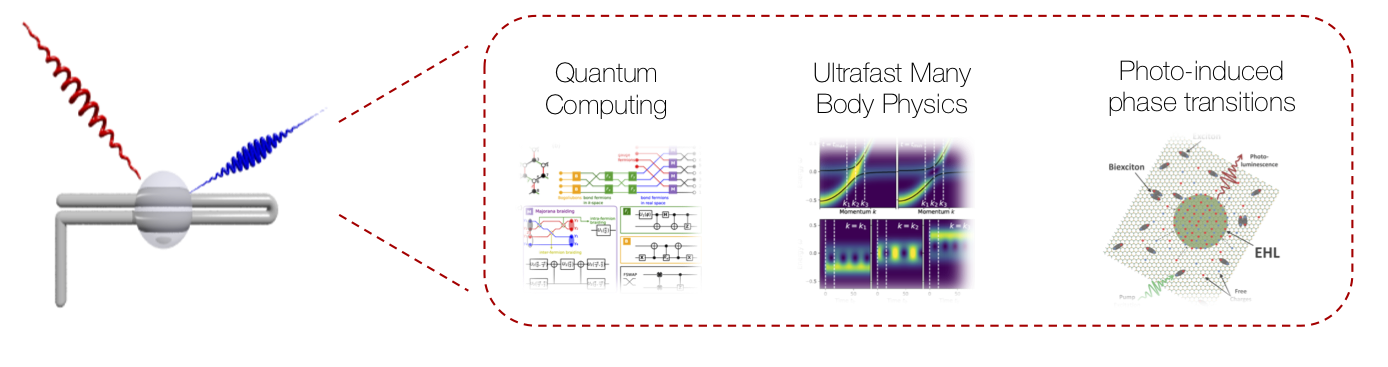
Dr. Alexander (Lex) Kemper is an Associate Dean for Research and Associate Professor in the Department of Physics at North Carolina State University (NC State), within the College of Sciences. He holds a PhD in Physics from the University of Florida (2010), followed by postdoctoral research at Stanford University/SLAC National Lab and Lawrence Berkeley National Lab as an Alvarez Fellow. He joined NC State in 2015 as an Assistant Professor, advancing to his current roles. His research focuses on quantum materials in and out of equilibrium, combining ultrafast laser experiments with computational modeling. Key areas include non-equilibrium dynamics in correlated materials, pump-probe spectroscopy, and quantum computing algorithms for simulating condensed matter systems. He received an NSF CAREER Award in 2018 for studying light-induced phases in 2D materials. Research interests span superconductivity (cuprates and Fe-based systems), electron-phonon coupling, and quantum machine learning applications. His lab develops software tools like eigenvector continuation and Hankel projections to study many-body systems. Recent work addresses quantum state preparation resilience, fast scrambling in hyperbolic models, and geometric quantum algorithms. Current lab members include graduate researchers (Anjali Agrawal, Heba Labib) and undergraduates (Liam Doak, Arvin Kushwaha). Alumni include notable contributors like Akhil Francis and Avinash Rustagi. Collaborations involve experimentalists in ultrafast spectroscopy and quantum hardware teams. Publications (2025) highlight advances in quantum algorithms (e.g., error mitigation, horizontal gates) and experimental techniques (correlation-ARPES, RIXS). His work bridges theoretical predictions with quantum hardware implementation, aiming to solve complex materials physics challenges on near-term quantum devices.
Nada Benhaddou is a Researcher at CREST (Centre for Renewable Energy Systems Technology), specializing in photovoltaic materials and devices. Her work focuses on optimizing solution-processed CIGS (Copper-Indium-Gallium-(Di)selenide) solar cells, emphasizing trade-offs between efficiency and process reproducibility. She holds a PhD in thin-film solar cells with a chemistry background. Her research interests include thin-film solar cell fabrication, material characterization, and the development of novel processing techniques for high-performance photovoltaic devices. Key projects involve analyzing solvent interactions, annealing effects, and diffusion barriers to enhance device stability and efficiency. Nada’s publications highlight advancements in CIGS solar cell materials, including studies on morphological inhomogeneities, solvent repulsion techniques, and machine learning-driven combinatorial analysis. Her work bridges chemistry, materials science, and engineering to address challenges in renewable energy systems. She has contributed to interdisciplinary collaborations, particularly in leveraging machine learning for material analysis. No specific grants or awards are listed, but her research aligns with global efforts to improve solar energy technology through innovative materials science. Nada is affiliated with the PV Materials and Devices group at CREST, where she investigates cutting-edge solutions for scalable and sustainable photovoltaic systems.
Aldo H. Romero is the Eberly Family Distinguished Professor of Physics and Astronomy at West Virginia University, where he serves as Director of Research Computing . His research integrates computational materials science, artificial intelligence, and high-performance computing to advance understanding of condensed matter systems, including strongly correlated materials, 2D materials, and magnetic compounds. Education : Ph.D. in Physics and Chemistry from University of California, San Diego (1998) Awards : Eberly Family Distinguished Professorship Romero’s group specializes in Density Functional Theory (DFT) , Dynamical Mean Field Theory (DMFT) , and machine learning for materials discovery. They develop open-source tools like PyProcar , MechElastic , and ABINIT , focusing on properties such as electronic structure, elastic behavior, and magnetic interactions. Recent work explores chiral materials , AI-driven optimization , and high-throughput computational methods for material design. Key trends in publications include studies on chiral symmetry in kagome lattices, machine learning for material properties, symmetry-based structure prediction, and DFT+DMFT analysis of correlated systems. Collaborations span Germany, France, China, Spain, and Italy, with applications in energy storage, quantum technologies, and spintronics. Scientific contributions encompass: Development of Fireball and ABINIT codes Machine learning for Hubbard U parameter optimization Chiral material discovery via symmetry arguments Pioneering work on 2D Rashba systems Labs and teams include: AI WVU Discussion Group (founded by Romero) West Virginia University Computational Materials Group Collaborative efforts with international institutions Grants and proposals highlight initiatives like the NSF & NVIDIA Open Multimodal AI Infrastructure (OMAI) program and Spencer Foundation support for AI in education. The group works with over 20 graduate students and 4 postdoctoral researchers, emphasizing interdisciplinary training and global collaboration.
Hubert Brückl is a Professor and Head of the Department for Integrated Sensor Systems at the University for Continuing Education Krems. He holds a PhD and habilitation in Physics from the University of Regensburg and has held key roles at institutions like the Technical University of Darmstadt, IFW Dresden, and the AIT Austrian Institute of Technology. His research focuses on thin films, magnetism, sensors, and micro/nanotechnology, with significant contributions to machine learning applications in materials science. Brückl's scientific career includes leadership in over 15 funded research projects, such as the development of AI-based corrosion monitoring systems and advanced magnetic sensors. He has authored numerous publications in high-impact journals, including Nature Scientific Reports , Physical Review Applied , and IEEE Transactions on Magnetics . His work spans interdisciplinary areas, combining physics, engineering, and data science to create innovative sensor technologies. Current projects emphasize AI-driven predictive modeling of materials properties and high-precision magnetic sensor fabrication. Brückl's lab integrates cutting-edge facilities for nanotechnology and sensor development, collaborating with industry partners like Siemens and aerospace firms. His research addresses challenges in sustainable materials, biomedical diagnostics, and industrial monitoring systems.
Karon MacLean is a Professor of Computer Science and Director of the SPIN (Sensory Perception and Interaction Research Group) at the University of British Columbia. She joined UBC in 2000 after working at Interval Research Corp. in Palo Alto. Her research focuses on restoring physicality to human-computer interaction through haptic interfaces, multisensory interaction, and affective communication. She holds a Bachelor's degree from Stanford University and graduate degrees from MIT. Her work emphasizes application-driven design, exploring haptic feedback in robotics, embedded systems, and healthcare contexts. Current projects include developing Calmer, a robotic device for preterm infant pain management, and CuddleBits, affective robot pets. She leads the SPIN Lab, which investigates haptic languages, low-power interfaces, and evaluation techniques for tangible computing. Her academic contributions span over two decades, with key areas including physical user interfaces, parasitic power systems, and the integration of haptics into medical and everyday technologies. She advises students on HCI topics and collaborates internationally on projects that merge engineering, psychology, and design.
Dmitri Romanov is a Research Professor in the Department of Physics at Temple University. His research focuses on strong-field quantum control in complex systems, including femtosecond laser filamentation, nonlinear optics of filament wake channels, and electronic dynamics in molecules and nanostructures. He explores applications such as light scattering in turbid media and dispersion law engineering for quasiparticles. Key contributions include studies on Rabi sideband control, transient optical nonlinearities, and the development of machine learning algorithms for particle identification in high-energy physics experiments. Romanov has authored influential works on femtosecond laser-matter interactions and co-authored the textbook Modern Advanced Mathematics for Engineers (Wiley, 2001). His recent projects involve collaborations with the Electron-Ion Collider (EIC), focusing on detector design and real-time data processing using FPGA-based systems. Romanov’s work bridges theoretical physics, experimental optics, and applied nanotechnology, with implications for advanced materials and medical imaging.
Maria Cristina D'Oca is an Associate Professor in the Department of Physics and Chemistry - Emilio Segrè at the University of Palermo. Her work focuses on radiation physics, dosimetry, and spectroscopy, with applications in medical physics, food safety, and archaeological dating. She has contributed to advancements in EPR dosimetry, FLASH radiotherapy, and radiation detection. Department: Physics and Chemistry Email: mariacristina.doca@unipa.it Her research interests include: Radiation dosimetry for medical applications Electron Spin Resonance (EPR) and Thermoluminescence techniques Food irradiation detection and safety Metal ion adsorption on biological materials Mechanisms of radiation interaction with organic and inorganic compounds Monte Carlo simulations for radiation transport Recent publications highlight her expertise in FLASH radiotherapy dosimetry, diffusion correction in Fricke dosimeters, and gamma irradiation effects on food. She employs machine learning and computational models to enhance dosimetric accuracy and explores historical dating methods using EPR spectroscopy.
Daniele Leonardis serves as Associate Professor of Applied Mechanics at the Institute of Mechanical Intelligence (IIM) of the Sant'Anna School of Advanced Studies in Pisa since October 2025. His research centers on wearable haptic interfaces and hand exoskeletons for clinical neurorehabilitation, virtual reality, and teleoperation applications. His primary research domains include: Development of miniaturized actuators for high-fidelity haptic rendering in wearable devices Clinical neurorehabilitation using serious games for children with Cerebral Palsy Integration of tactile feedback in teleoperation systems for complex manipulation tasks Soft exoskeletal devices for movement assistance in spinal/neurological patients Industrial robotics for railway infrastructure inspection Leonardis leads significant research initiatives: Coordinator and scientific director of the completed TELOS project (2024) for VR-based cerebral palsy rehabilitation Scientific director for SSSA in the European SUN project on augmented reality and haptic feedback Director of the SmartNest third-party research project Collaborator in TATTO, LEARN, and AVATAR projects Supervisor for RFI's mobile railway inspection system design His recent publications (2024-2025) demonstrate concentrated advancements in teleoperation interfaces, soft exoskeleton validation, and novel actuation methods for tactile feedback, with strong clinical and industrial validation components. He actively disseminates research through editorial roles in leading robotics journals and public demonstrations at international conferences. As founding partner of Next-Generation-Robotics spin-off, Leonardis bridges academic research and commercial applications in railway inspection robotics, reflecting his commitment to translational impact.
Maria Fyta serves as a Professor of Biotechnology at RWTH Aachen University's Faculty of Biology, leading research in the Department of Biotechnology from her lab in the Biology Building (Worringerweg 3, Aachen). Her work bridges computational physics, nanotechnology, and molecular biology to develop next-generation biosensing platforms. Her research focuses on nanopore-based DNA/protein sequencing , utilizing 2D materials (graphene, MoS 2 , h-BN) and nanodiamond functionalization for single-molecule detection. Key projects include ionic liquid catalysis systems , computational alloy design , and molecular dynamics simulations of biomolecular translocation. Recent work emphasizes machine learning integration for signal analysis and materials discovery. Analysis of her 15 most recent publications reveals dominant trends in Nanopore engineering for biomolecular sensing Computational materials design of 2D systems and alloys Machine learning applications in nanofluidics While no specific scientific awards are documented in the provided materials, her extensive publication record demonstrates significant contributions to nanotechnology and biophysics. Professor Fyta's group develops advanced simulation frameworks for biomolecular translocation and collaborates on experimental validation of nanoscale devices. Current efforts focus on enhancing read-out capabilities in functionalized nanopores and designing bio-mimetic sequencing platforms.
Mark C. Hersam is the Chair of Materials Science and Engineering and the Walter P. Murphy Professor at Northwestern University's McCormick School of Engineering. He also serves as Director of the Materials Research Science and Engineering (MRSEC) Center. His research focuses on low-dimensional nanoelectronic materials, including carbon nanotubes, graphene, and transition metal dichalcogenides, with applications in electronics, energy, sensors, and quantum computing. Hersam leads the Hersam Research Group, emphasizing scalable nanomanufacturing methods like inkjet and 3D printing. Education: Ph.D. in Electrical Engineering (University of Illinois), M.Phil. in Microelectronic Engineering (University of Cambridge), B.S. in Electrical Engineering (University of Illinois). Research Interests: Synthesis, functionalization, and applications of nanomaterials. Current projects include van der Waals heterostructures for neuromorphic computing, high-temperature micro-supercapacitors, and borophene synthesis. His work bridges fundamental science and industrial-scale production. Notable Awards: National Academy of Engineering (2024), MacArthur Fellowship (2014), and over 30 other prestigious honors. His contributions span nanomaterials innovation and their commercialization. Advising and Outreach: Director of the Hersam Research Group, which emphasizes diversity and STEM outreach. Active in mentoring students through Northwestern's PhD Program in Applied Physics. His lab collaborates with industry partners for technology transfer. Labs/Teams: The Hersam Research Group focuses on hybrid nanomaterials for information technology, biotechnology, and energy. Their work is supported by sponsors including the Department of Energy and the National Science Foundation.
Anasua Chatterjee is a researcher at the Center for Quantum Devices, part of the Niels Bohr Institute at the University of Copenhagen. Her work focuses on quantum dot arrays, spin qubits, and semiconductor-based quantum computing platforms. She collaborates with leading quantum research groups and contributes to advancements in quantum device calibration, optimization, and noise mitigation. Affiliation: Center for Quantum Devices, Niels Bohr Institute, University of Copenhagen Her research spans quantum device automation, charge sensing, and real-time control of qubit fluctuations. Recent publications highlight her expertise in radio-frequency reflectometry, gate voltage optimization, and topological superconductivity in hybrid devices. Key article trends include autonomous calibration of quantum dots using evolutionary algorithms, spin qubit control via FPGA-based feedback systems, and integration of superconducting elements with semiconductor platforms. These studies often involve collaborations with institutions in the U.S. and Europe. While no formal awards are listed in the provided texts, her work appears integral to scaling quantum processors and improving qubit coherence for fault-tolerant systems.
Professor Niall English is a leading academic at University College Dublin's College of Engineering & Architecture, specifically within the School of Chemical & Bioprocess Engineering. With over 20 years of dedicated research in gas hydrate systems, his work bridges fundamental science and industrial applications, particularly in climate change mitigation and wastewater treatment innovation. His research focuses on gas hydrate kinetics, methane emissions, and microbial regulation of hydrate stability , with groundbreaking contributions to understanding the relationship between Earth's magnetic field reversals and historical mass extinction events (the 'Belfast hypothesis'). Key interests include: Nanobubble engineering for industrial wastewater treatment Electromagnetic field effects on chemical processes Microbial-peptide regulation of gas hydrates Climate change implications of Arctic hydrate destabilization Professor English's recent publications (2024-2025) reveal a strong trend toward environmentally sustainable applications , particularly electric-field nanobubble technologies for wastewater treatment, biogas upgrading, and carbon capture. His work demonstrates significant cross-disciplinary integration of computational chemistry, environmental engineering, and geophysics. He received the Leverhulme Trust Research Project Award (2021-2023) for 'Exploring the potential for biocatalytic gas-hydrate formation (BioGHF)', reflecting the international recognition of his work. His commercialization efforts include two spin-out companies: Aqua-B (CEO) for nanobubble wastewater treatment and BioSimulytics for pharmaceutical crystal-structure prediction software. Professor English actively collaborates with Queen's University Belfast microbiologist Professor Chris Allen, filing joint patents for regulating gas hydrate growth using proteins and peptide sequences. Their research targets the $1 trillion wastewater treatment industry, aiming to solve challenges in processing heavily polluted water through hydrate-based separation techniques.