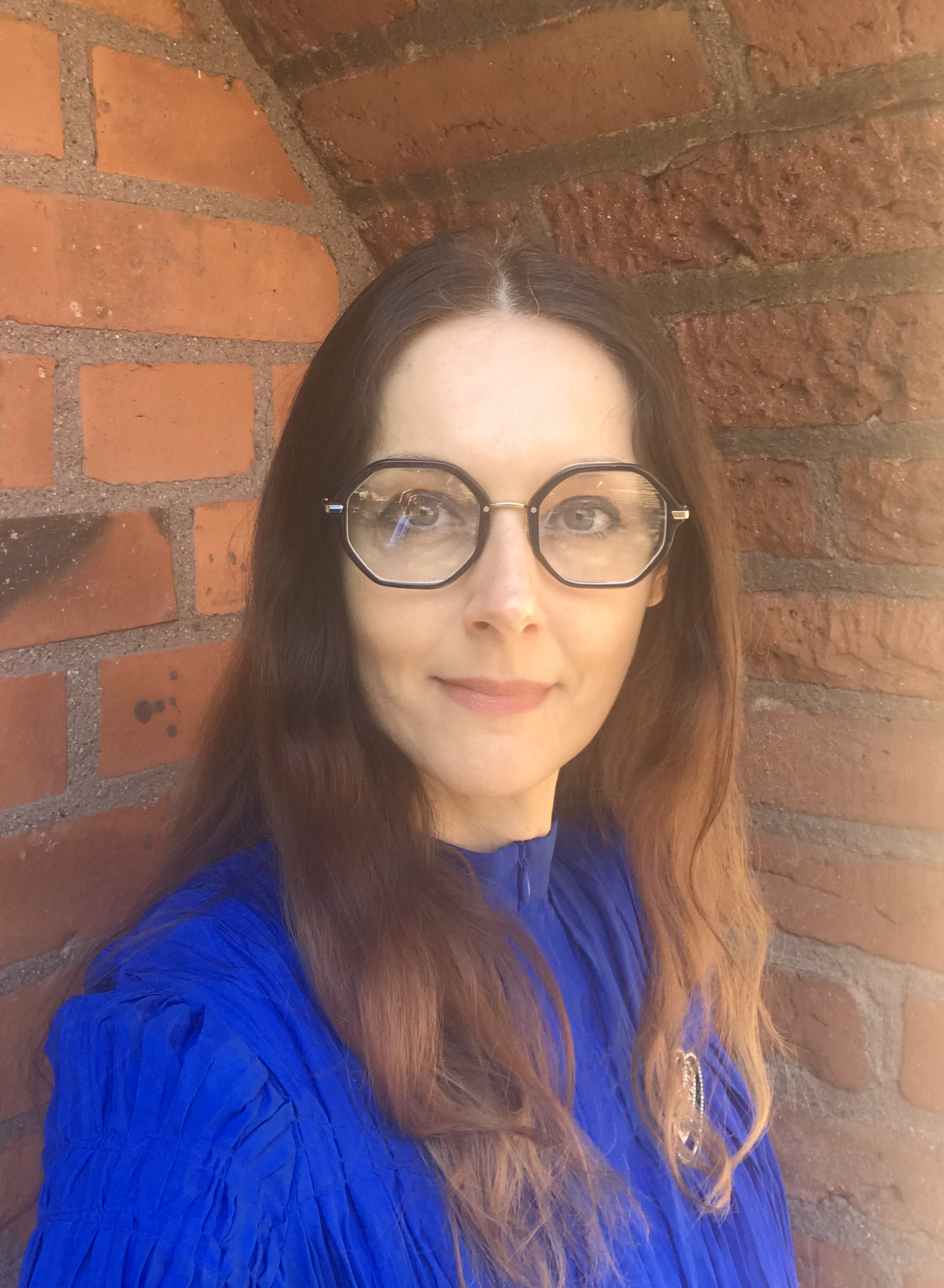
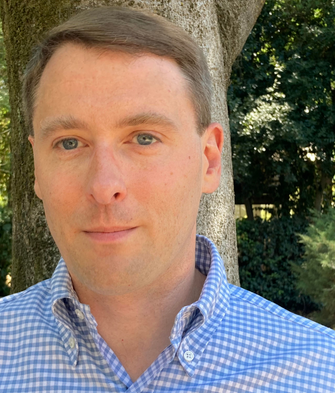
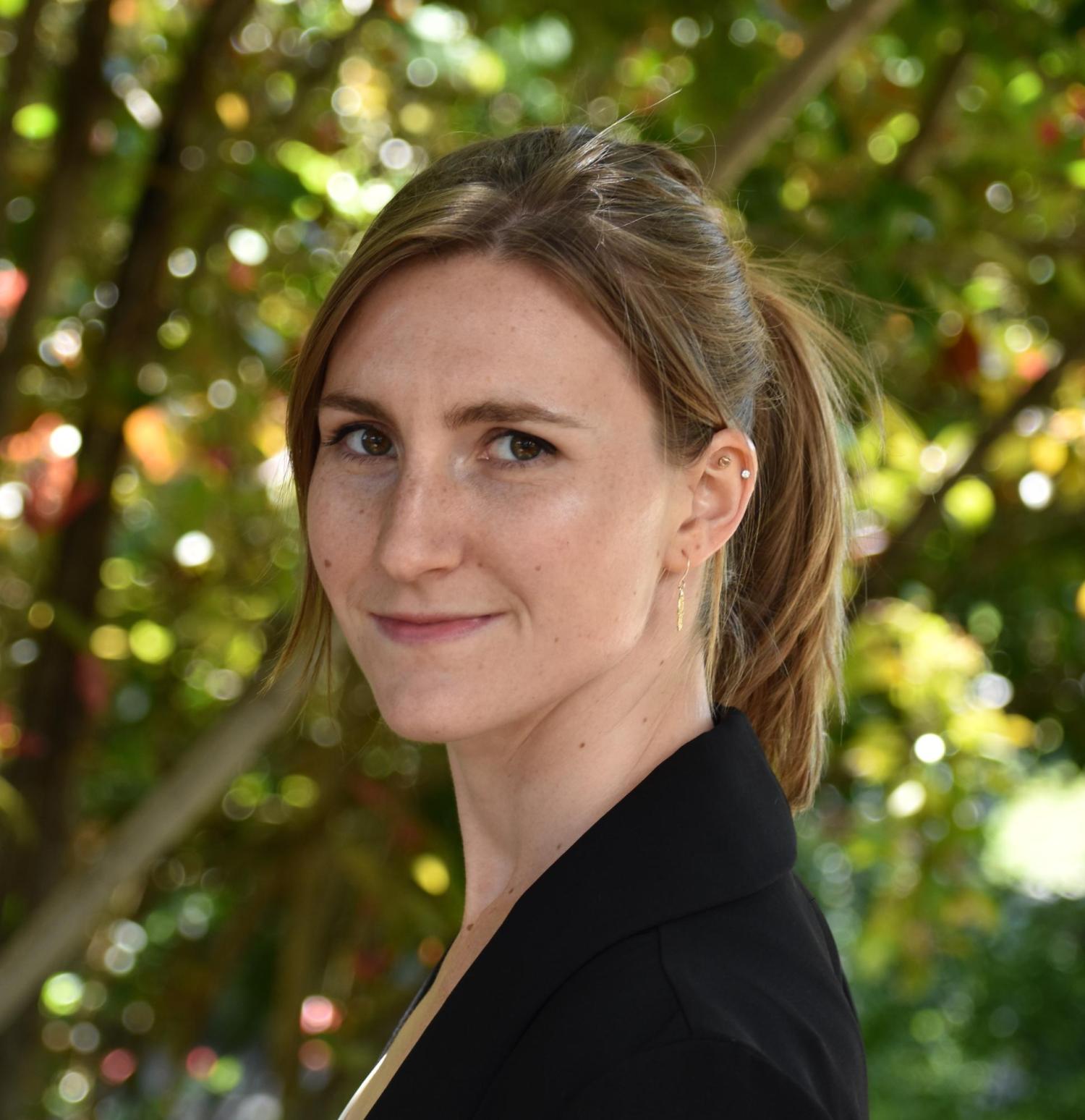
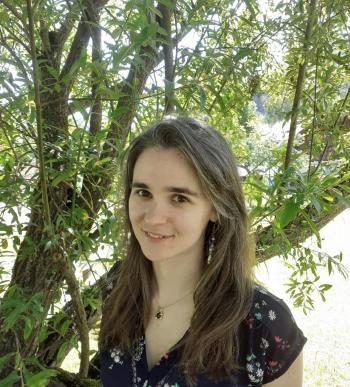
Renjie Feng is a Research Fellow in Mathematics and AI at the School of Mathematics and Statistics and the Sydney Mathematical Research Institute , University of Sydney. His work bridges probability theory, statistics, and applications in machine learning, deep learning, and artificial intelligence. His research interests focus on probability theory and its applications to machine learning , random matrix theory , and statistical physics . He investigates extreme value problems, spectral properties of random matrices, and topological features of random fields over Riemannian manifolds. Recent publications highlight trends in random matrix theory (GUE, GOE, GSE), extreme gap problems , determinantal point processes , and Wiener chaos . Collaborative works with F. Götze, D. Yao, and R. Adler emphasize U-statistics , multivariate linear statistics , and random topology inspired by Poisson point process studies.
Ravi Ramamoorthi is the Ronald L. Graham Professor of Computer Science and Director of the UC San Diego Center for Visual Computing. He holds a faculty position in the Department of Computer Science and Engineering (CSE) and is an affiliate of the Department of Electrical and Computer Engineering (ECE). He joined UC San Diego in 2014, previously at UC Berkeley and Columbia University. He also holds a part-time appointment as a Distinguished Research Scientist at NVIDIA. His research focuses on visual computing, including rendering, computer vision, light field cameras, and physics-based modeling. Notable contributions include foundational work on spherical harmonic lighting, neural radiance fields (NeRF), and Monte Carlo rendering techniques. His work bridges graphics, vision, and signal processing with applications in sparse reconstruction, importance sampling, and real-time rendering. He teaches courses like CSE 167 (Computer Graphics), CSE 168 (Rendering), and advanced topics in computer graphics. Awards include ACM and IEEE Fellowships, the Okawa Foundation Grant, and multiple Frontiers of Science Awards. His research is supported by NSF, ONR, and industry collaborators including Adobe, Sony, and Qualcomm. Key projects include the Center for Visual Computing, Light Field research, and educational initiatives like edX MOOCs on computer graphics and rendering. His work has influenced industry tools (e.g., Pixar, RenderMan) and modern real-time rendering pipelines with denoising techniques.
Danica Kragic is a Professor of Computer Science at the School of Electrical Engineering and Computer Science at the Royal Institute of Technology (KTH) in Stockholm, Sweden. She serves as the Director of the Centre for Autonomous Systems and leads the Robotics, Perception and Learning Lab at KTH. Her research focuses on advancing robotics capabilities through computer vision and machine learning approaches. MSc in Mechanical Engineering from the Technical University of Rijeka, Croatia (1995) PhD in Computer Science from KTH (2001) Professor Kragic's research primarily centers on robotics, computer vision, and machine learning, with particular emphasis on robotic manipulation, grasp planning, and human-robot interaction. Her work bridges theoretical foundations with practical applications, exploring how robots can understand and interact with objects in complex environments. She investigates how visual and tactile sensing can be integrated to improve robotic perception and manipulation capabilities, with applications ranging from industrial automation to assistive robotics. Her recent publications demonstrate a strong focus on advanced grasp planning techniques, tactile sensing for manipulation, and mathematical representations for robotic control. Kragic's research shows increasing integration of machine learning approaches with traditional robotics frameworks, particularly in the areas of grasp synthesis, object recognition, and human-robot collaboration. Her work spans theoretical contributions in mathematical representations of grasps to practical implementations of robotic systems capable of adapting to novel objects and situations. 2007 IEEE Robotics and Automation Society Early Academic Career Award IEEE Fellow ERC Starting Grant (2012) Member of The Royal Swedish Academy of Sciences Member of The Royal Swedish Academy of Engineering Sciences Honorary Doctorate from Lappeenranta University of Technology Professor Kragic's research has been supported by major funding bodies including the EU, Knut and Alice Wallenberg Foundation, Swedish Foundation for Strategic Research, and Swedish Research Council. While specific student names aren't listed in the provided information, her publication record suggests extensive mentorship of PhD students and postdoctoral researchers in robotics and computer vision. Her lab, the Robotics, Perception and Learning Lab, serves as a hub for interdisciplinary research connecting computer science, engineering, and cognitive science perspectives on robotic systems. As Director of the Centre for Autonomous Systems at KTH, Kragic oversees a major research initiative focused on advancing autonomous technologies. Her Robotics, Perception and Learning Lab brings together researchers working on visual perception, machine learning, and robotic manipulation, with particular emphasis on developing systems that can understand and interact with objects in unstructured environments. The lab's work spans theoretical foundations of robotic manipulation to practical implementations of systems capable of learning from experience.
James Bremer is a Professor in the Department of Mathematics and holds a cross-appointment in the Department of Computer and Mathematical Sciences at the University of Toronto's Scarborough campus. His research focuses on developing efficient numerical algorithms for solving elliptic boundary value problems, integral equations, and special function transforms.
Quoc Thong Le Gia is an Associate Professor in the School of Mathematics & Statistics at the University of New South Wales (UNSW), Sydney. He holds a PhD in Mathematics from Texas A&M University (2003), an MS in Mathematics from Texas A&M University (2000), and a BSc in Mathematics and Computer Science from UNSW (1998). His research focuses on Numerical Analysis , Approximation Theory , Partial Differential Equations , and Stochastic Processes , with particular expertise in problems on spherical domains. His work bridges theoretical mathematics with practical applications in computational science, data science, and machine learning. Le Gia's recent publications demonstrate a strong focus on numerical methods for PDEs on spheres, stochastic analysis, and machine learning applications. His work shows consistent progression from theoretical foundations to practical implementations, with increasing interdisciplinary applications in recent years. L. F. Guseman Prize in Mathematics, Texas A&M University (2003) As a dedicated academic mentor, Le Gia has supervised numerous PhD, Master's, and Honours students across computational mathematics and data science topics. He has secured significant research funding through ARC Discovery Projects including DP220101811 (2022-2024) and DP180100506 (2018-2020). Professionally, he serves as External Associate Editor for Frontiers in Applied Mathematics and Statistics , Secretary for ANZIAM's Computational Mathematics Group, and Co-chair of Mathematics of Computation and Optimisation (AustMS Special Interest Group).
Amit Singer is a Professor of Mathematics at Princeton University, specializing in computational methods for structural biology and cryo-electron microscopy (cryo-EM). His work focuses on developing mathematical frameworks and algorithms for analyzing large-scale microscopy datasets, particularly in 3D reconstruction and heterogeneity analysis of molecular structures. He leads research in manifold learning, optimal transport, and harmonic analysis, with applications to cryo-EM, signal processing, and inverse problems. Research interests include: (1) Mathematical methods for cryo-EM, including particle alignment, density map analysis, and subspace-based reconstruction techniques; (2) Development of rotation-invariant representations for imaging problems; (3) Application of machine learning and optimization to biomedical imaging challenges. His contributions bridge pure mathematics (e.g., harmonic analysis, manifold theory) with applied computational techniques for real-world microscopy data. Key trends in his recent articles (2023–2025) include advancements in multi-reference alignment methods, Wasserstein distance-based image registration, and overcoming particle detection limitations in cryo-EM. He also explores sparsity constraints, autocorrelation analysis, and novel algorithms for handling heterogeneous datasets. These methods improve resolution and reduce computational costs in analyzing molecular structures at atomic scales. Notable contributions include the ASPiRE software package for steerable PCA, and foundational work on synchronization problems in cryo-EM orientation estimation. His research often addresses algorithmic scalability and robustness to noise in experimental setups.
Betsy Stovall is a Professor of Mathematics at the University of Wisconsin–Madison and holds the Letters and Science Mary Herman Rubenstein Professor chair. She serves as the AMS Associate Secretary for the Central Section . Education : Not explicitly stated in provided text. Appointments : Regular faculty at UW–Madison since at least 2012 Organizer of graduate analysis seminars Research Interests : Stovall specializes in harmonic analysis , focusing on operators involving curvature, oscillatory integrals, and Fourier restriction phenomena. Her work intersects with partial differential equations (PDEs) through the study of dispersive equations and geometric analysis problems. Teaching : Complex Analysis (Math 623) - Fall 2021 Calculus III (Math 234) - Fall 2020 Graduate Analysis Seminar - Spring 2022 Organized UW Madison undergraduate summer school in Analysis (2018) Scientific Contributions : Sole or joint author of 15+ publications NSF RTG grant in Analysis and PDE Active in harmonic analysis seminars and educational initiatives Administrative Roles : AMS Associate Secretary Co-organizer of RTG/Student seminars Summer school director
Esther Rolf is an Assistant Professor in the Department of Computer Science at the University of Colorado Boulder. Her research focuses on blending methodological and applied machine learning techniques to address social and environmental challenges, emphasizing usability, data-efficiency, and fairness. Her work includes developing algorithms for environmental monitoring with satellite imagery and advancing geospatial ML systems. Her research explores the multifaceted role of data representation in machine learning, particularly how spatial distribution and data acquisition impact model fairness and efficacy. Projects include formalizing representivity in training data and tackling evaluation challenges in geospatial ML applications. Recent publications highlight her expertise in satellite-based poverty mapping, multimodal data efficiency, and geospatial foundation models. She integrates specialized architectures and domain-specific benchmarks into her work. Best Paper Award, ICML (2018) Best Paper Award, NeurIPS Workshop on AI for Social Good (2019) NSF Graduate Research Fellowship Google Research Fellowship Esther's lab at CU Boulder recruits PhD students and postdocs interested in statistical/geospatial ML and context-driven research for real-world problems. She teaches graduate courses in machine learning and geospatial ML at CU Boulder.
Mark Bocko is a Distinguished Professor of Electrical and Computer Engineering at the University of Rochester, affiliated with the Hajim School of Engineering & Applied Sciences. He holds roles as Director of the Center for Emerging and Innovative Sciences (CEIS) and Director of Audio & Music Engineering. He earned his PhD in Physics from the University of Rochester in 1984, focusing on gravitational wave detectors. His research spans audio signal processing, sensors, superconductivity, and quantum computing. Notable contributions include flat-panel loudspeaker development, non-contact ECG sensors, and quantum coherence studies in Josephson junctions. Research interests include audio and acoustic signal processing, computer audition, and sensor technologies. His work integrates interdisciplinary approaches, combining electrical engineering, physics, and computer science. Awards include the 2012 Goergen Award for Teaching and Mercer Brugler Distinguished Teaching Professor (2008–2011). Recent publications address modal crossover networks for loudspeakers, vibrational touch sensing, and room impulse response modeling. He has advised PhD students on topics like spatial audio rendering and musical vibrato analysis. His labs focus on advancing audio engineering and smart sensor systems through collaborative industry partnerships.
Raphaël Beuzart-Plessis is a CNRS Research Fellow affiliated with Aix-Marseille University and the Institute of Mathematics of Marseille (I2M) at Luminy Campus. He specializes in advanced areas of mathematics, including harmonic analysis, automorphic forms, representation theory, and number theory, with a focus on unitary groups and conjectures like Gan-Gross-Prasad. His work bridges algebraic geometry, differential geometry, and operator theory. Arithmetic, Geometry, Logic and Representations Group (AGLR) 2022-2027 ERC RELANTRA grant recipient Research interests span automorphic representations, L-functions, periods of automorphic forms, and harmonic analysis on real spherical spaces. He works extensively on the local and global Gan-Gross-Prasad conjectures, endoscopy, and supercuspidal representations. His recent publications analyze Plancher1el formulas, spherical characters, and congruences of automorphic forms. His 15 most recent publications (2014-2022) address topics such as the Gan-Gross-Prasad conjecture, Jacquet-Rallis's fundamental lemma, and the Asai Rankin-Selberg integrals. These works reflect his expertise in automorphic forms, representation theory, and number theory, often involving collaborations with leading mathematicians. 2016-2017 Peccot Prize for young mathematicians under 30 2022-2027 ERC RELANTRA grant for research in automorphic forms and representation theory Beuzart-Plessis has no listed students or laboratory teams but participates in the AGLR-RGR (Reduction Group Representations) team and has been an invited speaker at the 2022 International Congress of Mathematicians. His career includes guest lectures at Collège de France, including four sessions on Period factorizations and Plancherel formulas in 2017.
Dr. Merry Mani is an Associate Professor in Radiology and Imaging Sciences and Biomedical Engineering, specializing in biomedical imaging and signal processing. Her work focuses on advancing MRI-based imaging technologies to study neurological disorders such as Alzheimer's, Autism, and Epilepsy. She holds a Ph.D. in Electrical and Computer Engineering from the University of Rochester (2014) and completed a postdoctoral fellowship at the University of Iowa School of Medicine (2018). Her research combines biophysical modeling with machine learning to explore brain microstructures. Key achievements include the NNARSAD Young Investigator Grant and NIH-funded projects like 'Fast Multi-dimensional Diffusion MRI with Sparse Sampling'. Her lab develops cutting-edge reconstruction methods like qModeL and MUSSELS, prioritizing high spatio-temporal resolution imaging. Major contributions span diffusion MRI acquisition, model-based deep learning, and clinical applications in neurodegenerative diseases. Notable grants include NIH R01EB031169 for Alzheimer’s neurodegeneration studies and projects on rTMS for depression. Her work bridges imaging innovation with clinical impact, aiming to improve diagnosis and treatment through advanced imaging biomarkers.
Prof. Dr. Markus Bachmayr is a full professor at the Institute for Geometry and Practical Mathematics, RWTH Aachen University, holding the chair for Applied Mathematics. His research focuses on nonlinear approximation, high-dimensional partial differential equations (PDEs), uncertainty quantification, and numerical methods in quantum chemistry. He leads the ERC Consolidator Grant project Computational Complexity of Highly Nonlinear Approximations (COCOA) and contributes to CRC 1481 Sparsity and Singular Structures, and RTG 2326 Energy, Entropy, and Dissipative Dynamics. His recent work emphasizes adaptive low-rank and sparse approximation techniques for parametric and stochastic PDEs, including applications in radiative transfer and poroviscoelastic flow modeling. He serves as Editor-in-Chief of Foundations of Computational Mathematics and Associate Editor for multiple journals. Scientific Awards: John Todd Award 2013 Borchers Plakette 2014 Erwin Wenzl Preis 2007 He has taught courses such as Numerische Analysis I/II, Numerische Mathematik für Elektrotechniker, and seminars on numerical methods and approximation theory.
Dr Alex Sherman is a Lecturer at UNSW Sydney in the School of Mathematics & Statistics . He previously held postdoctoral positions at the University of Sydney with Kevin Coulembier and at Ben-Gurion University of the Negev with Inna Entova-Aizenbud. His research focuses on representation theory and supergeometry , with applications to Lie superalgebras , modular representation theory , and tensor categories . He has published extensively on topics such as ghost distributions, Duflo-Serganova functors, and the geometry of spherical supervarieties. Email: alex.sherman@unsw.edu.au Location: Room 4111, The Red Centre, UNSW Sydney, NSW 2052 In 2025 , he will lecture the Linear Algebra stream of MATH1241. He organizes the UNSW Pure Maths Seminar and Algebra Seminar , and has co-organized courses on Kazhdan-Lusztig equivalences and tensor categories.
Prof. Felix Krahmer is a TUM Tenure Track Assistant Professor of Optimization and Data Analysis at the Department of Mathematics, Technische Universität München (TUM), part of the School of Computation, Information and Technology. Previously, he held a Junior Professorship (W1) for Mathematical Data Analysis at the University of Göttingen (2012–2015). His research focuses on mathematical foundations of data science, including compressed sensing, signal quantization, uncertainty quantification, and optimization algorithms. He has led an Emmy Noether research group and contributed to the ZeMat interdisciplinary project. Education : PhD in Mathematics (2009), New York University, advisors: Percy Deift & Sinan Güntürk MSc in Mathematics (2007), New York University BSc in Mathematics (2004), Jacobs University Bremen Research Interests : Krahmer’s work bridges theoretical mathematics and applied data science. Key areas include compressed sensing algorithms, high-dimensional signal reconstruction, quantization theory for analog-to-digital conversion, and optimization methods for inverse problems. He also explores applications in imaging (e.g., MRI reconstruction) and stochastic processes. Key Contributions : His research on phase retrieval, sigma-delta quantization, and compressed sensing recovery has advanced signal processing techniques. Recent efforts focus on uncertainty quantification for high-dimensional inverse problems and the mathematical analysis of consensus-based optimization. Grants & Awards : Emmy Noether Research Group Grant (DFG) Funding from BMBF (ZeMat project) Teaching & Outreach : Krahmer has taught advanced courses on compressed sensing, functional analysis, and random matrix theory. He co-organized workshops on probabilistic techniques and clinical risk prediction, emphasizing interdisciplinary collaboration. Labs/Teams : Member of the TUM Data Science Research Group, focusing on optimization, imaging, and uncertainty quantification. Active in the Munich Center for Quantum Science and Technology (MCQST).
Susanna V. Haziot is an Assistant Professor in the Department of Mathematics at Princeton University. Her research focuses on fluid dynamics, partial differential equations, and geophysical fluid dynamics with applications to oceanographic phenomena. She investigates wave propagation, vortex dynamics, and nonlinear systems, particularly in contexts like Arctic and Antarctic ocean currents, Muskat problems, and water wave theory. Her work combines analytical techniques, such as bifurcation theory and stability analysis, with geophysical modeling to address challenges in climate science and coastal engineering. Notable contributions include studies on solitary waves with constant vorticity, critical layers in stratified fluids, and the application of stereographic projections to model ocean currents. Dr. Haziot’s publications span topics from mathematical analysis of free boundary problems to historical perspectives on traveling water waves, reflecting her interdisciplinary approach. While no awards or grants are explicitly listed in the provided materials, her extensive publication record highlights her active role in advancing theoretical and applied fluid dynamics research. Her affiliations include the mathematics department at Princeton, where she contributes to both teaching and research initiatives. No doctoral advisees are listed in the provided text, though her work likely involves collaboration with graduate students and research groups focused on environmental fluid dynamics.