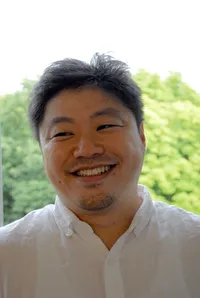
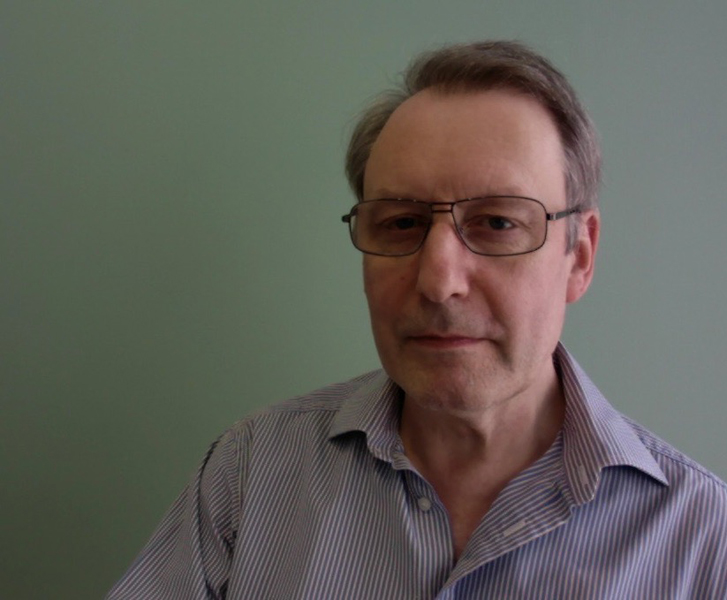
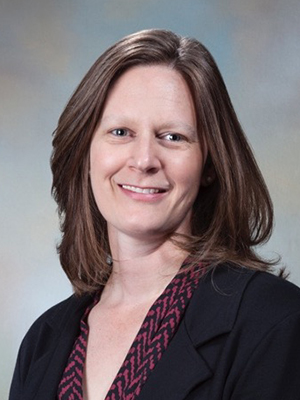
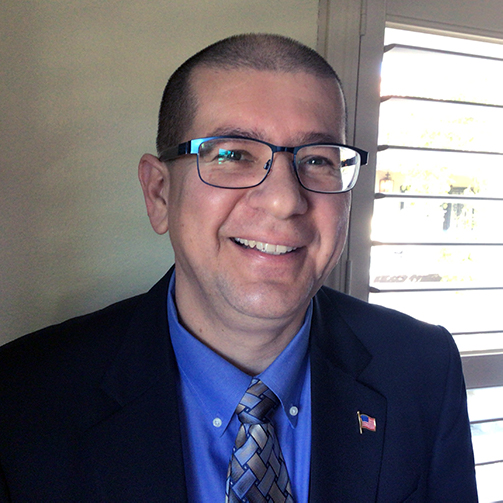
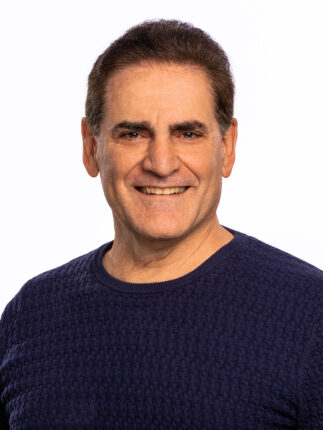
Sergiy Merenkov is a Professor in the Department of Mathematics at The City College of New York (CCNY) and a Doctoral Faculty member in the Mathematics Program at the CUNY Graduate Center. He holds offices in MR 316 at CCNY and 4213 at the Graduate Center, with phone numbers 212-650-5147 (CCNY) and 212-817-8561 (GC). His research focuses on dynamical systems, complex analysis, metric geometry, and fractal geometry. Key themes include quasisymmetric maps, conformal dynamics, hyperbolic groups, Sierpiński carpets, and Kleinian group actions. His work often bridges geometric topology, complex variables, and algebraic structures. Recent articles explore topics such as Carathéodory convergence, wandering domains in dynamical systems, and rigidity properties of fractal spaces. His research is supported by grants from the National Science Foundation (DMS-0400636, DMS-2247364, etc.). Merenkov has collaborated extensively with mathematicians like Mario Bonk, Misha Lyubich, and Oded Schramm on projects involving fractal geometry, conformal welding, and geometric group theory. His PhD thesis (Purdue University, 2003) addressed manifold classification via algebraic methods.
Dr. Thomas Sweijen is an Assistant Professor in Environmental Hydrogeology at the Department of Earth Sciences, Utrecht University . His work focuses on sustainable subsurface utilization through numerical modeling, experiments, and field testing. Key research areas include: Transport phenomena and coupled processes in porous media Reactive transport and hydromechanical coupling Pore-scale to field-scale upscaling Grouting and subsurface energy systems Recent publications highlight his interdisciplinary approach: Combining geomechanics with numerical pore-scale modeling in silicate grouting erosion studies Developing analytical methods for coastal aquifer dynamics Investigating DNAPL infiltration in heterogeneous media His methodological toolkit spans: Discrete Element Method for granular materials Multi-sphere approximation in particle modeling Field testing of subsurface systems
Dr.-Ing. Yoshiyuki Sakai is a Scientific Employee at the Department of Hydromechanics, College of Engineering, Technical University of Munich (TUM). His research focuses on wall-bounded flows, duct turbulence, coherent structures, computational fluid dynamics (CFD), and high-performance computing (HPC) applications. PhD in Fluid Mechanics (2016) from Karlsruhe Institute of Technology MSc in Computational Science and Engineering from TUM (2012) BEng in Aerospace Engineering from University of Southampton (2010) His work bridges fundamental turbulence research with environmental applications, particularly microplastic transport in aquatic systems and hyporheic exchange processes. He has contributed to advancing DNS and HPC capabilities through code optimization studies. Recent publications show strong focus on: Turbulent flow structure evolution Pore-scale and open channel flow dynamics Microplastic dispersion modeling LES-RANS hybrid methods Flow regime transitions HPC performance optimization His work combines theoretical fluid mechanics with advanced computational methods to address both engineering and environmental challenges.
Keith Martin Ball is a leading mathematician specializing in functional analysis, convex geometry, and information theory. He holds the Professorship at the University of Warwick since 2010 and previously held prominent positions at University College London, Texas A&M University, and the International Centre for Mathematical Sciences (ICMS) in Edinburgh. Alma Mater: Trinity College, Cambridge (PhD 1987 under Béla Bollobás) Key Contributions: Extension theorems for Lipschitz functions, reverse isoperimetric inequalities, Banach-Steinhaus Theorem advancements, and entropy-driven central limit theorem proofs. His research spans high-dimensional geometry, discrete geometry, and applications to information theory. He has authored the popular mathematics book Strange Curves, Counting Rabbits, & Other Mathematical Explorations . Recent Publications focus on zeta function irrationality, entropy inequalities, and geometric functional analysis, reflecting his interdisciplinary approach combining pure mathematics with probabilistic and information-theoretic methods. Scientific Honours Fellow of the Royal Society (FRS) (2013) Fellow of the American Mathematical Society (AMS Fellow) (2013) Shephard Prize (2015) Whitehead Prize (1992) Leverhulme Fellow (2003-2004) Member of Academia Europaea (2023)
Dr. Mark Watkins is an academic staff member at the University of Sydney's School of Mathematics and Statistics, affiliated with the Computational Algebra Research Group. His research focuses on Number Theory , Algebraic Geometry , and Computational Algebra , with a particular emphasis on elliptic curves, modular forms, and lattice theory. He has contributed to topics ranging from Selmer group distributions to combinatorial game theory in chess. PhD in Mathematics Member of the Computational Algebra Research Group Email: mark.watkins@sydney.edu.au Watkins' recent publications (2010–2022) explore advanced mathematical concepts such as quadratic twists of elliptic curves, spectral proofs of class numbers, and algorithmic chess strategies. His work bridges theoretical mathematics with computational tools, including contributions to the Magma software system for algebraic computations. He has no listed scientific awards but maintains active research collaborations with institutions globally. His research addresses fundamental questions in number theory and algebraic geometry, with applications to cryptography and computational methods.
Marcia Cooper is Associate Professor and Gulf Oil/Thomas A. Dietz Career Development Professor in Mechanical Engineering at Texas A&M University's College of Engineering, with affiliations in Materials Science & Engineering. She earned her Ph.D. from Caltech (2004) and researches heterogeneous materials, dynamic responses in extreme environments, and energetic materials behavior. Her work examines shock/detonation physics, high-velocity impact, and diagnostic techniques like laser velocimetry. Current projects investigate granular material compaction, polymer-particle composites, and energetic material safety. Research utilizes advanced imaging and computational modeling to understand mesoscale material behavior. Awards include SPOT Award for Leadership (2019), Employee Recognition Award (2011), and Outstanding Women at Sandia recognition (2009). No information available regarding students or grants in the provided text. Leads research on dynamic material response in the Cooper Research Group, located in the Dynamic Material Response Lab at the Turbomachinery Laboratory.
Erik Agrell is a Full Professor in Communication Systems at Chalmers University of Technology, Department of Electrical Engineering. He is a Fellow of the IEEE and co-founder of the Fiber-Optic Communications Research Center (FORCE). His research focuses on information theory, coding theory, and their applications in optical communications, aiming to enhance fiber-optic network efficiency. He also explores lattice theory and sphere packing in engineering and physics contexts. Affiliations: Chalmers University of Technology, FORCE Key Research Areas: Information Theory, Coding Theory, Optical Communications, Lattice Theory Recent work emphasizes geometric shaping in optical systems, phase noise mitigation, and machine learning integration for polarization sensing. His publications span 346 works, including studies on lattice quantizers, probabilistic shaping, and multi-core fiber transmission. Awards: IEEE Fellow Agrell advises on projects involving network optimization, resource allocation, and FPGA implementation of distribution matching. His labs focus on advancing optical communication technologies and interdisciplinary research in FORCE.
Carmelo Interlando is a Professor of Mathematics and the Associate Dean for Academic and Faculty Affairs at San Diego State University (SDSU), within the College of Sciences. He holds a B.S. in Computational and Applied Mathematics from UNICAMP (Brazil, 1990), and dual Ph.D.s in Electrical Engineering (UNICAMP, 1994) and Mathematics (University of Notre Dame, 2005). His research focuses on Applied Algebra , with specialties in Sphere Packings , Lattices , Number Fields , Algebraic Coding Theory , Modulation Schemes , and Cryptology . His work bridges algebraic number theory and coding theory, often addressing lattice constructions for applications in cryptography and signal processing. Recent publications emphasize quantum error-correcting codes, toric codes, and burst-error correction (2024), alongside advancements in cyclotomic field subfields and lattice diversity (2020–2023). His 2017–2020 papers explore lattice constructions from cyclic extensions and ramified fields, with applications to modulation and cryptographic primitives. Award recognition is not explicitly listed in the provided texts. He serves on the editorial board of the Journal of Discrete Mathematical Sciences and Cryptography and is affiliated with the American Mathematical Society. Interlando’s advising and grant activities are not detailed here, but his extensive co-authorship network suggests collaborative research in lattice-based cryptography and algebraic coding. His work often involves interdisciplinary teams at SDSU and international collaborators.
Professor Salvatore Torquato , Lewis Bernard Professor of Natural Sciences at Princeton University, leads the Complex Materials Theory Group at the Princeton Institute for the Science and Technology of Materials (PRISM). His work spans statistical mechanics, soft condensed matter theory, and interdisciplinary applications in biophysics and materials science. Research Interests: Hyperuniformity, packing problems, inverse statistical mechanics, multifunctional materials, quantum mechanics, cancer modeling, and biophysics. Scientific Awards: American Chemical Society Joel Henry Hildebrand Award (2017) Simons Foundation Fellowship (2012) Multiple Institute for Advanced Study memberships Guggenheim Fellow (1998) Publications & Collaborations: Recent work focuses on hyperuniform states across quantum systems, biological tissues, and photonic materials. His group collaborates with experimentalists in physics, applied mathematics, and mechanical engineering while developing novel theories for tumor growth and retinal cell arrangements. Contact: torquato@princeton.edu
Dr. Timothy Donohue serves as Conjoint Lecturer in the Faculty of Engineering and Built Environment at the University of Newcastle, Australia, while also holding the position of General Manager at TUNRA Bulk Solids (The University of Newcastle Research Associates Ltd). With a Doctor of Philosophy and Bachelor of Engineering (Mechanical) (Hons) from the University of Newcastle, he has built a career centered on numerical modeling for industrial problem solving, particularly in bulk materials handling. Dr. Donohue's research expertise focuses on transfer chutes, passive dust control techniques, and calibration of parameters for Discrete Element Modeling (DEM). His work combines Computational Fluid Dynamics (CFD) with DEM to reduce dust generation in material handling systems through passive means. His foundational research on permeability of packed beds and development of packing algorithms for simulating packed beds of spheres and fibrous materials has provided a strong basis for his current work in DEM and CFD applications. His research interests encompass bulk materials handling, discrete element modeling, computational fluid dynamics, dust control, transfer chute design, bin and hopper design, and bulk material stress analysis. His publication record demonstrates consistent contributions to the field of bulk solids handling, with recent work focusing on silo quaking, gate load analysis, particle degradation effects, and advanced DEM calibration techniques. His research bridges theoretical modeling with practical industrial applications, particularly in the coal and iron ore industries. Dr. Donohue has received numerous awards recognizing his contributions, including the First Prize Winner at the 2016 Unearthed Hackathon Hunter Valley, the A.W. Roberts Award for Outstanding Young Engineer in 2015, and several other prestigious honors throughout his career. With over 170 industrial projects completed since joining TUNRA Bulk Solids in 2007, Dr. Donohue has extensive experience in both conceptual design and troubleshooting existing systems. He has supervised PhD, Master's, and Final Year Project students at the University of Newcastle and has been involved in lecturing and tutoring undergraduate courses. Additionally, he has delivered approximately 20 industry short courses since 2009, ranging from 1 to 5 days in length.
Associate Professor Runyu Yang is a faculty member at the School of Materials Science & Engineering, University of New South Wales (UNSW), where he has served since 2003. His academic progression at UNSW includes positions as ARC-CSIRO Postdoctoral Fellow (2003-2006), Lecturer (2006-2008), Senior Lecturer (2008-2011), and Associate Professor (2012-present). His research focuses on particle/powder science and technology, with particular expertise in numerical modeling of particulate systems. Dr. Yang's research interests center on discrete element method (DEM) modeling, granular flow dynamics, particle packing, and multi-phase flow systems. His work has significantly advanced understanding in powder dispersion mechanisms, particularly in pharmaceutical applications such as dry powder inhalers. He has developed improved DEM models by incorporating rolling friction and van der Waals forces, and demonstrated that the loosest state of mechanically stable random packings does not exist—a finding published in Physical Review Letters. His research spans both fundamental particle science and practical applications in pharmaceuticals, mineral processing, and energy systems. Analysis of Dr. Yang's recent publications (2023-2025) reveals a strong focus on computational modeling of particulate systems across diverse applications. His work demonstrates a clear trajectory toward increasingly sophisticated multi-physics approaches, combining DEM with CFD, VOF, and GPU acceleration techniques. The research spans pharmaceutical aerosols (particularly dry powder inhalers), mineral processing (HPGR and SAG mills), metallurgical applications (blast furnace slag), and fundamental particle science. This interdisciplinary approach connects fundamental particle physics with practical engineering applications across multiple industries. Dr. Yang has published over 60 high-quality, peer-reviewed journal and conference papers in prestigious journals including Physical Review Letters/E, Journal of Applied Physics, Journal of Colloid and Interface Science, and AIChE Journal. His work has been cited over 460 times with an h-index of 12, reflecting significant impact in his field. Dr. Yang has attracted more than $1 million in research funding from the Australian Research Council (ARC), CSIRO, and industry partners. He is currently supervising 1 postdoctoral fellow and 6 postgraduate students. His teaching contributions include courses on Material Balance and Heat Transfer, Heat, Fluid and Mass Flow, Modelling in Material Engineering, and Pollution Control in Materials Processing.
Chu Min LI is a University Professor at the University of Picardy Jules Verne (UPJV), working in the Modélisation, Information et Systèmes (MIS) laboratory (UR UPJV 4290). Their research focuses on Optimization, Cryptography, and Artificial Intelligence, with particular expertise in MaxSAT (Maximum Satisfiability), Constraint Programming, and Combinatorial Optimization. Professor LI's research spans theoretical and applied computational problem solving. Key research areas include: MaxSAT and MinSAT solving techniques Constraint programming and satisfaction Combinatorial optimization algorithms Geometric packing problems AI-driven optimization methods Theoretical foundations of satisfiability Analysis of Professor LI's publications from 2023-2025 reveals a strong focus on advancing MaxSAT solving techniques with diverse applications including conference scheduling, assembly line balancing, and geometric packing problems. Their work consistently bridges theoretical insights with practical algorithmic improvements, demonstrating both depth in theoretical understanding and relevance to real-world problems across multiple domains. Professor LI has received significant recognition for their contributions, including a Best Paper Award at CP 2021 (27th International Conference on Principles and Practice of Constraint Programming). Professor LI leads substantial research projects including 'BforSAT' (Branching for SAT and beyond) and 'Massal'IA' (Propositional reasoning for large-scale optimization), indicating significant research funding and leadership. Their extensive collaborative network includes researchers such as Felip Manyà, Kun He, Jiongzhi Zheng, and Sami Cherif, suggesting an active research group and international connections.
Sarah Kostinski is an Assistant Professor in the Department of Physics at New York University, specializing in theoretical soft condensed matter and biological physics. Education : B.S. in Physics and Music from University of Michigan–Ann Arbor; Ph.D. in Physics from Harvard University. Previous Appointments : Postdoctoral researcher at Tel Aviv University and Kavli Institute for Theoretical Physics, UC Santa Barbara. Her research explores the intersection of theoretical physics and biology, focusing on: Quantitative relationships between molecular composition and growth rates in unicellular organisms like E. coli and S. cerevisiae . Theoretical frameworks for intracellular kinetics and non-equilibrium systems. Applications of stochastic processes and random walks to cellular dynamics. Soft matter physics and its implications for biological systems. Computational modeling of biophysical phenomena. Statistical mechanics approaches to cellular optimization. Her recent publications highlight trends in theoretical physics, with a focus on stochastic dynamics, computational biology, and soft matter systems. She is affiliated with NYU's Center for Soft Matter Research , contributing to interdisciplinary studies of biological and soft condensed matter physics.
Dr. Frank Smallenburg is a Researcher at the Debye Institute for Nanomaterials Science within the Faculty of Science at Utrecht University . His research focuses on Soft Condensed Matter , particularly in computational studies of colloidal systems, quasicrystals, and phase transitions. Department: Department of Physics Email: f.smallenburg@uu.nl Research Interests include: Self-assembly of colloidal particles Thermodynamics of quasicrystals Machine learning in materials science Defect analysis in crystal structures Simulation techniques for glassy dynamics Recent Publications span computational physics, soft matter, and materials science, emphasizing: Machine learning for many-body interactions Defect-stabilized soft-matter quasicrystals Statistical mechanics of crystal nuclei Entropy-driven colloidal cluster formation Event-driven simulations for phase transitions
Michael Godfrey serves as a Lecturer in the Department of Physics and Astronomy, focusing on theoretical physics research. His primary affiliation is with the Theoretical Physics Research Group where he investigates complex quantum and condensed matter systems. His research spans semiconductor theory including carrier dynamics in quantum wells and dots, many-body effects in dense carrier gases, and quantum transport phenomena. Key interests involve phase coherence loss mechanisms, thermionic emission processes, and k·p approximations for semiconductor heterostructures. He also explores the quantum theory of mechanical systems with holonomic and nonholonomic constraints. Analysis of his publication trends reveals strong focus on glass transitions , jammed states , and amorphous systems through statistical mechanics approaches. His recent work connects semiconductor physics with fundamental condensed matter questions about length scales, correlation phenomena, and dynamical heterogeneity in confined systems. Dr. Godfrey has supervised postgraduate research as indicated by his supervised work record. His research output demonstrates consistent contributions to top physics journals including Physical Review Letters and Journal of Statistical Mechanics. His laboratory work involves theoretical modeling of quantum systems using non-equilibrium Green's function methods, density-matrix techniques, and computational simulations of hard-sphere packings and confined fluids.