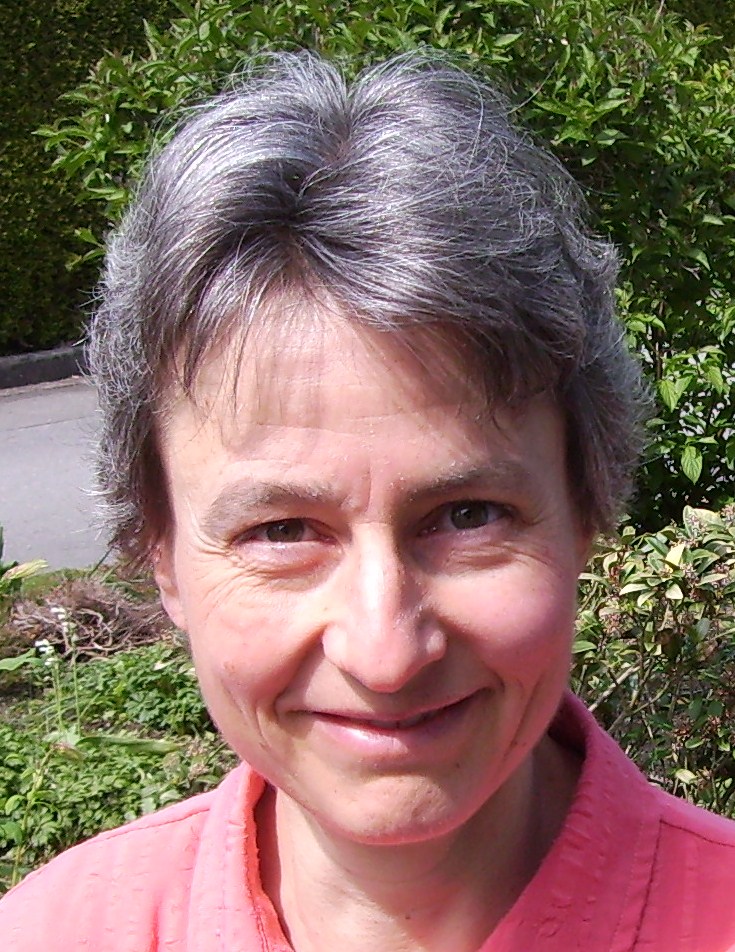
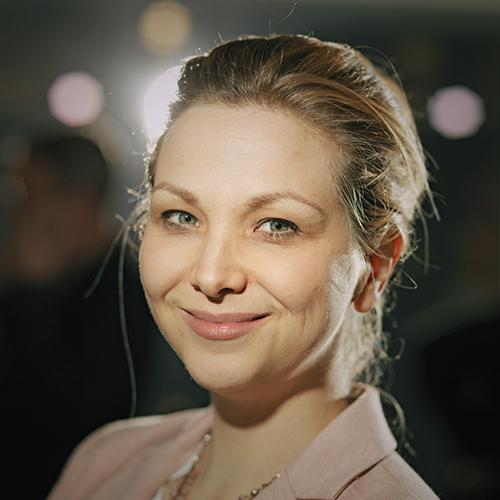
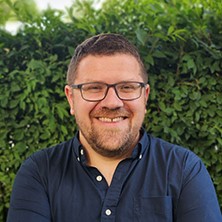
Prof. Dr. Gabriele Nebe is a Professor at the Chair of Algebra and Number Theory at RWTH Aachen University , where she has worked since 2004. Her research spans lattices, coding theory, modular forms, and finite groups . Current research areas include integer representations of finite groups, spherical designs, and their parallels in coding theory. She co-edits the Archive of Mathematics and leads the Graduate School Experimental and Constructive Algebra (2010-2019). Her work includes constructing extremal lattices, studying Hecke operators, and classifying quaternionic matrix groups. Scientific Awards : Borchers Plaque (RWTH Aachen) Friedrich Wilhelm Prize Merckle Research Prize (2002) She supervises PhD and Master’s students and collaborates on databases for unit groups of orders and MAGMA code for lattice constructions.
Wesley Burghardt serves as Associate Dean of Undergraduate Engineering and Professor of Chemical and Biological Engineering at Northwestern University's McCormick School of Engineering. Appointed in 1990, he previously chaired the Department of Chemical and Biological Engineering and oversees curriculum development, professional growth, and personal development initiatives for engineering undergraduates. His academic credentials include: Ph.D. in Chemical Engineering from Stanford University M.S. in Chemical Engineering from the University of Illinois B.S. in Chemical Engineering from the University of Illinois Burghardt's research pioneers optical and X-ray scattering methodologies to investigate complex fluid dynamics during polymer flow. Key focus areas encompass: Microstructure evolution in block copolymer gels under deformation Flow-induced crystallization mechanisms in polymers Rheological behavior of physically associating networks Nanocomposite orientation dynamics under shear In-situ structural characterization using synchrotron techniques Analysis of his 2018-2023 publications reveals dominant emphasis on Rheo-SAXS for capturing transient microstructure in deforming soft materials. His work systematically explores strain-temperature interdependencies in triblock gels, sphere-forming copolymer alignment mechanisms, and molecular origins of extensional strain hardening. Recent studies increasingly bridge polymer physics with biomedical applications through hydrogel research for 3D bioprinting and tissue engineering. No scientific awards were documented in the source materials. No student advising records or grant funding details were provided in the available content. His experimental program operates through a specialized laboratory focused on polymer rheology and advanced scattering techniques, supporting investigations into structure-property relationships in soft matter systems.
Daniel C. Fredrickson is a Professor of Chemistry at the University of Wisconsin–Madison, where he leads the Fredrickson Group in the Department of Chemistry. His research program integrates solid-state synthesis, advanced crystallography, and quantum-mechanical theory to uncover the chemical principles governing the complex structures of intermetallic compounds and to exploit these principles for the design of energy-relevant materials. Education B.S. 2000, University of Washington Ph.D. 2005, Cornell University Postdoctoral Associate 2005–2008, Stockholm University Research Focus The Fredrickson group explores the intersection of solid-state chemistry, crystallography and chemical bonding theory . Core themes include: • Chemical Pressure Analysis : quantifying steric and electronic influences on intermetallic structures. • Structure–Property Engineering : using structural diversity to tune superconductivity, thermoelectricity and catalysis. • Quasicrystals & Complexity : deciphering long-period superstructures and incommensurate order. • Data-Driven Discovery : machine-learning approaches to accelerate materials discovery. Methodologically, the group couples density-functional theory (DFT) and extended Hückel calculations with high-temperature synthesis, single-crystal X-ray diffraction and custom open-source software (DFT Chemical Pressure, eHtuner, DFT-raMO). Selected Scientific Impact Between 2012 and 2023 the group published more than fifteen high-profile articles that collectively advance (i) theoretical frameworks for chemical pressure, (ii) predictive rules for electron counting in transition-metal intermetallics, and (iii) machine-learning models for navigating structural complexity. Studies range from fundamental analyses of NaCd 2 and YbCd 5.7 to applied investigations of Nb 3 Ge superconductors. Awards & Recognition No specific external awards are listed in the provided text; emphasis is placed on sustained publication record and leadership in the solid-state chemistry community. Students & Mentoring Recent Ph.D. graduates under his supervision include: Kyana Sanders (2023) Jonathan Van Buskirk (2023) Amber Lim (2023) Undergraduate alumnus Joe Kraus continued to MIT for doctoral studies. Laboratories & Facilities The group operates four integrated labs: Glove Box Lab: three inert-atmosphere glove boxes with arc-melter, pellet press and optical microscope. Furnace Lab: ten high-temperature furnaces (900–1800 °C) for annealing and flux synthesis. X-ray Crystallography Lab: dedicated single-crystal diffractometer for rapid structure solution. Library and Theory Lab: high-performance computing cluster (dual Xeon workstations + 60 parallel cores) for DFT and Hückel calculations.
Károly Bezdek is a Professor in the Department of Mathematics at the University of Calgary. His office is located at Building I, Room 305, 8200 Veszprém, Egyetem str 10, and he can be contacted via bezdek@math.ucalgary.ca. His research spans foundational areas of mathematics with emphasis on geometric structures and combinatorial methods. Key interests include the study of convex bodies, sphere packings, and discrete optimization problems, where he applies rigorous analytical frameworks to solve complex spatial configurations.
Chris Stone is a Professor specializing in formal methods and the intersection of natural language processing with mathematical proofs. He co-directs the Math+CS Clinic Program at his institution alongside Prof. Talithia Williams (Math) and Prof. Ben Wiedermann (CS). His research focuses on improving the readability and accessibility of computer-verified proofs, analyzing language patterns in academic mathematical proofs, and developing tools like the ProofLang Corpus. He collaborates extensively with undergraduate researchers and has contributed to foundational work in proof assistants such as Coq and Andromeda. His work bridges theoretical computer science and practical applications, including tools like RZ for computable mathematics and studies in multithreading performance optimization. He explores how imperative language structures in proofs affect formal verification systems, retraining NLP models to better parse mathematical texts. Key contributions include analyzing over 3.7M proofs from arXiv.org to identify linguistic patterns and collocations, discovering that phrases like 'without loss of generality' exhibit predictable syntactic structures. His projects also span curriculum analysis (CS Curricula: https://cscurricula.fyi) and explorations of non-classical logics. Labs/Teams: Principal investigator of the ProofLang Corpus project and core member of the Math+CS Clinic program. Current research directions include making proof assistants more user-friendly for mathematicians and improving cross-disciplinary collaboration through language-aware verification systems.
Payman Jalali is an Associate Professor at the LUT School of Energy Systems, LUT University. His research focuses on fluid dynamics, granular materials, computational fluid dynamics (CFD), heat transfer, and multiphase flows. He has contributed to studies on energy systems, biomaterials, and biomedical engineering applications. His work integrates numerical methods such as the lattice Boltzmann method and discrete element method (DEM) to analyze complex phenomena like granular shock waves, conjugate heat transfer, and fluid-particle interactions. Key research areas include direct air capture systems, granular media failure mechanisms, and turbulence modeling in multiphase flows. His publications span from 2000 to 2025, with recent emphasis on CFD applications in energy systems and biomedical contexts. Notable contributions address challenges in fluid power systems, porous media behavior, and arterial blood flow dynamics. His academic contributions include over 50 peer-reviewed articles, covering topics from granular shear flows to cardiovascular modeling. Collaborative work bridges engineering and biomedical disciplines, reflecting his interdisciplinary approach to solving complex physical and biological systems.
Christoph Veyhl is a Professor at the University of Applied Sciences Mannheim, College of Engineering, Department of Mechanical Engineering. He specializes in materials science and mechanical engineering with a focus on cellular metals, finite element analysis, and industrial computed tomography. Research Interests: His work explores the mechanical and thermal properties of sintered metallic structures, additive manufacturing, and 3D printing technologies. Utilizing micro-computed tomography and advanced numerical simulations, he investigates anisotropy, strain rate sensitivity, and thermal conductivity in cellular materials like metallic foams and hollow sphere structures. Publications: With 14 publications and 422 citations, his research spans topics from scan quality estimation in industrial CT using neural networks to mechanical testing of diffusion-bonded hollow spheres. Key methodologies include finite element analysis and lattice Monte Carlo simulations. Contact: Email: c.veyhl@hs-mannheim.de | Phone: +49 621 292 6154 | Office: Building L, Room 252
Markus Faulhuber is a Senior Lecturer at the Faculty of Mathematics, specializing in harmonic analysis, Gabor frames, and lattice optimization. His research intersects mathematical physics, operator theory, and signal processing, with a focus on frame sets, theta functions, and Gaussian distributions. Active in time-frequency analysis and lattice energy minimization Recipient of the Doc Award (2018) and Best Poster Award (2024) Currently leading projects on universal optimality of the hexagonal lattice (2020–2022) and quantum paving (2025) His recent work explores the frame properties of Hermite functions, spectral bounds of self-adjoint operators, and the interplay between sphere packings and Gabor systems. Key subfields include extremal theta functions, variational principles, and quantum harmonic analysis. Notable scientific awards include the Doc Award for excellence in academic research (2018) and Best Poster Award (2024). He has contributed to 45 activities, including organizing the ESI Workshop on Quantum Harmonic Analysis (2025) and presenting on Gabor analysis (2024).
Richard B. Stephens is an Adjunct Professor in the Department of Physics and Astronomy at the University of Pennsylvania's School of Arts & Sciences. His research focuses on disordered solids, low-energy excitations in amorphous materials, and plasma physics applications in inertial confinement fusion. He has contributed to experimental and theoretical studies of laser-generated hot electrons, cone-guided fast ignition systems, and x-ray diagnostic techniques. Education: PhD in Solid State Physics from Cornell University (1974), M.S. in Physics (1968), and A.B. in Physics (Magna Cum Laude, Honors) from the University of Pennsylvania (both 1968). Research interests include simulating zero-energy states in disordered materials, studying a-Se glass dynamics, and advancing experimental setups for mapping state densities. His theoretical work bridges packed sphere simulations with physical systems. He collaborates with institutions like the Naval Research Laboratory and has served as Chair of the DOE HEDLP RENEW program. Publications span plasma physics, condensed matter, and optics, with recent work addressing hot electron divergence in cone geometries and fusion target implosion dynamics. His earlier research includes surface plasmon phenomena and stress effects on amorphous materials.
Dr. Scott Sulway serves as a Senior Lecturer in the School of Chemistry within the Faculty of Science at the University of New South Wales (UNSW), where he has established a dual research profile since joining in 2014. Originally from Northern England, he transitioned from a postdoctoral position to become an education-focused academic while maintaining active chemistry research, contributing significantly to both molecular magnetism and chemical education innovation. His educational qualifications include: Master of Chemistry with Honours from The University of Manchester (2008) Doctor of Philosophy from The University of Manchester (2012) Post Graduate Certificate in Education (Chemistry) from Manchester Metropolitan University (2013) Dr. Sulway's research program centers on single-molecule magnets, with particular emphasis on Organo-Lanthanide Complexes and strategies to increase their operating temperatures through molecular engineering. His parallel expertise in Chemical Education drives his investigation into digital learning technologies, focusing on how technological interventions can transform student engagement and outcomes in chemistry education. This dual focus creates unique synergies between fundamental materials research and pedagogical innovation. Analysis of his 15 most recent publications (2010-2025) reveals consistent output in high-impact journals, with recent work (2023-2025) showing intensified focus on lanthanide-based single-ion magnets, nanoparticle applications for imaging, and advanced ligand systems. The publications span materials chemistry, molecular magnetism, and educational technology, demonstrating his ability to bridge fundamental research with practical teaching applications. His recognition includes: Vice Chancellor's Award for Teaching Excellence (UNSW, 2015) Dr. Sulway actively contributes to educational advancement through initiatives like his 2018 conference presentation on digital assessment at the UNSW Learning and Teaching Forum, where he collaborated with colleagues to develop student-oriented educational practices that empower learners while supporting instructors. His work exemplifies the integration of cutting-edge research with transformative teaching methodologies in modern academic practice.
Dmitriy Bilyk is a Professor in the School of Mathematics at the University of Minnesota, based in Vincent Hall. His research explores harmonic analysis, functional analysis, and discrepancy theory, with applications to geometric inequalities and optimization problems on spheres. Research focuses on: Energy minimization and measure discreteness on spheres Discrepancy theory in arbitrary dimensions Geometric inequalities and spherical optimization Publications address mathematical structures in discrepancy theory, energy optimization, and geometric inequalities, with recent emphasis on sphere packing and measure theory applications. No awards are documented in the provided text. Research is supported by NSF grants and the Simons Foundation Collaboration Grant.
Monika Ciernia Sorondo is a University Professor for Media Music at the Faculty of Music, JAM MUSIC LAB Private University for Jazz and Popular Music Vienna. She serves as Dean of Studies and Head of Wind Instruments at JAM since 2018. Additionally, she is a lecturer at the Friedrich Gulda School of Music. Currently on maternity leave, Professor Sorondo maintains an active presence in both academic and artistic spheres as a saxophonist, composer, and producer specializing in jazz, funk, fusion, soul, lounge, pop, and classical music. Educational Background: PhD studies on "Development and Management of Music Schools" at University of Music and Performing Arts, Vienna Mag.art. in Media composition from MDW Vienna (2015) Mag.art. in IGP Popular Music Saxophone from MDW Vienna Diploma in Jazz saxophone from University of Music Munich Professor Sorondo's research interests span media music composition, cultural management, and music education administration. Her scholarly work focuses on the development and management of music schools, with particular attention to organizational structures and educational methodologies in music institutions. She also investigates the integration of jazz within orchestral contexts and analyzes film music composition techniques, particularly examining John Williams' work on the Harry Potter series. Her artistic research explores electronic music production and the fusion of world music elements with contemporary jazz and popular music forms. Professor Sorondo's publications demonstrate a consistent focus on bridging academic music theory with practical artistic application. Her work spans film scoring, electronic music production, and the analysis of musical traditions from diverse cultures including Polish folk influences on Chopin and Algerian musical elements. She shows particular interest in how traditional musical forms can be adapted to contemporary contexts while maintaining cultural authenticity. Professional Experience: Lecturer at JAM MUSIC LAB and Friedrich Gulda School of Music since 2016 Dean of Studies and Head of Wind Instruments at JAM since 2018 Lecturer at Vienna Conservatory, Division Pop (2012-2016) Teacher at Musikschule Ohrwurm/Jazzschool, Munich (2005-2006) Managing director of the artist agency "ArtSonic" since 2015 Editor and author at Bayerischer Rundfunk (2005-2006) Assistant Booker at NuCoast Entertainment (2012) Professor Sorondo leads several artistic projects including The Cat Pack (Jazz & Kabaret), Melotronic (Electronic), Funky Ladies (Pop), Saxophisticated (Saxophone quartet), and various chamber ensembles. She has collaborated with notable artists including Erwin Schrott, Stefanie Werger, Wolfgang Ambros, and the BR Rundfunkorchester, contributing compositions and arrangements for film, television, and live performance.
Peter Morse is an Assistant Professor of Physics at Seton Hall University's Department of Physics. He joined the faculty in 2024 after completing postdoctoral research at Syracuse University, Duke University, and Princeton University. His research focuses on computational and theoretical soft matter physics, particularly the interplay between geometry, dynamics, and thermodynamics in disordered systems. Education: PhD in Physics from the University of Oregon (2016), MS in Physics from the University of Oregon (2010), and dual BS degrees in Applied and Computational Mathematical Sciences and Physics from the University of Washington (2008). Research interests include glass and jamming transitions, hyperuniformity, packing problems, and the development of computational tools for high-performance simulations. His lab emphasizes Python and C++ programming, with a focus on optimizing algorithms for studying material memory and rheology. Recent work highlights the dynamics of glass formers, hyperuniform point patterns, and computational modeling of soft matter systems. Articles frequently explore structural dynamics in high dimensions and the interplay between geometry and material properties. Students in his lab gain expertise in HPC cluster usage and algorithm development for analyzing disordered systems. Current projects include optimizing code for stealthy hyperuniform systems and studying jamming transitions in minimally structured glass formers.
Diogo Oliveira e Silva is an Associate Professor at the Department of Mathematics, Instituto Superior Técnico (Lisbon, Portugal), and an Honorary Senior Research Fellow at the University of Birmingham (UK). He obtained his PhD from UC Berkeley in 2012 under Michael Christ and completed his Habilitation at Universität Bonn in 2017. Previously, he held positions as Associate Professor at Birmingham and Assistant Professor at Bonn. His research centers on mathematical analysis, with emphasis on: Harmonic analysis techniques (sharp inequalities, oscillatory integrals) Fourier restriction theory and uncertainty principles Sphere packing problems and nonlinear Fourier analysis His publications reflect interdisciplinary work connecting harmonic analysis with geometry, mathematical physics, and information theory, featuring recent explorations of sphere packings in higher dimensions and Fourier-analytic foundations of signal processing. Research funding has been provided by: AIM (American Institute of Mathematics) FCT (Portuguese Science Foundation) EPSRC (UK Engineering and Physical Sciences Research Council) DFG (German Research Foundation) NSF (US National Science Foundation)
Sergiy Merenkov is a Professor in the Department of Mathematics at The City College of New York (CCNY) and a Doctoral Faculty member in the Mathematics Program at the CUNY Graduate Center. He holds offices in MR 316 at CCNY and 4213 at the Graduate Center, with phone numbers 212-650-5147 (CCNY) and 212-817-8561 (GC). His research focuses on dynamical systems, complex analysis, metric geometry, and fractal geometry. Key themes include quasisymmetric maps, conformal dynamics, hyperbolic groups, Sierpiński carpets, and Kleinian group actions. His work often bridges geometric topology, complex variables, and algebraic structures. Recent articles explore topics such as Carathéodory convergence, wandering domains in dynamical systems, and rigidity properties of fractal spaces. His research is supported by grants from the National Science Foundation (DMS-0400636, DMS-2247364, etc.). Merenkov has collaborated extensively with mathematicians like Mario Bonk, Misha Lyubich, and Oded Schramm on projects involving fractal geometry, conformal welding, and geometric group theory. His PhD thesis (Purdue University, 2003) addressed manifold classification via algebraic methods.