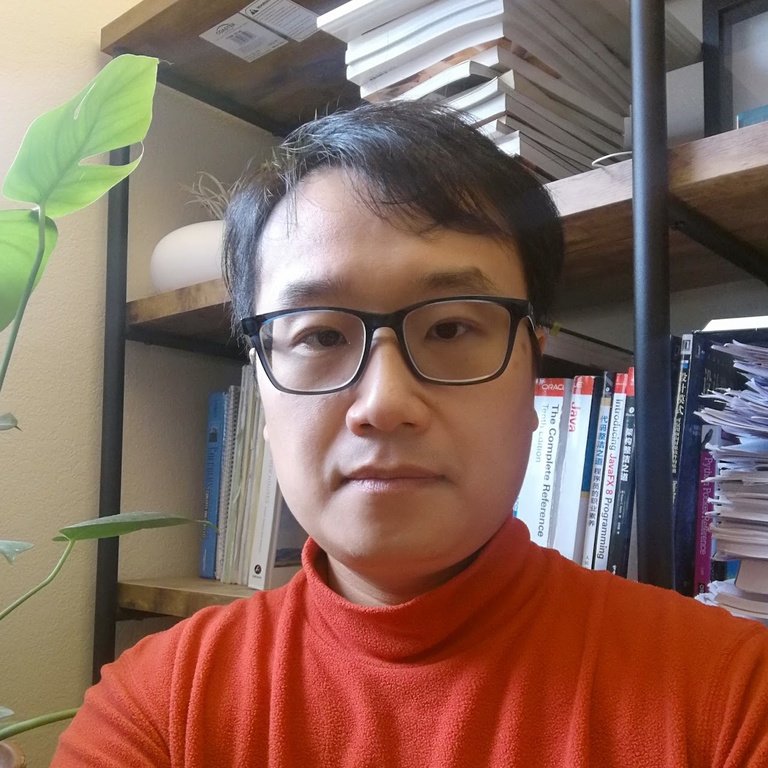
Ben Eischens is an Assistant Professor in the Department of Linguistics at UCLA. His work focuses on the intersection of phonology and phonetics, particularly in San Martín Peras Mixtec, an Otomanguean language spoken in Oaxaca, Mexico and diaspora communities. He holds a Ph.D. from UC Santa Cruz (2022) and collaborates extensively with Indigenous communities on language documentation and description. His research explores tone systems, laryngeal features, speech rate effects, and negative nominal structures, emphasizing empirical fieldwork and community partnerships. Recent work includes studies on vowel reduction, polar question formation, and the phonetic grounding of phonological theories. Eischens has presented at major conferences such as the International Congress of Phonetic Sciences (ICPhS), Annual Meeting on Phonology (AMP), and workshops on Languages of the Americas. His publications appear in journals like the International Journal of American Linguistics and Phonological Data & Analysis. He teaches courses in linguistic theory and field methods at UCLA, maintaining active research partnerships with San Martín Peras Mixtec community members. His work bridges theoretical linguistics with applied documentation, prioritizing Indigenous language revitalization efforts.
Raquel Fernández is Full Professor of Computational Linguistics and Dialogue Systems at the University of Amsterdam, where she leads the Dialogue Modelling Group at the Institute for Logic, Language & Computation (ILLC). As Vice-Director for Research at ILLC and a Fellow of the ELLIS Society, she bridges computational linguistics, cognitive science, and artificial intelligence through her research on language use in multimodal and conversational contexts. PhD in Computational Linguistics from King's College London Prior research positions at University of Potsdam and Stanford University's CSLI Her work explores how cognitive constraints, social interaction, and perception shape language use, with a focus on: Visually-grounded language processing Multimodal dialogue modeling Model uncertainty and calibration Language grounding in multimodal data Language learning and semantic change Dialogue reference resolution Recent publications analyze multimodal reasoning limitations, cross-lingual knowledge consistency, and uncertainty modeling in dialogue systems. She has received multiple accolades including an ERC Consolidator Grant , NWO VENI/VIDI/Aspasia fellowships , and EMNLP/GenBench awards . Outstanding Paper Award (EMNLP 2023) Best Data Award (GenBench Workshop 2023) ELLIS Society Fellow ERC Consolidator Grant #819455 recipient NWO VENI/VIDI/Aspasia awardee As a leader in academic service, she serves on the SIGDAT Executive Committee and chairs multiple conference committees. Her lab develops models for multimodal dialogue, visual storytelling, and grounded language understanding.
Georgia Zellou is an Associate Professor in the Department of Linguistics at the University of California, Davis, where she co-directs the Phonetics Lab and conducts award-winning research at the intersection of phonetics, speech perception, and human-AI interaction. Her work investigates how phonetic detail is cognitively represented through variations in speech production, with significant contributions to understanding speech alignment with voice assistants, face-masked speech intelligibility, and cross-linguistic perception of synthetic voices. Her academic credentials include a Ph.D. in Linguistics from the University of Colorado at Boulder (2012), an M.A. in Linguistics from Stony Brook University (2007), and a B.A. in Linguistics & Anthropology from the University of Florida (2005, Cum Laude, Phi Beta Kappa). Ph.D., Linguistics, University of Colorado at Boulder (2012) M.A., Linguistics, Stony Brook University (2007) B.A., Linguistics & Anthropology, University of Florida (2005) Professor Zellou's research program centers on laboratory phonology approaches to real-world communication challenges, examining how acoustic-phonetic details influence speech perception across contexts. Her studies span speech alignment with voice-AI systems (e.g., Amazon Alexa), sociophonetic variation in bilingual speech, and the cognitive mechanisms underlying perceptual compensation for coarticulation. She employs experimental methods including eye-tracking, acoustic analysis, and perceptual testing to uncover how phonetic variation functions pragmatically in human communication and human-machine interaction. Analysis of her 15 most recent publications (2023-2025) reveals three dominant research trajectories: (1) human-AI voice interaction dynamics, including prosodic alignment and social evaluation of TTS voices; (2) intelligibility optimization in challenging contexts (face masks, clear speech for diverse listeners); and (3) cross-linguistic phonetic variation in vowelless words and consonant clusters. These works consistently bridge theoretical phonology with applied speech technology, demonstrating how fine-grained phonetic detail influences communication effectiveness in both human-human and human-machine contexts. Her scientific recognition includes: Fulbright Scholar (2022) for research in France Chancellor’s Award for Excellence in Undergraduate Mentoring (2019) Fellow of the Linguistic Society of America (2020) Amazon Faculty Research Award (2019) for Alexa-related speech studies Dean’s Fellow designation at UC Davis (2020-2023) Professor Zellou maintains an active mentoring practice recognized with the Chancellor’s Award, supervising undergraduate researchers in the Phonetics Lab while teaching core linguistics courses from introductory to advanced graduate levels. Her research program is supported by competitive grants including NSF funding, Amazon Research Awards, and UC Davis internal grants (Hellman Foundation, ISS Junior Faculty Grant), reflecting the translational value of her work for speech technology development. She has co-directed major initiatives including the 2019 LSA Linguistic Institute. The Phonetics Lab she co-leads serves as a hub for experimental phonetics research, focusing on speech production-perception relationships through projects investigating vocal accommodation to voice assistants, nasal coarticulation dynamics, and cross-linguistic prosody. Current collaborations with industry partners aim to implement human speech adaptation principles into voice assistant design to enhance naturalness and engagement.
Mattias Heldner is Professor of Phonetics and Head of Department at the Department of Linguistics, Stockholm University. He also serves as Director of the Phonetics Laboratory where he has developed advanced recording facilities for breathing movements and voice quality dynamics in conversation. Dr. Heldner received his PhD in Phonetics from Umeå University in 2002, completed a postdoc at TeliaSonera Sweden in 2005, became Docent in Speech Communication at KTH Royal Institute of Technology in 2007, and was appointed Professor in Phonetics at Stockholm University in 2011. His research focuses on communicative behavior relevant for turn-taking in conversation and signaling of prosodic functions such as prominence and boundaries. His work spans multiple dimensions of speech communication, including: Respiratory patterns and their role in conversation flow Voice quality dynamics as turn-taking cues Prosodic functions in spontaneous speech Physiological constraints in verbal communication Acoustic properties of child speech development Neural correlates of lexical stress Dr. Heldner's recent publications demonstrate how respiratory signals provide crucial information for predicting speech activity and managing turn-taking. His research combines physiological measurements with acoustic analysis to uncover hidden aspects of conversational organization, particularly the relationship between breathing patterns and speech timing. As an educator, Dr. Heldner has taught phonetics courses for Speech and Language Pathology students at Karolinska Institutet, University of Gothenburg, and Umeå University. He currently supervises one PhD student and has successfully supervised two PhD theses to completion. Dr. Heldner has held several Swedish research grants and served as one of the Technical Program Chairs for Interspeech 2017 in Stockholm. His Phonetics Laboratory has developed innovative systems like RespTrack for measuring respiratory movements during speech with high experimental control.
Prof. Dr. Pia Knoeferle is a leading academic at Humboldt-Universität zu Berlin , where she serves as a Professor in the Department of German Language and Linguistics . She is a principal investigator in the Collaborative Research Center (CRC 1412) focused on register phenomena and leads the Reaction Time, Eye-tracking, and EEG Laboratories . Her research spans psycholinguistics , cognitive neuroscience , and computational modeling of language , with a central interest in how real-time language comprehension interacts with social context , formality-register congruence , and morphosyntactic processing . Appointments: Professor at Humboldt-Universität (2024), CRC 1412 member Methodologies: Eye-tracking, EEG, Visual World Paradigm, ERP Her work investigates lifespan language processing (children, adults, older adults) through contextual cue integration , including emotional , spatial , and social context such as gender cues , eye gaze , and facial expressions . Key questions include: How do pragmatic and contextual factors modulate lexical and grammatical processing ? What representations underlie register sensitivity in spoken and written comprehension ? Recent articles (2022-2024) focus on register congruence effects in German sentence processing, age-related differences in formality-register anticipation , and interactions between register and morphosyntactic knowledge . Using eye-tracking and visual world paradigms , her team examines incremental integration of socially-situated context with verb-argument relations and grammatical constraints . Findings suggest subtle late-stage register effects and interference between pragmatic and syntactic processing . Her lab collaborates with researchers like Katja Maquate , Valentina Nicole Pescuma , and Camilo Ronderos , contributing to the Frame text of the Second Phase Proposal for CRC 1412 (2020) and subsequent reviews in Frontiers in Psychology (2023). The work emphasizes complementary methods to model register variability across languages , modalities , and cultural contexts .
Dr. Stefanie Jannedy is a senior researcher at the Leibniz-Zentrum Allgemeine Sprachwissenschaft (ZAS) in Berlin, where she has been employed since 2008. She is a Principal Investigator of the DFG project C02 "Variation in Situated Interaction" within the Collaborative Research Center 1412 (CRC 1412) on "Register: Language-Users' Knowledge of Situational-Functional Variation." As a member of the Laboratory Phonology Group, her work focuses on sociophonetic aspects of language variation. Dr. Jannedy's research centers on language register, phonetic variation, and sociolinguistic patterns in speech. Her work particularly examines how situational contexts influence phonetic detail in speech production, with a focus on intra-individual variation. She has developed innovative experimental methods, including smartphone applications like "Plapper" for self-recording speech data in controlled conditions. Her research spans formal and informal speech contexts, examining speech rate, vowel dispersion, filler particles, and other phonetic features that vary systematically across different communicative situations. Analysis of her publication record shows a strong focus on register variation, particularly how speakers systematically adjust their speech across different social contexts. Her work combines experimental methods with corpus-based approaches to investigate fine phonetic detail in relation to situational factors. Recent publications demonstrate increasing interdisciplinary connections between phonetics, sociolinguistics, and cognitive science in understanding register knowledge. Dr. Jannedy has advised several students including Schüppenhauer, Gediminas, Witt, Johannes, and Hong, Nhung-Le. Her research is primarily supported through the CRC 1412 framework, which represents a major collaborative effort in register studies. Her laboratory work involves experimental setups that simulate tele-conference interactions to systematically manipulate social contexts while measuring subtle phonetic differences. This methodological innovation allows for controlled examination of register variation that would be difficult to capture in naturalistic settings.
Prof. Dr. Angelika Braun is a full Professor of Phonetics at the University of Trier since October 2009, with a career spanning forensic phonetics, sociophonetics, and cross-cultural speech analysis. She previously held roles at the Bundeskriminalamt (Wiesbaden/Düsseldorf) and Philipps-Universität Marburg, where she habilitated in Phonetics and Speech Processing (2000). Her work bridges academic research with forensic practice. Research Focus: Her Sociophonetics (language and emotions, gender-specific speech) Forensic Phonetics (speaker identification, voice analysis) Contrastive and Hawaiian Phonetics Speech prosody and toxin effects (smoking, alcohol) Intercultural dubbing studies Academic Contributions: Over 15 recent articles explore voice quality, emotional speech, forensic age estimation, and cross-cultural dubbing effects. Key conferences include Interspeech, International Congress of Phonetic Sciences, and ISCA. Her work appears in journals like Forensic Linguistics and The Phonetician . Scientific Honors: Fellow of the American Academy of Forensic Sciences (AAFS) Founder Member and former Chairperson of the International Association for Forensic Phonetics (IAFP) Life-Member of the International Phonetic Association (IPA) Leadership roles in ISPhS and GAL Practical Impact: Developed the Almeida-Braun Transcription System for dialect analysis and contributed to forensic audio enhancement protocols (e.g., Rodney King case). Serves as reviewer for Language and Speech , Forensic Linguistics , and JIPA . Collaborates on longitudinal studies of vocal aging and speaker identification.
Rory Turnbull is a Senior Lecturer in Phonetics and Phonology at Newcastle University’s School of English Literature, Language and Linguistics. His career spans roles as Assistant Professor at the University of Hawai‘i at Mānoa and Postdoctoral Researcher at the Laboratoire de Sciences Cognitives et Psycholinguistique in Paris. He holds a PhD in Linguistics from Ohio State University and an MA (Hons) in Linguistics and English Language from the University of Edinburgh. Education PhD in Linguistics, Ohio State University (2015) MA (Hons) in English Language and Linguistics, University of Edinburgh (2009) Rory’s research bridges phonetics, phonology, and psycholinguistics, focusing on how frequency, predictability, and usage-based factors shape linguistic sound structures. His work emphasizes cross-linguistic studies to address limitations in single-language research, with projects on lexical organization, prosodic contrasts, and their perception-production dynamics. His recent publications highlight methodological pluralism, including experimental phonetics, computational models, and theoretical phonology. Topics span phonological networks, dialectal variation, L2 sound processing, and prosody’s interaction with cognition. Rory co-convenes Newcastle’s Cross-Faculty Phonetics and Phonology Research Group and coordinates the Language and Linguistics Seminar Series. He serves on the editorial board of Glossa Psycholinguistics and contributes to open science initiatives.
Dr Mary Baltazani is a Postdoctoral Researcher in Phonetics at the University of Oxford's Faculty of Linguistics, Philology & Phonetics, affiliated with the Phonetics Lab and Language & Brain Lab. Her research focuses on the interface between phonetics, phonology, and pragmatics, with special attention to intonation, Greek dialects, and sociophonetics. She leads and collaborates on projects examining language contact effects on intonation (e.g., Greek in Cyprus, Cretan Greek under Venetian influence) and the compositional nature of intonational meaning. Education: PhD in Linguistics from UCLA (2002), M.A. in Linguistics (UCLA), and academic positions at institutions including UCL, University College London, and the University of Ioannina. She has organized major conferences like BAAP 2014 and contributed to the creation of educational materials on Greek dialects through projects like VOCALECT. Research Interests : Intonation and pragmatics in Greek Historical and dialectal phonetics Language contact in the Eastern Mediterranean Prosodic typology and socioprosodic variation Current/Recent Projects: Greek in Contact (ESRC-funded): Examines Turkish and Italian influences on Greek intonation. Components of Intonation (British Academy): Investigates whether intonation's meaning is holistic or compositional. Grants include ESRC, British Academy, and NSRF European Regional Development Fund awards. Publications span encyclopedic entries, journal articles, and conference proceedings on topics like Cypriot Arabic prosody, Greek dialectal vowel systems, and historical phonetic change.
Weiran Wang is an Assistant Professor in the Department of Computer Science at the University of Iowa. Previously, he worked as a Staff Research Scientist at Google (2021-2024), Senior Research Scientist at Salesforce Research (2019-2020), and Amazon Alexa (2017-2019). He completed his PhD in 2013 at UC Merced under Miguel A. Carreira-Perpinan and postdoctoral research at Toyota Technological Institute at Chicago (2014-2017) with Karen Livescu and Nathan Srebro. PhD: EECS Department, UC Merced (2013) MS: Computer Science, Chinese Academy of Sciences (2008) BS: Computer Science, Huazhong University of Science and Technology (2005) His research focuses on machine learning algorithms for speech processing , multi-view representation learning , and optimization . Key contributions include advancements in end-to-end speech recognition, stochastic canonical correlation analysis, and deep variational methods for multi-modal data. Notable work includes improving WER metrics for telephony speech and developing GPU/TPU implementations for ASR biasing. The 15 most recent publications span 2024-2018, emphasizing speech recognition (2024 NAACL/Interspeech), multi-view learning (2022 ICLR), self-training (2020 Interspeech), and acoustic modeling (2018). Trends include deep learning, attention mechanisms, and distributed optimization techniques. No scientific awards are explicitly mentioned in the provided texts. Current teaching includes CS4980: Deep Learning (Spring 2025) and CS4420: Artificial Intelligence (Fall 2024).
Susannah Levi is an Associate Professor in the Department of Communicative Sciences and Disorders at New York University (NYU), where she also serves as Director of the Undergraduate Program. She holds a doctorate from the University of Washington's Department of Linguistics and completed a postdoctoral fellowship at Indiana University's Department of Brain and Psychological Sciences. Prior to NYU, she taught at the University of Michigan. Her research focuses on spoken language processing, particularly how listener characteristics (e.g., bilingualism, language ability) and speech properties (e.g., talker familiarity, semantic predictability) interact during perception. Key areas include talker recognition, bilingual advantages in voice processing, and applications to clinical populations with language or reading disorders. She directs the Acoustic Phonetics and Perception Lab and has published extensively in journals like the Journal of Speech, Language, and Hearing Research and the Journal of the Acoustical Society of America. Her work explores how familiarity with a speaker's voice enhances comprehension across languages and dialects, as well as acoustic correlates of gender expression in speech. She has investigated phonetic factors influencing talker discrimination and the role of training in improving perception of non-native speech. Levi is also committed to pedagogical innovation, developing undergraduate courses in acoustic phonetics for communication sciences and disorders students. Her research portfolio spans developmental studies (e.g., children's talker processing), clinical applications (e.g., improving speech intelligibility for disordered populations), and methodological advancements in speech perception research. She has contributed to understanding how phonological and lexical cues interact with indexical properties of speech, and her lab employs interdisciplinary approaches combining behavioral experiments, acoustic analysis, and computational modeling.
Erica Gold serves as a Lecturer in the Department of Linguistics within the College of Humanities, Arts, Behavioral and Social Sciences at California State University San Marcos. Her academic background includes a Ph.D. in Linguistics and MSc in Forensic Speech Science from the University of York, UK, and a B.A. in Linguistics from UC San Diego. Ph.D. in Linguistics; University of York, U.K. MSc in Forensic Speech Science; University of York, U.K. B.A. in Linguistics; University of California San Diego Dr. Gold's research focuses on the intersection of phonetics and sociolinguistics, employing acoustic, auditory, and data-intensive approaches to inform both linguistic theory and forensic applications. Her primary interests include phonetic variation in vowels, speaking tempo, hesitation markers, and voice quality as they relate to regional and social accents/dialects, with particular attention to inter-speaker and intra-speaker variability across different populations. Her work bridges theoretical linguistics with practical forensic speaker identification applications. Analysis of her publication record reveals consistent specialization in forensic phonetics, with particular emphasis on speaker identification methodologies, regional dialect variation (especially West Yorkshire English), and the application of acoustic analysis to forensic evidence. Her research demonstrates methodological rigor through the development and validation of speech tempo measures, voice quality analysis, and large-scale regional speech databases for forensic reference populations. Dr. Gold serves as an Editorial Assistant for Babel: The Language Magazine, which publishes linguistics content for lay audiences, and is a Full Member of the OSAC subcommittee on Speaker Recognition for the National Institute for Standards and Technology, where she contributes to developing forensic speaker recognition standards. She teaches foundational linguistics courses including LING 101: Mysteries of Human Language and LING 200: English Grammar and Syntax, bringing her research expertise in phonetics and forensic applications into the classroom. Her professional activities demonstrate strong engagement with both academic linguistics and practical forensic applications through publications, committee work, and database development.
Dr. Agnieszka Konopka is a Lecturer in the School of Psychology at the University of Aberdeen, where she conducts research and teaches while actively accepting PhD students for supervision. Her office is located in Room G33 of the William Guild Building on the University of Aberdeen campus. Her academic appointments include: Lecturer, School of Psychology, University of Aberdeen SONA and research participation coordinator Associate Editor, Journal of Experimental Psychology: General Editorial Board Member, Journal of Experimental Psychology: Learning, Memory, and Cognition Editorial Board Member, Applied Psycholinguistics Dr. Konopka's research focuses on the cognitive mechanisms underlying language production and memory for language. She investigates how speakers plan and formulate messages and sentences across different languages, examining incrementality and flexibility in message and sentence formulation. Her work also bridges bilingual sentence processing with reconstructive memory research to understand how language learning affects memory for linguistic information. Her research interests include: Language production and message formulation Sentence formulation and incrementality Cross-linguistic differences in language processing Linguistic diversity and bilingualism Syntax and memory for language Source memory and metacognition Her publication record shows a consistent trajectory of high-impact research in psycholinguistics and cognitive psychology, with recent work expanding into cross-cultural aspects of emotion recognition and social category influences on cognitive processes. She frequently employs eye-tracking and other experimental methodologies to examine the precise time-course of linguistic processing. Her teaching responsibilities include: Memory & Language Methodology B MRes programme instruction Dr. Konopka maintains an active presence in the academic community through her editorial roles and continues to advance research at the intersection of language, cognition, and social processes.
Yoonjung Kang is a Professor in the Department of Linguistics at the University of Toronto, with cross-appointments spanning both the St. George and Scarborough campuses. She holds a PhD from MIT and a BA from Seoul National University. Her research focuses on phonetics, phonology, and psycholinguistics, with particular emphasis on Korean linguistics, historical linguistics, and sound symbolism. She has held editorial roles for journals including Phonology and the Oxford Research Encyclopedia of Linguistics . Her work explores language contact phenomena, loanword adaptation, and phonetic perception across dialects and languages. Key areas include vowel and consonant systems in Korean dialects, the interplay between sound symbolism and language-specific patterns, and heritage language variation. Recent studies investigate how speech rate influences perceptual judgments and the role of frequency in sound symbolic gender marking. Prof. Kang’s research spans a wide temporal range, from historical sound changes in Korean to contemporary sociophonetic variation. Her contributions bridge experimental phonetics and theoretical phonology, often combining corpus-based analysis with acoustic and articulatory data. She has published extensively on topics such as tonogenesis in Seoul Korean, perceptual cue competition in sibilant contrasts, and cross-language adaptation of loanwords.
Sandra Gordon-Salant, Ph.D., is a Professor in the Department of Hearing and Speech Sciences at the University of Maryland’s College of Behavioral and Social Sciences. She holds editorial roles at major journals like the Journal of Speech, Language, and Hearing Research and has served on National Academy of Sciences committees addressing hearing impairments. Her research focuses on aging and hearing loss effects on auditory processes, signal enhancement for hearing-impaired listeners, and speech understanding in older populations. Dr. Gordon-Salant earned her Ph.D. in Audiology at Northwestern University (1981). Her work has been continuously funded by the NIH’s National Institute on Aging since 1986. Key honors include the James Jerger Career Award (2009), ASHA’s Al Kawana Award (2013), and the University of Maryland’s Distinguished Scholar-Teacher title (2017). Her research interests span speech perception, psychoacoustics, aging-related hearing changes, cognitive influences on auditory processing, and assistive signal processing technologies. Over 110 peer-reviewed articles and book chapters, including co-editing The Aging Auditory System , highlight her contributions. Current studies explore age-related deficits in temporal processing, cochlear-implant user performance, and audiovisual speech recognition under challenging conditions. Notable grants include NIH support since 1986, and she leads the UMD Hearing Lab. Former advisees include prominent audiologists like Sarah Hargus Ferguson and Susan L. Phillips. Her recent work (2020–2024) emphasizes training interventions for older cochlear-implant users and real-world speech recognition challenges like those posed by masks and noise.