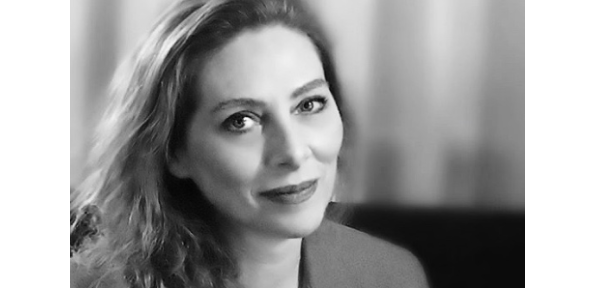
Professor Helena Sanson is a Full Professor of Italian, History of Linguistics, and Women's Studies at the University of Cambridge , where she is also a Fellow of Clare College and serves as Postgraduate Teaching and Examining Officer for the Italian Section. She joined Cambridge in 2005 after teaching at University College London (1998-2003) following her British Academy Postdoctoral Fellowship. PhD from University of Reading (2002) Her interdisciplinary research focuses on the intersection of Italian linguistic history , literary culture , and gender studies from the Renaissance to post-Unification period. Particular emphasis includes women's contributions to linguistic thought , conduct literature analysis , and female roles in translation networks . Her work examines how women navigated language standardization, educational access, and literary production across social strata. Recent projects include Leverhulme-funded research on women's linguistic experiences in 18th-19th century Italy and co-edited volumes on transnational travelers' accounts and early modern female education . She founded the Women and Gender in Italy (1500-1900) book series and the journal Women Language Literature in Italy . Scientific awards include: British Academy Postdoctoral Fellowship Leverhulme Research Fellowship Philip Leverhulme Prize CRASSH Early Career Fellowship Isaac Newton Trust grant Senior Visiting Fellowship at University of Bologna She supervises graduate research in topics spanning women's writing , linguistic thought , translation history , and cultural marginalization in 16th-20th century Italy. Her work bridges philology, literary criticism, and social history through rigorous textual analysis.
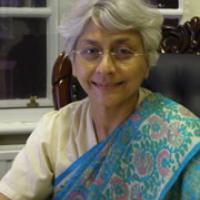
Professor Aditi Lahiri is a Research Professor of Linguistics at the University of Oxford's Faculty of Linguistics, Philology and Phonetics. She holds positions in the Centre for Linguistics and Philology and directs the Language and Brain Laboratory. Her research focuses on phonology, phonetics, historical linguistics, psycholinguistics, and neurolinguistics, with special expertise in metrical theory, feature theory, and morphological complexity. Education : BA (Mathematics, Economics) from University of Calcutta (1971); MA (Comparative Philology) from University of Calcutta (1973); DPhil (Comparative Philology and Linguistics) from University of Calcutta (1979); PhD (Linguistics) from Brown University (1982). Research Interests : Her work spans experimental and theoretical linguistics, including prosodic phrasing, lexical representation, language change, and neural correlates of phonological processing. Key areas include: Metrical phonology and historical sound change Cognitive representation of speech sounds Morphological complexity in the mental lexicon Speech perception and production mechanisms Recent Research Trends : Over the past decade, her publications emphasize cross-disciplinary approaches, integrating experimental psycholinguistics with computational modeling (e.g., ERC-funded projects on morphophonological alternations). Recent work explores language processing in multilingual speakers and the neural basis of phonological features. Awards : Recipient of prestigious awards including the Leibniz Prize (2000), Max Planck Research Prize (1994), and Fellow of the British Academy (2010). She serves as Vice President of the British Academy and President of the Philological Society. Grants & Leadership : Secured over €8 million in research funding, including ERC Advanced Grants (e.g., MORPHON, WORDS). Directed the DFG-funded Sonderforschungsbereich 471 (2006-2008). Established key partnerships in India through endowed scholarships and academic outreach initiatives. Labs & Collaborations : Leads the Language & Brain Laboratory, collaborating internationally on projects combining neurolinguistic methods with historical and experimental linguistics. Supervised numerous PhD students who have become leading academics globally.
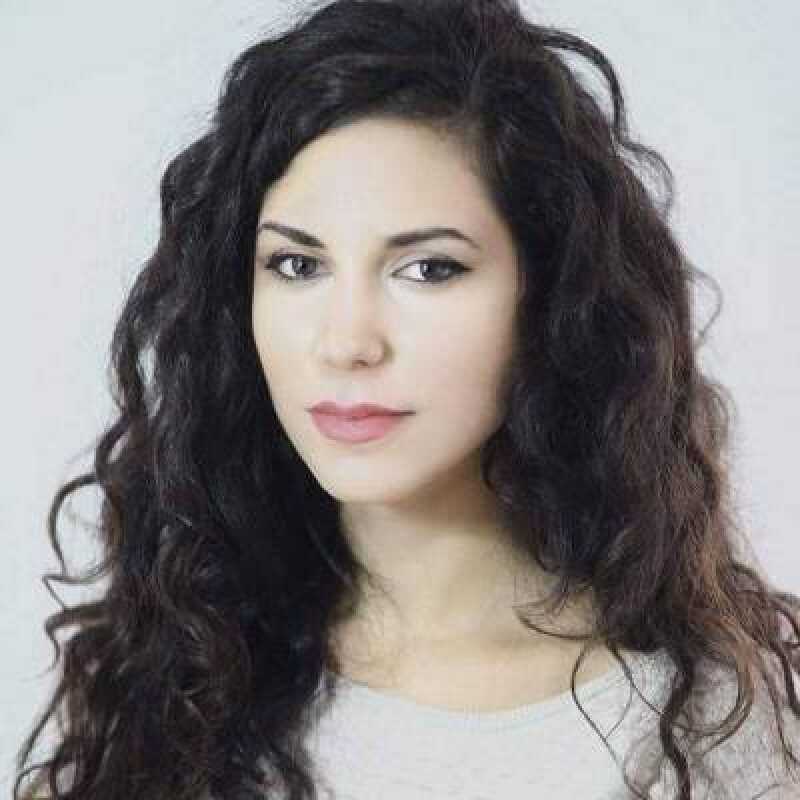
Dr. Francesca Carbone is a Lecturer in Social and Developmental Psychology at the School of Psychology, University of Kent. She completed her PhD at the University of Naples "L'Orientale" studying emotional processing through prosody and semantics, followed by postdoctoral fellowships at CNRS (Aix-Marseille University) and University of Kent. Education: PhD in Psychology (University of Naples "L'Orientale") Her research focuses on cognitive, emotional, and psychophysiological mechanisms underlying art reception and emotional communication. Current projects examine physiological speech production mechanisms and how facial expressions mediate emotional prosody perception. She also investigates film's cognitive effects on open-mindedness. Recent publications in Language Resources & Evaluation , Motivation and Emotion , and Quarterly Journal of Experimental Psychology demonstrate expertise in emotional semantics, prosody analysis, and media effects. Publications span experimental studies on speech interaction, film cognition, and multimodal emotion perception. Teaching responsibilities include module convenorship and instruction in advanced developmental psychopathology, child development, cognitive development, and psychology fundamentals.
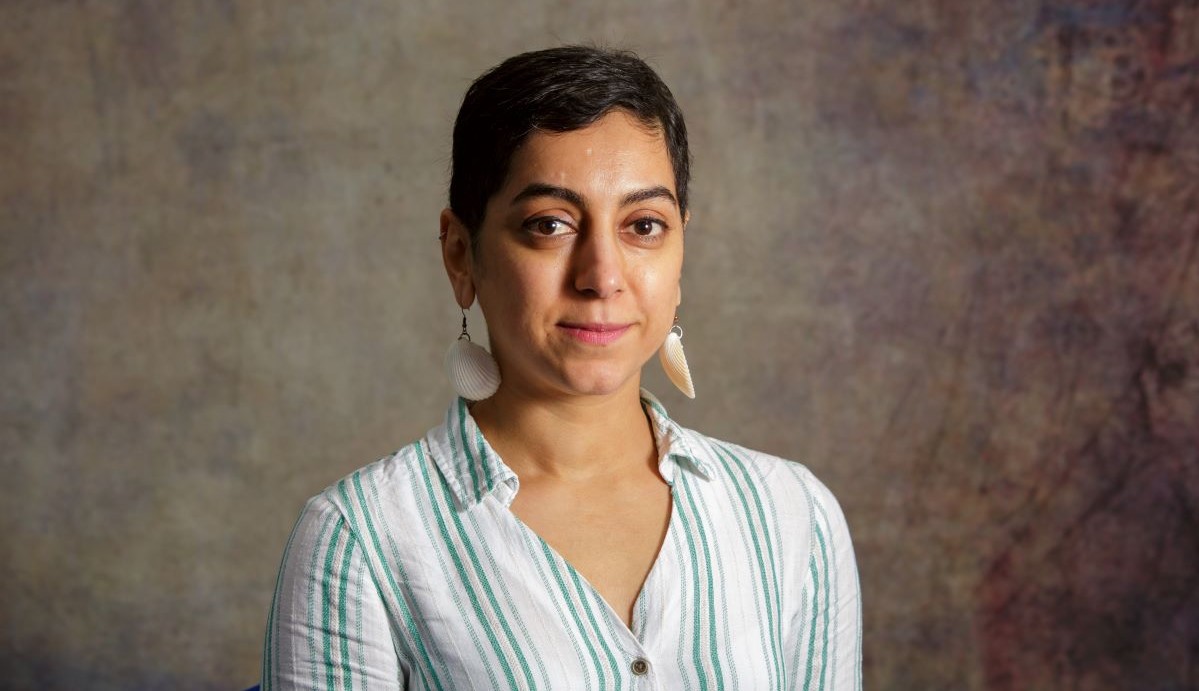
Fatemeh Mollaei is a Lecturer in Clinical Language Sciences at the University of Reading, affiliated with the School of Psychology and Clinical Language Sciences. She is a core member of the Centre for Integrative Neuroscience and Neurodynamics (CINN), focusing on neurophysiological mechanisms of speech disorders. Her work integrates behavioral, electrophysiological, and neuroimaging techniques to study Parkinson’s disease (PD) and develops neuro-rehabilitation methods using non-invasive brain stimulation (e.g., TMS, tDCS). Her research explores how sensory and motor systems interact during speech production in PD, employing tools like EEG, fMRI, and MEG. She investigates microstructural white matter changes and auditory processing deficits linked to speech impairments, aiming to translate findings into clinical interventions. Her studies also address broader topics like sensorimotor adaptation and stuttering, emphasizing translational neuroscience. Publications highlight trends in neuroimaging of speech disorders, auditory feedback mechanisms, and neuroplasticity in PD. While no formal awards are listed, her contributions to understanding speech motor control and rehabilitation practices are significant. Advising and grant details are not explicitly provided, but her involvement in interdisciplinary CINN projects suggests active collaborative research. Labs/Teams: Active contributor to the Centre for Integrative Neuroscience and Neurodynamics (CINN) at the University of Reading, collaborating on translational neuroscience projects.
London School of Economics and Political Science (LSE)United Kingdom
Charlie Beckett is a Professor of Practice and Director of Polis and the Polis/LSE JournalismAI project at the London School of Economics and Political Science (LSE), Department of Media and Communications. He specializes in the transformation of journalism in the digital age, focusing on AI integration, media ethics, and international news dynamics. His roles include leading research initiatives on journalism’s societal role and advising on media policy. Research Interests: Beckett’s work explores Artificial Intelligence in journalism, networked media systems, and the ethical challenges of digital communication. He examines how journalism adapts to technological changes, particularly in AI-driven news production and disinformation landscapes. His projects include the JournalismAI global survey and the LSE Truth, Trust & Technology Commission. Articles Trends: His recent work emphasizes AI’s impact on newsrooms, media trust dynamics, and global journalism practices. Themes include ethical AI adoption, generative AI applications, and regulatory frameworks for digital platforms. Awards: While no specific honors are listed, his contributions to media policy and journalism innovation are widely recognized internationally. Advising & Grants: Directs major initiatives like Polis and JournalismAI, fostering collaborations between academia, industry, and policymakers. His work often addresses funding challenges in journalism sustainability and ethical technology use. Labs/Teams: Leads Polis, a think-tank for journalism-society research, and oversees the JournalismAI project analyzing global AI trends in media. Collaborates with international institutions on media governance and innovation.
Dr Jacob C Dunn is an Associate Professor of Evolutionary Biology at Anglia Ruskin University's School of Life Sciences. Formerly a Senior Lecturer at Anglia Ruskin (2016–2020) and Lecturer at the University of Cambridge's Division of Biological Anthropology (2012–2016), he leads the Primate Evolution and Ecology Research Group and directs the Behavioural Ecology Research Group . His research focuses on primate vocal communication, language evolution, and conservation applications of bioacoustics, with international collaborations including the Fitch Lab at the University of Vienna. Research Interests: Bioacoustic analysis of primate vocal anatomy Macroevolutionary hypothesis testing Comparative studies of fear evolution Eco-acoustic approaches to animal welfare Phylogenetic comparative methods Notable Grants: £15,000 from Accelerate-C2D3 (2022–2023) £65,000 QR Funding (2021–2022) £340,000 Hydrophis Gas grant (2019–2022) £66,000 Anglia Ruskin University grant (2019–2020) Teaching: BSc (Hons) Zoology, Animal Behaviour, and Ecology & Conservation.
Professor Tony McEnery is a Distinguished Professor of English Language and Linguistics at Lancaster University, where he has held various senior roles, including Dean of the Faculty of Arts and Social Sciences (2008–2014) and Head of the Department of Linguistics and English Language (2000–2005). His research focuses on corpus linguistics, applied linguistics, and sociolinguistics, with notable contributions to corpus-based analyses of historical medical discourse, media representation of Islam, and swearing in English. He has led major research projects, including the ESRC Centre for Corpus Approaches to Social Science (CASS) and the Trinity Lancaster Corpus. McEnery has secured over £10 million in research funding and holds visiting professorships at institutions worldwide, including Zhejiang University of Media and Communications and Shanghai International Studies University. He is a Fellow of the Academy of Social Sciences, Trinity College London, and the Royal Society for the Arts. Education: No explicit details provided, but his career trajectory implies advanced degrees in linguistics. Research Interests: Corpus linguistics applications in theoretical and applied linguistics, historical language analysis, and language as a socially situated phenomenon. McEnery’s work extends to interdisciplinary collaborations, including projects with the Environment Agency and the Home Office. His teaching includes summer schools in corpus linguistics and a Futurelearn MOOC, reaching tens of thousands globally. He advises on research funding for international bodies like the Irish Research Council and the Qatar National Research Foundation. Grants and Awards: Queen’s Anniversary Prize (2015), Changjiang Chair (2021), and multiple fellowships. Current grants include the Lancaster-Northern Arizona corpus and the Trinity Lancaster Corpus projects. Advising and Labs: Supervises postgraduate students in linguistics and collaborates with teams like the ESRC CASS Centre and UCREL (University Centre for Computer Corpus Research on Language).
Alice Turk is a Professor of Linguistic Phonetics at the University of Edinburgh's School of Philosophy, Psychology and Language Sciences. She holds a PhD from Cornell University and serves as Principal Investigator for the ERC Advanced Grant 'PLANART: Planning the Articulation of Spoken Utterances' and collaborates on the project 'Prosodic Structure at the Interface Between Language and Speech'. Her research focuses on speech production, perception, prosodic structure, and timing. Education: PhD, Cornell University Her research interests span speech articulation, optimal control theory, motor control, and cross-linguistic phonetic patterns. She has led over 14 research projects, including studies on speech timing, ultrasound tongue imaging resources, and prosodic interfaces. Currently supervising PhD students Candice Mathers and William Peralta, she teaches courses such as 'Phonetics & Laboratory Phonology' and 'Speech Production & Perception'. Past grants include AHRC-funded work on prosodic structures and EPSRC support for an Edinburgh speech production facility. Her ERC grant (2022-2026) explores articulatory planning using optimal control models and biomechanical simulations.
Dr Chris Carignan serves as Programme Director for the Language Science MSc at University College London's Division of Psychology and Language Sciences within the Faculty of Brain Sciences. His research focuses on the intricate mechanisms of human speech production, particularly through cross-linguistic phonetic studies and articulatory dynamics using advanced imaging technologies. PhD in Speech Science Specializes in the intersection of language heritage and phonetic research Develops innovative methodologies for speech data collection and analysis His work spans multiple areas including nasal coarticulation , real-time MRI of vocal tract movements , and cross-linguistic phonetic analysis . He has contributed significantly to understanding how speakers produce complex speech sounds across different languages through comparative studies. Dr Carignan's research has led to the development of open-source tools for speech production analysis and pioneered new approaches for ultrasound articulography . His work on vowel nasalization and sibilant contrasts has been particularly influential in speech science. As Programme Director, he oversees a comprehensive curriculum that provides students with methodological training , statistical expertise , and hands-on research experience while allowing specialization through optional modules. His teaching philosophy emphasizes the importance of curiosity-driven research and interdisciplinary approaches in advancing language sciences.
Professor Adrian Hilton is a distinguished faculty member at the University of Surrey, serving as Director of the Centre for Vision, Speech and Signal Processing (CVSSP) and Director of the Surrey Institute for People-Centred AI. He is affiliated with the School of Computer Science and Electronic Engineering and leads the Visual Media Research Lab (V-Lab). His research focuses on pioneering next-generation 4D computer vision technologies that enable machines to understand and model dynamic real-world scenes. Key areas include 3D/4D shape capture, computer vision, machine learning, graphics, and animation for applications in sports analysis, film/TV production, virtual reality, and medical imaging. His work bridges the gap between real and computer-generated imagery, with notable contributions in volumetric capture, motion capture, and free-viewpoint video. Hilton's recent publications demonstrate a strong trend toward multimodal integration, particularly combining audio and visual processing for spatial audio applications, while advancing 4D reconstruction techniques for human performance capture. His work increasingly incorporates transformer architectures and neural rendering techniques for improved illumination estimation, shadow modeling, and multi-view consistency. Scientific Awards and Recognition Two EU IST Innovation Prizes Manufacturing Industry Achievement Award Royal Society Industry Fellowship (2008-2011) Royal Society Wolfson Research Merit Award in 4D Vision (2013-2018) Fellow of the Royal Academy of Engineering (FREng) Fellow of the International Association for Pattern Recognition (FIAPR) Fellow of the Institution of Engineering and Technology (FIET) Hilton actively mentors PhD and post-doctoral researchers through his leadership of CVSSP, which has a grant portfolio exceeding £31M and comprises 170 researchers. He has successfully commercialized several technologies, including systems used by the BBC for sports commentary visualization. His research collaborations span major industry partners including BBC, BT, Sony, Framestore, and The Foundry. He co-founded the G3 Games forum and the CVMP Conference on Visual Media Production, demonstrating strong engagement with the creative industries. Current research projects include the S3A Programme Grant in Future Spatial Audio and InnovateUK's ALIVE project for 360 video reconstruction.
Jörg Fachner is a Professor of Music, Health, and the Brain at Anglia Ruskin University (ARU), serving as Co-Director of the Cambridge Institute for Music Therapy Research. His research focuses on translational issues in interdisciplinary topics between medical, humanities, and music sciences. He holds a Dr. rerum medicinalium (Medical Sciences) from the University of Witten/Herdecke and a Diplom Pädagoge (Master in Education) from the University of Dortmund. **Research Interests:** Music therapy in neurorehabilitation, addiction treatment, dementia care, and mental health. Specializes in social neuroscience, EEG-based studies of therapeutic processes, and the neural dynamics of music-induced emotions. **Grants & Consultancy:** Major grants include the Josef Ressel Centre for Personalised Music Therapy Research in Neurorehabilitation (€1.1M), UKRI funding for RadioMe dementia technology (£35k), and collaborations with institutions like Aalborg University and Jyväskylä University. Consulted on projects such as depression and music therapy (NHS) and art therapies in addiction treatment (Germany). **Awards:** None explicitly listed, but recognized for contributions to music therapy research and clinical practice. **Labs/Teams:** Leads the Cambridge Institute for Music Therapy Research, collaborating on interdisciplinary projects like RadioMe and EEG hyperscanning studies. Supervises a global cohort of PhD students in music therapy and neuroscience.
Dr. Armin Mustafa is an Associate Professor in Computer Vision and AI at the University of Surrey, where he holds a prestigious Royal Academy of Engineering Research Fellow position. He is affiliated with the Centre for Vision, Speech and Signal Processing (CVSSP), the School of Computer Science and Electronic Engineering, and the Surrey Institute for People-Centred Artificial Intelligence (PAI). His research focuses on developing AI systems for visual understanding of complex dynamic scenes, with applications in entertainment, autonomous systems, and augmented/virtual reality. Dr. Mustafa completed his PhD in general dynamic scene reconstruction from multi-view videos in 2016 from the University of Surrey under the supervision of Prof. Adrian Hilton. Prior to his doctoral studies, he worked for three years (2010-2013) at Samsung Research Institute in Bangalore, India, in the field of Computer Vision. His research expertise spans Computer Vision, Scene Understanding, 3D/4D Vision, Virtual Reality, Light Fields, Machine Learning, Video Captioning, Augmented Reality, Artificial Intelligence, and Audio-visual Video Understanding. Dr. Mustafa has pioneered advances in 4D vision, NLP, and Scene Understanding over the past decade, with a particular focus on enabling machines to model and interpret real-world environments for socially beneficial applications. His work bridges theoretical advances in computer vision with practical applications in media production, virtual reality, and autonomous systems. Analysis of Dr. Mustafa's recent publications reveals a strong focus on multimodal learning, particularly the integration of audio and visual information for scene understanding. His work spans diverse areas including shadow detection and removal, audio event classification, video captioning, person image generation, and dynamic scene reconstruction. A notable trend is his exploration of transformer architectures for both vision and audio tasks, as well as the application of self-supervised learning techniques to reduce dependency on labeled data. Dr. Mustafa has received numerous prestigious awards: 2018 - Research Fellowship, The Royal Academy of Engineering, UK 2017 - Young Researcher award, CVPR 2016 - Doctoral Consortium grant, CVPR 2015 - BMVA travel grant for ICCV 2014 - Set-Squared Research to Innovator grant 2013 - Overseas Research Scholarship, FEPS, The University of Surrey 2010 - Cadence Silver Medal, Indian Institute of Technology, Kanpur As a dedicated mentor, Dr. Mustafa supervises several PhD students working on cutting-edge topics including multi-person reconstruction, audio-visual scene understanding, and automatic storyboard generation. His research is supported by significant grants including a £15 million UKRI Prosperity Partnership with the BBC (AI4ME), a 5-year Royal Academy of Engineering fellowship (4D Vision for Perceptive Machines), and multiple projects with industry partners such as Figment Productions and Foundry. Dr. Mustafa is an active member of the Centre for Vision, Speech and Signal Processing (CVSSP), one of the world's leading research centers in vision, speech, and signal processing. He also contributes to the Surrey Institute for People-Centred Artificial Intelligence (PAI), where he serves as a Surrey AI Fellow. His work often involves collaboration with industry partners and other academic institutions across Europe.
Jalal Al-Tamimi is an Associate Professor (Maître de conférences) in experimental phonetics and phonology at Université Paris Cité, affiliated with the Laboratoire de Linguistique Formelle (LLF). He holds an HDR (Habilitation à Diriger des Recherches) in Phonetics and Phonology and has extensive experience in teaching and research across institutions including Newcastle University, UK. His research focuses on the interface between phonetics and phonology, particularly the role of acoustic and articulatory correlates in speech production, perception, and acquisition. He specializes in Arabic dialects, using advanced quantitative methods like generalized additive mixed models and machine learning techniques. Al-Tamimi’s academic journey includes a PhD from Lyon 2 University (2007) and postdoctoral roles in the UK before joining Paris. He currently directs the Master in Language Sciences and co-leads research strands on phonetic complexity and language variation. His administrative roles include membership in the AFCP and coordination of experimental linguistics at LLF. Research interests span laboratory phonology, articulatory-acoustic mapping, and the application of automated methods in clinical diagnosis. His work explores epilarynx dynamics in Arabic gutturals and forced-alignment systems for dialectal Arabic. Awards include the Peter Ladefoged Prize (2018) and Leverhulme Fellowships. He supervises numerous PhD and MA students across computational linguistics and phonetics. Publications highlight contributions to vowel dynamics, speech processing in Alzheimer’s, and cross-linguistic phonological studies. His lab collaborations involve the MAUS team and Sorbonne’s SCAI, focusing on speech technology and pathological speech analysis.
Royal Holloway, University of LondonUnited Kingdom
David M Howard is a Professor and Founding Head of the Department of Electronic Engineering at Royal Holloway, University of London. He holds a PhD in Human Communication from UCL and is an Emeritus Professor in Electronic Engineering. His research focuses on human speech/singing voice production, VR/AR applications in acoustics, and the Vocal Tract Organ. He has led major projects like the StoryFutures AHRC initiative. Awards include Fellowship of the Royal Academy of Engineering and Honorary Membership from the Croatian Choral Directors Association. Education: BSc (Eng) in Electronic Engineering from UCL (1977), PhD in Human Communication (1985). Former roles include Head of Department at University of York and roles in engineering institutions. Research interests span vocal tract modeling, forensic audio analysis, and choral singing development. He collaborates internationally on projects like heritage VR storytelling and data science in museums. His work contributes to UN SDG Education goals through advancing accessible technology and arts.
Holly Branigan is a Professor of Psychology of Language and Cognition at the University of Edinburgh, affiliated with the School of Philosophy, Psychology and Language Sciences. Her research focuses on language production, dialogue, child language development, and bilingualism. She holds a Personal Chair and has led numerous grants including projects on conversational alignment in children with autism, language experience effects on development, and syntactic priming in dialogue. Her teaching includes undergraduate courses on Psychology of Language and postgraduate modules on Dialogue. She supervises PhD students in topics like syntactic processing, bilingualism, and interactional linguistics. Branigan has secured over £10M in research funding from bodies like the ESRC and EU, leading projects such as 'How does language experience support language development?' (2018–2023) and 'AThEME: Advancing European Multilingual Experience' (2014–2019). Her work explores how speakers adapt language based on social context, interlocutor traits, and cognitive factors. Key achievements include a 7-year ESRC fellowship (1999–2006), and recognition for contributions to understanding syntactic processing mechanisms. She currently leads research on child language imitation in social contexts and bilingual syntactic representation.