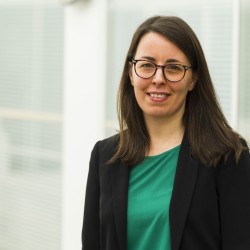
Frédéric Tomas is an Assistant Professor in the Department of Communication and Cognition at Tilburg University’s Tilburg School of Humanities and Digital Sciences. He holds a Ph.D. in Psychology from the Université de Paris 8. His research focuses on written deception detection, cognitive mechanisms in deceitful testimony production, and the intersection of AI with communication and criminal justice systems. He leads a Dutch government-funded Starter Grant project exploring AI’s role in the criminal justice system. His academic work spans linguistic analysis (using LIWC software and keystroke dynamics), consumer attitudes toward AI-generated content, and conspiracy theory psychology. He has published in journals like Emerging Media , British Journal of Social Psychology , and Linguistics in the Netherlands . He received the LOT Grotevragenprijs (2023) for collaborative work on AI’s linguistic challenges. Tomas has trained professionals (e.g., law enforcement, HR) in deception detection and critical thinking. He organizes conferences like the TSHD Digital Humanities Symposium and contributes to interdisciplinary discussions on AI ethics, misinformation, and forensic linguistics.
Prof. Nizar Bouguila is a Professor at the Concordia Institute for Information Systems Engineering (CIISE), Concordia University, and holds the Concordia University Research Chair in Applied Artificial Intelligence. His research focuses on machine learning, data clustering, smart building systems, and energy management. He actively supervises graduate students in Computer Science, Electrical and Computer Engineering, and Information Systems Security programs. Dr. Bouguila's work integrates probabilistic models, deep learning, and domain adaptation techniques. He has pioneered methods in energy disaggregation, load forecasting, and anomaly detection in smart infrastructure. His recent projects address challenges in occupant behavior prediction, speech emotion recognition, and fake news detection using Arabic datasets. Key research themes include: Probabilistic clustering with Bayesian nonparametric mixtures Smart building analytics via IoT and sensor data Domain adaptation for cross-domain learning Explainable AI in energy systems His 2023-2025 publications emphasize: Advanced transformer networks for load forecasting Graph neural networks in transportation Multimodal data fusion for anomaly detection Topic modeling for short texts Dr. Bouguila's advising spans multiple engineering and computer science disciplines, reflecting his interdisciplinary research profile.
Darragh O'Brien is Assistant Professor in the School of Computing at Dublin City University's Faculty of Engineering and Computing, and member of the ADAPT research centre. His research spans network security, software security assurance, and speech processing technologies. O'Brien's technical work includes malware detection systems, DNS traffic analysis for botnet identification, and secure programming methods. His speech processing research focuses on pathological speech classification using machine learning and glottal source modeling. Recent publications demonstrate growing engagement with healthcare applications including surgical prehabilitation systems and pathological speech diagnosis. Teaching innovations include using SystemTap for operating systems education. Courses taught: Computer Programming Fundamentals Network Security Secure Programming
Nathan L. Meikle serves as an Assistant Professor in the Management and Entrepreneurship area at the University of Kansas School of Business. His academic work bridges organizational behavior, decision-making, and the intersection of business with law and technology. With a unique background spanning law, business, and athletics, Meikle brings diverse perspectives to his teaching and research in the business school environment. Dr. Meikle's educational journey reflects his interdisciplinary approach to scholarship: Ph.D. in Management (Organizational Behavior), University of Utah, 2018 J.D., Stanford Law School, 2013 B.S. in Management, Brigham Young University, 2006 Meikle's research focuses on social perception and bias in organizational contexts, with particular attention to how humans interact with emerging technologies like artificial intelligence. His work examines expertise utilization in teams, decision-making processes, and the psychological factors that influence organizational behavior. Through his scholarship published in top-tier journals including The Academy of Management Journal and The Journal of Personality and Social Psychology , Meikle explores how cognitive biases affect workplace dynamics and technology adoption. His recent publications reveal an evolving research trajectory that increasingly examines human-AI interaction, with multiple studies on algorithmic bias and perceptions of artificial intelligence in recruitment and decision-making contexts. Meikle's work demonstrates a consistent thread connecting social psychology fundamentals with contemporary organizational challenges presented by technological advancement. Meikle has received multiple teaching awards for his instruction in organizational behavior, ethics, negotiation, and related subjects. His pedagogical approach integrates practical application with theoretical foundations, helping students develop both conceptual understanding and real-world skills. Beyond traditional academic pursuits, Meikle hosts the "Meikles & Dimes" podcast, which explores practical insights in decision-making, communication, and performance psychology through conversations with business leaders, academics, and professionals across disciplines. He is also the author of "Little Miss: A father, his daughter and rocket science," a memoir about teaching his two-year-old daughter to read. Meikle's professional background includes time as a collegiate football player for BYU and as a radio broadcaster for IMG College Sports Radio, experiences that inform his understanding of team dynamics, leadership, and performance under pressure.
Thienkhai H. Vu, MD, PhD, is an Associate Clinical Professor in the Department of Radiology and Biomedical Imaging at the University of California, San Francisco (UCSF). He specializes in chest imaging at SFGH and contributes to ultrasound, abdominal, and musculoskeletal imaging. Dr. Vu holds a PhD in Pathology from the University of Oklahoma HSC (1997) and an MD from the same institution (1999). His training includes residencies in Ophthalmology (University of Wisconsin, 2001), Diagnostic Radiology (King/Drew Medical Center, 2004; UCSF, 2005), and a fellowship in Cross-Sectional Imaging at SFGH (2006). He previously served as Program Director for the Cross-Sectional Training Program and Co-Director of Breast/Body Imaging at SFGH. Currently, he participates in the UCSF Abdominal Imaging Fellowship Selection Committee. Education: PhD in Pathology: University of Oklahoma HSC, 1997 MD: University of Oklahoma HSC, 1999 Residencies: Ophthalmology (UW Madison), Diagnostic Radiology (King/Drew, UCSF) Fellowship: Cross-Sectional Imaging (SFGH) His research focuses on molecular imaging, thoracic imaging, and advanced modalities like MRI, MDCT, microimaging techniques, and quantum dots. He has authored 20 peer-reviewed publications and 12 abstracts. His work bridges clinical practice and technical innovation in radiology. Awards: Nominated for the Robert Lull, MD Award (SFGH, 2009) Labs/Teams: Involved in UCSF’s radiology training programs and imaging research initiatives.
Randy Fortier is an Associate Teaching Professor and Associate Dean of Science (Undergraduate) at Ontario Tech University's Faculty of Science. He specializes in Computer Science education with a focus on software security, web/mobile development, graphics, and game development. His academic career includes teaching roles at the University of Windsor (1997-2003) and Thompson Rivers University (2003-2013). Education: BSc (Honours Computer Science, Software Development) from University of Windsor (1997), MSc (Computer Science) from University of Windsor (2003). Research interests span software security, mobile/web development, computer graphics, and game development. His earlier work focused on natural language processing and distributed virtual environments. His publications explore semantic web technologies, mobile speech interfaces, and scalable distributed systems architectures. Teaching portfolio includes over 15 courses ranging from introductory programming to advanced topics like interactive media and simulation modeling. He currently holds administrative leadership in undergraduate science education.
Dr. Sheela Ramanna is a Professor and Chair of the Applied Computer Science Graduate Program at the University of Winnipeg , with an adjunct appointment in the Department of Computer Science at the University of Manitoba. She holds a Ph.D. in Computer Science from Kansas State University (2003), an M.S. in Computer Science (1998), and a B.S. in Electrical Engineering (1996) from Osmania University , India. Adjunct Professor, University of Manitoba Professor & Chair, University of Winnipeg Graduate Program Her research focuses on Artificial Intelligence , Machine Learning , and Soft Computing (Rough Sets, Fuzzy-Rough Sets, Tolerance-based Methods) with applications in Multimodal Information Processing , Natural Language Processing , and Topological Data Analysis . She has developed novel tolerance near-set algorithms for sentiment classification, named entity recognition, and community detection in social networks. Recent publications include 2025 work on speech emotion recognition, 2024 studies on diabetic retinopathy detection and plant species recognition, and 2023 research on text summarization and NLP applications. Her work spans 15+ peer-reviewed articles in journals like Scientific Reports , Information Fusion , and Frontiers in Artificial Intelligence . Scientific Awards include the UW Merit Award for Exceptional Performance (multiple years), MITACS Globalink Research Intern (2024), and 3MT People's Choice Award (2018). She has served as Editor for EAAI Journal , Associate Editor for KES Journal , and Organizing Co-Chair for ISCMI 2025 . She supervises 22+ graduate students and postdocs, including Vrushang Patel (President's Scholarship), Habib Ben Abdallah (MITACS Fellow), and Anil Rahate (collaborative PhD with SIT Pune). Her NSERC-funded projects include precipitation forecasting with WeatherLogics Inc., road condition classification, and LULC mapping using satellite imagery.
Mihaela Popa-Wyatt is a Lecturer in the Philosophy Department at The University of Manchester. Her research focuses on Philosophy of Language, Meta-ethics, and Social Epistemology, particularly examining how oppressive speech reinforces social hierarchies. She holds a Marie Curie fellowship background and has been an independent research fellow at the University of Birmingham and a Beatriu de Pinos Fellow at LOGOS Barcelona. Her current projects include the 'Good Speech Project' (2023-2025) and 'Online Harms and Trust: Incel Communities' (2022-2023), collaborating with researchers like Justina Berškytė and Graham Stevens. She teaches Applied Philosophy and Language & Oppression, and serves as the Equality, Diversity, and Inclusion (EDI) officer in her department. Popa-Wyatt organizes workshops such as 'Harmful Content (Online and Offline)' and 'Themes in Oppressive Speech,' and her work engages with UN SDGs related to justice and strong institutions. She co-organizes the Philosophy Film Club with Jonathan Hourigan and contributes to public debates on hate speech and digital trust through platforms like the Royal Institute of Philosophy.
Jean-Marc Odobez is a Senior Scientist at the IDIAP Research Institute and Adjunct Professor at the Swiss Federal Institute of Technology Lausanne (EPFL), where he is affiliated with the School of Engineering and serves on the Electrical Engineering Doctoral committee (EDEE). He leads the Perception & Activity Understanding Group at Idiap and has extensive teaching responsibilities across multiple departments. Dr. Odobez received his PhD in Computer Science from Rennes University in 1994. His research focuses on multimodal perception systems combining computer vision, statistical machine learning, and deep learning for activity recognition, behavior understanding, and human-robot interaction. His work spans diverse application domains including human health assessment, social robotics, and media content analysis. His recent research shows strong trends in gaze estimation, human activity recognition, and multimodal processing. His team has developed innovative solutions for gaze tracking, head pose estimation, and activity recognition using depth sensors and neural networks. His work increasingly bridges computer vision with digital humanities, particularly in the analysis of ancient Maya glyphs. IEEE member Associate Editor of Machine Vision and Applications journal Dr. Odobez has supervised numerous PhD students and serves as a committee member for the Electrical Engineering Doctoral program. He has been principal investigator for over 16 European and Swiss research projects and has worked on 10 technology transfer projects with SMEs. He co-founded Klewel SA and Eyeware SA, focusing on eye tracking and attention modeling technologies. His research group actively collaborates with industry partners and maintains strong connections with the computer vision and human-computer interaction research communities.
Affiliations Senior Lecturer in People-Centred AI at the Surrey Institute for People-Centred Artificial Intelligence (PAI) and School of Computer Science and Electronic Engineering, University of Surrey. Visiting Faculty at IIIT Lucknow. Former Postdoctoral Research Fellow at the Centre for Translation Studies (CTS), University of Surrey. Education PhD, IIT Bombay & Monash University (2021) - Dissertation on distributional similarity for cognate detection and computational phylogenetics. BTech in CSE, Uttar Pradesh Technical University (2013). Research Interests Focused on NLP and ML, particularly in low-resource languages, machine translation quality estimation, cognitive NLP, and multimodal information processing. Leads research in Human-Machine Interaction at PAI and the NLP subgroup in the Nature Inspired Computing and Engineering (NICE) group. Publications & Awards Over 30 publications in top conferences (ACL, EMNLP, EACL) including Best Paper Honourable Mention at EACL 2021. Awards include CISCO Fellowship (2016-2020) and Teaching Assistant of the Semester (2017, 2019). Teaching Leads NLP module for undergrad and postgrad students at Surrey. Co-teaches NLP at IIIT Lucknow. Integrates cutting-edge topics like multimodal processing into coursework.
Dr Muhammad Awais is a Senior Lecturer in Trustworthy and Responsible AI at the University of Surrey. He leads research on foundation models and self-supervised learning, with affiliations to the Surrey Institute for People-Centred Artificial Intelligence (PAI) and the Centre for Vision, Speech and Signal Processing (CVSSP). His expertise spans AI ethics, audio processing, medical AI, and biometric systems. Education: PhD in AI, MSc in AI, BSc Computer Engineering, BSc Mathematics and Physics. His research focuses on advancing AI through self-supervised learning techniques, with applications in healthcare (e.g., Parkinson’s Disease rehabilitation), transportation, and security systems. He has published extensively on topics like masked autoencoders, audio event classification, and age-invariant face recognition. Key contributions include DailyMAE (fast autoencoder pretraining), ASiT (audio-spectrogram transformers), and AiCareGaitRehabilitation (AI-driven gait rehabilitation). His work emphasizes ethical AI deployment and cross-modal learning.
Dr. Angela Mazzone is a Lecturer in Psychology at the University of Surrey, affiliated with the School of Psychology within the Faculty of Health and Medical Sciences. She holds roles such as Academic Integrity Officer, member of the University Ethics Committee, and coordinator of the Voluntary Research Apprentice Scheme. Her research focuses on adolescent social development, bullying dynamics, moral emotions, and the impact of social media on youth mental health. She has also explored workplace bullying and employee silence in higher education settings. Education: BSc Psychological Sciences (Gabriele D’Annunzio University, Italy, 2009) MSc Psychology (Gabriele D’Annunzio University, Italy, 2011) PhD Functional Neuroimaging (Developmental Psychology specialism, Gabriele D’Annunzio University, Italy, 2015) Her research investigates bullying prevention, bystander behavior, and the role of school climate in mitigating cyberhate and victimization. She has conducted studies on sexting’s mental health implications and cross-cultural bullying dynamics. Her work often employs mixed-methods approaches, emphasizing policy recommendations for inclusive education and workplace environments. Teaching contributions include modules on social psychology, developmental psychology, and the psychology of global challenges. She actively collaborates with international institutions, including Dublin City University and the Czech Academy of Sciences. Dr. Mazzone’s research aligns with Sustainable Development Goals related to quality education and reduced inequalities, aiming to improve mental health outcomes for marginalized youth and employees.
Dr. Vijaya Kolachalama is an Associate Professor at Boston University, affiliated with both the School of Medicine and the Faculty of Computing and Data Sciences, within the Department of Computer Science. Their research focuses on developing AI-driven solutions for clinical challenges, particularly in neurodegenerative diseases, digital pathology, and domain generalization in medical imaging. Key interests include dementia screening frameworks, clinical-grade software tools for pathology, and neural network advancements for data generalization. Education: B.S. from Indian Institute of Technology, Kharagpur, India; Ph.D. from University of Southampton, UK. Their lab (VKola Lab) emphasizes translational AI for healthcare, with projects addressing Alzheimer’s diagnostics, voice-based cognitive assessment, and gait analysis in osteoarthritis. Collaborations span biomedical engineering, neurology, and nephrology. Research trends in their articles highlight AI applications in healthcare, including privacy-preserving voice analysis, multimodal data fusion for diagnostics, and computational models of amyloid-tau interactions in Alzheimer’s. They also explore digital platforms for brain health monitoring and machine learning in clinical trial design. No scientific awards listed. Advising and grants details are not provided in the text. The VKola Lab website (https://vkola-lab.github.io) serves as a hub for their work, including open-source tools and datasets.
Dr. Harish Tayyar Madabushi is a Lecturer in the Department of Computer Science at the University of Bath, affiliated with the Bath Institute for the Augmented Human and the Artificial Intelligence and Machine Learning group. His research focuses on Large Language Models (LLMs), their mechanisms, and applications in bias mitigation, speech-to-text systems, and construction grammar integration. He previously held an Honorary Research Fellow position at the University of Birmingham (2021–2024). Madabushi's work bridges computational linguistics and AI ethics, addressing challenges like regional dialect adaptation in public services and healthcare applications. He leads the Wyser project, funded by Innovate UK, aiming to reduce bias in Automatic Speech Recognition (ASR) systems. His research has been featured in foundational discussions at the UK AI Safety Summit and contributes to UN SDGs related to innovation and sustainable development. He supervises doctoral students in areas such as neuro-symbolic AI and explainable NLP, offering projects funded by ART-AI. His publications span conferences like ACL, COLING, and LREC-COLING, with over 45 peer-reviewed outputs. He actively collaborates internationally, addressing multilingual, code-switched, and specialized lexical learning challenges in LLMs.
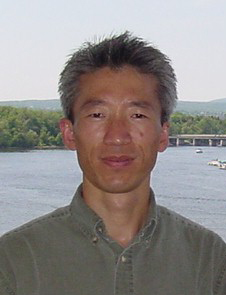
Jiying Zhao is a Professor at the School of Electrical Engineering and Computer Science (EECS) at the University of Ottawa. He holds a Ph.D. in Engineering from Keio University (Japan) and multiple engineering degrees from North China Electric Power University (China). His academic career includes roles as an instructor and associate professor at Thompson Rivers University (Canada) before joining the University of Ottawa in 2001, where he advanced to full professor in 2009. Dr. Zhao's research focuses on image/video processing , multimedia communications , and digital watermarking . Notable contributions include advancements in video super-resolution techniques, perceptual quality assessment of stereoscopic images, and robust watermarking algorithms resistant to geometric attacks and compression. His professional affiliations include IEEE, IEICE, and membership in Professional Engineers Ontario. While no specific awards or grants are listed, his extensive publication record demonstrates significant contributions to multimedia and signal processing fields. Advising and student mentorship details are not provided in the available text. Research interests are centered around 3D imaging , haptic communication , and content security , with applications in telepresence systems and video authentication. He maintains an active research website linked to the School of EECS.