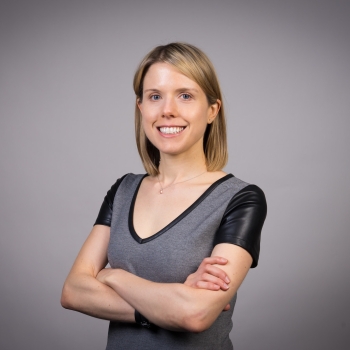
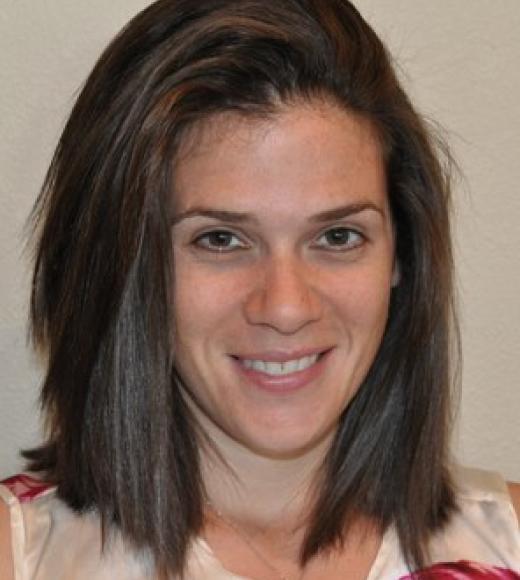
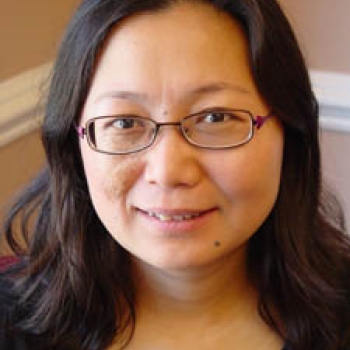
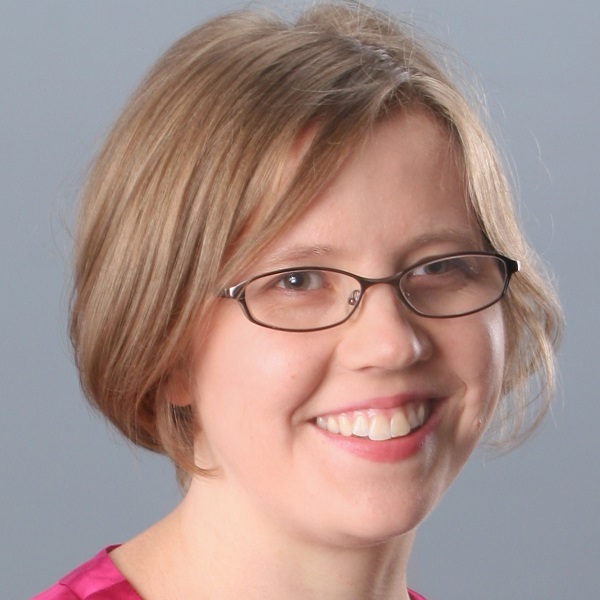
Tara McAllister is an Associate Professor and Director of the Doctoral Program in Communicative Sciences and Disorders at New York University’s Steinhardt School. She leads the Biofeedback Intervention Technology for Speech (BITS) Lab , focusing on speech learning mechanisms and biofeedback treatments for speech disorders. Her work emphasizes acoustic and ultrasound biofeedback efficacy in resolving residual speech sound disorders, particularly in children. McAllister directs development of the staRt iOS app, expanding access to biofeedback training. She holds degrees from Harvard, MIT, and Boston University, with clinical expertise in speech-language pathology. Education: A.B./A.M., Linguistics, Harvard University (2003) M.S., Communication Disorders, Boston University (2007) Ph.D., Linguistics, MIT (2009) Research Interests: Speech motor control, perception-production links, bilingual phonological development, and technology-driven interventions. Her NIH-funded studies investigate biofeedback applications for speech disorders and crowdsourcing methodologies for perceptual analysis. Grants & Labs: NIH/NIDCD-funded BITS Lab research staRt app development since 2014 Teaching: Courses include Critical Evaluation of Research and Speech Science Instrumentation , emphasizing evidence-based practices in communication sciences.
Max Planck Institute for Intelligent SystemsGermany
Michael J. Black is a Professor and Director at the Max Planck Institute for Intelligent Systems in Tübingen, Germany, where he leads the Perceiving Systems department and serves as Managing Director . He is also an Honorarprofessor at the University of Tübingen 's Faculty of Science . His career spans roles at Brown University (2000-2010), Xerox PARC, and academic-industry collaborations with Amazon and Meshcapade.
Prof. Marianne Pouplier is a Professor at the Institute of Phonetics and Speech Processing (IPS) at Ludwig Maximilian University of Munich. Her research focuses on speech production mechanisms, particularly coarticulation, phonetic universals, and language-specific variations. She investigates articulatory timing, speech errors, and cross-linguistic differences in consonant clusters using advanced methodologies like real-time MRI and electromagnetic articulography. Her work bridges theoretical models (e.g., Articulatory Phonology) with empirical data, emphasizing the interplay between phonological representation and motor execution. Key contributions include studies on nasal coarticulation, larynx dynamics, and the role of articulatory effort in speech production. Selected publications highlight her expertise in analyzing speech motor control through interdisciplinary approaches. She collaborates internationally, contributing to projects like the Bavarian Archive for Speech Signals (BAS). No awards or grants are explicitly listed, but her extensive publication record underscores her scholarly impact.
Georgia Zellou is an Associate Professor in the Department of Linguistics at the University of California, Davis, where she co-directs the Phonetics Lab and conducts award-winning research at the intersection of phonetics, speech perception, and human-AI interaction. Her work investigates how phonetic detail is cognitively represented through variations in speech production, with significant contributions to understanding speech alignment with voice assistants, face-masked speech intelligibility, and cross-linguistic perception of synthetic voices. Her academic credentials include a Ph.D. in Linguistics from the University of Colorado at Boulder (2012), an M.A. in Linguistics from Stony Brook University (2007), and a B.A. in Linguistics & Anthropology from the University of Florida (2005, Cum Laude, Phi Beta Kappa). Ph.D., Linguistics, University of Colorado at Boulder (2012) M.A., Linguistics, Stony Brook University (2007) B.A., Linguistics & Anthropology, University of Florida (2005) Professor Zellou's research program centers on laboratory phonology approaches to real-world communication challenges, examining how acoustic-phonetic details influence speech perception across contexts. Her studies span speech alignment with voice-AI systems (e.g., Amazon Alexa), sociophonetic variation in bilingual speech, and the cognitive mechanisms underlying perceptual compensation for coarticulation. She employs experimental methods including eye-tracking, acoustic analysis, and perceptual testing to uncover how phonetic variation functions pragmatically in human communication and human-machine interaction. Analysis of her 15 most recent publications (2023-2025) reveals three dominant research trajectories: (1) human-AI voice interaction dynamics, including prosodic alignment and social evaluation of TTS voices; (2) intelligibility optimization in challenging contexts (face masks, clear speech for diverse listeners); and (3) cross-linguistic phonetic variation in vowelless words and consonant clusters. These works consistently bridge theoretical phonology with applied speech technology, demonstrating how fine-grained phonetic detail influences communication effectiveness in both human-human and human-machine contexts. Her scientific recognition includes: Fulbright Scholar (2022) for research in France Chancellor’s Award for Excellence in Undergraduate Mentoring (2019) Fellow of the Linguistic Society of America (2020) Amazon Faculty Research Award (2019) for Alexa-related speech studies Dean’s Fellow designation at UC Davis (2020-2023) Professor Zellou maintains an active mentoring practice recognized with the Chancellor’s Award, supervising undergraduate researchers in the Phonetics Lab while teaching core linguistics courses from introductory to advanced graduate levels. Her research program is supported by competitive grants including NSF funding, Amazon Research Awards, and UC Davis internal grants (Hellman Foundation, ISS Junior Faculty Grant), reflecting the translational value of her work for speech technology development. She has co-directed major initiatives including the 2019 LSA Linguistic Institute. The Phonetics Lab she co-leads serves as a hub for experimental phonetics research, focusing on speech production-perception relationships through projects investigating vocal accommodation to voice assistants, nasal coarticulation dynamics, and cross-linguistic prosody. Current collaborations with industry partners aim to implement human speech adaptation principles into voice assistant design to enhance naturalness and engagement.
Ying Lu is an Associate Professor at the Department of Applied Statistics, Social Science, and Humanities within the Steinhardt School of Culture, Education, and Human Development at New York University. She holds dual PhDs in Public Policy and Demography from Princeton University (2005) and in Statistics from the University of North Carolina at Chapel Hill (2009). Before joining NYU, she was an Assistant Professor at the University of Colorado Boulder, affiliated with the Institute of Behavioral Science. Her research focuses on quantitative methodology in social and behavioral sciences, including applications in demography, health, and political behavior, as well as statistical methods like model selection and hypothesis testing for high-dimensional data. Her interdisciplinary work bridges statistical rigor with real-world societal challenges. Recent articles highlight her contributions to areas such as employee outcomes in HRM, gut microbiota-cardiometabolic disease links, and innovative clinical trial designs. She has also explored topics in food science, environmental catalysis, and sustainable development policy. Ying Lu’s academic journey reflects a commitment to advancing statistical methodologies while addressing pressing issues in health, policy, and environmental science. She has advised numerous projects but no specific students are listed in the provided texts.
Marc Erich Latoschik is a Professor in the Department of Human-Computer Interaction at the University of Würzburg, Germany. He previously held roles at Bayreuth University, Bielefeld University, and FHTW Berlin. His research focuses on virtual and augmented reality, embodiment, human-computer interaction, and applications in health, education, and social systems. Education: Completed his PhD in 2001 at Bielefeld University with a thesis on multimodal interaction in virtual reality. Research Interests: Embodied interaction, virtual embodiment, presence and plausibility in VR/AR, avatar design, social virtual reality, health applications (e.g., VR therapy for body image issues), and XR security/privacy. Active in developing frameworks like Reality Stack I/O and MAIL for VR/AR research. Key Projects: ViTraS study on body image exercises in VR, avatars for mass use via smartphone reconstruction, and motion-based biometrics in XR. Collaborates with medical teams on cybersickness detection and emergency training simulations. Labs/Teams: Leads research groups on immersive technologies and social VR applications. Involved in interdisciplinary projects combining HCI, AI, and healthcare.
Lee Miller is a Professor in the Department of Neurobiology, Physiology, and Behavior at the University of California, Davis, College of Biological Sciences. His research integrates neural engineering, physiology, and computational methods to develop communication restoration technologies and investigate sensory processing mechanisms. His primary research interests include neural engineering for speech neuroprosthetics, electrophysiological analysis of speech production, auditory neuroscience, and geometric approaches to neuromuscular signal decoding. He employs surface electromyography (EMG), electroencephalography (EEG), and computational modeling to study brain-machine interfaces for speech restoration and multisensory integration. Recent publications reveal a dominant focus on EMG-based speech neuroprostheses, with geometric and topological analysis of neuromuscular signals emerging as a key methodology. His lab has pioneered non-invasive approaches to speech articulation decoding, created standardized EMG databases, and investigated neural mechanisms of attention in speech-in-noise processing. This work bridges engineering innovation with fundamental neuroscience to address communication disorders. Professor Miller leads the Miller Lab at UC Davis, which specializes in neural engineering for communication restoration. The lab develops real-time speech synthesis systems from neural signals and investigates the physiological basis of speech production and perception using multimodal recording techniques.
Henrike K. Blumenfeld is an Associate Professor at San Diego State University (SDSU), affiliated with the School of Speech, Language and Hearing Sciences within the College of Health and Human Services. She serves as Director of the Bilingualism and Cognition Laboratory and holds joint faculty status in the SDSU/UCSD Joint Doctoral Program in Language and Communicative Disorders. Her primary research focuses on bilingualism, cognitive control, and language processing across the lifespan. Education: Ph.D., Communication Sciences and Disorders, Northwestern University (2001–2008) B.A., Linguistics, Bryn Mawr College (1997–2001) Research Interests: Bilingualism and cognitive aging Cross-linguistic effects in language comprehension Cognitive control mechanisms in bilingual speakers Neurobiological bases of bilingual language processing Assessment of multilingual populations Grants & Awards: She has secured funding from NIH/NIDCD, NSF, and SDSU grants totaling over $200,000. Notable awards include the 2022 CHHS YES Award for service, 2013 Undergraduate Professor of the Year, and multiple research travel grants. Labs/Teams: Directs the Bilingualism and Cognition Lab, collaborating with institutions like the Gary and Mary West Senior Wellness Center and Bangor University’s Centre for Research on Bilingualism.
Dr. José del R. Millán is a Professor and holds the Linda Steen Norris & Lee Norris Endowed Chair in Neuroengineering at The University of Texas at Austin's Chandra Family Department of Electrical and Computer Engineering. He also serves as a Professor in Dell Medical School's Department of Neurology, a courtesy Professor in Biomedical Engineering, and is affiliated with the Mulva Clinic for the Neurosciences, Institute for Neuroscience, Texas Robotics, and the UT CARE Initiative. His work focuses on brain-machine interfaces (BMI), neuroprosthetics, and translating BMI technologies for individuals with motor/cognitive disabilities and able-bodied users. Education: PhD in Computer Science (1992, Technical University of Catalonia). Previous roles include Defitech Foundation Chair in Brain-Machine Interface at EPFL (Switzerland) and visiting scholar positions at Berkeley, Stanford, and the International Computer Science Institute. Research Interests: Neuroengineering, BMI applications in healthcare and assistive robotics, statistical machine learning for neural signals, and neurorehabilitation. Key contributions include EEG-based BMI systems, closed-loop neurostimulation, and wearable neurotechnology. Awards: IEEE Fellow (2017), Norbert Wiener Award (2011), and Fellow of the International Academy of Medical and Biological Engineering (2020). Grants & Labs: Co-director of UT CARE, leader in clinical neuroprosthetics and neurorobotics. Active in developing BMI-driven wheelchairs, VR integration for BCI, and EEG-based speech prosthetics. Research outputs emphasize translational neurotechnology, with projects funded by industry and governmental agencies. Labs/Teams: Clinical Neuroprosthetics & Brain Interaction Lab, Texas Robotics, Wireless Networking and Communications Group (WNCG).
Juergen Schmidhuber is Associate Professor at the Faculty of Informatics of Università della Svizzera italiana and a leading researcher at the Dalle Molle Institute for Artificial Intelligence (IDSIA USI-SUPSI). He is also Chief Scientist at NNAISENSE, a company dedicated to building practical general-purpose AI. His work has profoundly influenced modern artificial intelligence, particularly through the development of Long Short-Term Memory (LSTM) networks in 1991, now deployed across billions of devices for speech recognition, machine translation, and virtual assistants. His research interests span Artificial Intelligence, Deep Learning, Recurrent Neural Networks, Universal AI, Meta-Learning, Algorithmic Information Theory, Artificial Curiosity, Robotics , and Low-Complexity Art . He has pioneered mathematically rigorous frameworks for self-improving AI systems and formal theories of creativity and beauty. His work bridges theoretical foundations with real-world applications in computer vision, natural language processing, and autonomous robotics. The recent articles reflect a consistent trajectory of innovation, combining deep theoretical insights with scalable machine learning architectures. His publications emphasize sequence modeling, universal learning, intrinsic motivation, and computational creativity , demonstrating both foundational contributions and industrial impact. From LSTM to Goedel machines, his work consistently targets the long-term goal of self-improving general AI. Scientific Awards: Numerous awards in AI and machine learning (specific names not listed) Schmidhuber leads a research group at IDSIA, where he mentors students and researchers in advancing the frontiers of AI. His lab has secured significant recognition and industrial collaboration, though specific grants are not detailed. He promotes the 'New AI'—general, sound, and relevant to physics—and continues to explore the convergence of intelligence, computation, and the universe. Labs and Teams: Dalle Molle Institute for Artificial Intelligence (IDSIA USI-SUPSI) NNAISENSE (as Chief Scientist)
Kep Kee Loh is a Senior Tutor in the Department of Psychology at the National University of Singapore (NUS). Currently, he also holds an NUS Overseas Postdoctoral Fellowship position at both the Montreal Neurological Institute (McGill University) and the University of Oxford. His research focuses on comparative primate neuroanatomy, examining what makes the human brain special compared to other primates through multimodal MRI techniques. Ph.D. in Neuroscience from Université Claude Bernard Lyon I (2014-2018) M.Sc. in Cognitive Neuroscience from University College London (2011-2012) B.Soc.Sci. (Hons.) in Psychology from National University of Singapore (2007-2011) Dr. Loh's research primarily investigates the anatomical organization of brains across humans and various primate species including chimpanzees, baboons, and macaques. He employs different magnetic resonance imaging techniques (anatomical, resting-state, diffusion-weighted MRI) to compare brain organization across species, with particular focus on the medial frontal cortex, sulcal anatomy, and the evolution of speech and language in the human brain. His work adopts a multimodal approach to provide an integrative view of what sets human brains apart from other primates. His recent publications demonstrate a strong focus on comparative neuroanatomy across species, with particular emphasis on primate brain evolution, frontal cortex organization, and language-related neural pathways. The research spans multiple disciplines including neuroscience, cognitive science, and evolutionary biology, with increasing attention to methodological advancements in neuroimaging techniques for cross-species comparisons. NUS Overseas Postdoctoral Fellowship (2021) Institute of Language, Communications and the Brain (ILCB) Postdoctoral Fellowship (2019) Fondation Recherche Médicale (FRM) Fin de Thèse (PhD funding) (2017) BRAIN Student Travel Award, 6th Motivation and Cognitive Control Symposium (2016) Dr. Loh has been involved in numerous collaborative research projects across international institutions, including the French Institute of Health and Medical Research (Stem Cell and Brain Research Institute), Aix-Marseille Université, and currently McGill University and the University of Oxford. His work has received significant recognition with over 1,000 citations for his 33 publications. While specific grant information isn't detailed in the provided text, his postdoctoral fellowships indicate successful competitive funding. Dr. Loh collaborates with several research groups including the Montreal Neurological Institute at McGill University and research teams at the University of Oxford. His work connects with broader initiatives like the collaborative resource platform for non-human primate neuroimaging, indicating participation in larger research networks focused on advancing primate neuroscience through shared resources and methodologies.
Cristina Baus Marquez is a Research Fellow at the University of Barcelona's Faculty of Psychology, affiliated with the Department of Cognition, Development, and Educational Psychology. She holds a Ramon y Cajal Research Fellowship (2020–2025) and leads research in the Brain Dynamics and Structure of Human Cognition (BraCo) group. Her work focuses on cognitive neuroscience, bilingualism, and language processing, with a particular emphasis on electrophysiological and behavioral studies of language production, perception, and social cognition. Education: Bachelor's Degree (Llicenciatura) in Psychology, University of Barcelona (2003) PhD in Cognitive Neuroscience and Specific Educational Needs, Universidad de La Laguna (2010) Research Interests include the neural mechanisms underlying bilingual speech production, cross-modal language interactions, and how linguistic experience shapes perception of faces and voices. She employs EEG/ERP techniques to study self-monitoring processes in bilinguals and investigates the role of iconicity in sign language production. Key Projects: Ramón y Cajal Fellowship (2020–2025): Investigates verbal interactions and learning mechanisms Fundación BIAL Grant (2017–2019): Explored electrophysiology of bimodal bilingualism AGAUR Grant (2018–2020): Studied verbal interactions' cognitive mechanisms Labs/Teams: Active member of the BraCo research group, collaborating internationally on multilingualism and cognitive neuroscience projects.
Frank Russo is a Professor in the Department of Psychology at Toronto Metropolitan University, where he holds the NSERC-Sonova Senior Research Chair in Auditory Cognitive Neuroscience. He leads the Science of Music Auditory Research and Technology (SMART) Lab and holds affiliate and adjunct positions at the University Health Network and the University of Toronto, respectively. Research Interests: Dr. Russo's work lies at the intersection of auditory cognitive neuroscience, music psychology, and rehabilitation. His research explores how humans perceive music and speech, particularly under challenging conditions such as hearing loss or non-native accents. He investigates the cognitive and neural mechanisms of listening effort, emotional speech processing, and the social and therapeutic benefits of music, especially through community choirs and digital interventions. Publication Trends: His recent publications emphasize objective measurement of listening effort using functional near-infrared spectroscopy (fNIRS), music-based interventions for Parkinson’s disease and dementia, vocal and emotional responses to singing, and multisensory integration in beat perception. The work is highly translational, bridging basic cognitive neuroscience with clinical and community applications. Scientific Awards and Honors: NSERC-Sonova Senior Research Chair in Auditory Cognitive Neuroscience Fellow of the Canadian Psychological Association Fellow of Massey College Fellow of the Canadian Society for Brain, Behavior and Cognitive Science Past President of the Canadian Acoustical Association Advising and Grants: Dr. Russo actively mentors students and researchers, as evidenced by his co-authorship with numerous junior colleagues. He has secured major funding through NSERC and industry partnerships, enabling the development of impactful technologies such as hearing aid algorithms, sensory substitution systems, and digital therapeutics. His SingWell project fosters collaboration across academic, clinical, and community sectors. Labs and Teams: He directs the SMART Lab at Toronto Metropolitan University, a hub for interdisciplinary research on music, hearing, and cognition. The lab collaborates extensively with KITE Research Institute, Rehabilitation Sciences at the University of Toronto, and various community organizations focused on aging, hearing loss, and neurodegenerative conditions.
University Medical Center Hamburg-EppendorfGermany
Prof. Helen Blank is a Professor leading the Multisensory Perception Group and the Prediction in Communication Lab at the Institute for Systems Neuroscience, University Medical Center Hamburg-Eppendorf. Her work focuses on understanding how sensory information is integrated and predicted in contexts like speech perception and face recognition. She holds a Marie Curie Fellowship for her research on prior information's role in human communication. Fluent in German, English, and French, she contributes to experimental medicine and systems neuroscience. Her research spans predictive coding, neuroimaging, and clinical applications in Parkinson’s and developmental disorders. Education: Not explicitly stated in text, inferred as advanced degrees in neuroscience or related fields. Her research interests emphasize multisensory integration, predictive processing in speech and vision, and the neural bases of perception. Recent articles explore topics such as pupil responses to auditory surprise, face expectation hierarchies, and audio-visual speech processing. Awards include the Marie Curie Fellowship supporting her predictive communication work. She leads interdisciplinary teams within the Center for Experimental Medicine, advancing knowledge on perceptual mechanisms and their clinical implications.
Prof. Bernhard U. Seeber is an Extraordinary Professor at the Technical University of Munich (TUM), leading the Chair of Audio Signal Processing within the TUM School of Computation, Information and Technology. His work bridges auditory neuroscience and engineering, focusing on improving hearing aids, cochlear implants, and virtual acoustic systems. He holds affiliations with the Bernstein Center for Computational Neuroscience, Munich Institute of Biomedical Engineering, and others. Education: Studied and earned his PhD (2003) in Electrical Engineering and Information Technology at TUM. Postdoctoral research included time at UC Berkeley and the MRC Institute of Hearing Research (UK), where he pioneered studies on binaural hearing and cochlear implant optimization. Research Interests: Combines experimental and theoretical approaches to explore auditory scene analysis, binaural unmasking, and spatial hearing. Key areas include signal coding for cochlear implants, virtual acoustics, and non-destructive acoustic monitoring. His work emphasizes interdisciplinary collaboration with industry and academia. Awards: Lothar Cremer Award (2010), Emmy Noether Fellowship (2007), and recognition from the German Acoustical Society. Teaching: Offers courses on audio communication, computational neuroscience, and technical acoustics. Projects: Leads initiatives like HAPPAA and Auralization, advancing sound field synthesis and hearing aid algorithms. Current Roles: Head of Chair of Audio Signal Processing, Board Member of DEGA, and spokesperson for the ITG Technical Committee on Hearing Acoustics.