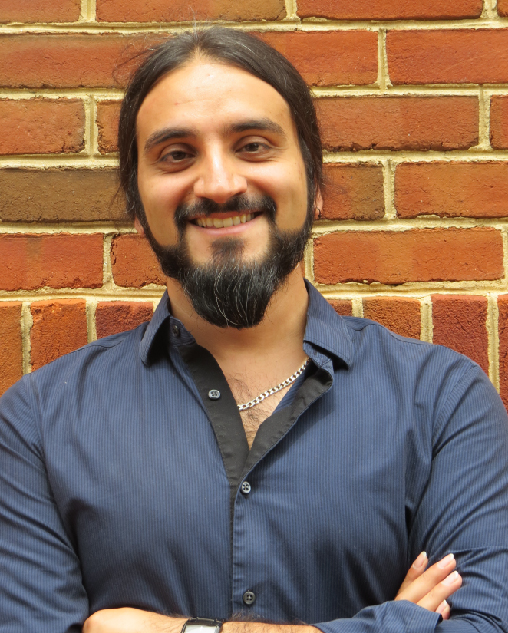
Adeen Flinker is an Associate Professor in the Department of Neurology at NYU Grossman School of Medicine. Their research focuses on speech, language, and auditory processing, using techniques like electrocorticography and signal processing to understand neural mechanisms underlying communication. They lead the Flinker Lab and collaborate on clinical studies involving patients with implanted intracranial electrodes. Education: PhD from University of California, Berkeley; Postdoctoral Training at New York University under David Poeppel. Research interests include speech production, auditory feedback, and neural networks governing language. Recent work explores speech errors induced by cortical stimulation and the role of alpha oscillations in visual cortex function. Over 50 publications highlight contributions to brain mapping and speech neuroscience. Clinical trials focus on speech and motor dysfunction in Parkinson’s patients undergoing deep brain stimulation. The lab participates in studies assessing dysarthria severity and auditory feedback mechanisms. No awards listed but maintains an active research portfolio with NYU Langone affiliations.
Seung-Cheol Baek is a PhD Student at the Max Planck Institute for Empirical Aesthetics, Frankfurt am Main (Sammler Lab). Previously, he served as a Graduate Researcher at the Center for Intelligent & Interactive Robotics (KAIST, 2020–2021) and the Brain Humanities Lab at Seoul National University (2017–2020). He holds an M.A. in German Language and Literature (Neurolinguistics division) and a B.A. in German Language and Literature from Seoul National University. His research focuses on shared neural mechanisms underlying music and speech perception, spectrotemporal structure analysis, and emotion recognition through neuroimaging techniques (EEG/MEG). Key areas include auditory attention models, language acquisition effects on cognition, and cross-modal neural processing. Notable awards include the Seoul National University Fellowship (2019), multiple scholarships (2018), and a best student paper award (2018). His lab work integrates interdisciplinary methods from cognitive neuroscience, linguistics, and engineering.
Virginie Woisard is an Associate Professor and Hospital Practitioner affiliated with Toulouse - Jean Jaurès University and Toulouse University Hospital. She is a key member of the NeuroPsychoLinguistics Laboratory (LNPL) and holds clinical and research roles in the ENT Department at Larrey Hospital and the Oncorehabilitation Unit at the Toulouse University Cancer Institute. She also directs the University Training Center for Speech Therapy in Toulouse. Her research interests lie at the intersection of speech science, otorhinolaryngology, and oncology rehabilitation. She focuses on speech intelligibility (acoustic, prosodic, and phonetic dimensions), aerodigestive functions (physiology, pathophysiology, and assessment), and cancer care (patient pathways, sequelae, disability, and quality of life), particularly for upper aerodigestive tract cancers. Her methodological approaches include experimental psycholinguistics, automatic speech processing, functional assessments, and clinical trials. Her recent publications (2022–2024) demonstrate a strong trend in developing and validating objective, automated tools for assessing speech and swallowing disorders in cancer patients. These include the Carcinologic Speech Severity Index, pseudo-word intelligibility tests, holistic communication scores, and psychometric guidelines. Her work bridges clinical practice with advanced linguistic and acoustic analysis, particularly in French-speaking populations. Scientific Awards and Recognition: President of the French Society for Swallowing and Dysphagia (2021–2024) Member of the European Society of Swallowing Disorders Research Group (since 2021) Member of the European Union of Phoniatrists’ Dysphagia Committee Editorial board member for multiple journals: Revue de laryngologie Otologie Rhinologie , Folia Phoniatrica et Logopedia , Annals of Otolaryngology , Case Reports in Otolaryngology , and European Archives of Otorhinolaryngology Virginie Woisard actively leads and coordinates major research projects such as PhLES-NID (ANR-funded) and VULCANO (Institut National du Cancer) , and participates in multi-center trials like Voice4PD-MSA and PETAL . She has supervised numerous university diplomas (DU/DIU) in phonology, voice, speech, swallowing, and neurolaryngology since 1998, indicating a long-standing commitment to training and academic mentorship. Her work emphasizes therapeutic education, rehabilitation, and improving patient quality of life. She leads the Parolothèque scientific interest group and is deeply involved in interdisciplinary research connecting linguistics, medicine, and technology. Her lab, the NeuroPsychoLinguistics Laboratory (LNPL), serves as a hub for clinical and experimental research in speech and language disorders.
Behtash Babadi is an Associate Professor in the Department of Electrical & Computer Engineering and a faculty member at the Institute for Systems Research and the Brain and Behavior Institute at the University of Maryland, College Park. He also holds affiliate appointments in the Program in Neuroscience & Cognitive Science and the Applied Mathematics & Statistics program. Education: Ph.D. in Engineering Sciences, Harvard University (2011) M.Sc. in Engineering Sciences, Harvard University (2008) B.Sc. in Electrical Engineering, Sharif University of Technology (2006) Research Interests: Dr. Babadi’s work focuses on statistical and adaptive signal processing frameworks for understanding neural systems. Key areas include: Neural signal processing and systems neuroscience Granger causality and functional connectivity analysis Dynamic modeling of neuronal assemblies Applications to auditory processing and cognitive recovery Scientific Contributions: His recent publications address cortical network dynamics, MEG source analysis, and robust causal inference. Notable methods include Network Localized Granger Causality (NLGC) for direct connectivity estimation and multitaper spectral analysis for neuronal spiking data. Awards: NSF CAREER Award (2016) E. Robert Kent Teaching Award (2019) GSAS Merit Fellowship (Harvard, 2010) Collaborations: Dr. Babadi collaborates with institutions like MIT, Harvard, and Massachusetts General Hospital, and participates in interdisciplinary initiatives such as the Brain and Behavior Initiative (BBI) and NIH BRAIN grants.