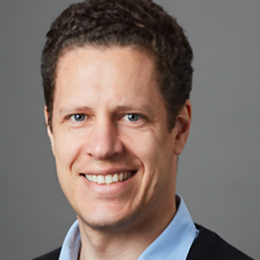
Costanza Argiroffi is a researcher at the University of Palermo within the Department of Physics and Chemistry - Emilio Segrè. Her office hours are scheduled for multiple programs including Physics, Natural and Environmental Sciences, and Optics and Optometry. Stellar Evolution (Physics) Instrumentation for Optics and Astronomy (Optics and Optometry) Accretion processes in young stars Her research focuses on high-energy astrophysical phenomena, particularly X-ray and UV emission from young stellar objects , magnetohydrodynamic modeling of accretion shocks , and multi-wavelength diagnostics of stellar activity . Publications span topics from stellar flares to laboratory astrophysics and accretion dynamics . Costanza Argiroffi's recent publications demonstrate strong expertise in: X-ray astronomy (XMM-Newton, Chandra, NuSTAR) Magnetohydrodynamic simulations Young stellar object variability Accretion processes in classical T Tauri stars Binary star magnetospheres Planetary atmosphere irradiation She has advised multiple theses and participated in research projects involving international collaborations with X-ray observatories.
Rhythm Shimakawa is an Associate Professor at Waseda University's Center for Data Science and Institute for Advanced Study, with affiliations to the National Astronomical Observatory of Japan (Subaru Telescope). His career spans roles as a JSPS Overseas Fellow at UC Santa Cruz and NAOJ Fellow at Subaru Telescope. Education: Doctor of Philosophy (2017) from The Graduate University for Advanced Studies (School of Physical Sciences, Department of Astronomical Science), B.Sc. in Science (2012) from Osaka University. His research bridges galaxy formation/evolution, machine learning applications, and citizen science projects like GALAXY CRUISE. Key interests include protoclusters, superclusters, Lyα emitters, environmental effects on galaxies, and gas recycling in high-redshift systems. Recent publications (2024) focus on galaxy size-environment correlations, JWST observations of protocluster AGN activity, and discovery of z=4 quiescent galaxy concentrations. His team uses Subaru Hyper Suprime-Cam data for large-scale structure mapping and molecular gas studies in protoclusters. Scientific awards: SOKENDAI Research Award (2017), SOKENDAI Future Scientist Award (2015) Media coverage includes findings on supermassive black holes in protoclusters, galaxy void kinematics, and citizen-astronomy collaborations. He leads observational campaigns with ALMA, Keck/MOSFIRE, and HST data to study protocluster gas properties and galaxy morphologies.
Christoph W. Juchem is an Associate Professor at Columbia University in the Departments of Biomedical Engineering and Radiology, with prior faculty roles at Yale University. His research bridges Biomedical Engineering , Magnetic Resonance Spectroscopy , and Neurological Disorders like Multiple Sclerosis and Post-Traumatic Stress Disorder . Education: Doctoral studies at Max-Planck Institute and University of Tübingen; physics degrees from University of Bonn and Madrid. His research focuses on optimizing Magnetic Resonance (MR) shimming for improved neuroimaging and cardiac MR , with recent work addressing scientific transparency in neuroimaging. Publications span 1H spectroscopy , neurotransmitter abnormalities , and field stability in clinical settings. Scientific awards include the Clinical and Translational Science Award (CTSA) and multiple ISMRM fellowships . He has contributed to MR technology standardization and served on the ISMRM Annual Meeting Planning Committee .
Stephanie Diem serves as Professor in the Department of Nuclear Engineering & Engineering Physics within the College of Engineering at the University of Wisconsin-Madison. She leads the Pegasus-III Experiment as Principal Investigator, pioneering innovations in solenoid-free fusion startup techniques to advance commercial fusion energy development. Her work bridges experimental plasma physics, international collaboration, and sociotechnical engagement in fusion energy systems. Dr. Diem's educational background includes: BS in Engineering Physics from University of Wisconsin-Madison MA in Plasma Physics from Princeton University PhD in Plasma Physics from Princeton University (National Spherical Tokamak Experiment research) Her research centers on experimental plasma physics for magnetic confinement fusion, with specialized expertise in radio frequency wave applications for plasma heating and current drive. Current investigations focus on electron Bernstein wave (EBW) physics, non-solenoidal startup via local helicity injection, and edge instability control in spherical tokamaks. This work integrates advanced diagnostics, numerical modeling validation, and international collaborations across facilities including Proto-MPEX (ORNL), MST (UW-Madison), NSTX, and MAST (UK). Analysis of her recent publications reveals strong emphasis on spherical tokamak startup physics, EBW heating systems, and sociotechnical dimensions of fusion development. Key trends include machine learning integration for plasma control, impurity transport during startup, and public engagement frameworks for equitable energy transitions. Her work spans fundamental plasma physics to policy-oriented fusion technology assessment. Notable scientific recognition includes: Kavli Fellow (National Academies, 2025) U.S. Science Envoy for Fusion Energy (2024/2025) David J. Rose Excellence in Fusion Engineering Award (Fusion Power Associates, 2023) New Voices of the National Academies cohort (2021, extended to 2024) Thomas H. Stix Graduate Prize (Princeton University) Dr. Diem actively mentors graduate students through NE 790/890/990 research courses while securing major grants for fusion research infrastructure. Her leadership extends to the Global Fusion Forum initiative and development of sociotechnical readiness frameworks for fusion systems. Current efforts include international collaborations under the PPPL-IAEA practical arrangement and U.S. Department of State science diplomacy initiatives. The Pegasus-III laboratory team develops cutting-edge diagnostics including multi-point Thomson scattering, impurity monitoring systems, and EBW emission measurements. The facility serves as a testbed for scalable startup techniques with partnerships spanning Oak Ridge National Laboratory, General Atomics, and international fusion centers.
Dr. Ming Sun is a tenured Professor in the Department of Physics & Astronomy at the University of Alabama in Huntsville (UAH), affiliated with the College of Science. His research focuses on galaxy groups and clusters, supermassive black holes, AGN feedback, and multi-wavelength observations of cosmic phenomena. Ph.D. in Astronomy, Harvard University (2005) B.S., Nanjing University, China (1997) Dr. Sun's research explores the interplay between galaxy evolution and environmental processes like ram pressure stripping, merger shocks, and AGN feedback. He leads groundbreaking studies using X-ray, optical, and radio telescopes to unravel the dynamics of hot gas, star formation, and cosmic structures. His recent publications highlight discoveries in galaxy cluster outskirts (Abell 2029, Centaurus), ram pressure stripped tails (VESTIGE survey), and multiphase gas interactions. These works leverage XRISM, Chandra, XMM-Newton, HST, ALMA, and MeerKAT data. Research Excellence Award of 2024 (UAH College of Science) UAH 2018 College of Science Outstanding Faculty Member Award Dr. Sun has secured over $1.5M in research funding since 2017, including NASA, NSF, and STScI grants. He mentors graduate students like Sunil Laudari and leads a dynamic team with postdocs Juhi Tiwari and Prathamesh Tamhane, utilizing major observatories for cutting-edge astrophysical research.
Patrick Hopkins is a Professor in the Department of Mechanical and Aerospace Engineering at the University of Virginia, with courtesy appointments in the Department of Materials Science and Engineering and the Department of Physics. He leads the ExSiTE Lab (Experiments and Simulations in Thermal Engineering), focusing on energy transport and coupled photonic interactions with condensed matter, soft materials, and nanosystems. Education : Ph.D. in Mechanical and Aerospace Engineering (2008), B.S. in Mechanical Engineering, and B.A. in Physics (2004), all from UVA. Postdoctoral work at Sandia National Laboratories (2008–2011) as a Harry S. Truman Fellow. Research Interests : Thermal conductivity measurement, phonon-polariton interactions, electron-phonon coupling, and interfacial heat transfer in nanosystems. Scientific Awards : AFOSR Young Investigator, ONR Young Investigator, ASME Bergles-Rohsenow Award, PECASE awardee, and ASME Fellow. Recent Publications explore topics including hyperbolic phonon-polaritons, thermal transport in chalcogenides, and advanced metrology techniques.
Sergey Makarov is a Professor at ITMO University's Faculty of Physics and Engineering, Dean of the Faculty of Photonics, and Head of the Laboratory of Hybrid Nanophotonics and Optoelectronics. His research focuses on advanced laser physics and nanophotonics, with applications in surface engineering and dielectric metamaterials. Education: DSc in Physics, PhD in Laser Physics (2014), BSc in Condensed Matter Physics (2011) from National Research Nuclear University MEPhI. Dr. Makarov's work spans femtosecond laser ablation , dielectric nanophotonics , and ultrafast electron dynamics , with a particular emphasis on creating functional nanostructures for optoelectronic devices. His publications from 2013–2015 highlight interdisciplinary research in Optics , Nanotechnology , and Materials Science , with recurring subfields such as plasmonic resonance, surface structuring, and laser-induced phase transitions. He leads a research lab at ITMO University, mentoring students and collaborators in hybrid nanophotonics. While no specific awards are listed, his extensive publication record in high-impact journals like Nano Letters and Applied Physics A demonstrates significant contributions to ultrafast laser-matter interactions and nanoscale engineering.
Dr. Ingo Hoffmann is a researcher at the Institut Laue-Langevin (ILL) , where he serves as the instrument responsible for IN15 within the Spectroscopy group. His expertise lies in the structure and dynamics of soft matter systems , particularly oppositely charged polyelectrolyte-surfactant systems and mesoscale membrane dynamics . Research Interests: Structure and dynamics of polyelectrolyte-surfactant complexes for solution viscosity control Mesoscale membrane dynamics under nanoparticle adhesion Self-assembly and electrostatic interactions in soft matter systems Technical Developments: In-situ dynamic light scattering (DLS) for IN15 instrument. Methods: Neutron spin-echo (NSE), small-angle neutron scattering (SANS), DLS, NMR, and rheology. Publications: His work includes studies on stimuli-responsive materials, surfactant tail length effects, and nanoparticle-membrane interactions, with a focus on applications in colloid science and biophysics.
Casey O'Brien serves as Assistant Professor in the Chemical and Biomolecular Engineering Department at the University of Notre Dame's College of Engineering, where she develops catalytic materials to reduce environmental impacts in chemical processes through advanced spectroscopic techniques. Education Ph.D. Chemical Engineering, Carnegie Mellon University, 2011 B.S. Chemical Engineering, University of Colorado at Boulder, 2006 Research Focus Her interdisciplinary work centers on catalytic interfaces for chemical transformations and separations, leveraging in-situ/operando vibrational spectroscopy to elucidate reaction mechanisms. Key initiatives include developing membrane spectroscopy tools and designing catalysts that block environmentally harmful byproduct pathways while promoting sustainable reaction channels, with applications in greenhouse gas reduction and next-generation refrigerant technology. Publication Trends Recent publications demonstrate escalating focus on plasma-catalyzed methane conversion, carbon cycle closure strategies, and CO 2 utilization, frequently employing molecular-level spectroscopic insights. Over 70% of 2021-2024 papers address environmental sustainability through catalytic innovation, with strong representation in ACS Applied Materials & Interfaces and membrane science journals. Scientific Recognition NSF CAREER Award for chemical technology reducing greenhouse gases NSF Chemical Catalysis funding for plasma-surface chemistry research Mentorship and Funding Dr. O'Brien has graduated three PhD students (Justin Easa, Sarah Pate, Hui Xu) and currently advises four doctoral candidates. Her research group secures continuous NSF support, including a $500,000 CAREER grant and recent funding for metastable state catalysis research, while developing instrumentation for simultaneous membrane spectroscopy and gas permeation analysis. Research Infrastructure The O'Brien Research Group operates from McCourtney Hall with specialized facilities for catalyst synthesis, in-situ spectroscopic characterization, and membrane testing, supporting collaborative projects with Notre Dame's Hessert Laboratory and multidisciplinary engineering initiatives.
Kevin Rosso is a Laboratory Fellow and the associate director of the Physical Sciences Division for Geochemistry at Pacific Northwest National Laboratory (PNNL). He received his BS degree in geological sciences from Cal Poly at Pomona, California, in 1992, and his MS and PhD degrees in geochemistry from Virginia Tech in 1994 and 1998. With over 340 publications and an H-index of 63, Dr. Rosso is a leading figure in molecular geochemistry and surface science. Dr. Rosso's educational background includes: Ph.D., Geochemistry, Virginia Polytechnic Institute and State University M.S., Geochemistry, Virginia Polytechnic Institute and State University B.S. Geological Sciences, California State Polytechnic University, Pomona Dr. Rosso is best known for his pioneering research on electron transfer reactions between aqueous ions, mineral surfaces, and bacterial enzymes. His research spans from fundamental topics such as metal sulfide oxidation, bacterial reduction of metal oxides, contaminant interactions with clay minerals, and mechanisms of crystal growth and dissolution, to applied areas including geologic carbon sequestration, stress corrosion cracking in alloys, performance optimization of lithium battery materials, and the design of semiconductor materials for solar photocatalysis. His work has been instrumental in establishing the field of molecular geochemistry through the application of advanced tools like scanning probe microscopy, quantum mechanical molecular simulations, and massively parallel supercomputers. Analysis of Dr. Rosso's recent publications (2022-2023) reveals a continued focus on mineral-water interfaces, electron transfer processes, and materials for energy applications. His research spans multiple disciplines including geochemistry, materials science, surface chemistry, and computational chemistry. Key themes include aluminum speciation in alkaline solutions, mineral dissolution and precipitation mechanisms, electron transport in metal oxides, and the development of advanced characterization methods for understanding complex geochemical systems. Dr. Rosso has received numerous prestigious awards recognizing his contributions to geochemistry: Science Innovation Award (Stumm Medal), European Association of Geochemistry, 2020 Geochemistry Fellow, 2020 Member, Washington State Academy of Sciences, 2019 Visiting Distinguished Scholar, Durham University, 2019-2020 Life Fellow of the Mineralogical Society of America Life Fellow of The Geochemical Society Life Fellow of The European Association of Geochemistry Mineralogical Society's Hallimond Lectureship, 2016 Mineralogical Society of America Award, 2004 Dr. Rosso leads the U.S. Department of Energy's major fundamental geochemistry program at PNNL and is the founding director of the Center for Understanding Subsurface Signals and Permeability (CUSSP), a multi-institutional DOE Energy Earthshot Research Center launched in 2023. He has mentored a research group of approximately 35 PhD students, postdoctoral fellows, and staff scientists. His laboratory work is supported by significant DOE funding for research on geochemical processes relevant to energy production, environmental remediation, and nuclear waste management. Dr. Rosso directs the Center for Understanding Subsurface Signals and Permeability (CUSSP), which focuses on understanding subsurface processes critical for carbon sequestration, nuclear waste disposal, and geothermal energy. His team combines experimental and computational approaches to study mineral-fluid interactions at multiple scales, from molecular to field levels. The laboratory maintains state-of-the-art facilities for surface characterization, spectroscopy, and high-performance computing simulations.
Samira Ebrahimi is an Academic employee in the Department of Plant and Environmental Sciences at the University of Copenhagen, specifically within the Section for Plant Glycobiology. Her research integrates advanced optical engineering with plant science to develop novel imaging methodologies for studying plant cellular structures and dynamics. Her primary research domains include: Plant Glycobiology: Investigating glycan structures and functions in plant development Optical Microscopy: Pioneering label-free imaging techniques including quantitative phase imaging Digital Holography: Developing computational methods for 3D plant cell visualization Starch Chemistry: Analyzing structural properties of plant starches using NMR spectroscopy AI in Plant Science: Implementing machine learning for subcellular tracking Biophysics: Quantifying mechanical properties of plant cell walls Analysis of her 2022-2025 publications reveals a strong trajectory toward AI-enhanced microscopy systems, with significant focus on portable instrumentation for field applications and computational approaches to replace fluorescent labeling. Her work demonstrates increasing interdisciplinary collaboration between plant biology, optical physics, and computer science. Scientific Awards: No scientific awards mentioned in available documentation Advising and Grants: No information regarding student supervision or research grants provided in source materials Laboratory Affiliations: Core member of the Section for Plant Glycobiology at the University of Copenhagen, focusing on structural and functional analysis of plant carbohydrates
Andreas Stoll is a Researcher at the Leibniz Institute for Astrophysics Potsdam (AIP), where he is a core member of the Astrophotonics (innoFSPEC) research group within the Development of Research Technology department. His work focuses on designing and implementing advanced photonic instruments for astronomical applications, with particular emphasis on integrated optics solutions that enhance spectroscopic capabilities for ground-based and space telescopes. The Astrophotonics group operates at the intersection of optical engineering and observational astronomy, developing technologies that address critical challenges in instrument stability, miniaturization, and spectral resolution. Dr. Stoll's research spans multiple dimensions of astrophotonic instrumentation, with primary focus areas including integrated photonic spectrographs, fiber-optic spectrometer designs, and near-infrared astronomical instrumentation. His work leverages waveguide technology and novel fiber geometries to create compact, high-performance instruments that overcome traditional limitations in astronomical spectroscopy. The Astrophotonics (innoFSPEC) group maintains strong collaborations with AIP's 3D and Multi Object Spectroscopy section and Technical Software/Electronics teams, facilitating the transition from theoretical concepts to functional astronomical instruments through interdisciplinary engineering approaches. Analysis of Dr. Stoll's recent publications reveals a consistent trajectory toward practical implementations of multi-functional astrophotonic systems, with increasing sophistication in cross-dispersed spectrograph designs and H-band instrumentation. His work demonstrates growing integration of photonic technologies into astronomical workflows, particularly through the development of arrayed waveguide spectrographs and helix-core fiber bundles that enable new observational capabilities. The research shows particular strength in translating theoretical photonics concepts into instrument demonstrators ready for telescope deployment, with significant contributions to community roadmapping efforts that define the future direction of the field. As part of the Astrophotonics (innoFSPEC) team at AIP, Dr. Stoll contributes to a dynamic research environment focused on developing next-generation astronomical instrumentation. The group maintains active collaborations with international partners and telescope facilities, working on projects that range from laboratory demonstrators to instruments destined for major observatories. Their work encompasses the full development cycle from optical design and component fabrication through laboratory testing and on-sky validation, with current efforts emphasizing the integration of multiple photonic functions onto single chips to achieve unprecedented instrument capabilities for exoplanet characterization and galactic structure studies.
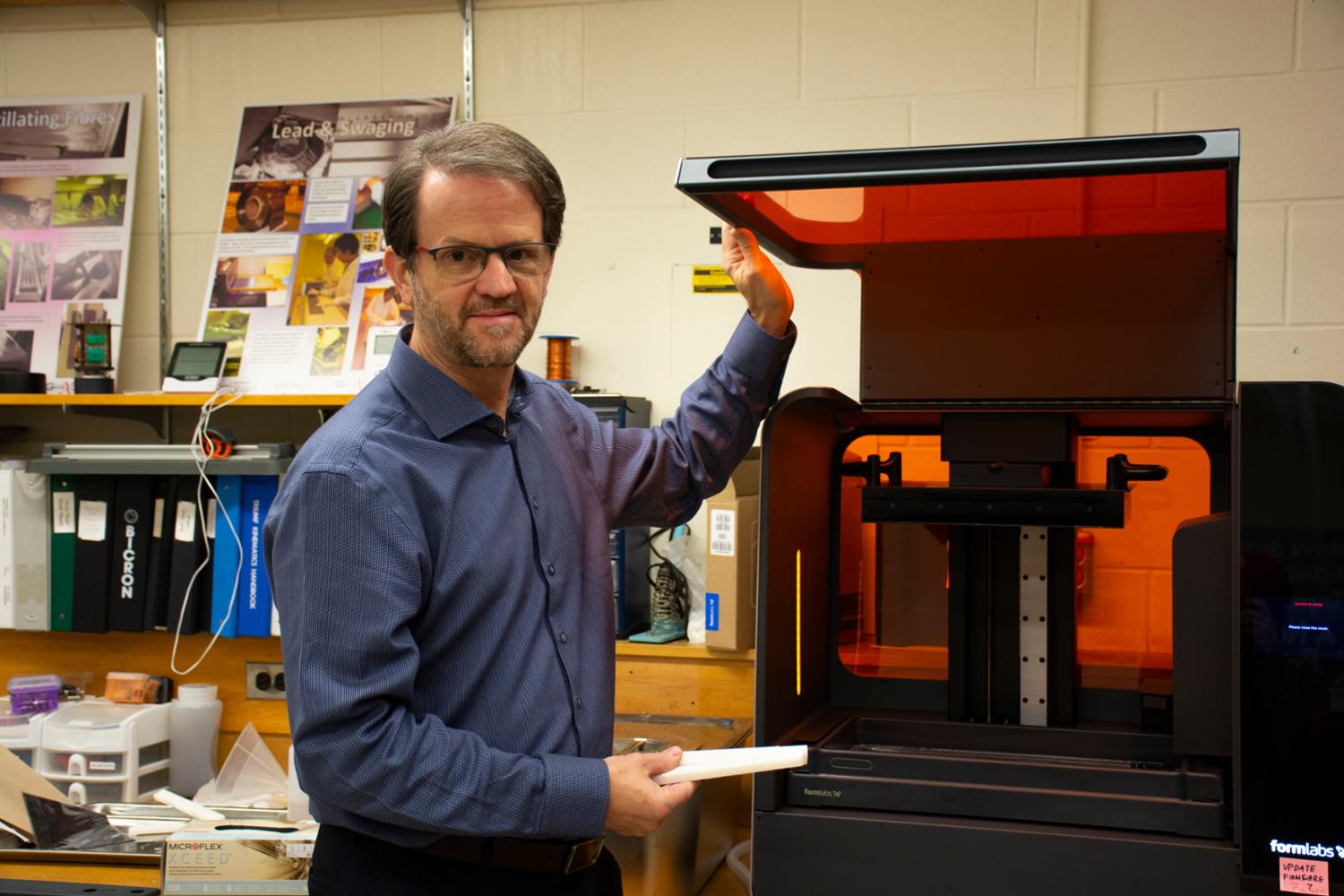
Zisis Papandreou is a Professor and Department Head in the Department of Physics at the University of Regina's Faculty of Science. He leads research in subatomic physics with a focus on exotic hybrid mesons, rare eta decays, and nuclear imaging of plants. His work contributes significantly to our understanding of Quantum Chromodynamics and the Standard Model of particle physics. Professor Papandreou's research interests span several key areas in nuclear and particle physics. He specializes in meson spectroscopy, particularly exotic hybrid mesons which involve gluonic degrees of freedom beyond the standard quark model. His work with the GlueX Experiment aims to produce and identify exotic forms of matter that test Quantum Chromodynamics in novel ways. He also investigates rare eta decays through the Jefferson Lab Eta Factory program and collaborates on nuclear imaging of plants. His group played a defining role in developing large silicon-based photo sensors immune to magnetic fields, now commercially available for subatomic, medical, and nuclear safety applications. His recent publications demonstrate a strong focus on experimental particle physics, particularly in advancing the GlueX detector system and analyzing data from photoproduction experiments. The research spans detector development, calibration methodologies, and fundamental studies of hadron structure and decays. His work shows consistent contributions to understanding meson spectroscopy and testing predictions of Quantum Chromodynamics, with publications covering beam asymmetry measurements, structure function determinations, and calorimeter development. Co-spokesperson for the JEF (Jefferson Lab Eta Factory) program in Hall D Collaborator on nuclear imaging of plants with Dr. Teymurazyan Key contributor to the design and construction of the GlueX barrel calorimeter Professor Papandreou teaches undergraduate courses including PHYS 111: Mechanics and PHYS 112: Waves and Optics, while overseeing the academic and administrative functions of the Physics Department as Department Head.
Hasib Mustafa is an Assistant Professor specializing in Laser Processing with active research spanning Laser Material Science, Remote Sensing, and Environmental Monitoring. His work integrates advanced optical techniques with practical applications in environmental and agricultural systems. His research focuses on laser-material interactions, particularly laser ablation and surface processing, combined with UAV-based remote sensing for environmental thermometry and agricultural monitoring. Key methodologies include laser-induced luminescence spectroscopy, hyperspectral imaging, and fluorescence observation systems, targeting applications in precision agriculture and environmental diagnostics. Recent publications (2022-2025) reveal a concentrated effort in developing UAV-deployable laser systems for environmental monitoring, with significant contributions in luminescence-based thermometry and artificial seed detection. This work bridges materials engineering, optical physics, and remote sensing technologies. His scientific recognition includes: Outstanding Poster Award (2018) PhD Cum Laude (2019) Mustafa actively contributes to scholarly review processes, particularly for Surface and Coatings Technology journal, but no advising responsibilities or grant details are documented in available sources. No specific laboratory affiliations or research teams are explicitly stated in the source materials.
Raymond Burston is a Researcher at the Department of Solar and Stellar Interiors within the Max Planck Institute for Solar System Research, part of the prestigious Max Planck Society. His work focuses on understanding the complex dynamics of our Sun through advanced helioseismic techniques and analysis of solar observational data from missions like SDO/HMI. Burston has established himself as a significant contributor to solar physics research through numerous publications and collaborations with leading scientists in the field. Dr. Burston's research primarily centers on helioseismology, solar dynamics, and the study of solar active regions. His work investigates solar surface flows, supergranulation patterns, and the interpretation of helioseismic travel times to understand the Sun's interior structure and dynamics. He has made notable contributions to understanding the emergence of solar active regions, the structure and evolution of solar supergranulation, and the development of methodologies for analyzing solar observational data. His research often involves sophisticated mathematical modeling of solar phenomena and requires expertise in both theoretical physics and data analysis. Analysis of Burston's publication record reveals a consistent focus on solar physics with particular emphasis on helioseismic techniques. His work demonstrates a progression from theoretical aspects of helioseismology to practical applications using data from major space-based solar observatories. A significant portion of his research involves collaborations with the team led by Laurent Gizon at the Max Planck Institute, indicating his integration into a leading solar physics research group. His contributions span both observational analysis and methodological development in the field. Burston has been actively involved in major space missions including PLATO (PLAnetary Transits and Oscillations of stars) and the Solar Dynamics Observatory. His work on data center development and analysis systems for these missions highlights his role in bridging theoretical research with practical data processing infrastructure. While his primary focus remains solar physics, some of his earlier publications also touch on gravitational perturbations, demonstrating a broader physics background.