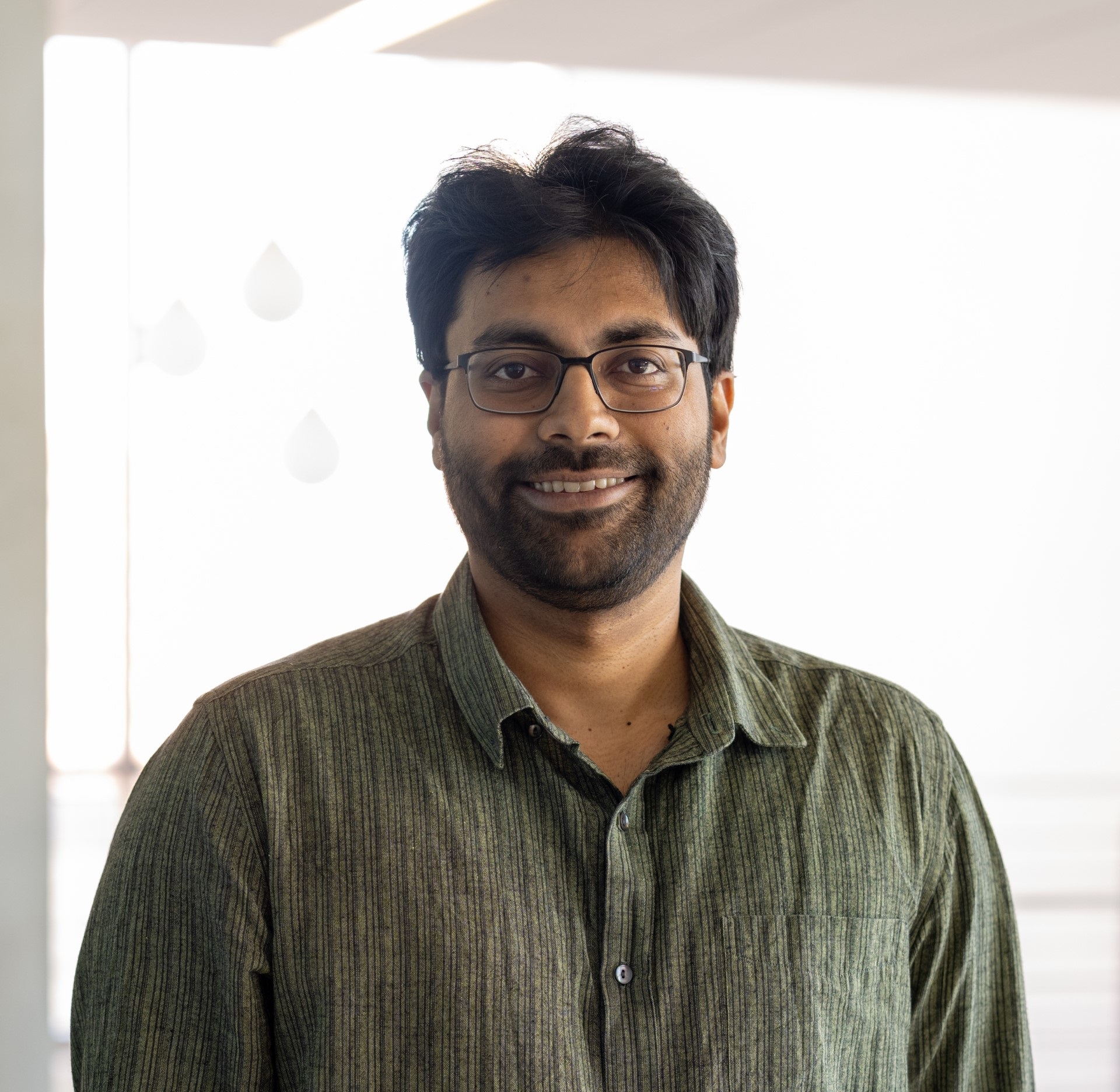
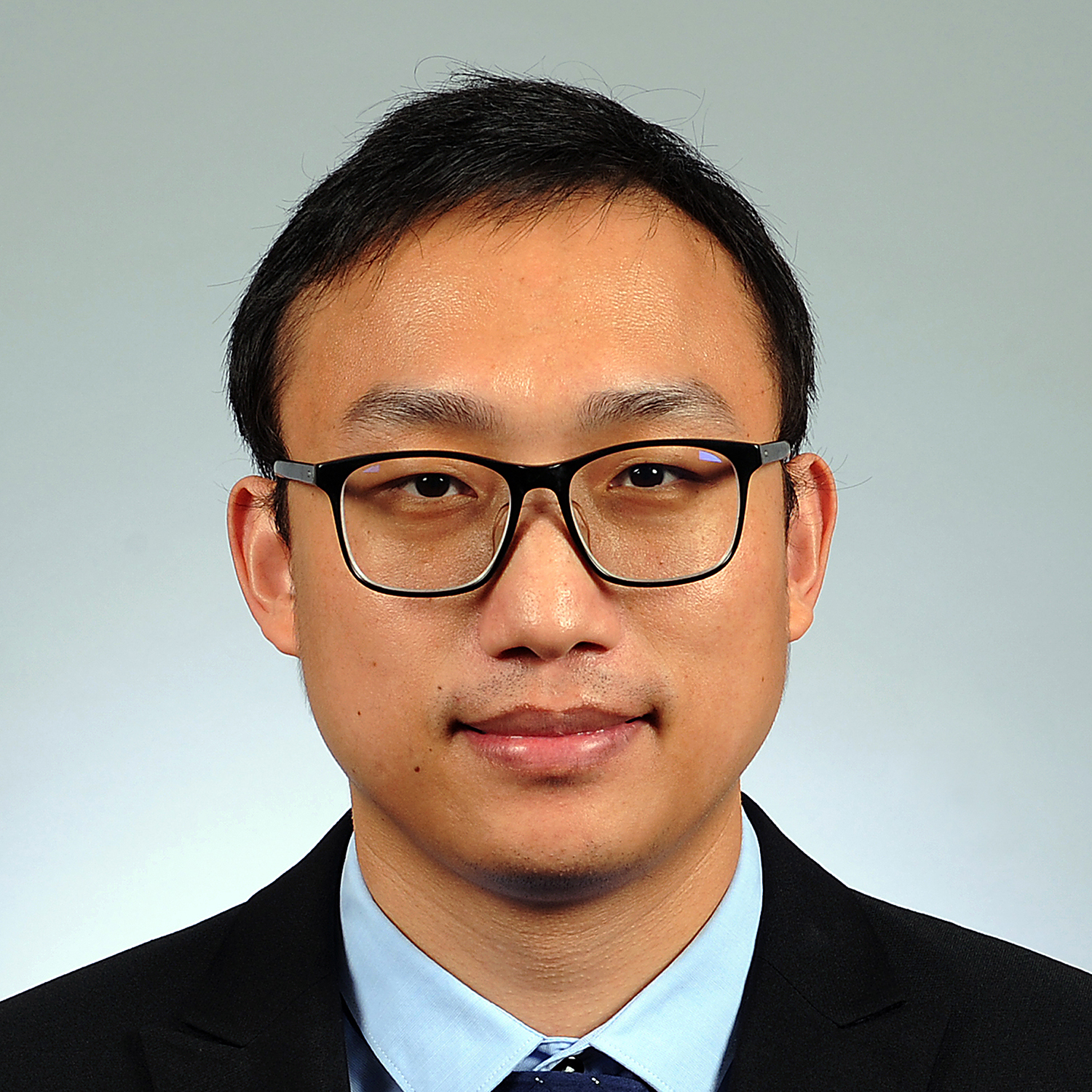
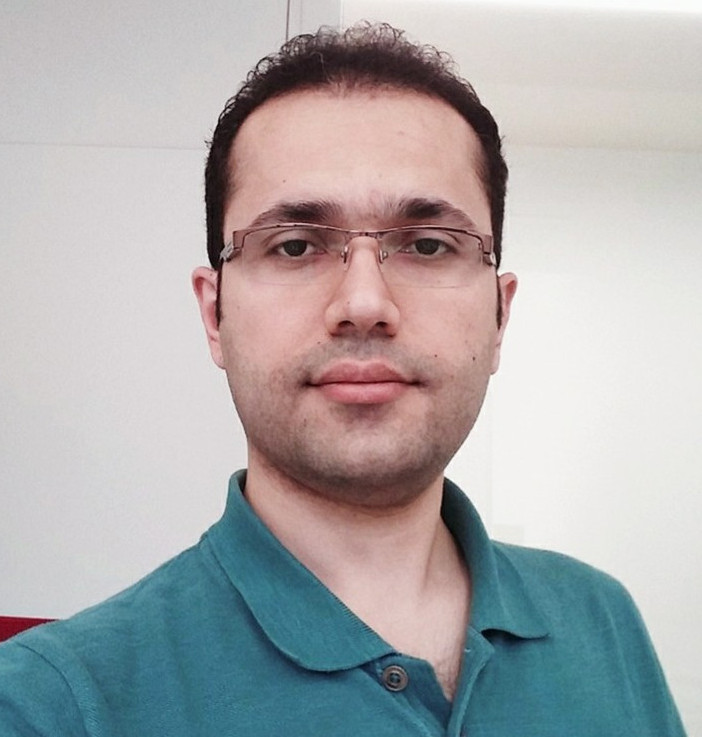
Maria Mushtaq is an Associate Professor at Telecom Paris , affiliated with the Information Processing and Communication Laboratory (LTCI) and the Secure and Safe Hardware (SSH) Lab . She received her PhD in Information Security from the University of South Brittany, France (2019) and completed 2 years of postdoctoral research at LIRMM, University of Montpellier under the CNRS excellence post-doc grant. Research Focus: Microarchitectural vulnerability assessment, runtime mitigation against side/covert-channel attacks, cryptanalysis, OS-based security primitives, and hardware-software interface security Technical Expertise: Cache timing attacks, transient execution attacks (Spectre/Meltdown), Hardware Performance Counter analysis, gem5 simulation Her recent work involves RISC-V security analysis using gem5 simulations and machine learning for attack detection. She serves as Guest Editor for the Journal of Applied Sciences special issue on Side Channel Attacks in Embedded Systems and has been on the Program Committee for the European Test Symposium (2020-2021). 2021 HiPEAC Collaboration Grant recipient Organized IP Paris Winter School on Microarchitectural Security (2022) Active in international conferences as panelist and keynote speaker
Deian Stefan is an Associate Professor in the Department of Computer Science and Engineering at the University of California at San Diego. His research focuses on secure systems spanning security, programming languages, and systems. He is particularly interested in WebAssembly, JavaScript JITs, language-based security (constant-time programming, memory safety, information flow control), verification for security, and program analysis tools. Co-founder and Chief Scientist at Intrinsic (acquired by VMWare) Contributor to W3C WebAppSec and Node.js Security Working Groups Research Interests: His work addresses secure systems through principled approaches, including: Web frameworks security Browser design security Sandboxing techniques Runtime systems security Constant-time programming WebAssembly and JavaScript JITs Scientific Awards: Distinguished paper award at POPL 2023 IEEE Cybersecurity Award for Practice 2022 Best paper award at CollaborateCom 2010 Most Influential Paper Award at ICFP 2022 First place at CSAW 2020 for applied research Advising: Deian has mentored students including Shravan Narayan, Evan Johnson, Sunjay Cauligi, and Fraser Brown, focusing on security, systems, and programming languages.
Dr. Shravan Ravi Narayan is an Assistant Professor in the Computer Science department at The University of Texas at Austin. His research focuses on secure systems, program verification, and hardware-based security, with groundbreaking work in Software Fault Isolation (SFI), WebAssembly security, and Spectre attack mitigation. He teaches courses like CS361S (Network Security and Privacy) and CS380S (Theory and Practice of Secure Systems). 2023 - Distinguished paper award at ASPLOS 2022 - Mozilla research award 2022 - IEEE Cybersecurity Award for Practice 2022 - NSA Best Scientific Cybersecurity Paper Honorable Mention 2021 - Google V8 research award His publications highlight innovations in hardware-assisted isolation (HFI), sandboxing runtime design (WaVe), and browser security frameworks like RLBox. His work bridges systems security, programming languages, and hardware architecture to create practical, verifiable security solutions. He actively recruits exceptional PhD candidates with expertise in security, programming languages, or computer architecture and collaborates with industry leaders like Firefox and Fastly.
Vasileios P. Kemerlis is an Associate Professor of Computer Science at Brown University, where he conducts research in systems and software security. He serves as the director of the Secure Systems Lab (SSL) and is a recipient of the prestigious NSF CAREER Award. His work focuses on practical security solutions for real-world systems. Dr. Kemerlis specializes in software, hardware, and systems security with particular emphasis on OS kernel protection, software hardening, fuzz testing, and information flow tracking. His research bridges theoretical security concepts with practical implementations that can be deployed in commodity systems. His work often leverages hardware features to build more robust security mechanisms while maintaining system performance. His recent publications demonstrate a consistent focus on memory safety, control flow integrity, and practical security mechanisms that can be deployed in real-world systems. His work spans multiple security domains including kernel security, network security, and application security, with a strong emphasis on developing solutions that balance security guarantees with practical performance considerations. Scientific Awards: NSF CAREER Award Dr. Kemerlis teaches advanced security courses at Brown University including CSCI 1650: Software Security and Exploitation (offered Fall 2016-2024) and CSCI 2951U: Topics in Software Security (offered Spring 2016-2018, 2020, 2021, 2024). As director of the Secure Systems Lab, he leads research efforts that have resulted in numerous publications at top security venues including IEEE Symposium on Security and Privacy, ACM CCS, and USENIX Security. The Secure Systems Lab under his direction focuses on developing practical security solutions that can be deployed in real-world systems, with recent work exploring hardware-assisted security mechanisms, binary hardening techniques, and novel approaches to memory safety.
Fan Yao is an Associate Professor in the Department of Electrical and Computer Engineering at the University of Central Florida's College of Engineering and Computer Science. She received her Ph.D. in Computer Engineering from The George Washington University in 2018 and currently leads the Computer Architecture and Systems Research (CASR) lab. Her research focuses on the intersection of computer architecture, security, and machine learning, with particular emphasis on hardware-based security vulnerabilities and defenses. Dr. Yao's research interests span computer architecture, hardware and system security, AI security, energy-efficient computing, and cloud computing. Her work addresses critical security challenges in modern computing systems, particularly focusing on microarchitecture attacks, hardware-based model tampering in deep learning systems, and information leakage threats in emerging non-volatile memory systems. She has developed innovative defense mechanisms against cache timing channels, branch predictor vulnerabilities, and GPU-based side channels. Her recent publications demonstrate a strong focus on AI security (particularly Deep Neural Network vulnerabilities), hardware security (including cache and branch predictor attacks), and secure memory architectures. The research shows an evolution from traditional computer architecture topics toward the security implications of AI hardware and emerging memory technologies, with increasing emphasis on practical attacks and defenses in real-world systems. NSF GW I-Corps Site Grant Award, 2018 Best Dissertation Award, GWU, 2018 The Norris & Betty Hekimian Engineering Endowment Fellowship, GWU, 2017 Top Picks in Hardware and Embedded Security, 2019 NSF CAREER project award, 2024 Dr. Yao currently leads multiple NSF-funded research projects including 'Understanding and Taming Deterministic Model Bit Flip Attacks in Deep Neural Networks' (NSF SaTC, 2020-2023), 'Towards Secure-By-Design Integration of Emerging Non-Volatile Memory in Future System' (NSF CNS, 2020-2023), and 'Architecting Secure-by-Design Memristor-Based Memories' (NSF CNS, 2019-2022). She has successfully mentored numerous PhD students, many of whom appear as first authors on top-tier conference publications, demonstrating her commitment to graduate education and research mentorship. As the leader of the CASR lab, Dr. Yao oversees a vibrant research group focused on building secure-by-design, efficient, and advanced future systems through novel techniques spanning hardware, computer architecture, and systems. The lab actively publishes at top computer architecture and security conferences including ISCA, MICRO, HPCA, IEEE S&P, and USENIX Security, with multiple papers accepted to these venues annually. The group has developed several influential tools and frameworks for security analysis, including proof-of-concept code for BranchSpec exploits that has been widely cited in the hardware security community.
Ashish Venkat is an Associate Professor in the Department of Computer Science at the University of Virginia, part of the School of Engineering and Applied Science. He holds a Ph.D. from UC San Diego and has established himself as a leading researcher in computer architecture, compilers, and computer security. Research Interests: His research focuses on cross-disciplinary hardware and software techniques to build secure, high-performance computing systems. He investigates robust exploit mitigations that maintain energy efficiency and programmability, with a particular emphasis on speculative execution, memory safety, hardware security, and privacy-preserving computing. He also explores the application of machine learning to detect security threats and model execution behavior. Publication Trends: His recent publications (2020–2025) demonstrate a strong focus on hardware-based security, particularly microarchitectural vulnerabilities (e.g., micro-op cache attacks), memory safety via microcode capabilities, and secure accelerators for bioinformatics. There is a consistent trend of publishing in top-tier venues like ISCA, MICRO, IEEE S&P, and USENIX Security, often featuring novel hardware/software co-design solutions. Scientific Awards: NSF CAREER Award (2023) NSF CRII Award (2018) IEEE Micro Top Pick (2019) IEEE Design & Test Top Pick (2020, 2021) HPCA Best Paper Runner-Up (2019) DATE Best Paper Nominee (2023) UVA Research Achievement Award (2023) ISCA Prolific Author of the Decade (2013–2022) Advising and Grants: He actively mentors graduate and undergraduate students, many of whom have pursued advanced degrees or joined leading tech companies. He has secured significant funding as PI or co-PI from NSF, DARPA, SRC, and Intel, including a $4.9M DARPA HERCULES grant and an NSF CAREER award. His projects focus on holistic security solutions, speculative optimization, and privacy-preserving machine learning frameworks. Labs and Teams: He leads a research group focused on secure and efficient computing systems, collaborating with researchers at institutions like UC San Diego, UC Riverside, and UC Irvine, as well as industry partners including Intel and IBM.
Hamed Nemati is an Assistant Professor at the Division of Network and Systems Engineering under the School of Electrical Engineering and Computer Science at KTH Royal Institute of Technology in Stockholm, Sweden. He was previously a Visiting Assistant Professor at Stanford University and a Research Group Leader at the Helmholtz Center for Information Security (CISPA) , where he also worked as a PostDoc and Research Fellow. Education : PhD in Computer Science from KTH Royal Institute of Technology Research Interests : Security of systems software, formal methods and program logics, interactive theorem proving, machine code analysis, applied machine learning Current Projects : Systematic verification of multi-language security protocols, hardware-software co-design for Spectre mitigation, capability-based access control models Scientific Awards : WASP (Wallenberg AI, Autonomous Systems and Software Program) faculty member Teaching Activities : Formal Methods in Security (Fall 2020-2023) at CISPA/Saarland University Digital Forensics and Incident Response (EP2780) (Fall 2024) at KTH
Prof. Dr.-Ing. Rüdiger Kapitza serves as a Professor and Chair of Computer Science 4 (Systems Software) at Friedrich Alexander University Erlangen-Nuremberg (FAU). His extensive research portfolio spans trusted execution environments, Byzantine fault tolerance, blockchain technology, and secure systems. Kapitza actively contributes to the academic community through program committee roles for major conferences including OSDI, Middleware, EuroSys, and DSN. His research interests focus on creating secure, reliable systems through the integration of hardware security features with distributed systems. Kapitza investigates how trusted computing can enhance system security while maintaining performance, particularly for critical applications. His work bridges theoretical foundations with practical implementations across domains including cloud infrastructure, edge computing, and transportation systems. Analysis of his recent publications reveals consistent innovation in trusted execution environments, distributed consensus protocols, and secure virtualization. His research demonstrates a clear trajectory from early work on adaptive services to current focus on hardware-assisted security solutions. Key themes include making distributed systems more robust through trusted components, optimizing energy efficiency in heterogeneous systems, and developing practical security solutions for real-world applications. Prof. Kapitza's standing in the systems research community is evidenced by his service on program committees for top-tier conferences. His work has been published in prestigious venues including OSDI, EuroSys, Middleware, and DSN, reflecting significant impact in both academic and industrial contexts. He leads the Systems Software research group at FAU, mentoring students and collaborating with researchers worldwide. The group addresses fundamental challenges in systems security, reliability, and performance, with applications ranging from drone data recording to railway systems and secure cloud services. His team develops practical tools and frameworks that advance the state of the art in systems research.
Andrew Kwong is an Assistant Professor in the Department of Computer Science at the University of North Carolina at Chapel Hill, specializing in computer security and applied cryptography with a focus on side-channel attacks and defenses. His research bridges hardware vulnerabilities and cryptographic systems, particularly targeting microarchitectural weaknesses. His primary research interests include Rowhammer-based exploits , side-channel attacks on cryptographic implementations , hardware security modules , and microarchitectural vulnerabilities . Kwong investigates how physical hardware properties (e.g., DRAM disturbance errors, cache hierarchies, acoustic properties) can compromise system security, with recent work demonstrating end-to-end key recovery against post-quantum cryptography and novel Rowhammer amplification techniques. His publication record features high-impact venues including IEEE S&P (5 papers), USENIX Security (4 papers), and CCS (2 papers), with notable work When Frodo Flips receiving a Best Paper Award Honorable Mention at CCS 2022. Research trends show consistent focus on practical hardware-assisted attacks, evolving from acoustic side-channels (2018-2019) to Rowhammer sophistication (2020-2025). Best Paper Award Honorable Mention (CCS 2022) Kwong teaches graduate courses including Hardware Security and Side-Channels (COMP 790-184) and Research Topics in Computer Security (COMP 790-185), emphasizing hands-on lab assignments for conducting and defending against hardware attacks. His syllabi cover foundational topics like cache side-channels, Spectre variants, Rowhammer, and trusted execution environments, requiring students to implement real-world attacks through programming assignments.
Georgios Portokalidis is an Associate Research Professor at IMDEA Software Institute and Visiting Research Professor at Stevens Institute of Technology. He leads research in software systems security with focus on binary analysis, software hardening, and operating system security. His research develops practical defenses against software vulnerabilities through techniques like binary debloating, system call filtering, and hardware-assisted security. Current projects explore Rust language security, processor-assisted protection mechanisms, and vulnerability mitigation through code reduction. Publication trends show evolution from foundational binary analysis to applied security hardening, with recent emphasis on Rust security, hardware-assisted defenses, and real-world system protection. Work demonstrates consistent focus on practical, deployable security solutions. He has supervised numerous PhD students and postdocs, currently mentoring researchers at IMDEA. His group investigates binary analysis, software debloating, and system hardening techniques. Major grants include DARPA YFA (2021-2023) and ONR funding (2017-2022) supporting adaptive binary debloating research. Leads the systems security research group at IMDEA Software Institute, collaborating with international partners. Maintains active research partnerships and regularly contributes to top security conferences as program committee member.
M. Anton Ertl is an Associate Professor at TU Wien's Faculty of Informatics, Department of Compilers and Languages. His roles include teaching courses such as 'Compilers,' 'Efficient Programs,' and 'Stack-based languages.' He specializes in compiler back-ends, Forth, interpreters, programming languages, operating systems, and computer architectures. Ertl's research focuses on optimizing interpreters, compiler design, and hardware security, particularly addressing vulnerabilities like Spectre. His research interests span interpreter performance, compiler optimization, and Forth language evolution. Recent work includes exploring hardware-based Spectre mitigation, decompilers for Gforth, and stack-based language efficiency. He actively contributes to the EuroForth conferences as an editor and presenter. Ertl supervises students on topics like compiler construction, reverse engineering, and interpreter optimization. His academic contributions include over 50 publications, with a focus on virtual machine performance, compiler back-ends, and Forth-related advancements. He is a key figure in the Gforth project and regularly teaches advanced courses on programming languages and computer systems.
Setareh Rafatirad is an Assistant Professor in the Department of Electrical and Computer Engineering at George Mason University's College of Engineering and Computing. Her research spans hardware security, machine learning for security applications, and IoT security systems. Her research interests focus on hardware security, machine learning for security applications, IoT security, side-channel attacks, and malware detection. She has developed innovative approaches for securing integrated circuits, detecting malware using machine learning techniques, and protecting against side-channel vulnerabilities in computer systems. Her work bridges the gap between hardware design and security, creating practical solutions for emerging security challenges in computing systems. Her recent publications demonstrate a strong trend toward applying machine learning techniques to security problems, particularly in hardware and embedded systems. She has made significant contributions to understanding and mitigating side-channel attacks, developing secure machine learning models, and creating efficient security solutions for resource-constrained devices. Her work shows increasing interdisciplinary reach, connecting hardware security with healthcare applications and educational technologies. Dr. Rafatirad has collaborated extensively with researchers including Houman Homayoun, Avesta Sasan, and Sai Manoj P. Dinakarrao. She has secured research funding for projects related to hardware security and machine learning applications, though specific grant details are not provided in the available information.
Herbert Bos is a Full Professor at Vrije Universiteit Amsterdam, holding positions in the Faculty of Science (Computer Systems department), the Network Institute, and the Systems and Network Security group. His research focuses on hardware and software security, including transient execution attacks, memory exploitation, and vulnerability detection. He has authored over 229 research outputs, including influential papers on Spectre mitigation, Rowhammer attacks, and fuzzing techniques. Notable contributions include frameworks like PANDAcap and BinRec. Bos teaches courses such as Binary and Malware Analysis and Operating Systems. His work aligns with UN Sustainable Development Goals related to innovation and infrastructure security. Education details are not explicitly provided, but his academic titles (prof. dr. ir.) suggest advanced degrees in computer science and engineering. Ancillary activities include roles as an author for Pearson textbooks and a member of the Kiesraad in The Hague. Research interests emphasize cutting-edge hardware vulnerabilities (e.g., Spectre, Rowhammer), memory safety, and automated testing (fuzzing). Recent work highlights practical defenses against transient data leaks (Phantom Trails) and data-only attacks. Collaborations span international institutions, reflecting his global influence in cybersecurity. Publications since 2016 showcase advancements in CPU architecture security, kernel exploitation, and embedded device defenses. His datasets (e.g., PANDAcap SSH Honeypot) provide foundational resources for the security community. Grants and lab affiliations are inferred through his research outputs and teaching roles.
Frans Kaashoek is the Charles Piper Professor in MIT's Department of Electrical Engineering and Computer Science (EECS) and a member of the Computer Science and Artificial Intelligence Laboratory (CSAIL). He leads the Parallel and Distributed Operating Systems (PDOS) group, focusing on secure systems, formal verification, and distributed computing. His work emphasizes crash-safe systems, concurrent programming, and cryptographic security. Education: PhD in Computer Science from Vrije Universiteit Amsterdam (1992), thesis on group communication in distributed systems under Andy Tanenbaum. Research interests include operating systems, networking, programming languages, and computer architecture. Notable projects: FSCQ (verified crash-safe file system), Perennial (framework for verifying concurrent systems), and Noria (high-performance web backend). Awards: ACM SIGOPS Mark Weiser Award (2001), ACM Prize in Computing (2010), National Academy of Engineering membership (2006), and American Academy of Arts and Sciences membership (2012). Publications: Over 150 papers on systems software, verification, and security. Authored textbooks like Principles of Computer System Design: An Introduction and xv6 commentary.
Deian Stefan is an Associate Professor in the Computer Science and Engineering (CSE) Department at University of California, San Diego (UCSD) . His research focuses on secure systems , spanning security , programming languages , and systems . Notably, he works on WebAssembly , JavaScript JITs , and language-based security (e.g., constant-time programming, memory safety, information flow control). Education : PhD in Computer Science from Stanford University (2015), M.Eng and B.Eng in Electrical Engineering from Cooper Union (2011) His research trend emphasizes secure compilation , transient execution attacks , and hardware-software co-design for security . Key themes include SFI (Software Fault Isolation) , constant-time cryptography , and WebAssembly hardening . Scientific Awards Distinguished paper awards at POPL 2023, IEEE MICRO Top Picks 2024 IEEE Cybersecurity Award for Practice 2022 CSA W first place (2020), DJB Prize (2010) He teaches graduate courses like CSE 227: Graduate Computer Security and CSE 291: Building Secure Systems , covering topics from supply chain attacks to hardware defenses . He co-founded web-security startup Intrinsic (acquired by VMWare).