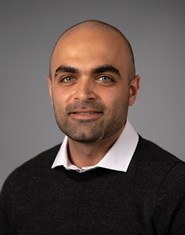
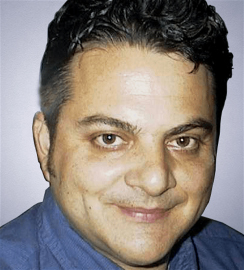
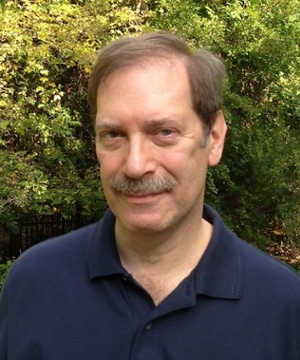
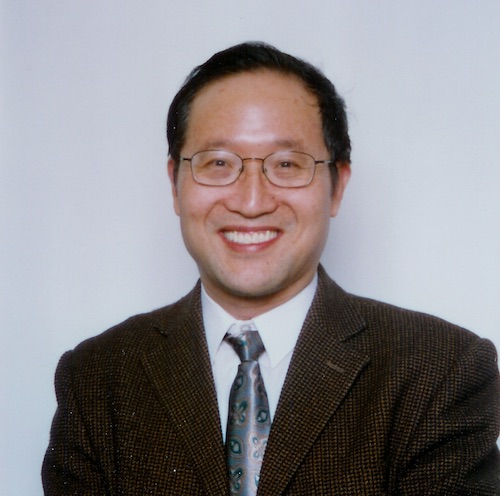
Hoomaan Maskan is a doctoral student at the Department of Mathematics and Mathematical Statistics, Umeå University. His research focuses on Signal Processing , Statistical Learning , and Compressive Sensing with applications in sparsity and spatio-temporal data analysis. His recent publications highlight advancements in high-resolution ODEs for accelerated optimization, nonconvex programming, and super-resolution DOA estimation. Key themes include mathematical modeling, sparse signal recovery, and algorithm design for spatio-temporal data. Research projects include " Compressive Sensing and Statistical Learning with Sparsity " (2019-2024). He is a member of the Mathematical Programming and Statistical Learning and Inference for Spatio-Temporal Data research groups.
Lilianne Mujica-Parodi is an Adjunct Professor in Physics and Astronomy at Stony Brook University and leads the Laboratory for Computational Neurodiagnostics (LCNeuro). Her research employs control systems engineering to study homeostatic regulation in brain circuits, with focus areas including neurometabolic interventions, brain aging, and multiscale neural modeling. Key findings demonstrate nonlinear transitions in brain aging where ketone-based metabolic interventions reverse age-related signaling deficits. Her work integrates neuroimaging (fMRI, MRS), computational modeling, and electrophysiology to explore how energy substrates influence network stability and ion channel regulation. Recent publications highlight applications in diabetes-related brain aging and optimization of computational psychiatry frameworks.
Erin Hicks, Ph.D., is Chair and Professor in the Department of Physics & Astronomy at the University of Alaska. She holds a Ph.D. in Astronomy & Astrophysics from the University of California, Los Angeles (2006), an M.S. in Astronomy & Astrophysics (2001), and a B.S. in Physics with minors in Astronomy and Mathematics from Washington State University (1999). Education: Ph.D., Astronomy & Astrophysics, UCLA, 2006 M.S., Astronomy & Astrophysics, UCLA, 2001 B.S., Physics, Washington State University, 1999 Her research focuses on galaxy formation and evolution, particularly the roles of black holes and active galactic nuclei (AGN) in shaping galaxy dynamics. Key interests include AGN feedback mechanisms, high-redshift galaxy properties, and observational techniques like adaptive optics and integral field spectroscopy. Her work integrates n-body simulations to model galaxy evolution. Publications highlight studies on molecular inflows/outflows in AGN, kinematics of high-redshift galaxies, and the interplay between star formation and AGN activity. Recent work emphasizes spatially resolved observations of gas dynamics in distant galaxies. No scientific awards were explicitly mentioned. She advises no listed students and has no noted lab affiliations. Career highlights include postdoctoral fellowships at the University of Washington and the Max Planck Institute for Extraterrestrial Physics.
Juuso Tuure is a Postdoctoral Researcher at the University of Helsinki, affiliated with the Faculty of Agriculture and Forestry and the Department of Agricultural Sciences. His research focuses on agronomy, soil science, and climate-smart agricultural systems, particularly in arid and semi-arid regions. Active projects: GHGREACT (2025-2026) as Project Manager, REACT (2022-2026) as Participant Former projects: VILKUTEK (2018-2022), CropSkills (2018-2019), TAITASMART (2016-2019) His work explores the intersection of dew collection, soil moisture dynamics, and regenerative agriculture, with a strong emphasis on sustainable water management in East Africa. He employs technologies like VNIR–SWIR spectroscopy and machine learning for soil carbon estimation. Recent publications highlight his contributions to understanding spectral-temporal patterns in agriculture, optimizing mulching techniques for soil moisture retention, and analyzing passive dew collection systems. His research output integrates field experiments with advanced modeling approaches. As a supervisor, he co-mentored PhD candidate Soroush Moradi and currently serves as a postdoctoral mentor for Sheila Wachiye. He actively participates in conferences and seminars, including presentations at the Taita Research Station anniversary and the 7th International Conference on Fog, Fog Collection and Dew.
Associate Professor Christian Wolf is an astronomer at the Australian National University (ANU), affiliated with the Research School of Astronomy and Astrophysics within ANU College of Science. He holds a PhD from the Max-Planck-Institute for Astronomy (1999) and has held roles at the University of Oxford until 2013. His research focuses on supermassive black hole growth, accretion discs, wide-field surveys (LSST, eROSITA, SkyMapper), and gravitational-wave counterpart detection. He leads the SkyMapper Group and has contributed to projects like the COMBO-17 survey and All-sky Astrophysics (CAASTRO). His work includes discovering ultra-luminous quasars and studying galaxy evolution. Supervised students include Neelesh Amrutha, Zachary Steyn, and Ashley Hai Tung Tan. Over 130 publications span quasar studies, black hole dynamics, and survey methodologies. Education: PhD (1999), Max-Planck-Institute for Astronomy; Postdoctoral roles at MPIA Heidelberg (until 2001) and University of Oxford (STFC Fellow 2004-2009). Research interests emphasize observational cosmology, quasar variability, and multi-wavelength surveys. Key projects include the SkyMapper Southern Survey (DR2/4) and the AllBRICQS quasar survey. His publications often address black hole accretion, galaxy evolution, and survey techniques.
Adam Sykulski is a Senior Lecturer in Statistics at the Department of Mathematics, Imperial College London, within the Faculty of Natural Sciences. His research focuses on time series and spatiotemporal statistics, particularly spectral analysis and Fourier methods, applied to environmental and oceanographic sciences. He holds roles including Trustee of the Royal Statistical Society Council (elected 2024), External Examiner at King's College London, and leads the EPSRC CDT in Mathematics for Future Climate. He has supervised 7 PhD students to completion, with 4 current advisees, and contributed to 32 peer-reviewed publications in top-tier journals like Biometrika and IEEE Transactions on Signal Processing. Education: PhD and MSci in Mathematics from Imperial College London (2008–2011 and 2003–2007). Professional development includes a Postgraduate Certificate in Academic Practice (2020). Research interests span statistical methodologies for environmental data, oceanographic modeling, and interdisciplinary applications. Key roles include Partner Investigator in the Australian Research Council’s TIDE project and leadership in equality, diversity, and inclusion initiatives at Imperial College. His work integrates statistical theory with practical challenges in climate science and operational research.
Tristan Léger is a Gibbs Assistant Professor (equivalent to Assistant Professor) in the Department of Mathematics at Yale University. He previously held postdoctoral positions, including at Princeton University. He obtained his PhD in 2020 from the Courant Institute of Mathematical Sciences under the supervision of Professor Pierre Germain. Current Affiliation: Yale University Department: Department of Mathematics His research focuses on mathematical physics and PDE analysis, with three main directions: soliton stability in nonlinear dispersive equations, delocalization of Schrödinger eigenfunctions on hyperbolic manifolds, and dynamics of kinetic equations. Recent work includes studies on spectral projectors on hyperbolic surfaces, well-posedness of kinetic equations, and scattering theory for inhomogeneous systems. He has delivered invited talks at institutions such as Johns Hopkins University, Duke University, and the Simons Center for Geometry and Physics, presenting on topics like spectral projector bounds and soliton stability. His teaching includes courses on ordinary differential equations, multivariable calculus, and analysis at Yale, Princeton, and NYU. Léger collaborates actively with researchers such as Ioakeim Ampatzoglou, Jean-Philippe Anker, and Pierre Germain. His work bridges theoretical mathematics with applications in physics, particularly in chaotic systems and kinetic theory. He also engages in outreach through programs like CSplash, introducing advanced math to high-school students.
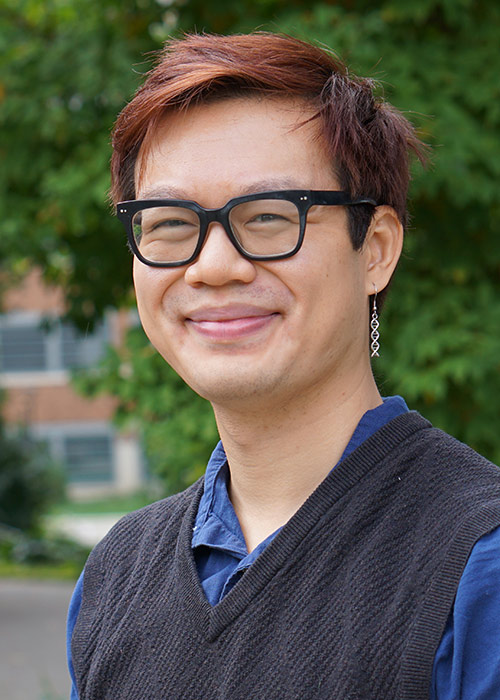
Kevin Lin is an Assistant Professor in the Department of Biostatistics at the University of Washington, joining in Fall 2023. His research focuses on developing statistical methods for analyzing single-cell data to uncover cellular mechanisms in diseases like Alzheimer’s and immune resistance. He holds a PhD from Carnegie Mellon University and completed postdoctoral training at the University of Pennsylvania. His work bridges computational methods with biological questions, emphasizing matrix factorization, network modeling, and changepoint detection. Education: PhD in Statistics & Data Science (Carnegie Mellon University, 2020) Previous Role: Postdoctoral Researcher at University of Pennsylvania (Wharton Statistics) Research interests include high-dimensional data analysis, statistical genetics, and single-cell RNA-Seq. Notable contributions include methods like Tilted-CCA for multimodal data integration and eSVD-DE for cohort-wide differential expression analysis. His work has been recognized with awards such as the Wikimedia Foundation Research Award (2023). Lin’s lab collaborates on projects involving endolysosomal dysfunction in Alzheimer’s, yeast cell division dynamics, and lineage-aware machine learning. Key achievements include over 20 publications in journals like Nature Biotechnology , PNAS , and Biometrics . He advises on grants related to single-cell technologies and serves on the EDI subcommittee for mental health initiatives at UW. Outside academia, Lin enjoys zumba and cooking.
Dr. Charith Abhayaratne is a Senior Lecturer and EEE Foundation Year Tutor at the School of Electrical and Electronic Engineering, University of Sheffield. He leads the Communications Research Group and serves as the accreditation team lead for the school. With qualifications including a PhD from the University of Bath and a B.E. from the University of Adelaide, his research focuses on signal processing, machine learning, multimedia security, and video coding. His work explores blockchain for content protection, visual salience in robotics, human activity recognition, and advanced video coding techniques (HDR, UHD, 360° video). His research has been funded by Innovate UK, EPSRC, and industry partners. Education: B.E. (Electrical and Electronic Engineering), The University of Adelaide, Australia (1998) PhD (Electronic and Electrical Engineering), University of Bath, UK (2002) PGCertHE (Higher Education), University of Sheffield (2008) Fellow of the Higher Education Academy (FHEA), Member of the Institution of Engineering and Technology (MIET), Member of IEEE (MIEEE) Research Interests: His work spans multimedia security (data hiding, blockchain), computer vision (visual salience, object recognition), and video coding (HDR/UHD). Current projects include robotic vision applications, assisted living through activity recognition, and international standards development (JPEG/MPEG). He has contributed to scalable video standards and serves on technical committees for IEEE, EURASIP, and APSIPA. Awards & Service: Recipient of the Alain Bensoussan Fellowship (ERCIM, 2002) Associate Editor for IEEE Transactions on Image Processing, IEEE Access, and Elsevier JISA Member of EPSRC Peer Review College and British Standards Institution (BSI) Grants & Labs: Active grants from Innovate UK and EPSRC support projects in multimedia security and video coding. His lab leads interdisciplinary work in AI-driven visual analytics and secure media distribution frameworks.
Dimitris N. Politis is a Distinguished Professor in the Department of Mathematics and the Halicioglu Data Science Institute at the University of California, San Diego. He holds the prestigious Halicioglu Data Science Institute Chancellor's Endowed Chair II position and has been affiliated with UCSD since 1997, progressing from Associate Professor to his current distinguished position. His educational background includes a Ph.D. in Statistics from Stanford University (1990), along with multiple master's degrees in Statistics, Mathematics, and Computer and Systems Engineering from Stanford and Rensselaer Polytechnic Institute. Professor Politis's research focuses on advanced statistical methodologies, with particular expertise in: Time Series and Random Fields analysis Computer-Intensive Methods in Statistics Resampling and Subsampling for Dependent Observations Spatial Statistics and Point Processes Nonparametric Spectral and Probability Density Estimation Model-free Prediction and Regression Information Theory and Signal Processing Econometric Analysis of Financial Time Series His scholarly output includes over 100 journal papers and several influential books, most notably "SUBSAMPLING" (1999), "MODEL-FREE PREDICTION AND REGRESSION" (2015), and "TIME SERIES: A FIRST COURSE WITH BOOTSTRAP STARTER" (2020), which has become a key educational resource in the field. Professor Politis has received numerous prestigious awards and honors: Guggenheim Fellowship (2011) Fellow of the American Statistical Association (2011) Fellow of the Institute of Mathematical Statistics (2004) Distinguished Author Award from the Journal of Time Series Analysis (2020) Econometric Theory Multa Scripsit Award (2013) Tjalling C. Koopmans Econometric Theory Prize (2012) He has been principal investigator on numerous NSF and NIH grants, including current funding for "Computer-intensive methods for dependent and complex data" (NSF DMS 24-13718, 2024). Professor Politis has held significant leadership roles, including serving as Chair of the Faculty Council of the Halicioglu Data Science Institute (2019-2023) and Associate Director (Founding) of the Institute (2018-2024). As a co-founder of the International Society for NonParametric Statistics, Professor Politis has made substantial contributions to the organization of major conferences and workshops in his field, including the First Conference of the International Society for NonParametric Statistics in 2012. His editorial work includes serving as Co-Editor of the Journal of Time Series Analysis since 2013 and Senior Editor for the ACM/IMS Journal of Data Science since 2022.
Professor Michael Ruzhansky is a faculty member at Queen Mary University of London, where he holds the position of Professor of Mathematics in the School of Mathematical Sciences. His research focuses on advanced areas such as partial differential equations, harmonic analysis, fractional calculus, and pseudo-differential operators. He is affiliated with the Centre for Geometry, Analysis, and Gravitation, reflecting his interdisciplinary research interests. Affiliations: School of Mathematical Sciences, Department of Mathematics Key Research Areas: PDEs, harmonic analysis, fractional calculus, functional inequalities, and mathematical physics His work spans theoretical contributions to operator theory, spectral analysis, and applications in mathematical physics. Recent research emphasizes fractional dynamics, non-local equations, and inequalities on Lie groups. He has published extensively in leading journals, with a focus on advancing core mathematical analysis and its applications. Notable research includes studies on inverse problems for fractional equations, Schatten classes on noncommutative spaces, and Hardy-type inequalities. His expertise intersects pure and applied mathematics, contributing to both foundational theory and real-world modeling challenges.
Christian Schwab is an Associate Professor at Macquarie University, affiliated with the School of Mathematical and Physical Sciences and the Astrophysics and Space Technologies Research Centre. His research focuses on exoplanet detection, spectroscopic techniques, and astrophotonics, particularly in developing high-precision instruments like spectrographs to identify Earth-like planets. He leads and collaborates on projects such as the NEID Earth Twin Survey and the MARVEL radial velocity facility. Key research interests include radial velocity methods, spectrograph calibration, and the study of planetary systems around low-mass stars. Schwab has contributed to over 200 publications, with recent work emphasizing exoplanet orbital dynamics, stellar parameter estimation, and instrument design. He received the Faculty of Science and Engineering Award for Excellence in Learning Innovation in 2021. His projects involve collaborations across institutions to advance exoplanet science, including work on the iLocater spectrograph and the Large Fiber Array Spectroscopic Telescope (LFAST). These efforts aim to improve precision in detecting small planets and understanding planetary formation mechanisms.
Simone Cecchini is an Assistant Professor in the Department of Mathematics at Texas A&M University, affiliated with the College of Arts & Sciences. His research focuses on the intersection of analysis, geometry, and topology, particularly scalar curvature in Riemannian manifolds and mathematical general relativity. He holds a PhD from Northeastern University (2017), supervised by Maxim Braverman, and a Master’s from Sapienza University of Rome (2012), advised by Paolo Piazza. His work is supported by the Simons Foundation and the NSF. Research interests include scalar curvature rigidity, positive mass theorems, noncommutative geometry, and geometric analysis. He co-organized the MAGEC 2024 workshop at Caltech and contributes to initiatives like TAMU Math Circle. Teaching includes Algebraic Topology II and Linear Algebra. He co-organizes the Noncommutative Geometry Seminar at Texas A&M.
Steve Gonek is Professor of Mathematics at the University of Rochester's School of Arts & Sciences. He received his PhD from the University of Michigan in 1979 and specializes in analytic number theory, particularly the Riemann zeta-function, L-functions, and prime number distribution. His research examines moments of zeta and L-functions, zero distribution properties, and connections between analytic behavior and arithmetic problems. He has held visiting positions at Macquarie University, the American Institute of Mathematics, and the Newton Institute. Analysis of recent publications shows sustained focus on distribution properties of zeta zeros, equivalence relationships between major number theory conjectures, and explicit formulas for L-functions. His work consistently advances analytic methods in number theory.
Zhilin Li is a Professor in the Department of Mathematics at North Carolina State University. He is affiliated with the College of Sciences and specializes in numerical analysis, scientific computing, and partial differential equations. His research focuses on developing numerical methods for interface problems, irregular domains, and complex fluid dynamics systems. Education: PhD in Applied Mathematics from the University of Washington (1994). Research interests include: numerical methods for PDEs with free boundaries, finite difference/element methods, computational fluid dynamics (CFD), and biological flow simulations. He has contributed to advancing high-order compact schemes, immersed interface methods, and adaptive finite element techniques. Recent work emphasizes solving anisotropic diffusion problems, moving contact line dynamics, and multiphase flow challenges in engineering and biomedical contexts. His methods address accuracy and stability in complex geometries and discontinuous coefficients. Key contributions include the Immersed Interface Method (IIM) for interface problems and novel finite difference schemes for irregular domains. His research spans applications from petroleum engineering (wellbore stability) to neuroscience (neuroregeneration). Grants and collaborations are implied through his publications, though specific funding details are not listed here. He is actively involved in interdisciplinary projects combining mathematics with engineering and life sciences.