Chris Allton is a Professor of Physics at Swansea University, holding a Personal Chair within the School of Biosciences, Geography and Physics. His academic journey includes education at the University of Queensland (B.Sc.) and Australian National University (Ph.D.), followed by appointments in Edinburgh, Southampton, Rome, and Wales. He leads research in theoretical particle physics focusing on lattice gauge theory simulations of QCD, particularly studying proton/neutron properties and QCD under extreme conditions like those post-Big Bang. His work explores quark-gluon plasma formation at ultra-high temperatures. Academic Roles: Professor, Swansea University (since 1995) Research Groups: FASTSUM Collaboration, Lattice QCD Key research themes include QCD at non-zero temperature/density, computational methods for high-energy physics, and thermal phase transitions. Collaborations span international projects like the FASTSUM initiative. Public engagement includes directing Oriel Science, Swansea's science outreach center.
Gennady Mishuris is a Professor of Mathematical Modelling at Aberystwyth University's Department of Mathematics. He holds the Royal Society Wolfson Research Merit Award and has been affiliated with the Wales Institute for Mathematical and Computational Sciences since 2007. His research focuses on singular integral equations, solid mechanics, biomechanics, hydraulic fracture, and rheology. Mishuris has secured significant funding through grants like the Royal Society's Advanced Modelling of Material Toughness project (2025–2029) and the Innovate UK-funded Geothermal Ukraine initiative (2024–2026). He has authored over 270 publications and serves on editorial boards for journals including Proceedings of the Royal Society A and Mathematics and Mechanics of Solids . Notable awards include the 2025 Royal Society Industry Fellowship and the 2020 Ser Cymru Fellowship. Research Highlights: Hydraulic fracture dynamics, matrix factorization algorithms, and biomechanical indentation modeling. Awards: Royal Society Wolfson Award (2016), Fellow of the Learned Society of Wales (2014), and multiple international fellowships. Grants: Leads projects on material toughness modeling, porous material characterization, and geothermal energy applications. Mishuris collaborates globally and has supervised 13 research projects. His work bridges applied mathematics with engineering, contributing to both theoretical and industrial advancements.
Bruce T. Draine is Professor of Astrophysical Sciences at Princeton University. His research focuses on interstellar dust physics, including light scattering models, grain composition, and radiative transfer. He developed the DDSCAT code for electromagnetic scattering calculations and authored the textbook Physics of the Interstellar and Intergalactic Medium . Key contributions include dust property mapping in M31 and KINGFISH galaxies, studies of X-ray scattering halos, and models of microwave emission from interstellar grains. He has received NSF and NASA funding for astrophysical studies of diffuse matter.
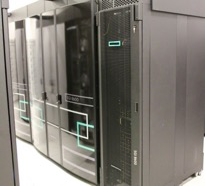
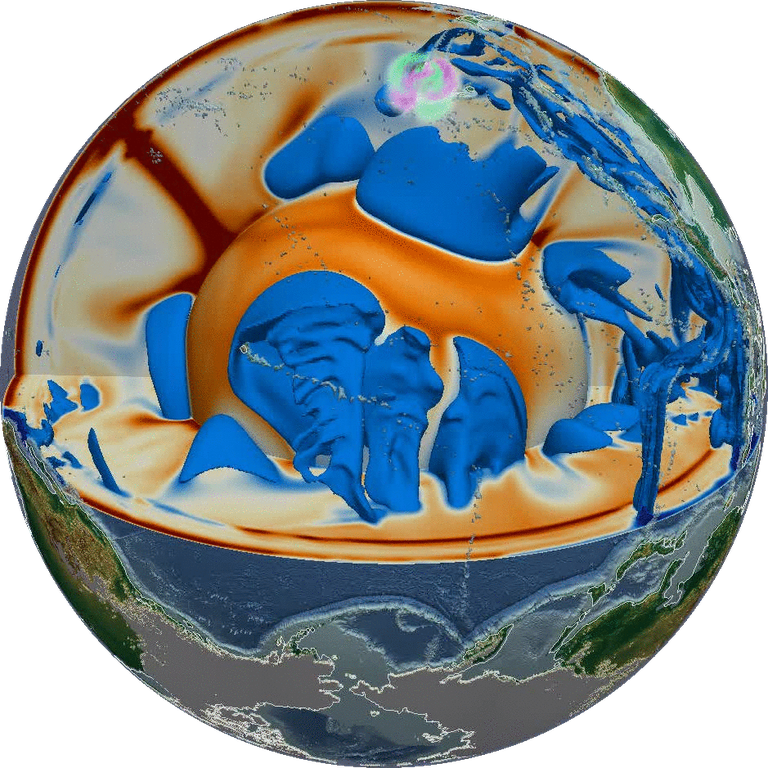
Bernhard Schuberth is a Senior Research Scientist in the Department of Earth and Environmental Sciences at Ludwig-Maximilians-Universität München, specializing in Geodynamics. His work bridges computational seismology, geodynamics, and mineral physics to understand Earth's deep structure and dynamics. He holds a PhD (summa cum laude, 2009) and a Habilitation (2023) in Geophysics from LMU Munich. His research focuses on mantle circulation models, seismic wave propagation, and tomographic filtering. Education: Diplom in Geophysics (2004, LMU Munich), PhD (2009), and Habilitation (2023). Awards include the Edison Award Silver Prize (2004) and a Marie-Curie Fellowship (2010–2012). Research Interests: Combining numerical simulations of seismic wave propagation with geodynamic models to test hypotheses about mantle dynamics. Key tools include spectral element methods, mantle flow modeling, and mineral physics-based phase transitions. Publications highlight: Recent work addresses uncertainties in mantle temperature estimates (2025), tomographic resolution (2024), and mantle flow trajectories (2023). Earlier studies validated thermal explanations for superplumes (2012) and post-perovskite constraints (2018). Awards and Grants: Recipient of grants from the Marie-Curie program and the German Excellence Network. Active in collaborative projects like PRACE DECI and GLOBALSEIS. Labs/Teams: Leads computational geophysics projects using high-performance computing. Collaborates with international groups on mantle dynamics and seismic modeling.
Simon Atkinson is a Senior Lecturer at De Montfort University's Faculty of Computing, Engineering and Media, where he leads research in digital music composition and electroacoustic practices. His work bridges creative practice with technological innovation in the Leicester Media School. Research interests focus on: Experimental interfaces for sound generation Computational approaches to music creation Perception of electronic soundscapes Interdisciplinary art-science collaborations His publications demonstrate sustained exploration of timbral complexity through digital means, with recent works examining AI-assisted composition and immersive audio environments. Trends indicate growing emphasis on cross-modal perception and sustainable artistic practices. Awards recognize his scholarly contributions to peer review processes in music technology journals. Current doctoral supervision involves projects on: Machine learning for interactive performance systems Haptic feedback in digital instruments Networked audiovisual installations He co-directs the Electroacoustic Resource Site (EARS) project and maintains collaborations with international research groups including the Orpheus Institute (Belgium) and CIRMMT (Canada).
Kate Nicholson is an academic researcher at Northumbria University, specializing in interdisciplinary studies at the intersection of environmental science, chemistry, and cultural heritage. Her work combines advanced technologies like machine learning, remote sensing, and unmanned aerial vehicles (UAVs) to address challenges in agriculture, ecology, and art conservation. She leads projects such as the Innovate UK-funded 'Development of a laundry stain identification and removal process' (2018–2021). Her research interests span agricultural technology (e.g., crop monitoring via UAVs), environmental remote sensing (e.g., wild orchid identification), and the scientific analysis of historical pigments in medieval manuscripts. Nicholson holds a PhD in Chemistry (2007) and is a Fellow of the Higher Education Academy (2017), contributing to academic and professional development in her field. Education: PGCE Chemistry (2013), PhD Chemistry (2007), MSc Chemistry (2003) Affiliations: Royal Society of Chemistry (since 2015) Her publications reflect a focus on applied technology in both natural and cultural domains, including studies on crop phenotyping, spectral analysis of ancient woodlands, and pigment composition in medieval art.
Academic Profile Paul Allen is Professor and Director of the Institute of Railway Research at the University of Huddersfield's School of Computing and Engineering. He serves as Associate Dean (RIKE) and leads research in railway dynamics and safety. With a PhD in contact mechanics from Manchester Metropolitan University, he has expanded the Institute of Railway Research from 9 to 30+ staff with £3m annual expenditure. Research Focus His work centers on railway systems optimization, including wheel-rail contact mechanics, braking systems, condition monitoring, and vehicle dynamics. He developed the £2.5m HAROLD test facility and secured over £10m in research funding, including the £22m Centre for Innovation in Rail project that created 50+ industry jobs. Publications Recent articles (2022-2025) focus on high-speed train dynamics, fault detection algorithms, composite materials in bogie frames, and machine learning applications in railway maintenance. Research consistently addresses wear analysis, structural integrity, and predictive maintenance methodologies. Honors & Leadership Fellow of the Institute of Mechanical Engineers Fellow of the Chartered Management Institute Advisor to HS2, Network Rail, and Department for Transport BBC commentator and industry press contributor Academic Activities Leads PhD supervision in railway engineering and serves on editorial boards for international conferences. His research group collaborates globally with rail industry partners including Alstom and Unipart Rail.
Marijana Gavrilović Božović is an Associate Professor at the Department of Electrical Engineering and Computer Science, Faculty of Engineering, University of Kragujevac, Serbia. Her academic work focuses on plasma physics, spectroscopy, and biomedical signal processing. Department: Electrical Engineering and Computer Science Email: marijana.gavrilovic@kg.ac.rs Office: D-26 Her research spans multiple domains: Plasma Physics and Spectroscopy : Investigates laser-induced plasma dynamics, Stark broadening, and LIBS (Laser Induced Breakdown Spectroscopy) for material analysis. Biomedical Engineering : Explores neural network applications for gait phase recognition using acceleration and force data. Medical Physics : Analyzed pediatric radiation exposure in clinical settings. Recent publications highlight her expertise in plasma diagnostics, cavitation effects during laser ablation, and biomedical signal processing. She employs advanced spectroscopic techniques and computational modeling to study plasma behavior under various conditions.
Gregor MacGregor is an Assistant Teaching Professor in the Masters of the Environment (MENV) program at the University of Colorado Boulder's Environmental Studies Department. He also serves as a Faculty Fellow at the University's Law School, where he teaches natural resources law and directs the Acequia Project, providing pro bono legal services to Hispano irrigators in southern Colorado. His academic background includes a BA in International Affairs and a J.D. with a Natural Resources Law certificate from the University of Colorado. His research and teaching focus on natural resources policy, environmental law, and legal frameworks supporting rural redevelopment. Beyond academia, he operates Vulcan Mine Bakery, offering free business consultations for rural economic initiatives. Recent scholarly contributions span debris disk dynamics, exoplanet studies, and space telescope instrumentation. His work integrates legal and scientific perspectives to address environmental challenges, particularly in water rights and community-based resource management. Education: BA International Affairs (CU Boulder), J.D. with Natural Resources Law Certificate (CU Law School) Professional Experience: Former water attorney in private practice, U.S. Army Cavalry Officer Key Projects: Acequia Project, Outdoor Recreation Economy courses
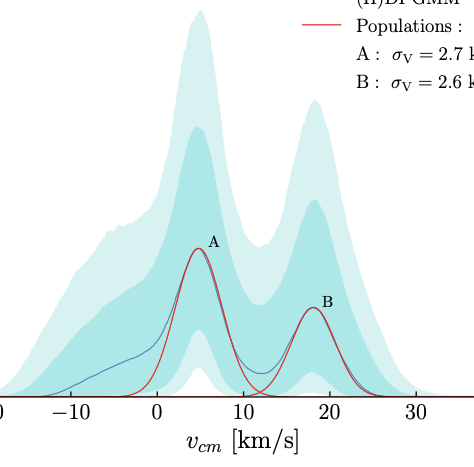
Johan Olofsson is an Adjunct Professor in the Planet and Star Formation department at the Instituto de Física y Astronomía in Valparaíso, Chile. His research focuses on massive star formation, binary systems, and observational astronomy. He specializes in analyzing radial velocity distributions and circumstellar material to understand stellar evolution mechanisms. His studies include investigating the binary fraction in clusters like M17, proposing migration scenarios for massive binaries, and modeling CO bandheads and hydrogen lines in disks. He has pioneered methods to identify binary candidates using single-epoch spectroscopy, contributing to understanding how massive stars form and evolve. Key findings include the observed 27% binary fraction in M17 clusters hardening into 87% intrinsic binaries over time, and the lack of short-period binaries in young massive stars. His work has been featured in MPIA press releases and international science publications. Collaborations include leading studies on accretion variability, disk modeling with PRODIMO software, and analyzing HII regions like NGC6357. His research bridges observational data with theoretical models to address fundamental questions in high-mass star formation processes.
Maria Bergemann is a Lise Meitner Group Leader and Independent Research Group Lead at the Max Planck Institute for Astronomy in Heidelberg, heading the Stellar Spectroscopy and Populations research group within the Galaxies and Cosmology department. Her research spans theoretical and observational astrophysics with a focus on stellar physics, galactic evolution, and cosmic nucleosynthesis. Her work encompasses non-equilibrium (Non-LTE) radiative transfer modeling and 3D radiation-hydrodynamics simulations of stellar atmospheres, lifting canonical approximations to provide new insights into stellar structure. She is actively involved in major astronomical programs including the Gaia-ESO survey, 4MOST, PLATO, WEAVE, and MSE projects, analyzing multi-million datasets to address fundamental questions about the origins of chemical elements, galactic structure, and star-planet connections. Her group has made significant contributions to understanding galactic chemo-dynamics, including studies of stellar clusters, abundance gradients, and the structure of the Milky Way disk and bulge. Dr. Bergemann's research has received support from the Max Planck Society, European Research Council, and the German Research Foundation. Her team develops sophisticated mathematical and statistical algorithms for robust model-data comparison and pattern recognition in multi-dimensional parameter spaces, including adaptation of the Payne code for Gaia-ESO and 4MOST data analysis and introduction of Bayesian spectroscopy methods. Max Planck Society funding recipient European Research Council funding recipient German Research Foundation funding recipient She has supervised numerous PhD students, postdocs, and master's students who have gone on to faculty positions at institutions worldwide including Purdue University, Frankfurt University, Yunnan University, and the University of Sheffield. Her current research group includes several members working on diverse projects related to stellar atmospheres, galactic structure, and nucleosynthesis. The group maintains the public database http://nlte.mpia.de for 3D Non-LTE models, which are essential for deriving accurate fundamental parameters of stars and their detailed chemical compositions.
Guadalupe Cañas Herrera is a Research Fellow at the European Space Agency (ESA) , specializing in Theoretical Cosmology . She is a key member of the Euclid Consortium and a software developer for the CLOE (Cosmology Likelihood for Observables in Euclid) project, which is part of ESA's official data analysis pipeline for cosmological constraints. Her research focuses on statistical analysis of beyond-Standard cosmological models to study dark energy, dark matter, and primordial density perturbations, using data such as the Cosmic Microwave Background, weak lensing, and galaxy clustering. She also explores forecasting techniques for novel observables like gravitational waves and machine learning applications in cosmological inference. Collaborations : Euclid Consortium, Osservatorio Astronomico di Roma, University of Amsterdam, Leiden Observatory, Lorentz Institute for Theoretical Physics, University of Cantabria. Contact : guadalupe.canasherrera@esa.int Her work bridges theoretical cosmology with advanced statistical methods and software development, aiming to unravel the universe's origins and evolution through precision data analysis.
Terje Gobakken serves as a Professor at the Norwegian University of Life Sciences within the Faculty of Environmental Sciences and Natural Resource Management, specifically in the Forestry and Renewable Energy Section. His research primarily focuses on developing advanced methodologies for forest resource assessment using remote sensing technologies like airborne laser scanning (ALS), satellite data, and geospatial analysis. His work contributes significantly to forest inventory systems, biomass estimation, climate change mitigation strategies, and sustainable forest management. Key research themes include: Integration of multisource remote sensing data for forest attribute mapping Development of statistical models for carbon stock assessment Innovative approaches to monitoring forest ecosystems under climate change Applications of machine learning in forestry
Ethan Neil is an Associate Professor of Physics at the University of Colorado Boulder, specializing in theoretical particle physics. His research focuses on lattice field theory, particle dark matter, and strongly-coupled quantum systems. He is affiliated with the Lattice Strong Dynamics (LSD) and Fermilab Lattice/MILC collaborations. Neil holds a PhD in Physics from Yale University (2011) and a BSc in Physics and Mathematics from Duke University (2005). His work emphasizes precision calculations in QCD, including contributions to the muon anomalous magnetic moment (g-2) and studies of dark matter models. He collaborates extensively on lattice simulations to explore new physics beyond the Standard Model, with applications to collider phenomenology and hidden sectors. Notable research includes investigations into stealth dark matter, hyper-Stealth particles, and flavor-violating axion-like particles (ALPs). Neil’s recent publications highlight advancements in lattice QCD techniques, including improved model-averaging methods and studies of infrared fixed points in gauge theories. He actively contributes to the Snowmass process, shaping the future of lattice gauge theory and particle physics research.
Samuel Leipold is a Lecturer at the Lucerne School of Music (Lucerne University of Applied Sciences and Arts), specializing in Jazz Guitar and Free Improvisation. He holds a Lecturer position within the Institute of Jazz and Folk Music. His research and artistic work focus on avant-garde jazz, contemporary classical influences, and experimental improvisation techniques. Leipold’s discography includes acclaimed albums such as Ostro (2023) and Viscosity (2021), praised for their innovative fusion of jazz, chamber music, and free improvisation. He is a member of the Swiss Jazz Orchestra and collaborates with artists like Jürg Bucher and Luca Lo Bianco. His work has been recognized, including a longlist for the Preis der Deutschen Schallplattenkritik (2021). He actively performs in Switzerland and internationally, blending classical composition techniques with jazz spontaneity. His teaching emphasizes artistic identity and personal expression in music.