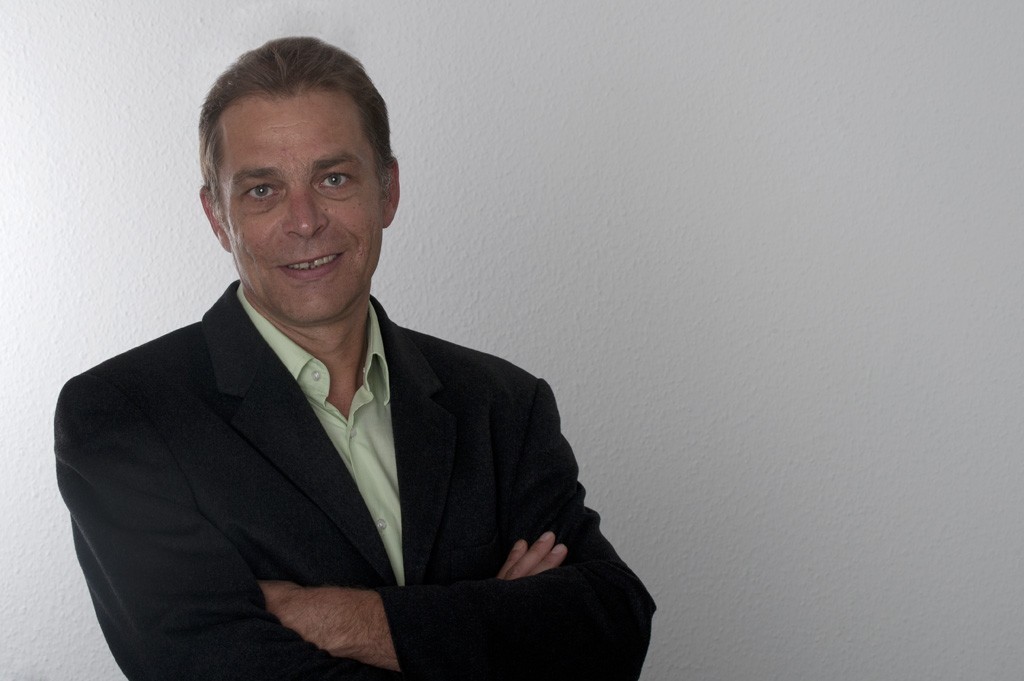
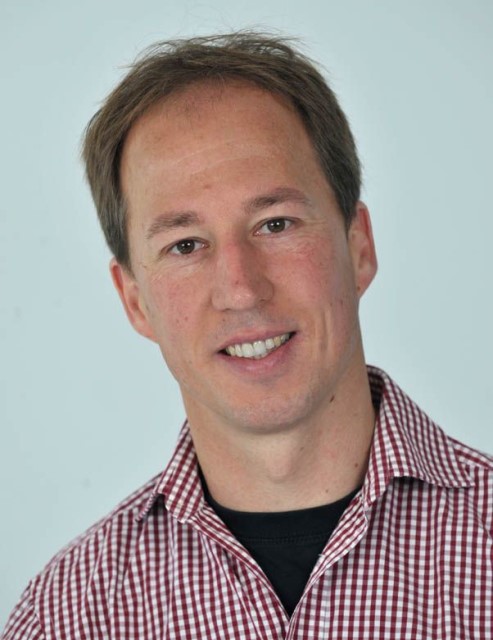
Prof. Dr. Thomas Brinkhoff is Chair of the Institute Board and Chair of Geoinformatics at Oldenburg University of Applied Sciences. He leads the Institute for Applied Photogrammetry and Geoinformatics (IAPG) and contributes to institutions like the Association for the Promotion of Geoinformatics in Northern Germany (GiN e.V.) and the Oldenburg Research and Development Institute for Computer Science (OFFIS e.V.). Education: Diploma in Computer Science (Informatik), Universität Bremen (1990) Doctorate in Computer Science (Dr. rer. nat.), Ludwig Maximilian University of Munich (1994) Brinkhoff's research spans geodatabase systems, spatiotemporal data processing, geosensor analytics, and location-based services. His work addresses Volunteered Geographic Information (VGI), web-based geospatial visualization, and mobile data integration, with applications in traffic management and forensic science. Recent projects include ProSaDi (Digital Provenance and Collection Research) and contributions to the Laboratory for optical 3D metrology . He has served on program committees for ACM SIGSPATIAL (2002-2019), AGILE conferences (2010-2025), and editorial boards of journals like GeoInformatica and TGIS. Notable Lectures: 2024: Forensic applications of tachograph data 2023: Geoinformatics in homicide investigations 2022: Spatiotemporal analysis for sustainability projects 2015: Open geodata standards at FOSSGIS 2014: Mobile sensor data processing
Prof. Dr. Dennis Säring is a faculty member at the University of Applied Sciences Wedel , specifically affiliated with the School of Engineering. His academic and research activities focus on Deep Learning , Medical Image Analysis , and applications of Artificial Intelligence in healthcare and biomedical imaging. He has led seminars on Deep Learning topics and supervised student projects in Autonomous Driving at Audi's AADC 2018 competition. Research Highlights : Cardiovascular imaging, forensic age estimation via MRI, neural network-based bone segmentation, and cerebrovascular aneurysm analysis. Technical Expertise : Cardiac MRI, 3D/4D image processing, parametric mapping, and spatiotemporal data fusion. His recent publications (2018-2023) emphasize 3D MR segmentation for age assessment, CMR strain analysis in athletes, and T1/T2 mapping for myocarditis. Key collaborations include institutions like the University Medical Center Hamburg-Eppendorf and Wedler Hochschulbund, with funding for autonomous vehicle research. While no explicit scientific awards are listed, his work spans clinical cardiology, forensic radiology, and AI-driven medical diagnostics.
Prof. Dr. Axel Mecklinger is a leading cognitive neuroscientist at Saarland University , specializing in the neurocognition of memory and language through spatiotemporal brain imaging (EEG/MEG/fMRI). His career spans over three decades, with significant contributions to understanding visual working memory , associative recognition , and memory development . Key research areas: Memory binding, ERP subsequent memory effects, novelty detection, and cognitive aging Major grants: DFG Research Groups, Collaborative Research Centers, and international collaborations with the Chinese Academy of Sciences Scientific leadership: Organized conferences, edited journals, and served as speaker for research training groups His recent work explores unitization in memory formation , cross-cultural differences in memory processing , and theta neurofeedback interventions . Awards include the Early Career Award of the German Psychophysiology Society (1992) and the European Federation of Psychophysiology Societies' Federation Prize (1994). Current projects investigate the neural mechanisms of semantic surprisal and memory plasticity in aging populations.
Miguel Mahecha is Professor of Environmental Data Science and Remote Sensing at the University of Leipzig, where he serves as Institute Head of the Institute for Earth System Science and Remote Sensing. He is also affiliated with the Remote Sensing Centre for Earth System Research, a collaboration between Leipzig University and the Helmholtz Centre for Environmental Research (UFZ). Mahecha is a member of the German Centre for Integrative Biodiversity Research (iDiv) and serves as Principal Investigator in the Centre for Scalable Data Analytics and Artificial Intelligence. Additionally, he is a Fellow of the European Laboratory for Learning and Intelligent Systems and co-spokesperson for the National Research Data Infrastructure for Earth System Sciences (NFDI4Earth). Full Professor for Modelling Approaches in Remote Sensing, University of Leipzig (since 03/2020) Research Group Leader: Empirical Inference in the Earth System, Max Planck Institute for Biogeochemistry, Jena (12/2012 - 03/2020) PostDoc, Max Planck Institute for Biogeochemistry, Jena (10/2009 - 11/2012) PhD in Environmental Sciences, ETH Zürich (06/2006 - 09/2009) Diploma in Geoecology, Bayreuth University (10/2000 - 04/2006) Mahecha's research focuses on understanding ecosystem responses to climate extremes and human-environment relationships during these events. He investigates macro-ecological dynamics and ecosystem functioning using data-driven methods and high-dimensional Earth observations. A key contribution is his co-development of the Earth System Data Cube concept, which integrates empirical methods with theoretical understanding to analyze complex Earth system interactions. His work spans biogeography, ecosystem functioning, and advanced data science methodologies for environmental monitoring. His recent publications demonstrate a strong emphasis on analyzing compound climate extremes, particularly heatwaves and droughts, and their impacts on ecosystems. Mahecha has pioneered methods using Earth System Data Cubes to integrate diverse environmental datasets, enabling novel insights into biosphere-atmosphere interactions. His research increasingly incorporates artificial intelligence and machine learning approaches to understand spatiotemporal patterns in ecological systems, with applications in real-time forest monitoring and biodiversity assessment. Fellow of the European Laboratory for Learning and Intelligent Systems Co-spokesperson for NFDI4Earth (National Research Data Infrastructure for Earth System Sciences) Mahecha leads multiple significant research projects including Digital Forest (real-time forest monitoring), NFDI4BioDiversity, and XAIDA (extreme events: AI for Detection and Attribution). His work receives funding from diverse sources including EU, DFG, and Stiftungen Inland. He collaborates extensively with the German Centre for Integrative Biodiversity Research (iDiv) and the Centre for Scalable Data Analytics and Artificial Intelligence. His research group, Earth System Data Science (ESDS), focuses on developing methods to extract valuable information from long-term environmental observations to understand coupled Earth system dynamics. At the Remote Sensing Centre for Earth System Research, Mahecha's ESDS group investigates how ecosystem functions respond to climate extremes, societal vulnerability to environmental hazards, and nonlinear interactions in coupled Earth systems. The group leverages citizen science data, remote sensing observations, and advanced computational methods to address pressing environmental questions.
Eli D. Strauss is a behavioral ecologist and Postdoctoral Researcher at the Max Planck Institute of Animal Behavior and the University of Konstanz. He will transition to an Assistant Professor position at the Department of Integrative Biology, Michigan State University in late 2025. His research focuses on the evolution of stable social systems, particularly in spotted hyenas, analyzing how individual behaviors and relationships shape group-level dynamics. Strauss employs field experiments, computational techniques, and long-term observational data to study dominance hierarchies, social inequality, and the interplay between individual experiences and collective behaviors. Research Interests : Strauss investigates how societies emerge from individual interactions, emphasizing long-term perspectives. Key themes include dominance hierarchy dynamics, social inheritance, and the ecological drivers of social behavior. His work bridges behavioral ecology with computational methods, addressing questions about social structure stability and evolutionary adaptations. Key Projects : Co-director of the Mara Hyena Project in Kenya, a long-term study on hyena behavior and ecology. Developing methodologies for longitudinal studies of dominance hierarchies, including frameworks for analyzing hierarchy dynamics across timescales. His computational tools (e.g., DynaRankR ) are widely used for dominance inference. Upcoming Initiatives : Establishing a lab at Michigan State University focusing on social behavior and collective ecology. Recruiting graduate students and postdocs to study social systems, computational ecology, and animal behavior.
Mohamed Sarwat is an Associate Professor at Arizona State University specializing in databases , spatial data management , and recommender systems . His research focuses on GeoSpark —a cluster computing framework for spatial data—and its extensions like GeoSparkViz for visualization and GeoSparkSim for traffic simulation. Key Contributions: LARS* (Location-Aware Recommender System), Horton* (Graph Reachability), Sindbad (GeoSocial Platform), and Riso-Tree (Graph Database Indexing) Research Themes: Integration of spatial/temporal data with machine learning, efficient indexing for big geospatial datasets, and scalable frameworks for mobility data science His work spans collaborations with 23+ co-authors across institutions like University of Minnesota, University of Melbourne, and University of Salzburg. Current projects emphasize GeoTorchAI —a spatiotemporal deep learning system—and mobility data science infrastructure.
Dongheui Lee is an Assistant Professor at the Institute of Automatic Control Engineering (LSR) within the Faculty of Electrical Engineering and Information Technology at Technische Universität München (TUM). She leads the Dynamic Human Robot Interaction for Automation System Lab. Her research focuses on human motion understanding, physical human-robot interaction, and machine learning in robotics. Education: B.S. and M.S. in Mechanical Engineering from Kyunghee University (2001-2003), PhD in Mechano-Informatics from the University of Tokyo (2007). Prior roles include research scientist at KIST Korea (2001-2004) and project assistant professor at the University of Tokyo (2007-2009). Research Interests: Human-robot collaboration, probabilistic robotics, motion recognition, and incremental lifelong learning mechanisms. She has contributed to advancements in motion primitives, compliant physical interaction, and real-time object tracking. Selected Awards: Finalist for KUKA Service Robotics Best Paper Award (2009), Hirose Scholarship (2006-2007), and multiple grants from KRF, KOSEF, and international robotics competitions. Key Publications: Focus on prioritized inverse kinematics, motion imitation, and adaptive control systems. Her work bridges robotics theory and practical applications in humanoid robots and human-robot interaction.
David Bermbach is a Full Professor at Technische Universität Berlin , leading the Scalable Software Systems group since 2023. His research focuses on distributed systems, serverless computing, and benchmarking, with significant work on edge and fog computing architectures. He is affiliated with the Einstein Center Digital Future and co-chairs interdisciplinary projects like SimRa for bicycle traffic safety. Full Professor, Scalable Software Systems (2023–present) ECDF-Professor, Mobile Cloud Computing (2017–2023) Postdoctoral Researcher (2014–2017) Education : Diploma in Business Engineering (2010) – Karlsruhe Institute of Technology (KIT) PhD in Computer Science (2014, summa cum laude) – KIT Research Interests span distributed systems with emphasis on cloud, edge, and fog computing, serverless architectures, IoT platforms, and benchmarking frameworks. His work addresses consistency-performance trade-offs, resource placement, and interdisciplinary applications in urban mobility and satellite edge computing. Article Trends show a focus on serverless computing (12/15), edge-cloud integration (9/15), and benchmarking methodologies (7/15). Key themes include optimizing function placement, federated learning architectures, and low-earth orbit computing systems. Scientific Awards Best Paper Award – ShutPub (2024) Best Workshop Paper – A Research Perspective on Fog Computing (2017) Best Paper Runner Up – Benchmarking Eventual Consistency (2014) Summa Cum Laude PhD Thesis (2014) Advising & Grants include mentoring students like Tobias Pfandzelter and Trever Schirmer, leading funded projects through the Einstein Center Digital Future, and contributing to 6G network research. His team works on cloud federation, serverless optimization, and real-world IoT applications.
Fabian Gans is a Researcher at the Max Planck Institute for Biogeochemistry, affiliated with the Department Biogeochemical Integration led by Prof. Dr. M. Reichstein. He leads the Scalable Spatiotemporal Data Structures and Analytics (SSDSA) research group and is actively involved in the Empirical Inference of the Earth System group under Dr. Miguel D. Mahecha, as well as the Energy and Earth System group under Dr. A. Kleidon. His work is central to advancing data-driven methodologies in Earth system science. His research focuses on Earth system dynamics, particularly through the development and application of Earth System Data Cubes (ESDCs), which integrate multivariate spatiotemporal datasets for robust analysis. He employs machine learning, remote sensing, and hybrid modeling to study carbon and water fluxes, climate extremes, and ecosystem responses. His work bridges observational data with modeling frameworks to improve understanding of biosphere-atmosphere interactions. The 15 most recent publications highlight a strong trend toward data integration, scalability, and the use of artificial intelligence in Earth sciences. Key themes include the FLUXCOM framework for upscaling carbon fluxes, the development of Earth System Data Cubes, analysis of compound climate extremes, and hybrid modeling approaches. His research consistently emphasizes open science, reproducibility, and the need for integrated data platforms to tackle global environmental challenges. Scientific Awards: No awards listed in the provided text. Advising and Grants: No formal advisees or students are listed. No specific grants or funding sources are mentioned, though his involvement in large collaborative projects like FLUXCOM and Earth System Data Cubes suggests participation in significant research initiatives. Labs and Teams: Fabian Gans leads the Scalable Spatiotemporal Data Structures and Analytics (SSDSA) group and is a key member of the Empirical Inference of the Earth System team. He is also involved in the DeepESDL platform, an open collaborative environment for Earth system research, indicating leadership in developing research infrastructure and fostering interdisciplinary collaboration.
Lukas Pfahlsberger is a scientific collaborator at the Institute of Computer Science , Humboldt University of Berlin, within the Faculty of Mathematics and Natural Sciences. His work focuses on process mining and business process management. Research interests include: Causal process mining and knowledge integration Business process analytics and organizational capability development Big data governance and alignment methods Spatiotemporal analysis in process mining Recent publications explore temporal, multi-perspective, and causal approaches to process mining, with applications in IT demand management and digital transformation. His work bridges technical process mining methods with organizational theory and data governance frameworks. Contact: lukas.pfahlsberger@hu-berlin.de
Tim Christian Rese (formerly Dockenfuss) is a current Research Associate at the Scalable Software Systems research group within the Faculty IV - Electrical Engineering and Computer Science at the Technical University of Berlin , joining in February 2024 after completing his Bachelor's (2021) and Master's (2024). He supports teaching activities for both bachelor's and master's courses under Prof. Dr.-Ing. Bermbach. Education: Bachelor's Degree (2021) Master's Degree (2024) His research interests center on benchmarking in emerging computing paradigms, specifically Function-as-a-Service (FaaS) and spatiotemporal databases . These areas align with performance evaluation and optimization in distributed systems. Contact details include email tr@3s.tu-berlin.de , office location EN 17, Room E-N 156.
PD Dr. Katja Mellmann is a Scientific Associate at the Max Planck Institute for Empirical Aesthetics in Frankfurt am Main, where she holds a Heisenberg Position since 2020. She maintains an adjunct professor status (Privatdozentin) at LMU Munich's Institute for German Philology. Her academic trajectory includes interim professorships at TU Darmstadt (2022-2023), Ruhr University Bochum (2021-2022), and Bielefeld University (2019-2020). Previously, she was a Dilthey Fellow at the University of Göttingen (2010-2018) and visiting scholar at Ohio State University's Project Narrative (2009-2010). Mellmann earned her Habilitation (2014) and PhD (2005) from LMU Munich, following an MA in German and French Languages and Literatures (2000). She serves as co-editor of the book series Poetogenesis: Studies and Texts on the Empirical Anthropology of Literature and was on the editorial board of Frontiers in Psychology (Evolutionary Psychology section, 2010-2023). Her research integrates literary theory with evolutionary psychology, examining the biological foundations of narrative, emotional responses to literature, and historical reception. Key areas include the anthropology of literary behavior, cognitive narratology, German literature of the 18th-19th centuries, and media history. She pioneers interdisciplinary approaches connecting philology with human sciences to understand literature's phylogenetic origins and cognitive mechanisms. Mellmann's publications demonstrate sustained focus on evolutionary literary theory, narrative psychology, and German literary history. Recent works explore biological functions of poetic behavior, cognitive principles of storytelling, and quantitative reception studies. Her research consistently bridges historical analysis with contemporary cognitive science frameworks. Heisenberg-Programm der DFG (2020) Senior Fellowship, Marbach Weimar Wolfenbüttel Research Association (2017) DFG Research Grant (2008) Dilthey-Fellowship, Volkswagen Foundation (2008) Weimar Scholarship, Stiftung Weimarer Klassik (2005) She directs the project Biological Anthropology of Literature: Phylogenetic Preconditions of Poetic Behavior , investigating language origins and narrative genres through evolutionary frameworks. Collaborating with Michelle Scalise Sugiyama (University of Oregon), she co-develops the Forager Folklore Database for cross-cultural narrative analysis. Her team includes doctoral researcher Jan Jokisch and student assistants.
Karin Mora is a postdoctoral researcher at Leipzig University , affiliated with the Faculty of Physics and Earth System Sciences . She leads the DeepFeatures project funded by the European Space Agency and contributes to the proposed Breathing Nature excellence cluster, combining biology, economics, meteorology, and physics to study biodiversity-climate-human interactions. Research Focus : Phenological Rhythms in Ecosystems AI & Mathematical Modeling of Climate Impacts Earth System Data from Satellites and Citizen Science Scientific Contributions : DeepExtremeCubes methodology for climate extremes SpectralIndices.Jl software for remote sensing Plant Trait Coordination and Forest Monitoring Innovations Awards : Forschungspreis (Paderborn University, 2015) Technion Postdoctoral Scholarship (2014-15) Funding for EWM Summer School Course (2013) Education : PhD in Applied Mathematics (University of Bath, 2014) Master of Mathematics (University of Reading, 2008) Outreach : MDR Wissen Radio Contributions Royal Society Summer Science Exhibition Co-organizer of EuropaBON Stakeholder Dashboard
Professor André Niemann at the University of Duisburg-Essen's Institute of Hydraulic Engineering and Water Management is a leading expert in water resources management, focusing on flood protection, dam control systems, and AI-driven hydrological forecasting. His work bridges practical engineering challenges with advanced data science applications. Academic Leadership: Coordinated projects like interSim (interactive simulation for vocational training) and PROWAVE (forecast-based dam control) Research Impact: Pioneered ensemble optimization methods for reservoirs and LSTM models for inflow forecasting Technological Innovation: Developed AI frameworks for sensor data quality control in water management His research addresses critical intersections between hydraulic engineering and climate resilience, with recent projects analyzing flood forecasting systems ( HÜProS ), urban drainage optimization, and sustainable hydropower solutions using legacy mining infrastructure. Collaborations span institutions like Harz Waterworks, Deltares, and international conferences (IAHR, ICOLD, EGU). Publications since 2012 cover topics from underground pumped storage feasibility to real-time control of urban reservoirs, with a growing emphasis on machine learning applications since 2023. He actively engages in fieldwork, including excursions to dams and control centers, and teaches modules ranging from hydromechanics to environmental monitoring.
Dr.-Ing. Reinhold Lehneis is a Scientist and Group Leader at the Department of Microbial Biotechnology, Helmholtz Centre for Environmental Research (UFZ), Leipzig, Germany. His work focuses on Energy system analysis for renewable electricity supply in electrobiorefineries Spatiotemporal modeling of renewable energy production Climate change impacts on wind and solar power generation Developing simulation tools like ReSTEP (Renewable Spatial-Temporal Electricity Production) models His research integrates environmental biotechnology with energy transition strategies, emphasizing Biomass power plants Wind and photovoltaic systems Run-of-river hydropower Municipal contributions to Germany’s energy goals Selected publications demonstrate expertise in High-resolution energy modeling Climate-adapted renewable systems Spatial equity in energy deployment and have appeared in journals like Energies , Renewable Energy , and Resources .