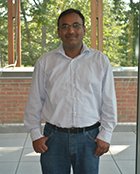
Praveen Tripathi is a Research Assistant Professor in the Department of Computer Science at Stony Brook University. His research focuses on Machine Learning, Data Mining, Spatio-Temporal Data Analysis, and Time Series Data Analysis. He has contributed to trajectory analysis frameworks, recommendation systems with temporal influence, and optimization algorithms. While his biography section is not detailed here, his work emphasizes practical applications of spatio-temporal data and multi-objective optimization. Awards are listed in the menu but specific details are not provided in the text. His publications span cybersecurity, trajectory analysis, and financial market dynamics, reflecting a strong interdisciplinary approach. No advising or grant information is explicitly mentioned in the provided content.
Professor Jonathan Corney holds the Chair of Digital Manufacture in the School of Engineering at the University of Edinburgh. His research focuses on advanced manufacturing technologies, including digital twin applications, smart factory optimization, sustainability engineering, and additive manufacturing. He leads projects addressing human factors in industrial environments, predictive analytics for production processes, and intellectual property challenges in modern manufacturing systems. His academic background encompasses mechanical engineering with specialization in CAD/CAM systems, hydroforming technology, and patent analysis for design innovation. Corney has pioneered methods like the Economic and Environmental Impact Assessment for Sustainability (EENIAS), and developed decision support frameworks for energy-efficient scheduling and garment reprocessing in circular economies. Key research themes include: Smart factory design through real-time worker movement analysis Cyber-physical systems for supply chain optimization Machine learning applications in manufacturing process control Human-centric automation and safety protocols His recent work emphasizes predictive modeling using spatio-temporal graph networks, digital twin integration in assembly processes, and sustainable manufacturing practices. Over 150 peer-reviewed articles demonstrate his contributions to near-net-shape manufacturing, intellectual property management, and crowdsourced design methodologies.
Dr. Krystal Randall is a Research Fellow at the University of Wollongong's School of Earth, Atmospheric and Life Sciences (SEALS), specializing in Antarctic terrestrial ecosystems. Her work integrates spatial biology, microclimate modeling, and field monitoring to study plant-climate interactions at ultra-fine scales. Her research focuses on climate change impacts in Antarctic ecosystems , particularly how extreme events affect moss communities. She develops novel technologies including drone-based remote sensing systems, MossCam, and smart sensors for remote biological monitoring. Her fieldwork spans Australia's alpine regions and multiple Antarctic locations, collecting critical data on physical-biological interactions in polar environments. Key research trends from her publications include the application of drone hyperspectral imaging and AI for Antarctic vegetation monitoring , microclimate modeling at unprecedented scales, and physiological studies of moss survival in extreme conditions. Her work bridges spatial biology, climate science, and technology development. Scientific recognition includes: Antarctic Science Foundation Ambassador (2023) She coordinates courses including BIOL241 (Biodiversity of Terrestrial Organisms) and BIOL362 (Ecophysiology), and supervises PhD research on Antarctic moss responses to extreme climate events. Her funded projects include the ECO-ANTARCTICA observing system and internal grants for technology development. Randall leads field campaigns developing new monitoring methodologies while contributing to global datasets like SoilTemp.
Professor Zhifeng Bao is a faculty member at RMIT University's School of Computing Technologies. His research focuses on enhancing data usability across heterogeneous domains, including structured, unstructured, and spatial-temporal data. His work spans database management, keyword search optimization, social network analysis, and spatio-textual data processing. He coordinates the course COSC1169: Intranet and Internet Data Engineering and supervises PhD/Masters students in projects such as trajectory data processing, data asset valuation, and edge computing optimization. Research interests emphasize improving data accessibility and efficiency through methodologies like query relaxation, visual analytics, and provenance tracking. His recent projects include cost-effective edge node placement, traffic accident risk prediction, and differentially private federated learning. Teaching and supervision activities highlight a commitment to bridging theory and practical data engineering challenges.
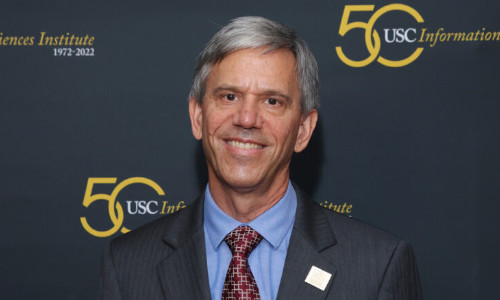
Craig Knoblock serves as the Keston Executive Director of the Information Sciences Institute (ISI) at the University of Southern California, Vice Dean of Engineering for the Viterbi School of Engineering, and Research Professor of both Computer Science and Spatial Sciences. He also directs USC's Data Science Program and leads the Center on Knowledge Graphs as Research Director. Dr. Knoblock's research focuses on techniques for describing, acquiring, and exploiting the semantics of data. His extensive work spans source modeling, schema and ontology alignment, entity and record linkage, data cleaning and normalization, extracting data from the Web, and building comprehensive knowledge graphs. With over 300 published works in these areas, his research has significantly advanced the field of semantic data integration. His work demonstrates strong trends toward practical applications of knowledge graphs across diverse domains including cultural heritage, geospatial information systems, human trafficking detection, and sensor networks. The evolution of his publications shows a progression from foundational ontology alignment techniques to sophisticated knowledge graph applications addressing real-world challenges. Fellow of the Association for the Advancement of Artificial Intelligence (AAAI) Fellow of the Association of Computing Machinery (ACM) Past President and Trustee of the International Joint Conference on Artificial Intelligence (IJCAI) Recipient of the 2014 Robert S. Engelmore Award Seven best paper awards for his research contributions As Executive Director of USC's Information Sciences Institute, Dr. Knoblock leads one of the world's premier research centers in computer science and information technology. His leadership extends to directing the Center on Knowledge Graphs and serving as Associate Director of the Informatics Program at USC. His educational background includes a Bachelor of Science from Syracuse University and Master's and Ph.D. degrees in Computer Science from Carnegie Mellon University.
Hanan Samet is a Distinguished University Professor in the Computer Science Department at the University of Maryland, College Park. He holds affiliations with the Center for Automation Research and the Institute for Advanced Computer Studies (UMIACS). His academic journey includes a PhD from Stanford University (1975) in Computer Science, following degrees in Engineering (UCLA) and Operations Research/Computer Science (Stanford). Affiliations: University of Maryland, College Park (since 1975) Roles: Professor, Founding Editor-in-Chief of ACM Transactions on Spatial Algorithms and Systems, Founder of ACM SIGSPATIAL Samet's research focuses on spatial data structures, spatial databases, GIS, computer vision, and information retrieval. His seminal work includes the Foundations of Multidimensional and Metric Data Structures , an award-winning book addressing spatial indexing and query optimization. He pioneered frameworks like NewsStand for map-based news exploration and Coronaviz for pandemic visualization. Key contributions span spatial synonyms for approximate search, SAND spatial browser for digital government, and trajectory analysis systems for aviation safety and urban mobility. His work bridges theory and practice, influencing databases, graphics, and geographic systems. Education: B.S. Engineering, UCLA M.S. Operations Research, Stanford M.S./Ph.D. Computer Science, Stanford Samet has advised numerous students and led NSF-funded projects on spatio-textual data, similarity search, and spreadsheet analysis. His honors include the ACM Paris Kanellakis Award (2011), IEEE Wallace McDowell Award (2014), and UCGIS Research Award (2009). His labs and teams focus on spatial algorithms, visualization, and GIS applications. Notable projects include VASCO (spatial index demo), MARCO (image databases), and CHOLERA (disease tracking).
Prof. Norbert Ritter is the Dean of the Faculty of Mathematics, Computer Science and Natural Sciences (MIN) at the University of Hamburg since August 2022. He holds a full professorship in the Department of Informatics, leading the Databases and Information Systems group. Previously, he served as an associate professor (2002–2005) and assistant professor (1998–2002) at the Technical University of Kaiserslautern and the University of Hamburg. His research focuses on advanced database technologies, including NoSQL systems, scalable cloud data management, big data analytics, and information integration. Key areas include service-oriented computing, federated database systems, and transaction management. He has authored over 149 publications, with recent work emphasizing polyglot data stores, spatio-temporal data processing, and web performance optimization. Education: M.Sc. (1991), Ph.D. (1997) in Computer Science from the University of Kaiserslautern Professional Activities: Dean of MIN Faculty (since 2022), former head of DBIS group Labs/Teams: Leads the Databases and Information Systems research group His advising record includes over 274 student theses, spanning PhD and master's projects in database design, data integration, and web performance engineering. Collaborative projects include Beaconnect (continuous web A/B testing) and Compaz (shared dictionary compression).
Chenjuan Guo is an Associate Professor at the Department of Computer Science, Aalborg University, within The Technical Faculty of IT and Design. She is affiliated with the Data Engineering, Science and Systems group and the AI for the People initiative, and is part of the Daisy - Center for Data-intensive Systems. Her research focuses on machine learning, data engineering, spatio-temporal data analysis, and time series forecasting. Key projects include the Villum Foundation-funded 'Explainable AI for Complex Microbial Community Interactions and Predictions' (2021-2024) and the Astra project on time series analytics in spatial networks (2018-2021). Her research interests span representation learning, autoencoders, path representation, outlier detection, trajectory data analysis, and time series modeling. She has supervised 3 PhD students and contributed to over 60 publications, with a recent emphasis on transformer-based forecasting, neural architecture search, and continuous learning frameworks for spatio-temporal data. Her work bridges theoretical advancements with practical applications in environmental science, cloud computing, and urban mobility systems. Key achievements include developing frameworks like AutoCTS++ for automated time series forecasting and LightGTS for lightweight models. She actively collaborates internationally, contributing to conferences like ECML PKDD and CVPR. Her research is supported by grants from the Villum Foundation and other institutions.
Len Kne is a Researcher at the University of Minnesota , serving as Research Computing Director at U-Spatial. He has taught graduate-level GIS courses since 2012 including: GIS 8501: GIS Project Management & Professional Development (2012-2019) PubH 7253: GIS in Public Health (2015-2018) PubH 6719: Humanitarian Crisis Simulation (2018-2019) GIS 5577: Spatial Databases (2012-2017) Research Interests: Geographic Information Science, Spatial Computing, Remote Sensing, and Spatial Thinking. His work contributes to UN Sustainable Development Goals through geospatial analysis applications. Notable Projects: Lead PI for USDA-funded crop evaluation ML modeling (2024-2026) Co-PI on winter stress mitigation for northern turfgrasses (2021-2026) Minnesota Department of Health infrastructure transparency tool (2021-2026) USDA Forest Service floodplain analysis projects (2023-2024) Datasets: Contributed to multiple open datasets including historical surface waters mapping, digital surface models, and ecological suitability studies for Twin Cities.
Robert Brunner serves as Professor of Astronomy at the University of Illinois at Urbana-Champaign, where he bridges astrophysical research with computational innovation. His work focuses on extracting knowledge from massive astronomical datasets through advanced statistical and machine learning techniques, while also extending methodologies to finance and agricultural applications. Research interests center on developing machine learning algorithms (random forests, deep neural networks, Bayesian estimation) for astronomical data analysis, cosmological parameter constraints via n-point clustering measurements, and hardware acceleration using GPUs/cloud systems. His interdisciplinary approach spans source classification, transient phenomena detection in surveys like SDSS and DES, and applications in financial time-series analysis and agricultural remote sensing. Recent publications (2019-2025) reveal strong cross-domain expertise: astronomical catalogs for Rubin Observatory and Spitzer surveys coexist with financial market analysis using community detection methods and agricultural computer vision systems. Key methodological threads include spatio-temporal forecasting, multimodal learning for earnings calls, and anomaly detection via extended isolation forests, demonstrating consistent innovation in handling petascale datasets across scientific boundaries.
Prof. Petra Sauer is a Professor of Computer Science and currently serves as Dean of the Department of Computer Science and Media at BHT Berlin. She leads research in database systems, geospatial technologies, and educational data analytics. Her work bridges academic research with practical applications in facility management, urban logistics, and e-learning platforms. Key projects include DiSEA (education analytics), ExCELL (mobility data integration), and BIM-FM (building lifecycle management). Research interests focus on: Database design & schema evolution Semantic web applications Geodatabase implementations Learning analytics in MOODLE environments Notable awards include the Tiburtius Prize (Gold 2008 for Marc-Florian Wendland's thesis, Bronze 2009 for Marco Blankenburg's thesis). Active supervision spans over 15 advisees across data science, database security, and semantic integration topics. Current courses include 'Database Systems' for Media Informatics students. Key projects: DiSEA: Moodle-based learning analytics framework ExCELL: Real-time traffic forecasting platform mVIZ: Open data visualization guidelines BIM-FM: Semantic integration of building models
Dr. Fabian Panse is a Researcher at the Database and Information Systems (DBIS) group within the Department of Informatics at the University of Hamburg. His work focuses on database systems, data quality, and probabilistic data management, with significant contributions to polyglot persistence, duplicate detection, and data simulation frameworks like SmartOpenHamburg and HADeS. Research Assistant since 2009 PhD in Computer Science Research interests center on polyglot persistence , probabilistic databases , duplicate detection , and data pollution techniques . His publications span conferences like VLDB, ICDE, and workshops on database fundamentals. He has supervised over 20 theses including Master's and Bachelor's projects on topics ranging from data synthesis to smart city applications . Key collaborations include Prof. Norbert Ritter and Dr. Wolfram Wingerath.
Dr. Daniel Goldberg is an Associate Professor at Texas A&M University and Director of the TAMU GeoInnovation Service Center. His expertise spans GIS, geocoding, and geocomputation, with a focus on health and environmental applications. He holds a Ph.D. in Computer Science (USC, 2010), M.Sc. (USC, 2003), and B.Sc. (Rutgers, 2002). His research interests include CyberGIS, 3D GIS, spatial databases, and environmental exposure assessment. Notable projects involve developing real-time mobile crowdsensing systems and analyzing the impact of natural disasters on public health. He has contributed to over 40 peer-reviewed articles, often leveraging interdisciplinary approaches. Dr. Goldberg has received awards such as the Texas A&M Montague Scholar Award (2015) and the CyberGIS Fellow designation (2014). His work emphasizes geospatial privacy, health data security, and innovative GIS education methods. He leads the TAMU GeoServices team and collaborates with national institutions like the National Center for Supercomputing Applications. Advising highlights include mentoring over 20 graduate and undergraduate students, with notable contributions to projects on cyberGIS frameworks and NTD surveillance. His lab focuses on bridging geospatial technology with societal challenges in health, environment, and urban planning.
Javier Osorio is an Assistant Professor at the University of Arizona's School of Government and Public Policy. His research focuses on the micro-foundations and dynamics of political and criminal violence in Latin America, employing quantitative methods such as natural language processing, GIS, and big data analytics. He has received awards from the UNODC and MPSA, and his work appears in leading journals like the Journal of Peace Research . Dr. Osorio holds a Ph.D. in Political Science from the University of Notre Dame (2013) and previously taught at John Jay College of Criminal Justice. He leads the Academy for Security Analysis, funded by USAID, and collaborates with the NSF and DoD’s Minerva Initiative. His research projects include supervised event coding for conflict analysis and randomized controlled trials in Central America. His key contributions span conflict language models (e.g., ConfliBERT), criminal violence classification, and multilingual event coding frameworks. He has advised interventions in El Salvador and Nicaragua, emphasizing data-driven approaches to security challenges.
Beng Chin Ooi is a Lee Kong Chian Centennial Professor at the National University of Singapore (NUS), School of Computing. He has been with NUS since 1991, progressing through the ranks from Lecturer to his current distinguished position. He previously served as Dean of the School of Computing from 2007 to 2013 and as Director of the Smart Systems Institute from 2011 to 2021. His educational background includes: 1985: B.Sc. (1st Class Honors) from Monash University, Melbourne, Australia 1989: Ph.D. in Computer Science from Monash University, Melbourne, Australia Beng Chin Ooi's research focuses on database systems, large scale analytics, and distributed systems. His work has been instrumental in advancing the field of data management technology, particularly in the context of "big data" in large-scale parallel and distributed systems. He has made significant contributions to spatio-temporal and distributed data management, as well as pioneering research in distributed database management and peer-to-peer based enterprise quality management. His recent publications demonstrate a strong focus on blockchain technology, machine learning systems, and healthcare informatics. There's a clear progression from foundational database research to applications in emerging technologies like blockchain and AI. His work bridges theoretical advances with practical system implementations, as evidenced by multiple open-source projects associated with his publications. His notable awards include: 2021: NUS Research Recognition Award 2020: ACM SIGMOD E.F. Codd Innovations Award 2020: ACM SIGMOD Research Highlight Award 2019: VLDB Best Paper Award 2016: Fellow of Singapore National Academy of Science 2016: China Computer Federation Overseas Outstanding Contributions Award 2014: VLDB Best Paper Award 2014: IEEE TCDE CSEE Impact Award 2013: Singapore National Day's Public Administration Medal (Silver) 2013: NUS Outstanding Researcher Award 2012: IEEE Computer Society Kanai Award 2011: ACM Fellow 2011: Singapore President's Science Award 2009: IEEE Fellow 2009: ACM SIGMOD Contributions Award Throughout his career, Professor Ooi has demonstrated exceptional leadership in the database community, promoting high standards of database research at both international and regional levels. His BLOCKBENCH framework became the world's first benchmarking tool for private blockchains, and his work on data provenance on blockchain systems earned both the VLDB Best Paper Award and the ACM Research Highlight Award. He has led several major research initiatives, including the Smart Systems Institute at NUS. Professor Ooi has established multiple open-source projects including FabricSharp for blockchain data provenance and Cool for cohort online analytical processing. His research group has consistently produced high-impact work that bridges theoretical advances with practical system implementations.