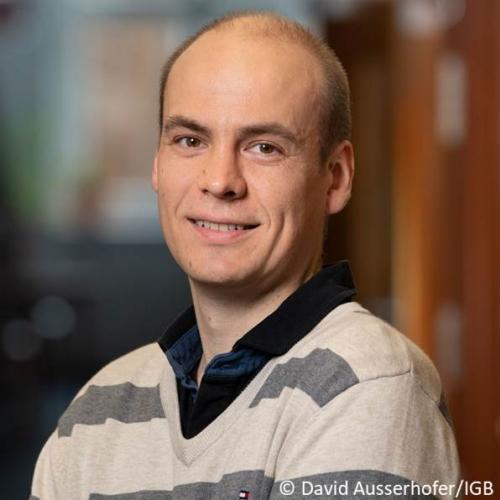
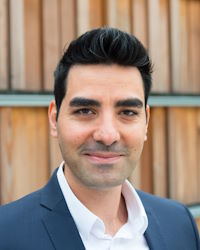
Prof. Dr. Thomas Brinkhoff is Chair of the Institute Board and Chair of Geoinformatics at Oldenburg University of Applied Sciences. He leads the Institute for Applied Photogrammetry and Geoinformatics (IAPG) and contributes to institutions like the Association for the Promotion of Geoinformatics in Northern Germany (GiN e.V.) and the Oldenburg Research and Development Institute for Computer Science (OFFIS e.V.). Education: Diploma in Computer Science (Informatik), Universität Bremen (1990) Doctorate in Computer Science (Dr. rer. nat.), Ludwig Maximilian University of Munich (1994) Brinkhoff's research spans geodatabase systems, spatiotemporal data processing, geosensor analytics, and location-based services. His work addresses Volunteered Geographic Information (VGI), web-based geospatial visualization, and mobile data integration, with applications in traffic management and forensic science. Recent projects include ProSaDi (Digital Provenance and Collection Research) and contributions to the Laboratory for optical 3D metrology . He has served on program committees for ACM SIGSPATIAL (2002-2019), AGILE conferences (2010-2025), and editorial boards of journals like GeoInformatica and TGIS. Notable Lectures: 2024: Forensic applications of tachograph data 2023: Geoinformatics in homicide investigations 2022: Spatiotemporal analysis for sustainability projects 2015: Open geodata standards at FOSSGIS 2014: Mobile sensor data processing
Miguel Mahecha is Professor of Environmental Data Science and Remote Sensing at the University of Leipzig, where he serves as Institute Head of the Institute for Earth System Science and Remote Sensing. He is also affiliated with the Remote Sensing Centre for Earth System Research, a collaboration between Leipzig University and the Helmholtz Centre for Environmental Research (UFZ). Mahecha is a member of the German Centre for Integrative Biodiversity Research (iDiv) and serves as Principal Investigator in the Centre for Scalable Data Analytics and Artificial Intelligence. Additionally, he is a Fellow of the European Laboratory for Learning and Intelligent Systems and co-spokesperson for the National Research Data Infrastructure for Earth System Sciences (NFDI4Earth). Full Professor for Modelling Approaches in Remote Sensing, University of Leipzig (since 03/2020) Research Group Leader: Empirical Inference in the Earth System, Max Planck Institute for Biogeochemistry, Jena (12/2012 - 03/2020) PostDoc, Max Planck Institute for Biogeochemistry, Jena (10/2009 - 11/2012) PhD in Environmental Sciences, ETH Zürich (06/2006 - 09/2009) Diploma in Geoecology, Bayreuth University (10/2000 - 04/2006) Mahecha's research focuses on understanding ecosystem responses to climate extremes and human-environment relationships during these events. He investigates macro-ecological dynamics and ecosystem functioning using data-driven methods and high-dimensional Earth observations. A key contribution is his co-development of the Earth System Data Cube concept, which integrates empirical methods with theoretical understanding to analyze complex Earth system interactions. His work spans biogeography, ecosystem functioning, and advanced data science methodologies for environmental monitoring. His recent publications demonstrate a strong emphasis on analyzing compound climate extremes, particularly heatwaves and droughts, and their impacts on ecosystems. Mahecha has pioneered methods using Earth System Data Cubes to integrate diverse environmental datasets, enabling novel insights into biosphere-atmosphere interactions. His research increasingly incorporates artificial intelligence and machine learning approaches to understand spatiotemporal patterns in ecological systems, with applications in real-time forest monitoring and biodiversity assessment. Fellow of the European Laboratory for Learning and Intelligent Systems Co-spokesperson for NFDI4Earth (National Research Data Infrastructure for Earth System Sciences) Mahecha leads multiple significant research projects including Digital Forest (real-time forest monitoring), NFDI4BioDiversity, and XAIDA (extreme events: AI for Detection and Attribution). His work receives funding from diverse sources including EU, DFG, and Stiftungen Inland. He collaborates extensively with the German Centre for Integrative Biodiversity Research (iDiv) and the Centre for Scalable Data Analytics and Artificial Intelligence. His research group, Earth System Data Science (ESDS), focuses on developing methods to extract valuable information from long-term environmental observations to understand coupled Earth system dynamics. At the Remote Sensing Centre for Earth System Research, Mahecha's ESDS group investigates how ecosystem functions respond to climate extremes, societal vulnerability to environmental hazards, and nonlinear interactions in coupled Earth systems. The group leverages citizen science data, remote sensing observations, and advanced computational methods to address pressing environmental questions.
Prof. Norbert Ritter is the Dean of the Faculty of Mathematics, Computer Science and Natural Sciences (MIN) at the University of Hamburg since August 2022. He holds a full professorship in the Department of Informatics, leading the Databases and Information Systems group. Previously, he served as an associate professor (2002–2005) and assistant professor (1998–2002) at the Technical University of Kaiserslautern and the University of Hamburg. His research focuses on advanced database technologies, including NoSQL systems, scalable cloud data management, big data analytics, and information integration. Key areas include service-oriented computing, federated database systems, and transaction management. He has authored over 149 publications, with recent work emphasizing polyglot data stores, spatio-temporal data processing, and web performance optimization. Education: M.Sc. (1991), Ph.D. (1997) in Computer Science from the University of Kaiserslautern Professional Activities: Dean of MIN Faculty (since 2022), former head of DBIS group Labs/Teams: Leads the Databases and Information Systems research group His advising record includes over 274 student theses, spanning PhD and master's projects in database design, data integration, and web performance engineering. Collaborative projects include Beaconnect (continuous web A/B testing) and Compaz (shared dictionary compression).
Benjamin Bach is a Lecturer (Assistant Professor) in Design Informatics and Visualization at the University of Edinburgh , affiliated with the School of Informatics and the Centre for Design Informatics . Education : PhD in Computer Science from Université Paris Sud (2014), MSc in Computer Science (Diplom Medieninformatik) from University of Technology Dresden (2010). Research Interests focus on designing interactive visualization interfaces to explore, communicate, and understand complex data. Key areas include: Network Visualization Immersive Analytics (Augmented/Virtual Reality) Data-driven Storytelling Collaborative and Non-digital Visualization Visualization of Spatio-temporal Data Graph Databases and Dynamic Networks His work integrates these themes into tools like networkcube and Vistorian , emphasizing interdisciplinary applications in biology, neuroscience, and history. Current projects explore annotation systems, dynamic network analysis, and geographic network visualization. Scientific Awards : Honorable mention for Best PhD Thesis by IEEE Visualization Committee (2014). Supervision : Mentored 14 graduate students (MSc, MA, B.Hons) and actively seeks PhD/MSc candidates in network visualization, data storytelling, and immersive analytics. Collaboration : Works within the interdisciplinary Centre for Design Informatics , which bridges data science, design, and digital humanities.
Prof. Petra Sauer is a Professor of Computer Science and currently serves as Dean of the Department of Computer Science and Media at BHT Berlin. She leads research in database systems, geospatial technologies, and educational data analytics. Her work bridges academic research with practical applications in facility management, urban logistics, and e-learning platforms. Key projects include DiSEA (education analytics), ExCELL (mobility data integration), and BIM-FM (building lifecycle management). Research interests focus on: Database design & schema evolution Semantic web applications Geodatabase implementations Learning analytics in MOODLE environments Notable awards include the Tiburtius Prize (Gold 2008 for Marc-Florian Wendland's thesis, Bronze 2009 for Marco Blankenburg's thesis). Active supervision spans over 15 advisees across data science, database security, and semantic integration topics. Current courses include 'Database Systems' for Media Informatics students. Key projects: DiSEA: Moodle-based learning analytics framework ExCELL: Real-time traffic forecasting platform mVIZ: Open data visualization guidelines BIM-FM: Semantic integration of building models
Dr. Fabian Panse is a Researcher at the Database and Information Systems (DBIS) group within the Department of Informatics at the University of Hamburg. His work focuses on database systems, data quality, and probabilistic data management, with significant contributions to polyglot persistence, duplicate detection, and data simulation frameworks like SmartOpenHamburg and HADeS. Research Assistant since 2009 PhD in Computer Science Research interests center on polyglot persistence , probabilistic databases , duplicate detection , and data pollution techniques . His publications span conferences like VLDB, ICDE, and workshops on database fundamentals. He has supervised over 20 theses including Master's and Bachelor's projects on topics ranging from data synthesis to smart city applications . Key collaborations include Prof. Norbert Ritter and Dr. Wolfram Wingerath.
Yubao Liu is a Professor at Sun Yat-sen University's School of Data and Computer Science, Department of Computer Science, with a prolific research career spanning over two decades in computer science. His work demonstrates significant contributions to database systems, data mining, and spatio-temporal analysis. Professor Liu's research interests focus on Data Mining , Database Systems , Traffic Flow Prediction , and Graph Neural Networks . His recent work has concentrated on developing advanced techniques for large-scale traffic flow prediction, crowd flow analysis, and spatio-temporal modeling using deep learning approaches. His research bridges theoretical computer science with practical applications in transportation systems and urban computing. Liu's publication record shows consistent high-impact contributions, with recent work emphasizing graph-based neural network architectures for traffic forecasting problems. His research demonstrates a clear evolution from foundational database work to cutting-edge applications of deep learning in transportation and social network analysis. Professor Liu has collaborated extensively with researchers including Weiyang Kong, Kaiqi Wu, Sen Zhang, Genan Dai, and Youming Ge, indicating a strong research group focused on spatio-temporal data analysis and deep learning applications. His academic advising is evident through publications where his students appear as first authors, suggesting an active mentorship role in training the next generation of computer scientists specializing in data-intensive applications.
Gotthard Meinel is a Senior Fellow at the Leibniz Institute of Ecological Urban and Regional Development (IOER) since 2023, with a distinguished career spanning over three decades in geoinformatics and spatial analysis. Previously, he served as Head of the Research Department for Spatial Information and Modeling (2009-2022) and held various leadership positions within the institute since joining in 1992. Meinel received his education at the Technical University of Dresden, graduating in Information Technology in 1981. He pursued postgraduate studies in biomathematics and earned a specialist mathematician degree between 1981-1992, culminating in his promotion (PhD equivalent) in 1987. His research focuses on geoinformatics, particularly remote sensing image processing and the automated analysis of large geospatial datasets. Meinel specializes in monitoring land-use developments and building stock through advanced spatial analysis methods. His work encompasses the development of indicators and visualization technologies for understanding settlement patterns and open space dynamics. With expertise spanning computer science, mathematics, and spatial analysis, Meinel has made significant contributions to the field of land use monitoring in Germany. Analysis of Meinel's recent publications reveals a strong focus on land use monitoring systems, spatial data infrastructure, and the integration of survey and geospatial data. His research increasingly emphasizes interdisciplinary approaches, combining urban planning, environmental science, and data science to address complex spatial challenges. Key trends include the development of comprehensive monitoring frameworks, analysis of building stock characteristics, and exploration of sustainable land use practices across Germany. Meinel has led or participated in numerous significant research projects including the Social-Spatial Research Data Infrastructure (SORA), the Research Database for Non-Residential Buildings (ENOB:DataNWG), OpenGeoEdu, and the Competence Center for Scalable Data Services and Solutions (ScaDS). These projects demonstrate his leadership in developing innovative spatial data infrastructures and analytical approaches. As project leader and principal investigator, Meinel has supervised numerous research initiatives and likely mentored students and junior researchers, though specific advisees are not documented in the provided materials. His work has significantly influenced spatial planning practices and land use monitoring methodologies in Germany. Meinel's research is closely associated with the IOER Monitor, a comprehensive spatio-temporal research data infrastructure for settlement and open space development in Germany. His team has developed sophisticated methodologies for analyzing land use change, building stock dynamics, and urban structure through the integration of topographic data, remote sensing, and statistical approaches.
Mareike Schmidt is a Scientific Associate and Researcher at the Institute for Software Systems (VSIS) within the Department of Computer Science at the University of Hamburg, MIN Faculty. She actively contributes to heterogeneous database systems research and participates in both teaching and thesis supervision. University: University of Hamburg Department: Computer Science Email: mschmidt@informatik.uni-hamburg.de Office: Room F522 Phone: +49-40-42883-2343 Research Focus : Mareike's work centers on Heterogeneous and Adaptive Database Systems (HADeS) , exploring: Polyglot persistence architectures Dynamic data placement strategies Spatio-temporal task execution Topology description formalisms Publication Trends : Her recent publications reveal a trajectory in database systems research, particularly addressing challenges in polyglot persistence, adaptive data management, and distributed storage solutions. The work spans theoretical foundations and practical implementations, with a focus on multi-model data handling and system optimization. Thesis Supervision : Mareike has supervised multiple student works including: Lili Hauke's Bachelor thesis (2024): Database administration tool for polyglot systems Felix Pusch's Master thesis (2024): PolyStore blueprint model and API Heiko Eckmann's Master thesis (2022): Common data model for polyglot persistence Jan Synwoldt's Bachelor thesis (2019): Probabilistic data generation with Tesseract OCR Michael Hirsch's Bachelor thesis (2019): Question-answering systems for sensor network data Collaborative Projects : Actively involved in the HADeS (Heterogeneous and Adaptive Database Systems) research group and contributes to broader initiatives like Baqend, SmartOpenHamburg, and MIDAS.
Dr. Sami Domisch is a Research Group Leader at the Leibniz-Institute of Freshwater Ecology and Inland Fisheries (IGB) in Berlin, leading the Global Freshwater Biodiversity, Biogeography and Conservation (GLOWABIO) research group since 2024. He previously held a Leibniz Junior Research Group Leader position (2019–2024) and completed a postdoc at IGB (2016–2019). His academic journey includes a PhD at Senckenberg Research Institutes (2009–2012) and postdoctoral work at Yale University (2013–2016). Domisch specializes in freshwater biodiversity, climate change impacts, and hydrological modeling, with a focus on macroinvertebrates and ecosystem services. Education: PhD in Biodiversity and Climate Research (2012), Senckenberg Research Institutes Postdoc at Yale University (2013–2016) Advanced studies in biology at Carl von Ossietzky Universität Oldenburg (2005–2007) Basic studies in biology at Technische Universität Kaiserslautern (2001–2005) His research interests span freshwater biogeography, conservation strategies, and the integration of geospatial tools for environmental data analysis. Domisch has co-developed influential tools like the hydrographr R package and the GeoFRESH platform. He is an Associate Editor for Scientific Data and Journal of Biogeography , and a member of multiple editorial boards. Key grants include DFG-funded projects on freshwater fish diversity and NFDI4Earth initiatives for geospatial data interoperability. His work addresses global challenges like dam impacts, climate change effects, and invasive species dynamics. Domisch has received the EFFS-Award (2011–2012) for his PhD work and hosts international researchers through DAAD programs. Notable collaborations include the AquaINFRA and SOS-Water Horizon Europe projects, focusing on infrastructure for water research and safe operating spaces for water systems. His lab develops geospatial solutions to bridge data gaps in freshwater science.
Walid G. Aref is a Professor at Purdue University, West Lafayette, USA, specializing in database systems, spatial data processing, and big data technologies. His work focuses on adaptive indexing, LSM trees, and graph data systems. 2025: Research on skiplists, GTX graph systems, and BMTree indexing 2024: Contributions to trajectory indexing and HTAP-optimized data systems 2023: Editorial roles in ACM Transactions on Spatial Algorithms and Systems His research spans scalable spatial-keyword query processing, distributed streaming systems, and hardware-aware database optimization. Notable collaborations include Ahmed R. Mahmood and Mourad Ouzzani. Recent publications highlight trends in machine learning for indexing , NUMA-aware optimization , and multi-dimensional data structures . He has no listed scientific awards in this dataset. Walid actively contributes to transactional graph systems , load balancing , and spatiotemporal data management , with a 2021 IEEE Transactions paper on attack-resilient load balancing.
Dr. Conny Junghans is a researcher in computer science with expertise in data mining, spatio-temporal analysis, and information security. She completed her diploma at Ilmenau University of Technology (2005) and earned her PhD at the University of California, Davis (2009). From 2009-2011, she worked at Ruprecht-Karls-University of Heidelberg in the Database Systems Research group under Prof. Dr. Michael Gertz. Education: Diploma in Computer Science, Ilmenau University of Technology (2005) PhD in Computer Science, University of California at Davis (2009) Her research focuses on data stream mining with adaptive resource management, spatial/sensor network anomaly detection, and data quality assurance. She has contributed to multilingual document similarity models and burst detection in stream engines. Recent publications highlight trends in quality-aware systems, obstacle handling in sensor networks, and adaptive spatio-temporal prediction. She has served on program committees for SSDBM and CIKM conferences and acted as an external reviewer for multiple journals and conferences.
Jia Yu is a researcher affiliated with Arizona State University , Tempe, AZ, USA. Their work focuses on geospatial data management, database systems, and cluster computing frameworks like Apache Spark. They have collaborated extensively with Mohamed Sarwat and other researchers on projects such as GeoSpark , GeoSparkViz , and GeoSparkSim , contributing to scalable spatial data processing and visualization systems. Key research areas include Learned indexing mechanisms (e.g., GLIN) Microscopic traffic simulation Parallel and distributed data processing Interactive geospatial dashboards Column correlation exploitation for database efficiency Integration of visualization with backend data systems Recent publications (2014-2024) demonstrate expertise in geospatial analytics, database indexing, software testing, and Apache Spark-based systems. Notable projects include Turbocharging Visualization Dashboards , HERMIT Indexing , and Spindra Knowledge Graph Management . Work emphasizes both theoretical innovation and practical implementation for handling massive-scale spatial data.
Raul Castro Fernandez is a prominent researcher in data management and database systems, with a focus on data discovery, integration, and marketplaces. He has collaborated extensively with leading institutions and researchers, contributing to projects like Data Station and Nexus for secure data sharing. His work bridges theoretical innovation with practical implementations in cloud optimization, differential privacy, and LLM-driven data tools. Key Contributions : Data market frameworks, LLM applications in databases, differential privacy platforms Collaborators : Yue Gong, Samuel Madden, Michael Stonebraker, Eugene Wu, Kyle Chard Research Themes Fernandez explores automated metadata management for data catalogs, spatiotemporal data sharing with privacy guarantees, and LLM-based data discovery . His work on stateful stream processing (e.g., SABER system) and cost optimization in cloud analytics shows technical depth. Recent Trends 2023-2025 publications highlight his pivot toward LLM applications in data management, including tabular data representation and hypothesis assessment tools. He also investigates sustainability in HPC through carbon credit systems.
Dr.-Ing. Hasan Tercan is a Scientific Researcher and Head of the Research Field 'Industrial Deep Learning' at the Institute for Technologies and Management of Digital Transformation, University of Wuppertal, where he has been since December 2018. His work focuses on the development and application of machine learning and artificial intelligence methods in industrial environments, particularly in production quality assurance and intelligent process control. Education: PhD (Dr.-Ing.) in Computer Science, University of Wuppertal (2023) Master's in Computer Science, Technical University of Darmstadt (specialization: Database Systems and Data Mining) Research Assistant, Chair of Information Management in Mechanical Engineering, RWTH Aachen University His research interests lie at the intersection of machine learning and industrial applications. He specializes in transfer learning , lifelong learning , deep reinforcement learning , and predictive quality modeling in manufacturing. A key focus is bridging simulation and real-world data through simulation-to-reality approaches and enabling continuous model adaptation in dynamic production environments. His recent publications (2025) reflect a strong trend in applying advanced AI techniques—such as AttentiveGRUs, GANs, Decision Transformers, and deep reinforcement learning—to industrial challenges like radar-based object detection, job shop scheduling, robot end-effector control, and process configuration. These works demonstrate a consistent emphasis on deploying scalable, adaptive AI solutions in real-world industrial systems. Scientific Awards: Ph.D. Prize from the Friends and Alumni Association of the University of Wuppertal (FABU) Hasan Tercan leads the 'Industrial Deep Learning' research group, indicating active mentoring and project leadership. While specific grant details are not mentioned, his multiple 2025 publications in high-impact journals (e.g., Procedia CIRP, AI, Autonomous Agents and Multi-Agent Systems) suggest involvement in funded research projects. He collaborates closely with Prof. Dr. Meisen and other researchers, contributing to a robust research ecosystem in industrial AI. He is affiliated with the 'Industrial Deep Learning' research group, which focuses on advancing deep learning methodologies tailored for industrial transformation, including intelligent planning, control, and quality assurance in manufacturing and assembly processes.