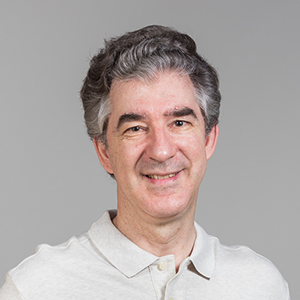
Stefan Bruckner is Professor of Visualization at the University of Bergen, specializing in biomedical visualization, volume rendering, and visual data exploration. His work develops novel techniques for analyzing complex scientific datasets across meteorology, medicine, and materials science. Dr. Bruckner's research group develops interactive visual analytics tools for weather forecasting, medical diagnostics, and ensemble data analysis. His methodological innovations include GPU-accelerated rendering, visual parameter exploration, and uncertainty visualization. He received the 2011 Eurographics Young Researcher Award for contributions to illustrative visualization. Professional service includes program committee roles for IEEE VIS, Eurographics, and ECRTS conferences. His pedagogical contributions span visualization, computer graphics, and programming languages at institutions including École normale supérieure and École polytechnique.
Dr. Sebastian Stein is a Research Fellow in the School of Computing Science at the University of Glasgow, working within the Inference, Dynamics and Interaction Research Group. His current research focuses on the EPSRC-funded project 'Closed-Loop Data Science for Complex, Computationally- and Data-Intensive Analytics' under Professor Roderick Murray-Smith. With a background spanning human-computer interaction, ubiquitous computing, and machine learning, his research integrates computer vision, action recognition, and intelligent interactive systems. He holds a PhD in Computing from the University of Dundee and a Diplom in Computer Science and Electrical Engineering from TU Dortmund. Stein's publications demonstrate expertise in multimodal sensing systems, rehabilitation engineering, probabilistic modeling interfaces, and intelligent transportation solutions. Recent work includes EEG-based pain biomarkers, interactive Bayesian models, and COVID-19 containment strategies through control theory. His technical contributions span healthcare applications like spinal cord injury rehabilitation, neuroprosthetics development, and urban computing platforms for built environment analysis.
Sara Beery is an Assistant Professor at the Massachusetts Institute of Technology (MIT), affiliated with the Department of Electrical Engineering and Computer Science and the Computer Science and Artificial Intelligence Laboratory (CSAIL). Her research focuses on leveraging computer vision for environmental sustainability and conservation challenges. Beery's work spans computational vision, self-supervised learning, and multimodal AI systems. She has contributed to advancements in neural latent dynamics, face recognition bias analysis, and spatio-temporal dataset creation for autonomy. Her recent publications emphasize computer vision applications in conservation, medical imaging, and robotics. Notable topics include synthetic image generation, denoising low-SNR video, and cell segmentation using foundational AI models. Scientific Awards Resnick Graduate Scholar
Dr. Christoph F. Eick is an Associate Professor in the Department of Computer Science at the University of Houston, where he directs the UH Data Analysis and Intelligent Systems Lab (UH-DAIS). His research spans multiple cutting-edge domains including knowledge discovery, evolutionary computing, spatial data analysis, and artificial intelligence, with recent projects focusing on disaster computing, computational frameworks against modern slavery, and threshold-based association analysis. His research interests center on developing advanced computational frameworks for spatial and spatio-temporal data analysis, supervised clustering algorithms, and extracting knowledge from social media. Dr. Eick's work frequently intersects with practical applications in environmental monitoring, disaster response, and social media sentiment tracking. Research trends in his recent publications show a strong focus on spatial data mining techniques, blockchain applications for disaster management, medical image analysis using deep learning, and innovative frameworks for emotion tracking in geospatial contexts. His work consistently bridges theoretical computer science with real-world problem-solving. Recipient of multiple competitive national and international fellowships Regular program committee member for IEEE ICDM and AAAI conferences He actively advises PhD and Master's students on projects ranging from supervised clustering to spatial association mining. His lab maintains collaborations with industry partners and has secured grants for research in multi-run clustering and geo-targeting frameworks. Dr. Eick leads the UH-DAIS research group which focuses on developing novel algorithms for data mining and intelligent systems, with particular emphasis on real-world applications in environmental science, healthcare, and social media analysis.
Marina Georgati is an Assistant Professor at Aalborg University, affiliated with the Technical Faculty of IT and Design and the Department of Sustainability and Planning . Her research focuses on sustainable energy systems, spatial analysis, and migration patterns, with a strong emphasis on machine learning applications in urban demography and environmental planning. She leads the Sustainable Energy Planning Research Group and collaborates on interdisciplinary projects such as the Heat Roadmap Europe 5 and iDesignRES initiatives. Key Projects: iDesignRES: Open-source tools for renewable energy system design HRE5: Strategic heat planning across Europe FUME: Migration scenarios analysis for Europe BalticRIM: Maritime cultural heritage management Research Interests: Georgati’s work bridges energy sustainability, urban demography, and computational geography. She develops machine learning models for spatial disaggregation of population data, analyzes migration dynamics using gridded datasets, and evaluates heat potential in district heating systems. Her methodologies include gradient boosting, deep learning, and compositional data analysis. Grants & Activities: Principal Investigator/Participant in 5 EU-funded projects (2017–2027) Peer reviewer for Environmetrics , International Journal of GIS , and others Organizer of academic workshops on data science applications Labs/Teams: She contributes to the Data Science Lab x Academia collaboration and leads the Sustainable Energy Planning Research Group, fostering interdisciplinary innovation in energy and urban systems.
Dylan Keon is an Assistant Professor (Senior Research) at Oregon State University's School of Electrical Engineering and Computer Science. He serves as the Associate Director of the Northwest Alliance for Computational Science & Engineering (NACSE). His research focuses on spatial analysis, spatio-temporal data systems, climate data production, and decision support systems for environmental and disaster management applications. He holds a Ph.D. in Computational Geography and M.S. in Plant Ecology and GIS/Statistics from Oregon State University, along with a B.S. in Botany from Western Michigan University. Dr. Keon has over 20 years of experience in developing geospatial tools for environmental monitoring, including projects funded by USDA, NSF, and other agencies. His work spans topics such as precision agriculture, climate modeling, tsunami engineering, and aquatic pathogen tracking. He currently leads operations on multiple USDA-funded initiatives and has contributed to critical infrastructure resilience frameworks for coastal regions. His research trends emphasize interdisciplinary collaboration, leveraging computational methods to address complex environmental challenges. Recent efforts include advancing solar radiation models, improving tsunami inundation simulations, and creating databases for tracking aquatic pathogens. Keon’s contributions bridge academic research with real-world applications, particularly in disaster preparedness and sustainable environmental practices.
Srirangaraj (Ranga) Setlur is a Principal Research Scientist and Co-Director of the Center for Unified Biometrics and Sensors (CUBS) at the University at Buffalo. He also serves as the Associate Director of Community Engagement at the Institute for Artificial Intelligence and Data Science. His research focuses on AI, Machine Learning, Pattern Recognition, Computer Vision, and Information Retrieval with applications in biometrics, document analysis, and healthcare. Education: MS in Industrial Engineering, University at Buffalo (1995) Research Interests: Development of AI-driven systems for biometric authentication (e.g., fingerprint, facial recognition) Design of datasets for chart analysis (CHART-Info), gait recognition (DIOR), and cross-domain fingerprint analysis Applications in healthcare diagnostics (e.g., dyslexia screening via handwriting analysis) Advancements in multimodal fusion (e.g., audio-visual, physiological signals) Recent Research Trends: His recent work emphasizes cross-domain learning (e.g., Ridgeformer), sparse feature aggregation (Proxyfusion), and AI applications in social robotics (AutoMisty). He consistently addresses challenges in unconstrained environments and under-represented data scenarios. Awards: Senior Member, IEEE 2019 ICDAR Best Student Paper Award (F. Xu) 2010 IBM Best Student Paper Award (X. Peng) UB Visionary Innovator Award Labs/Teams: Leads research teams in CUBS and the Institute for AI & Data Science, focusing on biometric systems, surveillance optimization, and multimodal AI applications.
Nicolle T. Clements is an Associate Professor at Saint Joseph's University's Department of Decision and System Sciences and serves as Academic Coordinator for the MS in Business Intelligence & Analytics program. She holds a PhD in Statistics from Temple University, an M.S. in Statistics from Virginia Tech, and a B.S. in Mathematics from Millersville University. Her research focuses on applied statistical analysis in Pennsylvania's agricultural sector, including projects funded by the PA Department of Agriculture to evaluate initiatives like PA Preferred branding, urban agriculture trends, and small meat processing capacity. She teaches courses on statistics, data mining, and R programming across undergraduate, graduate, and executive education levels. Her research expertise spans statistical methodologies, agricultural data analysis, and interdisciplinary applications in public health and environmental science. Recent work addresses consumer perceptions of industrial hemp, vegetation monitoring via spatio-temporal models, and ethical dimensions of business intelligence storytelling. Dr. Clements has published extensively in journals like Journal of Criminal Justice , International Journal of Remote Sensing , and Journal of Addictive Behaviors . Her 2024 study on industrial hemp perceptions highlights her ongoing commitment to bridging statistical rigor with real-world agricultural challenges. She collaborates actively with policymakers and industry partners to translate statistical insights into actionable strategies.
Paolo Girardi is an Associate Professor at Ca' Foscari University of Venice, affiliated with the Department of Environmental Sciences, Informatics and Statistics. His research focuses on statistical methodologies applied to environmental health, occupational epidemiology, and public health analytics. He teaches courses on statistical modeling, data analysis for tourism, and introductory statistics for climate change studies. Key research interests include asbestos exposure assessment, spatio-temporal statistical modeling, and the health impacts of environmental pollutants. His work combines advanced statistical techniques with real-world applications in occupational health and climate science. Recent studies involve retrospective exposure modeling for dockworkers, cancer mortality analysis in asbestos-exposed cohorts, and spatial clustering of climate data. Teaching responsibilities span undergraduate and graduate programs, including STATISTICS for Business Administration, DATA ANALYSIS FOR TOURISM, and SPATIO-TEMPORAL STATISTICAL MODELS for climate change studies. Office hours are conducted online via Zoom during academic terms. Publications emphasize methodological innovations (e.g., multiverse analysis frameworks) and applied epidemiology (e.g., cholangiocarcinoma risk from asbestos, vaccine hesitancy factors). No listed awards, but extensive contributions to occupational health research are evident through his prolific publication record.
Xiaozhi Gao is a Professor at the School of Computing, University of Eastern Finland (UEF), within the Faculty of Science, Forestry and Technology. His research focuses on computational intelligence, optimization algorithms, neural networks, and their applications in domains such as energy forecasting, cybersecurity, and healthcare. He has authored and edited numerous international journal articles and conference proceedings. Research Interests: Dr. Gao's work spans machine learning, evolutionary algorithms, deep learning architectures, and their implementation in real-world problems like trajectory prediction, resource allocation, and medical diagnostics. His recent studies emphasize lightweight neural networks for railway safety and multi-objective optimization in dynamic environments. Publications: His 2025 articles include advancements in audio-visual deep networks for climate forecasting, constraint-based optimization models, and edge computing security frameworks. He has also co-edited conference volumes on advanced informatics and computing research. Awards & Grants: No specific awards or grants mentioned in the provided text. Labs/Teams: Active in interdisciplinary collaborations on AI-driven solutions for energy systems, robotics, and smart infrastructure. His research contributes to UEF's strategic focus on digital innovation and sustainability.
Carsten Keßler is a Professor at the Department of Sustainability and Planning within The Technical Faculty of IT and Design at Aalborg University. He holds adjunct professorships at Bochum University of Applied Sciences (since 2021) and the Ph.D. Program in Earth and Environmental Sciences at the City University of New York (2017–2021). His research focuses on geoinformatics, population dynamics, migration patterns, and spatial data infrastructure. Education: Not explicitly listed in provided texts, but his academic rank implies doctoral qualification. Key research areas include: - Geographic Information Systems (GIS) for urban and environmental analysis. - Migration studies , including historical migration patterns and future migration scenarios for Europe. - Spatial data infrastructure development and open educational resources for GIScience. - Machine learning applications in population modeling and environmental projections. He leads/co-leads projects such as FUME: Future Migration Scenarios for Europe (2019–2023) and EO4SDG: Earth Observation and Deep Learning for Sustainable Development . His work has produced over 75 publications, with recent focus on climate resilience, urban heatwaves, and geoprivacy. Notable awards include a prize for High-resolution spatialized population projections (2017). He actively contributes to academic peer review, conferences, and educational initiatives in geoinformatics.
Patrick Laube is a Professor at the Zurich University of Applied Sciences (ZHAW) , affiliated with the School of Life Sciences and Facility Management and the Institute of Natural Resource Sciences. His research focuses on geospatial analytics, environmental impact assessment, and computational movement analysis, with applications in biodiversity monitoring, sustainable urban development, and remote sensing. 2025 - Assessing tick attachments with citizen science data 2024 - Anthropogenic legacy in freshwater ecosystems His work integrates spatio-temporal data analysis to address environmental and social dynamics, particularly in tracking biodiversity loss and optimizing sustainable construction projects. Recent publications highlight advancements in river width monitoring and wildlife-vehicle collision prediction using GIS and remote sensing. Key projects include Sustainable Protein and Oil Crops for Swiss food systems, Digitising Environmental Impacts with geospatial tools, and Climate Rating for Real Estate Portfolios . He contributes to spatial sustainable finance and historical river change analysis.
Esko Ikkala is a Doctoral Candidate and Researcher at Aalto University's Department of Computer Science (School of Science). His work focuses on Linked Open Data, Semantic Web technologies, and their applications in Digital Humanities, Cultural Heritage informatics, and archaeological data management. He is actively involved in developing frameworks like Sampo-UI for semantic portal interfaces and has contributed to major projects such as WarSampo, FindSampo, and LawSampo, which integrate historical and legal data into knowledge graphs. His research bridges computer science with humanities, emphasizing data harmonization, citizen science, and semantic technologies for cultural heritage preservation. Key affiliations include the SeCo Research Group (Semantic Computing) at Aalto University, where he collaborates on projects like Mapping Manuscript Migrations and WarMemoirSampo. His educational background includes an M.Sc. (Tech) and ongoing doctoral studies in Computer Science, reflecting a strong foundation in both technical and humanities-oriented research. Research interests span semantic portals, ontology engineering, faceted search interfaces, and the application of AI techniques like NER for historical data enrichment. He has co-developed frameworks for managing archaeological finds (FindSampo), reassembling prisoner of war biographies, and visualizing parliamentary speeches through Linked Data. His work emphasizes sustainability, collaboration, and the democratization of access to cultural and historical data through open standards. Notable contributions include the Sampo-UI JavaScript framework, the WarSampo knowledge graph (with 14 million triples), and the FindSampo platform for archaeological citizen science. He has published extensively in venues like ISWC, ESWC, and Digital Humanities conferences, focusing on interdisciplinary applications of semantic technologies.
Roger Zimmermann is a Full Professor at the School of Computing, National University of Singapore (NUS), where he is also a Co-PI at the Grab-NUS AI Lab and leads the Location AI project. He previously served as Deputy Director of the NUS Smart Systems Institute (SSI) and Co-Director of the Centre of Social Media Innovations for Communities (COSMIC), both funded by Singapore’s National Research Foundation (NRF). Before joining NUS, he was a Research Area Director and Research Assistant Professor at the University of Southern California (USC). Ph.D. in Computer Science, University of Southern California (1998) M.S. in Computer Science, University of Southern California (1994) His research focuses on multimedia systems , spatio-temporal data management , streaming media architectures (especially DASH), machine learning applications , AR/VR , and location-based services . He leads the Media Management Research Lab (MMRL) at NUS, which conducts cutting-edge work in distributed multimedia and intelligent systems. His work combines theoretical depth with real-world applications in urban computing, smart mobility, and immersive media. The recent publications reflect a strong trend toward multimodal learning , spatio-temporal AI , adaptive streaming , and urban intelligence . His team explores zero-shot learning, 3D scene understanding, traffic forecasting, and open-vocabulary audio-visual segmentation, often leveraging foundational models and deep neural architectures. There is a clear emphasis on real-time, scalable systems for smart cities and immersive experiences. Dr. Zimmermann has received numerous accolades, including: DASH-IF Excellence in DASH Award (multiple years) Best Paper Awards at ACM SIGSPATIAL, IEEE ICME, and ACM MMSys Silver Award at ACM MMSys 2020 Grand Challenge IEEE Communications Society Best Editor Award (2017) ACM Distinguished Member (2017) Top 1% Publons Reviewer in Computer Science (2018) He has advised numerous students and led major research initiatives funded by MOE, NRF, A*STAR, NSF, and industry partners like Seagate, Intel, and HP. He has served as General Chair for IEEE MIPR 2023, ACM Multimedia 2020, and IEEE ISM 2015, and as TPC Co-Chair for several top-tier conferences. His editorial roles include Associate Editor for IEEE Transactions on Multimedia (TMM), ACM TOMM, and IEEE OJ-COMS. He leads the Media Management Research Lab (MMRL) , which focuses on intelligent multimedia systems, spatiotemporal data mining, and immersive media technologies. The lab develops scalable solutions for real-world challenges in urban computing, smart transportation, and interactive media.
Pietro Perona is the Allen E. Puckett Professor of Electrical Engineering at the California Institute of Technology (Caltech). He holds a D.Eng. from the University of Padua (1985) and a Ph.D. from UC Berkeley (1990). His academic roles include serving as Director of the Center for Neuromorphic Systems Engineering (1999–2004) and Executive Officer for Electrical Engineering (2006–2010). His research focuses on computational vision, visual recognition, and machine learning. Key projects include the Visipedia initiative (smart apps for species identification like iNaturalist and Merlin Bird ID) and collaborations on neuroethology with Professors Anderson and Dickinson, studying fruit fly and mouse behavior. He also explores human visual perception and crowd-sourced learning. Perona has been recognized as an IEEE Fellow and leads the Caltech Vision Lab, which develops machine vision systems for applications in conservation, robotics, and neuroscience. His lab’s work spans foundational research to real-world tools, including datasets like the Caltech Fish Counting Dataset and MABe22 benchmarks. He teaches courses on computational vision and has advised numerous projects in AI and robotics. Current collaborations include partnerships with Amazon Web Services (AWS) and Disney on AI-driven solutions.