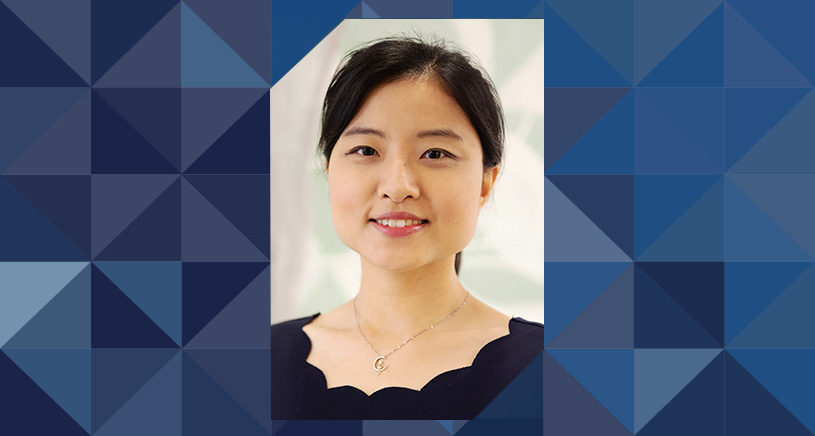
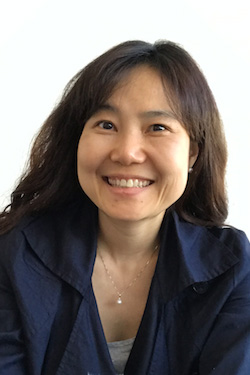
Fan Bu is an Assistant Professor in the Department of Biostatistics at the University of Michigan School of Public Health. Their research bridges Bayesian and computational statistics with applications in public health, observational healthcare studies, computational social science, and sports sciences. PhD in Statistics from Duke University (2021) BS in Mathematics from Peking University (2017) Research focuses on: Spatio-temporal statistics for modeling infectious disease spread Network inference methods for analyzing dynamic contact patterns Distributed learning frameworks for federated data analysis Recent publications address vaccine safety surveillance, HIV transmission dynamics, and epidemic modeling on dynamic networks. Their work combines methodological innovation with real-world applications in health data science and computational social science. Contact: fbu@umich.edu | Office: M4015 SPH II, 1415 Washington Heights, Ann Arbor, MI
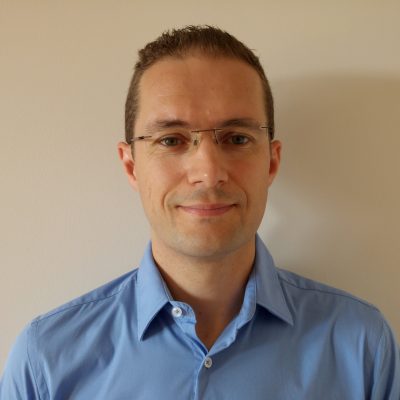
Frédéric Flouvat is a Full Professor in computer science and data scientist at Aix-Marseille Institute of Technology , conducting research at the Computer Science and Systems Laboratory (LIS - UMR 7020) . As co-leader of the Data Centric AI (DCAI) team in the Data Science department, he focuses on data-centric AI, pattern mining, and spatio-temporal data analysis. His interdisciplinary work spans environmental monitoring, urban dynamics, and educational data mining. His research emphasizes Representation learning in Agent-Based Models Innovative approaches to data-centric AI Expert model integration for pattern discovery Spatio-temporal pattern extraction from complex data Applications to soil erosion, urban growth, and educational outcomes Scientific recognition includes INFORSID 2005 Young Researcher Best Paper Prize Best paper award at EGC'13 He has coordinated pedagogical projects like Development of the FabLab spirit and supervised numerous students across institutions including University of New Caledonia, Grenoble, Paris, Lyon, and Brest. Current research projects include SITI (ANR-funded urban dynamics study) and Descol IA (Carnot Star Institute health benefits research).
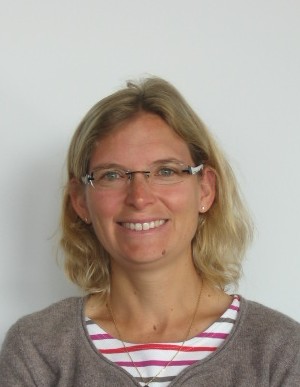
Soumya Dutta is an Assistant Professor in the Department of Computer Science and Engineering (CSE) at the Indian Institute of Technology Kanpur (IITK) since 2022. He previously held positions at Los Alamos National Laboratory as a Postdoctoral Researcher (2018-2019) and Scientist II (2019-2022). Dr. Dutta earned his Ph.D. and M.S. in Computer Science from The Ohio State University (2011-2018) and a B.Tech in Electronics and Communication Engineering from the West Bengal University of Technology (2005-2009). His research lies at the intersection of Machine Learning , Visual Computing , Big Data Analytics , and High-Performance Computing (HPC) . He focuses on developing scalable solutions for extreme-scale data, such as exascale simulations, social media, IoT, and healthcare. His work emphasizes uncertainty quantification in AI models and interactive visualization techniques. Dr. Dutta’s recent publications highlight his expertise in in situ visualization for climate modeling, implicit neural representations for uncertainty-aware rendering, and statistical sampling for exascale systems. His funded projects include AI-driven data analytics frameworks and deepfake defense mechanisms supported by ISRO, SERB, and C3iHub. Scientific Awards include Best Reviewer (TVCG), Best Paper (ISAV, TopoInVis), and LAAP Award (LANL).
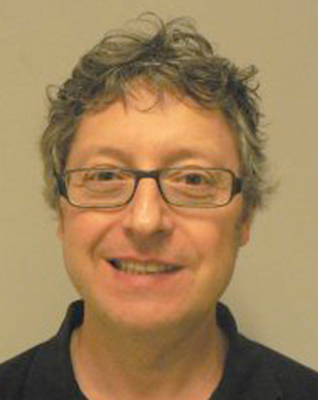
Dr. rer. nat. Dipl.-Inf. Gerd Reis is a researcher at the German Research Center for Artificial Intelligence (DFKI) in the Augmented Vision division. His work bridges artificial intelligence, computer vision, and mixed reality applications across diverse domains. Education : Holds a Doctorate in Natural Sciences (Dr. rer. nat.) and a Diplom in Informatics (Dipl.-Inf.). Research Focus : Develops AI-driven solutions for energy-efficient systems, real-time processing, and 4D scene analysis. Key areas include: Neural network optimization on hardware accelerators Spatio-temporal modeling in satellite imagery Medical device monitoring and surgical robotics Mixed reality interaction frameworks Project Leadership : Spearheads initiatives like GreifbAR (mixed reality interaction), VisIMon (medical monitoring systems), and LiSA (intelligent solar control systems). Contact: Gerd.Reis@dfki.de | Tel: +49 631 20575 2090
Joonpyo Kim serves as Assistant Professor in the Department of Mathematics and Statistics at Sejong University since 2022, specializing in advanced statistical methodologies with applications across medical imaging and industrial engineering. His academic foundation includes doctoral training at Seoul National University where he developed expertise in non-standard statistical frameworks. Education B.S. in Mathematics, Seoul National University (2016) Ph.D. in Statistics, Seoul National University (2022) Dr. Kim's research centers on spatio-temporal data analysis using asymmetric norm frameworks and change point detection methodologies. His work bridges theoretical statistics with practical applications in ophthalmology and semiconductor manufacturing, particularly through functional data analysis and quantile-based techniques. The fingerprint of his research reveals strong connections to quantile theory (100%), functional data analysis (61%), and changepoint detection (61%), demonstrating interdisciplinary impact across medical diagnostics and industrial process control. Recent publications (2024-2025) exhibit a clear trajectory toward solving high-dimensional statistical challenges in both biomedical and engineering contexts. His work on vitelliform macular dystrophy combines multimodal imaging with chromatic perimetry, while semiconductor manufacturing research develops novel model averaging for two-way functional data. The consistent application of quantile curves and extreme value theory across diverse domains highlights his methodological innovation. Scientific Recognition Korean Statistical Society Best Ph.D Dissertation Award (2022) Sejong Research Fellowship (2022-2027) from Ministry of Science and ICT BK21 FOUR Groups Students Award from Seoul National University Dr. Kim leads the Sejong Research Fellowship project (2022-2027), focusing on statistical methodology development with applications in medical diagnostics and industrial quality control. His mentorship contributed to the BK21 FOUR Groups Students Award, reflecting effective guidance in collaborative research environments. Current projects integrate multiscale extreme value analysis with functional data clustering techniques.
Ludger Becker is an Academic Director at the University of Münster, where he has been working since December 2003. He currently serves as Head of the Information Security Unit since June 2023 and as CISO of the University of Münster since April 2023. Previously, he was Head of IVV5 from January 1998 to December 2023 and held positions as Senior Academic Councillor and Academic Councillor at the Institute of Computer Science at the University of Münster. Dr. Becker received his Doctor of Engineering (Computer Science) from the University of Siegen in July 1992 and completed his Diploma in Computer Science from the University of Dortmund in April 1989. His research spans several key areas in computer science, with particular expertise in database systems , geographic information systems , and software engineering . Dr. Becker has made significant contributions to spatio-temporal data management, developing frameworks for representing moving objects and efficient index structures for spatial queries. More recently, his work has expanded into health informatics, particularly in clinical data generation and literature database analysis. His teaching focuses on software engineering principles, databases, and object-oriented programming, as evidenced by his leadership of the Software Internship course. Dr. Becker's publication record shows a clear evolution from foundational work in spatial databases and GIS in the 1990s and early 2000s, through educational technology applications in the early 2000s, to more recent contributions in health informatics. His research consistently demonstrates expertise in data management challenges across multiple domains. Dr. Becker regularly teaches Software Internship, Databases, and Advanced Database Concepts courses at the University of Münster. His teaching materials show particular attention to software design processes, object-oriented principles, and modern development tools and frameworks, including detailed documentation on implementing @pre, @post, and @inv tags in Javadoc for specifying software contracts. As Head of the Information Security Unit and CISO, Dr. Becker oversees critical information security infrastructure and policies for the University of Münster, applying his technical expertise to protect academic data and systems across the institution's extensive network.
Sérgio Paulo Carvalho Monteiro is an Assistant Professor in the Department of Industrial Electronics at the School of Engineering, University of Minho, and a Senior Researcher at Centro Algoritmi. He serves as Director of the Doctorate in Electronics and Computer Engineering since 2021 and previously led the Integrated Masters program (2011-2013), with core expertise in robotics and signal processing education. His academic credentials include a Doctor of Engineering (DEng), Master of Science (MSc), and PhD. Monteiro's research centers on intelligent robotics with dual focus on single-robot autonomy and multi-robot coordination . His work pioneers dynamic neural field approaches for human-vehicle interaction, particularly in learning driver routines through machine learning. Key application domains span industrial logistics , autonomous transportation , and collaborative workstations , emphasizing safety in human-robot shared environments. Analysis of his 42 publications reveals a clear trajectory from foundational formation control (2002-2010) toward contemporary AI-driven solutions for intelligent cockpits (2020-2024), with increasing emphasis on human-centered design and real-world industrial implementation. He has secured funding through major European initiatives including Horizon 2020 (iFACTORY), FP6 (CoopDyn), and national FCT projects, focusing on autonomous logistics and multi-robot collaboration. His academic leadership extends to directing doctoral programs and shaping curriculum for over 500 engineering students. As core member of the Mobile and Anthropomorphic Robotics Lab within Centro Algoritmi's CAR R&D Group, he develops bimanual manipulators (RAMBO) and safety-critical systems for human-robot collaboration, with recent expansion to CCG/ZGDV Institute affiliation (2023).
Céline Helbert is a Senior Lecturer at the École Centrale de Lyon, affiliated with the Department of Mathematics and Computer Science and the Camille Jordan Institute (UMR CNRS 5208). Her research focuses on statistics, numerical experimental design, and functional data analysis. Education: DEA in Financial and Actuarial Sciences (ISFA, Lyon), ICM at École des Mines de Saint-Étienne. Research: Expertise in kriging (Bayesian, high-dimensional), Gaussian process optimization, metamodelling for complex systems, and sensitivity analysis for functional inputs. Projects: Led the CIROQUO consortium (2021-2024) and contributed to initiatives like Chaire OQUAIDO (2016-2020) and ANR Pepito (2014-2019). Students: Supervised PhD candidates including Martin Buisson (automotive design), Reda El Amri (functional uncertainty analysis), and Simon Nanty (stochastic sensitivity analysis). Software: Maintainer of R packages DiceDesign and DiceEval for computer experiment design and validation. Conferences: Active in organizing events like JDS2022 and GDR Mascot Num workshops.
Mahmut Taylan Kandemir is a Professor in the Department of Computer Science at Pennsylvania State University. His research spans optimizing compilers, runtime systems, embedded systems, I/O, high-performance storage, and power-aware computing. He leads the Microsystems Design Lab and collaborates with institutions like Argonne National Lab, Microsoft, and Intel. Education: B.S. Computer Engineering, Istanbul Technical University (1988) M.S. Computer Engineering, Istanbul Technical University (1992) Ph.D. Computer Science, Syracuse University (1999) Research Focus: Dr. Kandemir's work integrates hardware-software co-design to address challenges in multi-core architectures, non-volatile memory systems, and energy efficiency. His recent projects explore 3D NAND flash optimization, near-data computing, and reliability in heterogeneous systems. Key themes include reducing data movement overhead, enhancing storage longevity, and developing compiler-directed solutions for emerging hardware. Publications: His articles frequently appear in premier venues (PLDI, ASPLOS, HPCA) and emphasize memory hierarchy optimization, security, and parallelism. Trends include hardware-assisted resilience, approximate concurrency, and energy-efficient VR streaming. Awards: Premier Research Award, Penn State Engineering Society (2017) IEEE Fellow NSF CAREER Award (2000) Best Paper Awards (IPDPS 2008, ICPADS 2006) Top ACM Digital Library Download (2006) Advising & Grants: He has graduated 32 Ph.D. and 20 master's students, with 15 Ph.D. and 5 master's students currently advised. His research is funded by NSF, DARPA, DOE, and industry partners. Active projects include: NSF/OAC: Re-Engineering Galaxy for Performance (2019-2023) NSF/SHF: 3D NAND Flash Optimization (2019-2022) NSF/SPX: Heterogeneous Intermittent Accelerators (2018-2022) Labs & Teams: Leads the Microsystems Design Lab, focusing on architecture-compiler co-design. Collaborates with the Storage Systems Research Center and heterogeneous computing groups at Penn State.
Anis KACEM is a Researcher at the Interdisciplinary Centre for Security, Reliability and Trust (SnT) within the University of Luxembourg, part of the Signal Processing and Satellite Communications (SIGCOM) research group. His work focuses on Computer Vision and Pattern Recognition, particularly in Human Behavior Understanding from visual data. He received his PhD in Computer Science from the University of Lille (France) in 2018. Research interests include advanced topics such as Earth Observation via multi-modal autoencoders, domain adaptation for image classification, vulnerability-aware deepfake detection, and CAD system reverse engineering. His contributions span neural network pruning, 3D shape analysis, and generative models for medical imaging. Publications highlight innovations in spatio-temporal learning for deepfake detection, hybrid attention mechanisms for pedestrian detection, and tool-augmented CAD task solvers. His work bridges theoretical advances with practical applications in autonomous systems and space technology. Notably, he has contributed to challenges like the SHARP 2023 Challenge on CAD history recovery and developed frameworks like Picasso for CAD sketch inference using self-supervised learning.
Frederic Cordier is an Associate Professor (HDR) at the University of Haute-Alsace, affiliated with the LMIA department within the Faculty of Science and Technology (FST). His research focuses on computer graphics, 3D modeling, and geometric algorithms. He holds a PhD in Computer Science from the University of Geneva (2004) and advanced degrees from the University of Lyon. His work spans sketch-based interfaces, cloth simulation, medical modeling, and texture mapping. Key projects include inferring mirror symmetry from sketches, compressing 3D mesh sequences, and reconstructing organ models from medical data. His contributions to real-time cloth simulation and dressed virtual humans have been influential in interactive systems and virtual garment design. Publications emphasize geometric algorithms for shape reconstruction, symmetry detection, and medical applications. He has held visiting roles at KAIST (South Korea) and conducted postdoctoral research in computational geometry. Teaching includes graduate-level computer science courses in Geneva and Haute-Alsace.
Jean-Marc Vannobel serves as a Lecturer at the University of Lille, where he is a permanent member of the Brain-Computer Interfaces (BCI) research team within the CRIStAL laboratory. His office is situated in room S4.06 at ESPRIT, Scientific City, Lille, with contact telephone number 03 20 43 40 14. His research spans Brain-Computer Interfaces, Signal Processing, Human-Computer Interaction, Virtual Reality, Neurotechnology, Multi-sensor Fusion, and Data Classification. The BCI team focuses on developing interfaces that translate neural activity into external device commands, evolving from clinical applications for motor disability palliation to broader public use cases. This work involves multidisciplinary collaboration with Lille University Hospital's clinical neurophysiology and rehabilitation services, national networks like CORTICO, and international bodies including the BCI Society and NeurotechEU. Dr. Vannobel currently co-supervises PhD students Sharham Bahrmai and Mehena Loudahi on projects involving neuromarker detection for VR user experience enhancement. His research integrates spatio-temporal signal processing, constrained programming, and multimodal human-machine interaction, supported by institutional partnerships though no specific grants are detailed in the source text.
Tomaso Poggio is the Eugene McDermott Professor in the Department of Brain & Cognitive Sciences at MIT. He is a member of both the Computer Science and Artificial Intelligence Laboratory (CSAIL) and the McGovern Brain Institute. Poggio previously served as director of the NSF Center for Brains, Minds and Machines (CBMM) at MIT, a multi-institutional Science and Technology Center dedicated to studying intelligence. Poggio's research spans computational neuroscience, artificial intelligence, and machine learning. His work focuses on the mathematics of deep learning and the computational neuroscience of the visual cortex. He introduced regularization as a mathematical framework for addressing ill-posed vision problems and made foundational contributions to understanding learning from data. His research has always been interdisciplinary, bridging brains and computers, with applications ranging from biophysical studies of the visual system to computational analyses of vision and learning in humans and machines. His recent publications reveal a strong focus on theoretical deep learning, particularly compositional sparsity, regularization methods, and the mathematical foundations of neural networks. Poggio's work demonstrates how deep networks overcome the curse of dimensionality through compositionally sparse structures present in most practically relevant functions. Laurea Honoris Causa from the University of Pavia for the Volta Bicentennial 2003 Gabor Award Okawa Prize 2009 2014 Swartz Prize for Theoretical and Computational Neuroscience 2017 Rosenfeld Lifetime award International Scientific Award 'Ratio et Spes' 2022 Kampe de Fériet award 2021 Helmholtz Prize for 'HMDB: A large video database for human motion recognition' Poggio has mentored several leaders in AI and neuroscience, including Christof Koch (President of Allen Institute), Amnon Shashua (CTO and founder of Mobileye), and Demis Hassabis (CEO and founder of DeepMind). His research group at MIT has received significant funding from NSF through the CBMM center, enabling interdisciplinary work that combines neuroscience, cognitive science, and artificial intelligence. At the Center for Brains, Minds and Machines, Poggio leads research on visual recognition, metric learning, and spatio-temporal convolutional networks. His team investigates how visual cortex represents actions and how to create robust representations that handle transformations like pose, scale, and rotation without affecting semantic categories.
Jean Hyaejin Oh is an Associate Research Professor at Carnegie Mellon University's Robotics Institute, where she leads the Bot Intelligence Group. Her research focuses on developing persistent robots capable of coexisting with humans through advances in AI, language understanding, multimodal perception, and navigation systems. She investigates how robots can interpret verbal commands, describe environments, generate semantic navigation plans, and explain their actions using natural language. Her work spans autonomous systems, human-robot interaction, computer vision, and machine learning, with emphasis on translating information between vision, language, and planning. Current projects include: DARPA ALIAS program (co-PI): Developing cockpit automation through semantic perception and pilot observation learning ARL RCTA program (PI): Intelligence architecture for language-guided robot navigation US DoD-Korea MOTIE collaboration (co-PI): Disaster response robotics using social media data Awards include: Best Cognitive Robotics Paper Award at ICRA 2015 She advises 10 PhD students and 1 master's student, with research outputs spanning robotic art, trajectory prediction, 3D vision, embodied AI, and autonomous exploration. Her recent publications demonstrate strong interdisciplinary focus across robotics, computer vision, and human-centered AI.
Panagiotis Angeloudis is a Professor of Transport Systems & Logistics at Imperial College London's Department of Civil and Environmental Engineering, Faculty of Engineering. He leads the Transport Systems & Logistics (TSL) Laboratory, focusing on autonomous systems, multi-agent modeling, and network optimization for transportation and logistics. His research spans freight distribution, passenger transport, and the integration of AI and robotics in mobility systems. He holds a PhD (2009) and MEng (2005) in Civil & Environmental Engineering from Imperial College London. His professional roles include Programme Director of the MSc in Transport and Data Science, Director of Teaching for the Transport Section, and transport champion for the Institute for Security Science and Technology. He also serves as an Associate Editor for the Journal of Maritime Policy and Management and on the UK Government's Future of Mobility review team. Research interests include autonomous vehicles, logistics optimization, and resilience engineering. His work addresses challenges in urban mobility, energy networks, and infrastructure resilience through advanced modeling and AI-driven solutions. Recent projects focus on deployment strategies for autonomous systems, maritime policy, and critical infrastructure resilience in geopolitical disruptions. His funded projects involve EPSRC, InnovateUK, and industry partners. Key areas of application include smart cities, emergency logistics, and sustainable transport systems. TSL Lab's innovations include digital twin simulations, trajectory prediction algorithms, and decision-support frameworks for autonomous systems.