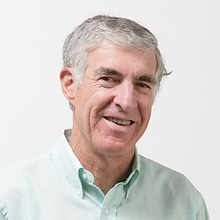
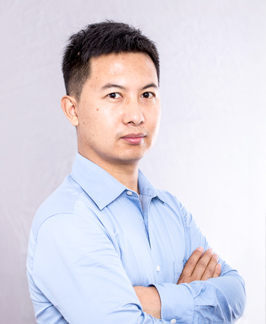
Walid G. Aref is a Professor of Computer Science at Purdue University since Fall 1999. His research focuses on database systems, spatial and spatio-temporal data management, query processing, and indexing. He has led projects funded by NSF, NIH, and industry partners. Aref is a Fellow of the IEEE and has received awards including the NSF CAREER Award (2001) and VLDB’s Ten-Year Best Paper Award (2016). He serves as Editor-in-Chief of ACM Transactions on Spatial Algorithms and Systems and has authored numerous influential papers. Education: BSc/MSc from Alexandria University (Egypt), PhD from University of Maryland (1993). Research Interests: Extending database functionality for emerging applications like spatial, graph, and sensor databases. Notable contributions include the Chameleon project, AQWA system for big spatial data, and privacy-preserving Casper framework. Selected Projects: NSF-funded work on multi-predicate spatial queries, in-memory graph relational systems, and adaptive spatio-textual processing. Systems like Tornado (spatio-textual streams) and LocationSpark (distributed spatial data) exemplify his contributions. Awards: Multiple best paper awards, IEEE Fellow, and leadership roles in ACM SIGSPATIAL.
Peter K. Bol is the Charles H. Carswell Professor of East Asian Languages and Civilizations at Harvard University. His research focuses on China's cultural elites from the 7th to 17th centuries, geospatial analysis, and digital humanities projects including the China Historical Geographic Information Systems (CHGIS) and China Biographical Database (CBDB). His research interests include: Intellectual transitions in Tang and Sung China Neo-Confucianism and its historical context Geospatial analysis in historical research Biographical database development Digital approaches to Chinese history Bol has led significant university-wide initiatives including the establishment of Harvard's Center for Geographic Analysis in 2005 and has served as Vice Provost (2013-2018) overseeing HarvardX, the Harvard Initiative in Learning and Teaching, and online learning research.
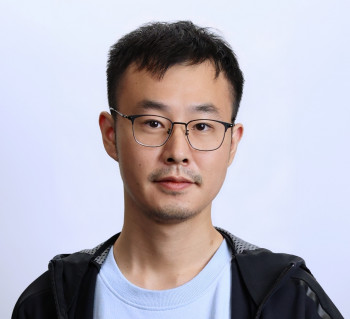
Dr. Yanjie Fu is an Associate Professor in the School of Computing and AI at Arizona State University, part of the Ira A. Fulton Schools of Engineering. He maintains his office in BYENG 506 at the Tempe campus and can be reached at yanjie.fu@asu.edu. Dr. Fu received his Ph.D. from Rutgers University in 2016, the B.E. degree from the University of Science and Technology of China, and the M.E. degree from the Chinese Academy of Sciences. His industry research experience includes positions at Microsoft Research Asia and IBM Thomas J. Watson Research Center. His research focuses on developing disruption-robust machine intelligence that can handle imperfect and complex data. Dr. Fu's work spans two major efforts: Data for AI (D4AI), exploring how structure knowledge of data can guide AI, and AI for Data (AI4D), investigating how AI can augment, reprogram, and knowledgeize data. His current research interests include space-time intelligence, data-centric AI, sim2decision, multimodal reasoning, and LLM with agentic AI. His lab has contributed projects including D4AI-spatial, D4AI-timeseries, D4AI-causal outliers, AI4D-RL, AI4D-Gen, and AI4D-LLM. Dr. Fu's recent publications reveal a strong trend toward integrating causal reasoning with deep learning for robust anomaly detection, advancing time series forecasting with novel normalization techniques, and applying generative AI to urban planning. His work increasingly bridges traditional machine learning with large language models, particularly focusing on data-centric approaches for tabular data transformation and feature engineering. US NAE FOE early career engineer (2023) US NSF CAREER (2021) NSF CRII (2018) ACM KDD18 Best Student Paper Finalist IEEE ICDM Best Paper Finalist (2014, 2021, 2022) ACM SIGSpatial Best Paper Runner-up (2020) 2022 Baidu Scholar global top Chinese young scholars in AI 2021 Aminer.org AI 2000 Most Influential Scholar Award Honorable Mention Dr. Fu has successfully mentored multiple Ph.D. students who have secured tenure-track faculty positions at prestigious institutions including University of Kansas, Chinese Academy of Sciences, Great Bay University, Portland State University, and University of Macau. His research has been supported by significant grants including the NSF CAREER award, and he currently serves as Associate Editor of ACM Transactions on Knowledge Discovery from Data. He is also a senior member of both ACM and IEEE. Dr. Fu leads a research group focused on developing trusted and safe machine intelligence. The lab connects computing issues across representation learning, self-supervised learning, interactive learning, adaptive learning, and stream learning to build disruption-robust frameworks. The group executes two key steps: data representation construct (integrating structure knowledge, self-optimization, explainability) and learning strategy construct (integrating robust representations with adaptive and interactive learning).
Max Planck Institute of Colloids and InterfacesGermany
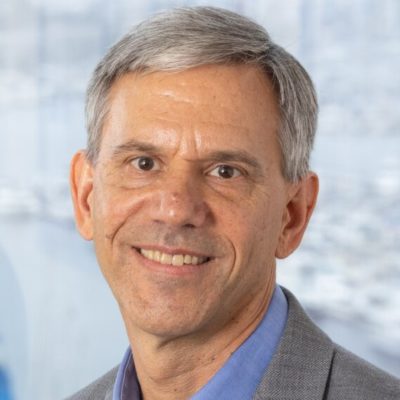
Craig Knoblock serves as Keston Executive Director of the Information Sciences Institute (ISI) at the University of Southern California (USC), Vice Dean of the USC Viterbi School of Engineering, and Research Professor of Computer Science and Spatial Sciences. He also directs the Data Science Program and the Center on Knowledge Graphs at USC. His educational background includes a Ph.D. and M.S. in Computer Science from Carnegie Mellon University (1991, 1988) and a B.S. with honors in Computer Science from Syracuse University (1984). Knoblock's research focuses on data semantics , specializing in source modeling, schema and ontology alignment, entity and record linkage, data cleaning, Web data extraction, and knowledge graph construction. His work bridges computer science, geospatial analysis, and artificial intelligence to solve complex data integration challenges. Recent projects emphasize historical map digitization, geospatial knowledge graphs, and smart city applications. His 300+ publications demonstrate consistent contributions to knowledge graphs and geospatial data integration, with a growing emphasis on historical map analysis and urban applications. The research trajectory shows increasing interdisciplinary collaboration across computer vision, geoinformatics, and domain-specific applications. IEEE Fellow (2020) ACM Fellow (2017) AAAI Fellow (2004) Robert S. Engelmore Memorial Lecture Award (2014) Donald E. Walker Distinguished Service Award (IJCAI, 2018) Use-Inspired Research Award (USC Viterbi, 2018) As Executive Director of ISI, Knoblock oversees one of USC's premier research centers with significant federal funding. His leadership extends to directing the Center on Knowledge Graphs and the Data Science Program. While specific grant details aren't provided, his extensive publication record and leadership roles indicate substantial research funding across data integration, knowledge representation, and geospatial applications. His work bridges theoretical computer science with practical applications in historical preservation, urban planning, and resource management through collaborative projects with government agencies and industry partners. Knoblock leads the Center on Knowledge Graphs at USC, focusing on developing techniques for building and utilizing knowledge graphs across diverse domains. His team combines expertise in artificial intelligence, geospatial analysis, and data integration to tackle challenges in historical map digitization, urban applications, and resource discovery. The research group maintains strong connections with both academic and government partners through the Information Sciences Institute's extensive network.
Anandamayee Majumdar is an Assistant Professor in the Department of Mathematics at San Francisco State University (SFSU), part of the College of Science & Engineering. She holds a Ph.D. and M.S. in Statistics from the University of Connecticut and Michigan State University, respectively, and earlier degrees from the Indian Statistical Institute (I.S.I.). Her research focuses on spatial and spatio-temporal processes, Bayesian computation, and their applications in biology, health, environmental sustainability, ecology, economics, finance, and industry. She has developed robust statistical models for handling missing data, multivariate processes, and expert-informed modeling, particularly in contexts like tuna catch estimation during the pandemic and financial risk analysis. She is currently exploring expert-integrated spatio-temporal models and public health trends. Professional experience includes roles as Senior Statistician at the Inter-American Tropical Tuna Commission (2021–2023), Professorial positions at universities in Bangladesh and China, and visiting research at UC Davis. She serves as Associate Editor for Applied Stochastic Modeling in Business and Industry and reviews for journals like Computational Statistics and Data Analysis and Biostatistics . Majumdar has contributed to interdisciplinary collaborations, including soil property modeling in urban ecosystems, and has held leadership roles in academic committees, such as the Interdisciplinary M.S./Ph.D. programs at Arizona State University. She actively mentors students and seeks to involve undergraduates and graduates in research projects.
Dr. Ziquan Liu is a Lecturer (Teaching & Research) at Queen Mary University of London's School of Electronic Engineering and Computer Science, affiliated with the Centre for Multimodal AI. He holds a PhD from City University of Hong Kong (2023) and dual B.Sc./B.Eng. degrees from Beihang University (2017). His research focuses on trustworthy machine learning, adversarial robustness, and uncertainty quantification in foundation models. He has served as a reviewer for top conferences like NeurIPS, ICLR, and CVPR, earning an Outstanding Reviewer Award in 2021. His teaching includes modules on machine learning for visual data analysis and principles of machine learning. He supervises PhD students in AI safety and reliability, with notable work on conformal prediction, adversarial attacks, and multimodal learning. His research outputs span top venues such as ICML, CVPR, and NeurIPS, addressing challenges in algorithmic fairness, model certification, and cross-modal alignment.
Dr. Hung Cao is an Assistant Professor of Computer Science at the University of New Brunswick, where he directs the Analytics Everywhere Lab. His work focuses on interdisciplinary research in Cyber-Physical Systems (CPS), IoT, Edge/Fog/Cloud Computing, and Explainable AI, addressing societal challenges through data-driven solutions. Prior roles include PostDoc Fellow and Data Scientist at the People in Motion Lab, UNB, and Lecturer/Researcher at Vietnam National University. He holds a Ph.D. in Geomatics Engineering (specializing in Data Science) from UNB (2020), an M.Sc. in Computer Science from University College Dublin (2015), and a B.Eng. from Vietnam National University (2011). Research interests span Smart Cities, Embedded AI, TinyML, Federated Learning, and Real-time Systems. He has led projects with Cisco, NB Power, and other industry partners to develop scalable analytics frameworks for IoT applications. Dr. Cao actively contributes to technical communities (IEEE Smart City, Edge Computing, etc.), serving as a reviewer for journals and conferences, and a Topic Editor for Electronics Journal . His innovations include the Analytics Everywhere framework for spatio-temporal data analysis, MACeIP platform for smart cities, and energy-efficient IoT systems for environmental monitoring. Current work emphasizes human-centered AI for healthcare diagnostics and industrial inspection systems.
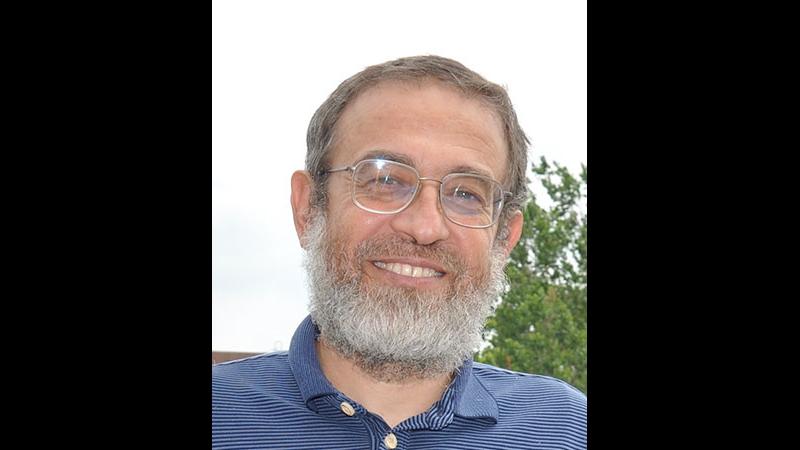
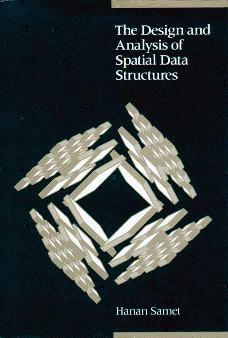
Hanan Samet is a Distinguished University Professor at the University of Maryland's Computer Science Department, affiliated with the Institute for Advanced Computer Studies (UMIACS) and the Center for Automation Research. He holds a Ph.D. from Stanford University (1975) and specializes in spatial databases, data structures, and geographic information systems. His research bridges computer science and geospatial analytics, with applications in image databases, computer vision, and spatio-temporal data management. Education: Ph.D., Computer Science, Stanford University, 1975 Research Interests: Focuses on spatial data structures, GIS, spatio-textual systems like NewsStand and CoronaViz, trajectory analysis, and metric indexing. His work emphasizes scalable algorithms for spatial networks and multimedia databases. Notable Projects: CoronaViz : Tracks disease spread via spatio-temporal data visualization NewsStand : Maps news articles geospatially SAND: Spatial browser for digital government Awards: ACM Paris Kanellakis Award (2014), IEEE McDowell Award (2015), UCGIS Research Award, and Fellowships in ACM/IEEE/AAAS. Recognized for advancing spatial database theory and practice. Grants/Advising: Leads NSF-funded projects on spatio-textual extraction and similarity search. Advises graduate students (e.g., Nicole Schneider, Montana Hoover) and undergraduate researchers. Labs/Teams: Active in UMIACS and the Center for Automation Research, collaborating on projects like VASCO (spatial visualization tools) and MARCO (image database systems).
Professor Zhifeng Bao is a faculty member at RMIT University's School of Computing Technologies. His research focuses on enhancing data usability across heterogeneous domains, including structured, unstructured, and spatial-temporal data. His work spans database management, keyword search optimization, social network analysis, and spatio-textual data processing. He coordinates the course COSC1169: Intranet and Internet Data Engineering and supervises PhD/Masters students in projects such as trajectory data processing, data asset valuation, and edge computing optimization. Research interests emphasize improving data accessibility and efficiency through methodologies like query relaxation, visual analytics, and provenance tracking. His recent projects include cost-effective edge node placement, traffic accident risk prediction, and differentially private federated learning. Teaching and supervision activities highlight a commitment to bridging theory and practical data engineering challenges.
Alberto Del Bimbo is a Full Professor of Computer Engineering at the Department of Systems and Computer Science, University of Florence, Italy. He serves as Director of the Media Integration and Communication (MICC) Center, a National Center of Excellence focused on Artificial Vision, Artificial Intelligence, and Multimedia Technologies. His career spans academia and leadership roles, including Deputy Rector for Research and Innovation Transfer (2000-2006) and Director of the Department of Systems and Computer Science (1997-2000). Education : Master Degree in Electronic Engineering (1977), University of Florence. Research Interests : Artificial Vision, Multimedia, Multimodal Interaction, Image/Video Analysis, Surveillance, and Industry Automation. Academic Leadership : Editorial roles including Editor-in-Chief of ACM TOMM , and leadership in IEEE, IAPR, and ACM conferences. Projects : MICC Center’s work on neuromorphic computing, deepfake detection, and AI-driven surveillance systems, with industrial partnerships (Leonardo SpA, Thales Italia, IARPA). Article Trends : Recent work focuses on neuromorphic event-based vision, multimodal emotion prediction, compatible AI representations, and deepfake detection using local surface frames. Applications span smart environments, cultural heritage, and real-time surveillance. Scientific Awards : ACM Distinguished Scientist (2016) ACM Award for Outstanding Technical Contributions to Multimedia (2016) IEEE Senior Member IAPR Fellow Labs & Teams : Leads the MICC research team at the University of Florence, collaborating with international institutions and companies on vision and AI innovation.
Hanan Samet is a Distinguished University Professor in the Computer Science Department at the University of Maryland, College Park. He holds affiliations with the Center for Automation Research and the Institute for Advanced Computer Studies (UMIACS). His academic journey includes a PhD from Stanford University (1975) in Computer Science, following degrees in Engineering (UCLA) and Operations Research/Computer Science (Stanford). Affiliations: University of Maryland, College Park (since 1975) Roles: Professor, Founding Editor-in-Chief of ACM Transactions on Spatial Algorithms and Systems, Founder of ACM SIGSPATIAL Samet's research focuses on spatial data structures, spatial databases, GIS, computer vision, and information retrieval. His seminal work includes the Foundations of Multidimensional and Metric Data Structures , an award-winning book addressing spatial indexing and query optimization. He pioneered frameworks like NewsStand for map-based news exploration and Coronaviz for pandemic visualization. Key contributions span spatial synonyms for approximate search, SAND spatial browser for digital government, and trajectory analysis systems for aviation safety and urban mobility. His work bridges theory and practice, influencing databases, graphics, and geographic systems. Education: B.S. Engineering, UCLA M.S. Operations Research, Stanford M.S./Ph.D. Computer Science, Stanford Samet has advised numerous students and led NSF-funded projects on spatio-textual data, similarity search, and spreadsheet analysis. His honors include the ACM Paris Kanellakis Award (2011), IEEE Wallace McDowell Award (2014), and UCGIS Research Award (2009). His labs and teams focus on spatial algorithms, visualization, and GIS applications. Notable projects include VASCO (spatial index demo), MARCO (image databases), and CHOLERA (disease tracking).
Rong Liu is an Associate Professor at the School of Business, Stevens Institute of Technology, specializing in Information Systems and FinTech. His research focuses on Blockchain, Deep Learning, Text Mining, and Business Process Management. Prior to Stevens, he was a Research Staff Member at IBM T.J. Watson Research Center (2006–2017). Liu holds a PhD in Information Systems from Penn State University (2006). Research Interests Liu’s work integrates AI and business analytics to address challenges in finance, healthcare, and operations. Key areas include blockchain applications in supply chains, ethical AI in hiring, misinformation detection, and predictive modeling for fraud and litigation. His methodologies combine deep learning with theory-driven approaches, emphasizing interpretability and real-world impact. Recent Trends in Publications His recent work explores large language model (LLM) applications in healthcare (e.g., drug shortage prediction), financial decision-making systems, and ethical compliance in job advertisements. He also investigates blockchain’s role in supply chain transparency and open-source development’s impact on ICOs. Awards & Recognition Liu has received awards including the Bright Idea Award (New Jersey Business Faculty, 2020) and multiple best paper awards at ICIS, WITS, and INFOCOM conferences. His work on supply chain event management (2007) was recognized with a Best Paper Award at the Business Process Management Conference. Service & Teaching He serves on academic committees at Stevens and reviews for top journals like MIS Quarterly and Production and Operations Management. Courses taught include Web Mining, Deep Learning for Business Analytics, and Large Language Models in Finance.
Professor Shenghua Gao is an Associate Professor at the School of Computing and Data Science of the University of Hong Kong (HKU), concurrently serving as Assistant Director for Shanghai Initiatives. He holds a PhD from Nanyang Technological University. His research focuses on integrating machine learning, spatio-temporal data analysis, and database systems to address challenges in mobility prediction, traffic management, and geospatial representation learning. He has contributed significantly to trajectory modeling, indexing frameworks for multi-dimensional data, and the application of large language models (LLMs) in spatio-temporal contexts. Key research interests include: Spatio-Temporal Data Science: Developing frameworks for efficient processing and analysis of point cloud, trajectory, and traffic data. Machine Learning for Databases: Innovating indexing algorithms (e.g., BMTree, MAST) and query optimization techniques leveraging ML. Trajectory and Mobility Prediction: Creating personalized models for next-location prediction and transfer learning across regions. Geographic AI (GeoAI): Enhancing road network representation and urban function inference using physics-guided and foundation models. Recent work highlights include the ST-LLM+ framework for traffic prediction, the MAST system for point cloud analytics, and the exploration of City Foundation Models for urban challenges. His publications span top venues in databases (SIGMOD, VLDB) and AI/data science (ICML, NeurIPS). While no awards are explicitly mentioned, his prolific output and leadership roles indicate significant academic contributions. He is actively involved in teaching and supervising research in the School’s undergraduate and postgraduate programs, including MSc(AI) and MPhil/PhD tracks.
Dr. Fabio Valdés is a researcher at FernUniversität in Hagen's Faculty of Mathematics and Computer Science, specializing in spatial databases and trajectory data analysis. He teaches core modules including Softwaresysteme, Databases and Security on the Internet, and Data Mining while leading advanced research in metric space indexing and pattern recognition. His research focuses on symbolic trajectories , efficient pattern matching for time-dependent data, and metric space indexing . Key contributions include the N-tree index structure for trajectory similarity search and frameworks for spatio-textual trajectory mining. His work bridges theoretical foundations with industrial applications in aircraft tracking, wildlife monitoring, and industrial image processing systems. Analysis of his 15 most recent publications reveals an evolution from foundational symbolic trajectory models (2013-2017) to advanced indexing structures (2020-2025). Current work integrates machine learning for neural network interpretability and energy price forecasting, maintaining strong ties to ACM SIGSPATIAL and IEEE venues while expanding into AI-driven applications. Best Demo Award at DASFAA 2013 Dr. Valdés has supervised over 40 Master's and Bachelor's theses since 2013, covering machine learning, reinforcement learning, and data engineering across finance, autonomous systems, and medical applications. His students have developed solutions for investment decision systems, autonomous agricultural robots, and medical NER systems while addressing industrial challenges in packaging machinery optimization and cockpit staffing.
Omid Reza Abbasi is a Research Fellow in Geoinformatics at the University of Salzburg , specializing in the integration of Artificial Intelligence, Machine Learning, and Geographic Information Systems (GIS) to address complex spatial challenges. His work spans diverse domains including spatio-temporal modeling, human mobility prediction, and semantic similarity measures in geospatial contexts. Projects : Collaborated on 'RegioWoodTrain,' a project focusing on sustainable regional wood transport through cooperative supply chain management using simulation and AI technologies. Research Interests : Omid's research emphasizes the application of AI and GIS in urban planning, transportation systems, and social media analysis. Key areas include: Large Language Models (LLMs) for geographical representation Semantic similarity assessment in geospatial data Human mobility pattern prediction using social networks Accessibility in WebGIS via audio interfaces Recommender systems for tourism and retail Spatio-temporal analysis of public services and environmental impacts Publications : His recent work explores the use of LLMs in GIS, novel semantic similarity metrics, and spatio-temporal modeling for urban governance. Articles from 2018-2025 highlight trends in AI-driven spatial analysis, collective mobility prediction, and georeferencing of semi-structured data. Contact : Email: omidreza.abbasi@plus.ac.at