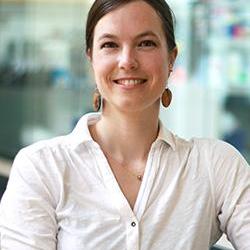
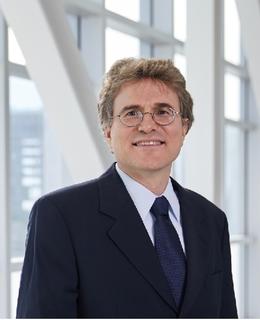
Mareike Schmidt is a Scientific Associate and Researcher at the Institute for Software Systems (VSIS) within the Department of Computer Science at the University of Hamburg, MIN Faculty. She actively contributes to heterogeneous database systems research and participates in both teaching and thesis supervision. University: University of Hamburg Department: Computer Science Email: mschmidt@informatik.uni-hamburg.de Office: Room F522 Phone: +49-40-42883-2343 Research Focus : Mareike's work centers on Heterogeneous and Adaptive Database Systems (HADeS) , exploring: Polyglot persistence architectures Dynamic data placement strategies Spatio-temporal task execution Topology description formalisms Publication Trends : Her recent publications reveal a trajectory in database systems research, particularly addressing challenges in polyglot persistence, adaptive data management, and distributed storage solutions. The work spans theoretical foundations and practical implementations, with a focus on multi-model data handling and system optimization. Thesis Supervision : Mareike has supervised multiple student works including: Lili Hauke's Bachelor thesis (2024): Database administration tool for polyglot systems Felix Pusch's Master thesis (2024): PolyStore blueprint model and API Heiko Eckmann's Master thesis (2022): Common data model for polyglot persistence Jan Synwoldt's Bachelor thesis (2019): Probabilistic data generation with Tesseract OCR Michael Hirsch's Bachelor thesis (2019): Question-answering systems for sensor network data Collaborative Projects : Actively involved in the HADeS (Heterogeneous and Adaptive Database Systems) research group and contributes to broader initiatives like Baqend, SmartOpenHamburg, and MIDAS.
Renske Vroomans is a Research Fellow at the Sainsbury Laboratory , University of Cambridge. She is a theoretical biologist specializing in evolutionary developmental biology (Evo-Devo) and computational modeling of biological processes. Her work focuses on how gene regulatory networks and dynamical processes shape the evolution of plant and animal development. PhD in Theoretical Biology and Bioinformatics, Utrecht University Postdoctoral research at University of Helsinki and Origins Center Her research explores patterns in developmental evolution, including: Evolution of multicellularity under selection pressures Role of gene networks in tissue morphogenesis Computational models for long-term plant evolution Recent publications highlight computational approaches to: Evolutionary dynamics of genome fragility and division of labor Multicellularity driven by spatial information integration Developmental constraints in plant organ evolution Scientific awards include the Gatsby Career Development Fellowship . Her group includes PhD students Steven Oud, Alexandre P Fernandes, and Research Assistant Pjotr van der Jagt.
Dr. Steffen Frey is an Assistant Professor in the Scientific Visualization and Computer Graphics group within the Bernoulli Institute at the University of Groningen's Faculty of Science and Engineering. He also maintains an affiliation with the Faculty of Medical Sciences/UMCG in the Robotics and image-guided minimally-invasive surgery (ROBOTICS) research group. His work bridges computer science with practical applications in medical and geoscientific domains. His research interests focus on scientific visualization, computer graphics, and interactive visualization techniques. Dr. Frey specializes in developing novel methods for flow estimation, temporal interpolation, parameter sensitivity analysis, and visualization of complex scientific data, particularly in porous media and fluid dynamics. His work often involves creating scalable solutions for big data visualization problems and applying visualization techniques to medical applications such as bone cement simulation. Analysis of his recent publications reveals a strong focus on machine learning approaches to scientific visualization, particularly in temporal interpolation and ensemble data analysis. His work combines traditional computer graphics techniques with modern deep learning methods to solve challenging visualization problems in scientific domains. The research demonstrates increasing sophistication in handling complex multi-dimensional datasets while maintaining interactive performance. 2019 IEEE Scientific Visualization Contest Winner Dr. Frey actively collaborates with researchers internationally, as evidenced by his co-authorship with scientists from various institutions worldwide. His work contributes to multiple Sustainable Development Goals, particularly those related to clean water and sanitation through his porous media flow research. He has supervised multiple students through research projects and thesis work, though specific names are not listed in the provided materials.
Alan Walsh is an Adjunct Instructor at Indiana University's Paul H. O'Neill School of Public and Environmental Affairs and a data engineer at the Pervasive Technology Institute. With 25 years of IT experience, he specializes in cloud computing infrastructure, big data analytics, and identity management systems for academic research environments. Education: M.S. in Business Analytics, Indiana University B.A. in Religious Studies, Indiana University His research integrates Information Technology, Cloud Computing, and Data Science to develop secure, scalable solutions for research data management. Key focus areas include identity and access systems, multi-tenant database architectures, and cloud-based transcription services enabling large-scale social science analysis. Publications from 2020-2024 reveal consistent innovation in research data infrastructure, with emphasis on granular access control, bibliographic data services, and climate modeling science gateways. His work bridges computer science with domain-specific research needs across social sciences and environmental studies. Awards: O'Neill Adjunct Teaching Award (2023) Walsh leads inter-institutional initiatives including the Committee on Institutional Collaboration's Identity Management Taskforce. His conference presentations and collaborative publications demonstrate active engagement with national research computing communities, though formal student advising is not documented. He contributes to Indiana University's Pervasive Technology Institute through projects like Scholarly Data Share, CADRE, and FutureWater Indiana, developing infrastructure for secure data sharing, bibliographic analysis, and environmental modeling.
Frank Wolter is a Professor for Logic and Computation at the University of Liverpool's Department of Computer Science. His research focuses on Knowledge Representation and Reasoning, Logic in Computer Science, Description Logic, and related areas. He has held significant editorial roles, including co-editing the Handbook of Modal Logic (2007) and multiple conference proceedings. He has been recognized with numerous awards, including Best Paper Awards at KR 2000, KR 2008, KR 2010, ISWC 2013, and PODS 2017, as well as the Elected EurAI Fellow (2023). His work includes foundational contributions to ontology-based data access and query answering, with a focus on computational complexity and formal methods. Wolter has supervised multiple PhD students, including Oliver Kutz, Sebastian Bauer, and Hadrien Pulcini. He has been involved in projects funded by EPSRC (e.g., Dynamic Ontologies, Knowledge Representation and Reasoning about Distances, and quantMD), addressing challenges in combining logics and modular ontologies. He actively participates in academic events, serving on program committees for conferences like IJCAI, AAAI, and KR, and has organized workshops on topics such as Craig Interpolation and the Decision Problem in First-Order Logic.
Dr. Saida Elmi is an Assistant Professor Adjunct at Yale University School of Medicine and an Assistant Professor at the University of New Haven. She holds a Ph.D. in Computer Science from the National School of Mechanics and Aerotechnics (2017), followed by postdoctoral research at Korea University of Technology and Education (2017–2018) and National University of Singapore (2018–2021). Her research focuses on AI applications in healthcare, transportation systems, and spatial data mining. She developed the Automated Test of Embodied Cognition (ATEC), an AI-driven system using motion capture and machine learning for mental disease detection. Key contributions include predicting taxi fares, travel times, and energy consumption in transportation networks using deep learning architectures like RNNs and CNNs, and designing group-oriented recommendation systems for points-of-interest (POIs) using graph convolution networks and attention mechanisms. Education : Ph.D., Computer Science, National School of Mechanics and Aerotechnics (2017) Postdoctoral Research, Korea University of Technology and Education (2017–2018) Postdoctoral Research, National University of Singapore (2018–2021) Her research interests span machine learning, spatial data mining, and AI ethics. She has pioneered frameworks for spatio-temporal data analysis, including a transfer learning approach for travel time prediction in data-scarce regions. Her work on energy consumption modeling and POI prediction has been published in top-tier conferences like WWW, MOBIQUITOUS, and ECIR. Dr. Elmi’s interdisciplinary projects integrate AI with healthcare and urban systems, emphasizing automated cognitive assessment and smart city technologies. Her current efforts focus on refining action recognition algorithms for clinical applications and optimizing recommendation systems for group mobility decisions.
Nikolaos Pelekis is a Professor at the Department of Statistics and Actuarial Science, School of Finance and Statistics, University of Piraeus, where he teaches courses in Data Science, Data Management, Information Systems, and Computer Programming. He has been actively involved in both undergraduate and postgraduate education, offering specialized courses such as "Statistical Data Mining Methods" in the Applied Statistics Master's program and "Big Data Management" in the Cybersecurity and Data Science postgraduate program. Born in 1975, Professor Pelekis earned his Bachelor's degree in Computer Science from the University of Crete (1998), followed by an MSc in Information Systems Engineering (1999) and a PhD in Moving Object Databases (2002) from UMIST University in the United Kingdom. His educational background laid the foundation for his distinguished career in data science and database management. Professor Pelekis' research spans multiple domains within data science and database management, with particular emphasis on mobility data analytics. His work focuses on data mining, big data management and analytics, with special attention to location and motion data including trajectories of moving objects. He has made significant contributions to spatial and spatiotemporal database management, moving object database systems, privacy-preserving data mining, and OLAP analysis. His research bridges theoretical foundations with practical applications, particularly in maritime and transportation domains. An analysis of Professor Pelekis' recent publications reveals a strong trend toward maritime data analytics and vessel traffic prediction. His work increasingly focuses on applying machine learning techniques to maritime trajectory data, developing systems for collision risk assessment, vessel location forecasting, and maritime route prediction. The research demonstrates a progression from foundational database management techniques to sophisticated analytics for time-critical mobility forecasting, with applications in aviation and maritime domains. Five best research paper awards 1st & 3rd place in the SemEval-2017 competition 3rd place in the ACM SIGSPATIAL Cup 2016 competition Best paper award at ACM SIGSPATIAL'14 (Path-based Queries on Trajectory Data) Best paper award at ER'13 (Baquara: A Holistic Ontological Framework for Movement Analysis with Linked Data) Best application paper award at ICDM'09 (Clustering Trajectories of Moving Objects in an Uncertain World) Ralf H. Güting best research paper award at SSTD'21 (A Novel Indexing Method for Spatial-Keyword Range Queries) Best Demo Paper award at SSTD'21 (MaSEC: Discovering Anchorages and Co-movement Patterns on Streaming Vessel Trajectories) Professor Pelekis has been actively involved in advising and research funding acquisition. He has participated in over 10 European and National Research and Development projects as principal investigator or key researcher. His leadership extends to directing research laboratories and coordinating large-scale collaborative projects. As co-founder of the Data Science Lab - DataStories at the University of Piraeus, he has mentored numerous researchers and students. His research has been supported by prestigious funding programs including Horizon Europe, Horizon 2020, and national research initiatives. Professor Pelekis co-founded and leads the Data Science Lab - DataStories at the University of Piraeus, which comprises 9 faculty members from 4 different Departments along with experienced and young researchers. He previously served as Head of Research for the Information Management Lab (InfoLab) at the Department of Informatics, University of Piraeus (2005-2014). His current research team is actively engaged in multiple European projects including "DAT.AI – Energy-efficient AI-ready Data Spaces" and "EMERALDS – Extreme-scale Urban Mobility Data Analytics as a Service," focusing on cutting-edge applications of data science in maritime and urban mobility contexts.
Fatima Boukari is an Associate Professor in Computer Science within the Division of Physics, Engineering, Mathematics and Computer Sciences at Delaware State University. Her research bridges artificial intelligence, deep learning, and mathematical modeling to develop robust solutions for biomedical engineering, cell biology, and agricultural technology challenges. Education: B.Sc. in Computer Science Engineering from University of Annaba, Algeria Dual M.Sc. degrees in Computer Systems Architectures and Parallel Computing from Algeria-Glasgow Ph.D. in Mathematics & Physics from Delaware State University Dr. Boukari's research centers on foundational Deep Learning architectures and mathematical modeling applied to biomedical diagnostics and cell dynamics analysis. Her work in reinforcement learning and transfer learning enhances decision-making for autonomous systems, while her cognitive modeling research decodes human perception using EEG data. She pioneers multi-modal distributed learning systems that maintain privacy across heterogeneous sensor networks, addressing critical gaps in military ISR applications. Her recent publications reveal a strong trajectory toward spectral data analysis for medical diagnostics and AI-driven cognitive modeling , with increasing emphasis on trustworthy AI solutions for healthcare and environmental sustainability. The consistent focus on cell segmentation/tracking algorithms demonstrates her commitment to advancing biomedical image analysis. Scientific Awards: No scientific awards, prizes, or fellowships listed in available information Dr. Boukari has mentored over 40 undergraduate and 2 graduate students from underrepresented STEM backgrounds. Her active research portfolio includes: NSF CISE grant for biomolecular detection using physics-informed machine learning Air Force RITA/UARC project on neuroscience computational modeling Air Force project building robust multi-modal distributed learning systems DE-CTR ACCEL project for COVID-19 respiratory disease diagnosis NSF grant for Delaware and Mid-Atlantic Data Science Corps Research scientist role in AI-CLIMATE National AI Research Institute She leads the Applied Interdisciplinary Data Science (AIDA) Laboratory and serves as Project Lead for the CAST E-IoT Center's four agricultural research thrusts. As Team Lead of the 1890 Working Group on Artificial Intelligence, she drives initiatives addressing climate change resilience and food security through responsible AI development.
Roman Ptak is a researcher at the Department of Computer Engineering, Faculty of Information and Communication Technology, Wrocław University of Science and Technology. His work focuses on document analysis, handwriting recognition, and geohistorical data modeling. Research interests include: Document Analysis: Specializing in text line segmentation and handwriting recognition techniques Geohistorical Data: Addressing heterogeneity in historical information systems Image Processing: Developing algorithms for document examination and artifact analysis Roman's recent research trends show: 2024: Tensor voting applications in handwriting analysis 2023: Advanced segmentation techniques for handwritten documents 2021: Heterogenic spectral database development 2020: Hybrid approaches combining histograms and projection methods 2019: Ink spectral analysis and polymorphic microscopy 2017: Historical document authentication and GIS-based cultural geography studies Contact: roman.ptak@pwr.edu.pl
Mel Chekol is an Assistant Professor at Utrecht University, affiliated with the Data Intensive Systems group within the Science faculty. He holds a PhD from INRIA Rhône-Alpes and a double MSc from Vienna University of Technology and Free University of Bozen-Bolzano. His research focuses on knowledge graphs, spatio-temporal data integration, probabilistic inference, and scalable machine learning applications. Previously, he worked at institutions including INRIA Nancy Grand Est, University of Mannheim, and the National Institute of Informatics in Tokyo. Key research interests include reasoning in knowledge graphs, temporal data modeling, and applying language models to enhance knowledge representation. He contributes to projects like the Utrecht Platform for Applied Data Science and has collaborated on frameworks such as the EXMO and WAM teams. His work emphasizes practical applications of AI and data science in governance and sustainability. Mel has published extensively in venues like VLDB Journal, ISWC, and AAAI, focusing on topics like rule learning, temporal knowledge graphs, and scalable inference systems. His research bridges theoretical advancements with real-world data challenges.
Thomas Devogele is a Professor at the University of Tours, France, where he serves as Head of the Computer Science Department within the Faculty of Sciences and Technology. He is also Head of the Master 2 in IT and apprenticeships program and deputy director of LIFAT (Tours Fundamental and Applied Computer Science Laboratory). His academic career spans more than two decades, having previously served as an Assistant Professor at the French Naval Academy from 1998 to 2010. His primary research focuses on Geographic Information Systems (GIS), spatio-temporal data mining, and moving object analysis. Dr. Devogele's work specializes in trajectory data-mining, similarity measures between lines or trajectories using Fréchet distance, classification and outlier detection of trajectories, and spatio-temporal database integration. He currently leads research projects DOPAN and PERSONAE. His recent publications (2021-2025) demonstrate an expansion of his research into cycling infrastructure analysis, blockchain applications for business processes, personalized web service recommendations, and health data narratives (particularly tuberculosis in Gabon), while maintaining his core expertise in trajectory analysis and spatial data. His work bridges theoretical computer science with practical applications in transportation, public health, and urban planning. Dr. Devogele has supervised numerous PhD students who have gone on to successful academic and industry careers, including Fournier Sébastien (Assistant Professor at Université de Provence), Noyon Valérie (Leader of GIS department at the city of Niort), and Etienne Laurent (Assistant Professor at Tours University). His teaching responsibilities include Software Engineering, Object-Oriented Programming (Java), Geographic Information Systems, Artificial Intelligence, and Database courses for Computer Science students at the Blois campus. He has made significant contributions to the field through his extensive publication record spanning from 1996 to the present.
Dr. Sebastian Neumaier is a Senior Researcher at the Institute of IT Security Research within the Department of Computer Science and Security at University of Applied Sciences St. Pölten . He focuses on open data ecosystems, knowledge graphs, and semantic web technologies. Research Interests : Open Data Quality and Governance Knowledge Graph Construction Data Security and Usage Control Semantic Web Standards Smart City Data Infrastructure Publication Trends (2015–2025) span open data quality assessment, knowledge graph applications, cybersecurity in data spaces, and semantic data labeling. Key subfields include license compliance, spatio-temporal data systems, and decentralized dataset exchange architectures. Education : PhD (2019) – Semantic Enrichment of Open Data Master's Thesis – Data Intelligence BSc – Computer Science Labs & Projects : Core contributor to ADEQUATe platform for open data quality Co-developer of DALICC as a service for license clearance Active in data space policy frameworks Participant in EU digital product passport initiatives
Emmanuel Stefanakis is a Professor and Department Head of Geomatics Engineering at the Schulich School of Engineering, University of Calgary. He holds a PhD in Electrical and Computer Engineering (National Technical University of Athens, 1997), an MScE in Geodesy and Geomatics Engineering (University of New Brunswick, 1994), and a Dipl.Eng in Rural and Surveying Engineering (National Technical University of Athens, 1992). His research focuses on Geospatial Data Science, Discrete Global Grid Systems (DGGS), GeoAI, and applications of Geomatics in natural hazards, transportation, and climate change . He has led over 140 student projects and authored/co-authored five textbooks and 150+ articles. Notable awards include the 2023 Canadian Cartographic Association’s Award of Distinction and the 2023 UCalgary Teaching Excellence Award. Recent articles emphasize high-performance trajectory analysis, DGGS integration, and geospatial quantum computing . His work bridges theoretical advancements with practical tools for flood modeling, epidemiology, and urban planning. Grants include NSERC Discovery Grants and collaborations with industry partners like McElhanney Ltd. Professional memberships span the Canadian Institute of Geomatics, Canadian Cartographic Association, and APEGA. He served as Editor-in-Chief of Cartographica (2014–2022) and actively contributes to international conferences on geoinformatics. His educational initiatives include innovative course designs in online and distance learning. Current roles include leadership in the HALOS and Geospatial Quantum Computing projects, advancing geomatics engineering education in the digital era.
Rubén Vera-Rodríguez is a researcher at the Biometrics and Data Pattern Analytics (BiDA) Lab, part of the Escuela Politécnica Superior at Universidad Autónoma de Madrid, Spain. His work focuses on biometrics, human-computer interaction, and privacy-enhancing technologies, with strong emphasis on mobile and wearable systems. Research Interests: His primary research areas include behavioral biometrics (keystroke dynamics, gait recognition), face recognition, synthetic data generation, and privacy-preserving methods in biometric systems. He explores the use of deep learning and transformer models for mobile authentication and digital phenotyping. The trends in his recent publications show increasing use of synthetic data, explainable AI, and transformer architectures in biometric systems. His work spans both technical innovation and privacy-aware design, contributing to benchmark datasets and open challenges. Scientific Contributions: Co-organizer of the SVC-onGoing and WAMWB workshops. Contributor to major biometric databases including BehavePassDB and ChildCIdb. Active in privacy-focused biometric research, as seen in surveys on sensor vulnerabilities. Advising and Collaborations: He collaborates extensively with researchers such as Ruben Tolosana, Aythami Morales, and Julian Fierrez. While no formal students are listed, he leads and contributes to team-based research projects and competitions. Labs and Teams: He is a core member of the Biometrics and Data Pattern Analytics (BiDA) Lab at UAM, a research group focused on advancing biometric technologies with attention to real-world usability and ethical considerations.
Ouri Wolfson is the Richard and Loan Hill Professor of Computer Science at the University of Illinois at Chicago (UIC), with a joint appointment at the University of Illinois at Urbana-Champaign (UIUC). He earned his Ph.D. in Computer Science from NYU's Courant Institute in 1984 and has previously held faculty positions at Columbia University and Technion. His research focuses on database systems, distributed systems, mobile/pervasive computing, and computational transportation science. His work bridges theoretical foundations with practical applications in intelligent transportation, urban computing, and mobile data management. Wolfson has authored over 200 publications spanning databases, transportation systems, and computational neuroscience. His recent work demonstrates strong focus on: Spatio-temporal algorithms for transportation networks Intelligent urban mobility solutions Computational neuroscience applications Resource management in distributed environments Honors include: ACM Fellow AAAS Fellow IEEE Fellow University of Illinois Scholar (2009) ACM Distinguished Lecturer (2001-2003) He founded two technology companies (Mobitrac, Pirouette Software) and has secured significant research funding from NSF, DARPA, NASA, and others, including a $3.1M NSF grant establishing a Ph.D. program in Computational Transportation Science.