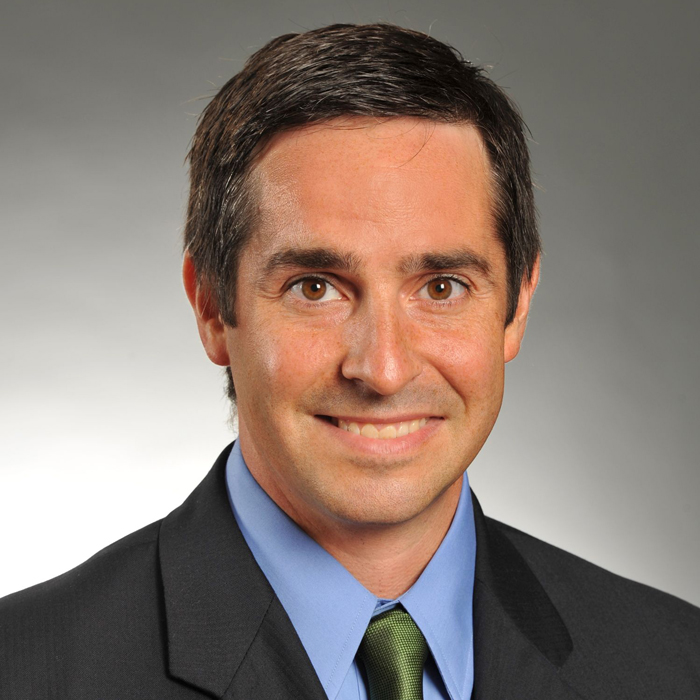
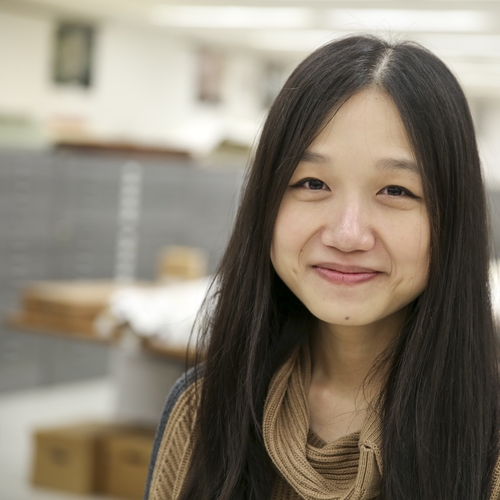
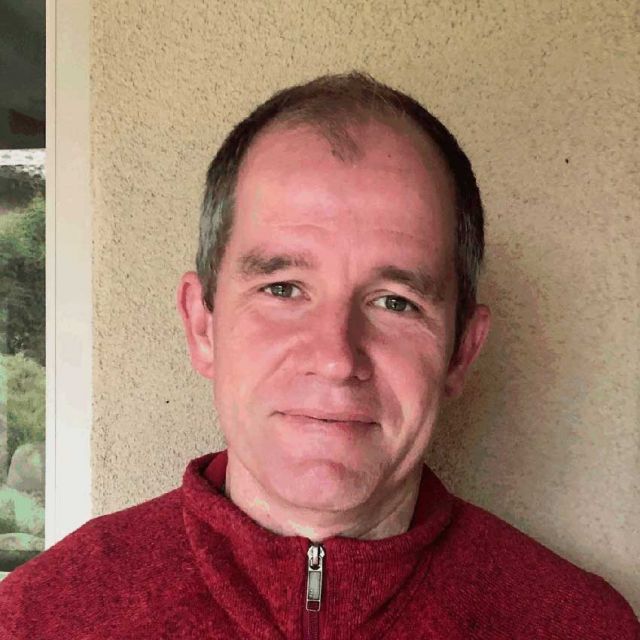
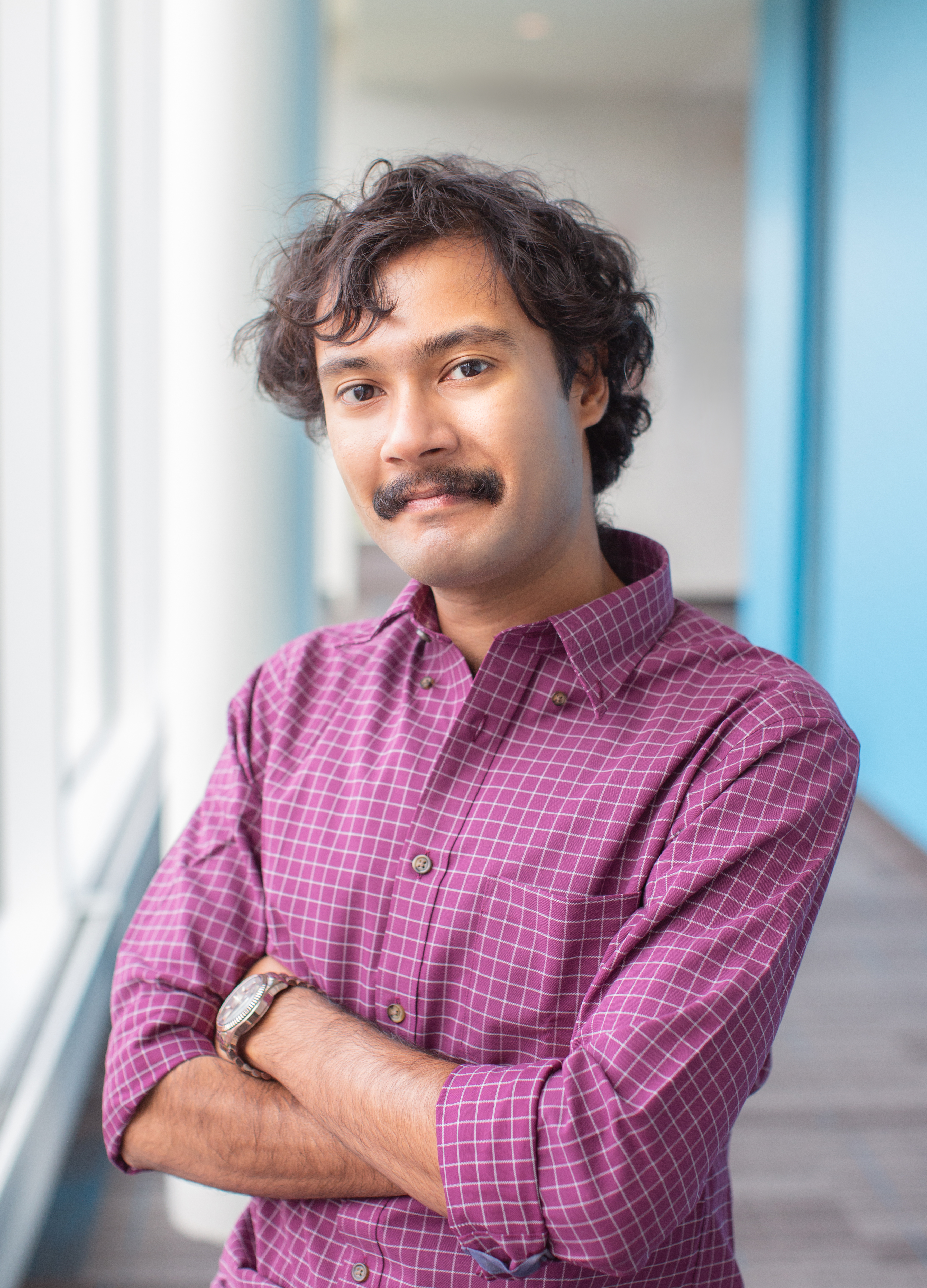
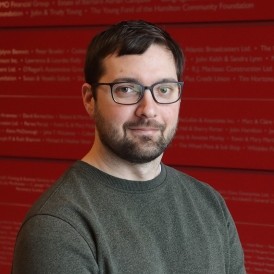
Dr. Horacio Rostro González is an Assistant Professor in the Department of Industrial Engineering at IQS School of Engineering, Ramon Llull University. His research focuses on neural network implementations using field-programmable gate arrays (FPGAs), with applications in robotics, motor imagery systems, and industrial automation. Research Focus: Development of hardware-accelerated AI systems for pattern recognition, robot locomotion control, and human-machine interfaces. Key projects include neuromorphic computing for spatio-temporal classification and AI-driven photonics parameter optimization. Projects: Member of the Industrial Engineering Research Group (GEPI), working on offshore wind farm data analysis using machine learning and renewable energy prediction systems.
Dr. Neil Spencer is an Assistant Professor in the Department of Statistics at the University of Connecticut. His research integrates Bayesian inference, network analysis, and computational statistics, with applications ranging from forensic science to neurological disorders. He earned a PhD in Statistics and Machine Learning from Carnegie Mellon University, MSc from University of British Columbia, and BScH from Acadia University. Research focuses on developing novel methods for network data analysis (latent position models, efficient MCMC), robust Bayesian inference, and forensic statistics. Publications demonstrate consistent innovation in computational techniques for complex data structures and interdisciplinary applications. Teaching includes STAT5410 (Statistical Computing) and STAT3345Q (Probability Models for Engineers). He co-advised PhD candidate Tolani Olarinre and participates in the New England Statistical Society's NextGen committee. Research publications emphasize methodological innovations in network modeling, Bayesian computation, and experimental design, with significant applications in neuroscience and forensic science.
Dr. Andrea Cremaschi is an Assistant Professor at IE University, specializing in Bayesian statistics with applications in biomedical research, public health, and data science. His academic journey includes roles at institutions such as the Singapore Institute for Clinical Sciences (SICS) and the National University of Singapore (NUS), where he contributed to interdisciplinary projects in biostatistics and clinical research. He holds a Ph.D. in Statistics from the University of Kent and degrees in Mathematical Engineering from Politecnico di Milano. His research focuses on developing novel Bayesian statistical methodologies for healthcare challenges, including drug sensitivity analysis in oncology, maternal and child health outcomes, and cost-effectiveness studies. He also explores applications in digital humanities and climate action, aligning with UN Sustainable Development Goals 3 (Good Health), 4 (Quality Education), and 13 (Climate Action). Key contributions include studies on postpartum diabetes screening, pediatric growth modeling, and ex vivo drug response analysis in leukemia. His work bridges computational statistics with real-world health challenges, emphasizing algorithmic innovation and interdisciplinary collaboration. Education: Ph.D. in Statistics (University of Kent), M.Sc./B.Sc. in Mathematical Engineering (Politecnico di Milano) Professional Affiliations: IE University, Singapore Institute for Clinical Sciences (SICS), National University of Singapore
Fangni Lei is an Assistant Research Professor in the Department of Civil and Environmental Engineering at the University of Connecticut (UConn). She holds a Ph.D. from Wuhan University (2016). Her research focuses on watershed-scale hydrologic modeling, microwave remote sensing of soil moisture, land surface water and energy balance modeling, and agricultural water management with remote sensing applications. Dr. Lei’s work bridges theoretical advancements with practical applications in environmental monitoring and climate science. Her research interests include integrating remote sensing technologies like CYGNSS and SMAP data to enhance soil moisture monitoring, improving hydrological models through data assimilation, and advancing precision agriculture practices using satellite-derived insights. Recent efforts emphasize machine learning applications in environmental data analysis, flood inundation mapping, and climate change impacts on ecosystems. Key contributions include developing blended soil moisture products, assessing vineyard water use via data assimilation systems, and evaluating global soil moisture estimates using multi-source satellite data. Dr. Lei collaborates with institutions like the Connecticut Manufacturing Simulation Center and the Connecticut Transportation Institute, contributing to interdisciplinary environmental research initiatives.
Markus Ådahl serves as Associate Professor in the Department of Mathematics and Mathematical Statistics at Umeå University, Sweden. His research focuses on developing advanced statistical methodologies for emergency medical services optimization, with primary office location at MIT-huset, plan 3, Matematik och matematisk statistik, MIT.B.349, Umeå. His work specializes in spatial statistics and machine learning applications for prehospital care systems. Key research areas include spatio-temporal modeling of ambulance demand, composite likelihood intensity estimation, and large-scale forecasting of emergency calls using log-Gaussian Cox processes. This research directly addresses operational challenges in northern Sweden's emergency response infrastructure through data-driven approaches. Recent publications demonstrate consistent focus on ambulance call pattern analysis, with methodological innovations in regularized semi-parametric modeling (2023) and large-scale spatio-temporal forecasting (2020). These studies establish critical frameworks for optimizing ambulance resource allocation in geographically complex regions. Ådahl currently leads the long-term research initiative Data-driven optimization of prehospital care via statistics and machine learning (2018-2028), which integrates statistical modeling with machine learning to enhance emergency medical service efficiency. While no formal advisees are listed in available materials, this project coordinates cross-disciplinary collaboration between statisticians, healthcare providers, and emergency response authorities.
Mehdi Moradi is an Associate Professor in Mathematical Statistics at the Department of Mathematics and Mathematical Statistics, Umeå University, Sweden. His research focuses on developing advanced methodologies for spatial and spatio-temporal marked point processes on general state spaces, including linear networks, with applications in criminology, seismology, environmental science, epidemiology, and transportation. He specializes in change-point detection, trajectory analysis, and statistical frameworks for analyzing complex spatio-temporal phenomena. His work integrates theoretical advancements with practical applications, particularly in environmental monitoring and urban planning. Recent research emphasizes cross-validation-based statistical frameworks for point processes, function-valued marked processes on linear networks, and hierarchical spatio-temporal change-point detection. He has contributed to open-source tools like the ‘spatstat.linnet’ package for R, enhancing computational methods in spatial statistics. Moradi’s publications span statistical theory, methodological innovation, and interdisciplinary applications, reflecting a commitment to bridging theoretical developments with real-world problem-solving. His research has been supported by grants and collaborations within Umeå University and beyond, though specific grants are not detailed in the provided text.
Oyelola Adegboye serves as an Adjunct Associate Professor at James Cook University's School of Public Health and Tropical Medicine. He is a chartered biostatistician with extensive international experience, having previously taught at the American University of Nigeria, American University of Afghanistan, and Qatar University. His academic journey includes a PhD from the University of Western Cape, South Africa, and a Master's degree in Biostatistics from Hasselt University, Belgium. His research focuses on spatial epidemiology, environmental statistics, and disease mapping with applications in public health. Adept at developing innovative statistical approaches, Dr. Adegboye examines spatial and spatio-temporal variations in infectious diseases and investigates climate-health relationships. His methodological expertise centers on correlation/covariance structures in public health data. Dr. Adegboye serves as associate editor for several prestigious journals including BMC Public Health (Global Health), Therapeutic Advances in Infectious Disease, PLOS ONE, Scientific African, and Scientific Reports. He is also an Early Career Researcher Initiative (ECRI) Advisory Panel member for Environmental Health Perspectives. Fellow of the Institute of Management Consultants Top 20 most-read article in 2017/2018 in Journal of the Royal Statistical Society, Series C As a research advisor, Dr. Adegboye currently supervises six graduate students working on diverse health-related projects spanning zoonotic pathogens, climate change impacts, antimicrobial resistance, and machine learning applications in public health. His previous role as a clinical research biostatistician at JCU's Australian Institute of Tropical Health and Medicine provided valuable experience in infectious disease research.
Michael McGuire is an Assistant Professor in the Department of Computer and Information Sciences at Towson University's College of Science and Mathematics. He holds a Ph.D. in Information Systems from the University of Maryland, Baltimore County (2010), with supporting degrees in Information Systems (MS, 2005) and Geography & Environmental Planning (BS, 1996). Education: Ph.D. & MS in Information Systems (UMBC), BS in Geography (Towson) Department: Computer and Information Sciences School: College of Science and Mathematics Email: mmcguire@towson.edu His research focuses on spatio-temporal data mining , sensor database systems , and environmental informatics applications. Current work examines deep learning approaches for climate prediction , including convolutional neural networks for tornado day forecasting and transformer models in hurricane intensity analysis. Earlier publications explore information visualization through eye-tracking studies and multi-criteria decision systems for route planning. Recent publications highlight machine learning applications in environmental contexts, with 2024 studies on knowledge graphs and 2023 work on federated learning . The 2022 tornado prediction papers demonstrate CNN capabilities in meteorological modeling, while 2021 eye-tracking research shows feature engineering approaches for visual processing tasks. Dr. McGuire's technical expertise spans distributed database systems , cloud computing architectures , and human-computer interaction through eye gaze analysis. His 2018-2020 publications compare SQL/NoSQL storage for climate data and develop safe route planning algorithms using Fuzzy TOPSIS and other decision frameworks.
Ying Song is an Associate Professor in the Department of Geography, Environment & Society at the University of Minnesota. Her research focuses on Geographical Information Science (GIScience), spatio-temporal modeling, and transportation geography. She explores human mobility patterns in urban environments, emphasizing accessibility, equity, and sustainability. Her work addresses multi-modal transportation planning, public health, and ecological impacts. Dr. Song holds a BS from Wuhan University (2007), an MS from the University of Utah (2009), and a PhD from The Ohio State University (2015). Her expertise includes GIS-based analysis of transportation networks, activity-travel behavior, and spatial equity. Recent research highlights include optimizing electric bus systems, gender differences in mobility, and accessibility for underserved communities. Her articles emphasize interdisciplinary applications of GIS, such as modeling sustainable transport, evaluating mental health through neighborhood resources, and improving data quality in smartphone surveys. While no specific awards are listed, her work reflects a commitment to advancing equitable urban systems. She teaches courses in transportation geography and spatial sciences, contributing to both academic and practical applications in the field.
Francesca Panero is an Assistant Professor (RTT) in Statistics at Sapienza University's Department of Methods and Models for Economics, Territory and Finance (MEMOTEF), with a concurrent role as Visiting Fellow at the London School of Economics (LSE) Department of Statistics. She holds a PhD in Statistics from the University of Oxford and prior degrees from the University of Turin and Collegio Carlo Alberto. Her research focuses on Bayesian models applied to complex networks , disclosure risk assessment , and Gaussian process modeling . Current projects include Bayesian nonparametric frameworks for sparse networks, spatio-temporal food insecurity prediction, and fair machine learning methodologies. She leads the GENIAL initiative at LSE, exploring GenAI's educational impact. She teaches courses on Probability and Stochastic Processes (Sapienza) and Deep Learning/Artificial Intelligence (LSE). Awards include the 2025 USI Visiting Lectureship and j-ISBA Chair Elect (2025-2026) . Her work is supported by grants such as the LSE RISF fund for food insecurity research. Publications span topics like graphex processes, fair ML algorithms, and optimal risk assessment methodologies. She actively engages in policy discussions through collaborations with organizations like the UN World Food Programme Hunger Monitoring Unit.
Zvonimir Dogic is a Professor of Physics at the University of California, Santa Barbara (UCSB), and serves as the Faculty Graduate Advisor. Previously, he held positions at Brandeis University, including Associate and Assistant Professor, and conducted postdoctoral research at institutions such as the Rowland Institute at Harvard. His research focuses on active matter, soft condensed matter, and self-assembly, aiming to replicate dynamic biological phenomena using simplified systems. Key areas include colloidal membranes, microtubule-based active fluids, and bacterial flagella. His work bridges experimental and theoretical physics, with collaborations extending to materials science and biophysics. Education: BA and PhD in Physics from Brandeis University (1997–2003). Postdoctoral roles at Research Center Julich, University of Pennsylvania, and Rowland Institute. Joined UCSB in 2017. Research interests include non-equilibrium systems, active nematics, and the interplay between structure and dynamics in soft materials. Recent studies explore self-folding active interfaces, light-activated microtubules, and chiral colloidal assembly. The Dogic Lab collaborates with theorists and experimentalists, leveraging advanced imaging and computational tools like deep-learning optical flow analysis. Students and alumni include over 50 researchers, many now in academic and industry roles. The lab is supported by grants from NIH, NSF, and private foundations. Ongoing projects investigate programmable materials, energy dissipation in active systems, and scalable active matter architectures.
Suprio Ray is an Associate Professor in the Faculty of Computer Science at the University of New Brunswick, Canada, leading the Big Data Systems and Analytics Lab. He holds a PhD from the University of Toronto, an M.Sc. from the University of British Columbia, and a B.E. from NIT Trichy. Previously, he worked in industry roles at Oracle, Bell Labs, and Webtech Wireless, and completed a PhD internship at SAP. His research focuses on scalable data systems, spatial/spatio-temporal data management, and modern hardware utilization. Key projects include the Jackpine spatial database benchmark , DaskDB (a scalable data science system), and NUMA-aware query processing . He collaborates across disciplines with ECE and GGE departments, supported by grants from NBIF, NSERC, and industry partners. Research interests span Big Data systems, privacy/security in databases, blockchain analytics, and parallel/distributed computing. He has pioneered techniques like STILT multi-dimensional indexes , privacy-preserving spatial queries (Pystin) , and learned spatial indexes . Over 60 publications appear in top venues like SIGMOD, ICDE, and IEEE BigData. Education: PhD (Computer Science), University of Toronto (2015) M.Sc. (Computer Science), University of British Columbia (2003) B.E. (Computer Science & Engineering), NIT Trichy (2000) Teaching includes courses on big data systems (CS4545/6545), database foundations (CS6585), and data science (CS2545). He advises graduate students in scalable analytics and spatial systems, emphasizing industry-relevant software skills. Key awards include the 2024 ACM SIGSPATIAL best poster award , IBM Best Student Paper (2014) , and Harrison McCain Foundation award (2016) . His work has been recognized with 7 best paper awards and 3 patents. Current projects explore FPGA-accelerated joins , serverless data analytics , and privacy-preserving blockchain queries . Past contributions include the GEMM mobility model (2003) and foundational spatial benchmarks.
Henrike Häbel is a Researcher at Karolinska Institutet, affiliated with the Department of Learning, Informatics, Management and Ethics, Department of Clinical Neuroscience, and Department of Medicine, Huddinge. She holds roles in the Medical Statistics Unit and Tanja Tomson's Prevention group. With a doctoral degree in Mathematical Statistics from Chalmers University of Technology and the University of Gothenburg (2017), she completed a postdoc at the Natural Resources Institute Finland before joining Karolinska Institutet. Her work focuses on statistical consultation, data management, survival analysis, and regression modeling in epidemiological studies. She actively contributes to teaching across multiple academic institutions and participates in the Centre for Bioinformatics and Biostatistics. Key research interests include spatial and spatio-temporal statistics, spatial point processes, and image analysis. Her work spans diverse medical domains such as oncology, cardiovascular disease, and public health. She received the Cramér Prize for Best Thesis in 2018. Current projects include obesity prevention programs (MINISTOP 3.0), rural emergency team dynamics, and long-term outcomes of severe COVID-19. She collaborates across departments and institutions, contributing to multidisciplinary teams like the Eye movements and vision group under Tony Pansell.
Dr. Moinak Bhaduri is an Assistant Professor in Mathematical Sciences at Bentley University. His research applies stochastic modeling to change-point detection, spatio-temporal processes, and repairable systems. He holds a Ph.D. from the University of Nevada, Las Vegas. His interdisciplinary work spans finance (market spillovers), environmental science (hurricane interactions), legal analytics (defamation trials), and social dynamics (immigration networks). Publications leverage methods like hidden Markov chains and recurrence rate ratios. No awards or student mentorship details are provided.
Kyran Cupido is an Associate Professor in the Department of Mathematics and Statistics at Saint Francis Xavier University. His work bridges spatial statistics with actuarial science, focusing on mortality risk, insurance modeling, and socioeconomic implications of geospatial patterns. PhD in Statistics, Arizona State University, 2020 MSc in Statistics, McMaster University, 2017 BSc in Mathematics and BEd in Intermediate/Senior Education, Brock University, 2015 Research interests center on integrating spatial statistics into actuarial domains. His publications analyze mortality trends, cybercrime patterns, emergency response systems, and social media dynamics through geospatial frameworks. Recent work includes natural hedging techniques for mortality risk and applications of machine learning to emergency logistics. Kyran Cupido has not been explicitly recognized for scientific awards in the provided texts. His academic contributions are documented through publications rather than student advisement details or laboratory affiliations.