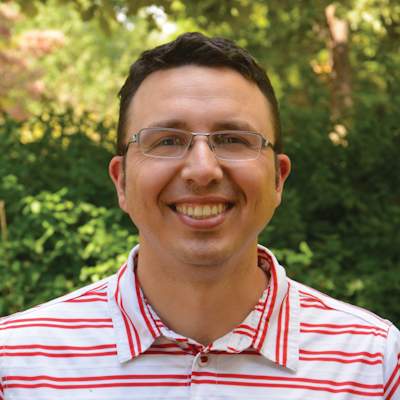
Dr. James Martin is a Professor of Wildlife Education at the University of Georgia's School of Forestry and Natural Resources. He holds a PhD in Forest Resources from UGA (2010) and a B.S. in Environmental Studies from the University of North Carolina Asheville (2003). His research focuses on three core themes: landscape ecology and management, gamebird (particularly quail) ecology, and sustainable agriculture/forestry. He integrates quantitative methods and collaborates with agencies to enhance wildlife conservation in managed ecosystems. His teaching includes courses on conservation decision-making, wildlife habitat principles, and internships. His research emphasizes northern bobwhite populations, predator management impacts, and the ecological effects of forestry practices. Recent studies address translocation success, pathogen surveillance, and the efficacy of monitoring technologies. Dr. Martin leads the SREL Lab and maintains an affiliation with Google Scholar. His work bridges ecological theory and applied land management, with a focus on wildlife-friendly agricultural practices and biodiversity conservation in working forests. Notable contributions include studies on bobwhite density in private forests, gopher tortoise burrow ecology, and the effects of thinning on wildlife habitat. His articles often analyze spatio-temporal dynamics, predation risk, and the economic feasibility of conservation practices. While no formal awards are listed, his prolific publication record reflects his leadership in North American gamebird conservation science.
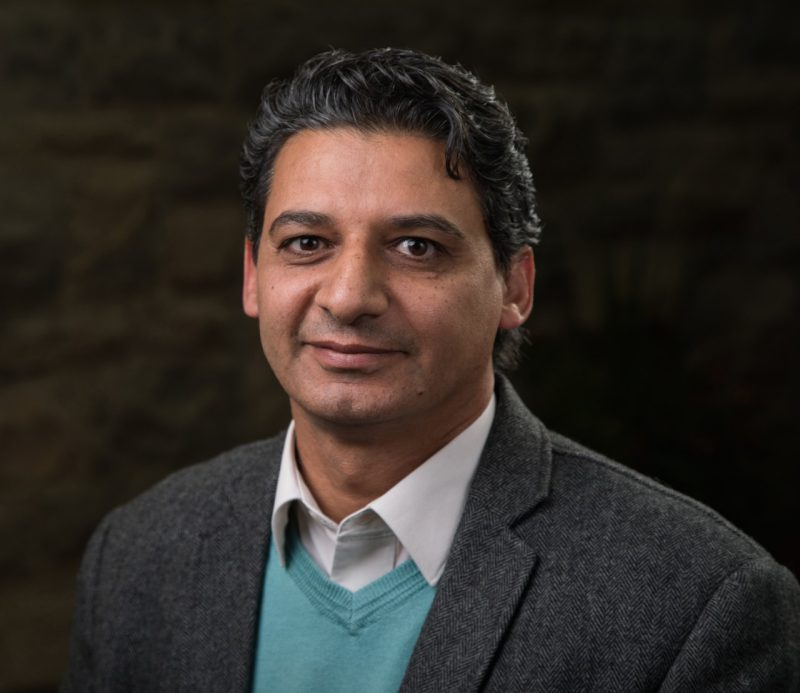
Dr. Dharmendra Saraswat is a Professor in the Department of Agricultural & Biological Engineering at Purdue University, College of Engineering. His research focuses on precision agriculture, remote sensing, and IoT applications for crop and natural resource management. He holds a Ph.D. from The Ohio State University and has held previous faculty positions at the University of Arkansas and Chandra Shekhar Azad University of Agriculture & Technology. His work bridges engineering and agriculture, emphasizing data science tools, decision support systems, and unmanned aerial systems (UAS). Education: Bachelor’s in Agricultural Engineering, University of Allahabad Master’s in Agricultural Engineering, Indian Agricultural Research Institute (IARI), New Delhi Ph.D. in Food, Agricultural & Biological Engineering, The Ohio State University Research Interests: Dr. Saraswat’s work integrates information technologies with agricultural challenges, including spatio-temporal modeling, machine learning for precision farming, and watershed management. He develops cloud-based tools and mobile applications to enhance agricultural decision-making. His expertise spans remote sensing, GIS, and UAS sensor data analysis. Awards: Fellow of Indian Society of Agricultural Engineers (2014) John W. White Outstanding Extension Award (2014) ASABE Educational Aids Blue Ribbon Award (2015/2013) Excellence in Remote Sensing (2013) Early Career & Innovation Awards (2011) Lab & Collaborations: His research leverages facilities like Purdue’s ADM Agricultural Innovation Center and Discovery Park. He collaborates on projects involving digital agriculture, environmental modeling, and agricultural robotics. Key contributions include disease detection algorithms, UAV-based systems, and climate impact assessments.
Djamila Aouada is an Assistant Professor and Senior Research Scientist at the University of Luxembourg's Interdisciplinary Centre for Security, Reliability and Trust (SnT), where she heads the Computer Vision, Imaging, and Machine Intelligence (CVI2) research group. She earned her State Engineering degree from École Nationale Polytechnique, Algeria, and PhD from North Carolina State University. Her research spans computer vision, signal processing, pattern recognition, and data modeling. Dr. Aouada leads several national and European projects including FNR FAVE, 3D-Act, and H2020 STARR, focusing on AI-driven solutions for industrial and security applications. She has received four IEEE Best Paper Awards for her contributions. Dr. Aouada has supervised 5 completed PhD theses and currently mentors 5 PhD candidates, while maintaining collaborations with Los Alamos National Laboratory and Mitsubishi Electric Research Labs. She serves as Senior IEEE Member and previously chaired IEEE Benelux Women in Engineering.
Hamdy Mahmoud is a Collegiate Assistant Professor at Virginia Tech's Department of Statistics within the College of Science. He also serves as an Assistant Professor at Assiut University in Egypt. His academic journey includes a Ph.D. in Statistics from Virginia Tech (2014) under Inyoung Kim, an M.S. in Statistics from both Virginia Tech (2010) and Cairo University (2005), and a B.S. in Statistics from Cairo University (1996). His research focuses on semi/nonparametric regression models, change point detection, environmental statistics, and spatial/spatio-temporal analysis. Notable contributions include applications in environmental health and cardiovascular mortality studies. He has published extensively in journals like Computational Statistics & Data Analysis and Environmental Metrics . Teaching highlights include courses such as Applied Bayesian Statistics and Statistical Methods I/II at Virginia Tech. He has received awards including the Jesse C. Arnold Teaching Excellence Award (2012-2013) and induction into the Mu Sigma Rho Honor Society (2011). His work bridges statistical theory and practical applications in health sciences and environmental studies. Professional Memberships: American Statistical Association (ASA), International Biometric Society (ENAR) Recent Awards: Travel Fund Award (2014), Teaching Excellence nominations (2014) Dr. Mahmoud’s research trends emphasize robust statistical methods and their environmental and medical applications. His publications often address complex data structures through semi/nonparametric frameworks, with a focus on change point analysis and spatial-temporal modeling.
Prof. Juergen Gall is a Professor at the University of Bonn, affiliated with the TRA Mathematics, Modelling and Simulation of Complex Systems and the Department of Information Systems and Artificial Intelligence. He leads the Computer Vision Group at the Lamarr Institute for Machine Learning and Artificial Intelligence. His research focuses on action recognition, video understanding, anticipation, human pose estimation, and applications in plant science, earth science, and neuroscience. He has contributed to numerous projects and conferences, including organizing workshops on machine learning for Earth systems and holistic video understanding. His work spans over 200 publications in top venues like CVPR, ICCV, and NeurIPS. He oversees software tools like MANTA and STING-BEE, and has developed datasets such as Humans in Kitchens and PoseTrack21. Research interests emphasize advancing computer vision for real-world challenges, with a focus on multi-modal learning and deep learning applications. Recent articles explore parameter-efficient models, diffusion-based anticipation, and multi-view matching for plant analysis. His contributions bridge academia and industry, addressing agricultural and environmental monitoring needs.
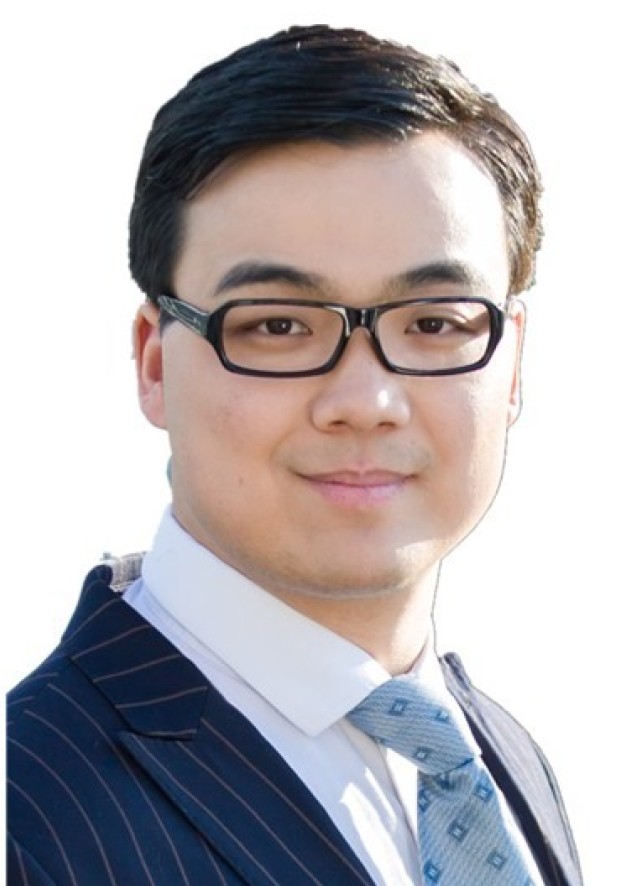
Dr. Xingchen Zhang is a Marie Skłodowska-Curie Individual Fellow at the Personal Robotics Laboratory (PRL), Imperial College London, and holds a Lecturer position in the Department of Electrical and Electronic Engineering. Previously, he served as a Teaching Fellow and Research Associate at Imperial College. He teaches Deep Learning courses and is actively involved in academic reviews for prestigious programs like UKRI Future Leaders Fellowships and top conferences/journals such as CVPR, ECCV, and IEEE TNNLS. Xingchen earned his BSc from Huazhong University of Science and Technology (2012) and PhD from Queen Mary University of London (2018). His research focuses on human motion prediction, pose estimation, image fusion techniques (visible-infrared, multi-focus), visual object tracking, and deep learning applications in computer vision. His work has led to a notable book on image fusion, awarded the National Science and Technology Academic Publications Fund in China (2019). His recent publications emphasize real-world applications such as traffic flow prediction, pedestrian privacy protection, and fusion-based object tracking. He contributes to advancing graph neural networks for mobility analysis and spatio-temporal modeling, while maintaining a strong focus on interdisciplinary robotics and AI solutions. Awards: Marie Curie Fellowship, National Science & Technology Academic Publications Fund (2019) Key Roles: Reviewer for UKRI FLF, CVPR, ECCV, IJCV Labs: Personal Robotics Lab (PRL), Imperial College London
George Ashdown is a Research Fellow at the School of Biosciences, part of the College of Health and Life Sciences at Aston University. He leads a research program focusing on host-pathogen interactions, particularly targeting intracellular Mycobacterium tuberculosis using advanced imaging and 'omics techniques. His work integrates super-resolution microscopy with machine learning to study drug delivery systems and disease biomarkers. He holds a PhD from King's College London (2017) on T cell immunological synapse dynamics and an MSc from the University of Edinburgh (2011) in Quantitative Cell and Molecular Imaging. His research has spanned malaria parasite lifecycle analysis using high-throughput imaging and AI-driven drug response studies. Ashdown's expertise spans lattice light-sheet microscopy, AI applications in biological imaging, and the development of novel drug delivery systems. He actively supervises PhD projects in host-pathogen interactions and lipid-based therapies. His contributions include pioneering methods to quantify molecular dynamics in T cells and advancing automated malaria diagnostics using convolutional neural networks. Current projects emphasize leveraging spatiotemporal data from cutting-edge microscopy for clinical translation. Research outputs highlight interdisciplinary approaches combining microscopy innovation with computational biology. He collaborates extensively on malaria and tuberculosis projects, contributing to both fundamental understanding and applied therapeutic development.
Jayaprakash Rajasekharan is an Associate Professor at the Department of Electrical Energy, Faculty of Information Technology and Electrical Engineering, Norwegian University of Science and Technology (NTNU). His research focuses on integrating data science and machine learning into energy systems, particularly in electricity markets, smart grid technologies, and renewable energy optimization. Research Interests: Data-driven energy solutions, smart grid modeling, hydropower scheduling, and decentralized electrification systems. Teaching: Courses on electricity markets, renewable energy informatics, and energy systems planning. Projects: Involved in PERSEUS FME, NTRANS, COFACTOR, and IntHydro initiatives addressing energy transition challenges. Advising: Supervised the 2021 Master's thesis on reactive power support from charging stations with local storage. Publications: Recent works analyze swarm electrification, energy disaggregation, and machine learning applications in hydropower scheduling.
Jesper Møller is a Professor in the Department of Mathematical Sciences at Aalborg University's Faculty of Engineering and Science, specializing in Statistics and Mathematical Economics. His research spans advanced stochastic modeling and spatial statistics. Key affiliations: Danish National Research Foundation (MaPhySto), Independent Research Fund Denmark, Centre for Stochastic Geometry and advanced Bioimaging Research Interests His work focuses on spatial point processes, including Cox processes, determinantal point processes, and Matern hard-core models. He develops computational methods like MCMC, Bayesian inference, and likelihood-based techniques for spatio-temporal data, with applications in forest fire modeling, bioimaging, and mobile service scenarios. Scientific Contributions Projects include: Generalized shot noise Cox processes Statistical inference for log Gaussian Cox processes Transforming point processes into Poisson processes Stochastic geometry for germ-grain models Collaborations He has collaborated with researchers across Denmark, Norway, Australia, Canada, and the USA, working on topics ranging from Hawkes processes to Voronoi tessellations.
Jia Yu is a researcher affiliated with Arizona State University , Tempe, AZ, USA. Their work focuses on geospatial data management, database systems, and cluster computing frameworks like Apache Spark. They have collaborated extensively with Mohamed Sarwat and other researchers on projects such as GeoSpark , GeoSparkViz , and GeoSparkSim , contributing to scalable spatial data processing and visualization systems. Key research areas include Learned indexing mechanisms (e.g., GLIN) Microscopic traffic simulation Parallel and distributed data processing Interactive geospatial dashboards Column correlation exploitation for database efficiency Integration of visualization with backend data systems Recent publications (2014-2024) demonstrate expertise in geospatial analytics, database indexing, software testing, and Apache Spark-based systems. Notable projects include Turbocharging Visualization Dashboards , HERMIT Indexing , and Spindra Knowledge Graph Management . Work emphasizes both theoretical innovation and practical implementation for handling massive-scale spatial data.
Dr. Jens Floeter is a Researcher at the University of Hamburg, Faculty of Mathematics, Computer Science and Natural Sciences, Department of Biology, Institute of Marine Ecosystem and Fisheries Sciences (IMF). He has been working as a Scientific Staff Member in the Fisheries Science research group under Prof. Dr. Christian Möllmann since November 2008. His research focuses on marine ecosystem dynamics, particularly examining the interactions between fisheries, offshore wind farms, and marine ecological processes in the North Sea and Baltic Sea regions. Dr. Floeter earned his doctorate (Promotion) in 2005 from the University of Hamburg with a dissertation titled "An investigation of key processes affecting trophic interactions in the North Sea fish assemblage and their significance for multi species fisheries assessment" at the Institut für Hydrobiologie & Fischereiwissenschaft. He completed his Diplom der Biologie in 1998 with a thesis on "Analyse und Modellierung der Nahrungsselektion von Nordseefischen" (Analysis and modeling of food selection by North Sea fish), and began his biology studies at the University of Hamburg in 1991. Dr. Floeter's research spans several interconnected areas within marine ecology and fisheries science. His primary focus is on understanding how offshore wind farms impact marine ecosystems, particularly examining pelagic effects, trophic interactions, and habitat changes. He investigates coupling of spatio-temporal scales in marine ecosystems, higher trophic level food web dynamics, and develops methods for multi-species fisheries assessment. His work often combines field observations with modeling approaches to address complex ecosystem questions. A significant portion of his research examines plankton habitats, predator-prey relationships, and the impacts of anthropogenic structures on marine communities. Analysis of Dr. Floeter's recent publications reveals a strong focus on the ecological impacts of offshore renewable energy infrastructure, particularly wind farms. His research spans physical oceanography (examining wind-wake effects and upwelling/downwelling), biological responses (plankton habitat identification, copepod behavior), and fisheries implications. He has increasingly incorporated advanced analytical methods including machine learning for plankton image classification and tensor decomposition for community ecology analysis. His work demonstrates a consistent trajectory of examining how human activities intersect with marine ecosystem dynamics, with growing emphasis on renewable energy infrastructure impacts. synKoFiMo (2015-2017): "Darstellung von Synergien im Kolk- und Fischmonitoring in Offshore-Windparks" (Demonstrating synergies in scour and fish monitoring in offshore wind farms) UNCOVER (2007): "UNderstanding the Mechanisms of Stock ReCOVERy" BECAUSE (2004-2007): "Critical Interactions BEtween Species and their Implications for a PreCAUtionary FiSheries Management in a variable Environment" LIFECO (2001-2004): "Linking hydrographic Frontal activity and ECOsystem dynamics in the North Sea & Skagerrak" SYCON (1999-2000): "Synthesis of North Sea research and development of a new research strategy" Dr. Floeter has extensive experience with field research methods, including work with high-speed towed multi-sensor vehicles (TRIAXUS, SCANFISH) for ecosystem monitoring. His research group collaborates with multiple institutions including the Helmholtz-Zentrum Geesthacht (HZG), Thünen Institute, and various international partners. His laboratory work focuses on analyzing marine ecosystem dynamics using a combination of field observations, remote sensing data, and computational modeling approaches to understand complex marine systems and inform sustainable management practices.
Hamed Karimi is a Researcher at the Chair of Satellite Geodesy within the Engineering Institute for Astronomical and Physical Geodesy at Technical University of Munich (TUM). His work focuses on satellite geodesy techniques and contributes to major international projects including ESA's Baltic+ Project (Theme 5), MAGIC/Science, QSG4EMT, and DFG-funded initiatives NEROGRAV and UPLIFT. Education: Master of Science (M.Sc.) His research centers on satellite gravimetry, GNSS time series analysis, and ionospheric studies. He develops advanced methods for signal separation in geodetic observations, spatio-temporal analysis of Global Ionospheric Maps, and uncertainty quantification in geodetic measurements. His work addresses critical challenges in Earth's gravity field modeling, crustal deformation monitoring, and space weather effects on navigation systems. Recent publications demonstrate a strong trend toward sophisticated signal processing techniques for geodetic data, with emphasis on multi-channel singular spectrum analysis and realistic noise modeling. His research bridges theoretical geodesy with practical applications in Earth observation, particularly through ESA and DFG collaborative frameworks. Karimi actively collaborates with leading geodesy experts including Prof. Roland Pail and Prof. Urs Hugentobler. He participates in the DFG Research Training Group UPLIFT and NEROGRAV unit, focusing on next-generation gravity field modeling and geodetic applications for Earth system science. His work supports TUM's leadership in satellite geodesy through the Engineering Institute for Astronomical and Physical Geodesy.
Michael Riis Andersen is an Associate Professor at the Department of Applied Mathematics and Computer Science, DTU Compute , Technical University of Denmark. His research focuses on Bayesian statistics, Gaussian processes, variational inference, and probabilistic programming, with applications in computer vision, natural language processing, and spatio-temporal modeling. His recent work includes: (1) Bayesian optimization with uncertainty-aware frameworks, (2) recommender systems balancing accuracy with editorial constraints, (3) geometry-aware transformers for geospatial analysis, and (4) scalable inference methods for neural networks and Gaussian processes. Many articles explore variational inference and probabilistic programming to enhance computational reliability and efficiency. Research keywords : Bayesian Statistics, Variational Inference, Machine Learning, Computer Vision, Probabilistic Programming, Spatio-Temporal Modeling.
Professor Stuart Clark is a distinguished academic at the University of New South Wales (UNSW), currently serving as Professor in the Civil and Environmental Engineering department within the Faculty of Engineering. He was appointed Director of Governance for the Faculty of Engineering in 2024 and promoted to Professor in 2025. Previously, he was an Associate Professor (2021-2025) and Senior Lecturer (2017-2021) in the Minerals and Energy Resources School at UNSW. His educational background includes a PhD in Geophysics from the University of Sydney (2007), Master of Arts from the University of Melbourne (2004), and BSc.(Hons)/B. Arts from the University of Sydney (2002). He also earned a Graduate Certificate in University Learning and Teaching from UNSW in 2022. Professor Clark's research focuses on understanding the influence of deep Earth processes on sedimentary basin development and applying machine learning to geological modeling. His work spans quantitative sedimentary basin dynamics, numerical simulations of Earth processes like subduction and sediment transport, and innovative applications at the intersection of geology and machine learning. His research has significant implications for sustainable resource use and exploration. His recent publications reveal a strong emphasis on basin analysis, particularly in the Northern Carnarvon Basin, with applications spanning petroleum geology, resource distribution, and geological modeling using advanced statistical methods like Bayesian inference. His work increasingly bridges traditional geology with computational approaches, including machine learning applications for fracture detection, fault identification, and image analysis of geological structures. Arc Postgraduate Council's Supervisor Award (2021) UNSW Vice Chancellor's Teaching Excellence Award - Rising Star (2019) UNSW Engineering Hero Award (2020) Professor Clark has successfully secured multiple significant research grants, including the Geodynamical Assessments of Subsidence in the North West Shelf in Australia (2024-2025), the ARC Industry Transformation Research Hub for Resilient and Intelligent Infrastructure Systems (2021-2027), and several Australian Research Council Linkage projects. He currently supervises numerous PhD and research master's students working on diverse projects related to basin evolution, dynamic topography, fracture mechanics, and resource exploration. His teaching portfolio includes undergraduate and postgraduate courses in geology, sedimentary and energy resources, and seismic imaging.
Dr. Jose Gonzales Rojas is an active Researcher specializing in Epidemiology, Bio-informatics & Animal models at Wageningen University & Research, with a strong focus on infectious disease dynamics in animal populations. His work spans multiple high-impact projects including VAX4ASF (African Swine Fever vaccine development) and research on avian influenza surveillance systems. Dr. Rojas's research interests center on zoonotic disease transmission , particularly avian influenza and vector-borne diseases affecting livestock. His work combines traditional epidemiological methods with bioinformatics approaches and machine learning for disease detection. He has made significant contributions to understanding virus shedding patterns , biosecurity breaches in poultry farms, and vaccine efficacy for animal diseases. Analysis of his recent publications reveals a strong emphasis on practical applications for disease control in agricultural settings. His work spans from fundamental virology studies to field applications, with particular expertise in poultry disease surveillance , rapid diagnostic testing , and epidemiological modeling of emerging pathogens including avian influenza and bluetongue virus. Dr. Rojas actively supervises graduate students and collaborates internationally on major research initiatives. As co-promotor for PhD candidate Moreira Olmos, he contributes to research on bovine tuberculosis control strategies in Uruguay. His current projects include leadership roles in EU-funded initiatives like VAX4ASF and national projects focusing on spatio-temporal risk assessment using AI methodologies. His laboratory work primarily focuses on animal disease surveillance systems, with particular emphasis on video monitoring technologies for biosecurity assessment and sensor-based animal welfare monitoring. Dr. Rojas's team collaborates extensively with veterinary diagnostic laboratories and agricultural stakeholders to translate research findings into practical disease control measures.