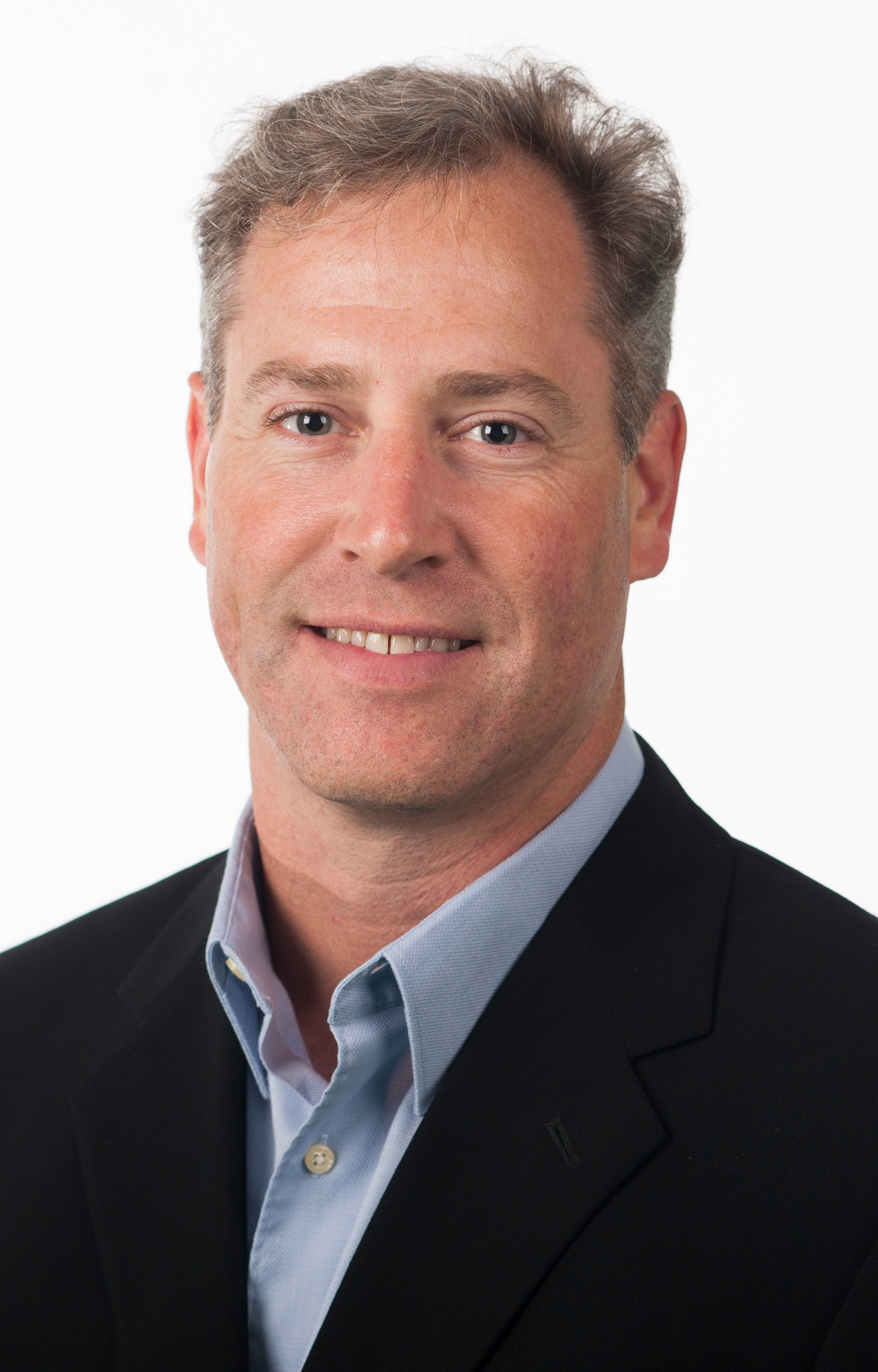
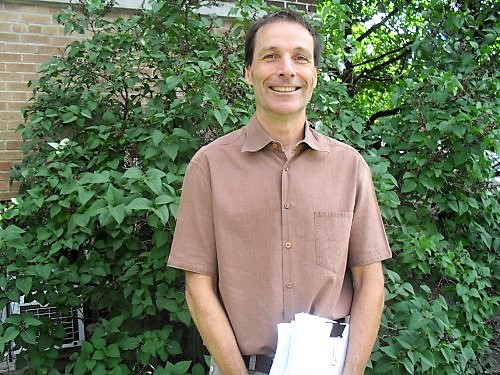
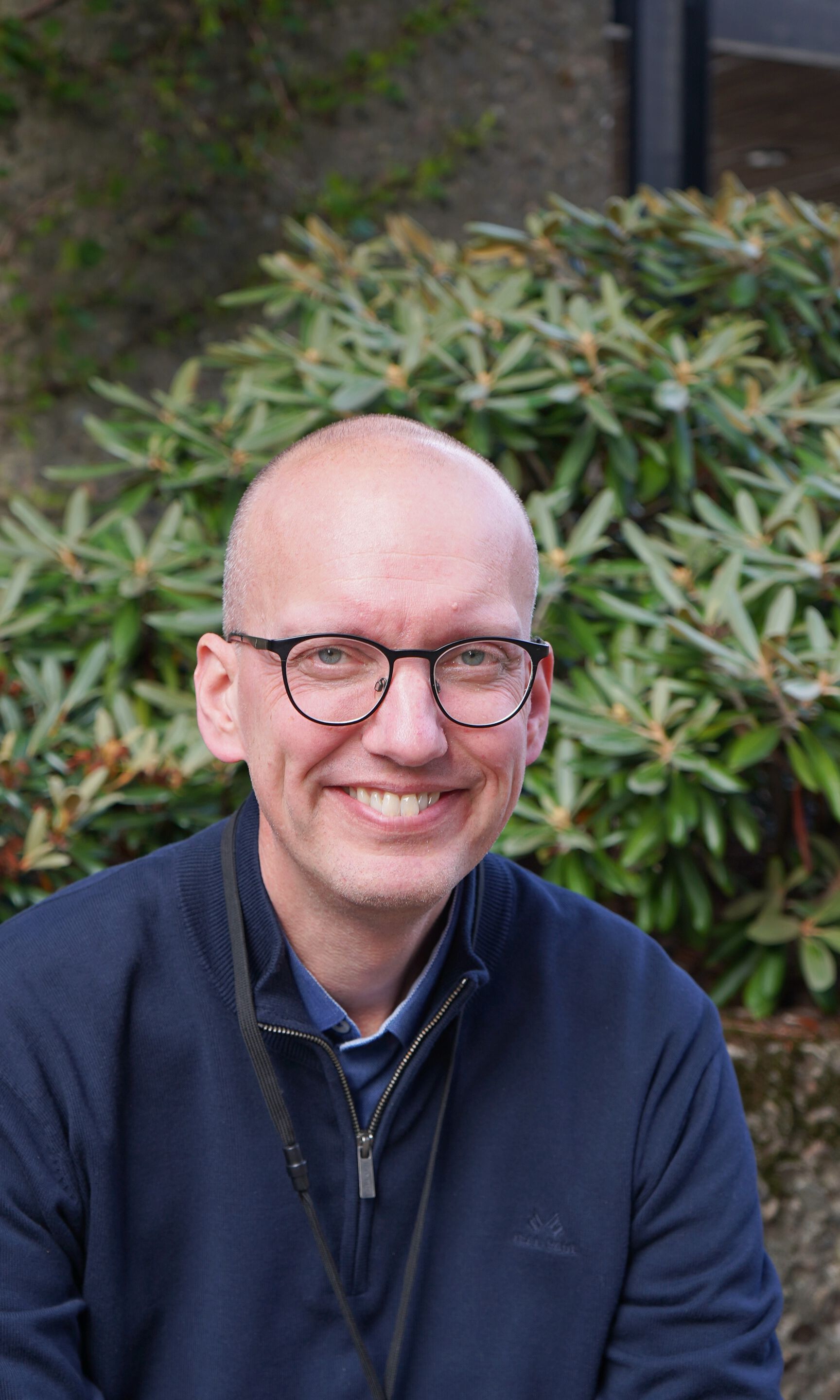
Robert Goodspeed is an Associate Professor of Urban and Regional Planning at the University of Michigan's Taubman College of Architecture and Urban Planning. His work bridges urban planning with information technologies, focusing on tools like GIS and sociotechnical systems to enhance planning processes and outcomes. Education: Ph.D. in Urban and Regional Planning, Massachusetts Institute of Technology M.C.P., University of Maryland B.A. in History, University of Michigan (dissertation on Detroit’s Gratiot Area Redevelopment Project) His research explores digital planning tools, smart cities, and collaborative practices. He leads initiatives like the Justice InDeed project addressing racial housing covenants and the Michigan Eviction Project analyzing eviction dynamics. Scientific Awards: Donald Schön Award for Excellence in Learning from Practice (2013) Planetizen Leading Thinker in Urban Planning and Technology Goodspeed teaches courses in scenario planning, negotiation techniques, and planning methods, with recent offerings including URP 526 (Scenario Planning) and URP 522 (Negotiation, Collaboration & Equitable Engagement).
Professor Xue Li is a faculty member in the School of Electrical Engineering and Computer Science at the University of Queensland. His research focuses on machine learning, data mining, and their applications in healthcare, materials science, and computer vision. He has authored over 300 publications, including seminal works on knowledge graph completion, video quality enhancement, and alloy design using machine learning. His work bridges theoretical advancements with real-world applications, such as clinical diagnosis andTinyML systems. Key research interests include graph representation learning, medical informatics, and efficient algorithms for multimedia data. Notable contributions include developing commonsense-enhanced relation extraction models and frameworks for compressed video reconstruction. His research also addresses challenges in federated learning and privacy-preserving genomics. Prof. Li has collaborated extensively with industry and academia, contributing to projects in RFID systems, electronic nose pattern recognition, and cybersecurity. His work is published in top-tier venues like IEEE Transactions and ACM conferences. Despite no listed awards, his prolific output underscores academic impact.
Charles Murry is an Associate Professor of Economics at the University of Michigan and a Research Associate at the National Bureau of Economic Research (NBER). He holds a Ph.D. from the University of Virginia (2014) and a B.S. in Economics from the University of Delaware (2006). His research focuses on empirical industrial organization and antitrust economics, with a particular emphasis on market power dynamics in industries like automobiles, airlines, and broadband. He has also contributed to econometric methodologies for analyzing market outcomes. Previously, Murry held positions at Boston College (2018–2024) and Pennsylvania State University (2014–2018). His work examines topics such as bundling strategies in public procurement, price discrimination in international markets, and regulatory impacts on market structure. He has published in top journals like the Quarterly Journal of Economics , Review of Economic Studies , and International Economic Review . Murry’s research bridges theoretical models and empirical evidence, addressing real-world policy issues such as competition enforcement and market design. He is actively involved in academic service, including contributions to antitrust-related amicus briefs and participation in policy panels.
Professor Bruce N. Walker holds a joint appointment in the School of Psychology and School of Interactive Computing at Georgia Institute of Technology, within the College of Sciences. His research focuses on human-centered technology design, emphasizing accessibility, auditory displays, and human-AI interaction. He leads the Sonification Lab, pioneering multimodal interfaces and inclusive technology solutions. He earned his Ph.D. in Human Factors and Human-Computer Interaction from Rice University in 2001. Research Interests: Trust in technology, accessible interfaces, sonification, AI-human collaboration, and HCI in non-traditional environments. Current projects include the AccessCORPS VIP initiative to enhance course accessibility and studies on automated vehicle interaction. Awards: Best Paper Award at AudioMostly 2014 for auditory weather reports research. Active in professional organizations like the International Community for Auditory Display and Human Factors and Ergonomics Society. Teaching: Courses include Research Methods for Human Factors, Sensation and Perception, and HCI Foundations. Supervises interdisciplinary teams in the Sonification Lab R&D Studio and AccessCORPS VIP. Labs/Teams: Sonification Lab (multimodal data exploration) and AccessCORPS (disability-inclusive course design). Collaborates on international projects like the Mwangaza initiative for learners with vision impairment in Kenya.
Dr. Andrew Curtis is a Professor in the Department of Population and Quantitative Health Sciences at Case Western Reserve University's School of Medicine. He also holds a joint appointment in the Department of Anthropology, College of Arts and Sciences. His research focuses on spatial epidemiology, context-driven spatial data collection, and spatial confidentiality, with methodological expertise in geospatial data collection and analysis. He previously directed the WHO Collaborating Center for Remote Sensing and Public Health and has advised numerous public health agencies internationally. His work addresses health disparities at neighborhood scales, disaster response, and spatial syndromic surveillance. Dr. Curtis has mentored 10 PhD graduates now working in academia and public health sectors globally. Education includes a PhD in Geography from SUNY Buffalo (1995), MA in Geography from SUNY Buffalo (1991), and a BA from Portsmouth Polytechnic (1987). He has taught courses in GIS for health, medical geography, and global health. His advisory roles include collaborations with the CDC, Red Cross, and public health departments in Ohio and internationally. His research has been applied to cholera outbreaks, opioid overdose patterns, and pandemic response strategies. He co-edited a special issue on health geography and serves on the editorial board of the Annals of the Association of American Geographers. Dr. Curtis' spatial video methodologies have enabled fine-scale mapping in informal settlements, disaster zones, and conflict-affected areas. His recent work includes geospatial support for Ohio hospitals during the pandemic and energy vulnerability analysis. He emphasizes participatory research and context-enriched data collection to bridge gaps between health research and actionable policy.
Xiaogang Wu is a Professor of Sociology and Yufeng Global Professor of Social Science at New York University, affiliated with the College of Arts & Science and the Department of Sociology. He holds a Ph.D. from UCLA, an M.A. from Peking University, and a B.A. from Renmin University of China. His research focuses on China's social stratification, education policy, inequality dynamics, urban studies, and quantitative methodologies. Key interests include social cohesion, housing policy impacts, migrant labor outcomes, and the interplay between education and socioeconomic status. His recent work analyzes pandemic vulnerability, educational expansion effects on earnings, and gender dynamics in reform-era China. He has contributed to major publications like Research in Social Stratification and Mobility and Demographic Research .
Camillia Cowling is an Associate Professor of Latin American History at the University of Warwick, based in the Faculty of Arts' Department of History. She specializes in slavery and abolition in Brazil and Cuba, with a focus on gendered dimensions of emancipation processes. Her research examines how enslaved and freed women influenced abolition through legal mechanisms and spatial politics. Cowling holds a Ph.D. from the University of Nottingham (2007) and has held prestigious fellowships including the Leverhulme Trust Early Career Fellowship (2009-2012). Her major work Conceiving Freedom (2013) analyzes gendered abolition dynamics in Havana and Rio de Janeiro, winning the Roberto Reis Prize. Ongoing research includes Bound Journeys, Freedom Places , exploring spatial politics of slavery in 19th-century Cuba with support from British Academy and Leverhulme grants. Cowling co-edited journal special issues on Mothering Slaves (2017/2020), advancing scholarship on maternal roles in slave societies. Teaching focuses on Latin America, including modules on Brazilian history, Atlantic slave societies, and global empire studies. She actively supervises PhDs on 19th-century Latin America, slavery, gender, and spatial mobilities. Notable supervisees include Dr. Liana-Beatrice Valerio (2020) and Dr. Nicolás Gómez Baeza (2024). Awards include the Frederick Douglass Prize nomination and media engagement through interviews like her 2015 Globo article discussing enslaved women's legal agency. Current projects emphasize archival research in Brazil, Cuba, and Spain, with a focus on spatial dimensions of enslavement and resistance.
Jaimey Fisher is Professor and Chair of Cinema and Digital Media and Professor of German at UC Davis. He holds a PhD from Cornell University with emphases in German intellectual history and film studies. His research explores German cinema, postwar reconstruction, and genre theory. Fisher authored four books: German Ways of War (2022), Treme (2019), Christian Petzold (2013), and Disciplining Germany (2007). He edited seven volumes including The Berlin School and Its Global Contexts (2018) and publishes widely on war films, transnational cinema, and critical theory. His articles analyze affective geographies in war cinema, transnational art film movements, and ethics in speculative media. Recent work examines New German Cinema's global resonances and AI ethics in Black Mirror . Fisher developed a summer-abroad course at the Locarno Film Festival and received grants from the Mellon Foundation and NEH. He directs graduate studies and mentors students in critical media analysis.
Dr. Kenneth Edwin Barker is a Professor in the Department of Computer Science within the Faculty of Science at the University of Calgary, where he also serves as Director of the Institute for Security, Privacy and Information Assurance (ISPIA). His academic career spans several decades with significant contributions to database systems and privacy research. Dr. Barker earned his B.S. and M.S. in Computer Science from the University of Calgary in 1982 and 1984 respectively, followed by a Ph.D. in Computer Science from the University of Alberta in 1990. His educational background established the foundation for his extensive research career in database systems and information security. His primary research interests focus on Privacy Preserving Data Repositories , with specific attention to protecting privacy in mobile applications, understanding privacy's impact on data analytics, and architecting database management systems that inherently respect user privacy. His work also extends to distributed database environments, integration of legacy systems, and multidatabase environments. Dr. Barker's research bridges theoretical foundations with practical applications, making significant contributions to how privacy is implemented in real-world systems. An analysis of his recent publications reveals a strong trend toward practical privacy-preserving techniques for cloud data, social networks, and location-based services. His work consistently addresses the tension between data utility and privacy protection, developing innovative methods to maintain data value while safeguarding personal information. The publications span multiple subfields including encrypted search, graph privacy, high-dimensional data privacy, and privacy metrics. Best Paper Award at DBSec 2012 Best Paper Award at CODASPY 2012 Best Paper at BNCOD 2009 Dr. Barker has been instrumental in establishing privacy research infrastructure at the University of Calgary through his leadership of ISPIA. His research has attracted significant funding from various sources supporting privacy and security initiatives. While specific grant details aren't provided in the text, his extensive publication record indicates sustained research funding throughout his career. He has collaborated extensively with researchers both within and outside the University of Calgary, particularly with R. Alhajj and other colleagues on numerous projects. As Director of ISPIA, Dr. Barker oversees a research environment focused on advancing security and privacy technologies. The institute serves as a hub for interdisciplinary research, bringing together computer scientists, social scientists, and legal experts to address complex privacy challenges. His leadership has positioned the University of Calgary as a significant player in privacy research within Canada.
Anna Stevens is a Lecturer in Archaeology & Ancient History at Monash University and Director of the Amarna Project at the McDonald Institute for Archaeological Research, University of Cambridge. Her research focuses on ancient Egypt, particularly urbanism, material culture, and non-elite life in Amarna during the reign of Akhenaten. She directs excavations at Akhetaten (Amarna), exploring topics such as health, burial practices, and urban heritage preservation. Stevens co-edits the Ancient Egypt in Context book series (Cambridge University Press), integrating Egyptology with broader social sciences. Education: PhD in Egyptian Archaeology, Monash University. Key Projects: Amarna Cemetery Project (2010–): Investigates non-elite burials, integrating archaeology and bioarchaeology to study health and funerary practices. Akhenaten's City: Protecting Amarna's Urban Heritage (2023–26): Creates photogrammetric models and conservation strategies for ancient housing areas. Research Interests: Urban archaeology, material culture analysis, lived religion, and cultural interaction in ancient Egypt, with emphasis on non-elite populations and Akhenaten's religious reforms. Grants & Funding: Supported by the National Endowment for the Humanities, British Academy, Egypt Exploration Society, and American Research Center in Egypt. Labs & Teams: Leads international teams at Amarna, collaborating with institutions like Southern Illinois University and CNRS. Engages in public outreach through lectures and the Journal of Egyptian Archaeology .
Matthew Marcus is an Assistant Professor of Practice in the Geographic Information System Technology (GIST) program at the University of Arizona. His work focuses on environmental applications of GIS, particularly in tropical ecosystems such as Amazonian palm swamps. He investigates issues like peatland degradation, deforestation, carbon emissions, and sustainable resource management through mixed-methods and remote sensing approaches. His research spans global-to-local scales, combining ecological data analysis with policy-relevant insights. Dr. Marcus's contributions include developing automated time-series mapping techniques and spatial models to quantify land use changes. His recent publications emphasize the intersection of social-ecological systems and conservation strategies in the Peruvian Amazon. He is affiliated with the ENR2 Building, collaborating on projects that bridge GIS technology with environmental monitoring and policy. While no specific grants or advising roles are listed, his academic contributions reflect a commitment to advancing applied GIS solutions for environmental challenges. His work underscores the importance of integrating technical tools with socio-environmental research to address climate change and ecosystem preservation.
Yves Bourgault is a Full Professor in the Department of Mathematics and Statistics at the University of Ottawa. He holds a MSc and PhD from Laval University. His research focuses on computational fluid dynamics, numerical methods, finite element techniques, and continuum mechanics modeling, with applications in cardiac electrophysiology and ecological systems. Dr. Bourgault has supervised several graduate students, including Edward Boey (co-supervised), Sana Keita, Saint-Cyr Koyagurebo-Ime, and Kak Choon Loy. His work integrates advanced numerical techniques to address complex problems in biomedical engineering, environmental science, and mathematical physics. Key methodologies include finite element methods, deferred correction schemes, and anisotropic mesh adaptation. His research group is part of the Applied Mathematics division at the University of Ottawa, emphasizing interdisciplinary applications. Recent work explores climate change impacts on ecological systems, cardiac tissue modeling using high-resolution MRI data, and robust numerical methods for reaction-diffusion equations. Publications span topics such as bidomain models for cardiac electrophysiology, fluid-structure interaction in heart mechanics, and mathematical modeling of fuel cells. His contributions bridge theoretical numerical analysis with real-world biomedical and environmental challenges.
Roles and Affiliations: Fred Espen Benth is a Professor in the Department of Mathematics at the University of Oslo, affiliated with the Risk and Stochastics research group. He holds a Dr. scient (PhD equivalent) in mathematics from the University of Oslo (1995). His academic journey includes roles as a researcher at the Norwegian Computing Center, a postdoc at the Universities of Aarhus and Oslo, and an Associate Professor at the University of Trondheim before becoming a full professor in 2002. Research Interests: Benth’s research focuses on mathematical finance, particularly energy and weather markets, commodity derivatives, and stochastic analysis. He explores modeling, estimation, and simulation of spot and forward prices, as well as pricing options and portfolio optimization. Recent work extends to climate systems, energy transition dynamics, and machine learning applications in financial and environmental modeling. Publications and Projects: His extensive publication record includes over 150 journal articles and book chapters, with a focus on energy markets, stochastic processes, and climate-related financial instruments. Notable projects include ‘Spatial-Temporal Uncertainty in Energy Systems (SPATUS)’ and contributions to interdisciplinary energy informatics. His work bridges theoretical stochastic analysis with practical applications in energy systems and risk management. Labs and Collaborations: Benth collaborates with the Stochastics of Renewable Energy Markets (STORE) group and contributes to initiatives like the ‘Computational Modelling and Machine Learning for Applications in Hydropower’ project. His research emphasizes the integration of stochastic methods with real-world energy and climate challenges.
Niklas Linde is a full professor at the University of Lausanne's Faculty of Geosciences and Environment, leading the Department of Earth Sciences. He holds a PhD in Geophysics from Uppsala University (2005) and has held roles including Assistant Professor (2008), Associate Professor (2013), and Full Professor (2019). His research focuses on transforming geophysical signals into realistic hydrogeological models with rigorous uncertainty quantification. Key areas include probabilistic inversion, Bayesian methods, and geostatistical modeling applied to environmental and subsurface processes. Education: PhD in Geophysics (Uppsala University, 2005), postdoctoral positions at Lawrence Berkeley National Lab (USA), CNRS-CEREGE (France), and ETH Zurich (Switzerland). He joined UNIL in 2008 as an Assistant Professor in Environmental Geophysics. Research interests span geophysical inversion techniques, subsurface heterogeneity characterization, and the integration of geophysical and hydrological data. Current projects emphasize Bayesian approaches for model selection and rare event estimation, supported by grants from the European Commission and Swiss National Science Foundation. Collaborations involve international teams addressing challenges in hydrogeology, rock fracture dynamics, and 4D hydrogeology. Publications reflect advancements in inverse problem solving, stochastic simulation, and machine learning applications. His work bridges theory and practice, with field studies in alpine environments, fractured media, and environmental monitoring. Students under his supervision have explored topics like deep generative networks and Bayesian hydrogeological inversion. Advising: Supervised over a dozen PhD students, including recent works on variational Bayesian methods and geophysical data fusion. Grants include projects on uncertainty quantification and experimental design. Active in scientific societies and editorial roles, contributing to methodological advancements in Earth sciences.
Janet Gyatso is the Hershey Professor of Buddhist Studies at Harvard Divinity School (HDS), affiliated with Harvard University's Faculty of Arts and Sciences. She holds academic ties to the Department of East Asian Languages and Civilizations and the Committee on Inner Asian and Altaic Studies. Her research focuses on Tibetan and South Asian cultural/intellectual history, Buddhist epistemology, gender studies, and the intersection of religion and medicine. Dr. Gyatso earned her BA, MA, and PhD from the University of California, Berkeley. She previously taught at Amherst College before joining HDS in 2014 as Associate Dean for Faculty and Academic Affairs (until June 2024). Her major works include Being Human in a Buddhist World (2015) and Women in Tibet (2006), exploring themes like early modern Tibetan medicine and Buddhist gender dynamics. Her current research addresses ethical relationships with animals and Buddhist ministerial training. She has held leadership roles, including president of the International Association of Tibetan Studies (2000–2006) and co-chair of the American Academy of Religion's Buddhism Section (2004–2010). She was inducted into the American Academy of Arts and Sciences in 2018. Gyatso's teaching spans Buddhist history, ritual, and Tibetan literary practices. She actively develops programs like the Buddhist Lay Ministry Initiative at HDS, blending academic rigor with practical ministry training.