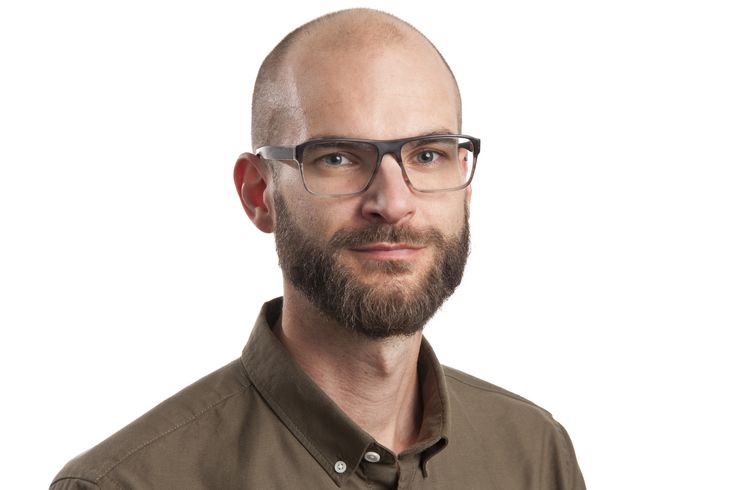
Mathias Leiter , Dipl.-Ing.Dr., is a researcher at the Institute of Silviculture within the Department of Agricultural Sciences at the University of Natural Resources and Life Sciences, Vienna (BOKU) . His work focuses on sustainable forest management, climate change adaptation, and continuous cover forestry. Research Highlights: Specializes in Plenterwald (selection forest) systems and tree growth modeling. Active in climate-smart forestry , with projects like Forestry innovation spaces for Climate Smart Forestry (2022–2025). Develops sampling methodologies for sustainability indicators in uneven-aged forests. Recent Publications span 2022–2025, emphasizing forest resilience, geospatial analysis, and comparative studies between Austria and Japan. Advising: Supervised Moritz Benjamin Geisreiter (2025) on natural forest reserves. Community Engagement: Contributed to knowledge transfer via lectures at the 75th University of Sarajevo Forestry Conference and IUFRO World Congress (2024).
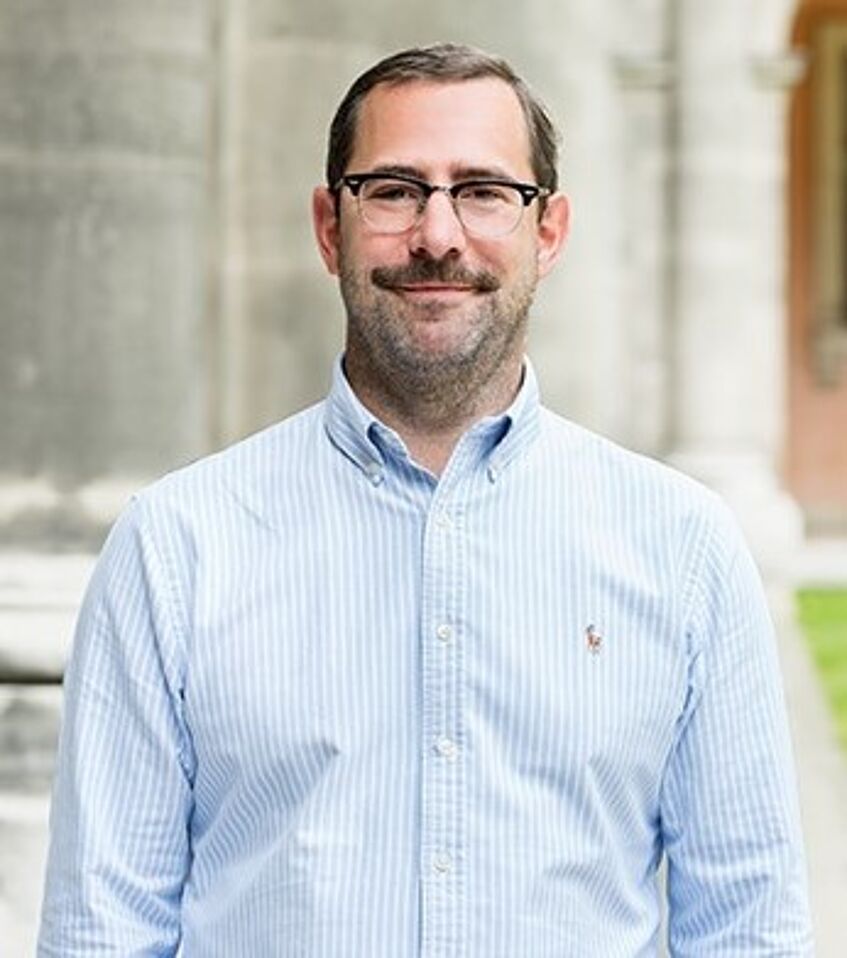
Dr. Christian Mikovits is a Researcher at the Institute of Agricultural Engineering , Department für Agrarwissenschaften, BOKU Vienna. His work focuses on Renewable Energy , Land Use , and Climate Change adaptation. BOKU Vienna: 2020–present (PA³C³, RETour projects) University of Innsbruck: PhD in Environmental Sciences (2012–2016) University of Copenhagen & BOKU: Master's in EnvEuro (2009–2011) Research Interests include: Agrivoltaics (dual-use land systems for solar+agriculture) Climate Resilience in energy-agriculture systems Land Use Conflict resolution for renewables Scientific Contributions highlight: 15+ publications (2020–2024) on agrivoltaics, renewable energy, and climate impacts Key projects: PA³C³ (agrovoltaics), RE_EXTREME (climate resilience), GLOCULL (urban sustainability) Methodologies: GIS analysis, LCA, stakeholder gaming
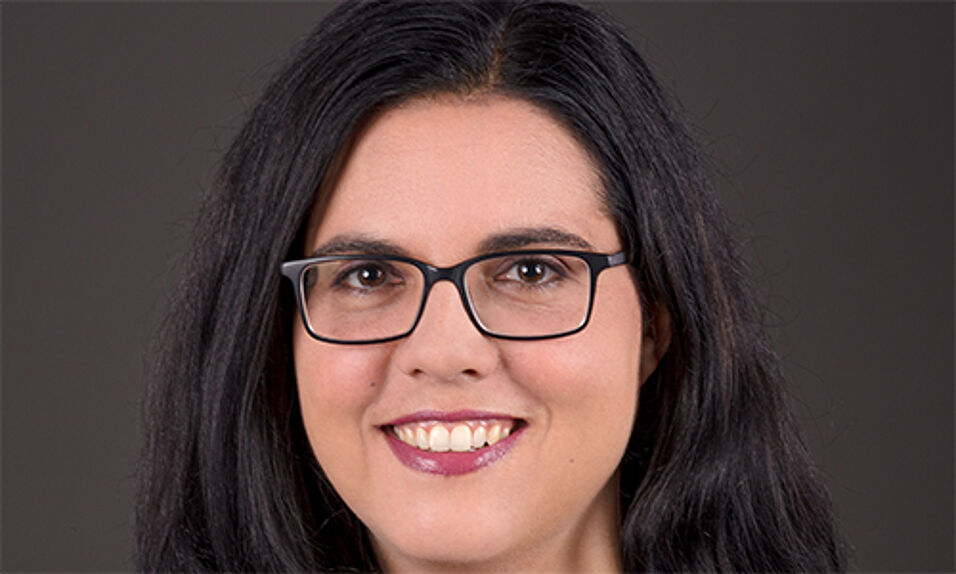
Dominik Wiedenhofer is an Assistant Professor at the University of Natural Resources and Life Sciences, Vienna (BOKU), within the Department of Social Ecology. His research focuses on sustainable resource use, climate protection, and circular economy strategies. He holds a PhD in Social and Human Ecology from Klagenfurt University and a Bachelor's in Environmental and Bioresource Management from BOKU. His career includes roles as a senior scientist, researcher, and project leader in global material flow analysis, socio-metabolic research, and policy development. Key areas of expertise include stock-flow-service nexus analysis, industrial ecology, and socio-ecological transformation. Wiedenhofer leads and contributes to numerous high-impact projects, including studies on global material stocks, urban circularity in Vienna, and the environmental implications of technological elements. His work has been recognized with awards such as the Graedel Prize and inclusion in the Top 2% Scientists list. Notable contributions include groundbreaking research on resource consumption inequalities, steel recycling stagnation, and the role of material stocks in carbon sequestration. He actively publishes in top journals like Journal of Industrial Ecology and Ecological Economics , and collaborates internationally on policy frameworks for sustainable development.
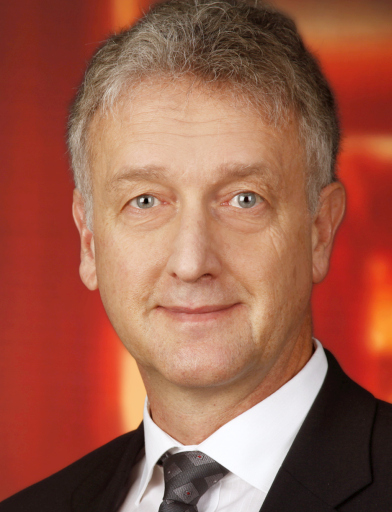
Herbert Formayer is an Associate Professor at the University of Natural Resources and Life Sciences, Vienna (BOKU), specializing in Meteorology and Climatology. His research focuses on climate change impacts across multiple sectors including energy systems, hydrology, biodiversity, and extreme weather events. He leads projects like ROBINE-AT and SECURES, addressing infrastructure resilience and energy sector vulnerability. Key areas include high-alpine hydrological modeling, regional climate projections, and ecosystem responses to warming. Research highlights include analyzing foehn wind dynamics in the Eastern Alps, evaluating forest fire behavior under climate change, and developing high-resolution meteorological datasets for Austria. His work integrates transdisciplinary approaches, collaborating with policymakers to translate climate science into actionable strategies. Notable contributions span climate adaptation for energy grids, biodiversity conservation in alpine ecosystems, and quantifying precipitation biases in hydrological models. His projects often involve advanced statistical methods and climate model ensembles to enhance scenario reliability.
Martin Weißmann is a Professor for Theoretical Meteorology at the University of Vienna's Faculty of Earth Sciences, Geography and Astronomy, where he has served since 2020. Previously, he headed the Department of Meteorology and Geophysics (2020-2022) and the Data Assimilation Branch at the Hans-Ertel Centre for Weather Research. His research focuses on numerical weather prediction, atmospheric data assimilation, ensemble forecasting, error modeling, and applications of wind lidar and satellite data. Education includes an MSc in Meteorology from the University of Innsbruck (1996-2003) and a PhD from DLR Oberpfaffenhofen in cooperation with University of Innsbruck (2003-2006). His scientific commitments include membership in the ESA Aeolus Science and data quality Advisory Group and coordination of the project Experimental Validation and Assimilation of Aeolus Observations. Research interests center on: Advanced data assimilation techniques for numerical weather prediction Ensemble methods for probabilistic forecasting and error quantification Integration of novel observation systems like Doppler wind lidars Validation and application of Aeolus satellite wind data Convective-scale modeling and high-resolution forecasting His publication record demonstrates consistent focus on improving weather prediction systems through innovative assimilation methods, with recent work emphasizing machine learning applications, convective-scale data assimilation, and satellite data validation. Teaching responsibilities include courses in dynamic meteorology, numerical weather prediction, and scientific communication.
Prof. Annie Waldherr is a University Professor of Computational Communication Science at the University of Vienna's Institute of Journalism and Communication Studies (since September 2020). She previously held roles including Junior Professor at the University of Münster (2017–2020) and Research Associate positions at the Free University of Berlin (2010–2016) and University of Hohenheim (2006–2010). Her research focuses on computational social science, digitized publics, and political communication, leveraging agent-based modeling and network analysis. Education: PhD in Communication Studies (Free University of Berlin, 2011) MSc/BA in Communication Studies (University of Hohenheim and University of Oregon, 2005) Research Interests: Prof. Waldherr explores how digitized public spheres function across translocal networks, integrating computational methods like text mining, social network analysis, and agent-based simulations. Recent work addresses misinformation dynamics, spatial dimensions of online communication, and the ethical challenges of big data. Grants & Projects: DFG-funded 'Translocal Networks: Public Spheres in the Social Web' (2018–2021) analyzing Berlin and Jerusalem Twitter networks Scientific evaluation of Germany's Federal Government's Quality of Life Dialogues (2015–2016) Research Training Group 'Trust and Communication in a Digitalized World' (2012–2021) Labs/Teams: Leads the Computational Communication Science Lab at the University of Vienna, focusing on digital public sphere analysis, misinformation studies, and computational methodologies.
Dieter Fellner is a Professor of Computer Science at Technical University of Darmstadt, Germany , and Director of the Fraunhofer Institute of Computer Graphics (IGD) . He also serves as Founding Director of the Institute of Computer Graphics and Knowledge Visualization at Graz University of Technology, Austria. His career spans multiple prestigious institutions including University of Bonn, Memorial University of Newfoundland, and University of Technology Braunschweig. Dr. Fellner's research focuses on algorithms integrating modeling and rendering , digital libraries , virtual/augmented reality , collision detection , and radio wave propagation simulation . His work in digital libraries led to a DFG-funded strategic initiative (1997-2005) involving 50 researchers annually across 21 groups. The 15 most recent articles highlight his expertise in 3D document modeling , stereoscopic projection , subdivision surfaces , and color quantization . His publications include influential textbooks like the German standard on computer graphics (1988) and Digitale Bibliotheken (2000). 2000 Fellow of the Eurographics Association Best Technical Paper Award (Günther Enderle Award) at Eurographics’98 2007 IST Advisory Group (ISTAG) Member for the European Commission 2019 Honorary Doctorate from University of Rostock Dr. Fellner actively participates in editorial boards of journals like Computer Graphics Forum , IEEE CG&A , and JOCCH , and serves on program committees for conferences such as Eurographics, VSMM, and ACM Web3D. His leadership roles include Chairmanship of the Eurographics Association (1999-2000) and Directorship of Fraunhofer IGD (since 2006).
Mag. Richard Sickinger is a Scientific Staff member at the Research Lab Sustainable Cultural Heritage within the University for Continuing Education Krems, Austria. His academic work focuses on sustainable building practices, pattern languages for societal change, and educational technologies in construction contexts. Role: Principle Investigator for EU-funded projects (2013-2016) Expertise: Pattern languages, sustainable building engineering, migrant workforce education Research Interests: Richard develops innovative educational tools like multi-lingual ConClips for construction skills training. His work bridges technical heritage preservation with modern sustainable building methodologies, emphasizing tacit knowledge transfer and feedback-oriented learning systems. He actively contributes to academic discourse through publications on pattern languages and lectures at international conferences like PUARL (2016-2018), where he explores storytelling applications for architectural pattern communication and coherence-building in design processes.
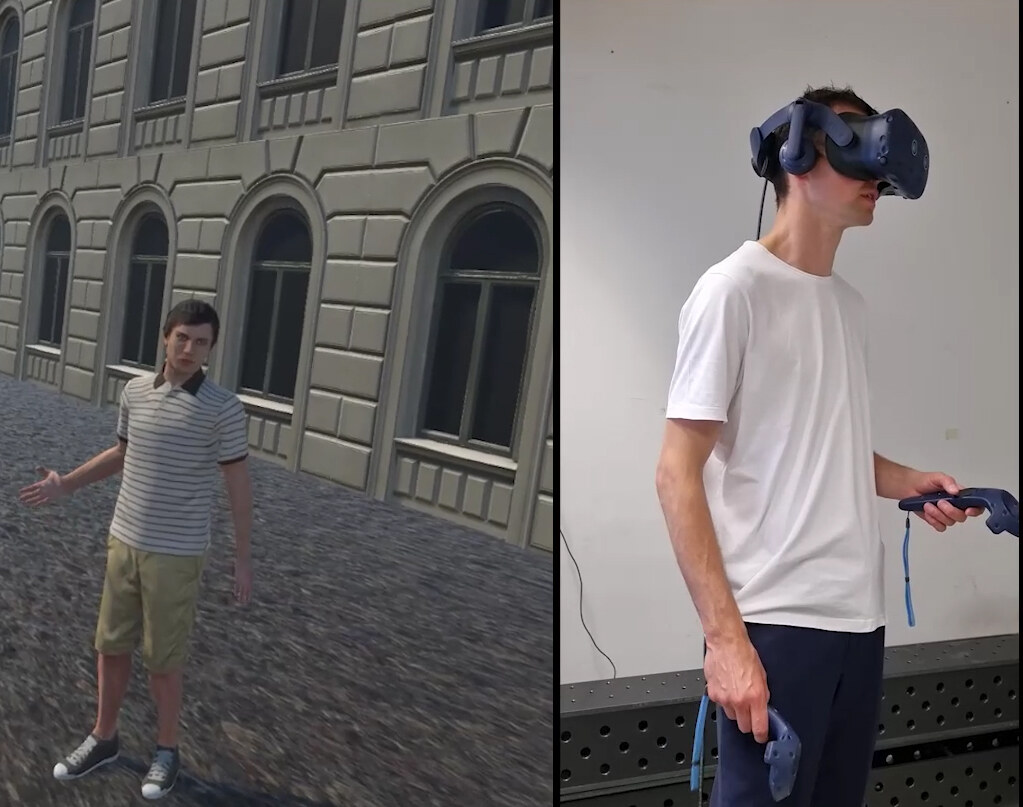
Emanuel Vonach is a PreDoc Researcher at the Institute of Visual Computing & Human-Centered Technology at Vienna University of Technology (TU Wien), specializing in virtual reality, haptics, and tangible user interfaces. His work focuses on developing innovative VR systems with robotic haptic feedback, health monitoring technologies for children, and motion capture applications. He maintains an active research profile with publications spanning from 2011 to 2025, demonstrating continuous contribution to the field of human-computer interaction. Vonach's research interests primarily center around enhancing virtual reality experiences through physical interaction. His work explores how robots can provide haptic feedback in VR environments, developing systems like CoboDeck (a large-scale haptic VR system using collaborative mobile robots) and Action-Origami inspired haptic devices. He has also pioneered applications in health monitoring for children through projects like MediCubes, which transforms medical examinations into engaging storytelling experiences using tangible interfaces. His research bridges the gap between theoretical computer science and practical applications in healthcare, education, and emergency response. His publication record shows a clear progression from foundational work in motion capture and tracking systems to increasingly sophisticated haptic VR applications. Recent publications focus on environment-independent locomotion prediction for haptic VR and safety monitoring systems for encountered-type haptics, indicating a maturation of his research toward more complex, real-world applications. The consistent funding from organizations like the Austrian Research Promotion Agency (FFG) and European Commission demonstrates recognition of his work's significance. Vonach actively supervises graduate students, with thesis topics covering mobile collaborating robots for haptics, in-situ questionnaires for haptic experience, and visual assessment with eye-tracking displays. His role as a PreDoc Researcher with FWF funding suggests he is either completing or has recently completed his doctoral studies while maintaining an active research program. His collaborations with Professor Hannes Kaufmann and other researchers at TU Wien form a cohesive research group focused on advancing VR and haptic technologies.
Francesco De Pace is a PostDoc Researcher at the Institute of Visual Computing and Human-Centered Technology within the Faculty of Informatics at Vienna University of Technology (TU Wien). His research focuses on the intersection of augmented reality, virtual reality, and human-robot interaction, with particular emphasis on developing innovative interfaces for industrial applications. Dr. De Pace's research spans several key areas in immersive technologies and human-computer interaction. His primary interests include Augmented Reality (AR) and Virtual Reality (VR) systems, Human-Robot Interaction (HRI), Brain-Computer Interfaces (BCIs), and advanced tracking and localization techniques. He has made significant contributions to the development of AR/VR interfaces for industrial robots, outdoor tracking with Real-Time Kinematic GPS, and SLAM (Simultaneous Localization and Mapping) systems. His work bridges theoretical research with practical industrial applications, focusing on creating more intuitive and effective human-machine interfaces. Dr. De Pace's recent publications demonstrate a clear trajectory toward enhancing human-robot collaboration through immersive technologies. His research shows increasing sophistication in integrating multiple modalities (visual, spatial, and neural) to create more natural interaction paradigms. A notable trend is the application of AR/VR to industrial settings, particularly for assembly tasks, path planning, and training scenarios. His systematic evaluation of RTK-GPS for wearable AR represents important foundational work for outdoor AR applications, addressing critical challenges in positional accuracy across different environmental conditions. While specific awards are not prominently documented in the available information, Dr. De Pace's research has been supported by significant funding mechanisms, including grants from the Austrian Research Promotion Agency (FFG) under Grant Agreement No FO999886342 KIRAS MRespond, indicating recognition of the importance and potential impact of his work. Dr. De Pace appears to be actively involved in multiple research projects, including PostDisaster and MRespond as indicated in his profile. His collaborative approach is evident through his extensive co-authorship with researchers across institutions. While specific student advising information isn't detailed in the available materials, his role as a PostDoc Researcher likely involves mentoring junior researchers and contributing to the academic development of students working on related projects. Dr. De Pace is associated with the Mixed Reality Lab at TU Wien, as indicated in the website navigation. His research appears to be conducted within collaborative frameworks that include both academic and industry partners. His work on the MRespond project suggests engagement with emergency response applications of mixed reality technologies, indicating interdisciplinary team involvement spanning computer science, engineering, and potentially public safety domains.
Soroosh Dini-Mortezapoor is a PreDoc Researcher at the Vienna University of Technology within the Virtual and Augmented Reality department (E193-03). His research focuses on enhancing human-computer interaction through innovative haptic technologies, collaborative robotics, and immersive virtual environments. Role: Researcher (PreDoc) Contact: soroosh.mortezapoor@tuwien.ac.at Projects: ACD (2020–2028) series Research interests span Virtual Reality (VR) , Augmented Reality (AR) , haptic feedback systems , and robot-assisted 3D reconstruction . His work explores the integration of robotics with mixed reality environments, emphasizing safety, material simulation, and spatial mapping. Key contributions include: Development of Origami-inspired haptic devices Collaborative VR systems like CoboDeck Autonomous photogrammetry robots for MR environments As a supervisor, he guided S. B. Shankar in creating a robotic dummy user for VR applications. His research is supported by the ACD project (2020–2028) and published in IEEE VRW, SIGGRAPH Emerging Technologies, and other leading venues.
Peter Kán serves as a Senior Scientist at TU Wien's Faculty of Informatics, Institute of Visual Computing and Human-Centered Technology. He manages the Mixed Reality Laboratory and teaches multiple courses including Mixed Reality Lab (193.169), PhD Seminar (193.083), and various Project courses in Computer Science and Visual Computing. PhD in Computer Science from TU Wien Research on High-Quality Real-Time Global Illumination in Augmented Reality His research spans photorealistic rendering, augmented and virtual reality systems, automatic 3D content generation, and embodied conversational agents. Current projects include RE:STOCK INDUSTRY (2024–2027), Circular Twin (2022–2025), and VR Tennis Trainer (2020–2022), funded by FFG and WWTF. His work integrates deep learning with real-time rendering for applications in industrial design, sports training, and accessibility solutions for deaf and hard-of-hearing users. Recent publications demonstrate strong focus on procedural building design, motion analysis, and accessibility interfaces. Key trends include embodied conversational agents with situation awareness, multi-objective optimization for industrial buildings, and haptic feedback systems. His research bridges computer graphics, human-computer interaction, and practical applications in architecture and healthcare. Peter Kán has received research funding from Austrian Research Promotion Agency (FFG) and Vienna Science and Technology Fund (WWTF) for projects including Conversational Agents (2023–2024) and Realistic Indoor Path Visualization (2016–2018). Supervised 10 theses including Tennis Motion Learning in VR (Sebernegg, 2025) and Embodied Conversational Agents (Rumpelnik, 2023) Manages Mixed Reality Laboratory focusing on photorealistic AR/VR systems Leads research teams on projects like Circular Twin and RE:STOCK INDUSTRY
Jesús Carrera Ramirez is a Research Professor at the Spanish National Research Council (CSIC) and former Full Professor at the Technical University of Catalonia (UPC). He holds an appointment in the Department of Civil and Environmental Engineering within UPC's Barcelona School of Civil Engineering. His career includes roles as Vicepresident for Research and Dean of Civil Engineering at UPC (1992-1998). A globally recognized hydrogeologist, he focuses on groundwater modeling, reactive transport, and coupled hydro-thermo-mechanical-chemical processes. His research addresses challenges like CO2 storage, geothermal energy, and induced seismicity from geoenergy projects. He leads the Groundwater Hydrology Group (GHS), developing codes like INVERT and CODEBRIGHT for subsurface flow and transport simulations. Collaborations include international aid projects in Ethiopia, Peru, and Cambodia. Key awards include the Prince Sultan Bin Abdulaziz International Prize for Water (2014) and AGU Fellow (2006). His work spans over 400 publications, with recent studies emphasizing biofilm impacts on water quality and seismicity mitigation strategies. He advises national water councils and participates in major infrastructure projects like Barcelona's water supply systems. Education: Civil Engineer (Technical University of Madrid, 1979), PhD in Hydrology (University of Arizona, 1984). Research interests integrate theoretical models with field applications, emphasizing subsurface heterogeneity and reactive processes. Recent articles highlight advancements in hydromechanical modeling, induced seismicity analysis, and microbial-driven contaminant attenuation during soil aquifer treatment.
Andrew David Cliff is a Professor at the Department of Geography, University of Cambridge, with a career spanning over five decades. He has held significant administrative roles including Head of Department (1999-2001), Chair of the School of Physical Science (2001-03), and Pro-vice-counsellor since 2004. Education: PhD and DSc from the University of Bristol Research Focus: Geography of epidemics, spatial processes, historical disease mapping, and conflict-related health crises Cliff's research explores the intersection of geography and public health, emphasizing the spatial dynamics of infectious diseases across historical contexts. His work includes groundbreaking studies on avian influenza, poliomyelitis, cholera, and smallpox, often analyzing their diffusion in war zones and isolated regions. His publications from 2000-2008 highlight interdisciplinary approaches combining geography, epidemiology, and historical analysis, with a focus on computational frameworks, island epidemiology, and the role of conflict in disease spread. Key journals include Annals of the Association of American Geographers and Medical History. Member, Academia Europaea (2002) Member, Historical and Cultural Geography research cluster Editorial Board, Statistical Methods in Medical Research Fellow of the Society of Study (FSS 1968) Fellow of the British Academy (FBA 1996) Chartered Geographer (CGeog 2002) Cliff has been affiliated with Christ's College, Cambridge, as Director of Studies (1973-) and Fellow (1974-). He has also collaborated with global institutions like the WHO and CDC through visiting scholar roles.
Francesco Lacquaniti is a Full Professor of Physiology at the University of Rome Tor Vergata and Director of the Center for Space Bio-Medicine there. He also leads the Department of Neuromotor Physiology at the Scientific Institute Santa Lucia Foundation in Rome. His academic journey includes positions at Cagliari University, University of Minnesota, and roles with the Italian National Research Council. Lacquaniti holds an M.D. and Neurology specialization from Turin University, followed by post-doctoral research in Minnesota. His research focuses on Neuroscience, Gait/Posture, and Space Physiology, particularly motor control systems, neural programming of movement, and gravitational effects on human physiology. Notable contributions include studies on locomotor primitives in infants and the neural basis of interception timing. Lacquaniti has authored over 130 peer-reviewed articles and serves on editorial boards of major journals like Experimental Brain Research and Frontiers in Exercise Physiology . Key honors include membership in Academia Europaea (2012), lifetime achievement awards in Space Biomedicine, and multiple keynote lectureships. He advises European and North American research agencies and has held leadership roles in neurosciences societies.