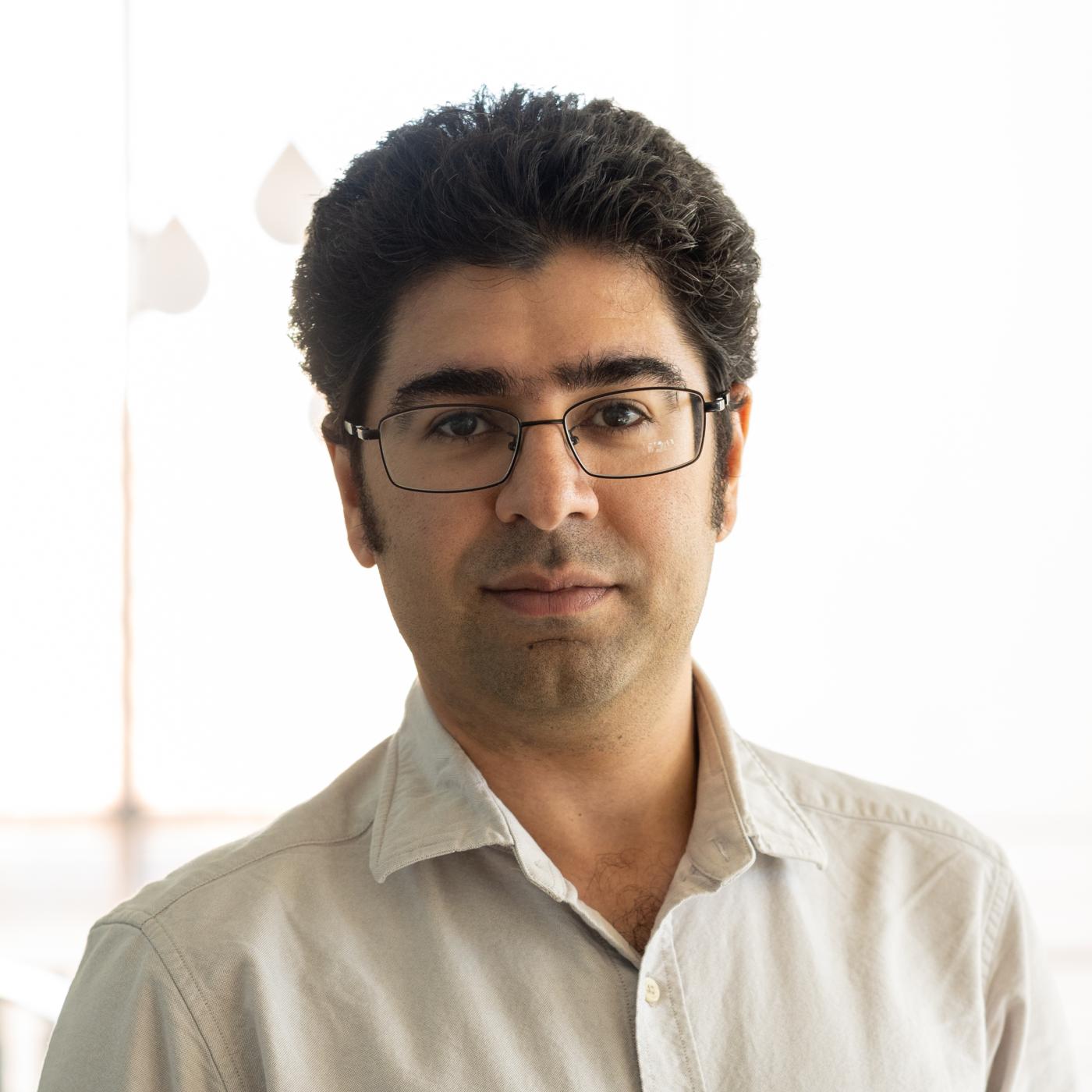
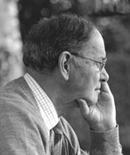
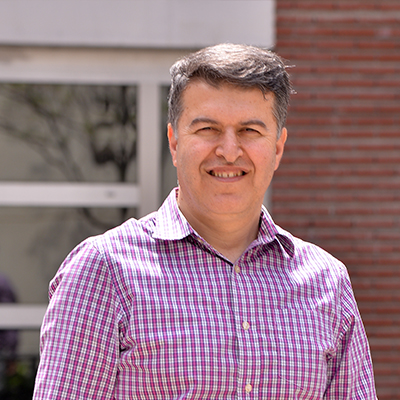
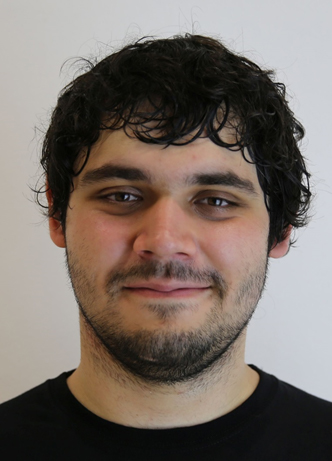
Dr. Gözde Damla Turhan is a Researcher at the Department of Architecture within the Faculty of Fine Arts and Design at İzmir University of Economics, a position she has held since September 2017. She holds a B.Sc. in Architecture from İzmir Ekonomi Üniversitesi (2014), followed by dual Master's degrees: M.Arch in Advanced Architectural Design (2016) and M.Sc. in Architecture (2016). Her Ph.D. in Design Studies (2022) focused on biobased materials, computational design, and digital fabrication. Current research interests include AI applications in design (machine learning, diffusion models, LLMs), and sustainable material innovation. Her work bridges architecture and computational technologies, emphasizing bio-based materials (e.g., bacterial cellulose), digital fabrication methods, and AI-driven design processes. She has explored topics like urban rehabilitation via GANs, NFT art hybrid experiences, and life cycle assessments of unconventional construction materials. Publications (2016–2023) span computational form-finding, material science, and digital tools in architecture. She actively contributes to design pedagogy, investigating how AI tools like diffusion models can reshape educational frameworks.
Arya Farahi is an Assistant Professor of Statistics and Data Sciences at the University of Texas at Austin since 2021. His research bridges astroinformatics, urban informatics, and AI ethics, focusing on mitigating algorithmic bias and uncertainty quantification in real-world applications. He holds PhDs in Physics and Scientific Computing from the University of Michigan, where he was a Data Science Fellow at the Michigan Institute for Data Science. Farahi's work includes collaborations with international projects such as the Dark Energy Survey (DES), COsmostatistics Initiative (COIN), and XMM-XXL Consortium. He leads the D3 Lab, which develops AI tools for scientific discovery and societal challenges, emphasizing interdisciplinary collaboration. His open-source contributions include TATTER, KLLR, and PoPE for statistical analysis and visualization. Key awards include the Best Student Paper Award at KDD’18 and a $400k+ grant. He is a volunteer with Statistics Without Borders and actively involved in projects like the Fire and Smoke Digital Twin for urban resilience. His research spans cosmology, healthcare AI, and urban economics, with a focus on trustworthy models and equitable AI systems.
Dr. Erika Speelman is an Associate Professor at the Laboratory of Geo-information Science and Remote Sensing within Wageningen University. She holds MSc and PhD degrees from Wageningen University, specializing in tropical agronomy. Her research focuses on developing simulation and gaming tools to enhance stakeholder collaboration in addressing socio-ecological challenges, particularly in the Global South. She leads the INREF SESAM programme (2020-2025), supervising 15 PhD candidates and 2 PostDocs, and coordinates MSc courses in geo-information science and interdisciplinary research methods. Her work spans agroforestry, water governance, and participatory tools for sustainable landscape management. Dr. Speelman has extensive experience collaborating with NGOs, UN agencies, and academic institutions across Asia, Latin America, and Africa. Her research emphasizes boundary objects like serious games to bridge stakeholder perspectives in contested landscapes. Recent projects include exploring water management in Kenya’s Ewaso Ng’iro Basin and land use dynamics in Peru’s Amazon. She teaches courses on spatial modeling, remote sensing integration, and geo-information science in socio-ecological contexts. Her international collaborations reflect a commitment to global sustainability challenges, integrating technical tools with community-driven solutions. Dr. Speelman’s lab is part of the Environmental Sciences group at Wageningen, fostering interdisciplinary approaches to complex environmental problems. She advocates for inclusive landscape governance through participatory tools, aiming to enhance resilience among smallholder farmers and marginalized communities. Her work combines academic rigor with practical impact, addressing issues like climate change, biodiversity loss, and equitable resource distribution.
Peter Haggett was a renowned geographer and Emeritus Professor of Urban and Regional Geography at the University of Bristol. His career spanned over five decades, including roles as Dean of the Faculty of Social Sciences (1975–1980), Head of Department at Cambridge University (1966–1975), and visiting professorships at institutions worldwide. He specialized in urban geography, quantitative methods, and epidemiological geography, co-authoring seminal works like Models in Geography and Spatial Diffusion . Haggett’s research extended to understanding disease spread through geographical frameworks, supported by the Wellcome Trust. Education: A Cambridge graduate, he taught at University College London (1955–1957) and Cambridge University (1957–1966). He held honorary degrees from multiple universities and received prestigious awards including the Royal Geographical Society’s Patron’s Gold Medal and the Prix International de Geographie. Research Interests: His work focused on three pillars: geographical discipline theory, quantitative spatial analysis, and disease geography. He pioneered methodologies for spatial diffusion models and applied them to influenza, AIDS, and measles epidemics. Collaborating with Prof Andrew Cliff, he produced influential atlases mapping disease distributions. Awards and Honors: Recipient of the Scottish Gold Medal, International Geographical Union’s Lauréat d’Honneur, and honorary fellowships. His contributions were recognized through a festschrift volume Diffusing Geography (1995). Advisory Roles: Served as Vice Chancellor of the University of Bristol, British Academy Vice President, and advisor to global health institutions like the WHO and CDC. He established Progress in Physical Geography and Progress in Human Geography journals. Labs and Collaborations: Active in interdisciplinary research with epidemiologists, including visiting roles at the CDC and WHO. His work bridged geography and public health, influencing global disease policy.
Francisco R. Ortega is a researcher at Colorado State University specializing in Virtual Reality (VR) , Augmented Reality (AR) , and Human-Computer Interaction (HCI) . His work focuses on improving user experience through multimodal interaction, cognitive load theory, and immersive analytics. Recent publications explore diverse applications including: Stress reduction via VR forest bathing Instruction methods for AR-based autism support systems Annotation design in extended reality AR notifications in cooking environments Gender-swapping VR for stereotype threat mitigation Comparative studies between AR and VR for data-driven storytelling His research integrates principles from: Computer Science Psychology Human Factors Education Technology Collaborations span institutions such as University of Florida, University of Seville, and technical teams across North America. While specific educational details remain undisclosed, his 20+ peer-reviewed publications since 2018 demonstrate deep contributions to VR/AR methodology, particularly in: Unconstrained gesture elicitation Spatial transformation challenges Immersive training systems Hybrid display environments Imperfect machine learning integration
Prof. Bahattin Koç is a Professor at Sabancı University's Faculty of Engineering and Natural Sciences, coordinating the Manufacturing Engineering Program. He holds a Ph.D. and has extensive experience in academia and industry, including roles at The State University of New York at Buffalo. His research focuses on 3D bioprinting, additive manufacturing, computational geometry, and nanotechnology-driven manufacturing processes. Research Interests: 3D bioprinting for tissue engineering, computational geometry for additive manufacturing, heterogeneous and multi-functional object modeling, nano-micro additive manufacturing, and hybrid manufacturing processes. His work integrates advanced design and manufacturing techniques to address challenges in biomedical and industrial applications. Grants and Funding: Secured significant grants including £815,625 from UK EPSRC (2018-2021), €1.4M from DiCoMI H2020 RISE (2018-2022), and $5M from the Turkish Ministry of Development. Projects include bone defect repair, bioprinting of patient-specific scaffolds, and advanced composite manufacturing. Students and Collaborations: Advised over 30 graduate students and researchers. Notable collaborations include work with Penn State University, University of Buffalo, and industry partners like TUSAS Engine Industries. He is a founding member of Sabancı University's Integrated Manufacturing Center and serves on TÜBİTAK advisory boards. Awards and Recognition: Co-inventor of patents such as the 'Method For Three Dimensional Printing Of Heterogeneous Structures' and 'Resorbable Laminated Repair Film'. Recognized for contributions to biofabrication and manufacturing innovation.
Jan-Henrik Haunert is a Professor at the University of Bonn, affiliated with the Institute of Cartography and Geoinformatics within the Faculty of Civil Engineering and Geodetic Science. His research focuses on map generalization, geographic information systems (GIS), and optimization techniques in cartography. He has contributed to projects funded by the German Research Foundation (DFG), particularly in deriving scale-dependent representations of geographic data. His work emphasizes logical consistency, semantic accuracy, and quality assessment in geospatial data processing. Key research areas include land cover map generalization, spatial data integration (e.g., volunteered geographic information), and rule-based incremental generalization. He has developed methodologies leveraging mixed-integer programming and straight skeleton algorithms for cartographic automation. His publications span peer-reviewed journals like GeoInformatica and Photogrammetrie - Fernerkundung - Geoinformation , as well as conference proceedings such as AGILE and ACM-GIS. Haunert’s contributions address challenges in geospatial data quality, including polygon simplification and river dataset matching. He has also explored applications in vehicle localization and virtual reality systems like the GeoScope for urban planning. His work bridges theoretical GIScience with practical applications in cartography and geoinformatics.
Salvatore Livatino is an Associate Professor in Virtual Reality and Robotics at the University of Hertfordshire, UK. He holds a MSc in Computer Science from the University of Pisa (1993) and a PhD in Computer Science and Engineering from Aalborg University, Denmark (2003). His academic journey includes roles as Research Fellow and Associate Professor at Aalborg University, as well as visiting positions at institutions like INRIA Grenoble and the University of Edinburgh. He leads the Communications and Intelligent Systems research group and directs the Virtual Reality and Robotics Laboratory. His research focuses on immersive technologies (VR/AR/XR), stereoscopic 3D visualization, and teleoperation systems for applications in robotics, healthcare, and command-and-control interfaces. He has contributed to over 30 peer-reviewed publications and secured funding for projects such as the Innovate UK-backed 'iDOC: AI Empowered Document Authoring' (2023–2025) and 'Immersion for Care: Using Extended Reality in Healthcare Training' (2025–2027). Teaching expertise includes problem-based learning, 3D visualization, and immersive game design. His work spans interdisciplinary collaborations in robotics, AI, and healthcare, emphasizing practical applications of virtual environments.
Michal Piovarci is a Researcher (Postdoc) at ETH Zurich's Computational Design Lab led by Bernd Bickel. He holds a Ph.D. from USI Lugano (2020) under Piotr Didyk, receiving the Eurographics PhD Award for his thesis on Perception-Aware Computational Fabrication. His research focuses on computer graphics, computational fabrication, and haptic/appearance reproduction, emphasizing perception-driven solutions. Education: Ph.D., USI Lugano (2020) Previous postdoc at ISTA's Visual Computing Group Research interests include 3D Printing Innovations Haptic Feedback Systems Material Perception Modeling Directional Surface Design Professional Activities: Area chair at ACM Symposium on Computational Fabrication (2024), program committee roles at SIGGRAPH, SAP, and Eurographics. Organized Computational Fabrication Seminars (2021-2022). Grants: SNSF Project Funding (CHF 1M, 2025-2029) and FWF Lise Meitner Grant (2022-2023). Teaching: Taught Scientific Machine Learning for Design (ETH Zurich, 2024) Computational Fabrication (TU Wien, 2022)
Marco Polverini is an active computer networking researcher with a prolific publication record spanning over a decade, with 59 publications documented from 2012 to 2025. His work primarily focuses on advanced networking technologies including Segment Routing, Software Defined Networking, and Network Function Virtualization. His research interests center around network routing optimization, traffic engineering, and network monitoring. He has made significant contributions to Segment Routing technology, developing novel behaviors for low-latency communication, black hole detection mechanisms, and traffic matrix assessment techniques. His recent work integrates artificial intelligence approaches, particularly reinforcement learning, with traditional networking protocols to create more adaptive and efficient network systems. He has also been exploring the application of Digital Twin technology for network management and optimization. Analysis of his publication trends shows a clear evolution from foundational work on energy-efficient networking and traffic engineering to more recent innovations in Segment Routing, in-band network telemetry, and AI-driven network optimization. His publications consistently appear in top networking venues including IEEE JSAC, IEEE Transactions on Network and Service Management, INFOCOM, and NOMS, demonstrating his standing within the networking research community. Throughout his career, Polverini has maintained strong collaborative relationships, particularly with Antonio Cianfrani (54 joint publications), Marco Listanti (33 publications), and Francesco Giacinto Lavacca (16 publications), suggesting he works within a well-established research group focused on next-generation networking technologies.
Stephanie Forrest is a Professor of Computer Science at Arizona State University and serves as Director of the Biodesign Center for Biocomputation, Security and Society . She holds affiliations with the School of Computing and Augmented Intelligence , Global Futures Laboratory , and Santa Fe Institute External Faculty . Education: B.A. from St. John's College M.S. and Ph.D. in Computer Science from the University of Michigan Research Interests: Forrest specializes in the intersection of biology and computation , with key contributions to cybersecurity (anomaly detection, instruction-set randomization), automated software repair (evolutionary methods), and biological modeling (immune systems, SARS-CoV-2 spread). Her work bridges complex adaptive systems , AI/ML , and defense applications . Scientific Contributions: 2020 IEEE S&P Test of Time Award 2019 ICSE Most Influential Paper Award 2011 ACM/AAAI Allen Newell Award NSF Presidential Young Investigator (1991) IEEE Fellow Evolutionary Computation Pioneer award Publications & Grants: Her research appears in top venues (ICSE, IEEE S&P, PNAS) and is funded by the National Science Foundation , DARPA , Air Force Research Lab , and Santa Fe Institute . Key projects include Crispy (CRISPR-inspired DoS defense), GenProg (automated bug correction), and SIMCoV-GPU (agent-based pandemic modeling).
Andreas Huth is a prominent researcher at the Helmholtz Centre for Environmental Research (UFZ) in Leipzig, Germany, where he works within the Department of Ecological Systems Analysis. His research focuses on developing and applying computational models to understand complex ecological systems, with particular emphasis on vegetation dynamics, biodiversity patterns, and environmental interactions. Huth is actively involved in several major research initiatives including the FORMIND project, which simulates forest growth using individual-based vegetation models, and contributes to the UFZ's research program on Smart Models and Monitoring. Huth's research interests span ecological modeling, vegetation dynamics, biodiversity assessment, and environmental system analysis. He specializes in developing sophisticated computational frameworks that integrate atmospheric, ecological, and spatial data to model complex environmental processes. His work often involves coupling different modeling approaches, such as connecting atmosphere and vegetation radiative transfer models to study cloud-vegetation interactions. Huth is particularly interested in understanding spatial patterns in ecological systems, species-habitat relationships, and the impacts of environmental change on biodiversity. His methodological expertise includes agent-based modeling, individual-based modeling, and developing digital twin technologies for environmental systems. Analysis of Huth's recent publications reveals a strong focus on integrating different modeling approaches to address complex environmental questions. His work demonstrates a progression from basic ecological modeling toward more sophisticated integrative frameworks that connect atmospheric processes with vegetation dynamics, and social systems with ecological outcomes. A notable trend is his increasing involvement in digital twin technology for environmental systems, particularly for biodiversity monitoring and prediction. His research spans multiple scales - from microbial ecosystems to continental-scale species distributions - while maintaining a consistent methodological thread of spatially explicit modeling and causal analysis in complex systems. Huth collaborates extensively with researchers across the UFZ and internationally, as evidenced by his co-authorship on numerous interdisciplinary publications. While specific awards are not mentioned in the available information, his consistent publication record in high-impact journals and leadership in major modeling initiatives like FORMIND indicate significant recognition within the ecological modeling community. His work has practical applications for environmental policy, conservation planning, and climate change adaptation strategies. Huth is an active member of the Ecological Systems Analysis research group at UFZ, which develops and applies computational models to investigate key mechanisms in ecological systems. He contributes to several major research platforms including FORMIND (an individual-based vegetation model for species-rich forests) and participates in the UFZ's broader research initiatives on environmental monitoring and sustainable technologies. His work is integrated within the UFZ's research program on Smart Models and Monitoring, which aims to develop innovative approaches for understanding and predicting environmental change.
Elias Economou is an Associate Professor of Cognitive Psychology at the Psychology Department, University of Crete. He received his bachelor's degree from the same department and earned a PhD from Rutgers University. Since 2004, he has held various roles including Adjunct Professor and Lecturer before becoming Associate Professor in 2015. Education: Bachelor's in Psychology (University of Crete), PhD (Rutgers University) His research focuses on understanding how human cognitive systems process environmental stimuli to perceive objects and their qualities, with dual emphasis on decoding human visual perception and simulating it in machine systems. Key areas include visual perception, attention mechanisms, and human-machine interaction. Recent publications analyze grouping factors in contrast illusions and lightness perception theories, reflecting interests in perceptual organization, environmental stimuli processing, and computational modeling of vision. He currently participates in the funded EMBRACE HE project. Teaching responsibilities include courses on perception, attention, memory, problem-solving, and experimental aesthetics at both undergraduate and graduate levels. His current affiliation with the University of Crete has been continuous since 2004.
Izak Snyman is an Associate Professor in the School of Physics at the University of the Witwatersrand (Wits), where he conducts theoretical research in condensed matter physics. He holds a PhD from Leiden University and has established a strong publication record in quantum many-body systems and quantum transport. Research Interests: His work focuses on theoretical aspects of quantum impurities, the Kondo effect, Josephson junctions, and quantum transport in nanoscale systems such as graphene and carbon nanotubes. He also explores connections to circuit quantum electrodynamics and quantum information platforms. His recent publications (2019–2025) highlight a shift toward integrating theoretical models with experimental quantum devices, particularly in superconducting circuits, where quantum fluctuations and many-body effects are observed. Themes include Kondo physics, screening clouds, topological junctions, and bosonization techniques. Scientific Contributions: While no specific awards are listed, his consistent publication in high-impact journals such as Physical Review Letters , Physical Review B , and Nature Communications underscores his influence in theoretical condensed matter physics. Advising and Grants: The provided text does not mention any students, grants, or funding sources. However, his long-standing research activity since 2004 suggests sustained academic engagement and likely mentorship and grant involvement. Labs and Research Groups: No specific lab or team is mentioned in the text. Given his focus on theoretical physics, he likely leads or contributes to a theoretical research group within the School of Physics at Wits, possibly collaborating with experimentalists in quantum device physics.
Óscar Andrey Herrera Sancho is a Full Professor at the University of Costa Rica and a researcher at the Atomic, Nuclear and Molecular Sciences Research Center. He holds a PhD in Physics from Leibniz University Hannover and has held roles including Head of the Physical Metrology Department at the National Metrology Institute of Costa Rica. His research spans Quantum Optics, Quantum Biology, Surface Physics, and Educational Physics, with interdisciplinary work in art conservation, biophysics, and cultural heritage science. Education: Postdoc Fellowship, Institute for Quantum Optics and Quantum Information, University of Innsbruck (2016) PhD in Physics, Leibniz University Hannover (2012) M.Sc. in Physics, University of Costa Rica (2008) B.Sc. in Physics, University of Costa Rica (2003) Research Interests: His work bridges quantum physics with cultural heritage preservation, including material analysis of historical artifacts, fungal biodeterioration studies, and pedagogical innovations linking literature and science. He also investigates surface physics phenomena relevant to astrophysical ice transitions and quantum gas systems. Scientific Awards: Alexander von Humboldt Foundation Fellow Advising & Grants: While specific grants are not listed, his extensive co-authorship network and leadership roles indicate active collaboration in interdisciplinary research. His work on cultural heritage has involved student teams in material analysis and software development for artifact preservation. Labs & Teams: Leads the Spatially Resolved Ultracold Rydberg Physics group at the 5th Institute of Physics, focusing on quantum systems and their applications in precision measurement and cultural heritage science.