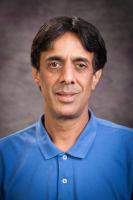
David J. Yu is an Associate Professor at Purdue University with primary appointments in the Lyles School of Civil Engineering (75%) and Department of Political Science (25%) . He contributes to interdisciplinary research through Purdue’s Building Sustainable Communities cluster, focusing on sustainability and community resilience. His research examines resilience of coupled systems to change and uncertainty, combining natural, physical, and institutional factors across scales from local to global. Methodological approaches include mathematical modeling , case study analysis , and behavioral experiments to understand human-infrastructure-water interactions. Recent publications demonstrate expertise in socio-hydrology of reservoir operations groundwater governance frameworks agent-based modeling of water systems cognitive biases in water management His work was recognized with an NSF CAREER Award (2022) for innovative research on resilience engineering. He actively seeks graduate students for projects in Civil Engineering, Ecological Sciences, Environmental Engineering, and Political Science programs at Purdue. Current research includes logical interdependencies in water infrastructure and AI-enhanced resilience frameworks for reservoir management.
Xiaoyang Wang is a Senior Lecturer in the School of Computer Science and Engineering (CSE) at the University of New South Wales (UNSW). He holds a Bachelor's and Master's degree in Computer Science from Northeastern University, China, and earned his PhD from CSE UNSW. Dr. Wang's research focuses on database systems with a special emphasis on query processing and data mining on large-scale graph, spatial, and streaming data. His expertise extends to data-driven machine learning, smart contract analysis on blockchain, and FinTech with financial network analysis. His work spans Graph Processing, Graph Neural Networks, Spatial Data Processing, AI for Databases (AI4DB), Database for AI (DB4AI), and FinTech applications. His publication record shows significant contributions to the field with 7 book chapters, 56 journal articles, 61 conference papers, 7 edited conference proceedings, and 4 conference abstracts. Recent publications (2022-2025) demonstrate his strong research trajectory in advanced graph processing techniques, neural network applications, and innovative database approaches. Key themes include hierarchical contrastive learning, robust attack frameworks, temporal graph processing, influence maximization, knowledge graph-enhanced reasoning, and rumor mitigation. Dr. Wang actively recruits PhD students interested in pursuing research in related fields and encourages current undergraduate and master's students at UNSW to contact him about research opportunities. He maintains an active research agenda with practical implications for industries dealing with large-scale network data, financial technology applications, and data-intensive systems. He can be reached at xiaoyang.wang1@unsw.edu.au and is located in Engineering building K17-501D at UNSW.
Hans Vernooij is a Lecturer in Farm Animal Health at the Faculty of Veterinary Medicine, Utrecht University. He specializes in statistical methods and data science applications in veterinary epidemiology and animal health. His areas of expertise include: Statistical methods for veterinary research Applied Data Science in Life Sciences Epidemiological modeling Machine learning applications in animal health Vernooij has extensive experience in developing statistical models for animal health applications. His research focuses on applying advanced statistical techniques and data science methods to solve problems in veterinary epidemiology and farm animal health. He has particular expertise in Random Forest models, as demonstrated during his sabbatical at the Human Sciences Research Council in Pretoria where he developed a model for HIV status prediction based on demographic information and knowledge of HIV prevention from large-scale survey data. His publication record shows consistent contributions across veterinary epidemiology, with recent work emphasizing machine learning applications and big data analytics in animal health surveillance. The research demonstrates a clear trajectory from traditional statistical methods toward more advanced data science approaches. Vernooij is actively involved in teaching and mentoring: Teaches statistics to Bachelor students at the veterinary faculty Supports PhD candidates and Master students during data analysis phases of their research Provides statistics education for the Master of Epidemiology program at the Julius Centre of University Medical Centre
Bharat Ratra is a Professor at the Department of Physics , Kansas State University , focusing on Cosmology and Astroparticle Physics . He develops theoretical models of the universe's large-scale structure and tests them using observational data, particularly from cosmic microwave background radiation (CMBR) anisotropy, dark energy dynamics, and large-scale matter distribution . His work frequently involves collaborations with the Kansas State University High Energy Physics Group , University of Kansas Cosmology Group , and use of computational resources at the Kansas State University Center for Scientific Supercomputing . Ratra's research has been supported by the National Science Foundation , and he has made significant contributions to understanding the time-variable cosmological constant , inflationary models , and dark energy through over 50 publications. His 15 most recent selected publications focus on constraining cosmological parameters using supernova data, CMBR anisotropy experiments (COBE, MAX, ARGO, White Dish), and large-scale structure observations, with a particular emphasis on Hubble constant determination, spatial curvature analysis, and dark energy dynamics . Among his research advisees is Silviu Podariu , and he has collaborated with postdoctoral associates such as Dr. Pia Mukherjee , Dr. Tarun Souradeep , and Dr. Graca Rocha (now at University of Oxford). Ratra's work bridges theoretical cosmology with observational data to refine our understanding of the universe's geometry and evolution.
Stefan Julich is a Professor of Landscape Studies at Eberswalde University for Sustainable Development, where he has held a professorship since 2022. He is affiliated with the Faculty of Landscape Management and Nature Conservation, contributing to both teaching and research activities. His academic career spans multiple prestigious institutions across Europe, including TU Dresden, Justus-Liebig University Giessen, and the Potsdam Institute for Climate Impact Research. Dr. Julich earned his Diploma in Geography with minors in Geology and Soil Science from Martin-Luther University Halle-Wittenberg (1998-2004), followed by a Dr. rer. nat. (magna cum laude) from Justus-Liebig University Giessen in 2010. His dissertation focused on uncertainties in modeling water and nitrogen cycles in micro- and mesoscale river catchments. His research primarily investigates soil physics and hydrology, with particular emphasis on the influence of land use on soil hydraulic properties, dynamics of water and material cycles in landscapes, and ecosystem services of soils. He employs advanced modeling techniques to simulate water and material flows from soil to landscape scales and develops innovative monitoring concepts and laboratory methods for environmental assessment. Analysis of his recent publications reveals a strong focus on tropical and temperate hydrology, with particular attention to land use change impacts, soil erosion processes, and water resource management in data-scarce regions. His work often bridges theoretical modeling with practical applications in environmental management, particularly in African and European contexts. Professor Julich actively contributes to long-term environmental observation systems, notably the Ecosystemic Environmental Observation (ÖUB) in Brandenburg's biosphere reserves, which monitors 136 sites across various ecosystem types. His research integrates abiotic (soil and water) and biotic (vegetation and fauna) components in comprehensive ecosystem assessments. He teaches courses in soil science, hydrology, and soil-water science within the Bachelor's programs in Landscape Use and Nature Conservation and Organic Agriculture and Marketing. His research projects focus on long-term ecosystem monitoring in biosphere reserves, examining how regional ecosystems evolve under changing environmental conditions.
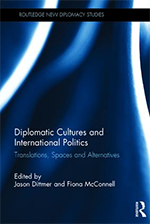
Professor Fiona McConnell is a leading political geographer at the University of Oxford , affiliated with the School of Geography and the Environment and St Catherine's College as a Tutorial Fellow. Her career spans institutions like Newcastle University (as Lecturer) and Trinity College, Cambridge (Junior Research Fellow). Education: BA in Geography, University of Cambridge (Fitzwilliam College) PhD, Queen Mary University of London McConnell's research explores governance beyond the state , focusing on stateless communities , diplomacy in marginalized spaces , and geographies of peace . She pioneers concepts like liminal geopolitics and diaspora diplomacy , examining how marginalized groups engage in statecraft and redefine legitimacy. Her recent publications reveal trends in digital diplomacy , self-determination , and legal geographies . Collaborations with scholars like Costas Constantinou, Elaine Ho, and Liam Saddington highlight her interdisciplinary approach. Scientific Awards: Philip Leverhulme Prize for Geography (2019) Back Award, Royal Geographical Society (2022) British Academy Mid-Career Fellowship (2017) McConnell supervises doctoral students in areas including contested sovereignties , digital mediation , and peacebuilding through natural resources . She leads the Gobi Framework project (2018–2021) on sustainable mining in Central Asia and co-founded the Model UNPO teaching initiative.
Stefanos Nikolaidis is a tenured Associate Professor in the Department of Computer Science at the University of Southern California (USC), where he directs the Interactive and Collaborative Autonomous Robotic Systems (ICAROS) Lab. His research focuses on enabling robots to interact robustly with humans in dynamic environments through advancements in artificial intelligence, human-robot interaction, procedural content generation, and quality diversity optimization. Education: PhD in Robotics from Carnegie Mellon University (CMU) and MS in Computer Science from MIT. The ICAROS Lab develops interactive agents for real-world tasks while creating diverse testing scenarios to enhance system robustness. Research integrates AI techniques with human-centric design principles across applications like rehabilitation robotics, collaborative manufacturing, and socially interactive embodiments. Recent publications demonstrate trends in quality diversity optimization, human-aware planning, and policy adaptation. Notable works include AutoQD for behavior discovery, CMA-MA for multi-objective optimization, and applications in hair manipulation, rehabilitation personalization, and large language model integration. Scientific Awards: NSF CAREER Award (2022). He actively shares research updates via Twitter and has contributed software tools like pyribs for quality diversity optimization. His work spans theoretical advancements in optimization algorithms and practical implementations in assistive robotics.
Fiona Zisch serves as Associate Professor at The Bartlett School of Architecture, University College London (UCL), holding key roles including Programme Director for the MArch Design for Performance and Interaction and Co-Chair of the UK chapter of the Academy of Neuroscience for Architecture (ANFA). She directs the International Centre for NeuroArchitecture and NeuroDesign and leads research at UCL's BodyLab. Her academic trajectory spans positions at the University of Innsbruck, University of Greenwich, University of Westminster, and University of Plymouth. Her educational foundation includes a Dipl. Ing. in Architecture (BSc/MSc equivalent) from the University of Innsbruck and Lunds Tekniska Hogskola, followed by a PhD from UCL's Bartlett School of Architecture and Institute of Behavioural Neuroscience. Zisch's transdisciplinary research explores cognitive ecologies through the integration of architecture, cognitive neuroscience, experimental psychology, philosophy of mind, critical theory, and cyberfeminism. Central to her work is the concept of wickedness and wicked thresholds —dynamic spaces of transformation where discovery emerges through reciprocity between neural spatial construction, architectural design concepts, and experiential qualities. Her investigations into embodied cognition examine how movement and bodily presence shape architectural experience, informed by her background in dance and collaborations with choreographers across spatial and temporal scales. Analysis of her 15 most recent publications reveals a dominant interdisciplinary trajectory merging architectural design with neuroscience. Key trends include neural mechanisms of spatial aesthetics, comparative studies of real/virtual environments, and the application of neuroarchitecture to equitable design. Her work consistently addresses spatial memory distortions , embodied navigation , and affective responses to built environments, while expanding into exhibition-based explorations of care ethics, disruption, and societal transformation through art-technology collaborations. Zisch supervises PhD candidates in UCL's Architectural Design MPhil/PhD programme and cross-departmental students in Neurology and Behavioural Neuroscience. Her teaching emphasizes 5EA cognition (extending 4EA models to incorporate Entanglement) and atmospheric design within performance-oriented architectural education. She actively contributes to international academic discourse through lectures, workshops, and external examination roles. She leads the BodyLab at UCL Here East, a transdisciplinary research space investigating the intersection of architectural design, neuroscience, and movement studies. The lab fosters collaborations with neuroscientists, choreographers, and technologists to develop experimental frameworks for understanding embodied spatial cognition through both physical and virtual environments.
Professor Alan Penn is a leading academic at University College London's The Bartlett School of Architecture , where he holds the title of Professor in Architectural and Urban Computing. He previously served as Dean of the Bartlett Faculty of the Built Environment from 2009 to 2019 and has been instrumental in establishing Space Syntax Ltd , a UCL knowledge transfer spin-out company. His affiliations include membership in the Space Syntax Laboratory, board membership of UCL Consultants Ltd, and trustee status at Shakespeare North Trust. Education: BSc (1978), Dip Arch (1980), MSc (1983) - all from University College London Alan Penn’s research investigates how spatial design influences social and economic behaviors through innovative space syntax methodologies . Key areas include: Agent-based simulations of human behavior Spatio-temporal representations of built environments Urban spatial network analysis Urban sustainability across multiple dimensions Cognitive markers in architectural design Historical urban growth modeling His recent publications demonstrate a strong focus on computational urbanism, evolutionary city patterns, and behavioral architecture. Research trends show interdisciplinary approaches combining architectural theory with: Machine learning applications Network science analysis Behavioral psychology insights Historical GIS techniques Complex systems modeling Public health considerations Scientific recognition includes: HEFCE Business Fellowship (2001-2005) KTP SE Region Award (2010) Multiple UCL Enterprise awards ‘Spirit of Enterprise’ Award (2008) As Principal Investigator he leads the £5m EPSRC-funded Urban Dynamics Lab , demonstrating sustained research excellence. His work extends to public engagement through: Shakespeare North Trust educational theatre development Media appearances (New Scientist, Slashdot) Public policy contributions
Sean Hanna is a Professor of Design Computing at The Bartlett School of Architecture , University College London , and a member of the UCL Space Syntax Laboratory . His interdisciplinary work bridges architecture, computational modeling, and machine learning.
Martha Tsigkari serves as an Associate Professor at The Bartlett School of Architecture, University College London (UCL), where she bridges architectural practice with cutting-edge computational research. Her position situates her at the forefront of digital transformation in the built environment, with institutional affiliations spanning UCL's Faculty of the Built Environment and direct contributions to UN Sustainable Development Goals 4 (Quality Education), 11 (Sustainable Cities), and 13 (Climate Action). Her research program critically examines the integration of artificial intelligence, machine learning, and cognitive psychology into architectural design processes. Key investigations include spatial and visual connectivity analysis, XR-enhanced collaborative design environments, and AI-driven optimization of building performance. She explores how digital tools reshape creativity, professional identity, and sustainability outcomes in architecture, with particular focus on data commoditization, skills evolution, and human-AI collaboration in design workflows. Her interdisciplinary approach connects architectural theory with computational neuroscience and industrial digitalization trends. Tsigkari's publication trajectory reveals a clear evolution from computational structural analysis (2012-2017) toward AI ethics and professional transformation (2022-2024). Early work established foundations in performance-driven facades and material systems, while recent output confronts existential questions about architectural practice in the AI era. Her scholarship consistently addresses the tension between technological capability and human-centered design values, with growing emphasis on sustainable development frameworks and educational implications. Scientific Awards: No major awards are documented in the available records. Advising and Grants: While specific supervisees and funding mechanisms aren't detailed in current sources, her extensive collaborative network across 30+ publications indicates active mentorship and research leadership. Co-authorship patterns suggest involvement in multi-institutional projects addressing AECO industry digitalization, with potential ties to UK research councils and industry partnerships like RIBA. Labs and Teams: Tsigkari operates within The Bartlett's digital research ecosystem through recurring collaborations with Kosicki, Tarabishy, and Psarras. Her work manifests in experimental toolsets including Glaucon (XR design environment), HYDRA (optimization framework), and SandBOX (conceptual design system), indicating leadership in UCL's computational design labs focused on human-AI interaction and sustainable building technologies.
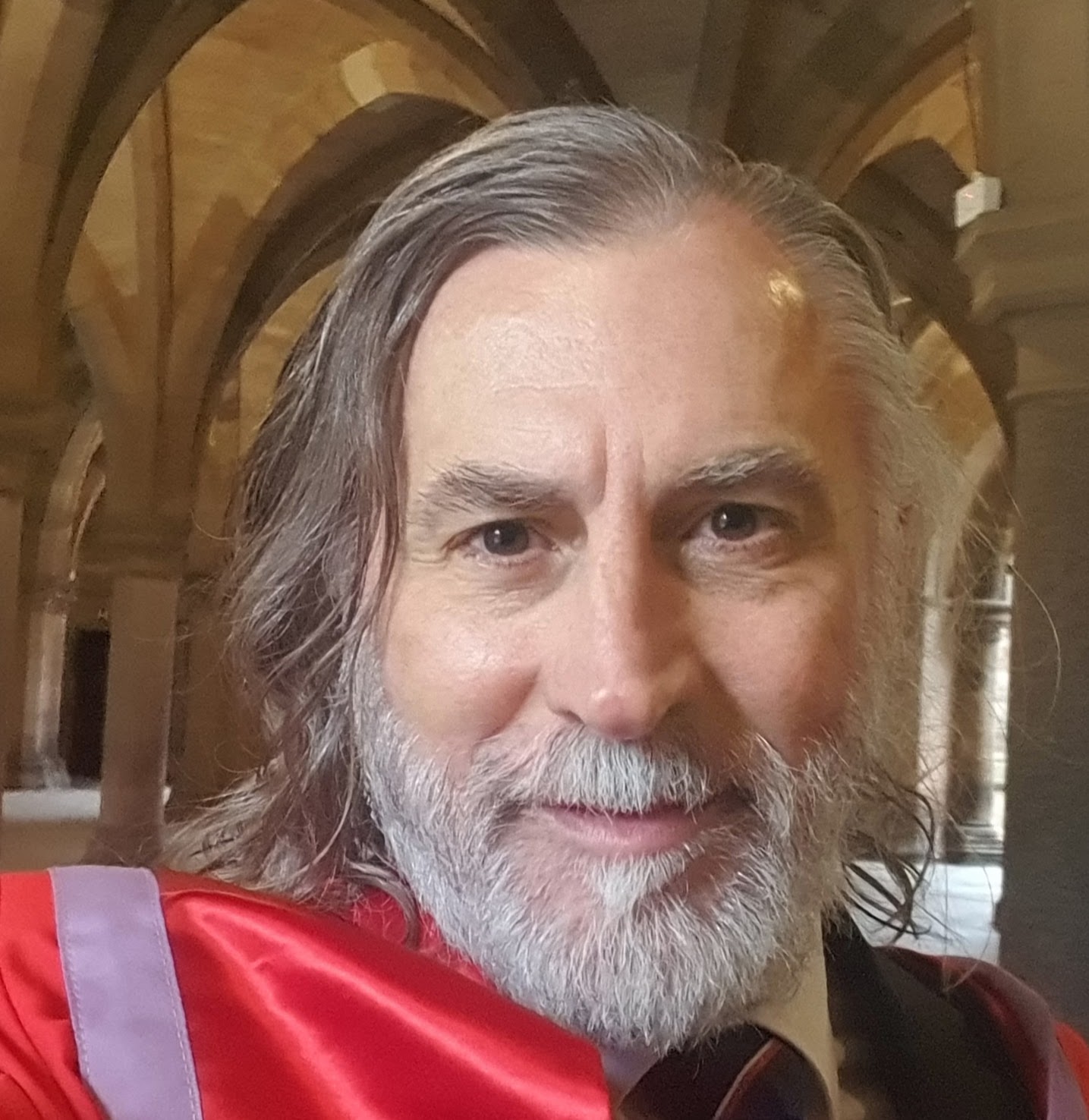
Dr. Matt Offord is a Senior Lecturer in Experiential Leadership Education within the Management department at the University of Glasgow's Adam Smith Business School. As Associate Director for Learning and Teaching (Scholarship of Learning and Teaching), he leads initiatives in educational innovation and mentors teaching-focused academics. His unique background as a former naval officer with nearly 30 years of service informs his practical approach to leadership education. Offord's research centers on experiential learning methodologies, particularly ecopedagogy, outdoor learning, and educational escape rooms. Drawing inspiration from John Dewey's educational philosophy, he creates learning experiences that develop critical reflection about leadership through unconventional settings and simulations. His work bridges theory and practice with a focus on 'wide awake' consciousness in leadership development. His extensive publication record shows a clear trajectory toward innovative educational approaches, with recent work emphasizing ecopedagogy, AI integration in business education, and sustainable leadership practices. Offord has published in journals including Postdigital Science and Education, Open Scholarship of Teaching and Learning, and Palgrave Communications. Shortlisted for Best Innovation Strategy Award (Association of MBAs and Business Graduates, 2024) Shortlisted for Innovation in Business Education Award (QS Reimagine Education, 2023) Distinction in MSc (Digital Education) (University of Edinburgh, 2023) Distinction in Post Graduate Certificate of Academic Practice (University of Glasgow, 2021) Aspect Innovation Fellow (2023) Senior Fellow of Recognising Excellence in Teaching (RET) Certified Management and Business Educator (CMBE) Offord actively mentors early career academics and PhD students while leading the School's academic efforts in Technology Enhanced Learning and Teaching (TELT) and AI. His current supervision focuses on paradoxical leadership, post-heroic leadership, emotional regulation, and leadership expectations. Significant grant funding supports his work, including the Knowledge Exchange Innovation Fund 2025 (£36,000) for educational escape rooms in maritime DEI training and the Chancellor's Fund 2023-2025 for ecopedagogy teaching projects. His teaching practice spans undergraduate, postgraduate, and executive education levels, with expertise in experiential learning through practical ecopedagogy, outdoor learning, serious games, and simulations. Offord has developed educational escape rooms for business education and maritime leadership training, demonstrating his commitment to innovative pedagogical approaches that connect classroom learning with real-world challenges.
Prof. Thomas H. Kolbe serves as Chair of Geoinformatics at the Technical University of Munich (TUM), where he leads research in spatial, temporal, and semantic modeling of urban environments. His work focuses on developing foundational frameworks for 3D/4D city models, digital twins, and smart city applications through international standardization efforts including CityGML and IndoorGML. His research spans virtual city modeling, urban system simulation, and GIS integration with emerging technologies. Current projects emphasize AI-driven urban scenario generation, semantic streetspace modeling, and IoT integration in digital twin ecosystems. Recent publications demonstrate strong interdisciplinary connections between computer vision, urban planning, and geospatial data science, with particular emphasis on practical implementations of 3D city models for sustainability challenges. Prof. Kolbe actively contributes to professional organizations including the Round Table GIS eV (as Chairman since 2013) and the Munich Data Science Institute (as core member since 2021). His leadership extends to the Leonhard Obermeyer Center for digital methods in the built environment and the Hans Eisenmann Forum for agricultural sciences. His work bridges theoretical geoinformatics with practical urban applications through numerous collaborative projects with municipal governments and industry partners.
Jorge Camba is an Associate Professor at the School of Engineering Technology and holds a courtesy appointment in the Department of Computer Graphics Technology at Purdue University . He also serves as a Senior Research Scientist (by courtesy) in the Department of Industrial Engineering at the University of Naples Federico II , Italy. PhD in Systems and Engineering Management (Universidad Politécnica de Valencia, Spain) MSc in Digital Media (East Tennessee State University) MSc in Computer Science (Universidad de Vigo, Spain) His research explores intelligent CAD systems , digital manufacturing , and mixed reality environments , focusing on model quality assurance , design intent communication , and collaborative design tools . Recent work investigates spatial cognition in CAD education , geometric variability analysis , and annotation-driven knowledge management . Key trends in his publications include parametric modeling strategies , 3D annotation systems , and XR applications in design evaluation. Awards include the Purdue Faculty Scholar (2021) and I3B Fellow (2021). He has presented at conferences on topics like Industry 4.0 , space habitat design , and digital product quality .
Hazar Dib is an Associate Professor at the School of Construction Management Technology, Purdue Polytechnic Institute, Purdue University. His work bridges Building Information Modeling (BIM) , knowledge management , and interactive learning technologies to advance construction education and process efficiency. Ph.D. in Building Construction (2007, University of Florida) MSc. in Civil Engineering (2002, University of Balamand) BSc. in Civil Engineering (2000, University of Balamand) Research Interests focus on: BIM lifecycle integration AI/knowledge-based systems for construction Digital tools for surveying and steel connection education Collaborative communication frameworks Sustainability metrics in building practices Human factors in technology adoption Scientific Awards include multiple Charles B. Murphy Awards for undergraduate teaching and the Society of Leaders in Construction induction. His NSF-funded projects like VELS (Virtual Environment for Learning Surveying) and Steel Connection Teaching Tool highlight his innovation in STEM education . Articles span serious games , visual learning , and BIM maturity assessments , reflecting his interdisciplinary approach.