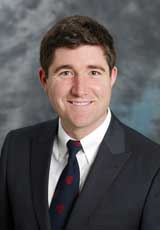
Li Jiannan is a Full-time Assistant Professor of Computer Science at the School of Computing and Information Systems, Singapore Management University (SMU). He is part of the SMU HCI community and holds a PhD from the University of Toronto (2024). His research focuses on human-machine collaborative systems, pervasive sensing, and human-computer interaction applications in health, wellbeing, and future work paradigms. Research interests include: Language-driven robotic telepresence systems Large language models for visualization and design studies Mixed reality collaboration tools Immersive environments for skill teaching Recent publications demonstrate expertise in: Robot-assisted physical task guidance Generative AI for VR scene creation Camera control through subtle human cues 360° video navigation techniques Scientific recognition includes: Best Paper Award at ACM/IEEE HRI 2025 Best Paper Honorable Mention at CHI 2025 Best Paper Honorable Mention at CHI 2021 Best Paper Honorable Mention at CHI 2018
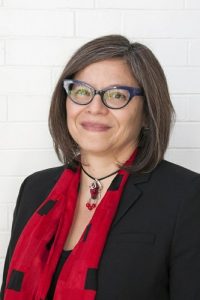
Annick Germain is a Professor at the National Institute of Scientific Research (INRS) and Director of the Urban Studies Program at the Urbanization Culture Society Research Centre in Montréal, Québec. She holds a PhD in Sociology from the Université de Montréal (1981) and has established herself as a leading expert in urban sociology with a focus on immigration, intercultural cohabitation, and municipal diversity management. PhD in Sociology, Université de Montréal, 1981 MSc in Sociology, Université de Montréal, 1974 Licence in Sociology, Université catholique de Louvain (Belgium), 1971 Professor Germain's research focuses on the sociological understanding of urban phenomena, particularly examining public spaces and sociability, social mix, neighborhood life and lifestyles, housing and social ties, and urban heritage and planning. Her work specifically investigates the interface between cities and immigration, exploring interethnic cohabitation in neighborhoods, controversies surrounding the planning of places of worship, municipal management of diversity, and cultural communities in urban life (including participation, housing, racism, and more). She has directed the Metropolis Centre of Quebec – Immigration and Metropolises, one of five Canadian centers of excellence that contributed to the Metropolis project on integration, diversity and urban dynamics. Her recent publications demonstrate a consistent focus on urban diversity, particularly examining the role of immigrant communities in reshaping suburban landscapes, religious diversity in Montréal, and interethnic cohabitation in middle-class neighborhoods. Her work employs both qualitative and quantitative approaches to understand how diverse populations navigate urban spaces, with particular attention to the everyday practices of cohabitation and the municipal policies that shape diversity management. Prix Planète INRS, Carrière d'excellence en recherche National Metropolis Award in immigration, university researcher category, 2017 Professor Germain has supervised numerous graduate students and postdoctoral fellows throughout her career, including over 30 master's and doctoral students. Her research has been supported by various funding agencies including SSHRC, FQRSC, and municipal partnerships. She is actively involved in multiple research networks, including the Quebec Interuniversity Centre for Ethnic Studies and serves as a Fellow at the Institute for Research on Public Policy. Her collaborative work extends internationally, with partnerships in Europe and North America examining comparative urban diversity. She is a member of the research team for FRQ (dir. M. Paquet, Concordia), the Quebec Immigration Research Team, a Fellow at the Institute for Research on Public Policy (IRPP), and a member of the steering committee of the Interdisciplinary Research Centre in Montreal Studies (CRIEM) at McGill University. Her work has significantly influenced municipal approaches to diversity management in Montréal and beyond.
Gerd Bruder is an Associate Professor in the Department of Computer Science at the University of Central Florida and a Research Associate Professor at the Institute for Simulation and Training. His work bridges computer science, human factors, and immersive technologies, with a focus on Extended Reality (XR) systems. Education: Habilitation, Computer Science, University of Hamburg, Germany (2017) Ph.D., Computer Science, University of Münster, Germany (2011) M.Sc., Computer Science with minor in Mathematics, University of Münster, Germany (2009) Dr. Bruder’s research centers on human-computer interaction in virtual and augmented environments. His interests include perception, 3D user interfaces, display technologies, and digital twins, with applications in healthcare, military training, architecture, and smart environments. He investigates how users perceive and interact with immersive systems, leveraging illusions and redirection techniques to enhance experience and usability. His recent publications reveal a strong trend in trust, cognitive load, and social interaction in XR. Themes include user transitions between realities, robot reliability perception, multisensory feedback, and AI integration. His work often explores how visual and spatial cues affect user behavior and decision-making in complex environments. Scientific Awards: Best Paper Award, ACM VRST 2023 2021 Innovation Award, TechConnect World Multiple Best Paper, Demo, and Poster Awards from ACM and IEEE conferences (2008–2021) Dr. Bruder leads an active research group, mentoring students and collaborating on grants and patents related to AR/VR systems. His work is supported by interdisciplinary teams and institutions, including UCF’s Institute for Simulation and Training. He has co-authored numerous patents in AR magnification, audiovisual detection, and virtual human simulation. His lab focuses on immersive environments, digital twins, and human factors in XR. Projects involve collaborative mixed reality, perceptual illusions, and real-world applications in training and healthcare.
David Black-Schaffer is a Professor at Uppsala University's Department of Information Technology, specializing in computer systems research. As of 2023, he serves as Dean of Research for the Faculty of Science and Technology. His work bridges software and hardware innovations to enhance data movement efficiency in computer systems, with applications commercialized through a startup and integrated into industry standards like OpenCL. Black-Schaffer earned his PhD in Electrical Engineering from Stanford University in 2008, focusing on many-core processor programming. His career spans roles at Apple Inc. (contributing to OpenCL standards), postdoctoral research at Uppsala University, and academic progression from assistant to full professor (2010–2017). He has held leadership roles including Head of the Division of Computer Systems (2022) and department representative on the faculty Advisory Committee for Research (2021). His research spans computer architecture, memory systems, parallel programming, and simulation techniques. Recent publications (2024–2020) explore garbage collection, cache optimization, memory contention, NUMA systems, and instruction scheduling. Key trends include software-hardware co-design for power efficiency, reuse-aware data placement, and machine learning for performance modeling. Knut & Alice Wallenberg Foundation: Wallenberg Academy Fellowship Prolongation (2020–2025), Wallenberg Academy Fellow (2016–2021) Swedish Research Council (VR): Project Grant (2019–2024), Young Researcher Grant (2015–2018), Framework Grant (2012–2017) European Research Council: ERC Starting Grant (2017–2022) Teaching Awards: Uppsala Engineering and Science Student Union Pedagogical Prize (2012), Uppsala University Pedagogical Prize (2016), Uppsala Technical Physics Students' Teaching Award (2019) Other Grants: ScalableLearning flipped classroom project (2012–2020), Arm Ltd. collaborations on memory system designs He pioneered flipped-classroom teaching through the ScalableLearning project, impacting over 80,000 students. His research is conducted in collaboration with institutions like Arm Ltd., with past contributions to Apple's OpenCL implementation and UPMARC research center.
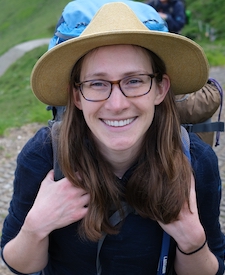
Román Corfas is an Assistant Professor of Instruction and Neuroscience Education Fellow at the University of Texas at Austin’s Department of Neuroscience. He transitioned to full-time neuroscience pedagogy in 2021, focusing on undergraduate curriculum development and teaching. Previously, his research explored insect behavior and sensory systems, including mosquito thermotaxis and fly navigation. Education: Bachelor’s in Neuroscience, Oberlin College Ph.D. in Neuroscience, Rockefeller University (2010) Postdoctoral Research, Caltech (2015–2021) Research Interests: Neuroscience education innovation, neuroethology of insect behavior, and sensory integration mechanisms in mosquitoes and fruit flies. His work bridges basic research on animal behavior with educational strategies to enhance STEM accessibility and engagement. Publications: Recent work emphasizes behavioral neuroscience (e.g., Drosophila navigation) and mosquito host-seeking mechanisms, reflecting his dual focus on research and pedagogy. Teaching & Curriculum: Leads introductory neuroscience courses and collaborates with the Neuroscience Department to modernize undergraduate curricula.
Caleb Kemere is an Associate Professor in the Departments of Electrical and Computer Engineering and Bioengineering at Rice University. His work bridges neuroscience, engineering, and computer science, focusing on neuroengineering, neural decoding, and real-time brain-computer interfaces. He holds a B.S. in Electrical Engineering (with Honors) and a B.A. in Economics from the University of Maryland, College Park, and a Ph.D. in Electrical Engineering from Stanford University. Before joining Rice in 2011, he was a postdoctoral fellow at the Keck Center for Integrative Neurosciences at UCSF. His research explores hippocampal function in spatial navigation and memory, signal processing for neural interfaces, and developing technologies like miniature microscopes and low-power sensors. He has pioneered frameworks such as Spyglass for reproducible neuroscience research and RealtimeDecoder for online neural decoding. Kemere has received prestigious awards including the NSF CAREER Award (2013), HFSP Young Investigator Award (2014), and BRAIN: EAGER Award (2015). His grants include a five-year NSF grant to study Deep Brain Stimulation (DBS) and a neural engineering IGERT grant. His lab, the Realtime Neural Engineering Lab (RNEL), develops tools for understanding and modulating neural activity. Ongoing work addresses closed-loop brain stimulation, environmental uncertainty modeling in foraging behavior, and sleep-based memory consolidation.
Kim Baraka is an Assistant Professor at the Faculty of Science, Vrije Universiteit Amsterdam, affiliated with the Artificial Intelligence department, Network Institute, and Social AI division. His research focuses on Human-Robot Interaction, Reinforcement Learning, and socially intelligent systems. He co-developed frameworks like SHARPIE for Human-AI collaboration and explores ethical aspects of AI teamwork. Baraka teaches courses on Human-interactive Agent Learning, Robotics, and Socially Intelligent Robotics. He actively contributes to conferences like HRI and ROMAN, publishing on topics ranging from robot curriculum learning to empathetic AI design. Ancillary roles include director of Bara-kadance and board member of Stichting Triplets. Research interests include: Human-AI co-creativity and collaboration Robot learning through human demonstrations Emotional expression in embodied AI Ethical frameworks for human-agent teams Recent work highlights multimodal interaction (e.g., audio-visual speech recognition), prosody-based teaching signals, and proxemics-aware navigation. His 2025 publications emphasize iterative algorithm design for fairness in human-agent teams and systematic reviews of collaborative AI creativity. This research bridges technical advancements with socially responsible AI deployment.
Mariana Ortega is an Associate Professor of Philosophy and Women’s, Gender, and Sexuality Studies at Pennsylvania State University. Her work bridges continental philosophy with intersectional feminist frameworks, focusing on questions of identity, sociality, and embodied experience in marginalized communities. She is particularly known for her contributions to Latina feminist phenomenology and critical race theory. Her research explores the intersection of aesthetics, memory, and racialized experiences, often engaging with thinkers like Heidegger while centering the lived realities of women of color. Ortega co-edited Constructing the Nation: A Race and Nationalism Reader and authored In-Between: Latina Feminist Phenomenology, Multiplicity, and the Self , which examines the multiplicitous selves of Latinas navigating borderland identities. She founded and directs the Roundtable on Latina Feminism, a key platform for discussions on Latin American and Latina feminisms. Ortega’s current research investigates aesthetics, epistemologies of ignorance, and Latinidad through practices like photography and performance art. Her work critiques colonial and patriarchal frameworks while proposing transformative methodologies rooted in embodied knowledge and decolonial praxis.
Prof. Christopher Habel is a Professor in the Department of Computer Science at the University of Hamburg, leading the WSV work area. His research focuses on spatial and temporal cognition, multimodal interaction, and accessibility technologies. He holds the formal title of Head of Department WSV and is affiliated with the Faculty of Mathematics, Computer Science and Natural Sciences. Habel's work bridges cognitive science, artificial intelligence, and human-computer interaction with an emphasis on assistive technologies for visually impaired individuals. Key research projects include the CINACS International Research Training Group, exploring auditory-haptic access to spatial graphics, and the development of multimodal comprehension systems integrating text, graphics, and tactile feedback. His contributions span theoretical frameworks in cognitive linguistics and practical implementations of verbal assistance systems for tactile maps and haptic graph exploration. Over 30 years of academic activity is reflected in his extensive publication record (1984–2015), with recent work emphasizing cross-linguistic studies, event recognition in virtual environments, and the design of multimodal interfaces for cognitive robotics. His research integrates computational models with empirical studies on human perception and language processing.
Dr. Ian Church is an Associate Professor in the Department of Geodesy and Geomatics Engineering within the Faculty of Engineering at the University of New Brunswick. He specializes in ocean mapping using acoustics, with primary research interests in integrating hydrodynamic numerical modeling with ocean mapping, marine habitat mapping, acoustic water column interpretation, and evaluating autonomous mapping platforms. His research aims to better understand the marine environment using acoustics and minimize uncertainty in ocean mapping products. Dr. Church received all his degrees (B.Sc.Eng, M.Sc.Eng, Ph.D.) from UNB while working with the Ocean Mapping Group. His professional experience includes operating and managing multibeam sonar systems onboard the coast guard ship Amundsen in the Canadian Arctic (2005-2013), and positions at the University of Southern Mississippi before returning to UNB in 2016. His publications demonstrate consistent focus on hydrographic surveying, ocean mapping technologies, and marine data processing. Recent trends show increased emphasis on AI applications in seabed mapping, advanced sensor technologies, collaborative training programs, and hydrodynamic modeling for coastal management. Dr. Church also contributes to educational initiatives like the COMREN International School on Hydrographic Surveying.
Tamara El-Hoss is an Associate Professor in the Department of Modern Languages, Literatures and Cultures at Brock University. Her research focuses on displacement, graphic novels ( bande dessinée ), and post-colonial Francophone literatures, particularly addressing immigrant/refugee narratives, (de)colonial histories, and cultural hybridity. She holds a Ph.D. and M.A. in French Literature from the University of Toronto and a B.A. in French Studies from York University. Her research interests include beur artistic outputs (literature/film), Maghrebian diaspora identities, and queer perspectives in Francophone contexts. She co-edited Im/migrant Passages: Crossing Visual, Spatial and Textual Boundaries (2020) and has published widely on graphic novels like Black Blanc Beur and films like Mathieu Kassovitz’s La Haine . El-Hoss teaches courses on Francophone cultures, postcolonial literatures, and critical theory. Her graduate supervision emphasizes comparative methodologies and cultural narratives, with notable supervisees examining topics like Maghrebian women’s identity and postcolonial exoticism. Her scholarly work bridges textual analysis with visual and spatial studies, exploring how marginalized voices navigate cultural, linguistic, and political boundaries. Current projects likely expand her focus on transnational cultural dynamics and artistic representations of displacement.
Dr. Ellen O. Aikens is an Assistant Professor with a joint appointment at the University of Wyoming's School of Computing and Haub School of Environment and Natural Resources. She holds a PhD in Ecology (University of Wyoming) and a BS in Biology and Environmental Studies (Ursinus College). Her research focuses on quantitative wildlife ecology, integrating animal tracking, remote sensing, and field studies to understand wildlife habitat needs and responses to environmental changes. A key emphasis is on migratory species like ungulates and birds, addressing conservation and management challenges through data-driven approaches. Her research highlights include studying migratory behavior development, social dynamics in animal migrations, and the impact of human activities on migration patterns. Notable projects analyze how ungulates track vegetation phenology ('green waves') and how drought or energy development disrupts these patterns. These studies contribute to large-scale conservation planning and ecological understanding. Publications span topics like migration ecology, climate change impacts, and animal movement tactics. Her work appears in journals such as *Nature Ecology and Evolution*, *Current Biology*, and *Ecology Letters*, emphasizing interdisciplinary methods to bridge ecological theory and applied conservation. Dr. Aikens collaborates across institutions to advance migration science, advocating for experimental approaches and habitat connectivity solutions. Her contributions emphasize applying ecological insights to real-world conservation challenges, particularly for migratory species facing environmental and anthropogenic pressures.
Holly Taylor is Moses Hunt Professor of Psychology and Professor of Mechanical Engineering at Tufts University. She directs the Spatial Cognition Lab and co-directs the Center for Applied Brain and Cognitive Sciences, focusing on human performance optimization. Her research examines mental representations of spatial information, investigating how navigation strategies are shaped by maps, multimedia sources, and environmental factors. Additional work explores nutritional impacts on cognition and stress effects on spatial decision-making. Recent publications demonstrate innovations in augmented reality navigation systems, spatial visualization for STEM education, and cognitive aspects of wayfinding under time pressure. Articles frequently appear in high-impact journals including Journal of Experimental Psychology and PLOS ONE . Sustained grant funding includes the Applied Brain and Cognitive Science Collaborative Effort with the U.S. Army (2019-2029). She teaches courses on spatial cognition, games psychology, and cognitive psychology.
Dr. Liza Weinstein is Associate Professor of Sociology and Department Chair at Northeastern University, researching cities, globalization, and urban political economy with focus on India. Her work analyzes housing insecurity, eviction politics, and informality through books like The Durable Slum and ongoing NSF-funded studies on legal exclusion in Mumbai. She holds a Ph.D. in Sociology from the University of Chicago. Research examines how urban transformations produce spatial stigma and how communities mobilize against displacement. Current projects investigate non-notified settlements in Mumbai, integrating legal anthropology with embodied experiences of territorial marginalization. Teaching includes courses on Global Markets, Indian Culture/Politics, and Urban Sociology. Professional service involves editorial roles for urban studies journals.
Woodam Chung serves as Professor and Stewart Professor of Forest Operations in the College of Forestry at Oregon State University. He leads research in forest operations planning and management, specializing in harvesting systems, biomass utilization, and wildland fire management. His work integrates engineering solutions with sustainable forestry practices. Research interests include forest management planning, steep slope harvesting, tethered equipment applications, biomass logistics, and fuel treatment optimization. Current projects focus on reducing wildfire risks through strategic fuel break networks and enhancing operational efficiency in challenging terrains. Publications demonstrate consistent focus on operational efficiency, environmental impacts, and technological innovation in forestry. Recent work emphasizes tethered harvesting systems, soil disturbance mitigation, computer vision applications, and wildfire risk management strategies. Currently advises seven graduate students on topics spanning forest operations, biomass utilization, and wildfire management. Maintains active collaborations with industry partners and land management agencies.